Finding the best one-person tent for cold weather is less about chasing one waterproof number and more about matching the shelter to wind, snow, campsite exposure, and your sleep system.
Camppal 1-Person Tent is the best overall pick here because the manufacturer lists four-season use, an aluminum pole, and 3500–4000 mm water resistance. The Night Cat 1-Person Tent is the best value for protected camps where heavy snow is not expected.
We checked the exact linked ASINs, manufacturer or current seller specifications, season ratings, weather construction, and available safety records. This is an editorial comparison, not hands-on testing.
Best One-Person Tents for Cold Weather Compared
| Product | Best for | Season rating | Waterproofing |
|---|---|---|---|
|
Budget
|
Budget solo camping and protected cold-weather trips | Seller-stated 4 season | PU 3000 mm |
|
Mid-range
|
Cold-weather solo trips and taller sleepers | Manufacturer-listed 4 season | 3500 mm fly/inner; 4000 mm floor |
|
Budget
|
Three-season backpacking and mild, sheltered conditions | 3 season | 2000 mm |
|
Mid-range
|
Compact three-season travel with an included footprint | 3 season | 210T version: PU 3000 mm |
[Amazon Products Picked for You]

[Professional 1 Person Tent]: Size: Inner tent(L8.2ft x W2.95ft x H2.95ft), Outer tent: L8.2ft x W(2.95ft +1.31ft) x H3.11ft, 3500~4000mm Water Resistance. Fire Retardant Standard/CPAI-84. This 1 person camping tent is very light, just 3.75lb, easy to carry on when you camp outside, besides, it's also very easy to set up with only one single ridge pole.
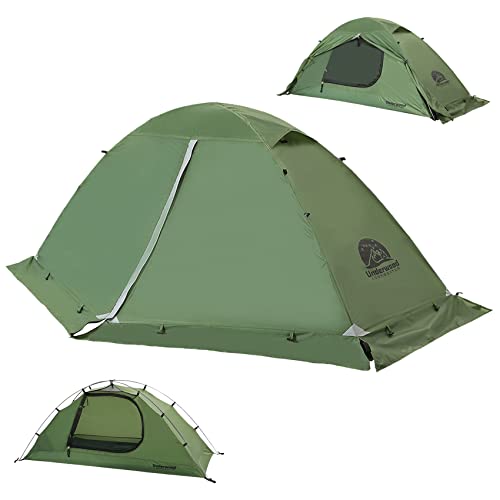
FOUR SEASON TENT: While other 3 season tents are only available for spring, summer, and fall, this extreme weather tent is suitable for all seasons of the year. In winter, the snow skirt of this 1 person backpacking tent makes sure that it can keep snow away. The rollable design makes it convenient when there is no snow around. In other seasons, the mesh design of the 4 season backpacking tent keeps bugs away while the double-layer door ensures ventilation

[Professional 1 Person Tent]: Size: Inner tent(L8.2ft x W2.95ft x H2.95ft), Outer tent: L8.2ft x W(2.95ft +1.31ft) x H3.11ft, 3500-4000mm Water Resistance. Fire Retardant Standard/CPAI-84. This 1 person camping tent is very light, just 3.75lb, easy to carry on when you camp outside, besides, it's also very easy to set up with only one single ridge pole
Best One-Person Tent for Cold Weather: Our Top Picks
[Amazon Products Picked for You]

Lightweight and Durable: The OneTigris STELLA Camping Tent features a lightweight and durable 20D Nylon outer fabric with a single-layer silicone coating, making it both sturdy and easy to carry at only 4.4lb/2kg. Suitable for backpackers, bushcrafters, everyday campers, and families Waterproof: With a 3000mm waterproof rating, the STELLA camping tent is perfect for use in all weather conditions. The removable blackout outer tent allows for greater flexibility in use.

FOUR SEASON TENT: While other 3 season tents are only available for spring, summer, and fall, this extreme weather tent is suitable for all seasons of the year. In winter, the snow skirt of this 1 person backpacking tent makes sure that it can keep snow away. The rollable design makes it convenient when there is no snow around. In other seasons, the mesh design of the 4 season backpacking tent keeps bugs away while the double-layer door ensures ventilation

Included rainfly offers extra weather protection
Detailed Reviews
[Amazon Products Picked for You]

【Upgraded Folding Method, Easier Fold Back】Throw the tent to the ground, and spread the pole then it will open up instantly in 3 seconds. Folding back is easier than tranditional pop up camping tent, fold the easy setup tent like number "8" and repeat TWICE, please refer to the instructional video. Practice a few times, you'll get the method quickly

[Professional 1 Person Tent]: Size: Inner tent(L8.2ft x W2.95ft x H2.95ft), Outer tent: L8.2ft x W(2.95ft +1.31ft) x H3.11ft, 3500-4000mm Water Resistance. Fire Retardant Standard/CPAI-84. This 1 person camping tent is very light, just 3.75lb, easy to carry on when you camp outside, besides, it's also very easy to set up with only one single ridge pole
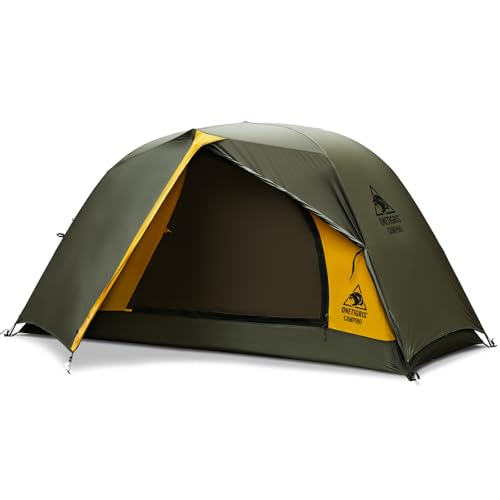
Lightweight and Durable: The OneTigris STELLA Camping Tent features a lightweight and durable 20D Nylon outer fabric with a single-layer silicone coating, making it both sturdy and easy to carry at only 4.4lb/2kg. Suitable for backpackers, bushcrafters, everyday campers, and families Waterproof: With a 3000mm waterproof rating, the STELLA camping tent is perfect for use in all weather conditions. The removable blackout outer tent allows for greater flexibility in use.
1. Night Cat 1-Person Tent

Bottom line: The Night Cat is a budget-friendly solo shelter for quick trips, protected campsites, and cold rain or light snow. Its single-layer body and fiberglass poles are the main reasons not to treat it as a heavy-snow mountain tent.
- Occupancy: 1 person, sized for a solo sleeper and basic gear
- Season rating: Seller-stated 4 season, but use conservatively in winter
- Waterproofing: PU 3000 mm, useful for wet-weather coverage
- Pole structure: Fiberglass, lighter-duty than typical mountaineering aluminum systems
The linked one-person model is listed at about 86.6 by 47 inches on the floor and about 4.4 pounds. That gives you more sleeping room than many narrow solo shelters, while the simple pole-and-sleeve setup keeps camp chores short.
The trade-off is winter strength. A seller-applied four-season label does not equal published snow-load testing, and the single-wall layout needs active ventilation in cold, damp weather. Use it for lower-risk routes with a conservative forecast rather than exposed ridgelines or sustained heavy snowfall.
Existing Sentiment Snapshot
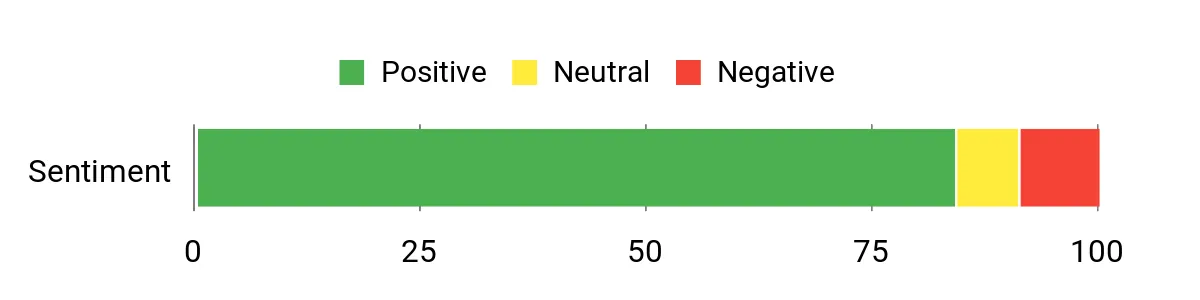
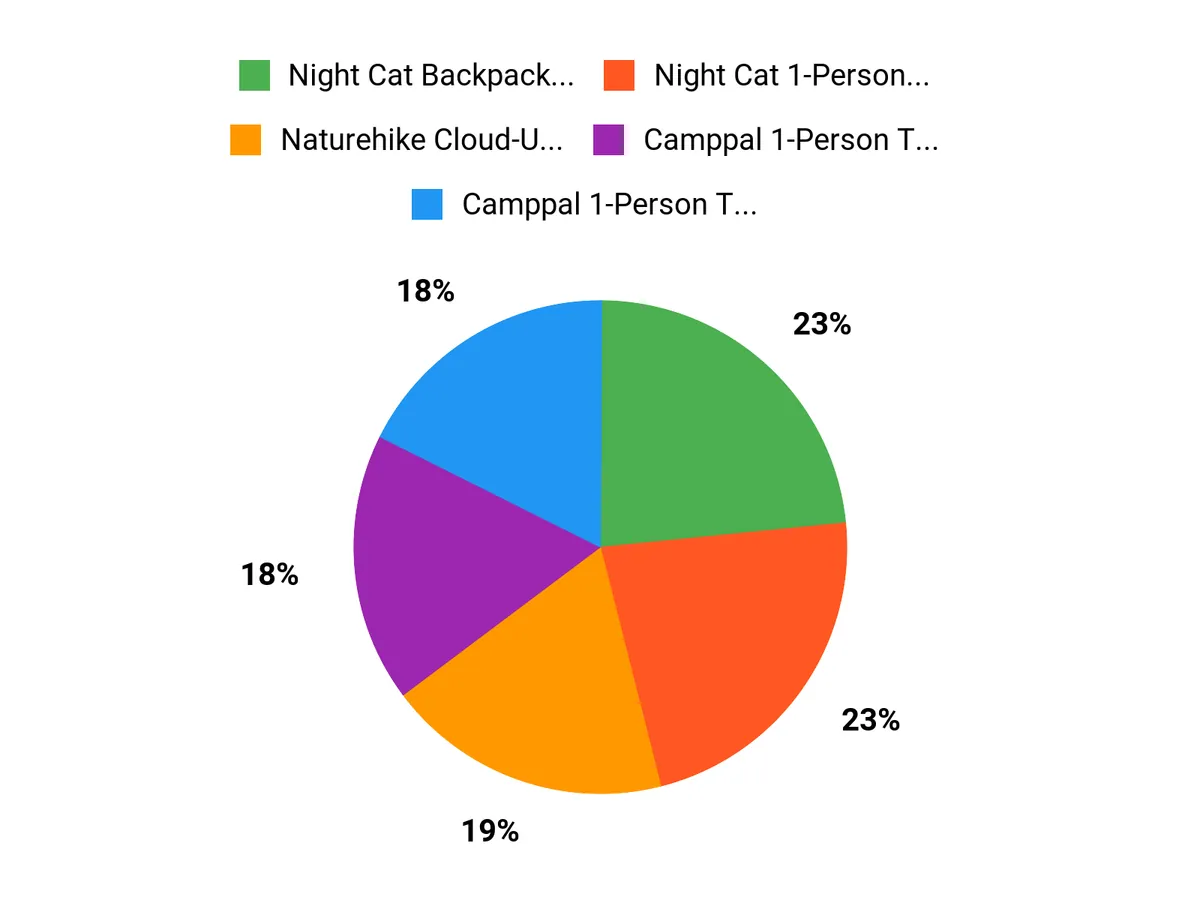
The static graphic below is retained from the original article for continuity. It is not live marketplace data and is not used as evidence for this ranking.
- PU 3000 mm weather specification
- Roomy floor for a one-person budget tent
- Simple setup with a compact packed format
- Lower-priced option in this group
- Fiberglass poles are less confidence-inspiring for severe winter use
- Single-layer design can require more condensation management
- No published heavy-snow load rating
Check Current Amazon Availability
2. Camppal 1-Person Tent

Bottom line: The Camppal is the strongest cold-weather match in this shortlist. The manufacturer lists a four-season design, an 8 mm aluminum pole, a 250 cm inner length, and 3500–4000 mm water resistance.
- Occupancy: 1 person, with an extra-long 250 cm inner floor
- Season rating: Manufacturer-listed 4 season, the clearest winter positioning here
- Waterproofing: 3500 mm inner/fly and 4000 mm floor, strong rain coverage
- Pole structure: 8 mm aluminum ridge pole, more winter-oriented than fiberglass
The 250 cm inner length is the clearest advantage for taller sleepers or anyone using a bulky winter sleeping bag. The maker also lists a 90 cm inner width and a fly that adds about 40 cm of side coverage for gear.
Published weight figures are not fully consistent across current sources and variants. The manufacturer lists about 1.8 kg without the snow skirt and 1.9 kg with it, while other current seller data can show different figures. Confirm the exact linked variant before building a backpacking load around one number.
Most important, a four-season label still is not a published snow-load or wind-test limit. For severe alpine weather, use a purpose-built mountaineering shelter with explicit guidance for those conditions.
Existing Sentiment Snapshot
The static graphic below is retained from the original article for continuity. It is not live marketplace data and is not used as evidence for this ranking.
- Manufacturer-listed four-season construction
- 3500 mm fly and inner with a 4000 mm floor
- Long 250 cm inner floor for taller sleepers
- Aluminum ridge pole instead of fiberglass
- Snow-skirt version is offered by the manufacturer
- Narrow 90 cm inner width limits gear-spreading room
- Published weight figures vary across current sources
- No published snow-load or wind-test limit for a specific storm
3. ShinHye 1-Person Backpacking Tent

Bottom line: The ShinHye is a verified one-person, three-season tent with a 2000 mm water-resistance specification. It fits backpacking and sheltered shoulder-season use better than true winter-storm duty.
- Occupancy: 1 person, with a small vestibule for footwear or gear
- Season rating: 3 season, so keep winter use mild and sheltered
- Waterproofing: 2000 mm, aimed at ordinary rain protection
- Pole structure: Current seller data conflicts, so verify the live listing
The exact linked ASIN can now be verified as the green one-person version. Current seller data consistently describes three-season use, a 2000 mm water-resistance rating, one door, one vestibule, and a compact solo format.
Some structured seller fields conflict on weight, pole material, and attachment method. That does not make the product unusable, but it does mean those details should not drive a safety-critical winter decision until you confirm the live Amazon listing.
Existing Sentiment Snapshot
The static graphic below is retained from the original article for continuity. It is not live marketplace data and is not used as evidence for this ranking.
- Verified one-person, three-season positioning
- 2000 mm water-resistance specification
- Small vestibule for shoes or compact gear
- Compact format for backpacking and short trips
- Not positioned as a heavy-snow winter shelter
- Seller data conflicts on some weight and pole details
- Less weather margin than the Camppal for cold-focused trips
Check Current Amazon Availability
4. Naturehike Cloud-Up 1 Person Tent
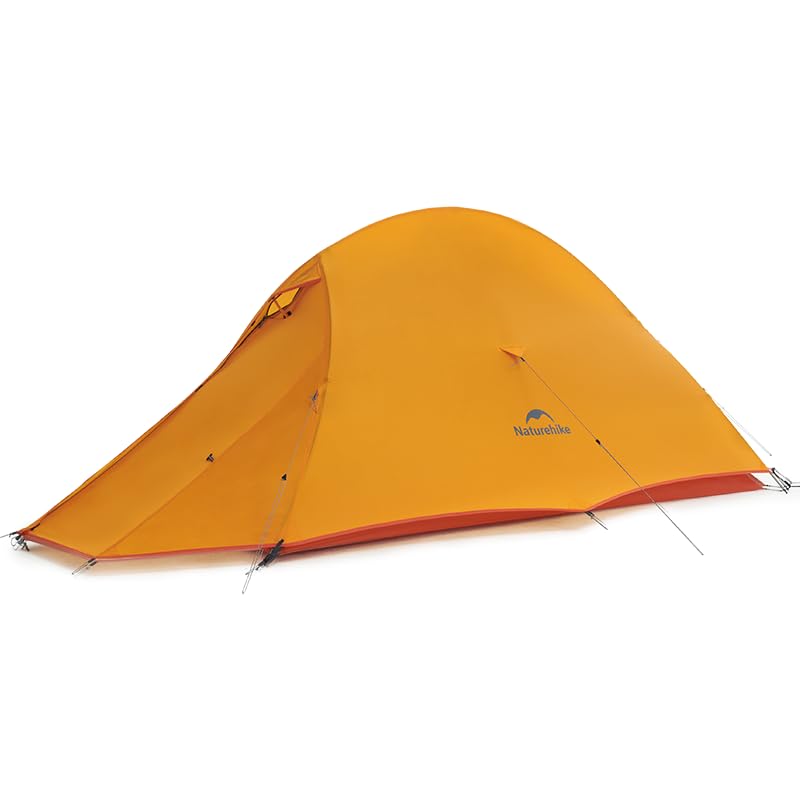
Bottom line: The linked Naturehike Cloud-Up is a three-season solo shelter that combines aluminum poles, a separate rainfly, and an included footprint. It is a strong packable choice for ordinary backpacking, but not a heavy-snow mountaineering tent.
- Occupancy: 1 person, compact for solo backpacking
- Season rating: 3 season, best for mild or sheltered cold-weather use
- Waterproofing: 210T version PU 3000 mm, useful for rain protection
- Pole structure: Aluminum alloy, a better repeated-use choice than fiberglass
Naturehike’s current Cloud-Up specifications list a 210T polyester version with PU 3000 mm waterproofing and 7001 aluminum-alloy poles. The exact linked ASIN is also sold with a footprint and a separate rainfly, reducing the number of accessories you need to source before a trip.
The Cloud-Up is still a three-season tent. Its double-wall layout and ventilation features help manage ordinary backpacking weather, but the design should not be treated as proof of heavy-snow or severe-wind capability.
Existing Sentiment Snapshot
The static graphic below is retained from the original article for continuity. It is not live marketplace data and is not used as evidence for this ranking.
- Three-season design with a separate rainfly
- 210T polyester version lists PU 3000 mm waterproofing
- Aluminum-alloy pole system
- Footprint is included with the linked kit
- Compact solo format for backpacking and bikepacking
- Not intended as a purpose-built heavy-snow mountaineering shelter
- Narrow solo floor limits indoor gear space
- Cloud-Up materials vary by version, so exact variant matters
Camppal 1-Person Tent vs Night Cat 1-Person Tent: Is the Upgrade Worth It?
The Camppal is the stronger cold-weather choice, while the Night Cat makes more sense when budget and simple setup matter more than winter-oriented construction.
- Season positioning: Camppal is manufacturer-listed as four season; Night Cat carries a seller-stated four-season label but uses a simpler single-layer structure.
- Pole material: Camppal uses aluminum; Night Cat uses fiberglass.
- Waterproofing: Camppal lists 3500 mm on the fly/inner and 4000 mm on the floor; Night Cat lists PU 3000 mm.
- Trip fit: Camppal is the better match for colder, more demanding protected routes; Night Cat suits lower-risk camps where heavy snow is not expected.
Which One-Person Tent Should You Buy?
- For the strongest cold-weather fit in this list: get the Camppal 1-Person Tent.
- For the lowest-cost cold-weather-capable option: get the Night Cat 1-Person Tent and keep trips protected and conservative.
- For a compact three-season kit with a footprint: get the Naturehike Cloud-Up 1 Person Tent.
- For simple mild-weather solo backpacking: get the ShinHye 1-Person Backpacking Tent.
- For exposed alpine winter camping: choose a purpose-built mountaineering tent with clear manufacturer guidance for severe wind and snow instead of relying on any lightweight budget pick here.
Winter Tent Safety
Winter safety note: A tent mainly blocks wind and precipitation; your sleeping bag and insulated pad provide most of your warmth. Never operate a fuel-burning stove, grill or heater inside the tent or enclosed vestibule. For heavy snowfall, high winds or exposed alpine terrain, use a shelter specifically engineered for those conditions and follow local weather and avalanche guidance.
How We Chose
- Exact product match: We checked each linked ASIN against current product data and kept the original product order.
- Winter relevance: We compared season rating, pole structure, rainfly coverage, and the maker or seller’s intended use.
- Weather specifications: We used manufacturer information first when available, then current seller data for exact-ASIN details.
- Practical fit: We considered solo floor space, vestibule use, included accessories, and setup trade-offs.
- Safety and feedback: We checked recall sources and owner-feedback sources, but did not add owner-trend boxes where two independent non-Amazon sources did not support a solid exact-model trend.
Product pages change. Confirm the exact variant, packaged weight, included accessories, and current warranty before ordering, especially when those details affect your winter route or pack weight.
How to Choose a One-Person Tent for Cold Weather
Start With the Season Rating
Use the season label as a starting point, not a guarantee. A three-season shelter is best kept to mild, settled winter weather, while a true cold-focused trip calls for a manufacturer-documented four-season design. In this group, the Camppal 1-Person Tent has the clearest four-season positioning.
Check Pole Material and Structure
Winter wind and snow load stress the frame, so pole material and geometry matter as much as fabric waterproofing. Aluminum is generally a better fit for repeated technical use than basic fiberglass. The Camppal and Naturehike use aluminum systems, while the Night Cat’s linked one-person model uses fiberglass poles.
Separate Waterproofing From Snow Strength
A 3000 mm or 4000 mm coating can tell you about water resistance, but it does not tell you how much snow the frame can support. Look for a full rainfly, strong staking and guy points, and clear manufacturer use guidance. Do not buy a tent for a blizzard based only on the highest millimeter number.
Plan for Condensation
Cold air turns your breath and damp gear into interior moisture. Keep vents open when practical, avoid pressing a sleeping bag against wet walls, and tension the fly correctly. A double-wall tent such as the Naturehike Cloud-Up 1 Person Tent gives you more separation between the inner and outer layers.
Make Sure Your Winter Sleep System Fits
A winter sleeping bag can be much bulkier than a summer bag, and a thick insulated pad needs floor width. Check usable dimensions instead of occupancy alone. Taller campers should pay special attention to length; the Camppal’s manufacturer-listed 250 cm inner floor is the longest clearly verified option in this group.
Understand Weight Definitions
Minimum trail weight and packaged weight may include different parts, so two numbers are not always directly comparable. Check what the manufacturer includes in each figure before planning a backpacking load. This matters especially for the Camppal and ShinHye, where current sources do not present one perfectly consistent weight figure.
Mistakes to Avoid When Buying a One-Person Tent
- Buying by waterproof rating alone: also check pole structure, season rating, and intended weather use.
- Assuming “four season” means expedition-ready: look for specific wind, snow, and route guidance.
- Ignoring sleep-system size: measure your pad and winter bag against usable floor dimensions.
- Sealing every vent: keep controlled airflow to reduce condensation in cold weather.
- Skipping a practice pitch: set up the tent with gloves before relying on it in bad weather.
Before You Buy Checklist
- Check the forecast, expected snow depth, wind exposure and campsite elevation.
- Confirm the live listing’s occupancy, season rating, packaged weight and included footprint.
- Measure your sleeping pad and winter sleeping bag against the tent’s usable floor dimensions.
- Practice pitching with gloves before the trip and inspect poles, seams, stakes and guylines.
- Carry an insulated pad and sleeping bag appropriate for temperatures below the forecast minimum.
- Keep all fuel-burning appliances outside the tent and enclosed vestibule.
FAQs
Can a three-season tent be used in winter?
A three-season tent can work in mild, settled winter conditions below tree line when heavy snow and severe wind are not expected. It is not a substitute for a purpose-built four-season mountaineering shelter on exposed terrain. Match the tent to the forecast, campsite exposure, and the consequences of a weather change.
Does a tent keep you warm in winter?
A tent mainly blocks wind and precipitation; it adds limited insulation by itself. Most overnight warmth comes from a sleeping bag rated for the conditions, an insulated sleeping pad, dry clothing, food, and hydration. Leave enough ventilation open to manage condensation instead of sealing the shelter tightly to trap warm air.
What is the difference between waterproofing and winter strength?
Waterproof ratings describe how well a fabric resists water pressure, but winter strength depends on more than the millimeter number. Pole material and geometry, guy points, fabric coverage, staking, snow shedding, and the maker’s intended season rating also matter. A high waterproof rating alone does not prove heavy-snow or high-wind capability.
How do I reduce condensation in cold weather?
Keep vents open when conditions allow, avoid blocking airflow with gear, and keep wet clothing outside the sleeping area when practical. Tension the rainfly so air can move between layers, and dry the tent fully after the trip. Some condensation is normal when warm, moist air meets cold tent fabric.
Can I cook or use a heater inside a backpacking tent?
No. Keep fuel-burning stoves, grills, and heaters outside the tent and outside an enclosed vestibule. These devices can create fire and carbon-monoxide hazards, while tent fabrics can melt or ignite. Cook in a well-ventilated area that follows the appliance maker’s safety instructions and local fire restrictions.
Is a four-season label enough for heavy snow?
No. A four-season label is useful context, but it does not by itself prove a tent can handle a specific snow load or severe wind. Look for clear manufacturer guidance, a strong pole structure, secure guy points, and a route-appropriate design. For exposed alpine travel, choose equipment made and documented for those conditions.
Is a single-wall or double-wall tent better in cold weather?
Neither design is automatically best for every winter trip. Double-wall tents can create more separation between your sleeping area and the rainfly, which can help manage moisture, while single-wall shelters can be simpler and lighter. For cold trips, prioritize weather coverage, ventilation, pole structure, and the conditions the manufacturer actually supports.
What Campers Prefer
Most solo cold-weather buyers need dependable weather coverage, a pole structure that matches the forecast, enough floor room for a winter sleep system, manageable pack size, and ventilation that helps control condensation. The best one-person tent for cold weather is the shelter whose season rating, structure, and limitations fit your actual route—not simply the lightest tent or the highest waterproof number.
Quick Comparison
| Product | Image | Best For | Verified Weather Details | Main Caveat | Amazon |
|---|---|---|---|---|---|
| Night Cat 1-Person Tent |
 |
Budget solo camping and protected cold-weather trips | Seller-stated four-season use; PU 3000 mm; fiberglass poles | Single-layer construction; no published heavy-snow load rating | Check Price on Amazon |
| Camppal 1-Person Tent |
 |
Cold-weather solo use and tall sleepers | Manufacturer-listed four season; 3500 mm fly/inner; 4000 mm floor; aluminum pole | Published weight figures vary by source and variant | Check Price on Amazon |
| ShinHye 1-Person Backpacking Tent |
 |
Three-season backpacking and mild, sheltered weather | Exact ASIN lists one-person, three-season use and 2000 mm water resistance | Seller data conflicts on some weight and pole/setup fields | Check Price on Amazon |
| Naturehike Cloud-Up 1 Person Tent |
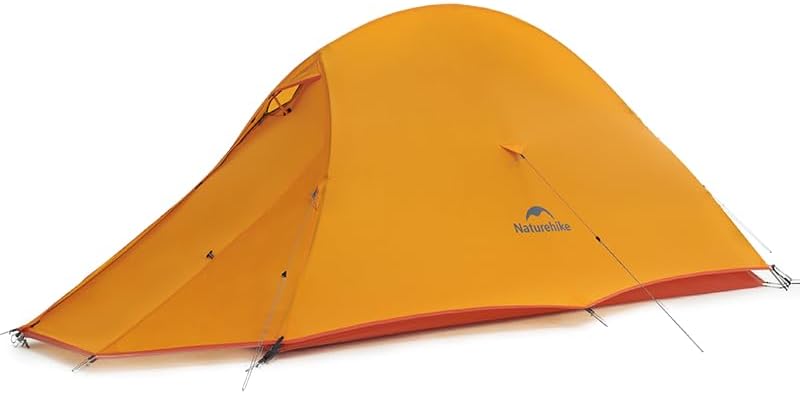 |
Compact three-season travel with an included footprint | 210T version: three season, PU 3000 mm, aluminum pole, separate rainfly | Not a purpose-built heavy-snow mountaineering shelter | Check Price on Amazon |
Final Verdict
For the best one-person tent for cold weather in this four-product roundup, the Camppal is the strongest overall match because its manufacturer clearly positions it for four-season use and lists aluminum construction with 3500–4000 mm water resistance. The Night Cat is the better value for protected camps, while the Naturehike and ShinHye are more appropriate for three-season or mild, sheltered conditions.
For a lower-cost option, see the Night Cat 1-Person Tent; for a more complete three-season backpacking kit, see the Naturehike Cloud-Up 1 Person Tent.
