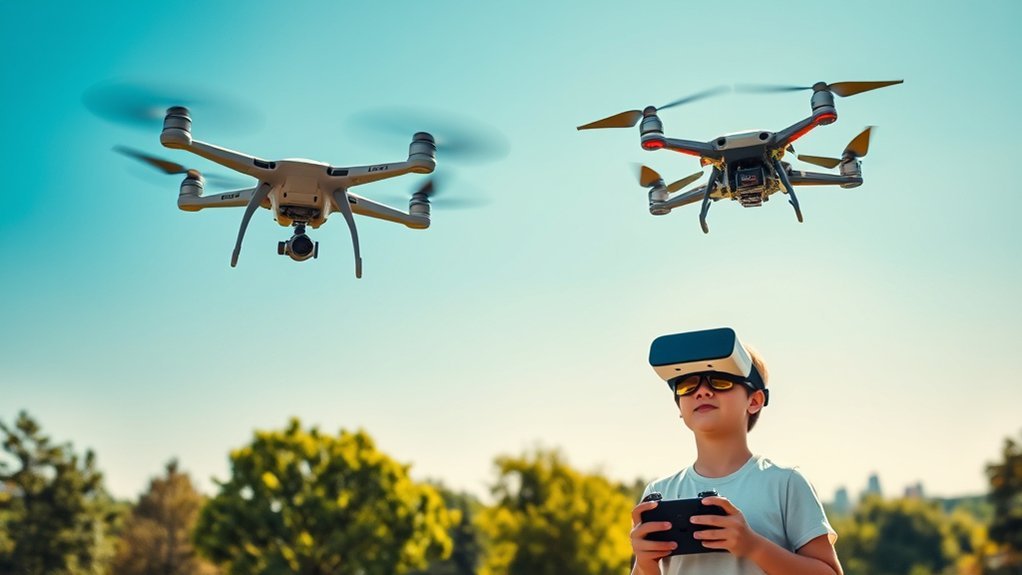
You might think all drones are the same, but GPS and FPV drones are built for very different flying styles. If you’re a new pilot, that choice affects how easy the drone feels, how much practice you need, and what kind of footage or flying experience you can expect. GPS drones focus on stability, automated flight, and camera-friendly features, while FPV drones focus on speed, immersion, and hands-on control.
Quick Answer
Choose a GPS drone if you want easier flying, stable video, automated return-to-home, and beginner-friendly safety features. Choose an FPV drone if you want a faster, more immersive flying experience for racing, freestyle, or dramatic cinematic movement. GPS drones are easier to learn; FPV drones offer more control but require more practice.
Key Takeaways
- GPS drones are best for beginners because they usually offer position hold, return-to-home, automated flight modes, and smoother camera footage.
- FPV drones are best for pilots who want immersion, speed, and manual control, especially for racing, freestyle, and close-range action shots.
- GPS drones rely on satellite positioning, while FPV drones rely more on pilot input, real-time video, and fast reflexes.
- FPV has a steeper learning curve, so simulator practice and safe open-space training matter more.
- Your best choice depends on your goal: stable photos and mapping favor GPS, while thrilling flight and dynamic movement favor FPV.
Understanding FPV Drones
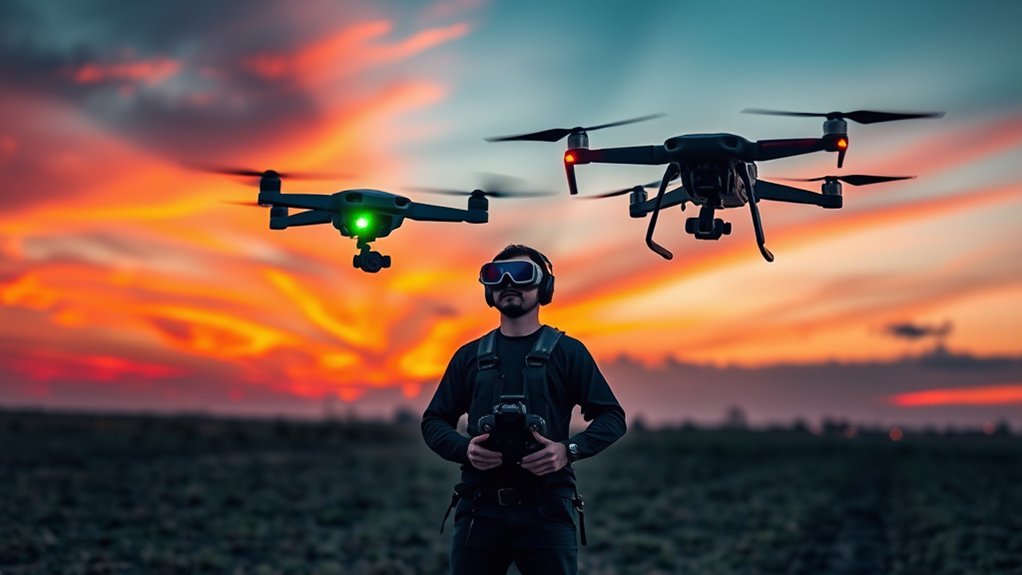
When you pilot an FPV drone, or first-person view drone, you see the flight through a camera mounted on the aircraft. The video feed appears on goggles, a headset, or a screen, giving you a cockpit-like view from the drone’s perspective.
This creates an immersive flying experience that feels very different from watching a drone from the ground. Instead of only seeing the aircraft move in the sky, you respond to what the drone sees in real time.
FPV drones excel in drone racing, freestyle flying, indoor fly-throughs, and creative cinematography. They can dive, roll, flip, and move through tight spaces in ways that many camera-focused GPS drones cannot match.
FPV drones shine when you want speed, immersion, and dramatic movement, but they reward practice more than automation.
Most FPV flying requires stronger stick control than GPS flying. You’ll manage throttle, pitch, roll, and yaw more actively, especially if you fly in manual or acro mode. That makes FPV exciting, but it also makes crashes more likely while you learn.
Many FPV drones are custom-built or highly customizable. Pilots often choose their own frame, motors, flight controller, camera, video system, propellers, batteries, and radio link. That flexibility is one reason FPV appeals to hobbyists who enjoy both flying and tinkering.
FPV drones may have fewer built-in safety sensors than many GPS drones. Some models include stabilization, rescue modes, or GPS return functions, but traditional FPV flying still depends heavily on the pilot’s judgment, visibility, and control.
Warning: FPV flying can limit your direct view of the aircraft. Follow local drone rules, keep the flight area safe, and use a visual observer when required or when it improves safety.
If you enjoy the challenge, FPV can feel like the closest drone experience to true flight. It rewards smooth stick inputs, spatial awareness, and consistent practice.
Understanding GPS Drones
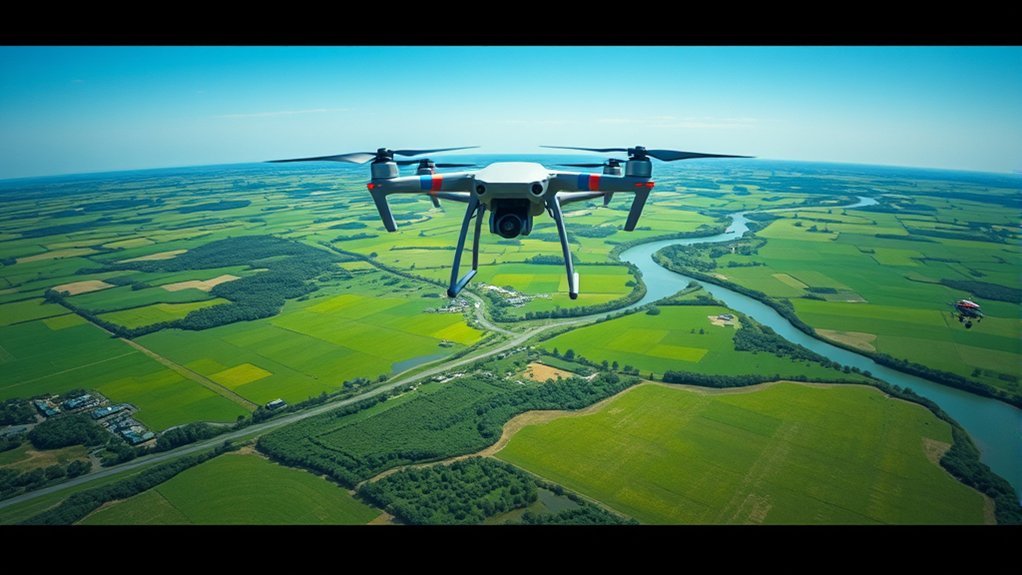
While FPV drones offer a hands-on flying experience, GPS drones focus on stability, positioning, and automation. They use satellite navigation to help the aircraft know where it is and hold its position more accurately.
A GPS drone can hover in place with less input from you. That makes it easier to frame photos, record smooth video, inspect a roof, or fly a planned route. Many beginner camera drones use GPS because it helps reduce drift and gives pilots more confidence.
Common GPS drone features include:
- Return-to-home functionality: The drone can automatically fly back toward its takeoff point when triggered, when signal is lost, or when the battery reaches a low level.
- Position hold: The drone can maintain its location more steadily when you release the controls.
- Geofencing: Some drones can limit flight in restricted or sensitive areas to support safer operation.
- Obstacle sensing: Many camera-focused GPS drones include sensors that help detect and avoid objects, though performance varies by model.
- Automated flight modes: Some models offer orbit, follow, waypoint, panorama, and subject-tracking modes.
GPS positioning is useful, but it is not perfect. Signal quality can change near tall buildings, dense trees, mountains, metal structures, or areas with heavy interference. A GPS drone still needs a careful pilot.
With their autonomous capabilities, GPS drones are strong choices for aerial photography, mapping, property videos, travel footage, inspections, and agriculture-related monitoring. They give you a calmer flying experience when your main goal is stable results rather than aggressive movement.
Key Differences Between FPV and GPS Drones
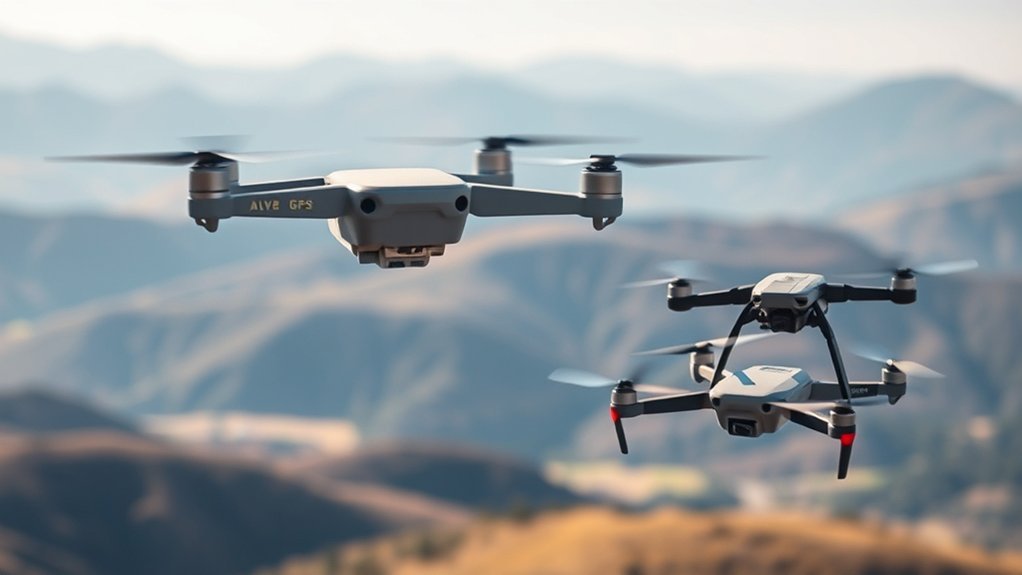
Understanding the key differences between FPV and GPS drones helps you choose the right UAV for your needs. FPV drones put you in direct control through a real-time video feed. GPS drones use satellite positioning and automated features to make flight smoother and easier.
The simplest way to compare them is by looking at control style, skill level, use case, and safety support.
| Feature | FPV Drones | GPS Drones |
|---|---|---|
| Control | Manual, pilot-driven | Automated, satellite-assisted |
| Use Cases | Racing, freestyle, cinematic fly-throughs | Photography, mapping, inspections, travel video |
| Learning Curve | Steeper, requires piloting skills | Easier, often beginner-friendly |
| Safety Features | Often limited, relies more on pilot skill | Often includes return-to-home, geofencing, and obstacle sensing |
| Price Range | $100 to $2,500+ depending on parts and video system | Often starts around $500 for stronger camera-focused models |
This table highlights the biggest trade-off. FPV drones give you more freedom and intensity, while GPS drones give you more stability and support.
[Amazon Products Picked for You]

Screen Controller, No Phone Needed: This drone comes with a 4.5-inch remote controller with a built-in screen, making connection simple and convenient. No smartphone connection or app download is required, allowing you to fly and view real-time footage directly on the controller. Without distractions from incoming calls, messages, or notifications, you can enjoy an immersive flying experience. The all-in-one design also reduces reliance on mobile devices.
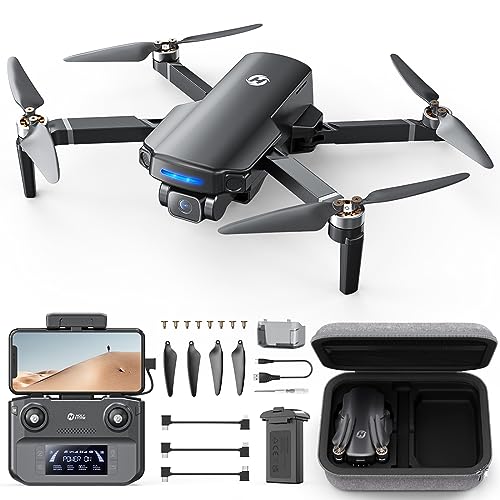
Extremely Lightweight, No FAA or Remote ID Registration: HS360S, drone with camera for adults featuring the Holy Stone latest design, weighs less than 250g; this GPS drone offers the perfect solution for hassle-free flying in the States without FAA or Remote ID registration. Perfect for capturing stunning footage on the go.

【Drone with Camera】Equipped with GPS drone FPV camera and a 90° electrically adjustable lensy, this drone for adults capture stunning aerial photos and videos from virtually any angle. Whether you're flying over forests, beaches, mountains, or cityscapes, it delivers breathtaking views and immersive experiences—helping creators preserve unforgettable moments and bring their vision to life.
Use Cases for FPV and GPS Drones
When it comes to use cases, FPV drones shine in racing, freestyle flying, and shots that need fast movement through tight spaces. They create an exciting first-person experience that keeps you connected to every turn and throttle change.
GPS drones are your go-to option for precision mapping, aerial photography, property videos, and inspections. Their stable flight paths make them better when you need repeatable movement, smooth footage, or reliable positioning.
Each type serves a distinct need. One prioritizes adrenaline and control; the other prioritizes stability and consistent results.
Racing and Competitive Sports
In the world of drone racing, FPV drones dominate because of their speed, agility, and low-latency video experience. Pilots fly through gates, around obstacles, and across technical courses while watching from the drone’s camera view.
Some racing builds can reach very high speeds, but speed is only part of the challenge. Good racing depends on cornering, throttle control, line choice, and fast decision-making.
Here’s what makes FPV drones ideal for racing:
- Speed: Lightweight builds and powerful motors help FPV drones accelerate quickly.
- Agility: FPV drones can make sharp turns, dives, rolls, and quick corrections.
- Customization: Pilots can tune parts, camera angle, rates, propellers, and batteries for their style.
- Control: Manual navigation gives skilled pilots more freedom than automated flight modes.
GPS drones usually cannot match the response and maneuverability needed for competitive racing. They are better suited for stable filming than high-speed gate flying.
If you want to race, FPV is the clear choice.
Precision Mapping and Inspections
While both FPV and GPS drones can support inspections, GPS drones are usually better for precision mapping and repeatable data collection.
GPS drones can follow pre-programmed flight paths, hold position, and move at steady speeds. That consistency helps with agricultural monitoring, construction progress tracking, roof inspections, and infrastructure assessments.
Some professional GPS drones support RTK, or Real-Time Kinematic positioning. RTK can improve positioning accuracy when the drone is paired with compatible correction systems, making it useful for surveying and measurement-focused work.
By contrast, FPV drones rely more on manual control. That can create excellent visual access in tight areas, but it may also introduce variation in altitude, angle, and overlap. For strict mapping, that inconsistency can reduce data quality.
GPS drones also tend to include more safety-focused features, such as geofencing, return-to-home, and obstacle sensing. Those tools make them easier to manage in complex inspection environments.
Aerial Photography and Video
GPS drones are usually better for traditional aerial photography and smooth cinematic video. Their stabilized gimbals help keep the camera level, even when the drone moves or faces light wind.
If you want clean landscape shots, real estate photos, travel videos, or social media clips, a GPS camera drone is usually the easier choice. You can focus more on framing and less on constantly correcting the aircraft.
FPV drones are better when you want motion that feels fast, close, and immersive. They can fly through doorways, along trails, over ridgelines, around cars, or behind athletes with a more energetic feel.
The trade-off is footage style. GPS footage looks stable and polished. FPV footage looks dynamic and intense.
Learning and Practice
GPS drones are usually easier for first-time pilots. Features like altitude hold, position hold, and return-to-home reduce the pressure while you learn basic controls.
FPV drones take more practice because the controls can feel less forgiving. A small stick movement can quickly change the drone’s angle, speed, or direction. Simulator practice helps you build muscle memory before risking a real crash.
Pro Tip: If you’re new to FPV, spend time in a simulator before your first outdoor flight. It is one of the cheapest ways to learn throttle control, turns, recovery, and orientation.
Factors to Consider When Choosing Your Drone
Choosing the right drone means matching the aircraft to your goals, budget, location, and skill level. A drone that feels perfect for one pilot may frustrate another pilot with different needs.
Here are the most important factors to evaluate:
- Type of Drone: FPV drones are great for speed and immersion, while GPS drones excel in precision tasks like mapping, aerial photography, and automated flight.
- Skill Level: If you’re a beginner, GPS drones are more user-friendly because of automated features. FPV drones require more advanced piloting skills.
- Budget: FPV drones can cost between $100 and $300 for basic setups, but high-end FPV systems cost much more once you add goggles, batteries, chargers, tools, and spare parts. Professional GPS drones often start around $1,000 due to their camera systems and advanced capabilities.
- Intended Use: For dynamic shots and creative cinematography, choose FPV drones. If you need stable footage and consistent flight paths, GPS drones are the better fit.
- Portability: Many GPS camera drones fold down for travel. FPV setups may require more accessories, spare props, and repair tools.
- Repair Comfort: FPV pilots often replace propellers, arms, antennas, or motors. GPS drone owners may rely more on manufacturer repairs.
- Local Rules: Drone rules can vary by country, region, airspace, weight class, and use case. Always check the rules before you fly.
[Amazon Products Picked for You]

【2K HD Camera & 5G Real-time Transmission 】The 2K drone is equipped with a 90° electrically adjustable camera, enabling effortless adjustment of the camera angle for enhanced perspectives. Built-in shock absorption and 5GHz FPV transmission ensures smooth and stable videos. HD photos and videos can be saved directly to your phone through the app, making it easy to view and share your happy moments on social media.

【Drone with Camera】Equipped with GPS drone FPV HD camera and a 90° electrically adjustable lensy, this drone for adults capture stunning aerial photos and videos from virtually any angle. Whether you're flying over forests, beaches, mountains, or cityscapes, it delivers breathtaking views and immersive experiences—helping creators preserve unforgettable moments and bring their vision to life.
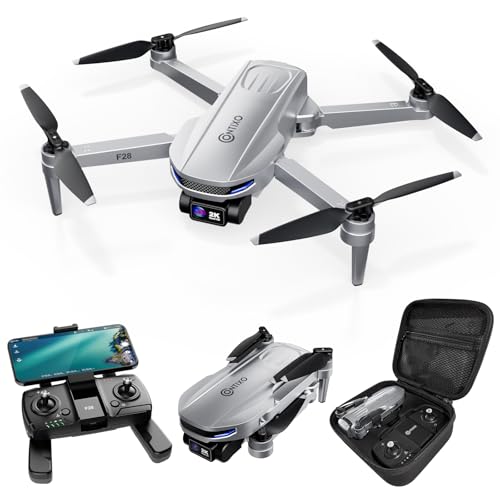
Exceptional HD Camera & FPV Drone - The F28 camera drone is equipped with a 2K Full HD Camera, offering a FOV of 85° and adjustable angles ranging from 0° to 90°, ensuring that your video drones capture better aerial photos and videos from a bird-eye perspective.
The Role of GPS Technology in Drones
Understanding the role of GPS technology in drones helps you understand why GPS models feel more stable. GPS uses signals from satellites to estimate the drone’s location, which supports positioning, navigation, and automated flight features.
The GPS module acts as a receiver. It reads signals from multiple satellites, then uses that data to calculate location. In many consumer drones, GPS helps with hovering, route planning, return-to-home, and flight logs.
GPS does not fly the drone for you, but it gives the aircraft a stronger sense of position, which makes stable flight and automated features easier.
Many GPS-equipped drones include autonomous flight capabilities, return-to-home functionality, and geofencing. These features can improve safety and efficiency when used correctly.
For higher precision, some professional drones use Real-Time Kinematic (RTK) GPS. RTK uses correction data to improve positioning accuracy, which can support surveying, mapping, and industrial inspections.
GPS also supports features such as “Follow Me,” waypoint missions, and automated orbit shots. These modes help the drone navigate more predictably while capturing usable footage.
Note: GPS features are helpful, but they do not replace safe piloting. Bad weather, weak satellite reception, magnetic interference, and poor launch locations can still cause problems.
Future Trends in Drone Technology
As drone technology evolves, artificial intelligence, better sensors, improved batteries, and smarter flight software are changing how drones work. These upgrades affect both GPS and FPV drones.
For GPS drones, the biggest trend is smarter automation. Newer models continue to improve subject tracking, obstacle detection, route planning, and camera features. These improvements make complex shots easier for casual pilots.
For FPV drones, the biggest improvements focus on video quality, low-latency transmission, digital goggles, lighter parts, and better flight-controller tuning. These upgrades make FPV footage cleaner while keeping the fast, immersive feel pilots love.
Here are some trends shaping the future of drone technology:
- Improved Camera Technology: Advances in FPV and GPS drone cameras are improving resolution, dynamic range, stabilization, and low-light performance.
- Hybrid Drones: Some drones combine FPV-style views with GPS-assisted safety features, giving pilots more flexibility.
- Battery Innovations: Better batteries can support longer flights, faster charging, and more reliable missions.
- Enhanced Safety Features: Manufacturers continue to improve obstacle sensing, geofencing, return-to-home, and remote identification support.
- Smarter Software: AI-assisted tracking and automated flight planning can reduce pilot workload.
These trends will continue to blur the line between GPS and FPV drones. Still, the core choice remains the same: choose GPS for stability and automation, or choose FPV for immersion and control.
Which Drone Is Better for Beginners?
For most beginners, a GPS drone is the better first choice. It usually feels calmer, easier to control, and more forgiving during early flights.
GPS drones can hover in place when you release the sticks. They may also include return-to-home, low-battery warnings, beginner modes, and obstacle sensing. Those features help you learn without feeling rushed.
FPV can still be a good first drone if your goal is racing, freestyle, or hands-on flying. However, you should expect a steeper learning curve. Start with a small, durable drone and practice in a simulator before flying near obstacles.
If your main goal is photography, travel videos, family footage, or easy outdoor flying, start with GPS. If your main goal is racing, flips, freestyle lines, and immersive movement, start with FPV.
[Amazon Products Picked for You]


5G FPV Video Transmission & 360° Laser Obstacle Avoidance: Equipped with 5G high-speed image transmission and 360° lidar obstacle avoidance, providing stable real-time footage and all-around flight protection

[Capture Every Detail in 13MP Stunning Resolution] Ameta S20 Pro drone features a 𝗦𝗼𝗻𝘆 𝗜𝗠𝗫𝟮𝟱𝟴 sensor and a 90° adjustable lens, delivering crystal-clear 4K photos and videos—perfect for landscapes, family moments, and creative projects. With 5G WiFi transmission, you’ll enjoy smooth, real-time FPV (first-person view) at distances of up to 300m, seeing every moment as it happens
Costs and Hidden Expenses
The drone itself is only part of the cost. Accessories, repairs, batteries, chargers, storage, software, and registration requirements can change your total budget.
FPV drones often need goggles, a controller, batteries, a charger, spare propellers, antennas, tools, and replacement parts. Crashes are also common while learning, so repair costs matter.
GPS drones may cost more upfront, especially if they include a strong camera, multi-direction obstacle sensing, or advanced tracking. However, many GPS drones come as ready-to-fly kits, so you may need fewer extra parts at the beginning.
Before you buy, compare the full setup cost, not only the drone price. This gives you a more realistic idea of what ownership will cost over time.
Related Guides
Frequently Asked Questions
What is the difference between GPS and FPV drones?
GPS drones use satellite positioning to support stable hovering, automated flight, return-to-home, and smoother camera work. FPV drones use a real-time camera feed to give you an immersive pilot’s-eye view and more direct manual control. GPS is easier for beginners; FPV is better for speed, racing, and dynamic flying.
What are the disadvantages of FPV drones?
FPV drones can be harder to learn, less forgiving, and more crash-prone. Many FPV setups have fewer automated safety features than GPS drones. You may also need extra gear, including goggles, batteries, chargers, spare propellers, and repair tools.
What is the difference between a GPS drone and a normal drone?
A GPS drone uses satellite navigation to help with position hold, return-to-home, route planning, and stable flight. A normal drone may not include GPS and may rely more on manual control or basic stabilization. GPS drones are usually better for photography, mapping, and beginner-friendly flying.
What is the difference between FPV drones and normal drones?
FPV drones give you a live camera view from the drone, often through goggles. This creates a more immersive and manual flying experience. Normal camera drones usually focus more on stability, automated modes, and easy aerial photography.
Are GPS drones safer than FPV drones?
GPS drones are often easier to fly safely because they may include position hold, return-to-home, geofencing, and obstacle sensing. However, no drone is automatically safe. Weather, pilot error, low battery, interference, and poor location choices can still cause accidents.
Can an FPV drone have GPS?
Yes. Some FPV drones include GPS modules for features such as rescue mode, location tracking, speed data, or return assistance. However, an FPV drone with GPS still feels different from a typical GPS camera drone because FPV flying usually focuses on manual control and immersion.
Should I buy an FPV drone or a GPS drone first?
Buy a GPS drone first if you want simple flying, stable photos, smooth video, and automated safety features. Buy an FPV drone first if your main goal is racing, freestyle, or immersive manual flight. For most new pilots, GPS is easier. For hobbyists who enjoy practice and repairs, FPV can be more rewarding.
Conclusion
In the world of drones, choosing between GPS and FPV options comes down to the kind of flying you want. If you want a smooth, guided experience with stable footage and beginner-friendly features, GPS drones are the better match. They work well for travel videos, aerial photography, inspections, mapping, and relaxed outdoor flying.
If you want speed, immersion, and the thrill of manual control, FPV drones offer a more exciting path. They take more practice, but they reward you with creative freedom, fast reactions, and a flight experience that feels far more connected.
For most beginners, start with GPS if your goal is easy camera flying. Start with FPV if your goal is racing, freestyle, or cinematic movement through tight spaces. Either way, learn the rules, practice in safe areas, and choose the drone that fits your real flying goals.
Sources
- Federal Aviation Administration UAS — general drone safety, airspace, and operating guidance.
- FAA Recreational Flyers — recreational drone rules, visual line-of-sight guidance, and safe flying basics.
- FAA Drone Registration — drone registration requirements and basic ownership guidance.
- FAA Remote ID — Remote ID requirements and compliance information.
