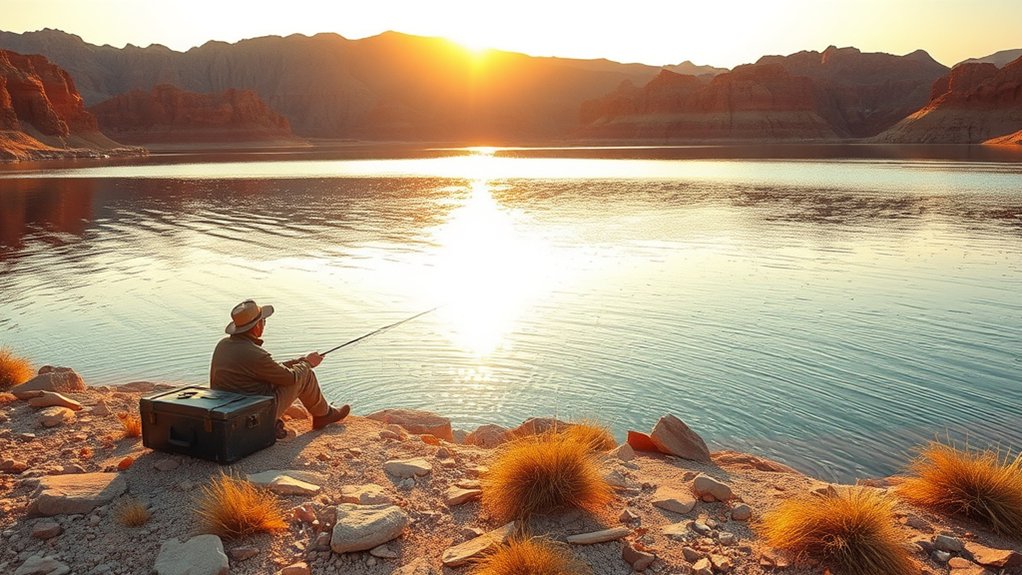
Desert lakes can fish very differently from natural, temperate lakes. At places like Lake Mead, low water, clear visibility, rocky structure, sudden wind, and seasonal fish movement all shape your results. If you understand those conditions before you launch, you can choose safer routes, better locations, and more effective baits for bass, stripers, catfish, panfish, and other desert-lake species.
Quick Answer
To fish desert lakes successfully, match your strategy to water level, clarity, season, wind, and structure. Start around points, coves, ledges, drop-offs, submerged cover, and current-influenced areas. Use stealth in clear water, fish deeper during heat, and always check current lake conditions and fishing rules before you go.
Key Takeaways
- Desert lakes change fast, so check water levels, wind, access, and local rules before each trip.
- Bass often use coves and shallow cover in spring, then ledges, drop-offs, and deeper structure in summer.
- Clear water calls for stealth, lighter line, natural colors, and longer casts.
- Wind can improve fishing by breaking up the surface and pushing bait toward points and banks.
- Electronics, maps, local shops, and fishing reports can help you find productive structure faster.
At a Glance
| Best Time to Fish | Early morning, late evening, stable weather windows, and windy banks when bait is pushed shallow |
| Difficulty | Moderate because water level, wind, clarity, and fish depth can change quickly |
| Tools Needed | Fishing license, lake map, fish finder or depth app, thermometer, sun protection, drinking water, and species-appropriate tackle |
| Common Targets | Largemouth bass, smallmouth bass, striped bass, catfish, panfish, and other species allowed by local regulations |
Understanding Lake Conditions
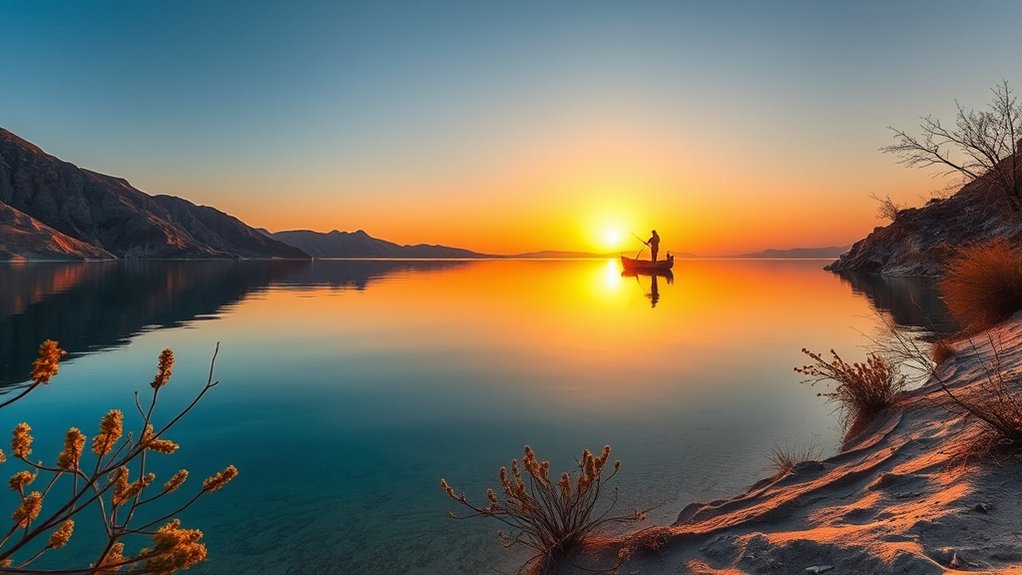
When you’re fishing at a desert lake like Lake Mead, understanding the lake conditions is essential for a successful and safe outing. Water levels can sit far below historic high-water marks, so you need to navigate carefully near shallow flats, reefs, exposed points, old roadbeds, and newly visible hazards.
Familiarize yourself with distinct sections of the lake, such as Boulder Basin and Virgin Basin. Wind, water color, boat traffic, and fish behavior can vary from one basin to another. A calm morning in one area can turn into rough, unsafe water in another, especially on large desert reservoirs.
Knowing the lake’s composition and contour helps you pinpoint productive fishing spots. Bass often use rocky points, shelves, ledges, brush, flooded cover, and shade lines. During post-spawn periods, many fish slide away from shallow spawning areas and hold near the first deeper break.
Keep in mind that seasonal changes also affect fishing techniques. During clear water conditions, often linked to filtration from quagga mussels, fish can spook more easily. Make longer casts, reduce deck noise, use natural colors, and keep your shadow off the water when fishing shallow areas.
Warning: Desert lakes can expose new hazards as water drops. Check current ramp conditions, watch for shallow rock, wear a life jacket, and avoid running unfamiliar water at speed.
Seasonal Fishing Strategies
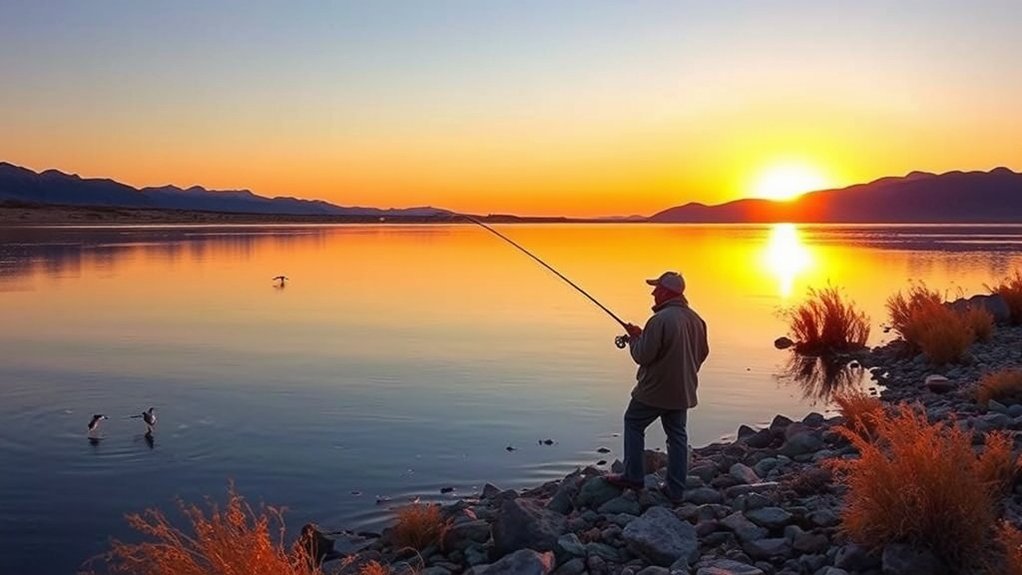
As the seasons change, so should your fishing strategies. Desert lakes can swing from cool mornings to extreme afternoon heat, and those shifts affect where fish hold and how aggressively they feed.
In spring, look for cove patterns and use swimbaits, jerkbaits, soft plastics, and shallow crankbaits to target fish moving toward spawning areas. When summer arrives, shift toward deeper waters and try drop shots, jigs, spoons, deep crankbaits, and slow presentations around ledges and submerged structure.
Spring Cove Patterns
Spring brings a strong opportunity for bass fishing, especially in coves where fish often move shallow to feed and spawn. To maximize your success, focus on cove patterns and use swimbaits or jerkbaits to mimic baitfish movement. Monitor water temperature and weather because warmer days and stable conditions can boost bass activity.
| Cove Characteristics | Best Lures | Ideal Conditions |
|---|---|---|
| Shallow areas | Swimbaits | Overcast, warm weather |
| Structure (rocks/logs) | Jerkbaits | Early morning/evening |
| Wind-protected spots | Crankbaits | Stable water temperatures |
Explore several coves instead of staying in one spot too long. One cove may hold warmer water, baitfish, shade, or clearer spawning pockets, while the next may be too cold, muddy, or exposed to heavy boat traffic.
Summer Depth Techniques
During the summer months, bass often retreat to deeper waters ranging from 15 to 30 feet or more, depending on oxygen, forage, light penetration, and water temperature. Adjusting your fishing strategies becomes essential once shallow fish stop feeding consistently.
To increase your chances of success, use drop shot rigs, jigs, deeper crankbaits, spoons, and soft-plastic worms. These tools can reach bass in cooler depths and stay in the strike zone longer. Focus on ledges, drop-offs, submerged humps, outside grass edges, and rocky transitions where bass can ambush prey.
Keep an eye on water temperatures. When surface temperatures rise sharply, bass may become less active in shallow water. Slow down your presentation, target shaded banks, and fish early morning or late evening when cooler temperatures encourage bass to move up and feed.
Fall and Winter Adjustments
Fall can produce excellent action when baitfish move into coves, creek arms, and wind-blown banks. Search with topwater lures, spinnerbaits, crankbaits, and small swimbaits until you find active fish. If bass chase shad or other forage near the surface, keep moving and cover water quickly.
Winter usually calls for a slower approach. Fish often hold near steep banks, deep rock, marina edges, and vertical structure. Use jigs, blade baits, drop shots, spoons, or small soft plastics. Let the bait stay near the bottom longer, and avoid moving it too fast when the water is cold.
Effective Techniques for Musky Fishing
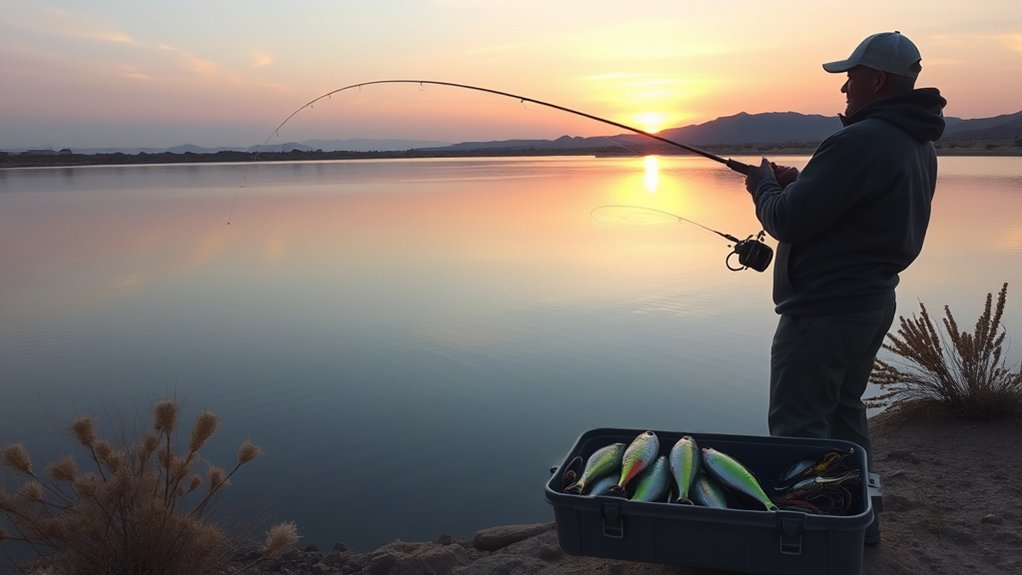
When you head out for musky fishing, using effective techniques can improve your chances of landing this elusive predator. First, confirm that muskies are present in the lake you plan to fish. Many desert lakes, including Lake Mead, are better known for bass, striped bass, catfish, and panfish rather than musky populations.
If you are fishing a desert-region reservoir or nearby lake that does hold muskies, select large, flashy lures such as bucktails, jerkbaits, glide baits, and large swimbaits. Low-light conditions, overcast skies, and windy periods can help because muskies often feed more confidently when light penetration drops.
Retrieve your lure slowly and steadily, then add pauses, turns, and direction changes to mimic injured prey. Many musky strikes happen close to the boat, so finish each cast with a figure-eight or wide sweep before lifting the lure from the water.
Use electronics to identify underwater structures, such as weed beds, rocky outcroppings, drop-offs, and points where muskies can ambush food. Stealth is essential. Approach your fishing spots quietly and avoid casting shadows across shallow water.
Finally, always check local regulations for musky size limits, possession limits, seasonal closures, and gear rules. Muskies grow slowly and often depend on careful catch-and-release practices, so use proper handling tools, support the fish horizontally, and release it quickly when required or preferred.
Note: Match your target species to the actual fishery. A Lake Mead plan should focus more on bass, striped bass, catfish, and panfish unless a local agency confirms musky opportunities in that specific water.
Weather Impact on Fishing Success
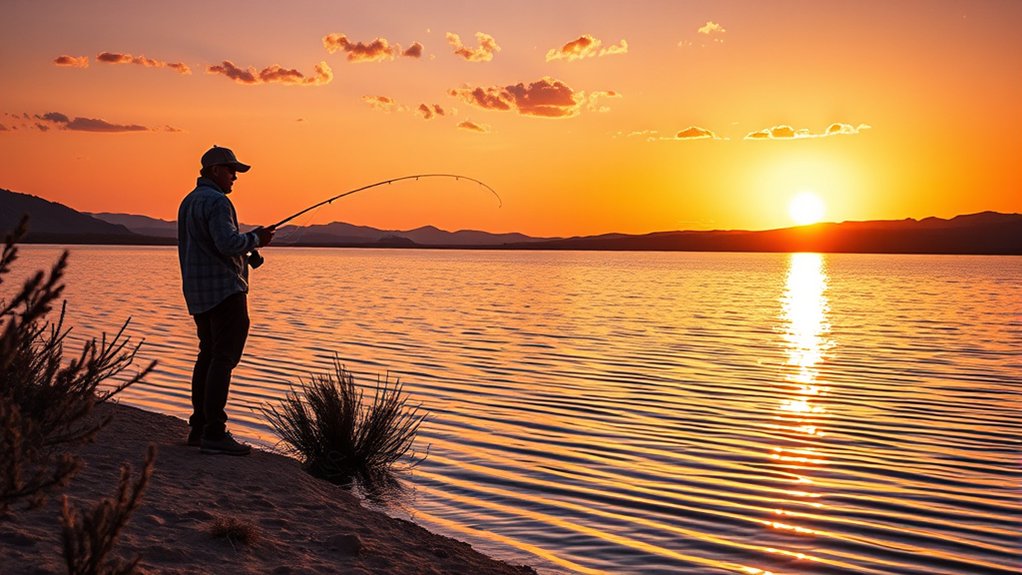
Weather plays a vital role in your fishing success, especially in desert lakes. Temperature, wind, light, barometric pressure, and storm movement can all change how fish position and feed.
Changes in temperature can influence fish activity, pushing them to be more or less aggressive depending on the conditions. Wind can also create current, stir plankton, push baitfish toward banks, and trigger feeding activity. Adjust your tactics and target areas where wind is moving water, but never ignore safety.
Temperature Influence on Activity
Understanding how temperature influences fish activity is essential for successful fishing in desert lakes. Water temperature affects fish metabolism, with warmer conditions generally increasing feeding activity during spring and early summer.
In places like Lake Mead, daily temperature fluctuations can alter fish behavior. Early mornings and late evenings often produce better shallow action because light levels are lower and surface water can feel more comfortable for feeding fish.
As temperatures rise, fish often retreat to deeper, cooler waters. Adjust your tactics during the hottest parts of the day by fishing deeper structure, shaded cliffs, marina shade, and areas with baitfish. Also watch for cold fronts or sudden temperature drops because they can slow the bite.
Focus on stable weather patterns when fish are more likely to feed consistently. Using a thermometer to monitor water temperature can help you understand bass behavior and choose the right depth, lure speed, and location.
Wind Effects on Behavior
Although many anglers overlook wind conditions, they can greatly impact fish behavior, especially in desert lakes like Lake Mead. Wind can make bass more active because choppy water reduces visibility and helps fish feel safer in shallow zones.
On windy days, focus on coves with long points, rocky banks, and shorelines where wind pushes bait. The direction and strength of the wind can also change water temperature and clarity, influencing where bass and baitfish gather.
Strong winds create surface disturbance that may make fish bolder. Walking baits, spinnerbaits, crankbaits, jerkbaits, and swimbaits can work well when the surface has ripple or chop. However, large desert reservoirs can become dangerous quickly, so choose protected water when wind builds.
Light, Cloud Cover, and Storms
Bright sun often pushes fish tighter to shade, rock, docks, deeper breaks, or submerged cover. In clear desert water, direct sunlight can make shallow fish cautious, so long casts and natural presentations matter.
Cloud cover can extend the morning bite and make moving baits more effective. Before or after weather changes, fish may feed aggressively for short windows. Avoid fishing during lightning, flash-flood threats, or dangerous wind events.
Recommended Lures and Baits
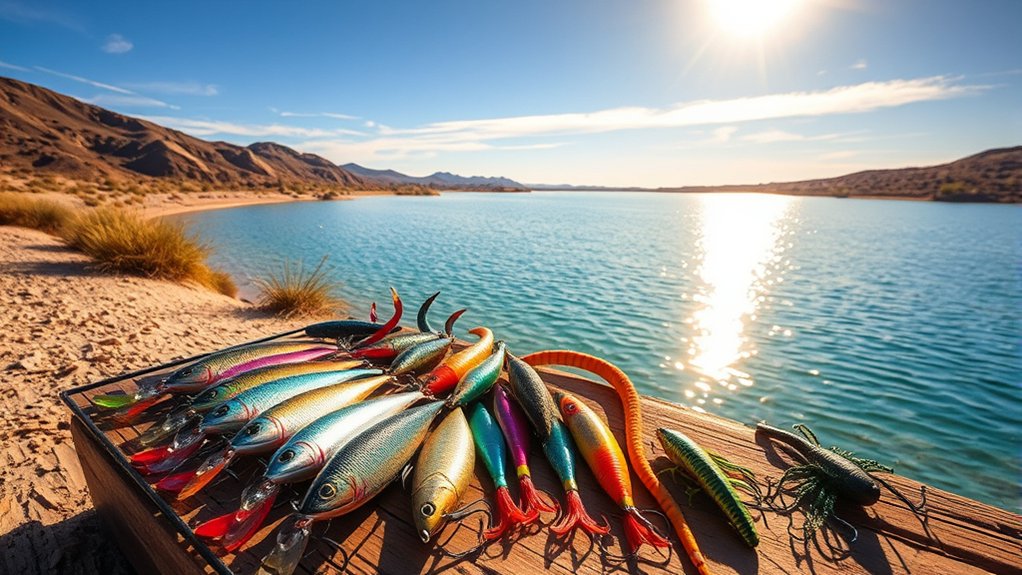
When you’re out fishing in desert lakes, choosing the right lures and baits can greatly impact your success. For bass, try Texas rigged lizards, tubes, worms, craw-style plastics, and creature baits in brown, green pumpkin, dark purple, watermelon, and shad-style colors.
If you’re targeting post-spawn fish, football jigs weighing around 1/2 ounce in brown, purple, green pumpkin, white, or shad colors can work well around rock, ledges, and points. For finesse fishing, the drop shot rig with a shad-shaped worm in natural shad, morning dawn, or watermelon red flake is a strong option in clear water.
During warmer months, use walking baits, poppers, hard jerkbaits, flukes, and small swimbaits for active fish near the surface. Spinnerbaits and chatter-style baits can complement your jigs and drop shot rigs when wind, stain, or low light gives fish more confidence.
For striped bass, watch for bird activity, surface boils, and bait schools. Spoons, topwater plugs, swimbaits, cut bait, and live bait where legal can all produce. For catfish, use cut bait, prepared bait, nightcrawlers, or other legal natural baits near deeper channels, flats, and nighttime feeding areas.
Keep in mind the presence of quagga mussels in some desert reservoirs. Use high abrasion resistant lines near rock, shells, and structure, and inspect your line often. Light tackle can help in clear water, but increase line strength when fishing heavy cover, zebra or quagga mussel beds, or deep rocky structure.
Pro Tip: In clear desert water, start with natural baitfish or craw colors. Switch to brighter or darker colors only when wind, shade, mud lines, or low light reduce visibility.
Best Places to Target on Desert Lakes
Desert lakes often have steep banks, flooded canyons, rocky points, submerged shelves, and long tapering flats. Instead of casting randomly, look for places where depth, cover, shade, and bait come together.
- Rocky points: Fish often use points as travel routes between shallow and deep water.
- Ledges and drop-offs: These areas hold bass during post-spawn, summer, and winter patterns.
- Cove mouths: Cove entrances can gather baitfish and create ambush points for predators.
- Wind-blown banks: Wind can push forage toward shore and trigger feeding.
- Marina shade: Shade, docks, and floating structure can attract bait and game fish.
- Submerged brush or timber: Any cover in a desert reservoir can concentrate fish.
- Channel swings: Steeper banks near old creek or river channels can hold fish year-round.
Use a map or electronics to find these features before you start casting. Once you catch one fish, slow down and work the area carefully because desert-lake fish often group around the best structure.
Local Regulations and Conservation
Before you head out with your favorite lures and baits, familiarize yourself with the local regulations and conservation efforts for the desert lake you plan to fish. Each state and waterbody can have different rules, including fishing license requirements, legal methods, species limits, and seasonal restrictions.
Be aware of size and bag limits for species such as bass, striped bass, trout, catfish, and musky where present. These rules help support sustainable fishing and protect fish populations from overharvest.
Seasonal restrictions may also apply in some waters to protect spawning fish or sensitive areas. Always check the current regulation booklet or official agency page before you fish because rules can change from year to year.
Conservation also includes preventing the spread of invasive species. Clean, drain, and dry your boat, kayak, trailer, livewell, and gear after each trip. Quagga mussels and other invasive organisms can move between waters on wet equipment.
To stay updated, use community resources such as local guides, marina staff, bait shops, and official agency updates. They can provide essential information on ramp access, fish activity, water levels, closures, and ongoing conservation initiatives.
Safety Tips for Desert Lake Fishing
Fishing a desert lake can be rewarding, but the environment can be harsh. Heat, sun exposure, wind, sudden storms, and long distances between services can create serious risks if you arrive unprepared.
- Carry more water than you think you need. Desert heat can dehydrate you quickly, especially from a boat or exposed bank.
- Use sun protection. Wear a hat, sunglasses, sunscreen, and lightweight long sleeves.
- Check wind forecasts. Large reservoirs can develop rough water faster than smaller lakes.
- Tell someone your plan. Share your launch point, fishing area, and expected return time.
- Bring navigation tools. GPS, lake maps, and backup battery power help if visibility drops or you lose cell service.
- Wear a life jacket. This matters even more when fishing alone, at night, or in windy conditions.
Also check ramp status before towing a boat to the lake. Low water can close or limit access at some ramps, and some areas may require longer walks, four-wheel-drive access, or alternate launch plans.
Utilizing Electronics for Fish Location
Using the right electronics can greatly enhance your fishing experience in desert lakes. Fish finders equipped with sonar and GPS capabilities are useful for identifying underwater structures, depth changes, bait schools, and fish-holding zones.
Familiarize yourself with different sonar types, including traditional 2D sonar, down imaging, and side imaging. Each view helps you understand fish behavior in a different way. Traditional sonar shows what is under the boat, while side imaging helps scan points, flats, brush, rock piles, and ledges more efficiently.
| Feature | Benefit |
|---|---|
| Sonar Technology | Identifies fish and structures |
| GPS Mapping | Marks productive fishing spots |
| Sensitivity Settings | Detects subtle environmental changes |
Regularly check current water levels and conditions through official lake or water-management resources before planning your strategy. Changing water levels can expose hazards, shift fish positions, and alter boat access.
Use GPS mapping to mark productive fishing spots, but do not rely on old waypoints without checking current depth. A brush pile, ledge, or shoreline point that held fish last season may sit much shallower or deeper after water levels change.
Bank Fishing vs. Boat Fishing
You can catch fish from both the bank and a boat on desert lakes, but each approach requires different planning. Bank anglers should focus on accessible points, riprap, marina areas where fishing is allowed, coves, and deeper water within casting distance.
Boat anglers can cover more water and reach offshore structure, but they also face greater safety responsibilities. Watch water depth, avoid shallow hazards, and pay attention to wind direction throughout the day.
Kayak anglers should be extra cautious. Desert reservoirs can have long open-water stretches, strong afternoon winds, and limited shade. Stay close to protected areas when conditions look unstable.
Community Resources and Support
Finding success in desert lake fishing often goes beyond just using electronics. Tapping into community resources can greatly improve your experience and help you avoid wasted time.
Local Bass Pro Shops, independent tackle stores, marina shops, and bait shops can be helpful sources for current conditions and strategies specific to desert lakes like Lake Mead. Ask about water clarity, active depths, productive baits, and recent safety concerns.
Don’t hesitate to learn from experienced anglers, guides, tournament reports, and local clubs. Their advice can help you understand seasonal patterns, productive structure, and bait selection faster than trial and error alone.
Engaging in online forums and community groups can help you share experiences, tips, and best practices. Use these discussions carefully, though. Reports can become outdated quickly, and some details may be exaggerated. Always compare community advice with current conditions and official rules.
By connecting with local fishing communities, you’ll discover new spots, effective bait recommendations, and insights into seasonal patterns affecting fish behavior. Community knowledge works best when you combine it with maps, electronics, observation, and safe judgment on the water.
Related Guides
Frequently Asked Questions
What is the 80/20 rule in fishing?
The 80/20 rule in fishing means a large share of your catches often comes from a small share of the water. Instead of casting everywhere, focus on high-percentage areas such as points, ledges, drop-offs, shade, cover, bait schools, and wind-blown banks.
What is the 90/10 rule in fishing?
The 90/10 rule says most fish may use a small percentage of the available water at any given time. On desert lakes, that small percentage often includes structure, bait, shade, current, depth changes, and comfortable water temperature.
What is the best bait for lake fishing?
The best bait depends on your target species, season, and water clarity. For bass, try Texas rigged lizards, tubes, worms, creature baits, jigs, drop shots, swimbaits, jerkbaits, and crankbaits. For catfish, use legal natural or prepared baits near deeper flats and channels.
What is the best time of day to fish in a lake?
The best times to fish in a lake are often early morning and late afternoon because light levels are lower and temperatures are more comfortable. In summer, night fishing can also work well for catfish, striped bass, and bass where local rules allow it.
How do you fish clear desert lake water?
Use longer casts, lighter line when conditions allow, natural colors, quiet boat control, and slower presentations. Clear water lets fish see both your lure and your mistakes, so reduce noise, avoid sudden shadows, and target shade, depth changes, and wind ripple.
Conclusion
In desert lake fishing, you’re like a skilled chef, mixing the right ingredients for a better result. Just as a chef adapts a recipe with seasonal produce, you should adjust your techniques and lures based on water level, season, wind, clarity, and target species.
Start with safe planning, then build your pattern around structure, bait, depth, and weather. Check current rules, protect the fishery, and stay flexible when conditions change. With the right preparation and smart adjustments, you can turn a tough desert lake into a productive and memorable fishing trip.
Sources
- National Park Service: Lake Mead Fishing — supports Lake Mead fishing access, general fishing guidance, and regulation awareness.
- National Park Service: Quagga Mussels — supports invasive mussel awareness and clean, drain, dry practices.
- U.S. Bureau of Reclamation: Lake Mead Elevation — supports checking current water levels before fishing or boating.
- Nevada Department of Wildlife: Fishing — supports license, regulation, and fishery guidance for Nevada waters.
- Arizona Game & Fish Department: Fishing — supports license, regulation, and fishing information for Arizona waters.