Have you ever wondered why dusk fishing can feel so rewarding? As the sun drops, many fish move into shallower water, feed with more confidence, and use the fading light to ambush bait. To make the most of this short window, arrive early, organize your gear, choose low-light lures, and plan your safety before darkness settles in. With the right setup and a calm approach, those twilight hours can become one of the most productive parts of your fishing trip.
Quick Answer
Dusk fishing works best when you arrive before sunset, scout the area in daylight, use darker lures with vibration or surface action, and fish near structure, weeds, docks, or baitfish. Keep lighting low, wear a life jacket around deep or moving water, and stay patient as fish activity changes with fading light.
Key Takeaways
- Arrive at least an hour before sunset so you can rig rods, check hazards, and mark productive spots while you can still see clearly.
- Use dark, noisy, vibrating, or topwater lures when light fades because fish often rely more on contrast, sound, and movement.
- Focus on shallow cover, docks, weed edges, rocky banks, drop-offs, and areas where baitfish gather near dusk.
- Carry more than one light source, keep your tackle organized, and avoid shining bright lights across the water.
- Check local rules, wear a life jacket when conditions call for it, and tell someone where you plan to fish before dark.
At a Glance
| Time Required | Arrive 60–90 minutes before sunset and fish through the first part of darkness if local rules allow. |
| Difficulty | Beginner to moderate. The fishing is simple, but low light requires better organization and safety planning. |
| Tools Needed | Rod and reel, dark lures, spare line or leader, pliers, line cutters, headlamp, backup flashlight, landing net, and a life jacket where needed. |
| Cost | Low if you already fish. Most anglers only need extra lighting, a few low-light lures, and safety gear. |
Arrival Timing and Preparation
When you arrive at your fishing spot, aim to get there at least an hour before sunset. That gives you time to learn the area, set up your rods, and make decisions while you still have daylight. This arrival timing matters because small tasks become slower and less safe once the light fades.
Use this preparation time to organize your tackle. Put pliers, line cutters, spare hooks, leaders, and your most likely lures where you can reach them without digging through your bag. A neat setup prevents clutter and helps you stay focused when the bite window opens.
Before you start, prepare your fishing rods and reels, then check for broken tackle, frayed line, dull hooks, loose drag settings, or damaged guides. A quick inspection can prevent lost fish and avoidable frustration during the best part of the evening.
Familiarize yourself with the water’s layout before dark. Look for potential hazards such as slippery rocks, submerged timber, sudden drop-offs, soft mud, boat traffic, and uneven banks. Also note those secret fishy spots, including weed edges, points, current seams, dock lights, rock piles, and shoreline cover that might yield a good catch.
Setting up your gear in a safe and comfortable spot before nightfall ensures you have everything close when fishing gets more active. By investing time in preparation, you increase your chances of a rewarding outing and make the most of those magical dusk hours.
Pro Tip: Tie on your first lure, clip your headlamp to your hat, and open only the tackle trays you expect to use before sunset. Less rummaging means more casts during the prime window.
Choosing the Right Gear
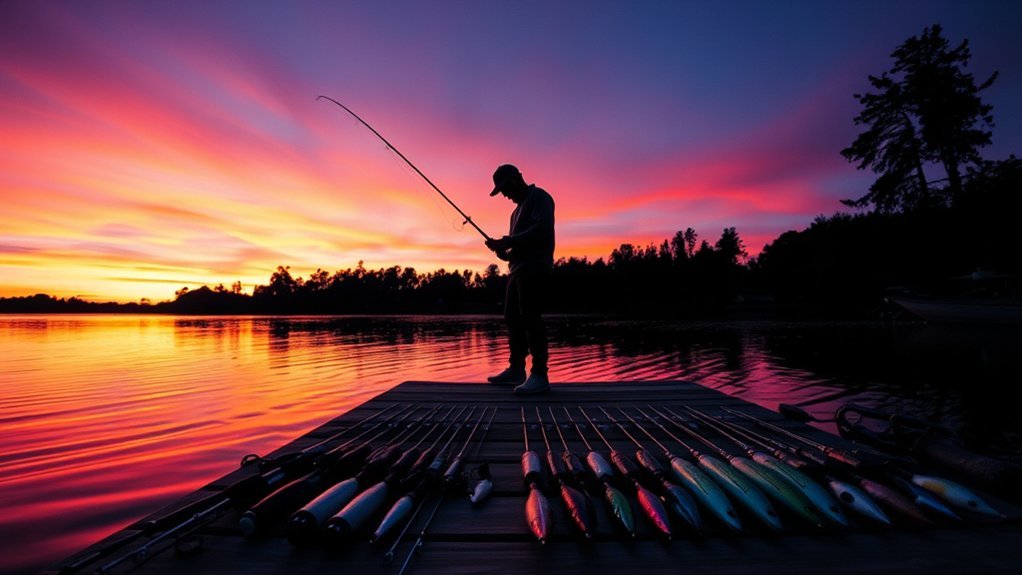
When you’re gearing up for dusk fishing, selecting the right equipment is essential for success. Low light changes how you see, how fish detect prey, and how quickly you can solve small problems. Choose gear that stays simple, visible, and easy to handle after sunset.
Opt for dark-colored lures like black spinnerbaits, black buzzbaits, dark blue worms, and dark jigs. Dark profiles often create stronger contrast against the fading sky or dim surface. Make sure you also have heavier tippets or leaders ready if you expect larger fish, abrasive cover, or toothy species.
Don’t forget to organize your tackle and pack adequate light sources so you can navigate safely without constantly shining bright beams across the water. A headlamp, backup flashlight, and small clip-on light can make hook changes, knot tying, and fish handling much easier.
[Amazon Products Picked for You]

Long Press Function and Motion Sensor: Unlike the old version, LHKNL headlamp has added a long press function. Just hold the key mode button for 3 seconds to turn off from any lighting mode—no need to cycle through all modes. It also added motion sensor mode, you can easily turn the lights ON or OFF by waving your hand, which is more convenient and avoids soiling the headlamp when your hands are dirty
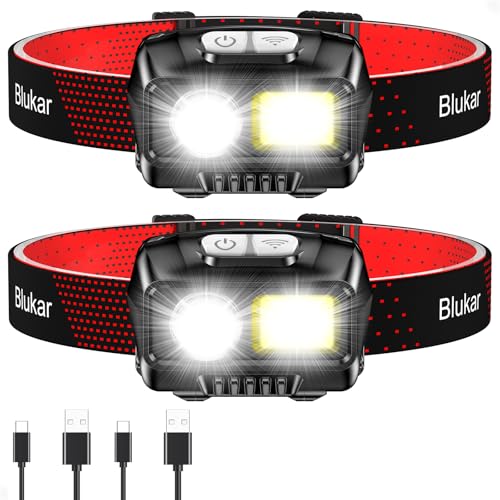
【Super Bright and Stepless Dimming】Adopts first-class LED chips, combined with advanced COB and XPG LED technology, the beam is brighter and more stable, and can easily illuminate everything around you. Long press the button to adjust the brightness from 100% to 30%, which can meet your different lighting needs.

230° Wide Beam & Long-Distance: WopkDupk LED headlamp with COB strip floodlight can provide 230° wide angle lighting, which allows you to light up the viewing area without moving the head. Equipped with super bright LED light on the side, headlamp rechargeable can be used as a spotlight to illuminate a distance of nearly 300 feet.
Essential Night Fishing Equipment
As you prepare for a night fishing adventure, having the right gear is essential for a successful outing. Start by packing at least two personal light sources, such as a headlamp and a flashlight. This gives you backup visibility and allows hands-free operation when you need to tie knots, land fish, unhook a lure, or walk safely.
Organize your tackle and gear before dark to prevent clutter. Keep essential tools, such as pliers, line cutters, a hook remover, and a small first-aid kit, easy to reach. If you wade, add a wading belt, a staff, and footwear with reliable traction. If you fish from a boat or kayak, make sure required lights and safety gear are ready before launch.
Consider using glow-in-the-dark materials for your lures and tackle only when they match the situation. Glow beads, reflective tape, and small lure accents can help in very low light, but they should not replace lure action, vibration, or natural presentation.
Opt for heavier tippets, such as 0x or 1x fluorocarbon for trout in certain night situations, because fish are often less leader shy after dark. For bass, pike, catfish, or saltwater species, match your leader to cover, water clarity, lure weight, and the fish you expect to catch. Finally, memorize your gear layout in your vest or pack so your hands know where to go without a long search.
Lure Selection Strategies
Choosing the right lures is essential for maximizing your success during dusk fishing. As light fades, fish often rely more on sound and vibration, so selecting effective lures at night can make all the difference. Use these strategies as a starting point:
- Opt for darker-colored lures like black, brown, purple, or dark blue for better contrast in low light.
- Use topwater lures like buzz baits, walking baits, poppers, chuggers, or prop baits when fish feed near the surface.
- Incorporate lures that create vibration, such as chatterbaits, spinnerbaits, bladed jigs, or crankbaits, to help fish locate your bait.
- Choose glow-in-the-dark or reflective lure accents when the water is very dark, but avoid overusing bright light in clear, pressured water.
- Adjust your lure size based on baitfish activity. Use larger profiles when predators feed aggressively and smaller profiles when fish seem cautious.
These tips can improve your bass fishing at night, especially around clear water, weed edges, docks, points, and shallow cover. They also apply to many other predatory fish when you match the lure to local forage.
Understanding Fish Behavior at Dusk
As dusk approaches, you’ll notice a shift in fish feeding habits. Many species move into shallower water, along cover, or closer to the surface to hunt. Lower light can make fish feel safer, especially in clear water or heavily pressured areas.
This change in light creates good conditions for predatory fish like bass, pike, walleye, and muskies. These fish often use shadows, weed lines, rocks, docks, and current breaks to ambush their prey. Understanding these behaviors helps you choose the right lures, retrieves, and casting angles during this prime fishing time.
Feeding Habits Shift
When twilight descends, fish often become more active and take advantage of the fading light to forage. As dusk settles, you may notice a shift in feeding habits, especially among species like bass, trout, walleye, panfish, and pike. Keep these key points in mind:
- Fish may move into shallower water, which makes them easier to reach from the bank, boat, kayak, or wading position.
- Surface and near-surface feeding can increase, making topwater lures effective when you see swirls, baitfish, or insect activity.
- Areas with cover, such as submerged vegetation, laydowns, rocks, docks, or bridge pilings, can hold ambush-feeding fish.
- Baitfish activity often rises near shorelines, lights, current seams, and warm pockets, attracting larger predatory fish.
- Changing light levels can trigger short feeding windows, so stay ready and avoid wasting time during sunset.
Predatory Fish Activity
With the increased activity of fish during dusk, understanding the behavior of predatory species becomes essential for successful fishing. As dusk approaches, larger fish like bass and pike may become more aggressive and move into shallower water to hunt.
They capitalize on lower light conditions to ambush smaller baitfish, which are also more active at this time. This natural instinct to forage means you may see more swirls, boils, follows, or sudden strikes near cover.
Focus your efforts near structures like rocks, docks, submerged vegetation, timber, points, and drop-offs where these predators can wait for prey. Pay attention to water temperature and oxygen levels, too. Cooler evening temperatures can make shallow areas more comfortable, while wind or current can help keep oxygen and bait moving.
Light and Shadows
Understanding how light and shadows affect fish behavior at dusk can greatly enhance your fishing success. As the sun sets, fish may move closer to the surface or into feeding lanes, making them easier to target. Here’s what you should keep in mind:
- Fish often feed with more confidence in low light, which can increase your chances of a strike.
- Shadows from structures, docks, overhanging trees, and vegetation create ambush points for predators.
- The fading light can make baitfish easier for predators to trap against banks, weed edges, or the surface.
- Areas with artificial light, like docks, bridges, marinas, or piers, can draw insects and baitfish, which may attract larger fish.
- Rippling water, dimples, splashes, or sudden surface movement can reveal fish activity in shadows.
Using these light and shadow patterns can improve your fishing experience during dusk. Cast beyond the target when possible, then bring the lure through the strike zone without landing directly on top of feeding fish.
Effective Lure Selection
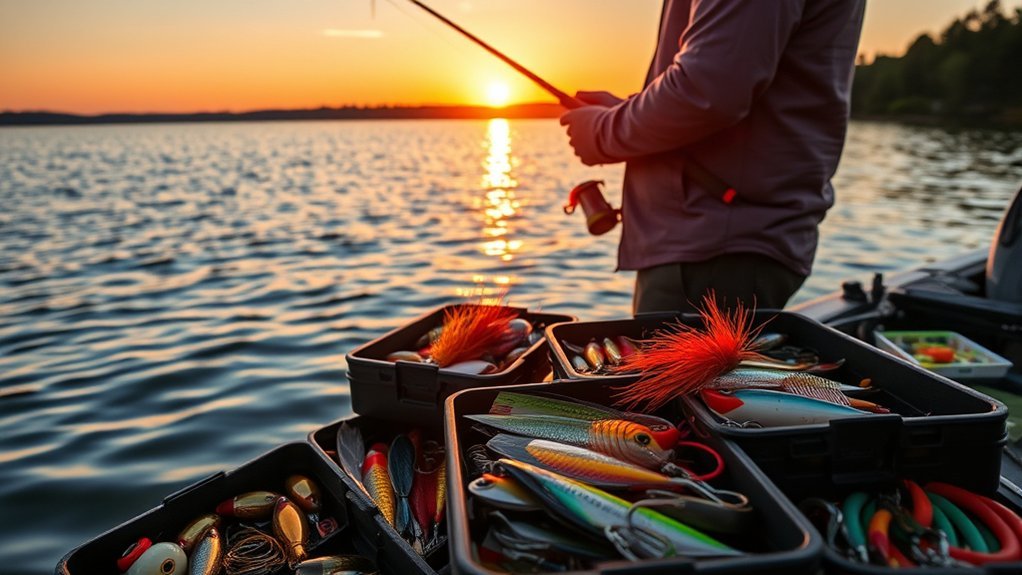
As dusk settles in and visibility drops, selecting the right lures can greatly impact your fishing success. Focus on dark-colored lures like black or dark blue spinnerbaits, jigs, buzzbaits, and plastic worms because they can create a strong silhouette in low-light conditions.
Topwater lures, such as chuggers, walking baits, poppers, and buzz baits, create surface commotion that can attract predatory fish during this active window. They work especially well when you hear baitfish flipping, see surface swirls, or notice fish pushing prey toward shallow edges.
Don’t hesitate to experiment with slower-moving lures like Texas-rigged soft plastics, shaky heads, swim jigs, or football jigs. Their steady presentation gives fish more time to locate and strike as light fades. Slow retrieves also help when fish follow but do not fully commit.
Additionally, consider using lures with added vibration and sound, such as spinnerbaits with Colorado blades, bladed jigs, lipless crankbaits, or rattling crankbaits. These can help fish locate your bait in stained or choppy water.
Finally, adjust the size and color of your lures based on local prey availability. If small shad, minnows, bluegill, crawfish, shrimp, or insects are active, choose patterns and movements that mimic the natural baitfish or forage present in the area.
At dusk, lure contrast, vibration, and placement often matter more than perfect color matching. Put the lure where fish are already hunting.
[Amazon Products Picked for You]

SHARP TREBLE HOOKS: The fishing plugs are equipped with exclusive custom fishing hooks, which featuring excellent puncture ability, strong abrasion resistant, and high corrosion resistance

☆ Bright Colors - Realistic fishing gear, and lifelike swimming movements attract fish, which can be used in both fresh and salt water.

The original Pop-R and America's number 1 topwater popping lure; The standard by which all topwater poppers/chuggers have been judged for more than three decades
Utilizing Light for Success
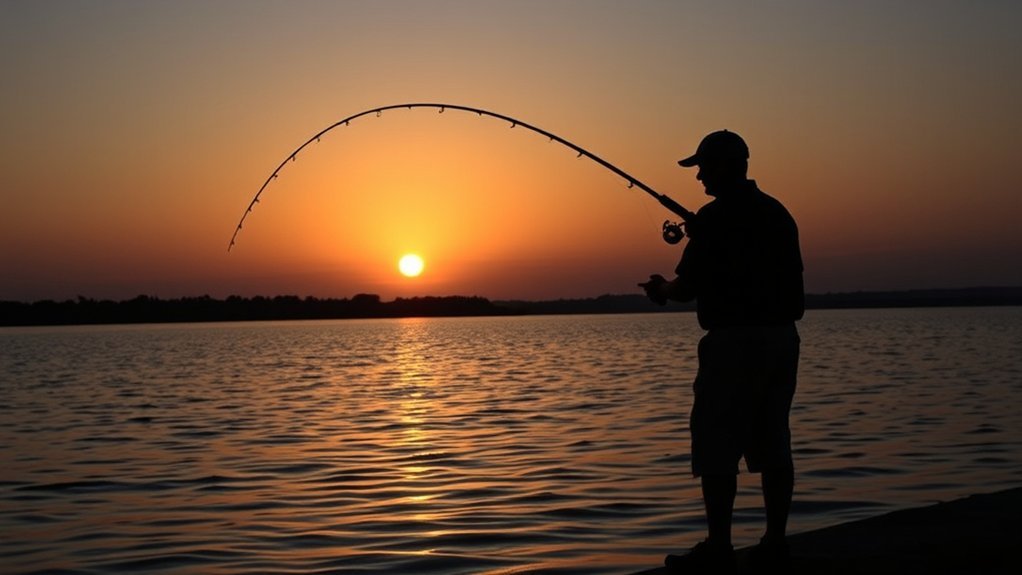
Selecting the right lures is only part of the equation when fishing at dusk. How you manage light can greatly enhance your experience and success. Too much light can hurt your night vision, attract bugs, and disturb shallow fish, while too little light can make basic tasks unsafe.
- Allow your eyes to adjust to darkness for 20–30 minutes before fishing heavily after sunset.
- Use minimal lighting when possible to reduce bug attraction and maintain your night vision.
- Carry a headlamp with an easy switch for hands-free tasks like re-tying, unhooking fish, and checking knots.
- Choose red or green light settings when handling hooks or tackle because they tend to feel less harsh than bright white light.
- Use ambient light sources carefully because dock lights, moonlight, bridge lights, and boat lights can change fish behavior.
If you fish near lighted docks or bridges, cast to the shadow edges rather than only the brightest water. Predators often hold just outside the light line and wait for baitfish to drift or swim past.
Note: Moon phase, cloud cover, water clarity, and fishing pressure can all change how much light helps or hurts. Adjust your brightness and lure choice to the conditions you see.
Safety Precautions for Night Fishing
When fishing at night, prioritizing safety is crucial to guarantee an enjoyable experience. Always wear a life jacket when fishing from a boat, kayak, canoe, steep bank, dock, jetty, or fast-moving water. It can give you critical support if you fall, slip, capsize, or lose your footing.
Before you head out, inform someone about your fishing location and expected return time. Share the general area, parking spot, access point, and who is with you. This helps someone seek assistance if you do not return as planned.
Familiarize yourself with the fishing area during daylight to avoid disorientation and hazards like rocks, holes, submerged obstacles, strong current, sudden drop-offs, or private property boundaries when darkness falls. If you wade, shuffle your feet, test each step, and avoid water that feels too strong or too deep.
Use LED lights to improve visibility, and confirm your navigation lights comply with boating rules if you are on the water after dark. Boats, kayaks, and other vessels may have specific lighting requirements, so check the rules that apply where you fish.
Lastly, maintain an organized fishing area to prevent accidents. Keep essential tools, like pliers and nets, easy to access, so you won’t waste time fumbling around in the dark. By following these precautions, you can focus on enjoying your night fishing adventure while staying safe.
Warning: Do not fish unfamiliar banks, jetties, spillways, fast current, or deep wading areas alone after dark. Low visibility makes slips, boat traffic, and sudden weather changes more dangerous.
[Amazon Products Picked for You]

Crafted with a premium ripstop polyester shell and replaceable EPE foam inside for superior buoyancy. Inside zipper opening for convenient to take out the floating foam to be a super thin and breathable vest.

Crafted with a premium ripstop polyester shell and replaceable EPE foam inside for superior buoyancy. Inside zipper opening for convenient to take out the floating foam to be a super thin and breathable vest.

Crafted with a premium ripstop polyester shell and replaceable EPE foam inside for superior buoyancy. Inside zipper opening for convenient to take out the floating foam to be a super thin and breathable vest. Product with reflective tape, can be quickly identified at night.
Techniques for Different Water Conditions
Understanding the water conditions at dusk can greatly enhance your fishing success. Adapting your techniques to varying water clarity, wind, depth, and cover is essential for attracting fish effectively. Use these strategies to evaluate the water in front of you:
Evaluating water conditions at dusk is key to improving your fishing success and attracting more fish.
- Clear Water: Use slow-moving lures like Texas-rigged dark-colored worms, finesse jigs, or subtle swimbaits along weed edges, points, and depth changes.
- Murky Water: Focus on shallow cover and use black jigs, spinnerbaits, bladed jigs, or rattling crankbaits that create vibration and help fish find the lure.
- Windy Evenings: Opt for black spinnerbaits, vibrating jigs, or lipless crankbaits along rocky banks, windblown points, and current-washed cover to trigger aggressive strikes.
- Calm Nights: Use topwater lures, such as chuggers, walking baits, prop baits, or buzz baits, near lighted docks, weed openings, and quiet shorelines.
- Time of Day: Choose darker versions of daytime lures as light fades because they can offer better contrast in low light.
In moving water, cast slightly upstream or across the current and let your lure move naturally through seams, eddies, and current breaks. In still water, fan-cast around cover and vary your retrieve until fish show you what speed they prefer.
Fishing With a Partner for Enhanced Experience
Fishing with a partner not only makes the experience more enjoyable, but it also opens up shared learning opportunities. You can exchange tips and techniques, which can sharpen your skills and boost your confidence on the water. Plus, having someone by your side enhances safety, allowing you to focus on catching fish while they keep an eye on your surroundings.
A good partner also helps with landing fish, untangling lines, checking hooks, carrying gear, and spotting changes in baitfish activity. At dusk, those extra eyes and hands can make the trip smoother and safer.
Shared Learning Opportunities
As you venture out during dusk, teaming up with a partner can greatly elevate your fishing experience. Fishing with a partner not only fosters shared learning but also enhances your effectiveness as anglers on the water. Here are some benefits of teaming up:
- Quickly discuss strategies and fish behavior
- Share insights on effective bait choices
- Scout potential fishing spots together
- Capture memorable moments with your fishing partner
- Organize tackle and gear for efficiency
- Compare lure colors, retrieve speeds, and depths faster than fishing alone
- Watch for surface activity in different directions as light fades
Enhanced Safety Measures
While dusk brings a unique charm to fishing, it also presents challenges that can be reduced by having a partner along. Fishing with a partner enhances safety by providing quicker assistance during emergencies in low visibility. You can share the excitement of night fishing, making it less intimidating for beginners.
Effective communication helps coordinate casting and avoid tangles. Plus, a partner can manage gear, snap photos, net fish, and keep both of you aware of your surroundings. Together, you can cover more water and observe fish behavior, boosting your chances of success.
| Benefits | Safety Measures | Fishing Techniques |
|---|---|---|
| Quicker assistance | Maintain awareness | Coordinate casting |
| Shared experience | Emergency support | Cover more water |
| Gear management | Communication | Observe fish behavior |
Adapting to Environmental Changes
When dusk settles in, adapting to the changing environment becomes essential for successful fishing. As the light fades, fish become more active in many situations, and you should adjust your tactics accordingly. Here are some tips to enhance your fishing experience at dusk:
- Use darker or more visible lures to match the reduced light levels.
- Monitor water temperatures because cooling water can affect fish metabolism and feeding.
- Vary your retrieval speeds and lure types to entice strikes when predators compete for food.
- Observe baitfish behavior because their movements can hint at where larger predatory fish are lurking.
- Shift to stealthy approaches, focusing on slower presentations and areas with structure or cover for ambush.
- Watch the wind direction because windblown banks often collect plankton, insects, baitfish, and feeding predators.
- Adjust after the first 15–20 minutes if you get no bites. Change depth, retrieve speed, lure profile, or casting angle before leaving a good area.
Weather can also change quickly near sunset. Keep an eye on clouds, lightning, fog, wind shifts, and dropping temperatures. A light jacket, dry bag, and phone protection can keep a small change from ending your trip early.
Patience and Persistence in Night Fishing
Although night fishing can be challenging due to changing catch rates, embracing patience and persistence can lead to rewarding experiences. Focus on enjoying the process rather than only counting fish. Every catch is a victory, no matter the size.
Dusk fishing often rewards anglers who make small adjustments instead of constantly moving. If you know fish are present, try changing your retrieve speed, lure angle, depth, or pause length before abandoning the spot. Sometimes one subtle change turns a quiet evening into a productive one.
Here’s a quick reference table to help you understand the benefits of patience and persistence in night fishing:
| Aspect | Importance | Tips |
|---|---|---|
| Catch Rates | Can rise or fall quickly | Celebrate every catch |
| Fish Size | Larger fish may feed after dark | Stay persistent |
| Observation | Key to adapting techniques | Stay attentive to cues |
| Experience | Builds confidence | Embrace the learning curve |
Frequently Asked Questions
What Is the 80/20 Rule in Fishing?
The 80/20 rule in fishing is an informal way to say that a small share of your effort often creates most of your results. Instead of casting everywhere, focus on high-percentage spots, such as structure, cover, current seams, drop-offs, baitfish, and the best time windows.
Is Dusk a Good Time to Go Fishing?
Yes, dusk can be an excellent time to go fishing. Many fish feed with more confidence as light fades, especially near shallow cover, docks, weed edges, current breaks, and baitfish activity. Conditions still matter, so adjust your lure and location based on water clarity, wind, and local fish behavior.
What Is the 90/10 Rule in Fishing?
The 90/10 rule in fishing is another informal guideline. It means most fish are often found in a small part of the available water. At dusk, focus on the most productive 10% of water, including points, docks, weed lines, rocks, shade edges, current breaks, and areas with visible bait.
Is Fishing Better at Dusk?
Fishing is often better at dusk when fish move shallower, baitfish become active, and low light gives predators an advantage. It is not guaranteed every evening, but dusk gives you a strong chance when you fish near cover, match local forage, and stay quiet.
What Lures Work Best for Dusk Fishing?
Good dusk lures include black spinnerbaits, buzzbaits, poppers, walking baits, bladed jigs, dark soft plastics, jigs, and rattling crankbaits. Choose topwater lures when fish feed near the surface, and use vibrating or slower lures when fish hold deeper or in murky water.
How Early Should You Arrive Before Dusk Fishing?
Arrive at least one hour before sunset. This gives you time to park, scout hazards, rig your rods, organize tackle, watch bait movement, and choose your first casting spots before visibility drops.
Conclusion
As you gear up for dusk fishing, remember that fading light can create one of the most exciting windows of the day. Fish often move shallower, bait becomes easier to spot, and predators use shadows to feed with confidence. Your job is to arrive early, stay organized, choose lures that fish can find, and adjust as the evening changes.
By following these tips, you can maximize your time on the water and improve your chances of reeling in a quality catch. Stay patient, adapt to the conditions, respect local rules, and keep safety at the center of every trip. With the right approach, you’re sure to make lasting memories on your fishing adventures.
Sources
- U.S. Coast Guard Navigation Rules — boating navigation and lighting rules for safe operation after dark.
- U.S. Coast Guard Boating Safety: Life Jackets — life jacket safety guidance for recreational boaters and anglers.
- NOAA Solar Calculator — estimating sunset timing so you can plan arrival and twilight fishing windows.
- U.S. Fish & Wildlife Service: Fishing — general fishing guidance, conservation context, and responsible angling information.