Bridge fishing gives you easy access to deep water, shade, current, and structure without needing a boat. The key is knowing where fish hold, how moving water positions them, and which gear helps you land fish safely from a higher platform. With the right setup, you can turn a simple bridge spot into a productive fishing location.
Quick Answer
For better bridge fishing, target pilings, current seams, shaded water, and bottom rubble. Use live shrimp, cut bait, jigs, or soft plastics based on the species. Bring pliers, a drop net, rope, safe footwear, and enough tackle to fish different depths without overpacking.
Key Takeaways
- Fish often hold near bridge pilings, shade lines, current breaks, and rubble because those areas offer food and cover.
- Live shrimp, cut bait, Carolina rigs, jigheads, and soft plastics all work, but the best choice depends on the fish and current.
- A drop net, rope, pliers, safe footwear, and polarized sunglasses make bridge fishing safer and easier.
- Moving water usually helps, but extreme current can make bait control, anchoring, and boat handling more difficult.
- Season, tide, moon phase, water temperature, and time of day can change where fish feed around a bridge.
At a Glance
| Time Required | 1 to 4 hours for a normal trip, longer if you plan around tides |
| Difficulty | Beginner to intermediate, depending on current, bridge height, and target species |
| Tools Needed | Rod and reel, tackle bag, pliers, bait knife, bucket, rope, drop net, sinkers, hooks, leader, bait, and sunglasses |
| Cost | Low to moderate if you already own basic fishing gear; bait, rigs, and terminal tackle add small trip costs |
Understanding Bridge Structures and Fish Behavior
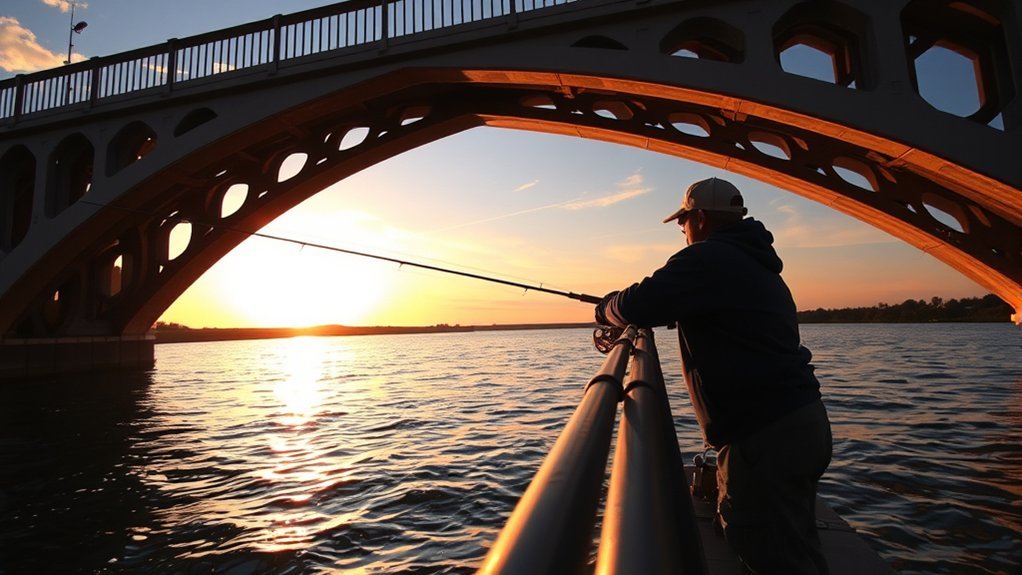
When you fish near bridges, understanding how the structure changes fish behavior can greatly improve your success. Bridge pilings, fenders, rocks, oysters, barnacles, and concrete edges create cover, shade, and feeding lanes. Small baitfish and crustaceans gather around these areas, and larger fish often wait nearby for an easy meal.
Focus your first casts around bridge pilings, stanchions, shaded edges, and current seams. Fish often face into the current, so they can watch food drift toward them. Cast slightly up-current and let your bait or lure move naturally past the structure instead of dropping it straight down every time.
Look for current breaks where fast water meets slower water. These breaks let fish save energy while staying close to moving food. The best spots often sit just behind a piling, along a shadow line, near a depth change, or beside rubble at the base of the bridge.
Additionally, underwater rubble, rocks, old concrete, and shell growth can create strong fish habitat. These areas hold crabs, shrimp, baitfish, and other food. Don’t overlook shaded areas under bridges on sunny days, because fish may slide into cooler, darker water to ambush prey.
Finally, pay attention to tidal flow or current speed. Moderate moving water is often easier to fish than dead slack water or roaring current. Moving water brings food past the structure, but extremely strong flow can make it hard to keep bait in the strike zone. Using live bait can increase your appeal when fish are holding tight to the bridge.
Pro Tip: Make several casts from different angles before moving. A fish may ignore bait dropped straight beside a piling but strike when the same bait drifts naturally along the current seam.
Essential Gear for Successful Bridge Fishing
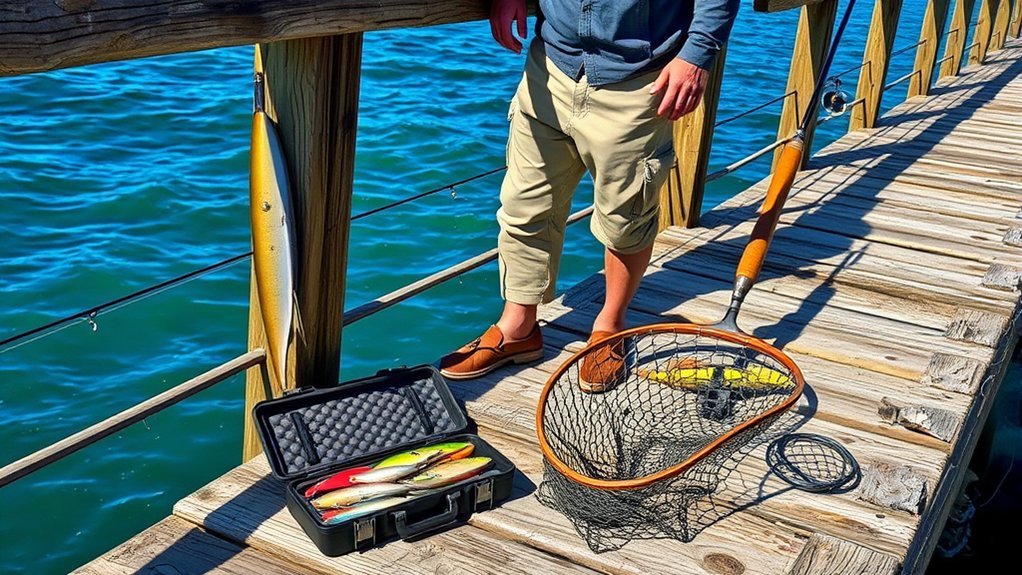
Fishing around bridges can be rewarding, but having the right gear makes a big difference. Start with a sturdy 5-gallon bucket. It can hold gear, carry bait, serve as a seat, and help you keep simple items organized while you fish.
Don’t forget essential tools like needlenose pliers for dehooking fish, a bait knife for cutting bait, and a landing net or drop net for safely lifting larger fish. A bridge can sit several feet above the water, so trying to swing a heavy fish up by the line can break your leader, injure the fish, or create a safety problem.
When it comes to transport, use a shoulder-slung tackle bag for a light setup or a bridge/pier cart for a longer trip. Pack at least 1/2-inch-diameter nylon rope for lowering buckets or nets when needed. Choose rope that is easy to grip when wet, and keep it coiled so it does not create a tripping hazard.
Your main line should match the current, structure, and target species. Many anglers use braid for sensitivity and strength, then add a fluorocarbon leader for abrasion resistance and a less visible presentation. Around rough pilings, oysters, rocks, and concrete, inspect your leader often because small nicks can cost you a good fish.
Dress for the weather and the surface under your feet. Enclosed shoes, lightweight rain jackets, sun protection, and polarized sunglasses all make the trip safer and more comfortable. Polarized glasses also help you see bait movement, shallow structure, and surface activity near the bridge.
Best Spots to Cast From a Bridge
The best bridge fishing spots are usually not random. Start with areas where fish can hide, feed, or rest out of heavy current. Pilings are obvious targets, but you should also fish the edges of shadows, seams where currents meet, eddies behind supports, and the down-current side of the structure.
If the bridge has lights at night, look for baitfish gathering near the light line. Predators often patrol the darker edge just outside the brightest water. Cast beyond the light and retrieve your lure through the edge instead of splashing directly on top of the fish.
During the day, watch for signs of life. Bait flicking on the surface, birds diving, shrimp skipping, or small swirls can show where fish are feeding. Also check the bottom if the water is clear enough. Rocks, shell patches, and depth changes can hold fish even when the visible pilings look quiet.
From a boat, never crowd another angler or anchor where your boat blocks a bridge channel. From the bridge, avoid casting into boat traffic, walkways, and other people’s lines. A good bridge spot still needs safe casting room and clear landing space.
Effective Bait and Rig Techniques
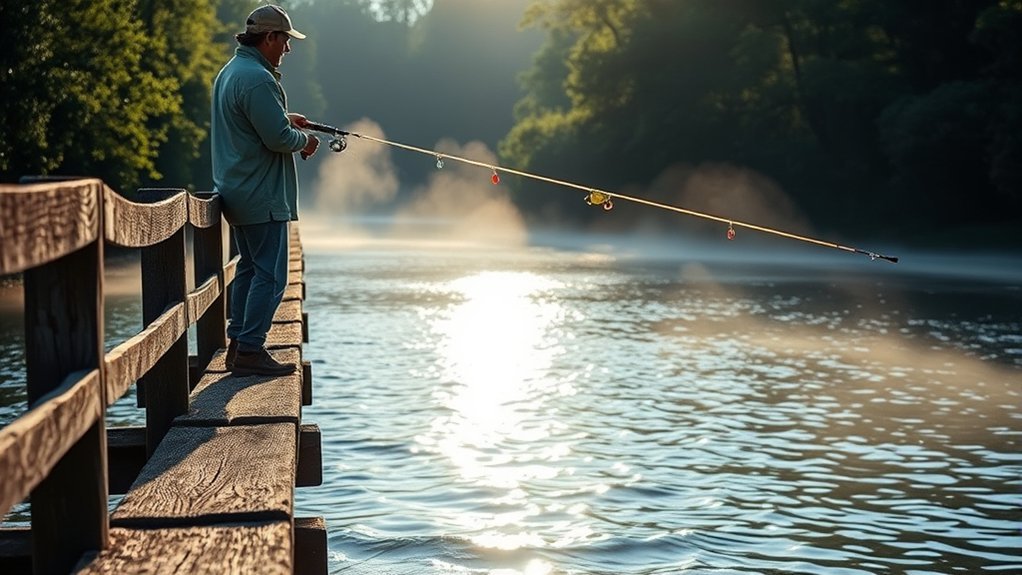
Choosing the right bait and rig matters, but the best setup depends on the fish, current, depth, and bottom type. For redfish and sheepshead, live shrimp is one of the most useful bridge baits. Fresh-dead cut bait like croaker, pinfish, or finger mullet can also work well on the bottom when fish are feeding by scent.
A Carolina rig or sliding sinker rig works well when you need bait to stay near the bottom while still moving naturally. Use enough weight to hold bottom without making the bait look stiff. In light current, a lighter sinker can improve the presentation. In heavy current, you may need more weight, but too much can reduce bites.
A 5/0 circle hook can work well for larger live baits like croakers, while a smaller 1/0 hook is often better for sheepshead and smaller baits. Circle hooks work best when you let the fish load the rod before reeling tight. Avoid a hard hookset with circle hooks, because that can pull the hook away from the fish.
If you’re after redfish, trout, snook, striped bass, or other predators near bridges, consider artificial lures like jigheads with soft-plastic bodies. Cast up-current and let the lure sweep along pilings, shadow lines, and bottom edges. A slow lift-and-drop retrieve often works when fish are near the bottom, while a steady retrieve can work when fish chase bait higher in the water.
Modify your rig for high-speed predators by using spoons, bucktails, swimbaits, or longer leaders when the water is clear. Chum blocks can create a scent trail in tidal water, but use them carefully. Too much chum can feed fish without getting them to bite your hook, and some locations may have local rules about chumming.
Note: Match your bait size to the fish you expect to catch. Small hooks and small bait often help with sheepshead and panfish, while larger live baits can draw bigger predators around pilings and deep channels.
How to Land Fish Safely From a Bridge
Landing a fish from a bridge can be harder than hooking it. If the bridge is high, do not lift a large fish by the rod or line. Instead, use a drop net. Lower the net into the water, guide the fish over it, then lift steadily with the rope.
Keep the fish away from pilings during the fight. If it turns toward structure, lower your rod tip and apply steady pressure from the side. Avoid jerky pulls, because sudden pressure can pop the hook free or scrape the leader against concrete, barnacles, or rocks.
Before you cast, decide where you will land the fish. Look for a clear spot away from foot traffic, railings, loose gear, and other anglers. If you plan to release the fish, wet your hands before handling it, keep it off hot pavement when possible, and return it to the water quickly.
Safety Considerations While Fishing Bridges

Navigating the unique challenges of bridge fishing requires strong awareness and safe habits. Strong currents, boat wakes, traffic noise, slippery surfaces, low light, and crowded railings can all create risk. Use these safety tips before and during your trip:
- Anchor Safety: If you fish from a boat near a bridge, use enough anchor line for the depth, bottom, current, and conditions. Too little scope can cause the anchor to drag and pull you toward pilings or traffic lanes.
- Navigation Lights: Make sure your navigation lights work properly if you fish from a boat in low light. Good visibility helps other boaters see you near bridge supports, channels, and no-wake areas.
- Awareness: Stay alert to boats, pedestrians, bikes, other anglers, changing weather, and rising water. Never cast across walkways or toward traffic, and keep hooks secured when you move.
Also check local signs before fishing. Some bridges restrict fishing, parking, access hours, cast-net use, or certain types of gear. Rules can change by city, county, state, season, and species, so follow the posted regulations at the bridge you plan to fish.
Warning: Never climb over railings, fish from traffic lanes, block a navigation channel, or stand where waves and wakes can knock you down. A good fishing spot is not worth risking a fall, collision, or injury.
Seasonal Strategies for Bridge Fishing
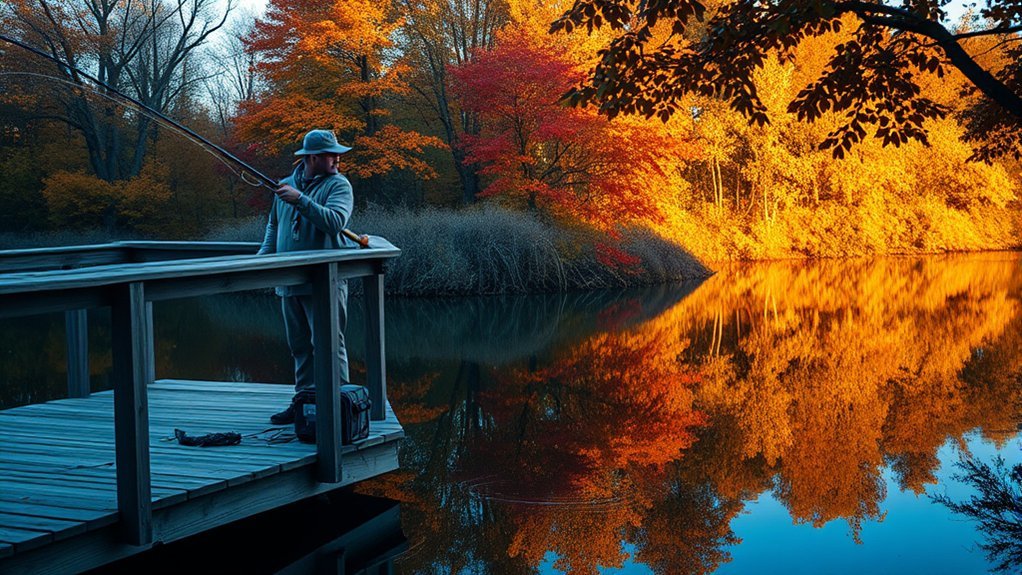
Understanding seasonal patterns can greatly enhance your success when bridge fishing. In warm coastal areas such as Florida, redfish can become more active around bridges during warmer months, especially when bait is present. For sheepshead, cooler months often bring more fish close to hard structure, where they feed on crabs, shrimp, barnacles, and shellfish.
Pay attention to the lunar phases, but do not treat them as the only factor. Full and new moons can create stronger tidal movement in many coastal areas, which may improve feeding windows. Still, wind, water clarity, pressure changes, bait movement, and fishing pressure can also affect the bite.
During slack tides, some fish may be less cautious, but many bridge spots produce better when water starts moving again. If the current is too strong, fish the edges, eddies, and protected sides of the pilings instead of the main flow. If the water is barely moving, slow down your presentation and fish closer to the structure.
In warmer months, target pelagic species like kingfish and Spanish mackerel when baitfish are active and water temperatures are favorable. Deeper passages, bridge channels, and areas with fast-moving bait can produce better action. By matching your bait, lure speed, and depth to the season, you’ll improve your chances of finding active feeding fish.
Common Bridge Fishing Mistakes to Avoid
One common mistake is fishing only the closest piling. Fish may hold on the far side, down-current seam, shadow line, or bottom edge. Work the area in sections instead of making every cast to the same spot.
Another mistake is using gear that is too light for heavy structure. Light tackle can be fun, but bridge fish can quickly wrap the line around concrete, oysters, rocks, or barnacles. Use enough leader strength to handle abrasion without making your presentation look unnatural.
Many anglers also ignore landing plans. If you hook a large fish from a high bridge without a drop net, you may lose it at the surface. Set up your net and rope before the bite happens.
Finally, avoid leaving trash, fishing line, hooks, bait containers, or cut bait on the bridge. Lost line can harm wildlife, and messy fishing spots often lead to more access restrictions. Pack out everything you bring in.
Related Guides
Frequently Asked Questions
What Is the Best Bait for Bridge Fishing?
The best bait for bridge fishing is often live shrimp because many saltwater species eat it. Fresh-dead squid, clam strips, cut bait, crabs, pinfish, croakers, and finger mullet can also work. Choose bait based on the species, current, water clarity, and local rules.
What Is the 80/20 Rule in Fishing?
The 80/20 rule in fishing means a small number of spots often produce most of your bites. Around bridges, that usually means pilings, current seams, shade lines, rubble, and bait-heavy areas. Spend more time learning those high-percentage zones instead of casting randomly.
What Is the 90/10 Rule in Fishing?
The 90/10 rule is a common fishing idea that says a small group of anglers often catch most of the fish because they understand timing, location, bait, and presentation. For bridge fishing, skill matters more than simply standing on the bridge with a line in the water.
How Do You Catch Fish From a Bridge?
To catch fish from a bridge, cast near pilings, shade, current breaks, and bottom structure. Let your bait drift naturally with the current, keep your rig near the strike zone, and use a drop net for larger fish. Check your leader often for abrasion.
Is Bridge Fishing Better at High Tide or Low Tide?
Bridge fishing is often best when water is moving, not always at the exact high or low tide. Incoming and outgoing tides can both work if they move bait past the structure. Fish slower during slack water and focus on eddies when the current is strong.
What Gear Do You Need for Bridge Fishing?
You need a rod and reel, hooks, sinkers, leader, bait or lures, pliers, a knife, a bucket, and a drop net for larger fish. Safe shoes, polarized sunglasses, sun protection, and a simple tackle bag also make bridge fishing easier.
Conclusion
Bridge fishing can be a rewarding way to reach productive water without a boat. The best results come from reading the structure, watching the current, and choosing bait or lures that match the fish you want to catch. Pilings, shade, rubble, lights, and current seams should always get your attention first.
Equip yourself with the right gear, use effective bait and rig techniques, and always prioritize safety. Plan how you will land fish before you cast, especially from a high bridge. Adapt your strategy to the season, tide, and water movement, and you’ll give yourself a much better chance of reeling in impressive catches beneath those bridges.