Float fishing is like casting a line into a world of possibilities. It gives you a simple, calm, and beginner-friendly way to catch fish in rivers, lakes, canals, ponds, and slow-moving streams. By learning the essential gear, choosing the right bait, setting the correct depth, and watching your float carefully, you can improve your chances of success without using complicated tackle.
Quick Answer
Float fishing works by suspending bait under a visible float so you can control depth and spot bites quickly. Beginners should start with a 10 to 12-foot rod, a small fixed spool reel, light line, suitable floats, split shot, and simple baits such as worms, maggots, or sweetcorn.
Key Takeaways
- A 10 to 12-foot float rod gives beginners good casting control, line management, and bite sensitivity.
- Use light line, small hooks, split shot, and a float that matches the water depth, flow, and bait size.
- Natural baits like worms, maggots, and sweetcorn are reliable choices for many common freshwater species.
- Set your depth carefully so the bait drifts naturally near the feeding zone, usually close to the bottom.
- Watch the float for dips, sideways movement, lifting, or sudden stops, then strike with a controlled lift of the rod.
At a Glance
| Time Required | 30 minutes to set up and practice; several sessions to build confidence |
| Difficulty | Beginner-friendly |
| Tools Needed | Float rod, fixed spool reel, line, floats, hooks, split shot, bait, landing net, unhooking mat, tackle box, and disgorger or forceps |
| Cost | Low to moderate, depending on rod quality, reel choice, and local tackle prices |
The Essential Gear for Float Fishing
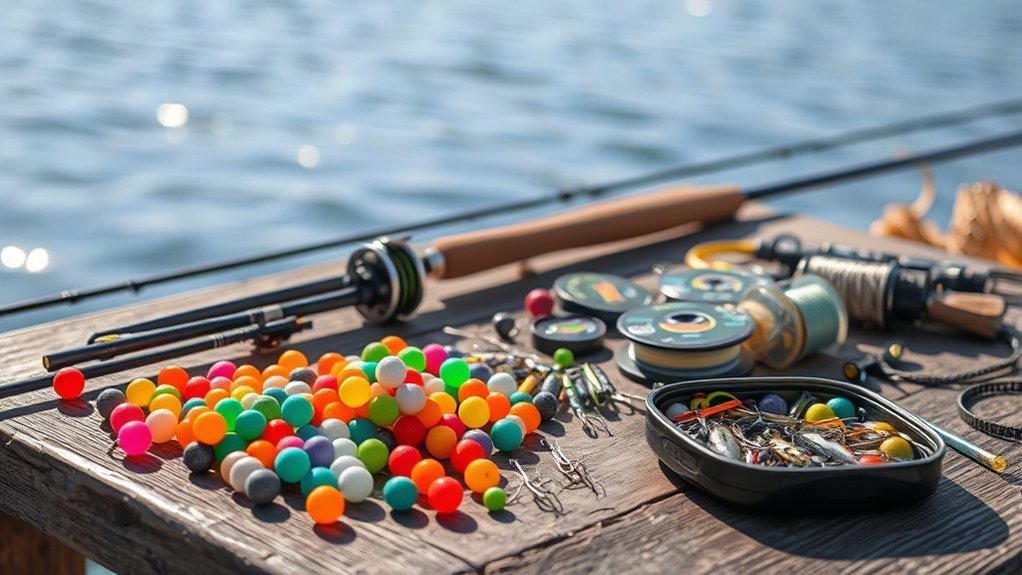
When you’re gearing up for float fishing, having the right equipment is crucial for success. Start with a rod measuring between 10 to 11 feet; this length offers ideal casting distance and control for many stillwaters, canals, and smaller rivers.
Having the right float fishing equipment, like a 10 to 11-foot rod, helps you cast more smoothly, control line better, and read bites with more confidence.
Pair it with a small fixed spool reel loaded with 4lb line for effective handling. This light setup is manageable for beginners and works well for smaller coarse fish, while stronger line may suit snaggy swims or bigger fish.
Your tackle must include a variety of floats, hooks, and split shot to adapt to different conditions and target species. A slim float works well for shy bites in calm water, while a larger or more buoyant float helps when wind, tow, or river flow affects presentation.
For organization, invest in a quality tackle box or pouch to keep your small items accessible. Store hooks, shot, floats, hook links, disgorgers, and spare line in separate compartments so you do not waste time searching while fish are feeding.
Don’t forget a small pan landing net and unhooking mat; they’re essential for safely landing fish and promoting ethical practices. A disgorger or forceps also helps you remove hooks carefully, especially when a fish takes bait deeper than expected.
Finally, a small rucksack will serve you well for transporting bait, tackle, and food, ensuring that all your important gear is organized and portable. Add a towel, bait box, polarized sunglasses, and weather-appropriate clothing if you plan to fish for several hours.
With this gear, you’ll be well-prepared for a successful float fishing experience. Keep your first setup simple, then add specialist floats, hook sizes, and line strengths as you learn your local waters.
Warning: Check local fishing rules before you fish. Many waters have license requirements, bait limits, closed seasons, barbless hook rules, keepnet rules, or catch-and-release policies.
[Amazon Products Picked for You]

【All-in-One Pack】- This fishing accessories kit has 263 essential items for any angler, including Fishing Hooks, Weights Sinkers, Spinner Blades, Floating Bobbers, Barrel Swivels, Split Rings, and more. It's perfect for any fishing condition, with 34 Hooks, 48 Sinkers, 4 Blades, 4 Bobbers, 30 Swivels, 30 Slides, and other accessories. The kit helps get your bait to the right depth, attract fish, and provide abrasion resistance. The fishing tackle box keeps everything organized and accessible.

160 Pieces Fishing Tackle Kit - Shaddock fishing tackle set contains 40pcs black Octopus Hooks, 40pcs black Baitholder Hooks, 52pcs Removable Split Shot Sinkers, 8pcs Snap Bobber Floats, 10pcs Barrel Swivels with Safty Snap and 10pcs Fishing Beads.

Handy Fishing Tackle Box: Variety of 80 fishing gear enclosed in a 13.7x6.7x2.6cm plastic box with 8 grids, keeps tools organized; Lightweight and portable to enjoy fishing in fresh and salt water for beginner and intermediate anglers
Best Float Fishing Equipment

To get started with float fishing, you’ll want a 10ft or 11ft rod paired with a small fixed spool reel loaded with 4lb line for peak performance. This combination gives you enough reach to control your float while staying light enough for long sessions.
Essential tackle includes a selection of floats, hooks, and split shot, which will help you adapt to different conditions and keep your float positioned correctly. Carry a few spare hook links, because fine line can weaken after snags, knots, or several fish.
Don’t forget to include a small pan landing net and unhooking mat to handle fish safely during catch and release. Wet your hands before touching fish, support them low over the mat, and return them gently once they recover.
[Amazon Products Picked for You]

High buoyancy: The float is strong enough to support the weight of the bait caster or spinner, and easily slides onto your rod and secures with hook and loop straps.
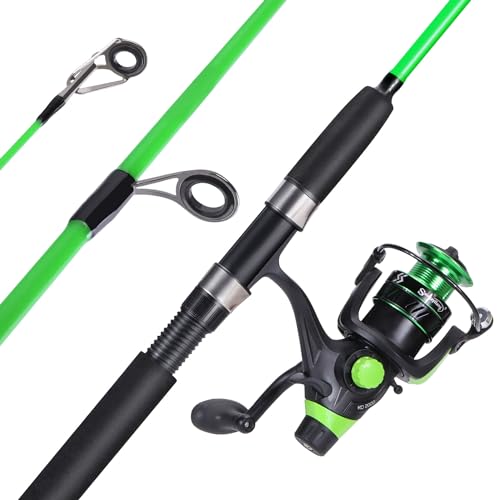
Sensitive & Strong – The spinning rods constructed from Composite Graphite and Glass Blanks which are designed for unbelievable toughness and durability.It allows you cast heavy lures or rigs a long way and master big fish, like catfish and salmon.

WHAT'S INCLUDED IN PLUSINNO FISHING ROD KIT - The complete fishing starter kit for adults includes collapsible fishing rod X1, spinning reel X1, carrier bag X1 and 373PCS fishing tackle box with tackle included that allows anglers to access quickly, all fishing accessories clearly visible at a glance. It eliminates hassle of accessing lower compartments. Fishing rod and reel combo with lures offers a hassle-free, ready-to-go solution to start fishing anytime, anywhere.Perfect fishing gear.
Recommended Rod and Reel
Choosing the right rod and reel is essential for successful float fishing, as it directly impacts your control and sensitivity on the water. A balanced setup helps you cast accurately, mend line, strike cleanly, and play fish without pulling the hook free.
For beginners, here are some recommendations:
- Rod length: Aim for a 10 to 12-foot rod to improve control and sensitivity when targeting larger rivers and fish species.
- Reel type: Use a small fixed spool reel loaded with a 4lb line for ease of use and sufficient strength.
- Rod weight: Opt for a lightweight rod with a strong butt section to enhance sensitivity during casting and retrieving.
A rod with a forgiving tip helps cushion sudden lunges from fish. A smooth reel drag also matters because it lets line leave the spool under pressure instead of snapping your hook link.
Essential Tackle and Bait
While selecting the right tackle and bait can seem overwhelming, having the essential equipment at your disposal greatly enhances your float fishing experience. You do not need a huge box of gear to start, but you do need tackle that matches your water and target fish.
Start with a 10ft or 11ft float fishing rod paired with a small fixed spool reel loaded with 4lb line for manageable casting. Invest in a selection of floats like Drennan Crystal floats and Middy Float Packs to adapt to varying conditions.
Quality hooks, such as Matrix Ready Tied Hook Links or size 16/18 hooks, are crucial for effective rigging. Smaller hooks work well with maggots and small pieces of worm, while larger hooks suit sweetcorn, bread, or bigger baits.
Use Anchor Six Division Split Shot weights to stabilize your float while providing necessary weight. Place shot carefully so the float sits correctly and only the visible tip shows above the surface.
Finally, keep your tackle organized in a tackle box or pouch for easy access during your fishing sessions. Label small compartments or keep similar items together so you can change rigs quickly when conditions shift.
How to Set Up a Basic Float Rig
A simple float rig is easy to build and teaches you the core skills of float fishing. Start by threading or attaching the float to your main line, depending on whether you use a waggler, stick float, or pole float style.
- Attach the float: Fix the float to the line with float rubbers, locking shot, or the correct float attachment.
- Add split shot: Place enough shot on the line to cock the float so only the tip remains visible.
- Tie on the hook: Use a ready-tied hook link or tie your hook directly to the main line.
- Plumb the depth: Use a plummet or careful trial casts to find the bottom and set the float depth.
- Bait the hook: Add worm, maggot, sweetcorn, bread, or another bait that suits your target fish.
- Test the drift: Cast in, watch how the float sits, and adjust depth or shot placement until the bait moves naturally.
For stillwater, your bait often works best just touching bottom or slightly above it. In moving water, your goal is a smooth drift that looks natural while keeping enough control to strike when the float reacts.
Pro Tip: After you set the float, make a few short test casts close in. You will spot depth problems faster and avoid wasting bait in the wrong part of the swim.
Best Float Fishing Bait
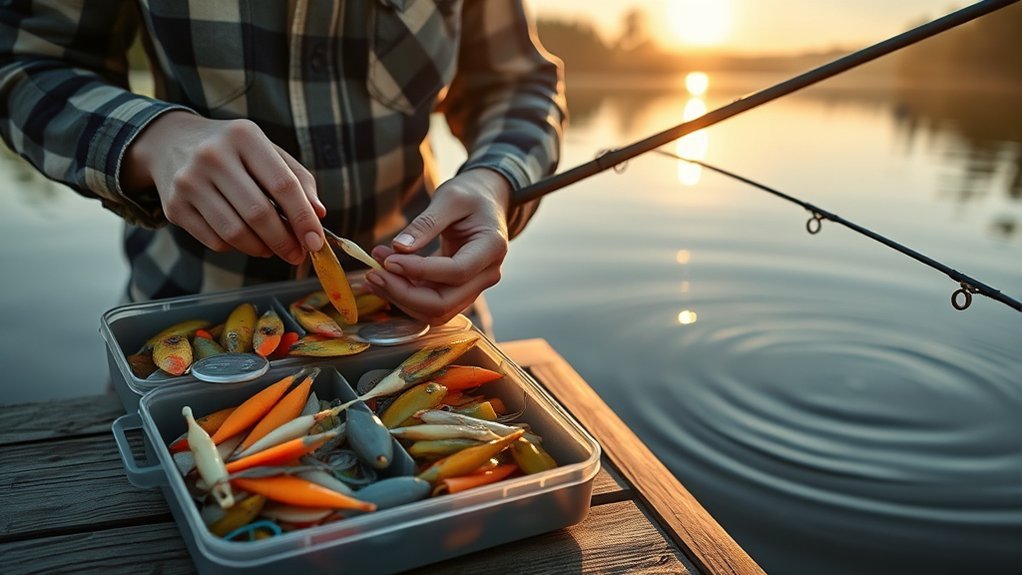
When it comes to float fishing, choosing the right bait is essential for success. The best bait depends on the fish species, season, water temperature, water clarity, and how much natural food is available.
You’ll want to take into account natural options like maggots and sweetcorn, effective artificial lures, and the strategic use of ground bait to attract your target species. Simple baits often catch more fish than complicated choices because they are easy to present naturally.
Each baiting technique can greatly influence your fishing experience, so experimenting with different combinations is key to finding what works best for you. Change one thing at a time, such as bait size, depth, or feeding amount, so you know what made the difference.
Natural Bait Options
Natural bait options play an essential role in float fishing success, as the right choice can greatly influence your catch rate. To maximize your effectiveness, consider these top natural bait options:
- Worms: Versatile and irresistible, they attract various fish species.
- Sweetcorn: Ideal for larger fish like carp, tench, and bream due to its appealing texture and flavor.
- Maggots: Highly effective for attracting a wide range of fish and a favorite among float anglers.
When using these baits, present them naturally close to the bottom. A single maggot, double maggot, small worm section, or single grain of sweetcorn can all work when matched to hook size.
Adjust your presentation based on water clarity and the specific species you’re targeting. In clear water, smaller hooks and lighter line can look more natural, while colored or scented baits may help in cloudy water.
Additionally, incorporating high-quality ground bait, like Fjuka Squeeze Ready Groundbait, can enhance your chances without overfeeding the fish. Use small amounts at first, then increase feeding only if fish respond confidently.
Effective Artificial Lures
Effective artificial lures can considerably enhance your float fishing experience by mimicking the movement and appearance of natural bait. Options like Jensen eggs, gooey bobs, and rubber worms are particularly effective, especially when enhanced with added scents to attract fish.
For a dynamic presentation, use lighter spinners and spoons under your float; Colorado and French blades, along with oval style spoons like the Dick Nite, yield impressive results. Keep these rigs light enough that the float still shows bites clearly.
Spin n glows come in various sizes and colors, allowing you to experiment and match them to your targeted species and water conditions. Bright colors can help in stained water, while subtle colors often suit clear, pressured swims.
Adjust your lure presentation based on water clarity and flow speed to maintain a natural look, and don’t hesitate to try different lure types and colors to increase your catch rates. If fish follow but do not commit, reduce lure size or slow the presentation.
Ground Bait Techniques
Mastering ground bait techniques is essential for enhancing your float fishing success. Properly preparing your ground bait can draw in fish without overfeeding them. Aim for a damp consistency that molds into balls for effective casting.
Consider these key points:
- Use popular options like Fjuka Squeeze Ready Groundbait and Dynamite Baits Sweetcorn to attract various species.
- Introduce small amounts of ground bait every 20 minutes to keep fish interested without overwhelming them.
- Make sure your ground bait complements the hook bait, maintaining a consistent feeding pattern.
Adjust the size and quantity of your ground bait based on fishing conditions and target species. This strategic approach will greatly improve your chances of landing more fish during your session.
In colder conditions, feed lightly because fish may eat less. In warmer water or active swims, you may need more frequent loose feed to keep fish competing near your float.
Best Float Fishing Line and Floats

When it comes to float fishing, selecting the right line and floats can considerably enhance your success on the water. The Daiwa Sensor Fishing Line, with a 4lb breaking strain, is an excellent choice due to its strength and sensitivity, allowing you to detect even the slightest bites.
You’ll need a variety of floats, and the Drennan Crystal range offers superb visibility and sensitivity, helping you adapt to different conditions. Choose the smallest float that still casts well, holds position, and remains visible at your chosen distance.
For effective rigging, consider using Matrix Ready Tied Hook Links or size 16/18 hooks to guarantee a strong connection to your bait. Ready-tied hook links save time and help beginners avoid weak knots while learning the basics.
To set your float and manage line depth, the Anchor Six Division Split Shot is ideal, allowing for precise adjustments based on water conditions. Use soft split shot carefully so you can move it without damaging the line.
Float choice matters because each style solves a different problem. Wagglers suit lakes and canals, stick floats help in gentle river flow, and larger floats offer stability when wind, depth, or distance makes control harder.
[Amazon Products Picked for You]

Welded Loops: Pre-looped at both ends with welded rings; no-knot leader attachment in seconds. Clearly marked label (THIS END TO REEL) on the running-line end shows which way to spool — no more second-guessing at the bench.

Creative invisible design! Despite its thinness the thread is very strong but at the same time you almost can not feel it on your neck and it gives an impression of a "single stone floating on body".

Welded Loops: Pre-looped at both ends with welded rings; no-knot leader attachment in seconds. Clearly marked label (THIS END TO REEL) on the running-line end shows which way to spool — no more second-guessing at the bench.
Float Fishing Techniques and Tips
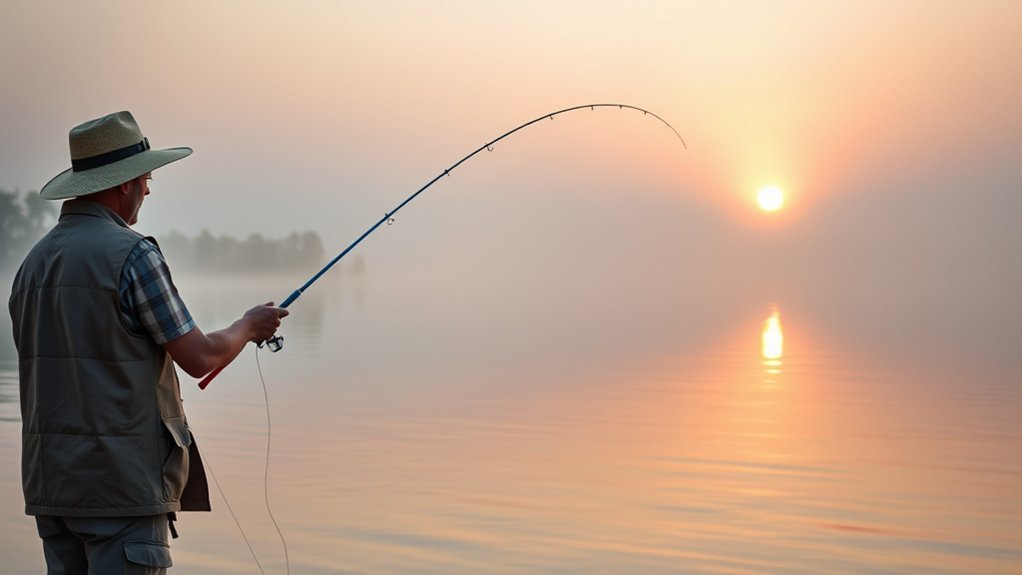
While float fishing can seem straightforward, employing specific techniques and tips can greatly improve your outcomes. Your goal is to present bait at the right depth, keep it moving naturally, and react when the float shows a real bite.
Here are some essential strategies to enhance your float fishing experience:
- Maintain Slack Line: Keep a slack line to detect subtle bites; watch for float movement as an indication of a catch.
- Float Positioning: Set your float about two feet (60 cm) from weed beds, and offer bait every 20 minutes to attract fish.
- Bait Presentation: Adjust your bait based on water clarity and species, ensuring it matches the current’s speed for a natural appearance.
Additionally, aim for a setup where sinkers rest on the lake bed with about four inches of line below the float to target fish feeding near the bottom. This can work well when fish feed confidently on the lake bed or when tow pulls your rig away from the feeding area.
Be ready to change depths and swims if bites are slow, as fish feeding patterns can vary throughout the day. If you get liners, missed bites, or foul-hooked fish, adjust depth because fish may be feeding higher in the water.
In rivers, mend the line by lifting or repositioning it so the float does not drag unnaturally. In stillwater, sink the line between rod tip and float when wind creates surface bow, then watch for clean dips, lifts, or sideways movement.
Note: Not every float movement is a bite. Wind, tow, weed, small fish, and bottom snags can all move the float, so look for repeated or positive movement before striking hard.
Shotting Patterns and Setup
Understanding shotting patterns is essential for effective float fishing, as they directly influence how your bait behaves in the water. There are two primary patterns: bulk shotting and spread shotting.
Bulk shotting involves grouping most of your shot together, typically just under or beside the float, allowing for quick sinking or stationary bait. This method is effective for enticing fish that prefer a rapid presentation or when you need bait to get through small fish near the surface.
On the other hand, spread shotting distributes the weight along the line, creating a gradual sinking effect that’s ideal for targeting smaller fish. It also helps when fish are taking bait as it falls through the water.
When setting up your rig, make sure you have enough shot to sink the float while keeping it minimally visible above the surface—fish won’t feel the shot. A float that sits too high may miss shy bites, while an overshotted float can sink too easily in wind or flow.
Most anglers fish overdepth, letting the bait rise naturally in the water column, which can greatly boost your catch rates. Fishing overdepth can also help hold bait still when wind or undertow moves the float.
Mastering these patterns is key to enhancing your float fishing success. Start with a simple bulk or spread pattern, then adjust after each cast until the float settles correctly and bait behaves the way fish expect.
Common Float Fishing Mistakes to Avoid
Many beginners struggle because their rig is slightly wrong rather than because fish are not present. Small errors in depth, shotting, hook size, or feeding can make your bait look unnatural.
- Using too large a float: A float with too much buoyancy can make bites harder to see and harder for fish to pull under.
- Fishing at the wrong depth: If your bait sits too high or drags badly, fish may ignore it.
- Feeding too much bait: Heavy feeding can fill fish before they find your hook bait.
- Striking too late: Waiting too long can lead to deep hooking, especially with small fish.
- Ignoring wind and flow: Surface drift can drag your float faster than the natural current below.
- Using blunt hooks: A dull hook causes missed bites and lost fish, even when everything else is correct.
Fix one problem at a time. If bites stop, change depth first, then bait size, feeding amount, hook size, or swim position.
Where to Fish With a Float
Float fishing works in many freshwater spots, but some areas produce more bites than open, featureless water. Look for places where fish can feed safely, hide from predators, or intercept drifting food.
- Weed edges: Fish often patrol near weed because it holds insects, cover, and oxygen.
- Margins: The water close to your bank can hold fish, especially in quiet swims.
- Drop-offs: Depth changes create natural patrol routes for feeding fish.
- Overhanging trees: Shade and falling insects can draw fish into a small area.
- River glides: Smooth, steady flow lets your bait travel naturally past waiting fish.
- Canal shelves: The near shelf, far shelf, and central track often hold different fish at different times.
Approach the swim quietly and avoid casting directly on top of fish. Start close in, then work farther out if you do not get signs of feeding.
Frequently Asked Questions
How do you float fish for beginners?
To float fish effectively, select a suitable rod and reel, choose the right float type, use natural baits, adjust shot placement for sink rate, and strike promptly at clear float movement. Start in a simple swim with light tackle, set your depth carefully, and feed small amounts often.
How far should my float be from my hook?
Your float should sit at a distance that places the bait where fish are feeding. About 18 inches above the hook can work in shallow water, but deeper swims need more distance. Use a plummet or test casts to find the bottom, then adjust until the bait presents naturally.
What bait should I use for float fishing?
For float fishing, use natural baits like worms, maggots, sweetcorn, bread, or salmon roe where legal and suitable. You can also try artificial options like gooey bobs, rubber worms, or scented imitations. Adjust bait size and color based on water clarity, target species, and bite response.
When should I strike when float fishing?
When the float dips, bobs, lifts, slides sideways, or disappears, it’s time to act. Strike quickly but smoothly when you see positive movement. In currents, wait for a clear stop, dip, or movement against the flow before lifting the rod to set the hook.
What size hook is best for float fishing?
Size 16 and 18 hooks are good starting points for maggots, small worms, and many common coarse fish. Use a larger hook for bigger baits like sweetcorn, bread, or large worm sections. Match the hook to the bait first, then adjust for the fish you expect to catch.
Why does my float keep lying flat?
A float usually lies flat when it is not weighted correctly, the depth is set too shallow, or the shot has moved. Add or adjust split shot until the float cocks upright with only the tip showing. If it still lies flat, increase the depth until the bait and shot settle properly.
Conclusion
To sum up, float fishing is not just a hobby; it’s a gateway to a rewarding outdoor experience. With the right gear, careful depth setting, smart bait choice, and a basic understanding of fish behavior, you’ll find yourself reeling in catches with confidence.
Have you ever imagined the thrill of watching your float dip under the water, signaling a bite? That simple moment is what makes float fishing so addictive for beginners and experienced anglers alike.
By applying the basics outlined here, you’ll soon be equipped to enjoy the serenity and excitement that float fishing has to offer. Start simple, observe every cast, adjust patiently, and let your float teach you what is happening below the surface.