Mahi-mahi are known for their stunning colors, fast growth, hard strikes, and acrobatic jumps, which makes them one of the most exciting offshore fish for beginners to target. To catch them consistently, you need to know how to identify the fish, where they gather, what baits they chase, which tackle works best, and which local regulations apply before you keep any fish.
Quick Answer
To fish for mahi-mahi, look for warm offshore water, floating debris, weed lines, birds, and current edges. Troll ballyhoo, squid, skirted lures, diving plugs, or artificial squid near structure, then keep the school close with chum. Always check your state’s current size and bag limits before keeping fish.
Key Takeaways
- Mahi-mahi often gather near floating debris, weed lines, current breaks, buoys, and commercial fishing floats.
- Ballyhoo, cut bait, squid, soft plastic jigs, diving plugs, spreader bars, and daisy chains all work well.
- Trolling helps you cover water, while casting topwater lures or jigs works when you find an active school.
- Regulations change by state and season, so verify size limits, bag limits, and federal rules before each trip.
- Keep the first hooked fish in the water briefly when safe, because other mahi-mahi often stay near it.
At a Glance
| Best Water | Warm blue water, weed lines, current edges, floating debris, offshore buoys, and canyon areas |
| Difficulty | Beginner to moderate, depending on weather, boat range, and offshore experience |
| Gear Needed | Medium-heavy offshore rod, reel with smooth drag, braided or monofilament main line, fluorocarbon leader, circle hooks, lures, bait, chum, gaff or landing net, and safety gear |
| Best Approach | Troll until you locate fish, then cast bait, jigs, or topwater lures to keep the school active |
Mahi-Mahi Identification
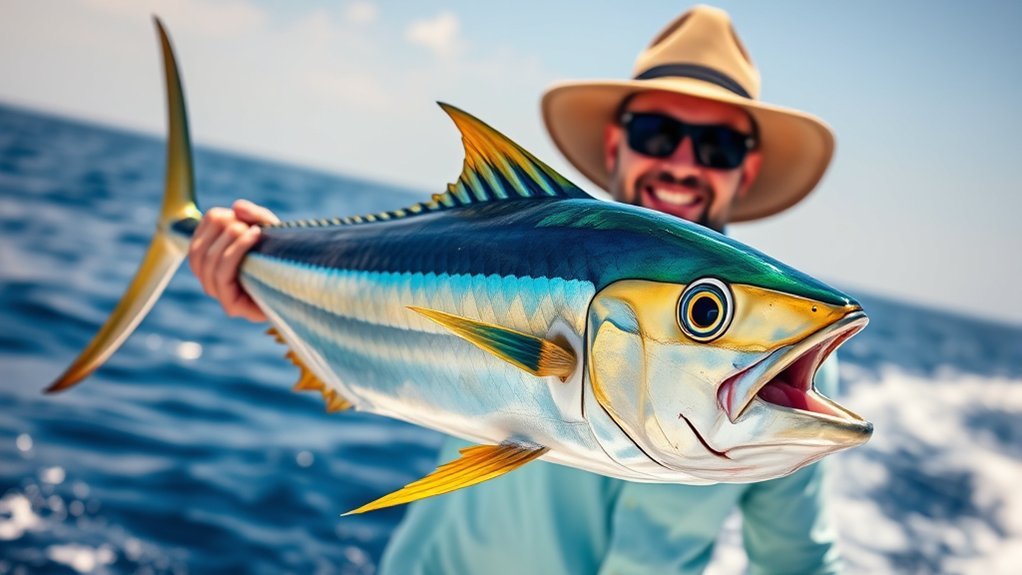
When you’re out on the water, identifying mahi-mahi can be a thrilling part of the fishing experience. These fish are also called dolphinfish, but they are not related to marine mammals. They are fast-growing, open-water fish with bright colors and a body shape that stands out from many other offshore species.
Look for a long, compressed body, a tall dorsal fin that runs across much of the back, and vivid blue, green, yellow, and gold coloring along the sides. Freshly caught mahi-mahi often appear almost neon, then fade after they leave the water.
Mature mahi-mahi have long, slender bodies and elongated pectoral fins. Males, often called bulls, usually have a more squared-off forehead or pronounced head profile. Females, often called cows, usually have a rounder head.
Size can also help with identification. Many recreationally caught mahi-mahi weigh around 10 to 30 pounds, though larger fish can push past 50 pounds in productive offshore waters. Smaller school fish are common around weed lines, floating debris, and current breaks.
You’ll often spot mahi-mahi swimming in schools. When hooked, they may leap, change direction quickly, and flash bright colors near the boat, which is one reason anglers enjoy targeting them.
Note: Mahi-mahi are sometimes called dolphin or dolphinfish on regulations pages and fishing reports. That name refers to the fish, not the marine mammal.
Mahi-Mahi Regulations
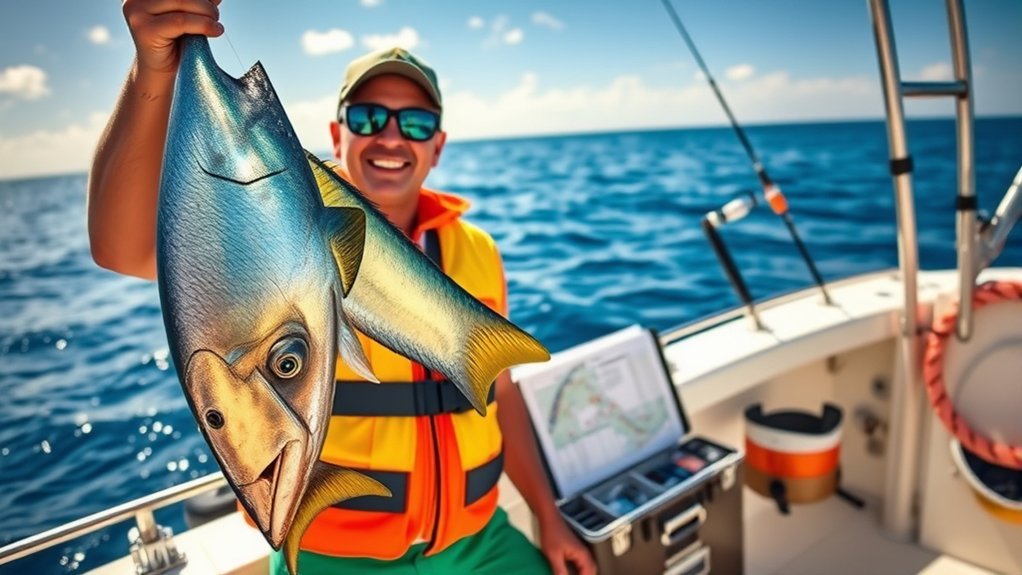
Understanding mahi-mahi regulations is essential for a successful and responsible fishing trip. Rules can vary by state, fishing zone, vessel type, and season, so you should always check the latest local and federal regulations before you cast your line or keep a fish.
Here’s a quick comparison of mahi-mahi regulations in a few Mid-Atlantic states based on the article’s original guidance:
| State | Minimum Size Limit | Daily Bag Limit |
|---|---|---|
| Maryland | None listed in the original article | 10 fish |
| Delaware | None listed in the original article | 10 fish |
| Virginia | 20 inches | 10 fish |
Regulation tables are useful for planning, but they can become outdated. Before your trip, confirm the current rule for the exact waters you plan to fish. Some trips may involve state waters, federal waters, or both, and the rules may not match across every area.
Additionally, it’s common to find mature mahi-mahi in deeper offshore waters, while younger fish may appear closer to the coast when warm water, bait, and floating structure move inshore. To help sustain mahi-mahi populations for future generations, keep only what you can use and release unwanted fish carefully.
Warning: Do not rely on an old article, dock talk, or a saved screenshot for fishing rules. Check your state agency and federal rules before each trip because size limits, bag limits, and seasons can change.
Best Baits and Lures for Mahi-Mahi
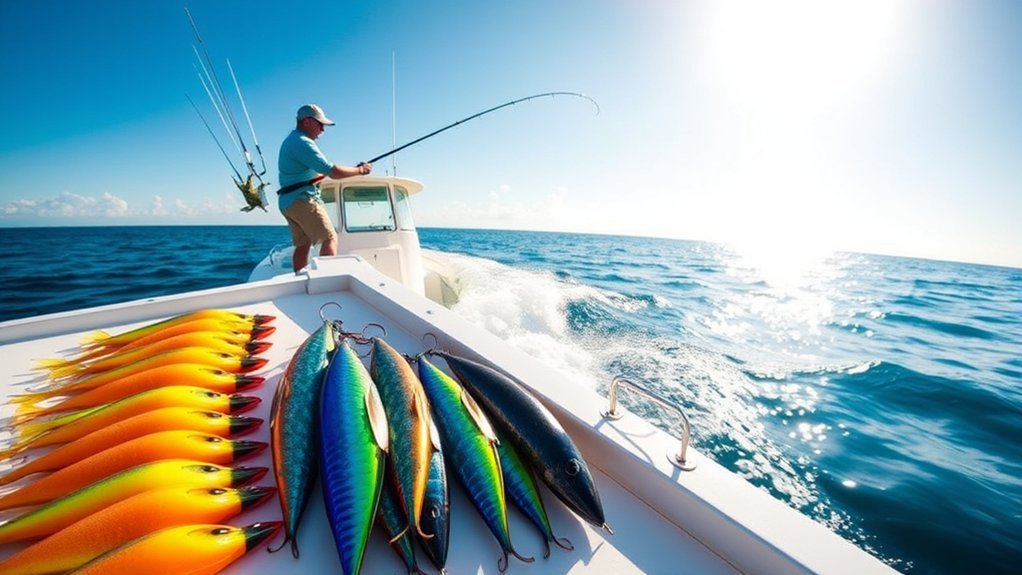
After you’ve familiarized yourself with mahi-mahi regulations, it’s time to gear up for the hunt. Mahi-mahi are aggressive feeders, so both natural baits and artificial lures can work when you present them near fish.
When it comes to bait, you can’t go wrong with ballyhoo, cut fish, or squid. Their scent and natural appearance can attract mahi-mahi, especially when you find a school holding near floating cover.
For lures, consider using diving plugs, soft plastic jigs, feather jigs, skirted trolling lures, or artificial squid. These options mimic fleeing baitfish and squid, which can trigger fast strikes from active mahi-mahi.
Don’t overlook spreader bars and daisy chains. These create surface commotion that can draw in schools of mahi-mahi searching for food.
Spreader bars and daisy chains create surface action, which can help mahi-mahi notice your spread from farther away.
Additionally, targeting floating objects like seaweed, logs, buoys, and fishing gear floats can greatly increase your chances. Mahi-mahi often gather around these structures for shade, shelter, baitfish, and hunting opportunities.
Finally, keep a bucket of chum handy when legal in your fishing area. Chum can help maintain the interest of mahi-mahi schools, encouraging them to stick around longer for feeding opportunities.
Best Natural Baits
- Ballyhoo: A classic trolling bait that works well naked, skirted, or rigged behind a lure head.
- Squid: A strong choice for chunking, drifting, or pitching to visible fish around debris.
- Cut bait: Small chunks of fish can keep a school near the boat after you hook the first mahi-mahi.
- Live bait: When available and legal, live baitfish can trigger strikes from larger, cautious fish.
Best Artificial Lures
- Skirted trolling lures: Good for covering water while searching for active fish.
- Diving plugs: Useful when fish are feeding below the surface or around deeper structure.
- Soft plastic jigs: Great for casting once you find a school near the boat.
- Artificial squid: Effective when mahi-mahi are feeding on smaller prey near weed lines.
- Topwater lures: Exciting to fish when mahi-mahi are aggressive near the surface.
Pro Tip: Once you hook a mahi-mahi, keep another bait or lure ready. These fish often travel in schools, so a second angler can cast quickly and hook another fish before the school moves away.
Effective Fishing Techniques
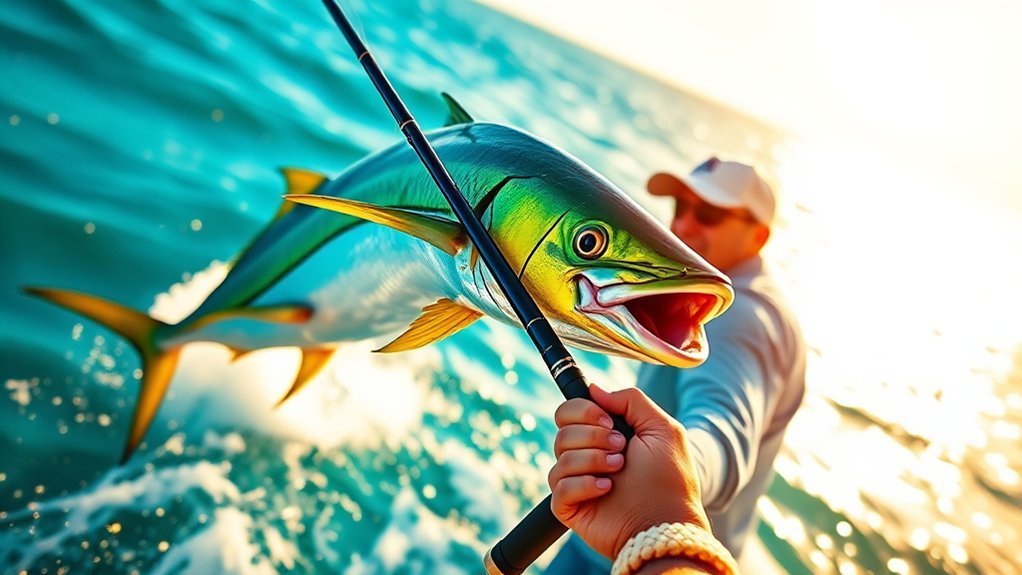
Effective fishing techniques can make all the difference when targeting mahi-mahi. To increase your chances of landing these vibrant fish, consider a blend of trolling, casting, drifting, and surface fishing.
Trolling with artificial lures or rigged baits helps you cover more water, especially around floating debris where mahi-mahi often gather. Run a spread at different distances behind the boat so your baits look like scattered prey.
On the other hand, using topwater lures, jigs, or chunk bait can spark thrilling strikes from these aggressive predators once you locate a school. If fish follow but do not strike, change lure size, color, speed, or bait type.
Here are some tips to enhance your mahi-mahi fishing experience:
- Target floating objects like logs and seaweed mats to attract schools.
- Use a light tackle setup for an exciting challenge when reeling in.
- Pay attention to seasonal patterns and local conditions, aiming for warm blue water and active bait.
- Watch for birds dipping, bait skipping, flying fish, and sharp color changes in the water.
- Keep your drag smooth because mahi-mahi often surge, jump, and change direction near the boat.
How to Troll for Mahi-Mahi
Start by searching warm, clean water with signs of life. Set out a mix of ballyhoo, skirted lures, feathers, or artificial squid. Vary the distance behind the boat so your spread covers more water and looks natural.
Keep your eyes on weed lines, floating debris, and current breaks. If you get a strike, mark the spot on your GPS and circle back through the area. Mahi-mahi often hold in the same zone when bait and structure are present.
How to Cast to Visible Fish
When you see mahi-mahi near the boat, avoid throwing directly on top of the school. Cast slightly ahead of the fish and retrieve the lure with quick, erratic movement. If they follow without biting, pause the lure, twitch it, or switch to a smaller bait.
If one fish stays hooked near the boat and conditions are safe, leave it in the water briefly while another angler casts. The hooked fish can keep the rest of the school nearby.
How to Use Chum
Chumming works best when you already have fish nearby. Toss small pieces of bait into the water at a steady pace rather than dumping too much at once. This keeps mahi-mahi interested without filling them up too quickly.
Pair the chum line with an unweighted bait or small jig so your offering drifts naturally. Stay organized, because mahi-mahi can turn a quiet deck into a fast-moving situation once the school fires up.
Warning: Offshore mahi-mahi fishing can put you far from help. Check marine weather, carry required safety gear, file a float plan, and avoid chasing fish beyond your boat’s safe range.
Prime Locations for Mahi-Mahi Fishing

When it comes to mahi-mahi fishing, location is everything. You’ll find these vibrant fish thriving in warm waters, especially around strong current, floating cover, and areas with bait.
The Gulf of Chiriquí and Isla Coiba in Panama can produce excellent mahi-mahi fishing, with strong offshore action often associated with warm water and productive currents. In many tropical and subtropical areas, the best months depend on local bait movement, water temperature, and weather patterns.
If you’re fishing in the Mid-Atlantic, target the canyons off the coast and commercial fishing floats along the Continental Shelf, as these are reliable spots during warmer months. Productive areas often include weed lines, temperature breaks, blue-water edges, and floating structure.
Don’t overlook inshore areas around bass pots and shoals, where younger mahi-mahi may gather near coastlines when warm water pushes in. These smaller fish can provide fast action on lighter tackle.
Inshore areas around bass pots and shoals can hold younger mahi-mahi when warm water, bait, and floating cover move close to shore.
Keep an eye out for floating debris like logs and seaweed mats; these can be hotspots for mahi-mahi. Also, watch for feeding birds, as their activity can signal fish nearby.
By choosing the right locations, you’ll not only increase your chances of a successful catch but also enjoy the stunning marine life that surrounds you.
What to Look For on the Water
- Weed lines: Long mats or streaks of floating seaweed can hold baitfish and small predators.
- Floating debris: Logs, pallets, rope, buckets, and other floating objects can attract mahi-mahi.
- Bird activity: Diving or circling birds may point to bait and feeding fish below.
- Current breaks: Sharp changes in water color, temperature, or surface texture often concentrate food.
- Offshore structure: Canyons, buoys, floats, and shelf edges can create productive fishing zones.
Best Gear for Mahi-Mahi Fishing
The best mahi-mahi setup depends on fish size, lure choice, and how far offshore you plan to run. You do not need the heaviest offshore gear for school-sized fish, but you do need a setup that handles fast runs, jumps, and sudden direction changes.
For many recreational trips, a seven-foot heavy action rod with 30- to 50-pound braided line gives you a strong starting point. Pair it with a smooth-drag reel, a 50-pound barrel swivel, fluorocarbon leader, and circle hooks sized 6/0 to 9/0 when fishing natural baits.
If you fish lighter tackle, you can enjoy a more sporting fight, especially with smaller mahi-mahi. Just avoid going so light that you overplay fish you plan to release, because long fights can reduce survival.
Basic Mahi-Mahi Tackle List
- Medium-heavy to heavy offshore rod
- Reel with a smooth drag and enough line capacity for fast runs
- 30- to 50-pound braided or monofilament main line
- Fluorocarbon leader sized for water clarity and fish size
- Circle hooks for natural bait
- Skirted lures, feathers, plugs, soft plastics, and artificial squid
- Landing net or gaff, depending on fish size and whether you plan to release or keep the fish
- Needle-nose pliers, dehooker, gloves, cooler, ice, and measuring tool
Note: Circle hooks are a smart choice when fishing bait because they can reduce deep hooking and make releases easier when used correctly.
Handling, Cleaning, and Keeping Your Catch
Mahi-mahi are valued for their firm, mild fillets, but quality drops quickly if you leave fish warm on deck. If you plan to keep a legal fish, land it safely, dispatch it quickly, and get it on ice as soon as possible.
Keep the deck clear before bringing a mahi-mahi aboard. These fish can thrash hard, and hooks or lures can swing dangerously. Use pliers or a dehooker, control the fish carefully, and avoid placing your hands near the hook.
For catch and release, keep the fish in the water when possible, minimize handling, and remove the hook quickly. If you lift the fish for a photo, support the body and return it to the water without delay.
Common Beginner Mistakes to Avoid
Many new anglers find mahi-mahi but fail to keep the school near the boat. The most common mistake is rushing after the first hookup and clearing every bait too fast. When safe, keep one fish in the water briefly and cast another bait to the school.
Another mistake is ignoring floating cover because it looks small or unimportant. Even a small piece of debris can hold bait and attract mahi-mahi in open water.
Finally, do not run offshore without a plan. Good mahi-mahi fishing often depends on weather, fuel range, water temperature, and safe navigation. A productive trip starts before you leave the dock.
- Do not fish blind: Look for birds, weed lines, bait, temperature breaks, and debris.
- Do not overfeed the school: Use small amounts of chum steadily.
- Do not use dull hooks: Mahi-mahi strike fast and jump hard, so sharp hooks matter.
- Do not forget the rules: Measure fish and confirm your bag limit before keeping them.
- Do not overlook safety: Weather can change quickly offshore.
Frequently Asked Questions
What is the best setup for mahi-mahi fishing?
For mahi-mahi fishing, use a seven-foot heavy action rod with 30- to 50-pound braided line. Pair it with a smooth-drag reel, a 50-pound barrel swivel, fluorocarbon leader, and circle hooks sized 6/0 to 9/0 when fishing natural bait. You can go lighter for smaller school fish if conditions are safe.
Why is mahi-mahi on the avoid list?
Mahi-mahi may appear on some seafood avoid lists when it comes from poorly managed fisheries, unsustainable fishing methods, or sources with bycatch concerns. It is not automatically a fish to avoid in every situation. Choose mahi-mahi from responsibly managed fisheries and check trusted seafood guidance when buying it.
How deep of water should you fish to catch mahi-mahi?
Many anglers catch mahi-mahi in water from about 100 to 1,000 feet deep, especially around offshore structure, weed lines, and floating debris. Depth matters less than finding warm water, bait, cover, and current edges that concentrate fish.
What is the best month to catch mahi-mahi?
The best month depends on your region. In some warm-water destinations, winter and spring can be strong. In parts of the U.S. Atlantic and Mid-Atlantic, warmer months often produce better action. Check local fishing reports, water temperature, and seasonal migration patterns for your area.
What water temperature is best for mahi-mahi?
Mahi-mahi prefer warm water, and anglers often look for clean blue water in the upper 70s to low 80s Fahrenheit. Temperature breaks, current edges, and floating structure can be more important than one exact temperature number.
Can beginners catch mahi-mahi?
Yes, beginners can catch mahi-mahi, especially with an experienced captain or crew. The hardest part is often finding fish offshore safely. Once you locate a school, mahi-mahi can be aggressive and willing to hit baits, lures, jigs, and topwater presentations.
Conclusion
In the vibrant world of mahi-mahi fishing, you’re not just casting lines; you’re learning how warm water, floating cover, bait, and timing come together. By understanding regulations, choosing the right baits, and mastering effective techniques, you’ll improve your chances of a thrilling catch.
Remember, every fishing trip is a new adventure. Patience, preparation, safe boating, and careful fish handling can turn a quiet day offshore into a memorable one. Gear up, check the rules, watch the water, and let the signs around you guide your next mahi-mahi trip.
Sources
- NOAA Fisheries Dolphinfish Profile — supports general mahi-mahi identification, habitat, and species background.
- NOAA FishWatch Mahi-Mahi Profile — supports seafood sustainability and consumer guidance context.
- Virginia Marine Resources Commission Recreational Fishing — supports the need to verify current recreational fishing rules before each trip.
- South Atlantic Fishery Management Council — supports federal management context for dolphin and wahoo fisheries in the South Atlantic region.