To land a fish, keep steady pressure on the line, use an appropriate hook set for your fishing method, and steer the fish away from rocks, logs, weeds, docks, and heavy current. The goal is to bring the fish under control efficiently, not fight it to exhaustion. Use the rod and drag together, change your angle when the fish changes direction, and net it headfirst only after you can guide it calmly.
If you plan to release the fish, use tackle strong enough to shorten the fight, keep the fish wet, minimize handling, and use a rubber or soft knotless landing net when a net is needed. NOAA Fisheries recommends minimizing air exposure and says that if a fish must leave the water, less than 60 seconds is ideal.
Last updated: September 11, 2026
Quick Answer
To land a fish, keep steady pressure, use the rod angle to guide it away from danger, and bring it under control without fighting it to exhaustion. Net it headfirst when it is close and manageable. For catch and release, wet your hands and net, support the fish properly, minimize air exposure, and let it swim away under its own power.
Key Takeaways
- Match your rod, reel, line, leader or tippet, hook, and drag to the fish size and the water you are fishing.
- Match the hook set to the method. A trout-style lift, downstream set, strip set, and circle-hook approach are not interchangeable.
- Change rod angles during the fight to steer the fish away from current, rocks, weeds, logs, docks, and undercut banks.
- Land the fish efficiently and net it headfirst only after it is under control.
- For catch and release, keep the fish wet, minimize air exposure, support its body, and follow species-specific and local rules.
At a Glance
| Fight Goal | Bring the fish under control as efficiently as conditions allow without deliberately fighting it to exhaustion. |
| Hook-Set Rule | Match the set to the hook, lure or fly, target fish, line strength, and presentation instead of using one motion for every situation. |
| Control Rule | Keep useful tension, change rod angles to steer the fish, remove slack quickly, and allow controlled line release during strong runs. |
| Landing & Release Tools | Appropriately sized rubber or soft knotless net, forceps or pliers, dehooking tools when needed, and species-appropriate release equipment for deep-water fish. |
Importance of Tippet and Equipment
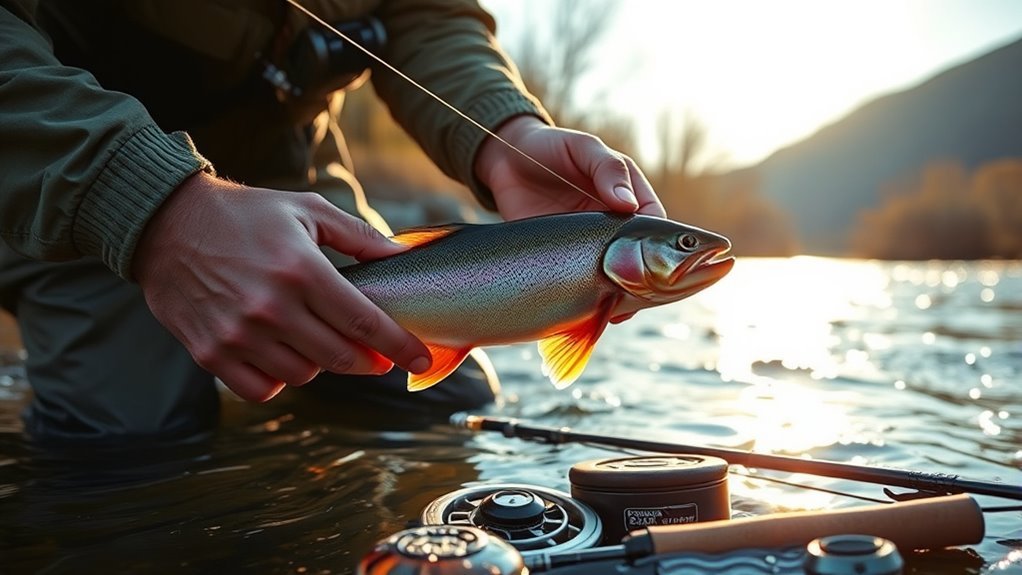
Your leader or tippet is the final connection between you and the fish. It needs to be fine enough for the presentation but strong enough to land the fish efficiently around the current and cover you expect.
In fly fishing, an X-size such as 7X describes diameter rather than a universal breaking strength. For example, the Orvis tippet chart lists its Super Strong 7X nylon at 0.004 inch and approximately 2.5-pound breaking strength. Other materials and products can differ, so read the strength printed on the spool instead of assuming all 7X tippet performs the same way.
Choose tippet or leader strength using the fly or lure, expected fish, current, abrasion risk, and nearby cover. Fine tippet may help delicate presentations in clear water. Larger fish, heavy current, rocks, vegetation, timber, docks, or saltwater conditions may require substantially stronger material.
Price matters less than balance. A rod, reel, line, leader, hook, and drag that work together protect the connection during sudden runs and give you more control than an expensive but mismatched setup.
Note: “Light” does not automatically mean “better.” Use tackle that still lets you control and land the expected fish promptly under the conditions you are fishing.
[Amazon Products Picked for You]

Size: 9FT-5X, 4.4 LB/2.0kg.

Convenient for You: tippet line holder keeps the tappet spools in order, easy to fetch, accommodates up to 5 tippet spools. The black anodized aluminum rod inside the holder, light weight, is corrosion resistant. With built-in elastic rope and loop, strong elasticity, easy to stretch, can be attached to any fishing vests.

Precisely Tapered Leader: The thicker butt connected to the fly line provides excellent rigidity and strength. The supple tip has low visibility in the water which reduces glare and better displays your fly without scaring the fish
Check Your Setup Before the Cast
A strong landing starts before the fish eats. Check your knot, leader or tippet, hook point, drag, and net position before fishing. A damaged connection or inaccessible net can turn a manageable fish into a preventable break-off.
- Inspect the tippet or leader: Replace sections that are rough, flattened, kinked, frayed, or badly abraded.
- Test the knot: Pull steadily before you cast so a poorly seated or slipping knot shows itself before a fish loads it.
- Sharpen or replace dull hooks: A sharp hook requires less force to penetrate and gives you a better chance of maintaining a secure connection.
- Set your drag: Use enough resistance to control the fish while still allowing line to leave the reel before a sudden surge exceeds your line or leader strength.
- Place your net where you can reach it: You should be able to grab it without releasing control of the rod or stepping into unsafe footing.
Hook Setting Techniques
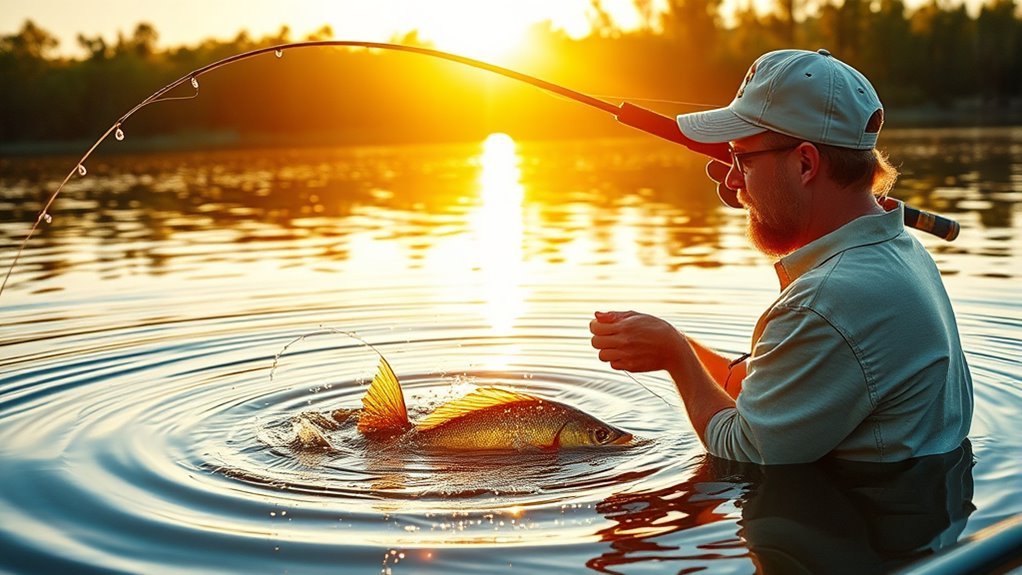
There is no single hook set that is correct for every style of fishing. The right motion depends on the hook, presentation, fish, line strength, and whether you are fishing a dry fly, nymph, streamer, conventional lure, bait, or circle hook.
For many trout-fly situations, the set is a controlled lift or tightening of the line. A downstream or side set can be useful in some moving-water presentations. Streamers and many saltwater fly situations commonly call for a strip set. Circle hooks are different again: snapping the rod upward can pull the hook away before it rotates into the corner of the mouth.
The common rule is simpler: remove slack, come tight with the appropriate motion, then transition into steady pressure without an uncontrolled jerk.
Downstream Hook Setting—and When Not to Use It
A downstream set can be effective in certain river and nymphing situations because the direction can help bring the hook into the side or corner of the fish’s mouth. It should be treated as one technique, not a universal rule. Take Me Fishing also notes that hook-setting technique changes with fishing method and that circle hooks often eliminate the need for a traditional snap set.
| Technique | Best Used When | Key Action |
|---|---|---|
| Controlled Rod Lift | Many trout dry-fly and nymph situations | Tighten the line with a firm but controlled lift that matches the tippet and hook size. |
| Downstream or Side Set | Selected moving-water presentations where the angle is appropriate | Set toward the downstream or side angle without an exaggerated swing. |
| Strip Set | Many streamer and saltwater fly-fishing situations | Keep the rod relatively low and pull the line with the line hand before transitioning into the fight. |
| Circle Hook | Bait fishing with a properly rigged circle hook | Avoid a sharp snap set; let the fish move away, come tight, and reel steadily as appropriate. |
The key is not brute force. Use enough pressure to seat the hook for the method you are fishing without breaking light line, opening the hook, or pulling it free.
Rod Angle Importance
The angle of your rod affects shock absorption, steering power, and how directly the fish can pull against your line.
Avoid pointing the rod directly at the fish during the fight because that removes much of the rod’s cushioning effect. Also avoid holding the rod nearly vertical for the entire fight when a lower side angle would give you more steering control.
A useful working position is often a low side angle or a moderate angle above the water. As the fish moves, change the rod position to keep useful tension and redirect its head.
If the fish runs left, pressure from the right can help turn it. If it runs toward timber, rocks, weeds, or a dock, use side pressure away from the obstacle. If it swims toward you, recover line immediately so slack does not form.
Tippet Pressure Awareness
Light leaders and tippets leave less margin for sudden shock, abrasion, and locked drag. That makes pressure management especially important when a larger fish runs.
Do not judge strength from the X-number alone. Check the manufacturer’s stated breaking strength and inspect the material for abrasion before fishing. Use the lightest material that still gives you a realistic chance of controlling the target fish under the conditions you expect.
If a fish surges, let the drag or controlled line release absorb the run. After the surge slows, regain line and change the rod angle to recover control.
Warning: Do not clamp down on the line when a strong fish runs. Sudden locked pressure can break the leader or tippet, open or bend a hook, or pull the hook free.
Fighting Fish Strategy
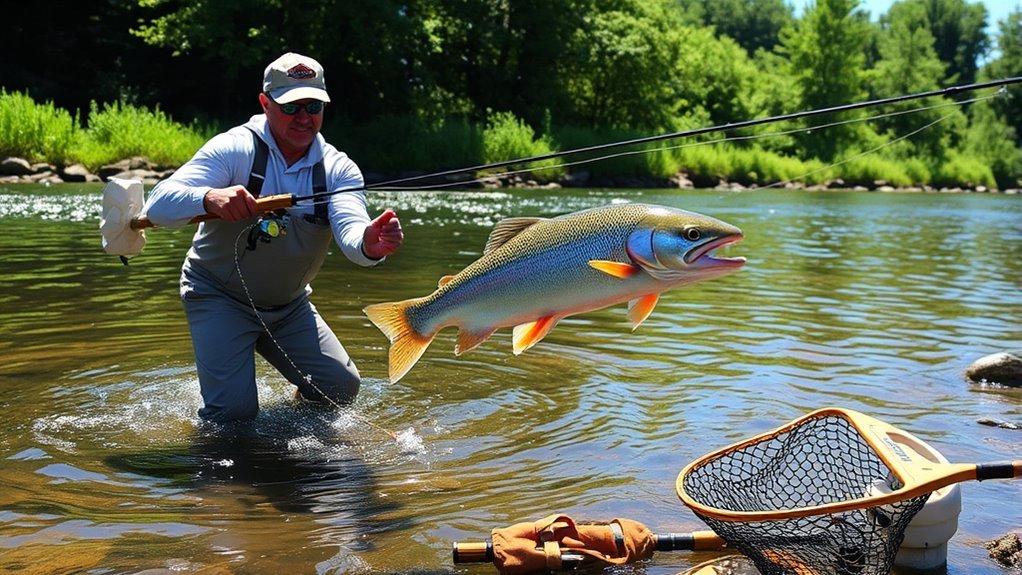
Once the hook is secure, focus on three things: maintaining useful tension, controlling the fish’s direction, and keeping it away from places where your leverage gets worse.
- Maintain a useful rod angle: Keep enough bend in the rod to absorb changes in load while using the stronger part of the rod to steer the fish.
- Follow the fish’s movements: Reel or strip line when it comes toward you and allow controlled line release when it makes a strong run.
- Manage the escape route: Change your position and rod angle before the fish reaches fast current, rocks, weeds, wood, docks, pilings, or an undercut bank.
The goal is efficient control rather than a long fight. Appropriately strong tackle lets you apply more pressure and land the fish sooner without exceeding the limits of the line, hook, or rod.
If the fish seems impossible to control, look at your angle before simply pulling harder. A few safe steps along the bank or boat can improve leverage and change which direction the fish can run.
[Amazon Products Picked for You]

STRONG FISHING BELT HARNESS - Keep your fishing rod secure and your back safe while battling big fish at sea, allowing you to achieve a personalized and comfortable fit. The fishing harness suitable for fish lover with a waist circumference of 90‑130cm/35.4‑51.2in.

Product Specifications: Fishing belt length: about 85 cm/33.5 inches; Buckle belt length: approx. 96 cm/37.8 inches; Belt width: approx. 12 cm/4.7 inches; Length of abdominal support: approx. 31.5 cm/12.4 inches; Belly support width: approx. 17 cm/6.7 inches; Aperture: approx. 45 mm/1.8 in

Adjustable Shoulder Straps: Fishing fighting belt has adjustable shoulder can be adjusted according to different body types. No matter what your body size, you can always adjust to the size that fits you most. Provide a perfect fit and also added comfort.
Use Side Pressure to Control the Fish
Side pressure is one of the most useful fish-fighting skills. Instead of relying only on an upward pull, angle the rod left or right to turn the fish’s head. Once the fish changes direction, it is often easier to guide toward safer water.
Use side pressure when the fish heads toward:
- Fast current, where flowing water adds force to the fight.
- Submerged logs, where the line can wrap, snag, or abrade.
- Rocks, where leader or line can scrape and weaken.
- Weeds or grass, where hooks and leaders can foul.
- Docks or pilings, where a fish can wrap the line around structure.
- Undercut banks, where fish may try to bury themselves.
Apply steady pressure away from the danger without a sudden yank. Keep the rod working and stay inside the safe load for your line and leader.
Pro Tip: Move your feet when you can do so safely. A few steps downstream, upstream, or along the bank can improve your angle more effectively than simply pulling harder.
Landing Process and Techniques

Bring the fish under control before reaching for the net. Choose stable footing or a safe position in the boat, keep the line under tension, and prepare the net before the fish is directly beside you.
Submerge the front of the net and guide the fish toward the opening. Do not chase or stab at the fish with the net. Take Me Fishing’s landing guidance recommends leading a fish into the net headfirst.
Wait until the fish is controllable enough to guide. A fish that is still making powerful uncontrolled runs is usually not ready for the final netting attempt.
[Amazon Products Picked for You]

High-quality Components & Floating Design: KastKing Pontus fish landing nets are built with high-quality 6063 Aluminum alloy handle and durable FBR frame for exceptional performance. The extension handle of 61in is equipped with a reinforced aluminum rib for added strength. The net is designed with floating EVA foam padding, allowing for effortless retrieval from the water while minimizing the risk of loss. Remember: hold the handle and extension pole with both hands and drag the net laterally.

High-quality Components & Floating Design: KastKing Pontus fish landing nets are built with high-quality 6063 Aluminum alloy handle and durable FBR frame for exceptional performance. The extension handle of 61in is equipped with a reinforced aluminum rib for added strength. The net is designed with floating EVA foam padding, allowing for effortless retrieval from the water while minimizing the risk of loss. Remember: hold the handle and extension pole with both hands and drag the net laterally.

【Premium Floating Design Fishing Net】Engineered with integrated buoyant foam padding, our fishing net remains afloat for instant retrieval if dropped. Features a fish-friendly rubber-coated nylon mesh that prevents snagging and protects fish, making it ideal for catch and release. Ensures hassle-free and responsible fishing.
How Do You Land a Fish in Current?
In rivers and streams, current changes the amount of pressure on both the fish and your line. When practical, keep the fish upstream or across from you so you are not constantly pulling its body directly against the strongest flow.
Move along the bank when footing is safe and guide the fish toward a softer seam, slower edge, or protected pocket. The purpose is to reduce the current’s leverage and shorten the fight—not to hold the fish in heavy flow simply to exhaust it.
As you prepare to net, keep the fish supported in the water and choose a position where the current will not sweep a weakened fish into rocks or fast water after release.
Effective Netting Techniques
Netting works best when the rod leads the fish and the net receives it.
Keep the fish’s head pointed toward the opening, submerge the front of the net, and guide the fish forward. Once the head and body are safely inside the hoop, lift or secure the net without continuing to pull hard against the rod.
Do not chase a green fish around with the net. If it surges away, return to fighting position, regain control, and make another calm attempt.
For catch and release, use a rubber or soft knotless net sized for the fish. Keep the fish in the water inside the net while preparing pliers, a camera, or other release tools.
Step-by-Step: How to Land a Fish
- Use the correct hook set: Match the motion to the hook, fishing method, fish, and line strength.
- Keep useful tension: Maintain enough rod bend to absorb movement without locking the system solid.
- Control slack immediately: Reel, strip, or otherwise recover loose line when the fish moves toward you.
- Steer the fish away from trouble: Use side pressure and body position to keep it clear of rocks, logs, weeds, docks, and heavy current.
- Let the drag work: Allow controlled line release during strong runs rather than suddenly stopping the spool or line.
- Guide the fish toward manageable water: Use a safe edge, softer current, or clear landing lane when conditions allow.
- Prepare the net before the final approach: Keep it accessible and wet, with the hoop ready in the water.
- Net it headfirst: Lead the fish into the opening rather than chasing it from behind.
- Handle it carefully: For release, keep it wet, support its body, avoid the gills and eyes, and minimize air exposure.
- Release or keep it legally: Check the current regulations for the species and waterbody and act promptly.
How to Land a Fish Without a Net
A landing net is often the safest option for a larger, toothy, heavily hooked, or difficult-to-control fish, but you may sometimes need to land a fish without one.
Choose a safe margin with good footing and keep the fish supported in the water rather than dragging it onto dry rocks, sand, grass, a dock, or a hot boat deck. Once the fish is calm enough to control, wet your hands and gently support it at the tail wrist and beneath the body when the species and size make that safe.
If you can remove the hook while the fish remains in the water, that is often better than lifting it. Use forceps, pliers, or an appropriate dehooker and keep the process short.
For toothy fish, spiny fish, large fish, or fish carrying treble hooks, do not grab blindly. Keep your hands away from teeth, gills, spines, and exposed hooks. A properly sized net or species-specific handling tool is usually the safer choice.
Safe Fish Handling After Landing
Landing the fish is not the final step. If you plan to release it, handling time, air exposure, body support, water temperature, hook location, and the fish’s condition all affect the quality of the release.
National Park Service catch-and-release guidance recommends keeping fish wet and calm, supporting their bodies, using wet hands or gloves, avoiding the gills, and allowing fish to recover before release. NOAA Fisheries also recommends landing fish with appropriately strong tackle rather than fighting them to exhaustion.
- Wet your hands first: Dry hands can remove protective mucus from the fish’s skin.
- Use a rubber or soft knotless net when possible: It is generally gentler on fins, scales, eyes, and protective mucus than rough knotted mesh.
- Keep the fish in the water: Remove the hook and prepare a photo while the fish remains supported in the water whenever practical.
- Minimize air exposure: NOAA Fisheries says less than 60 seconds is ideal if the fish must be removed from the water, and shorter is better.
- Support larger fish horizontally: Support the body rather than suspending a heavy fish vertically by its mouth.
- Avoid the gills and eyes: Do not put your fingers through the gills of a fish you intend to release.
- Allow recovery: Hold a sluggish fish upright in the water. If gentle current is available, face it into the flow; in very fast water, use a calmer recovery area when possible.
- Let the fish leave on its own: Release it when it can maintain balance and swim away under its own power.
Warning: Always check current local fishing regulations before keeping or releasing a fish. Size limits, slot limits, seasons, hook requirements, release rules, and catch limits can vary by species and waterbody.
What Changes When You Land a Fish From Deep Water?
Fish brought rapidly from deep water can suffer barotrauma as gases expand inside the body. Signs can include bloating, bulging eyes, a protruding stomach, difficulty swimming downward, or abnormal buoyancy.
NOAA Fisheries recommends returning affected fish to depth as quickly as possible with appropriate recompression or descending equipment when applicable. Some fisheries also have specific rules about descending devices, venting, species, seasons, or release methods, so follow the regulations for the water you are fishing.
Do not assume ordinary surface release technique is enough for every deep-water species. Prepare the correct release tool before fishing deep water, especially when you expect to release reef or offshore fish. For broader preparation before saltwater trips, see the Ocean Fishing Basics: Beginner’s Guide.
Common Mistakes and Corrections

Most lost fish near the end of the fight come from a small set of controllable mistakes:
- Locking the Rod at One Angle: Do not keep the rod straight up or pointed directly at the fish for the whole fight. Change the angle as the fish moves.
- Using the Wrong Hook Set: Match the set to the method. A light trout lift, downstream set, strip set, and circle-hook approach serve different situations.
- Ignoring the Escape Route: Identify current, rocks, weeds, logs, docks, and other hazards before the fish reaches them.
- Fighting Too Long: Use sufficiently strong tackle and controlled pressure instead of deliberately extending the fight.
After losing a fish, identify the moment the connection failed. A break-off during the first run points to a different problem than a fish that escapes while being netted.
More Mistakes That Cost Fish
- Reeling against a slipping drag: If the fish is actively taking line, cranking against the drag can add line twist and usually does not gain line.
- Trying to net too early: A fish that is still making uncontrolled runs can bolt when the net appears.
- Letting slack form: Slack can allow the hook to fall out or give the fish enough freedom to shake it loose.
- Grabbing the leader: Pulling directly on a light leader removes much of the rod’s cushioning effect.
- High-sticking the rod: Lifting the rod nearly vertical under heavy close-range load can place excessive stress on the upper rod section.
- Standing in one place: Safe movement along the bank or boat can improve your angle and keep a fish away from cover.
Equipment Maintenance for Success

Inspect your fishing gear before weak points become failures. Check leader and tippet for abrasion, knots for slipping or damage, hooks for dull or bent points, and rod guides for cracks that can cut line.
If you use very fine tippet such as 7X, remember that the X-size describes diameter and does not guarantee a specific breaking strength across every product. Use the strength printed by the manufacturer and choose heavier material when fish size, current, or cover makes the fine tippet impractical.
Keep the reel drag smooth and free of sticking. Rinse gear after saltwater or dirty-water use as appropriate for the equipment, and inspect net mesh, handles, clips, leaders, snaps, and hook-removal tools before the next trip.
Store rods, reels, line, leaders, nets, and tools so they are dry, protected, and ready to use. Reliable maintenance matters more than simply buying more expensive tackle.
Adapting to Local Conditions and Obstacles
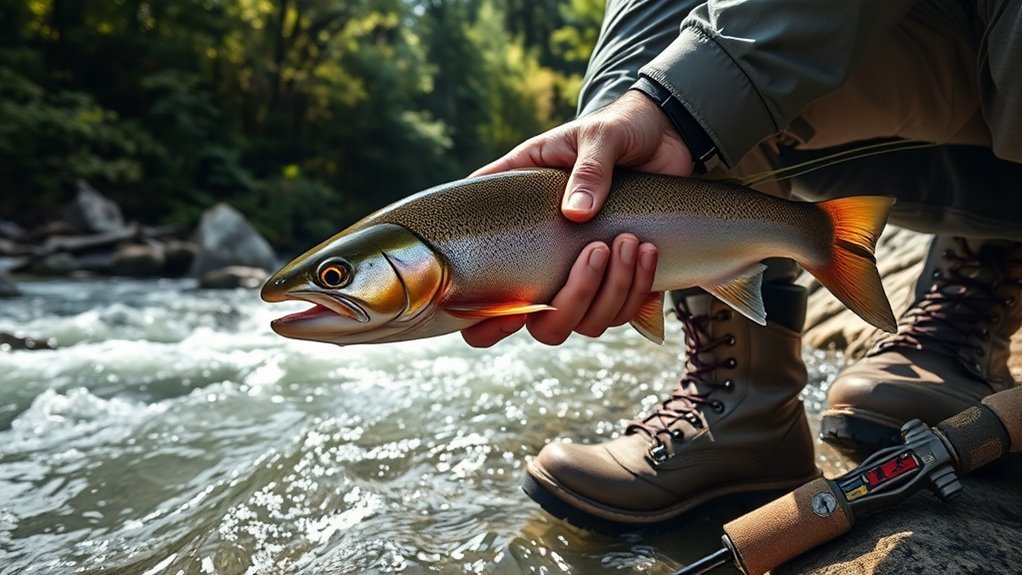
Before casting, look at the water and decide where you could safely land a fish. Your plan should change with current, depth, structure, fish size, temperature, and available footing.
- Water Conditions: Identify strong current, soft seams, shallow hazards, deep drop-offs, and safe landing lanes before a fish is hooked.
- Local Obstacles: Note rocks, submerged logs, vegetation, docks, bridge pilings, oyster or reef structure, and undercut banks that could abrade or wrap the line.
- Fishing Gear: Match line and leader strength to the expected fish and cover so you can shorten the fight rather than relying on unnecessarily light tackle.
- Release Conditions: Warm water, low flows, deep-water capture, and species-specific sensitivity can change how or whether catch and release should be practiced.
Local regulations can also dictate hook types, seasons, limits, release methods, or required equipment. Check the current rules for the exact waterbody instead of assuming the rules from another lake, river, state, or marine zone apply.
Adjusting for Different Fish and Water Types
Not every fish should be fought or landed the same way. A small trout on fine tippet, a largemouth bass beside weeds, a muskie carrying large hooks, and a reef fish brought from depth create different risks.
| Situation | Best Landing Approach |
|---|---|
| Small trout in clear water | Protect fine tippet, avoid sudden shock, and land the fish promptly once it is controlled. |
| Large trout in current | Use side pressure, move when footing is safe, and guide the fish toward softer current before netting. |
| Bass near weeds or wood | Use tackle suited to the cover and apply firm directional pressure before the fish reaches vegetation or timber. |
| Panfish or small fish | Keep steady pressure and avoid swinging a releasable fish onto dry or hard ground. |
| Toothy or heavily hooked fish | Use an appropriately sized net and long pliers or other species-appropriate tools; keep hands away from teeth, gills, spines, and exposed hooks. For muskie-specific handling, see the Muskie Fishing Basics: Beginner’s Guide. |
| Deep-water fish showing barotrauma | Minimize handling and use an approved descending or recompression method when applicable; follow species-specific and local regulations. |
Troubleshooting: Why Fish Come Off
If you keep losing fish, look for patterns. The moment the fish comes off often tells you where to start troubleshooting.
- Fish comes off immediately after the hook set: The set may not match the hook or fishing method, the hook may be dull, or excess slack may prevent solid contact.
- Leader or tippet breaks during the first run: The drag may be too tight, the material may be damaged or too light, the knot may be weak, or the hook set may be too aggressive.
- Fish breaks off near cover: You may need stronger tackle, earlier side pressure, a different casting angle, or better positioning before the bite occurs.
- Fish escapes at the net: You may be netting before the fish is under control, chasing it with the net, approaching tailfirst, or allowing slack during the final turn.
- Hook pulls out late in the fight: Pressure may have become inconsistent, the rod may have been pointed too directly at the fish, or an overly prolonged fight may have created more opportunities for the hook to loosen.
Frequently Asked Questions
How do you properly land a fish?
Keep steady pressure, guide the fish away from current and cover, and use a rod angle that lets you steer without creating slack. Bring the fish under control efficiently rather than deliberately exhausting it. When using a net, lead the fish into it headfirst and keep a releasable fish wet during handling.
How do you land a fish without a net?
Keep the fish supported in the water near a safe bank or boat position instead of dragging it onto dry ground. Wet your hands, control a small or manageable fish gently, and use pliers or a dehooker when needed. For large, toothy, spiny, or heavily hooked fish, an appropriately sized net or species-specific handling tool is safer.
What rod angle should you use when fighting a fish?
Use an angle that keeps the rod working while giving you directional control. A low side angle is useful for steering fish away from cover, while a moderate angle can provide shock absorption. Avoid pointing the rod directly at the fish, and avoid extreme high-sticking under heavy close-range load.
Should you net a fish headfirst or tailfirst?
Net a fish headfirst when possible. Put the net in the water, lead the fish toward the opening, and lift or secure the net only after the fish is safely inside. Avoid chasing the fish from behind or stabbing at it with the net.
Why do fish come off right before landing?
Fish often come off near the net because the angler creates slack, changes rod angle abruptly, grabs the leader, lifts the fish’s head too early, or tries to net while the fish is still making strong runs. Keep useful tension, stay patient, and make the final netting attempt only after the fish is controllable.
How should you release a fish safely?
Keep the fish wet, handle it with wet hands, minimize air exposure, support larger fish horizontally, and avoid touching the gills or eyes. Hold a sluggish fish upright in the water until it can maintain balance. Use gentle current for recovery when appropriate, and let the fish swim away under its own power.
Conclusion
Landing more fish comes from controlling pressure, angle, slack, and direction—not simply pulling harder. Match the hook set to your fishing method, use side pressure before the fish reaches cover, and prepare the landing net before the final approach.
If you plan to release the fish, shorten the fight with appropriate tackle, keep the fish wet, minimize air exposure, support its body, and adjust your release method for current, water temperature, species, and capture depth. Calm decisions during the final part of the fight protect your tackle, reduce lost fish, and give released fish a better chance of swimming away in good condition.