Like a sudden clap of thunder, a lightning storm can catch you off guard while fishing. If you guide clients, fish from a boat, wade a river, or stand on an open bank, you need a clear lightning safety plan before the first dark cloud forms. Knowing when to seek shelter, how to move your group, and what to do after a strike can be the difference between a close call and a disaster.
Quick Answer
Stop fishing as soon as you hear thunder, see lightning, or notice a storm building nearby. Leave open water, rods, high banks, beaches, and exposed shorelines. Move everyone to a substantial building or enclosed metal-topped vehicle, then wait at least 30 minutes after the last thunder before fishing again.
Key Takeaways
- Lightning can strike miles from the storm, so thunder is your warning to leave the water right away.
- The safest shelter is a substantial building or a fully enclosed vehicle with a metal roof.
- Fishing rods, boats, open banks, isolated trees, docks, and high terrain increase your exposure during storms.
- Guides should check forecasts, set a turnaround point, brief clients early, and identify shelter before launching.
- After a lightning strike, call emergency services, start CPR if needed, and keep yourself safe from continuing lightning.
At a Glance
| Time Required | Check weather before leaving, monitor conditions throughout the trip, and allow 30 minutes after the last thunder before returning outside. |
| Difficulty | Easy to follow if you plan shelter routes before fishing; difficult if you wait until the storm reaches you. |
| Tools Needed | Weather app, NOAA Weather Radio or marine radio where available, phone in a dry bag, float plan, first-aid kit, and emergency contacts. |
| Cost | Usually free if you already carry a phone or radio; the main investment is planning and discipline. |
Understanding Lightning Storm Risks for Anglers
When you’re out fishing, it’s essential to understand the risks posed by lightning storms. Anglers often stand near open water, hold long graphite or metal rods, and spend hours in exposed areas. That combination makes storms especially dangerous.
The National Weather Service teaches a simple rule: when thunder roars, go indoors. Thunder means lightning is close enough to threaten you, even if rain has not reached your fishing spot yet.
Lightning does not need to hit you directly to cause serious injury. Ground current, side flashes, contact with conductive objects, and water-related exposure can all injure people near a strike.
Fishing guides face extra responsibility because they must protect clients, not just themselves. Before each trip, you should explain your storm plan, identify shelter options, and make it clear that fishing stops when thunder starts.
Lightning often increases during warm, unstable afternoons, so midday and evening trips need special attention. Do not rely on blue sky overhead if thunderheads are building nearby.
Use distance rules only as backup, not as permission to keep fishing. If you see lightning and hear thunder within 30 seconds, the storm is close enough that you should already be moving to shelter.
Warning: No fish, tournament, client photo, or paid trip is worth staying on the water during lightning. End the session early when the weather turns unsafe.
Monitoring Weather Conditions Before Fishing
Understanding the risks of lightning storms is just the beginning. Monitoring weather conditions before you head out fishing is equally important because storms can form, strengthen, and change direction fast.
Check the forecast before you leave home, again before launching, and throughout the trip. Look for thunderstorm chances, severe weather alerts, wind shifts, and fast temperature changes.
Use the 30-second rule as an emergency cue: if you count 30 seconds or less between seeing lightning and hearing thunder, the storm is roughly six miles away. That is close enough to stop fishing and move to shelter immediately.
If you see lightning and hear thunder within 30 seconds, take immediate precautions. Do not wait for rain before leaving the water.
Pay attention to local weather patterns. Many thunderstorms become more likely during the afternoon and early evening, so plan longer trips around the highest-risk part of the day.
Listen to NOAA Weather Radio, marine weather channels, or local alerts when available. The NOAA Weather Radio network provides official warnings, watches, forecasts, and hazard information.
Also watch the sky. Towering clouds, dark bases, anvil-shaped tops, sudden gusts, distant rumbles, and fast-cooling air can all signal a storm building nearby. If you wait until lightning is directly overhead, you waited too long.
Pro Tip: Before every guided trip, choose a “leave now” trigger. For example, you might stop fishing when thunder is heard, a warning is issued, or storms appear within a set distance on radar.
Pre-Trip Lightning Safety Plan for Fishing Guides
If you guide anglers, build lightning safety into your normal trip briefing. Clients may focus on the catch, so you need to set expectations before weather becomes stressful.
Start by explaining that thunder, visible lightning, or official warnings mean the trip pauses or ends. This avoids arguments later and shows your group that safety is part of your professional standard.
Identify the closest safe shelters before launching. A safe shelter is usually a substantial building with wiring and plumbing, or a fully enclosed vehicle with a metal roof. Picnic shelters, open docks, tents, dugouts, and isolated trees do not provide reliable lightning protection.
Carry emergency contacts, a charged phone, a backup power bank, and a basic first-aid kit. For remote trips, share a float plan with someone on shore so they know your route and expected return time.
If storms are forecast, adjust the trip instead of hoping conditions improve. A shorter morning trip, different launch site, closer shoreline route, or full cancellation can prevent a dangerous scramble later.
Safety Precautions While Wading or Fishing From the Bank
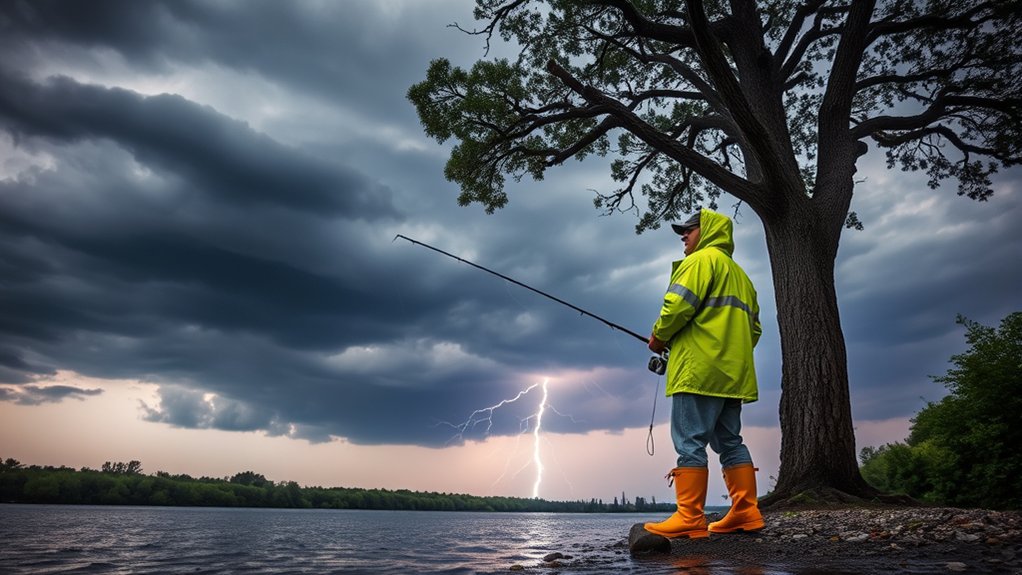
While fishing can be relaxing, safety must always come first, especially when lightning is possible. If you notice lightning in the area or hear thunder, move away from the water immediately.
Do not keep casting from a shoreline, sandbar, pier, jetty, or open bank. Water, wet ground, exposed shorelines, and long rods can increase your exposure during a storm.
Place your fishing rods flat on the ground only if you cannot carry them safely while leaving. Do not hold rods upright, wave them, or keep casting while thunder is nearby.
Your best option is to leave for a substantial building or enclosed vehicle. If that shelter is close, go there right away and keep your group together.
If you are caught far from shelter, move away from tall isolated objects, ridgelines, fences, metal railings, and open water. Avoid being the tallest object in the area.
Do not shelter under a lone tall tree. If you must move through wooded terrain, lower, uniform tree cover is safer than standing beside one isolated tree, but it still is not a truly safe lightning shelter.
Crouching should be treated as a last resort when you cannot reach shelter. It does not make you safe, but it may reduce your profile while you continue looking for a safer place.
Remember, being proactive about your safety while wading or fishing from the bank is vital during stormy weather. Leave early, not at the last second.
Safety Measures for Anglers in a Drift Boat
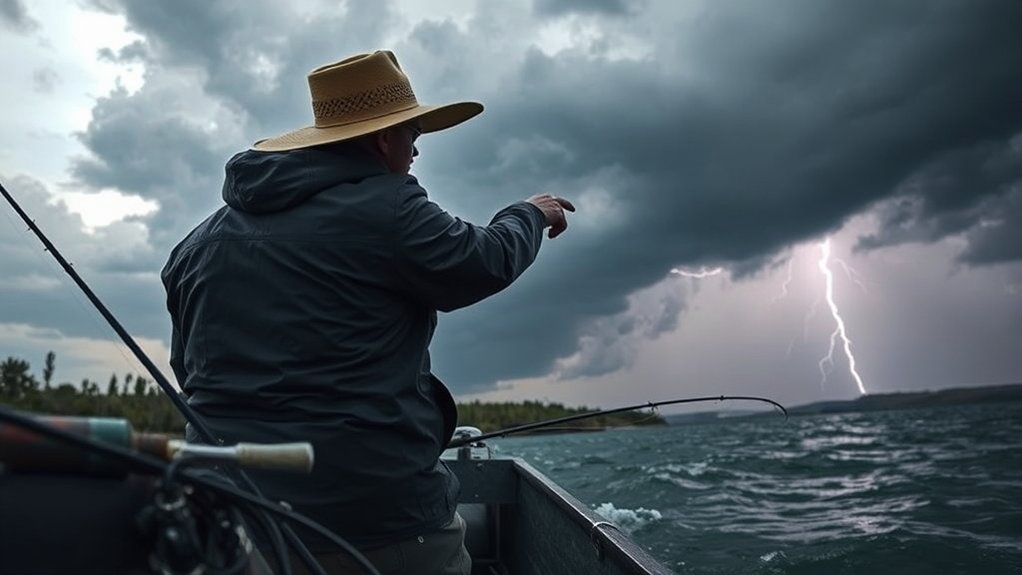
As a drift boat angler caught in a lightning storm, your safety should be your top priority. The safest action is to get off the water before the storm reaches you.
If thunder begins while you are floating, stop fishing and move toward the nearest safe takeout, marina, ramp, vehicle, or substantial building. Do not continue drifting just to finish a run.
If you can reach a bridge or protected landing safely, use it only as a temporary route to better shelter. Avoid touching metal bridge structures, cables, railings, and wet concrete surfaces during lightning.
Always anchor your boat away from trees, cliffs, power lines, and tall shoreline objects if you must stop. Tall isolated objects can attract lightning and create dangerous side flashes.
To reduce exposure, lay your fishing rods flat in the boat and stop casting. Keep passengers low, calm, and separated from metal gear as much as practical.
Anchor away from tall trees, stop casting, lay rods flat, and move toward safe shelter as soon as thunder or lightning appears.
During the storm, sit low in the boat only if you cannot immediately reach shore. This lowers your profile, but it does not make the boat safe.
Stay vigilant because storms can develop quickly. Having a plan in place can improve your response to changing conditions and reduce panic among clients or family members.
Your best defense against lightning is to be proactive. Make conservative decisions early, especially on rivers where exits may be limited.
Safety Measures for Motorboats, Kayaks, and Canoes
Motorboats, kayaks, canoes, and paddleboards each create different lightning challenges. Small craft are especially exposed because you sit low on open water with few quick shelter options.
If you are in a motorboat and storms approach, head to the nearest safe harbor, ramp, marina, or shoreline shelter before lightning begins. Reduce speed when visibility drops, but do not delay leaving open water.
If your boat has a cabin, stay inside it only if you cannot reach shore. Avoid touching metal rails, electronics, antennas, steering components, and wet conductive surfaces during lightning.
Kayak and canoe anglers should plan exits before launching. Choose routes with frequent takeouts when storms are possible, and avoid long open-water crossings during unstable weather.
If you paddle, wear your life jacket, secure loose gear, and head to shore as soon as thunder is heard. Once ashore, move away from the waterline and seek a real shelter.
Note: A boat can protect you from drowning risk when worn correctly with a life jacket, but it is not a reliable lightning shelter. Your main goal is to leave open water before the storm arrives.
Lightning Injury Statistics and Causes
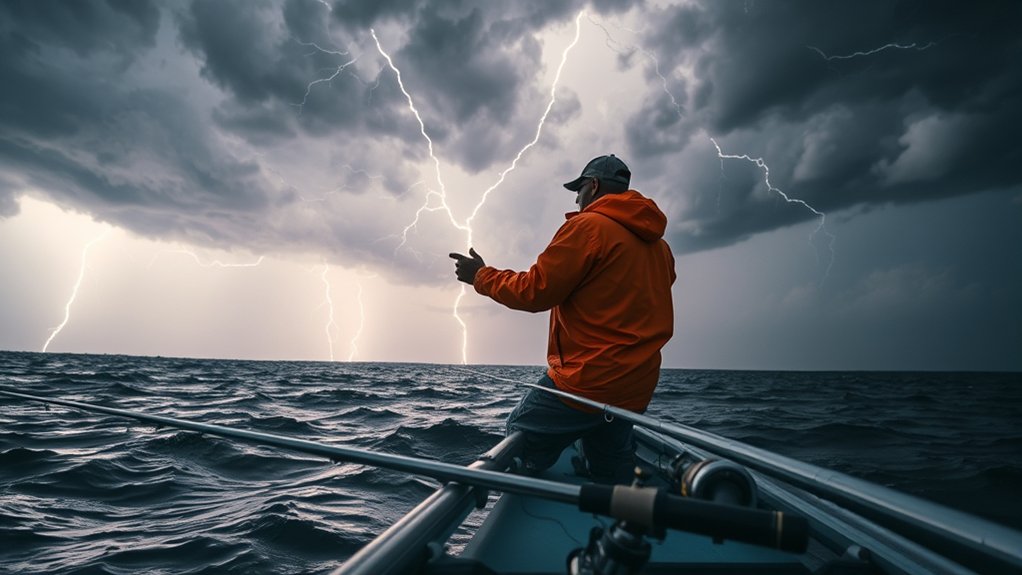
Lightning poses a significant danger to anglers, particularly during storms when they are out on the water or standing in open areas. Fishing combines several risk factors: water, exposure, long rods, wet ground, and delayed access to shelter.
Outdoor recreation is a common setting for lightning deaths and injuries. Fishing, boating, camping, sports, beach activities, and yard work all place people outside when storms can develop.
It is important to understand that a direct strike is not the only danger. Many lightning injuries happen when current travels through the ground, jumps from a nearby object, or passes through something a person is touching.
Ground current can spread outward from a strike point and affect more than one person. Contact injuries can happen when someone touches a metal railing, fence, rod, boat part, or other conductive object during a strike.
Side flashes can occur when lightning hits a nearby object, such as a tree, then jumps to a person standing close to it. That is one reason isolated trees are poor shelter choices.
Recognizing these risks can help you make informed decisions during your fishing trips. When thunder begins, the right choice is to stop fishing, leave the exposed area, and wait safely.
Treatment for Lightning Strikes
When a lightning strike occurs, it’s crucial to act quickly and safely to assist the victim. First, make sure the scene is as safe as possible because additional lightning can still strike nearby.
Move yourself and others away from water, metal objects, open ground, and tall isolated objects if you can do so without delaying life-saving care. Call emergency services immediately.
Lightning victims do not carry an electrical charge, so it is safe to touch them once the scene is safe. Check responsiveness, breathing, and pulse right away.
If the person is unconscious, not breathing normally, or has no pulse, begin CPR if you are trained and continue until emergency help arrives or another trained person takes over.
Use an automated external defibrillator if one is available and you know how to use it. Lightning can disrupt the heart’s rhythm, so fast action matters.
Also look for burns, trauma from falls, hearing problems, confusion, weakness, numbness, or vision changes. These symptoms need medical evaluation even if the person seems awake.
Monitor the victim closely for heart, breathing, and neurological problems. It’s important to seek emergency medical assistance promptly, especially after any direct or nearby strike.
Your quick response can make a significant difference in recovery. Always prioritize safety for yourself and others when treating lightning strike victims.
Lightning Prevention Strategies for Outdoor Activities
When you’re out fishing, it’s vital to seek shelter immediately if a thunderstorm approaches. Do not wait for heavy rain, because lightning often arrives before the storm core.
Keep an eye on weather updates to anticipate storms, and avoid positioning yourself near tall objects that could attract lightning.
Seek Shelter Immediately
As storms approach, seeking shelter immediately becomes essential for your safety during outdoor activities like fishing.
There are no safe outdoor locations when lightning is present, so head for sturdy buildings or enclosed vehicles. Avoid high terrain and isolated tall objects, as they can increase your exposure.
Use the 30-second rule: if you hear thunder within 30 seconds of seeing lightning, the storm is close enough that you need to take immediate precautions.
Always prioritize your safety over the fishing experience. Err on the side of caution and move to a safe location as soon as you detect storm conditions.
Monitor Weather Conditions
Monitoring weather conditions is essential for ensuring your safety while fishing, especially during storm season. Always check local forecasts for storm warnings to stay informed about potential lightning activity.
Use the 30-second rule: if you count 30 seconds or less between seeing lightning and hearing thunder, the storm is within roughly six miles, and you need to take immediate precautions.
| Signs of Storms | Actions to Take | Safety Tips |
|---|---|---|
| Darkening skies | Seek shelter quickly | Enclosed buildings are safest |
| Rapid wind changes | Avoid open water/high terrain | Do not rely on small sheds or trees |
| Increasing humidity | Stay alert for storm buildup | Have a plan for quick shelter |
| Thunder or lightning | Leave the water immediately | Monitor weather continuously |
Avoid Tall Objects
To stay safe while fishing during stormy weather, it’s crucial to avoid tall objects like isolated trees, poles, towers, fences, and exposed structures.
When you find yourself in an open area, seek safer shelter rather than standing near the tallest object. If no shelter is immediately available, move toward lower terrain while avoiding water, metal, and isolated trees.
If a storm approaches, move away from high ground and large bodies of water. These locations leave you exposed and can make escape harder once wind and rain begin.
Should you get caught in a storm with no reachable shelter, crouch low only as a last resort while keeping as little contact with the ground as practical. Do not lie flat, because that can increase ground-current exposure.
Always stay aware of local weather forecasts and storm patterns, ensuring that your fishing activities are away from areas prone to lightning strikes.
What to Do If You Cannot Reach Shelter
Sometimes anglers misjudge distance, river access, or storm speed. If you cannot reach a building or enclosed vehicle, focus on reducing exposure while continuing to seek a safer location.
Move away from water, boats, docks, metal fences, isolated trees, exposed ridges, and open beaches. Keep your group spread out by several yards so one ground-current event is less likely to injure everyone.
Put down fishing rods, umbrellas, push poles, landing nets, and other tall or conductive gear. Stay low, but do not lie flat on wet ground.
Do not shelter in a small open-sided structure, under a lone tree, beside a metal gate, or under a cliff edge where water may run. These places can create new risks.
As soon as the storm passes, continue waiting until at least 30 minutes after the last thunder before you resume fishing or move back into exposed areas.
Final Takeaways for Ensuring Safety During Storms
When planning your fishing trip, keeping an eye on the weather is crucial, since storms can arise unexpectedly, especially during warm afternoon conditions. Always check forecasts before heading out to avoid being caught off guard.
Keeping an eye on the weather is essential for a safe and enjoyable fishing trip. Always check forecasts before you go, and leave the water when thunder begins.
If you see lightning or hear thunder, seek immediate shelter in a building or vehicle. There is no safe outdoor location during an active thunderstorm.
Use the 30-second rule: if you count 30 seconds or less between lightning and thunder, the storm is dangerously close. Do not wait; take action immediately.
Remember, anglers can face higher lightning exposure than many other outdoor groups because they are often near water, boats, rods, wet surfaces, and open shorelines.
After the last lightning or thunder, wait at least 30 minutes before resuming any outdoor activities, including fishing.
Prioritizing safety ensures you can enjoy your fishing adventures without unnecessary risks. Stay vigilant, make conservative decisions, and be prepared to act quickly.
Frequently Asked Questions
What Is the 30-30 Rule for Lightning?
The 30-30 rule means you seek shelter if thunder follows lightning within 30 seconds, then wait 30 minutes after the last thunder before returning outside. It is a simple safety rule for judging when a storm is too close for fishing.
Is It Safe to Fish During Lightning?
No, it is not safe to fish during lightning. Stop fishing as soon as you hear thunder or see lightning. Leave open water, exposed banks, docks, piers, and rods, then move to a substantial building or enclosed vehicle.
How Do You Avoid Getting Struck by Lightning While Fishing?
Avoid lightning by checking forecasts, leaving the water when thunder starts, staying away from tall isolated objects, laying rods down, and using real shelter. Do not shelter under trees, on open banks, in small sheds, or on exposed docks.
What Is the 5-Second Rule for Lightning?
The 5-second rule estimates lightning distance. Count the seconds between a flash and thunder, then divide by five to estimate miles. For example, 15 seconds is about three miles. If you hear thunder at all, you should already be moving to shelter.
Should You Hold a Fishing Rod During a Thunderstorm?
No. Stop casting and put the rod down when thunder or lightning is nearby. Fishing rods can make you more exposed, especially when held upright on open water, high banks, beaches, or boats.
Can Lightning Strike Before It Starts Raining?
Yes. Lightning can strike before rain reaches your location and can occur away from the heaviest part of a storm. That is why thunder, dark clouds, gusty wind, and nearby lightning should all trigger your shelter plan.
Sources
- National Weather Service Lightning Safety — supports thunderstorm shelter guidance, lightning safety timing, and the “when thunder roars, go indoors” rule.
- National Weather Service Thunderstorm Safety — supports thunderstorm warning awareness and safe shelter planning.
- NOAA Weather Radio — supports use of official weather alerts and hazard information before and during fishing trips.
- National Weather Service Marine Forecasts — supports checking marine and coastal weather information before boating or fishing on open water.
Conclusion
When you’re out on the water, it’s easy to underestimate the storm clouds brewing overhead. But the thrill of fishing is never worth risking your safety or the safety of your group.
By staying alert, checking weather before and during the trip, and following lightning safety guidelines, you can protect yourself and your clients. Imagine this: instead of being caught in a storm, you are safely under shelter, watching the rain fall, knowing you made the right choice.
Prioritize safety, leave early when thunder begins, and wait at least 30 minutes after the last thunder before returning outside. That simple discipline helps ensure many more fishing trips to come.