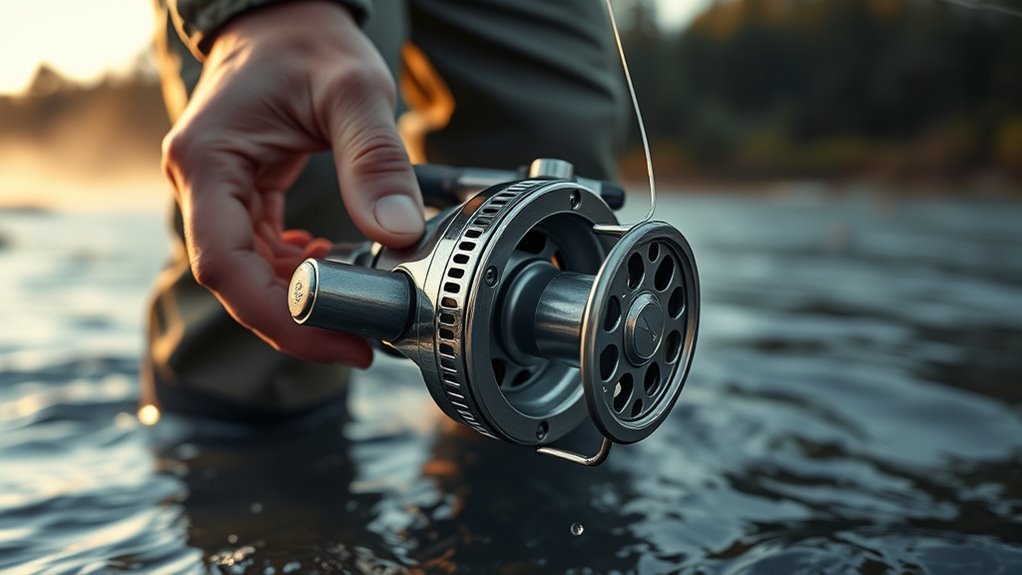
Using a left-handed centrepin starts with choosing a comfortable rod hand, then matching the reel and line direction to it. The main challenge is learning to cast and control a freely rotating spool without creating loose loops. Once your setup feels natural, a centrepin gives you direct control over line release, float presentation, and the fight with a fish.
Quick Answer
If you prefer holding your centrepin rod in your left hand, use your right hand to wind and operate the free spool. Check that the reel supports your chosen retrieve direction, then load the line for smooth forward winding. Start with a simple loop cast, practise the Wallis cast, and control spool speed with gentle finger pressure.
At a Glance
| Difficulty | Beginner setup; casting requires practice. |
| Tools Needed | Centrepin rod and reel, suitable mainline, optional backing, and a float rig. |
Key Takeaways
- Retrieve direction describes which hand winds the reel, not which hand holds the rod.
- Bottom-fed line is a common beginner setup, although some anglers prefer top feed.
- Backing depends on spool depth, reel design, and the amount of mainline required.
- A loop cast is easier to learn first; a Wallis cast feeds line directly from the rotating spool.
- Finger pressure is the main way to control a traditional free-running centrepin.
- Some models have an adjustable tension system, while others rely almost entirely on manual control.
What Hand Should You Use With a Centrepin?
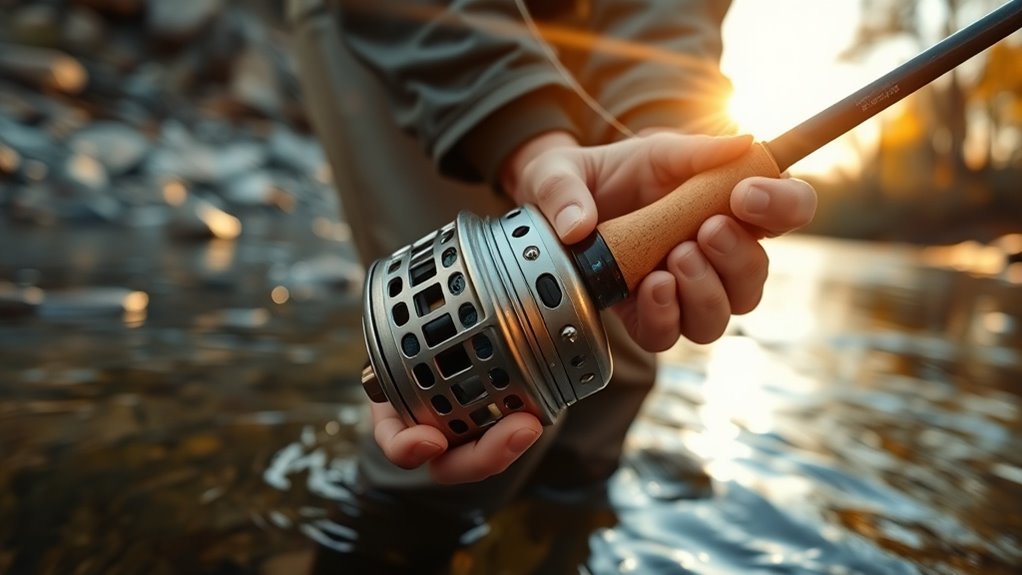
If you are left-handed, you may prefer holding the rod in your left hand and winding with your right. This keeps your dominant hand responsible for casting, striking, and controlling the rod while your other hand retrieves line.
However, left-hand retrieve means winding with the left hand. It does not automatically mean the setup suits someone who holds the rod in their left hand.
This distinction matters because the original reel-hand choice affects your grip, casting motion, and winding direction.
Rod Hand Versus Retrieve Hand
Two arrangements are possible, and neither is required for every left-handed angler.
- Rod in left hand: Wind with your right hand and control the rod with your left.
- Rod in right hand: Wind with your left hand using a suitable left-hand retrieve arrangement.
Choose the arrangement that allows you to cast, retrieve, and control the spool without repeatedly changing your grip.
Check the reel’s clicker, handles, and frame clearance before settling on either arrangement. The controls should remain accessible without interfering with your hand.
A comfortable setup also keeps the reel balanced against the rod, helping reduce wrist strain during long sessions.
How to Set Up a Left-Handed Centrepin Reel
Setting up a left-handed centrepin involves fitting the reel securely, choosing your winding direction, and confirming that the spool turns freely. Start with the reel unloaded so you can check its controls before adding line.
Different reel designs use different mechanisms, so follow the instructions for your specific model.
Step-by-Step Reel Setup
- Choose your rod hand. Hold the rod naturally and decide which hand will operate the reel.
- Mount the reel securely. Fit its foot into the reel seat and tighten the seat without forcing it.
- Check the handle position. Make sure the handle, ratchet control, and frame do not interfere with your grip.
- Confirm the retrieve direction. Turn the spool by hand and identify the direction that winds line onto it.
- Check the clicker or pawl. If the reel supports conversion, follow its manufacturer’s instructions.
- Test free rotation. Disengage the clicker where appropriate and check that the spool rotates smoothly.
Some centrepins are designed for either retrieve direction. Others have a direction-specific ratchet or require adjustment before use.
For example, the BC Reel Company Gold Standard user manual specifies clockwise spooling for right-hand retrieve and counterclockwise spooling for left-hand retrieve.
Those directions apply to that model. Do not assume another reel uses the same conversion procedure.
Warning: Keep fingers clear of spool openings and rapidly rotating handles. A fish can accelerate the spool suddenly, so apply braking pressure to a safe, accessible rim rather than reaching through moving components.
How to Spool a Left-Handed Centrepin Correctly
Correct spooling begins with the retrieve direction. The line must wind onto the reel in a way that lets you retrieve naturally and release line smoothly during a cast or drift.
For beginners, having the line leave the bottom of the centrepin is a common arrangement. Top feed is also possible, depending on the reel and fishing style.
The Angling Times guide to loading a centrepin explains both arrangements and identifies bottom feed as the usual beginner choice.
Step-by-Step Spooling Instructions
- Confirm the winding direction. Decide which way the spool must rotate to retrieve line with your chosen hand.
- Attach the backing. If backing is needed, secure monofilament or Dacron to the spool arbor with an Arbor Knot or suitable Uni Knot.
- Wind the backing evenly. Maintain light tension and keep the line distributed across the spool.
- Connect the mainline. Use a suitable line-to-line knot and trim the tag ends neatly.
- Add the mainline. Wind under steady tension while checking that the line does not bunch along one side.
- Leave rim clearance. Avoid packing line tightly against the spool lip or frame.
- Thread the rod guides. Run the line through each guide and check that nothing catches during retrieval.
- Test line release. Pull line from the reel and wind it back in to confirm the direction feels natural.
How Much Backing Should You Use?
Backing creates a base beneath the mainline and reduces the amount of fishing line needed to fill a deep spool.
The original recommendation of one-third to one-half of the spool is not a universal requirement. Actual backing capacity varies with spool dimensions and line diameter.
As a documented example, BC Reel Company’s Gold Standard manual specifies one-third backing and two-thirds mainline when backing is used.
Use your reel manufacturer’s capacity information rather than assuming the same proportion works for every centrepin.
Leave enough space for the mainline to sit evenly without rubbing the reel frame.
Which Mainline Works for Centrepin Fishing?
Supple, buoyant monofilament is commonly used for float fishing because it is easy to manage during long drifts.
For steelhead-style centrepin fishing, 8–12 lb monofilament is a common starting range. The exact strength depends on fish size, current, cover, and the rod’s rating.
The RAVEN Main Line specifications include 8 lb and 10 lb monofilament, with diameters of 0.26 mm and 0.28 mm respectively.
Choose the line strength for your fishing conditions rather than assuming one diameter suits every river.
How to Cast a Centrepin Left-Handed
A left-handed centrepin cast follows the same basic movements as a right-handed cast, with the hands reversed where needed. Hold the rod in your preferred casting hand and use the other hand to control line release.
The easiest starting point is a simple loop cast. Once you can control the spool reliably, practise the Wallis cast.
Start With a Simple Loop Cast
A loop cast lets you release a measured amount of line without immediately mastering direct spool-driven casting.
- Hold the rod in your left hand if that is your preferred casting hand.
- Use your right hand to pull a loop of line from between the reel and the first rod guide.
- Keep the rod grip relaxed and the float rig clear of obstacles.
- Make a smooth sideways casting movement.
- Release the loop as the rig moves towards its target.
- Control the spool as the rig reaches the water.
Start with short casts. Increase the amount of line released only after you can cast without loose loops or tangles.
A double-loop cast can release more line by drawing separate loops from the lower rod guides.
Learn the Wallis Cast
The Wallis cast uses the moving line and casting action to start the spool rotating. This allows line to leave the reel directly rather than peeling sideways from the spool.
It takes more coordination than a basic loop cast but offers greater control once the timing becomes familiar.
- Prepare the rig. Let the float and terminal tackle hang clear of the rod tip.
- Hold the rod. Keep your preferred casting hand on the rod, with light contact on the spool rim.
- Take the line. Use your free hand to take a short length of line from the reel.
- Begin the cast. Dip and lift the rod smoothly, allowing the rig to swing forwards.
- Start spool rotation. Pull the line with your free hand as the rod moves through the casting motion.
- Release smoothly. Let the line feed from the spool while maintaining control of its speed.
- Feather the rim. Apply light pressure as the rig approaches the water.
- Stop the spool. Prevent it from continuing to rotate after the cast lands.
Practise the sequence slowly before trying longer casts. The rod, free hand, and spool need to work together.
The Fishing World centrepin casting guide demonstrates how line tension starts spool rotation and how controlled braking prevents an overrun.
Pro Tip: Practise the Wallis cast on open ground with a safe practice weight instead of a baited hook. Concentrate on stopping the spool at the end of each cast before increasing distance.
Side Cast Versus Wallis Cast
The two methods release line differently, so they do not produce the same results.
- Loop or side cast: Easier to begin with, but line released sideways can develop twist over repeated casts.
- Wallis cast: Feeds line through direct spool rotation and avoids the sideways line release that causes twist.
You do not need to master the Wallis cast before using a centrepin successfully. Consistent line control matters more than casting distance.
How to Control the Spool While Fishing
Most centrepins depend on direct finger pressure to regulate line release. Unlike a conventional spinning reel, a traditional centrepin does not automatically manage a fish’s run through a standard adjustable fighting drag.
Some models include adjustable spool tension, while others have little mechanical resistance when the clicker is disengaged.
Your hand provides the fine control needed for casting, drifting, striking, and retrieving.
Thumb Braking Control
Thumb braking means applying controlled pressure to the spool rim to slow or stop rotation.
On a left-handed rod grip, your thumb or fingers can contact the accessible rim while your other hand manages the line and handles.
The amount of pressure should change with the situation.
- Use light pressure when controlling line during a drift.
- Increase pressure gradually if the spool begins rotating too quickly.
- Slow the spool before the float or rig reaches the end of a cast.
- Stop uncontrolled rotation when striking a fish.
- Reduce pressure carefully when a hooked fish needs to take line.
Do not grip a rapidly rotating handle or reach through the spool openings.
Controlling the Float During a Drift
A centrepin works especially well for trotting, where a float carries bait downstream with the current.
The aim is to release line smoothly while keeping the float moving naturally through the chosen run.
Keep unnecessary slack off the water and use the rod tip to manage the line’s path.
If the float drags unnaturally, check whether you are holding back too much line or allowing a large belly to form between the rod tip and float.
The Douglas Outdoors centrepin fishing guide explains how controlled line release, rod position, and float balance support a natural presentation.
Clicker and Drag Use
A centrepin clicker, also called a ratchet or check, applies resistance and produces a clicking sound as the spool turns.
It is useful for preventing unwanted spool movement during transport. It can also provide audible line-movement indication in some stationary fishing arrangements.
However, the clicker is not the primary bite indicator when actively trotting a float. The float provides the visual indication.
Most anglers disengage the clicker when they want the spool to rotate freely during active drift fishing.
Some reels also include a separate adjustable tension or clutch mechanism. Set this only as required by the reel design and fishing conditions.
Do not confuse light spool tension with a conventional fighting drag. The rod and controlled manual braking remain central to playing a fish.
Retrieving Line and Playing a Fish
Retrieve line by rotating the spool in the winding direction. Backwinding refers to allowing the spool to rotate backwards and release line, not the normal retrieve itself.
When a fish runs, maintain steady rod pressure and let line leave the reel under controlled resistance.
Wind line back when the fish slows or moves towards you. Keep enough tension to prevent loose loops from forming.
Before striking, control the spool so the rod movement transfers pressure through the line instead of simply spinning the reel.
Left-Handed Centrepin Mistakes to Avoid
Most beginner problems come from choosing the wrong winding arrangement, loading line in an awkward direction, or allowing the spool to rotate without control.
Check these areas before assuming the reel is faulty.
Reel Hand Choice
The most common source of confusion is assuming that a left-handed angler automatically needs left-hand retrieve.
If you hold the rod in your left hand, you will usually wind with the right hand. If you prefer winding with your left hand, you can hold the rod in your right.
Before fishing:
- Check which hand operates the reel handles.
- Confirm the direction that retrieves line.
- Check whether the ratchet works in that arrangement.
- Make sure the frame and controls clear your gripping hand.
- Practise casting and retrieving without changing your grip unnecessarily.
Line Direction Errors
Incorrect line direction makes retrieval awkward and can interfere with casting or line management.
Bottom feed is a common starting arrangement, but top feed is not automatically wrong. The important point is that the direction matches your chosen winding method.
If line comes off the reel unexpectedly or catches behind the spool, stop and inspect the setup.
Also check for uneven line lay, loose backing, or an overfilled spool.
Drag and Clutch Use
Applying too much mechanical resistance can stop a centrepin from releasing line smoothly during a drift.
Leaving the spool completely uncontrolled can create the opposite problem: excessive rotation and tangled line.
Use the reel’s tension adjustment only as its design allows, and develop manual control through practice.
Do not rely on the clicker as your only means of controlling a hooked fish.
Quick Troubleshooting Checklist
- Line tangles during casting: Check spool overrun, loose loops, and the timing of your release.
- The float stops drifting naturally: Check for excessive spool tension or line drag.
- The reel winds awkwardly: Recheck retrieve direction and line feed.
- The spool turns unevenly: Inspect for trapped line, debris, or a binding component.
- The clicker stays engaged: Check its control and the manufacturer’s operating instructions.
If the spool remains rough or binds after basic inspection, follow the manufacturer’s cleaning and maintenance procedure before fishing again.
Frequently Asked Questions
What Is the Point of a Center Pin Reel?
A center pin reel allows line to leave a freely rotating spool with very little resistance. This makes it useful for float fishing and natural downstream drifts. You control line release directly with your hand, which also helps when casting and playing fish.
Is a Left-Handed Baitcaster Harder to Find?
Left-hand retrieve baitcasters are available, although stock varies by manufacturer, model, and retailer. Unlike many spinning reels, a baitcaster’s handle position is usually fixed. A centrepin is a different reel design, so check its specific retrieve arrangement and conversion options rather than relying on baitcaster specifications.
What Line Should You Use on a Centerpin Reel?
Supple, buoyant monofilament is a common choice for centrepin float fishing. An 8–10 lb mainline can suit many standard float-fishing setups, while heavier conditions may require stronger line. RAVEN Main Line is one example. Match your line to the rod, target fish, and fishing conditions.
How Do You Cast With a Centerpin?
You can cast a centerpin using a simple loop cast or a Wallis cast. A loop cast releases line pulled from the rod guides. A Wallis cast starts the spool rotating as the rig moves forwards. Both methods require you to control and stop the spool to prevent overruns.
Conclusion
A reliable left-handed centrepin setup should match the way you naturally hold and control your rod. Choose the retrieve direction first, load the line correctly, and practise smooth spool control before attempting longer casts.
Start with short loop casts, then develop your Wallis casting technique as your timing improves. The goal is not maximum spool speed, but controlled line release from the cast through the final retrieve.
Sources
- BC Reel Company — Gold Standard Centerpin User Manual: Retrieve direction, backing proportions, clicker operation, and reel safety.
- Angling Times — How to Use a Centrepin Reel for Float Fishing: Line loading, top and bottom feed, casting, and spool control.
- RAVEN Tackle — Anglers Catalogue: Mainline properties, available strengths, and line diameters.
- Douglas Outdoors — Centerpin Fishing 101: Float-fishing equipment, line selection, and drift control.
- Fishing World — How to Cast a Centrepin: Wallis casting technique, spool rotation, and manual braking.
