To release fish safely, handle the fish with wet hands, support its body horizontally, and keep it in or near the water as much as possible. Limit out-of-water time during photos, remove hooks gently, and cut the line if the hook is deeply swallowed. Before release, face the fish into the current or gently move it forward in still water so oxygen-rich water passes over its gills. Release it only when it can swim away strongly.
Quick Answer
The safest way to release a fish is to keep it wet, handle it gently, remove the hook quickly, and return it to the water as soon as possible. If the fish looks tired, revive it in the water until it swims upright and pulls away under its own power.
Key Takeaways
- Wet your hands, net, and measuring surface before touching the fish to protect its slime layer.
- Keep the fish in the water whenever possible and limit photos to just a few seconds.
- Use barbless hooks, circle hooks, pliers, and rubberized nets to reduce injury and stress.
- Cut the line if the fish is deeply hooked instead of pulling the hook out by force.
- Revive tired fish facing into gentle current, then release them when they swim strongly.
At a Glance
| Time Required | A few seconds for a healthy fish; 30 seconds or longer if the fish needs revival. |
| Difficulty | Easy, but timing and gentle handling matter. |
| Tools Needed | Barbless or circle hooks, needle-nose pliers, rubberized landing net, line cutters, and a wet measuring board if needed. |
| Cost | Low. Most safe-release tools are basic fishing accessories. |
Understanding Catch and Release
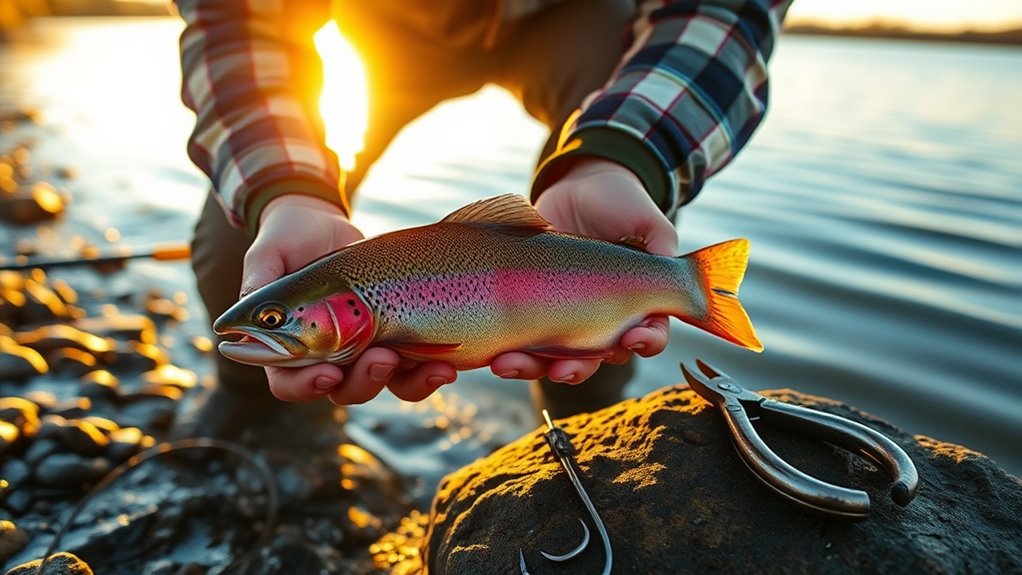
Understanding catch and release is important for any angler who wants to support healthy fish populations. This fishing practice lets you enjoy the sport while giving the fish a better chance to survive, recover, and be caught again in the future.
Safe release starts before the fish leaves the water. Use wet hands when handling fish to protect the slime layer that helps guard against infection and injury. Keep the fish in the water as much as possible, and avoid squeezing its belly, gills, or eyes.
Quick releases are critical. The longer a fish stays out of water, the more stress it experiences, especially in warm weather or after a long fight. By releasing the fish quickly and calmly, you greatly improve its chances of survival.
Adopting these practices helps maintain robust fish populations, supports ecosystem health, and encourages sustainable fishing for future generations. When you learn better handling habits, you make a positive impact on the water every time you fish.
Warning: Never hold a fish by the gills or hang a large fish vertically for a long photo. Poor support can damage gills, jaws, and internal organs.
Preparation for Safe Fishing
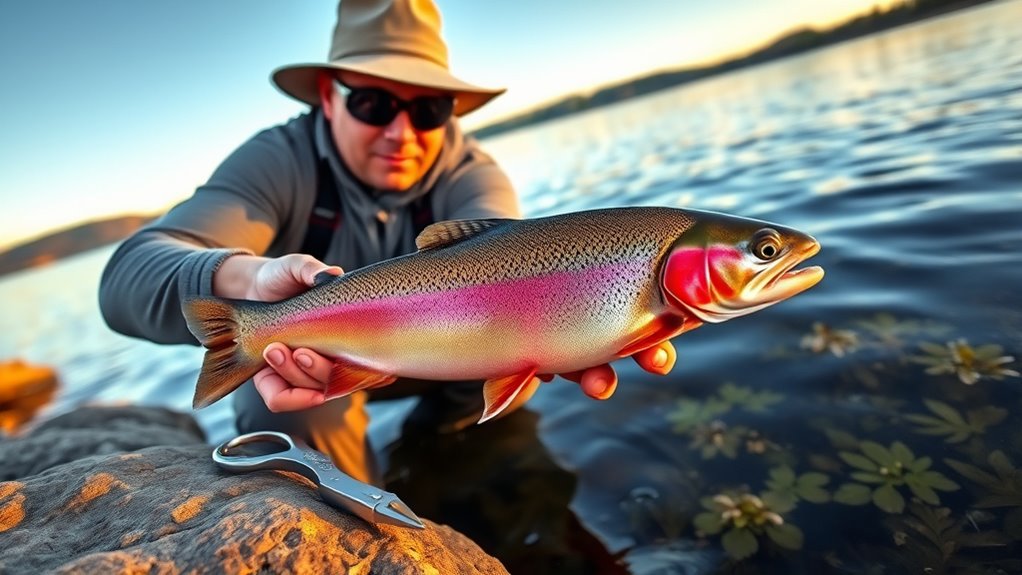
To prepare for safe fishing, gather the right tools before your first cast and think about the conditions you will fish in. Good preparation reduces handling time and helps you release fish faster.
Make sure you have barbless hooks, pliers, line cutters, a rubberized net, and tackle that matches the fish you plan to catch. Using gear that is too light can lead to long fights, which can exhaust fish before release.
Also check water temperature, local rules, and fish behavior. If conditions are stressful for fish, such as very warm water or spawning activity, consider changing location, targeting a different species, or ending the trip early.
Essential Gear Checklist
A thorough essential gear checklist can greatly improve your fishing experience while helping you release fish safely.
Preparing with the right tools not only minimizes harm but also streamlines the release process. Here are three essential items to include:
- Barbless hooks: These make hook removal faster and usually cause less tissue damage than barbed hooks.
- Needle nose pliers: Keep a pair handy for quick and gentle hook removal, especially when hooks are hard to grip by hand.
- Rubberized landing net: Use this gentler option to protect the fish’s scales, fins, and protective slime during handling.
Additionally, consider using circle hooks when fishing with bait. They often catch in the corner of the mouth, which can make release easier. Keep line cutters close in case you need to cut the line on a deeply hooked fish.
Optimal Fishing Conditions
Ideal fishing conditions play an important role in safe release, especially when you consider factors like water temperature, oxygen levels, and time of day.
Fish survival rates often improve when you fish during the cooler parts of the day, such as early morning or evening. High temperatures can stress fish and increase the risk of delayed mortality after release.
It is also smart to avoid fishing during sensitive spawning seasons when local rules or conservation guidance recommend leaving fish alone. Spawning fish may be more vulnerable, and disturbing them can affect future populations.
Additionally, be cautious when catching fish from deep water. Fish pulled up quickly from depth can face barotrauma, which may affect their ability to return safely. Always plan ahead to minimize time out of water during the release process, because quicker returns greatly improve survival chances.
Understand the species you target before you fish. Trout, bass, pike, catfish, panfish, and saltwater species can respond differently to handling, water temperature, and hook placement.
Note: Always follow local fishing regulations for seasons, size limits, bag limits, protected waters, and required release methods. Rules can vary by state, lake, river, and species.
Choosing the Right Hooks
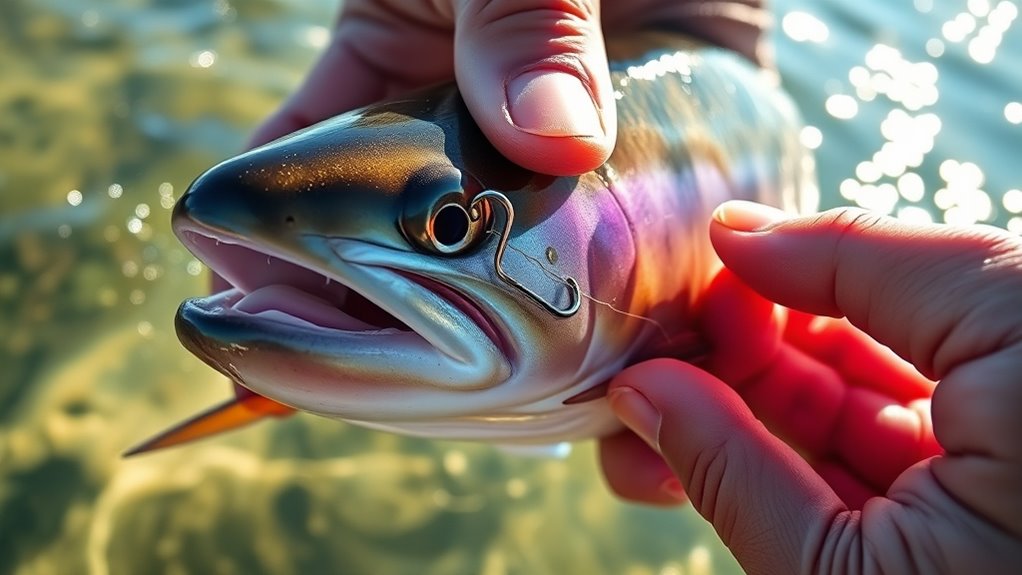
Choosing the right hooks is essential for minimizing harm to fish during catch-and-release fishing. The hook style, size, sharpness, and placement can all affect survival.
Here are three key considerations:
- Use Barbless Hooks: Barbless hooks make removal faster and less damaging. You can buy barbless hooks or flatten the barb with pliers.
- Opt for Circle Hooks: Circle hooks often hook fish in the corner of the mouth, especially when fishing with bait, which can reduce deep hooking.
- Avoid Treble Hooks When Possible: Treble hooks can cause more damage because they have multiple points of entry. Single hooks are often easier to remove.
For species with delicate mouths, choose smaller hooks that match your bait or lure without being oversized. A hook that is too large can tear tissue, while one that is too small may be swallowed more easily.
Always check your hooks for rust and sharpness. Dull or damaged hooks can tear instead of piercing cleanly, which may increase injury and handling time.
Pro Tip: Pinch barbs at home before your trip. It is easier to prepare your tackle calmly than to adjust hooks while a fish is already on the line.
Handling Fish With Care
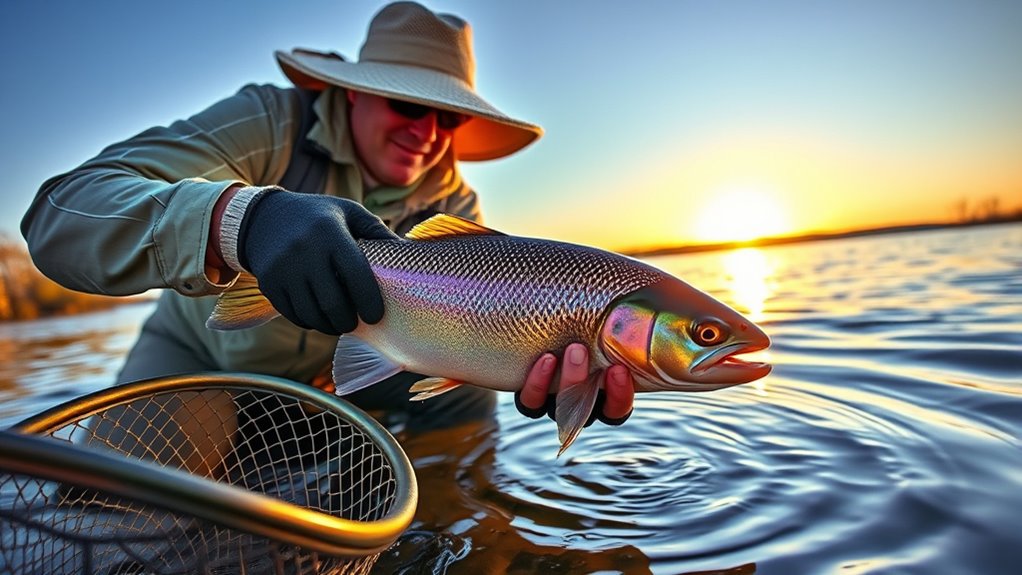
When handling fish, it is crucial to prioritize their well-being to improve the chance of a successful release. Start by wetting your hands to protect the fish’s sensitive slime layer, which helps defend against infection and supports healthy movement through the water.
Support the fish horizontally, especially larger species, to reduce strain on the jaw, spine, and internal organs. Use rubberized landing nets whenever possible because they are gentler on scales and fins than rough mesh.
| Action | Purpose | Tips |
|---|---|---|
| Wet your hands | Protects slime layer | Always do this first |
| Support horizontally | Reduces stress on internal organs | Hold just below waterline |
| Limit out-of-water | Minimizes stress while taking photos | Keep it to seconds |
When it’s time to remove hooks, be gentle and use dehookers or pliers if needed. If a hook is deeply lodged, cut the line close to the hook instead of forcing it out.
Safe Photo and Measuring Practices
Photos and measurements can be part of fishing, but they should never come before fish welfare. Prepare your camera, ruler, or measuring board before lifting the fish.
Keep the fish over the water or over a wet, soft surface. Take one quick photo, then return the fish to the water. Avoid dropping the fish on rocks, boat decks, docks, or dry ground.
If you need a measurement, use a wet measuring board and keep the fish’s body supported. For larger fish, one hand should support the tail area while the other supports the belly or chest area.
The best catch-and-release photo is the one you prepared for before the fish left the water.
The Art of Hook Removal
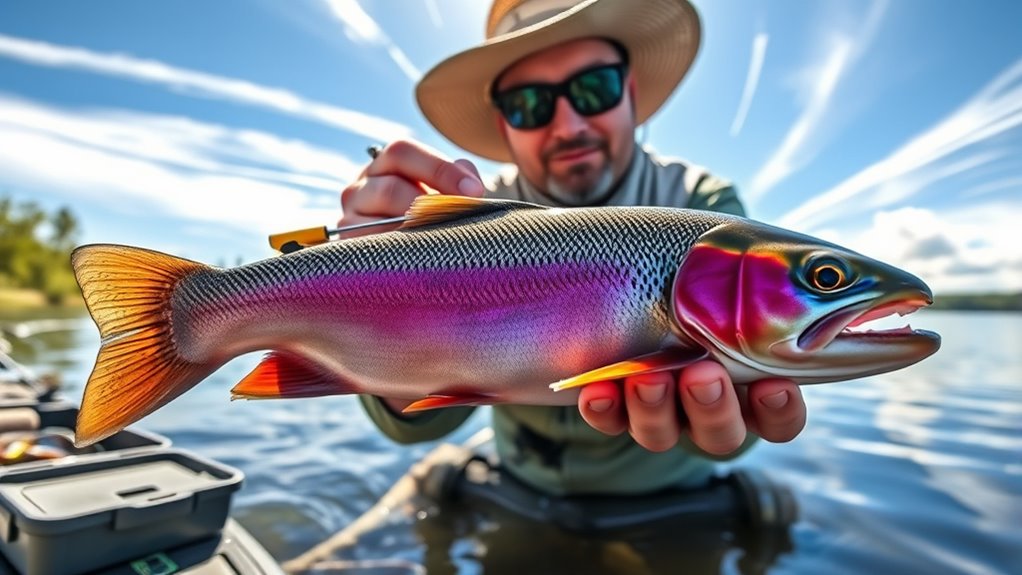
Although removing hooks can be a delicate process, mastering the art of hook removal is essential for the fish’s survival and well-being.
Mastering hook removal is crucial for ensuring the survival and well-being of fish.
Here’s how to do it effectively:
- Use Barbless Hooks: Choose barbless hooks or pinch down barbs to simplify removal and minimize injury to the fish.
- Gentle Extraction: For shallow-hooked fish, keep them in the water and use wet hands, pliers, or a dehooking tool for gentle extraction.
- Cut the Line: If you encounter a deep-hooked fish, cut the line close to the hook instead of forcing it out. This helps avoid extra damage to the throat, gills, or stomach.
Work quickly, but do not rush so much that you squeeze the fish or tear the hook free. A calm, controlled removal usually causes less harm than a forceful one.
What to Do With a Deeply Hooked Fish
A deeply hooked fish needs extra care. Do not pull hard on the line or try to dig the hook out with your fingers. This can cause more bleeding and reduce the fish’s chance of survival.
Cut the line as close to the hook as you safely can, then release the fish quickly if it is otherwise strong. Many hooks can loosen or corrode over time, while forced removal can create immediate, serious injury.
Reviving Fish Before Release
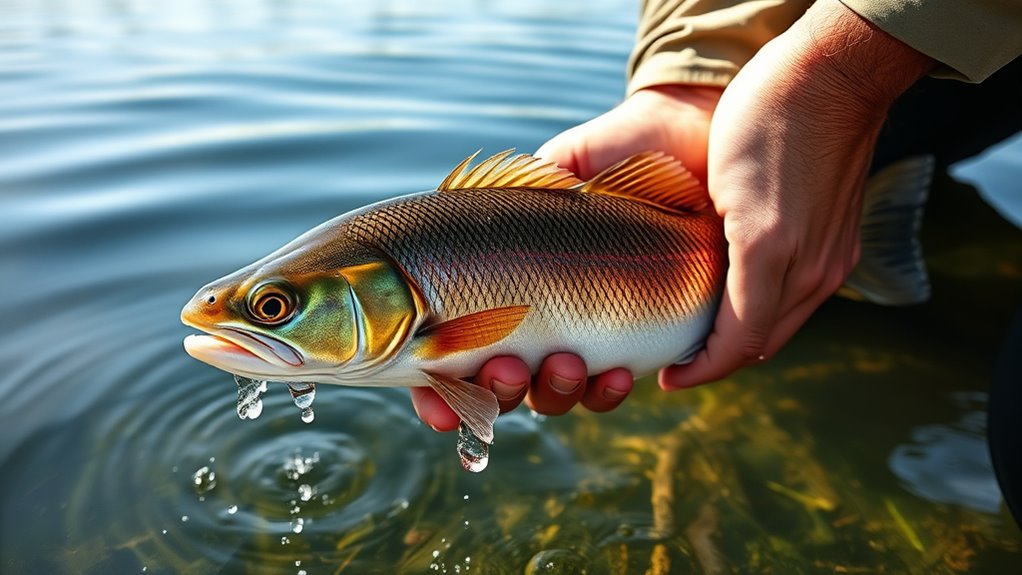
To effectively revive a fish before release, hold it in the water facing upstream or into gentle water movement. This allows oxygen-rich water to flow over its gills.
Gently move the fish forward in the water if there is no current. Avoid dragging it backward, because water should move naturally through the mouth and across the gills.
Keep an eye on its behavior. When it begins to hold itself upright, kick its tail, and swim strongly, it is usually ready for a safe release.
Proper Water Flow Technique
Reviving fish before release is essential for their survival, and using the proper water flow technique can support recovery. Follow these steps for effective revival:
- Hold a fish facing upstream in the water to allow natural water flow over its gills, promoting oxygen intake.
- Gently move the fish forward in still water to simulate natural swimming and help water pass across the gills.
- Monitor the fish’s behavior; look for signs of strength, such as upright balance, tail movement, and steady swimming. Once it shows readiness, it’s time to release the fish.
Assessing Fish Behavior
Evaluating a fish’s behavior after it’s caught is crucial for determining its readiness for release. You’ll want to assess whether the fish is lethargic or showing signs of strong swimming behavior. If it seems weak, extend your revival efforts to improve its survival chances.
| Behavior | Interpretation | Action Needed |
|---|---|---|
| Lethargic | May struggle to survive | Extend revival efforts |
| Weak swimming | Not ready for release | Continue reviving |
| Strong swimming | Fit for release | Let it swim away |
Supporting Fish During Revival
After evaluating the fish’s behavior and determining its readiness for release, supporting its revival becomes a priority. Proper techniques can greatly enhance the fish’s chances of survival.
Here are three key steps to follow:
- Positioning: Hold the fish in the water facing upstream, allowing water flow to promote oxygenation over its gills.
- Movement: Gently move the fish forward to stimulate gill movement and help it recover strength. Always support its belly to protect its internal organs, especially for larger species.
- Monitoring: Keep an eye on the fish’s behavior; it should begin swimming strongly on its own. Release the fish head-first once it shows signs of liveliness and control.
Observing Fish Behavior Post-Release
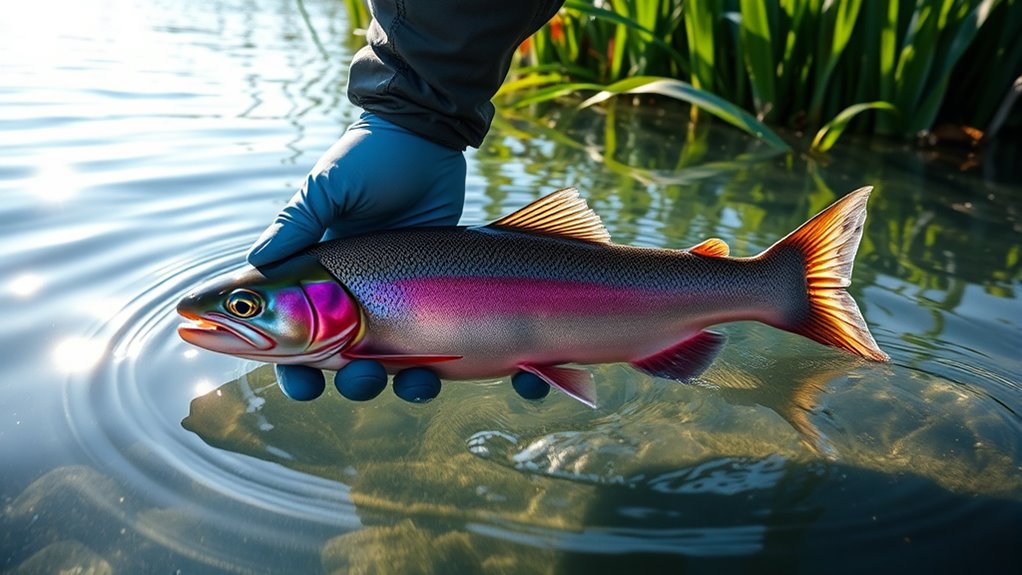
When you release a fish, observing its behavior is essential for evaluating its post-catch health. A healthy fish will swim away strongly, maintain balance, and move with clear direction instead of drifting aimlessly or struggling.
If it appears lethargic or remains close to the surface, it may need additional time to recover. Pay attention to signs of distress, such as rapid gill movement, rolling sideways, or erratic swimming patterns.
If the fish takes longer to swim away, it might be experiencing post-catch stress. You can help by supporting it in the water and encouraging oxygen flow over its gills.
Always verify you release the fish head-first into the water to facilitate natural orientation, promoting a smooth return to its environment. By observing fish behavior closely, you can verify a better chance of survival for the fish you’ve caught.
Common Catch-and-Release Mistakes to Avoid
Even experienced anglers can make mistakes that reduce a fish’s chance of survival. Most problems happen when the fish stays out of water too long, gets handled with dry hands, or suffers extra injury during hook removal.
- Using dry hands or towels: Dry surfaces can damage the slime layer and increase stress.
- Dragging fish onto shore: Sand, rocks, grass, and hot surfaces can injure scales, fins, and eyes.
- Taking too many photos: Long photo sessions increase air exposure and delay recovery.
- Using oversized tackle for photos only: Long fights can exhaust fish before release.
- Forcing out deep hooks: Cutting the line is usually safer than tearing tissue.
- Releasing too soon: A tired fish may need support before it can swim away strongly.
Ethical Considerations in Fishing
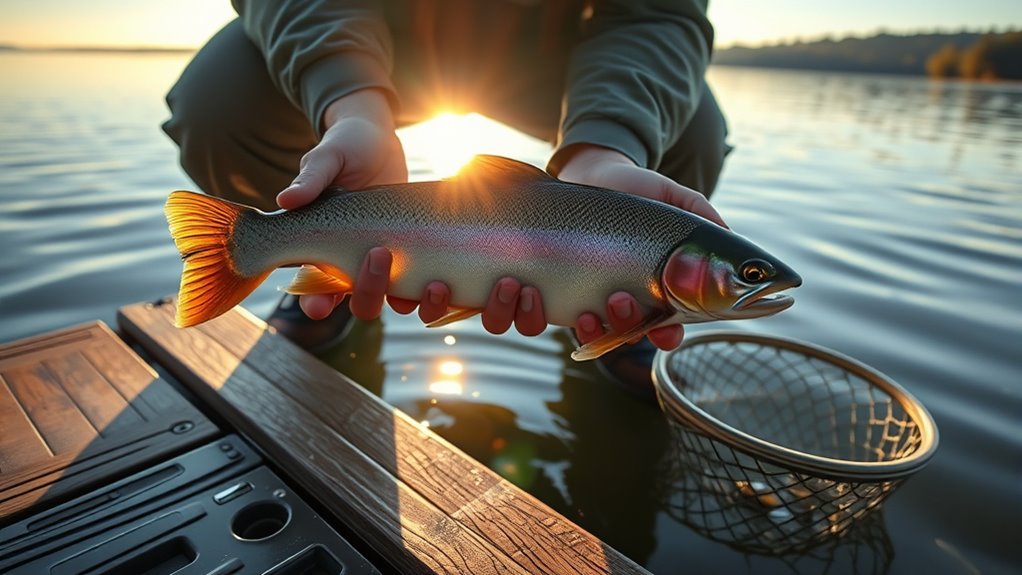
Releasing fish successfully not only enhances their chances of survival but also reflects your commitment to ethical fishing practices.
By focusing on these key considerations, you can ensure that your catch contributes positively to the aquatic environment:
- Know Local Regulations: Familiarize yourself with size limits, bag limits, seasonal closures, and protected species to support conservation efforts.
- Use Best Practices: Employ barbless hooks, circle hooks, and rubberized nets to minimize harm and reduce stress during handling.
- Prioritize Quick Releases: Limit the time fish spend out of water, especially in warmer temperatures, to improve their chances of surviving after release.
Ethical fishing also means knowing when not to fish. If the water is too warm, fish are spawning, or local agencies warn about stress conditions, choosing not to target vulnerable fish can be the most responsible option.
Community Engagement and Responsible Practices
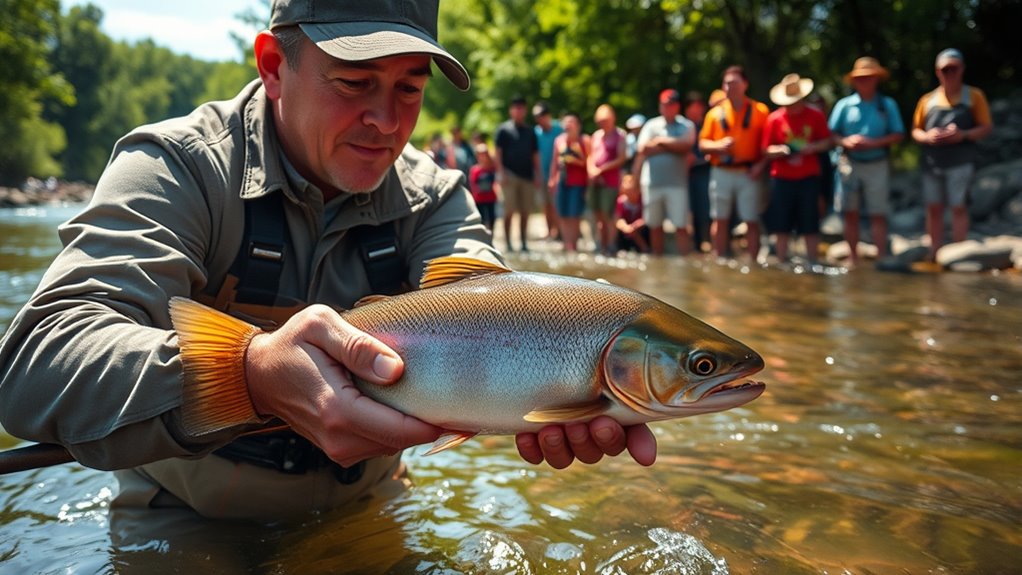
While many anglers focus on personal fishing techniques, engaging with the broader fishing community can greatly enhance responsible practices and conservation efforts.
By participating in discussions, workshops, and local fishing groups, you can share and learn best practices for catch and release. This helps more anglers adopt safe methods that protect fish populations.
Joining local conservation initiatives protects fish habitats and promotes sustainable fishing within your community. Habitat cleanups, invasive species awareness, and youth fishing education all support healthier waterways.
Encouraging fellow anglers to use quick and gentle hook removal techniques reduces stress on fish, boosting their survival chances post-release. Sharing your successful catch and release stories can inspire others to prioritize fish conservation and ethical fishing.
Additionally, supporting local regulations on fish size and bag limits fosters a culture of responsible practices that benefits our ecosystem and future generations.
Through community engagement, you can create a positive impact and contribute to the overall health of our waterways and fish populations.
Related Guides
Frequently Asked Questions
How do you properly release a fish safely to the water?
To release a fish safely, wet your hands, keep the fish in the water when possible, remove the hook gently, and support the fish horizontally. If it seems tired, revive it by holding it facing gentle current until it swims away strongly.
How do you release a fish without killing it?
Use proper gear, avoid long fights, keep air exposure short, and handle the fish with wet hands or a rubberized net. If the fish is deeply hooked, cut the line close to the hook instead of pulling it out by force.
How do you humanely catch and release fish?
To humanely catch and release fish, use barbless hooks or circle hooks, land the fish quickly, avoid dry surfaces, and limit handling. Revive tired fish in the water before release, and follow local fishing rules for the species you catch.
What is the first step of catch and releasing a fish?
The first step is preparation. Choose the right tackle, use barbless or circle hooks when appropriate, and keep pliers, a rubberized net, and line cutters ready before you cast. This helps you release the fish quickly and safely.
Should you move a fish back and forth to revive it?
Gently move the fish forward in still water or hold it facing into gentle current. Avoid forcing it backward, because water should flow naturally through the mouth and across the gills.
Is it better to cut the line on a deeply hooked fish?
Yes, cutting the line is often safer than pulling out a deeply lodged hook. Cut the line close to the hook, return the fish to the water quickly, and avoid causing extra damage to the throat, gills, or stomach.
Conclusion
By understanding catch and release, preparing effectively, and handling fish with care, you can create a safer and more ethical fishing experience. The biggest steps are simple: use the right hooks, keep the fish wet, reduce air exposure, remove hooks gently, and revive tired fish before release.
Choosing the right hooks and mastering the art of hook removal improves survival rates. Reviving fish before release and observing their behavior afterward also helps you make better decisions on the water.
When you engage with your community and advocate for responsible practices, you protect aquatic ecosystems and promote a culture of conservation for future generations.