If you’re new to fishing, jig head fishing gives you a simple, flexible way to catch bass, crappie, walleye, trout, redfish, flounder, and many other species. A jig head uses a weighted hook to carry a soft plastic lure or bait down through the water, then lets you hop, drag, swim, shake, or pitch it so it looks like wounded prey.
You do not need a complicated setup to start. You need the right jig weight, a soft plastic that fits the hook, a line size that matches the cover, and a steady feel for the bottom. Once you learn how to control the jig, watch your line, and adjust to water clarity, depth, current, and fish behavior, you can greatly improve your success on the water.
Quick Answer
To fish a jig head, rig a soft plastic straight on the hook, cast near structure or fish-holding cover, let it reach the target depth, then work it with short hops, slow drags, steady swimming, or subtle shakes. Watch your line closely because many bites feel light or look like a small jump in the line.
Key Takeaways
- Start with a jig head that matches the depth, current, wind, and lure size.
- Use lighter line in clear open water and stronger line around grass, wood, rocks, docks, or larger fish.
- Let the jig reach the bottom when bottom contact matters, then use short hops, slow drags, or gentle lifts.
- Bright colors help in stained water, while natural baitfish, crawfish, and green pumpkin tones often work better in clear water.
- Most beginner mistakes come from using too much weight, moving the jig too fast, or missing subtle line movement.
At a Glance
| Time Required | 15 to 30 minutes to learn the basic retrieve; several trips to build feel and confidence. |
| Difficulty | Beginner-friendly, but bite detection takes practice. |
| Tools Needed | Rod and reel, jig heads, soft plastic lures, fishing line, pliers, scissors or line cutters, and a valid fishing license where required. |
| Cost | Low. A small pack of jig heads and soft plastics is usually enough to start. |
Understanding Jig Fishing
Jig fishing is a versatile and effective technique that can greatly enhance your angling experience. By using a weighted hook, known as a jig head, you can present lures or bait in a way that entices strikes from various fish species.
A jig head combines weight and hook placement in one compact design. The weight helps the lure sink, stay near the bottom, cut through light current, and create a realistic fall. The hook holds the soft plastic, hair jig, marabou body, live bait, or trailer so the whole presentation moves as one piece.
Mastering this technique involves understanding how to manipulate the bait’s movement, adapting it based on fish mood and environmental conditions.
You’ll find three primary techniques for jig fishing: traditional casting, dragging, and flipping/pitching. Each technique is suited for different scenarios and structures, so it’s essential to know when to apply each one.
You can also swim a jig through open water, vertically jig from a boat or dock, or use tiny jig heads under a float for panfish. Beginners should start with the basic cast, sink, hop, pause, and retrieve pattern before trying more advanced methods.
Key to your success is varying the snapping height and mixing techniques to match the conditions and fish behavior. Continuous practice with different jig profiles, colors, and line sizes will boost your skills and increase your catch rates.
Embrace these fundamentals, and you’ll be on your way to becoming a proficient jig fisherman.
What Is a Jig Head?
A jig head is a hook with molded weight near the eye of the hook. Most jig heads use lead, tungsten, tin, or another dense material to help the bait sink and move with control. The head may be round, football-shaped, mushroom-shaped, bullet-shaped, swimbait-style, or weedless.
The shape matters because it changes how the lure moves. A round jig head is easy to use and works well for general fishing. A football jig head crawls across rock with better bottom contact. A mushroom head pairs well with small finesse plastics. A swimbait jig head keeps a paddle-tail bait tracking straight.
Note: Local rules may limit hook types, bait types, barbs, harvest size, seasons, or fishing areas. Check your local regulations before you fish a new lake, river, pier, or coastal area.
Basic Jig Head Parts Beginners Should Know
Knowing the main parts of a jig head helps you choose and rig one correctly. You do not need to memorize every style, but you should understand how the head, hook, eye, and keeper work together.
| Part | What It Does | Beginner Tip |
|---|---|---|
| Head | Adds weight and controls sink rate, bottom contact, and action. | Use the lightest head that still reaches the strike zone. |
| Hook | Holds the fish after the hookset. | Match hook size to lure size so the bait stays straight. |
| Eye | Gives you a tie point for your line or leader. | Make sure paint or debris does not block the eye before tying. |
| Keeper | Helps hold the soft plastic in place. | Re-rig the lure if it slides down or spins on the retrieve. |
Choosing the Right Jig Head Weight
Jig head weight controls how fast the lure sinks and how easy it is to feel the bottom. Too light, and your bait may never reach the fish. Too heavy, and it may fall too fast, snag more often, or look unnatural.
For many beginner freshwater situations, small jig heads from 1/16 ounce to 1/4 ounce cover a wide range of panfish, trout, crappie, walleye, and bass presentations. Heavier heads may help in deep water, wind, current, thick cover, or saltwater. Very light heads can shine in shallow water, clear water, cold water, and pressured fish.
| Common Jig Weight | Best Use | Why It Helps |
|---|---|---|
| 1/32 to 1/16 oz | Crappie, bluegill, trout, shallow finesse fishing | Falls slowly and looks natural around light-biting fish. |
| 1/8 oz | General shallow to mid-depth fishing | Easy to cast and easy for beginners to control. |
| 3/16 to 1/4 oz | Bass, walleye, deeper banks, light wind | Maintains better bottom contact without feeling too heavy. |
| 3/8 oz and heavier | Deep water, current, heavy cover, larger soft plastics | Gets down faster and gives stronger contact in tough conditions. |
Pro Tip: When you are unsure, start lighter. A lighter jig often looks more natural, stays in the strike zone longer, and gets fewer snags than an oversized head.
How to Rig a Soft Plastic on a Jig Head
A straight lure catches more fish because it tracks naturally. A crooked lure spins, twists your line, and looks wrong in the water. Take a few extra seconds to rig the bait neatly.
- Match the jig to the lure. The hook should exit the soft plastic far enough back to keep the lure straight without crowding the tail.
- Line up the hook first. Hold the jig beside the bait and note where the hook point should come out.
- Insert the hook through the nose. Push it into the center of the bait so the lure sits evenly.
- Thread the bait up the hook shank. Keep the plastic straight as it slides toward the keeper.
- Bring the hook point out at your mark. The lure should not bunch, twist, or curve.
- Seat the nose against the head. Push the plastic snugly onto the keeper so it does not slide down after each cast.
Warning: Jig hooks are sharp. Keep the point away from your fingers when threading soft plastics, and use pliers when removing hooks from fish.
The Importance of Jig Manipulation
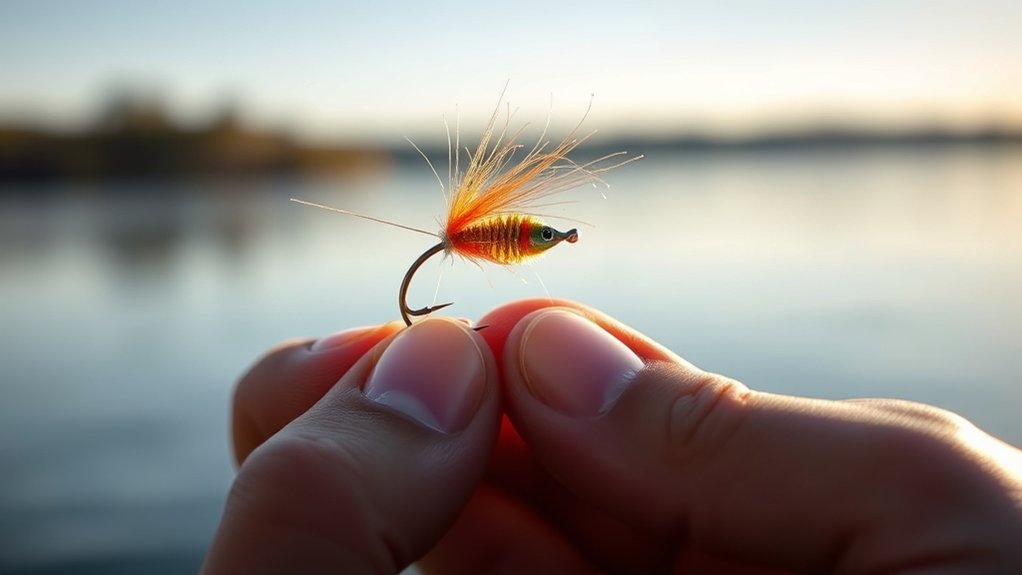
While many factors contribute to successful jig fishing, mastering jig manipulation stands out as a game changer. Your jig’s movement can trigger strikes from fish that might otherwise ignore it. By employing various techniques like short hops or dragging, you can create enticing actions tailored to the fish’s mood and feeding patterns.
| Technique | Effect on Jig Movement |
|---|---|
| Quick Snap | Simulates injured prey |
| Short Hops | Mimics fleeing bait |
| Dragging | Appears like bottom-dwelling food |
| Shaking/Lifting | Enhances presentation |
The angle and speed of your movements also matter. A quick snap can attract predatory fish, while adjusting the height can improve your jig’s visibility. Understanding these manipulations allows you to adapt to different fishing conditions and target various species effectively.
Many beginners move the rod too much and reel too fast. Instead, use the rod tip to move the jig, then reel just enough to pick up slack. This keeps the bait controlled and helps you detect light bites.
Traditional Casting Technique Explained
Casting techniques play an essential role in successful jig fishing, especially when it comes to traditional methods. Start by casting or pitching your jig into open areas, like rocky banks, weed edges, points, creek mouths, docks, and transition zones where fish often lurk.
Once your jig hits the bottom, elevate your rod tip to a 10 to 12 o’clock position. This helps you maintain control and enhances your sensitivity to bites. As you retrieve, perform short hops of 6 to 12 inches. This movement mimics injured prey, enticing fish to strike.
After each hop, pause long enough for the bait to fall again. Many bites happen on the fall or right after the jig stops. Keep a slight bow in the line, but do not let it go completely slack for too long.
Keep a close eye on your line; any sudden changes can indicate a fish taking the bait, requiring a quick hook set. For an effective retrieve, incorporate sharp snaps of the rod, as they generate more strikes.
Mastering these techniques will boost your jig fishing success and make your time on the water more rewarding. Happy fishing!
Mastering the Dragging Technique
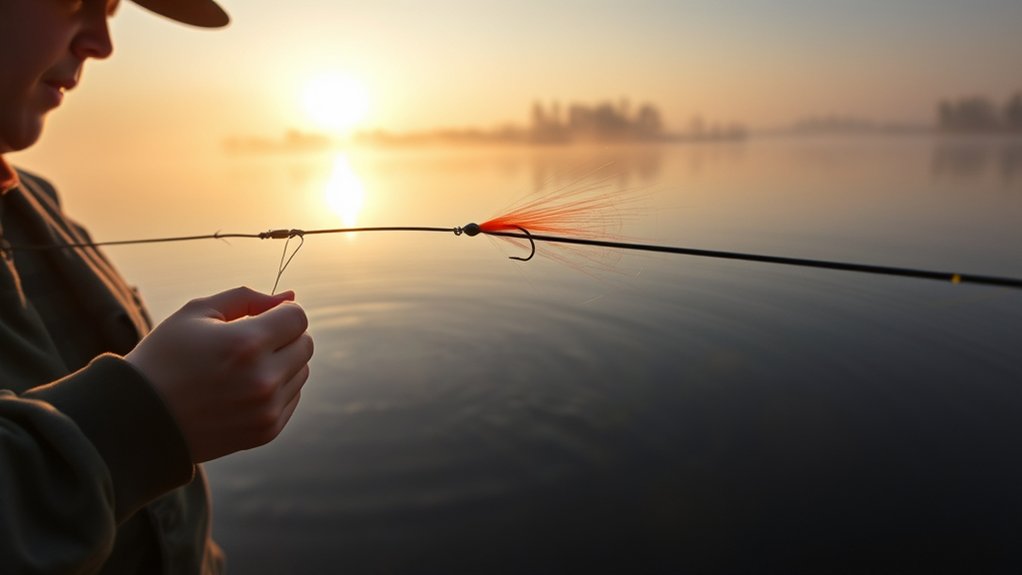
To master the dragging technique, start by making a long cast so your jig can settle at the bottom, where fish often hang out.
Keep your rod tip low, just a few feet off the ground, to maintain contact and feel for any bites as you reel in.
Incorporate sharp rod snaps to create enticing movements that can trigger strikes from curious fish.
Proper Casting Distance
How far should you cast when mastering the dragging technique? Aim for a casting distance of 30 to 50 feet. This range helps you effectively cover more ground and reach bottom structures where fish often hide.
After casting, allow the jig to settle for 3 to 5 seconds to guarantee it reaches the fish’s feeding zone. In deeper water, you may need to wait longer. A good rule is to watch your line and start the retrieve when the line stops sinking or suddenly jumps.
Keep your rod tip low, about 1 to 3 feet off the bottom, so you maintain contact with the jig and can feel any subtle bites.
Use a steady, slow retrieve to mimic natural prey movement, enticing strikes from nearby fish. Occasionally, snap the rod during the drag to create sudden movements that can trigger reaction bites from fish following the jig.
Rod Positioning Tips
After mastering the proper casting distance, the next step is to focus on rod positioning for the dragging technique.
Keep your rod tip low, ideally between 1 to 3 feet off the bottom, to maintain effective contact with the jig. As you retrieve, pull the jig toward yourself while reeling, creating a smooth movement that mimics natural bait.
To entice hesitant fish, occasionally snap the rod for sudden movements. Monitor line tension closely; any changes could indicate a fish is taking the jig, allowing you to react quickly.
Don’t hesitate to experiment with different dragging speeds and rod angles to discover what presentation works best for the fish’s mood and behavior on that day.
Triggering Strikes Effectively
While fishing with jigs, effectively triggering strikes is essential for success.
Mastering the dragging technique can greatly increase your catch rate. Here are some key tips to keep in mind:
- Make a long cast and let your jig sink to the bottom first.
- Keep your rod tip low, about 1 to 3 feet off the bottom.
- Apply occasional snaps of the rod for sudden movements.
- Experiment with the speed and frequency of your jig movements.
If fish follow but do not bite, make your pauses longer. If you feel short taps without a solid hookup, downsize the trailer, trim the skirt, or switch to a smaller hook that fits the bait better.
Flipping and Pitching for Success
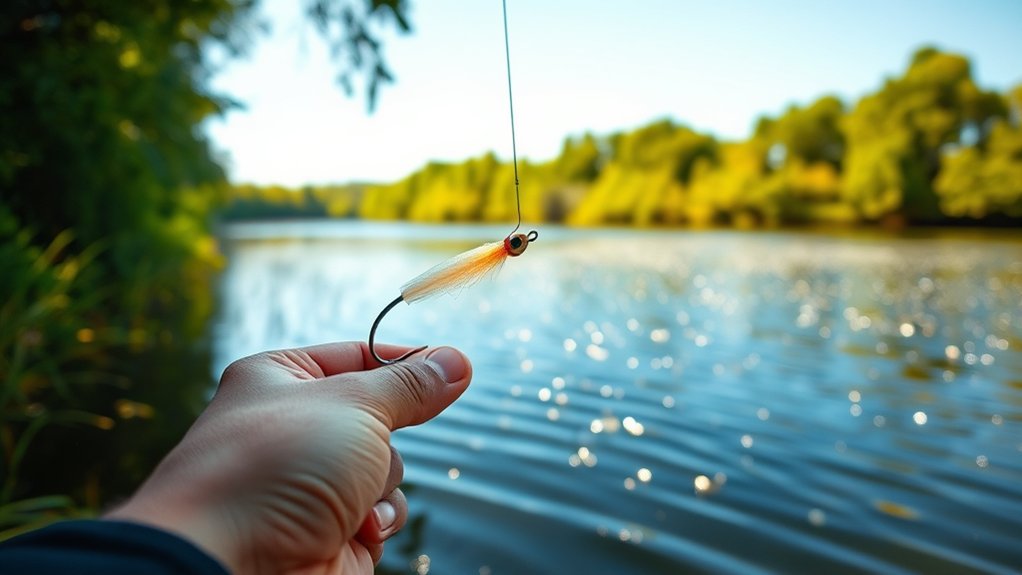
When you’re targeting fish that are tucked away in cover, mastering flipping and pitching techniques can greatly enhance your success. These methods are perfect for reaching fish hiding around objects like laydowns.
Start by positioning your jig directly over the cover and let it fall quietly to avoid spooking nearby fish.
Once on the bottom, create a quivering motion by gently shaking your rod tip. This movement simulates natural bait activity and can entice fish to strike. Remember to lift the jig off the bottom by 3 to 4 inches while shaking to enhance that lifelike presentation.
Patience is key—maintain your jig’s position over the object for an extended period. This strategy can considerably increase your chances of attracting fish.
For better control, use a short, accurate pitch instead of a high cast. A quiet entry matters because fish holding tight to shallow cover may spook when a heavy jig slaps the surface.
Swimming a Jig Head
Swimming a jig head works well when fish chase baitfish, suspend near grass, or feed along open banks. Instead of letting the jig sit on the bottom, you retrieve it steadily through the water column.
Use a paddle-tail swimbait, curly-tail grub, or small baitfish-style soft plastic. Cast past the target, let the lure sink to the depth you want, then reel slowly enough to keep the tail moving. Add small rod twitches if fish need extra action.
This technique is useful around grass edges, riprap, docks, shallow flats, current seams, and wind-blown banks. If you keep catching weeds or bottom debris, hold the rod tip higher or switch to a slightly lighter head.
Vertical Jigging From a Boat or Dock
Vertical jigging keeps the lure almost directly below you. It works from a boat, kayak, bridge, pier, dock, or ice-fishing hole where allowed. This style helps when fish are deep, stacked under bait, or holding near pilings and drop-offs.
Drop the jig until it reaches the target depth, then lift and lower the rod in short motions. You can make the jig hop sharply, pulse gently, or hover with small shakes. Keep your line controlled because fish often bite as the jig falls.
If you use electronics, lower the jig to the depth where fish appear. If you do not use electronics, count the lure down in seconds and repeat the depth when you get a bite.
Recognizing Fish Behavior
Successful jig fishing goes beyond just mastering techniques like flipping and pitching; it also hinges on your ability to recognize fish behavior. Understanding how factors like water temperature, light conditions, and seasonal patterns influence fish can greatly boost your success.
Pay attention to their mood—whether they’re neutral, active, or aggressive—because this will guide your jig-fishing technique.
- Observe surface activity like jumping fish or feeding frenzies.
- Identify local forage species to mimic their natural prey.
- Adjust your jig presentation based on fish behavior.
- Vary your retrieve speed and technique for better results.
Active fish may chase a swimming jig or react to quick hops. Neutral fish may need a slow drag, a smaller lure, or longer pauses. Inactive fish often require a subtle presentation placed close to cover or structure.
Adjusting Techniques Based on Conditions
Adapting your jig fishing techniques to varying conditions can greatly enhance your success on the water.
In murky water, slow down your movements to give fish more time to react, while in clear conditions, opt for faster retrieves when fish are chasing or more natural colors when they are cautious.
When it’s windy, heavier jigs help maintain control and guarantee your actions reach the fish despite surface disturbances.
Temperature changes also play a significant role; during colder months, slow your retrieve and keep your jig closer to the bottom to attract less active fish.
During colder months, slow retrieves and bottom-focused jigs can entice less active fish.
If you’re in heavily pressured areas, consider subtle techniques like dragging or flipping to avoid spooking wary fish.
Finally, remember that time of day matters—early mornings and late evenings often call for more aggressive jigs, while midday may require a slower, more deliberate approach.
Adjust your tactics accordingly, and you’ll see improved results!
The Role of Jig Color and Skirts
When you’re choosing jig colors, think about how they’ll stand out in the water conditions you’re facing.
Bright colors can grab attention in murky waters, while natural shades work better in clear environments.
Plus, experimenting with different skirt materials and combinations can enhance your jig’s movement and appeal, making it more enticing for fish.
Color Selection Strategy
Choosing the right color for your jig can make all the difference in attracting fish effectively. Understanding how color impacts fish behavior is essential. Here are some key points to take into account:
- Bright Colors: Use chartreuse or orange in murky waters for visibility.
- Natural Shades: Opt for colors like green pumpkin or brown in clear conditions.
- Seasonal Adjustments: Bright colors work well in spring, while subdued tones are better in fall.
- Water Clarity: In deeper or stained waters, vibrant colors stand out, but in shallow, clear waters, stick to natural shades.
Experiment with different color combinations and skirts to match the fish’s mood and environment for your best chance at a successful catch!
Skirt Design Impact
While the color of your jig skirt is essential for attracting fish, the design elements—like thickness and length—play an equally important role in your success. A well-designed skirt creates movement and bulk, enticing fish to strike. Experimenting with contrasting colors can enhance visual appeal, particularly in different light conditions. Incorporating metallic or glitter elements can mimic baitfish flash, making your jig more attractive to predators. Always consider local forage species when selecting skirt colors and patterns to increase your success rate.
| Skirt Color | Best Water Condition | Design Element |
|---|---|---|
| Bright Colors | Murky Water | Thin and Short |
| Natural Tones | Clear Water | Thick and Long |
| Contrasting Colors | Varying Light | Dynamic Movement |
| Metallic/Glitter | All Conditions | Flashy Elements |
Choosing the Right Line Sizes
Have you ever wondered how the right line size can impact your jig fishing success? Choosing the correct line is essential, as it affects your ability to catch fish effectively. Here’s what to take into account:
- Line Weight: Generally, 10 to 20-pound test lines work well. Use lighter lines for clear water and heavier lines for thicker cover or larger fish.
- Braided Lines: They offer low visibility, high sensitivity, and minimal stretch, making hook sets easier.
- Fluorocarbon Lines: Perfect for stealthy situations, these lines sink faster and help maintain jig contact with the bottom.
- Monofilament Lines: A great option for beginners, they provide a forgiving stretch and strength balance.
Always match your line size with your jig weight and fishing structure for peak performance. This simple adjustment can lead to more successful days on the water!
For small panfish or trout jigs, lighter 2 to 6-pound line may cast better and look more natural. For bass around wood, grass, docks, or rocks, many anglers step up to stronger line. For saltwater or heavy cover, match your line to the fish size, structure, current, and local conditions.
Rod and Reel Setup for Jig Head Fishing
A medium-light to medium spinning rod is a friendly starting point for many jig head techniques. Spinning gear casts light jig heads well and helps beginners manage line without much trouble. For heavier bass jigs, flipping, pitching, and thick cover, baitcasting gear can give you more power and control.
Choose a rod with enough sensitivity to feel bottom changes, weeds, rocks, and light bites. A fast or moderate-fast action often works well because it gives you control over the jig while still helping with hooksets.
Your reel should have a smooth drag. Do not lock the drag completely unless the cover demands it. A smooth drag helps protect lighter line when a fish surges near the boat, bank, or dock.
Where to Fish a Jig Head
Jig heads shine around places where fish can ambush prey. Instead of casting randomly, aim for structure, cover, depth changes, and current breaks. These areas give fish food, shade, safety, or an easy place to wait for passing bait.
- Rocks and riprap: Drag or hop the jig slowly so it looks like a crawfish or baitfish.
- Weed edges: Swim a jig along the outside edge or let it fall into open pockets.
- Docks and pilings: Pitch the jig close to shade lines and let it fall naturally.
- Laydowns and brush: Use a weedless jig head when snags are likely.
- Points and drop-offs: Cast across the slope and keep contact with the bottom.
- Current seams: Let the jig drift naturally near slower water beside faster flow.
How to Detect a Bite
Jig bites do not always feel like a hard hit. Sometimes the line jumps, moves sideways, stops sinking too early, feels heavy, or goes slack. When something feels different, reel down and set the hook with control.
Keep your index finger near the line when using spinning gear, and watch the line where it enters the water. Bright braided line with a fluorocarbon leader can help you see subtle movement, especially in wind or low light.
Pro Tip: If you are unsure whether you felt a bite, set the hook. A quick, controlled hookset teaches you the difference between rocks, weeds, and fish.
Hook Setting and Landing Fish
When you feel a bite, reel until the slack is gone, then sweep or snap the rod back with enough force to drive the hook home. The hookset depends on hook size, line stretch, rod power, and the fish you target.
With light wire hooks and small jig heads, avoid an oversized hookset that can tear the hook free. With heavier jigs, thicker hooks, and strong line, use more power. Keep steady pressure once the fish is hooked.
Guide the fish away from sharp cover, dock posts, rocks, grass, and submerged branches. If the fish runs, let the drag work. Lift with the rod, reel as you lower the tip, and avoid reeling against a slipping drag.
Common Jig Head Fishing Mistakes
Beginners can learn jig head fishing quickly, but a few common mistakes make the technique harder than it needs to be.
- Using too much weight: A heavy jig falls fast, snags more often, and may look unnatural.
- Rigging the soft plastic crooked: A twisted bait spins and reduces bites.
- Fishing too fast: Slow down when fish are cold, pressured, or inactive.
- Ignoring line movement: Many jig bites show up as a twitch or sideways slide.
- Using the wrong hook size: A hook that is too large can stiffen the bait, while one that is too small may miss fish.
- Not checking the hook point: Rocks, wood, and fish can dull the hook. Replace or sharpen it when needed.
- Staying in one color too long: Change color or profile when fish follow without biting.
Simple Jig Head Fishing Plan for Beginners
If you feel overwhelmed, use this simple plan on your next trip. It gives you a repeatable process without overthinking every cast.
- Start with a medium-light or medium spinning setup. Use a line size that fits your target fish and cover.
- Tie on a basic round jig head. Choose a weight that reaches the bottom without dragging like an anchor.
- Rig a soft plastic straight. Use a small swimbait, grub, worm, minnow, or craw-style bait.
- Cast to visible cover or structure. Aim near rocks, docks, weeds, points, brush, or current breaks.
- Let the jig sink. Watch your line as it falls.
- Hop, drag, or swim the lure. Use slow, controlled movements at first.
- Pause often. Let the bait fall naturally because many strikes happen during the pause.
- Set the hook when the line jumps or feels different. Reel down first, then lift firmly.
- Record what worked. Note depth, color, retrieve, water clarity, and location.
Continuous Learning in Fishing
To enhance your fishing skills, it’s essential to adapt your techniques regularly and explore new strategies.
Stay informed by researching seasonal fish behavior and experimenting with different jig sizes and colors.
Engaging with fellow anglers and documenting your experiences can lead to valuable insights that improve your success on the water.
Adapt Techniques Regularly
Adapting your jig fishing techniques regularly is essential for staying in tune with the ever-changing behavior of fish. By doing this, you can greatly boost your chances of a successful catch.
Here are some practical tips to enhance your approach:
- Experiment with snapping heights during retrieves, from 6 inches to 2-3 feet.
- Utilize a variety of techniques like traditional casting, dragging, and flipping.
- Track your successful methods and conditions, such as water temperature and clarity.
- Continuously learn about new jig profiles, color skirts, and line sizes.
Explore New Strategies
Staying flexible in your jig fishing techniques opens the door to exploring new strategies that can elevate your success on the water.
Continuously experiment with different jig methods, like traditional casting, dragging, and flipping, to see what works best in various conditions.
Keeping a fishing journal can help you track which jigs, colors, and techniques yield results, allowing you to identify patterns for future trips.
Attend local workshops or join online forums to learn from seasoned anglers and share insights.
Stay updated on seasonal fish behavior, as understanding their preferences can inform your jig choices.
Finally, invest time in practicing your jig manipulation skills—mastering subtle movements can greatly increase your chances of triggering strikes.
Frequently Asked Questions
How to Use Jig Head for Beginners?
To use a jig head, choose the right weight, attach a soft plastic bait securely, cast or drag it effectively, and watch your line closely for bites. Adjust retrieval speed and colors to attract fish. Start with short hops and slow pauses until you learn how the jig feels on the bottom.
What Is the 80/20 Rule in Fishing?
The 80/20 rule in fishing means you often catch most of your fish from a small share of your total effort. In practice, focus on the best cover, structure, depth, timing, and presentations instead of casting randomly across unproductive water.
How to Jig Fish for Beginners?
To jig fish effectively, start by casting to open areas, using short hops. Experiment with dragging and flipping techniques, adjusting your rod movements based on fish behavior to maximize your chances of success. Keep practicing, and pay close attention to line movement because many bites are subtle.
What Is the 90/10 Rule in Fishing?
The 90/10 rule in fishing means most fish are often concentrated in a small amount of productive water. Focus on key areas like structures, weed edges, current seams, drop-offs, shade, and baitfish activity to maximize your chances of a successful catch.
What size jig head should a beginner use?
A beginner can start with 1/16 ounce for panfish and trout, 1/8 ounce for general shallow fishing, and 1/4 ounce for deeper water, light wind, or bass-sized soft plastics. Use the lightest jig that still lets you cast well and feel the lure.
Do you put bait on a jig head?
Yes. You can put soft plastics, live bait, cut bait, hair, feathers, or scented trailers on a jig head, depending on the species and local rules. Soft plastics are the easiest starting point because they are simple to rig, durable, and available in many shapes.
Should a jig head touch the bottom?
It depends on the technique. Bottom contact helps when dragging, hopping, or fishing crawfish-style baits. A jig does not need to touch bottom when you are swimming a baitfish-style lure through open water, grass edges, or suspended fish.
Conclusion
As you commence your jig head fishing journey, think of each cast as a chance to learn what fish want that day. The water becomes your palette, where colors, weights, profiles, and movements blend to create an irresistible lure for fish.
Remember, adaptability is key. Conditions may change, but your willingness to slow down, adjust jig weight, change color, watch your line, and refine your retrieve will be your greatest asset. So, keep casting, keep experimenting, and let the rhythm of the water guide you to your next catch.