Wading fishing safely starts before you step into the current. You need well-fitted waders, a snug wading belt, reliable wading shoes, a wading staff, and a plan for changing water conditions. Move slowly, test each step, avoid crossing your feet, and never wade water that feels stronger than your ability to exit safely. If you fall, stay calm, keep your feet downstream, float defensively, and work toward shore when you can.
Quick Answer
To wade safely while fishing, wear fitted waders with a tight wading belt, choose grippy wading boots, use a wading staff, and wear a PFD in cold, deep, fast, or unfamiliar water. Enter slowly, face the current at an angle, test every foothold, and leave before water levels or weather turn risky.
Key Takeaways
- A wading belt helps slow water from filling your waders, but it does not replace cautious movement or a PFD.
- Use a wading staff, take short sideways steps, and keep two points of contact whenever the bottom feels uneven.
- Avoid standing up in strong current after a fall because foot entrapment can become life-threatening.
- Check local rules for boot soles, because some areas restrict felt soles to reduce the spread of invasive species.
- Do not wade alone in difficult water, during storms, at night, or when water levels are rising.
At a Glance
| Time Required | A few minutes before each fishing spot to assess depth, current, footing, weather, and safe exit points. |
| Difficulty | Easy in shallow, slow water; advanced and risky in cold, deep, murky, or fast-moving water. |
| Tools Needed | Waders, wading belt, wading boots, wading staff, PFD, whistle, first aid kit, waterproof phone pouch, and weather-aware planning. |
| Cost | Varies by gear quality, but safety items like a wading belt, staff, whistle, and PFD are worth prioritizing before comfort upgrades. |
Essential Equipment for Safe Wading
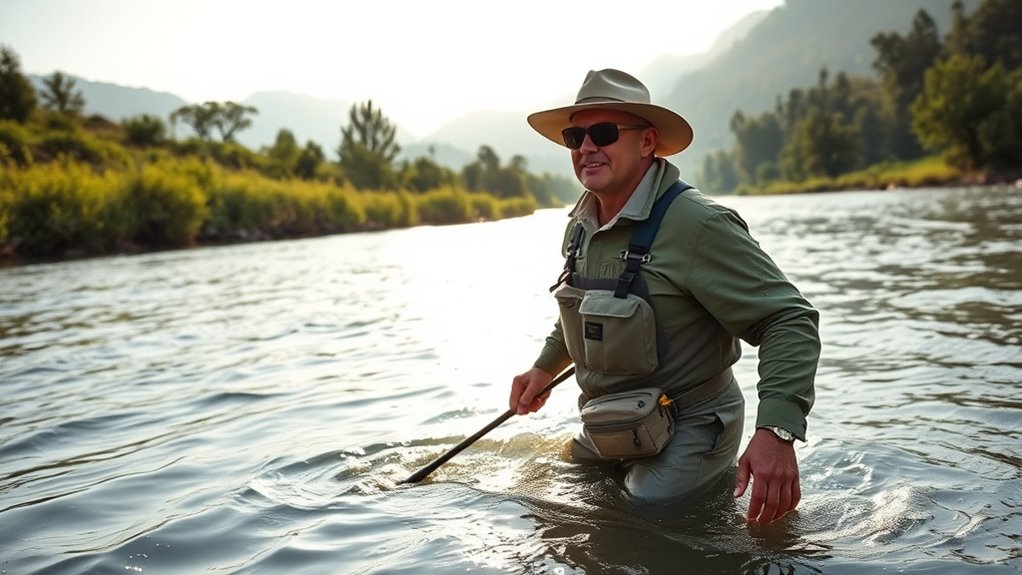
When you’re wading in rivers, having the right equipment can make all the difference in helping you stay safer, steadier, warmer, and more confident. Start with waders that fit your body and the season. They should let you move freely without sagging, bunching, or pulling tight when you squat, step over rocks, or climb a bank.
Wear wading shoes or boots that match the water you fish most often. Felt soles can grip slick rock well, while rubber soles with studs or cleats often work better on mixed terrain, trails, mud, and banks. Before you choose felt, check local regulations because some waters restrict felt soles to reduce the spread of invasive species.
A snug wading belt is essential when wearing waders. It helps slow the flow of water into your waders if you fall, giving you more time to float, regain control, and move toward safety. It should sit firmly around your waist or upper hips without limiting your breathing.
For additional stability, especially in fast-moving water, consider using a wading staff. A staff lets you test depth, feel for drop-offs, brace against current, and keep three points of contact while you move.
Make sure your waders are properly fitted by checking size charts, testing your range of motion, and inspecting seams, gravel guards, and boot connections before each trip. Small leaks can quickly become serious in cold water.
Finally, carry or wear a personal flotation device (PFD), especially in deep, cold, swift, remote, or unfamiliar water. Even strong swimmers can lose control after a slip, cold shock, or foot entrapment.
Prioritizing this gear creates a safer, more enjoyable wading experience because you can focus on fishing instead of fighting your footing.
Warning: Do not rely on waders to keep you afloat. Waders, a belt, and boots are safety tools, but they do not replace a properly fitted PFD in hazardous water.
Importance of Wading Belts
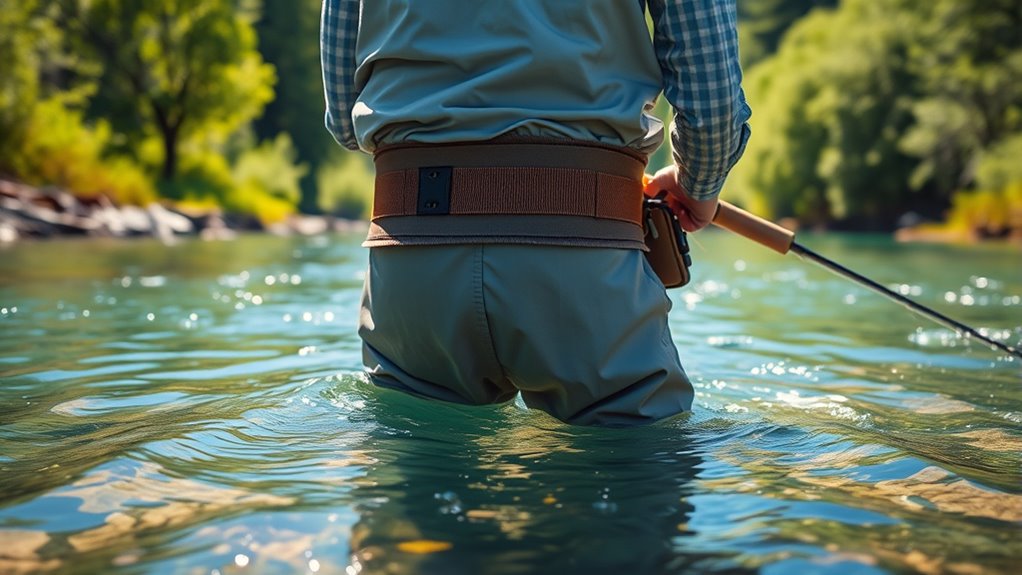
A wading belt is an essential piece of gear that greatly enhances your safety while fishing. When you wear waders, a belt helps slow the flow of water filling your legs and torso, which can make a fall easier to manage.
A belt will not make waders waterproof in a fall, and it will not remove all drowning risk. Its job is to buy time, reduce water movement inside the waders, and help you regain control sooner.
Here’s why you should prioritize wading belts:
- Slows Water Accumulation: A properly fitted belt delays water filling your waders and reduces the heavy, dragging feeling that can make movement harder in cold or swift water.
- Improves Body Control: By keeping the waders snug, a wading belt helps you stay more controlled in the water, which can make floating and moving toward shore easier.
- Supports Emergency Response: Look for a belt with a sturdy buckle that you can operate with cold or wet hands. Quick-release features can help if you need to remove gear under pressure.
Wear the belt over your waders every time you enter the water. Tighten it enough to seal the upper wader area, but not so tight that it causes discomfort or limits movement.
Pro Tip: After you put on your wading belt, squat, twist, and take a few high steps before entering the water. If the belt shifts or pinches, adjust it on dry ground.
Techniques for Safe Movement
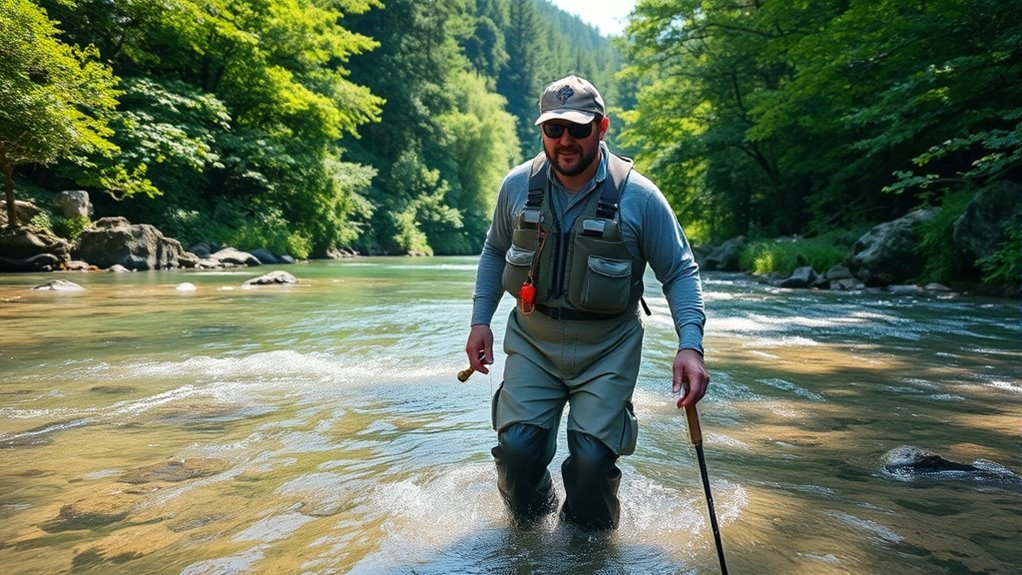
To guarantee safe movement while wading, it’s crucial to use techniques that improve your stability and balance. Rushing is one of the easiest ways to fall, especially when the bottom changes from gravel to slick rock, mud, or algae-covered cobble.
Move slowly and with control. Keep your feet about shoulder-width apart, bend your knees slightly, and lower your center of gravity. This stance helps you absorb current pressure instead of letting it push you off balance.
When you move through deeper water, use a sidestep method. Slide or lift one foot at a time, set it securely, then move the other foot. Avoid crossing your feet because that can turn a small stumble into a full fall.
| Technique | Purpose | Key Tips |
|---|---|---|
| Assess Foot Placement | Confirm secure footholds | Regularly check terrain before shifting weight |
| Move Slowly | Minimize slipping | Control each movement and avoid sudden turns |
| Sidestep | Maintain balance in deeper water | Avoid crossing feet and keep knees slightly bent |
Use your wading staff like a third leg. Plant it upstream or slightly in front of you before shifting weight. If the staff shakes hard or the bottom drops away, stop and choose another route.
Keep your body angled slightly into the current. Avoid turning your full side to heavy current because it gives the water more surface area to push against.
Navigating Water Conditions
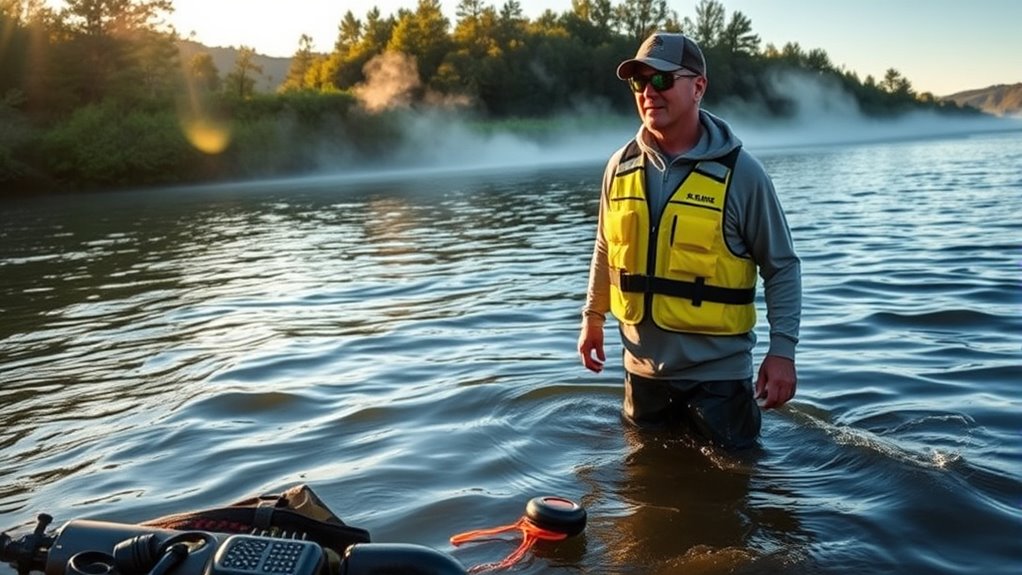
Maneuvering varying water conditions can be challenging, but understanding how to approach them safely makes a significant difference.
To enhance your wading safety, follow these key tips:
Enhancing your wading safety starts with reading the current, choosing shallow routes, using a wading staff, and leaving yourself an easy exit.
- Approach streams at a slight downstream angle: This helps reduce the force of the current on your body and lets you move with more control.
- Use a wading staff: Test depth, bottom type, and current strength before entering the water. A staff is especially useful when glare, stained water, or riffles hide the bottom.
- Prefer shallow water and current breaks: Move through softer edges, inside bends, gravel bars, and protected seams when they offer safe footing. Always compare your ability against the flow before crossing.
Be cautious when traversing gravel bars above deep water, as slips can occur easily. Water that looks calm near a drop-off can still pull hard once you lose footing.
Also watch for rising water, dam releases, storm runoff, and sudden color changes. If the water turns muddy, begins carrying more debris, or rises around your legs, leave immediately.
Note: A safe crossing on the way out may not be safe on the way back. Recheck depth, current, and your energy level before returning.
Understanding River Bottom Types
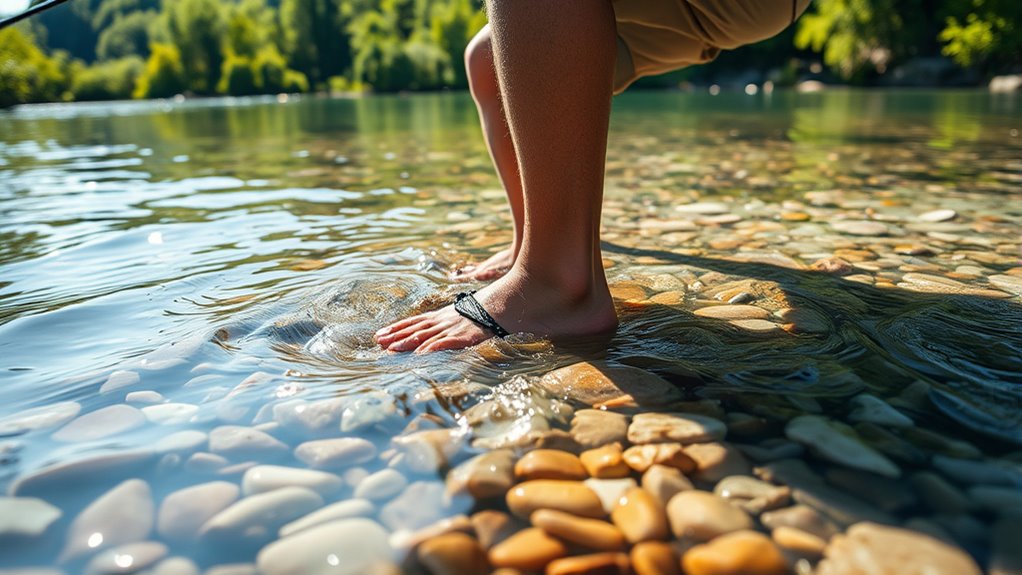
While fishing in rivers, understanding the various types of river bottoms is essential for ensuring your safety while wading. Each bottom type presents unique challenges, so knowing what to expect can help you avoid accidents.
| River Bottom Type | Safety Considerations |
|---|---|
| Sand and Gravel | Often provides secure footing, but soft pockets can shift under weight. |
| Cobbles | Can create slippery traps; often algae-covered and uneven. |
| Boulders | Offer stable spots but pose significant tripping and ankle-twisting hazards. |
| Mud Bottoms | Deceptively slippery and sticky; can lead to loss of balance. |
| Bedrock Surfaces | Extremely slippery when smooth, algae-covered, or lacking footholds. |
When wading, be cautious of these surfaces. Sand and gravel bottoms are often easier to manage, while bedrock, mud, and algae-covered cobble can be hazardous. Always stay alert to avoid slipping and tripping, ensuring a safer and more enjoyable fishing experience.
Do not assume clear water means safe footing. Clear water can hide potholes, ledges, branches, and sudden depth changes. Murky water adds even more risk because you cannot see where your next step will land.
Swimming Techniques for Emergencies
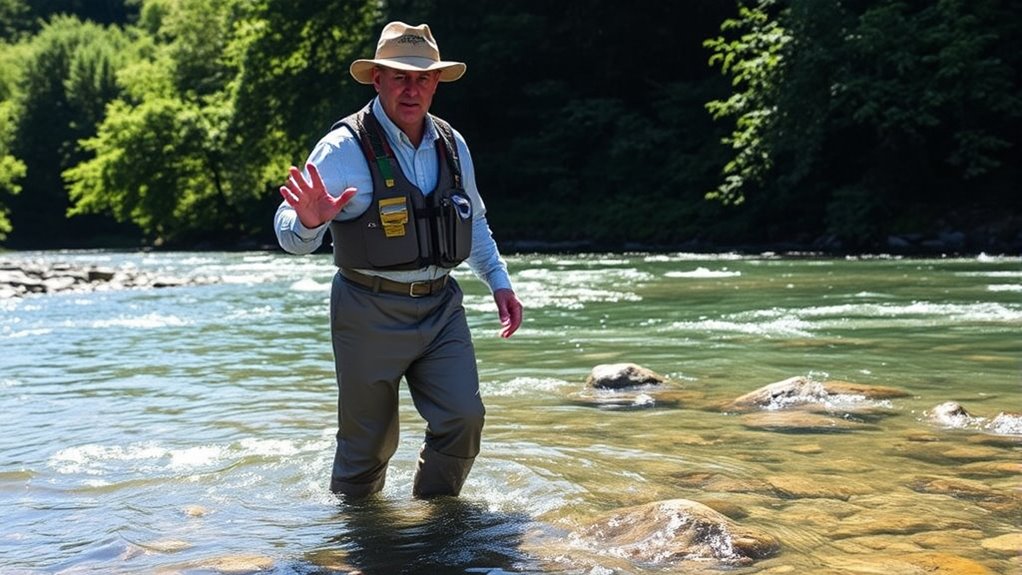
In emergencies, knowing how to swim defensively can make all the difference. The goal is to protect your head, avoid foot entrapment, conserve energy, and move toward a safe exit.
You’ll want to manage panic effectively and use aggressive swimming techniques only when you have a clear path to shore, an eddy, or a shallow recovery point.
Warning: If you fall in moving water, avoid trying to stand up until you reach slow, shallow water. Standing too soon can trap a foot between rocks and pin you in the current.
Defensive Swimming Position
When faced with an emergency in the water, adopting a defensive swimming position can greatly enhance your chances of staying safe. Here’s how to use this technique:
- Stay on your back with feet downstream: Keep your feet up and pointed downstream so they can fend off rocks, logs, and shallow obstacles.
- Keep your head up and look for exits: Watch for banks, eddies, gravel bars, slow seams, or rescue help. Do not stare only at the obstacle in front of you.
- Use controlled arm movements: Paddle with your arms to angle your body toward safer water while keeping your feet high.
Properly belted waders can help delay water filling, which may make this position easier to hold. Still, you should practice safe responses in controlled conditions before you need them in real water.
Focus on breathing, staying horizontal, and using your legs and arms to move toward safety when the current gives you a chance.
Managing Panic Effectively
Panic can easily set in during a water emergency, but staying calm is essential for your safety. Your first job is to breathe, float, and think before you fight the current.
| Technique | Description |
|---|---|
| On Your Back with Feet Downstream | This helps protect your body and reduces the chance of foot entrapment. |
| Breathe and Think | Control your breathing, avoid gasping, and look for the safest exit. |
| Defensive Swimming Position | Float on your back, feet downstream, head up, and body near the surface. |
| Swim Aggressively Toward Safety | When you see a clear route, roll or angle toward shore and swim with purpose. |
Using wading belts can help reduce water movement inside your waders during emergencies. Remember to concentrate, keep your feet downstream, and always look for safe wading conditions before entering the water. Stay calm and you’ll navigate the situation more effectively.
Techniques for Aggressive Swimming
Staying calm is essential in a water emergency, but knowing how to swim aggressively can make all the difference in getting to safety. Use aggressive swimming when you are ready to leave the defensive position and move toward a reachable exit.
- Angle your body toward the bank, eddy, or shallow water instead of trying to swim straight against the current.
- Use strong strokes, such as a modified freestyle or backstroke, while keeping your head above water and your eyes on the exit.
- Focus on controlled breathing; inhale when your face is clear of spray and exhale steadily to avoid panic.
If your waders fill with water, do not waste energy trying to empty them in the current. Get to shore or a stable shallow area first, then drain them and reassess your condition.
Foot Entrapment Risks and Prevention
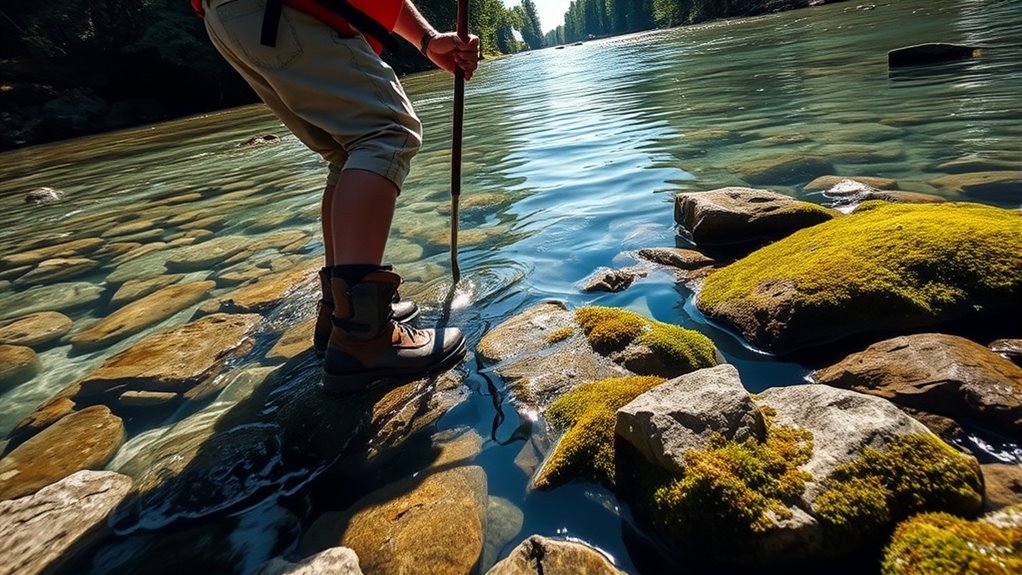
Although wading can be a rewarding fishing experience, foot entrapment poses a serious risk that you need to understand before entering moving water. This danger often arises in knee-deep or faster water when your foot gets wedged between rocks, under ledges, below branches, or in debris.
Foot entrapment becomes especially dangerous because the current can push your body downstream while your foot stays pinned. That pressure can make it hard to stand, breathe, or free yourself without help.
To enhance your safety, follow these key prevention tips:
| Prevention Tips | Details |
|---|---|
| Avoid Visible Obstructions | Steer clear of areas with branches, ledges, strainers, or debris. |
| Position Your Feet Wisely | Keep steps short, avoid deep slots, and do not jam your feet between rocks. |
| Use Quick-Release Wading Belts | Make sure they’re snug and operable under pressure. |
| Check Water Conditions | Be mindful of depth, speed, clarity, temperature, and your ability to exit. |
| Be Prepared for Assistance | Have a rope, stick, whistle, or nearby partner ready for emergencies. |
Always prioritize safe wading practices. Remember, quick-release wading belts can delay water filling waders, providing essential assistance in case of a fall or foot entrapment risk. Stay alert and protect yourself while enjoying your fishing adventure.
If you fall, do not put your feet down in fast current to stop yourself. Float first, keep your feet high, and stand only when the water is slow and shallow enough to do so safely.
Rescue Techniques for Wading Accidents
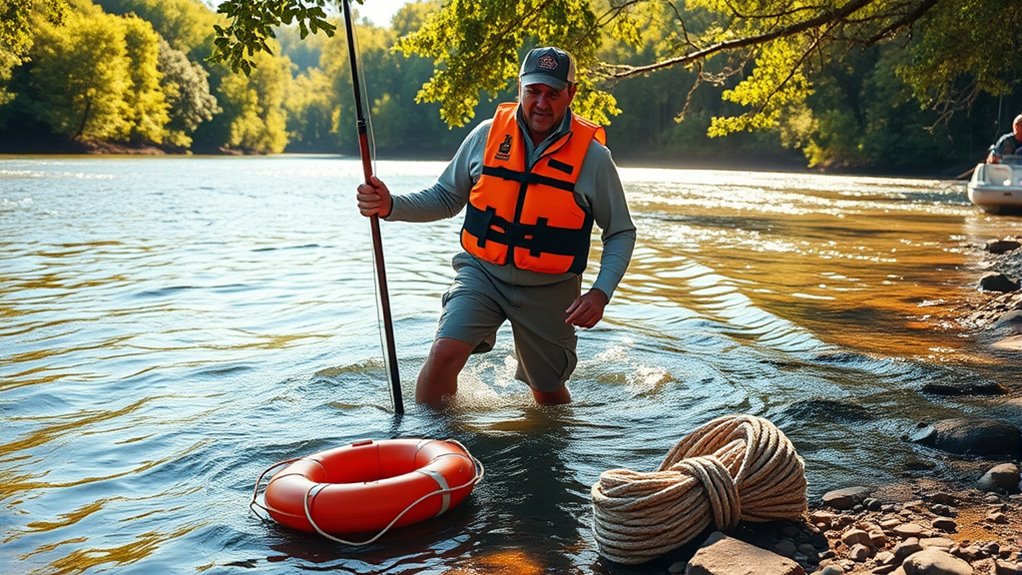
When you encounter a foot entrapment situation while wading, knowing effective rescue techniques can make all the difference. Still, rescues in moving water can put the helper in danger too, so your first step should be to avoid becoming a second victim.
Here are three key steps to follow:
Three essential steps can guide you in a foot entrapment rescue situation while wading: call for help, reduce current pressure, and use leverage without entering unsafe water.
- Call for help immediately if the situation is serious. Use a whistle, phone, or loud voice to alert nearby anglers, boaters, or emergency services.
- If it is safe, approach from downstream or the side with a stable stance. Use a rope, wading staff, branch, or landing net handle to reach the person without stepping into stronger water.
- If another person is available, coordinate from shore or shallow water. One person can communicate with the victim while the other prepares a throw rope, long stick, or safe exit route.
If the victim is pinned, the goal is to reduce the force of the current and help them free the trapped foot without pushing their head underwater. In some situations, removing or cutting gear may be necessary, but only if it can be done without increasing the danger.
Before wading at all, assess conditions carefully. If the depth, speed, or return route feels uncertain, do not cross. Turning around early is always safer than needing a rescue later.
Personal Flotation Devices: When and How to Use
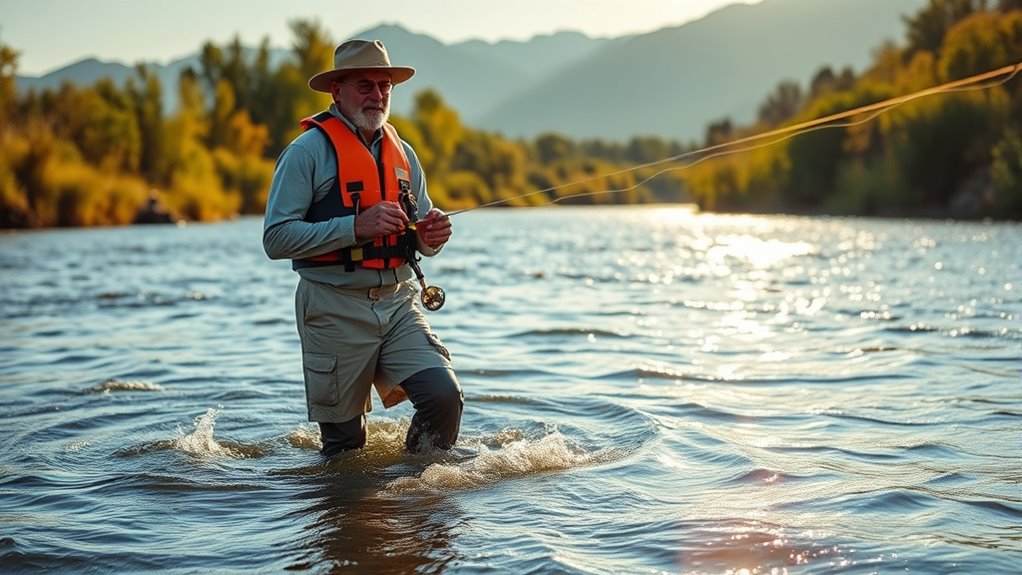
While wading in rivers, it’s wise to wear a personal flotation device (PFD) when conditions add risk. PFDs are especially important in hazardous conditions like high currents, cold water, deep pools, night fishing, remote areas, or unfamiliar crossings.
Choose a PFD that fits snugly and suits your fishing activities. Lightweight options, inflatable suspenders, and fishing vests with built-in flotation can provide buoyancy while still allowing casting and movement. Whatever style you choose, make sure it is designed for water safety and adjusted correctly.
Before heading out, assess the environmental conditions. If you’re wading at night or in swift water, wearing a PFD is vital. Even if you’re a strong swimmer, unexpected slips, cold shock, fatigue, or changing water conditions can happen quickly.
Prioritizing fishing safety means being prepared for any situation, so make wearing your PFD a non-negotiable part of your wading gear when the water is risky. Safe wading starts with taking the necessary precautions to protect yourself on the water.
Planning for Wading Safety
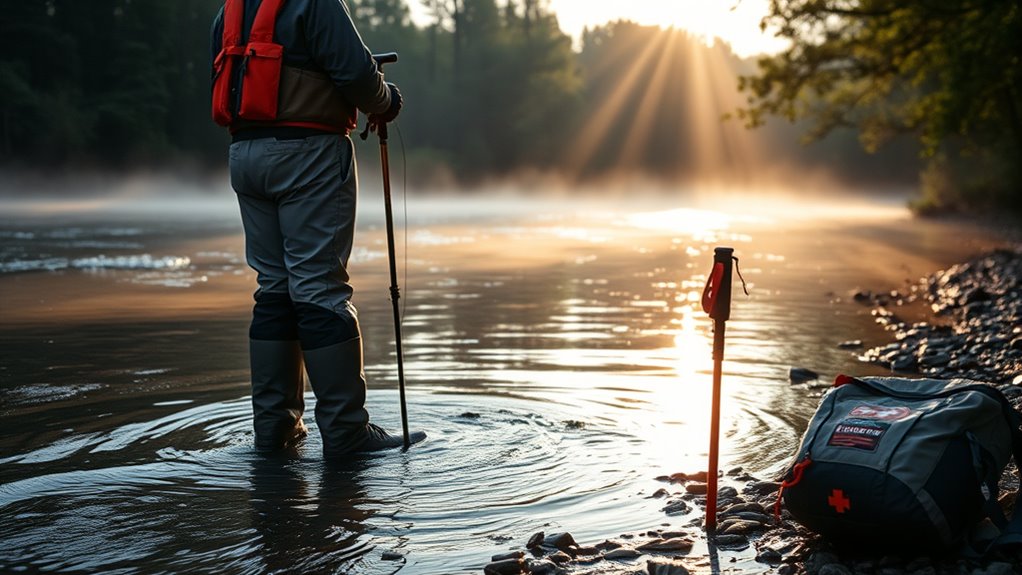
Before you step into the water, it’s crucial to assess your wading location for potential hazards like strong currents, slippery surfaces, sudden drop-offs, cold water, and underwater obstacles. Proper planning can greatly enhance your safety while wading.
Assess your wading location for hazards like current, depth, slippery surfaces, weather changes, and exit routes before you take the first step.
Here are three key steps to contemplate:
- Identify Escape Routes: Know the nearest banks, gravel bars, eddies, or safe zones you can reach quickly if you fall in. Having a plan can save your life.
- Use a Wading Belt: This gear slows water flow into your waders, reducing rapid water accumulation and helping you stay more controlled after a fall.
- Carry a Personal Flotation Device (PFD): Always have a PFD on hand, and wear it in high-risk conditions like fast-moving water, cold temperatures, night fishing, or deep crossings.
Lastly, check the weather forecast. Avoid wading during storms, lightning, heavy rain, high winds, or rising water to minimize risk and guarantee safer conditions.
Your safety is paramount, so don’t take unnecessary chances. If the water looks different from when you arrived, stop fishing and leave while you still have a safe route.
Pre-Wading Safety Checklist
Before each trip, take a minute to run through a simple safety check. This habit can help you catch small problems before they become serious on the water.
- Check your gear: Inspect waders, boots, belt, gravel guards, laces, staff, PFD, and whistle.
- Check the water: Look at depth, current speed, clarity, debris, temperature, and whether water levels appear to be rising.
- Check the weather: Watch for storms, wind, lightning risk, sudden cold, and upstream rainfall.
- Check the route: Plan where you will enter, where you will fish, and where you will exit if conditions change.
- Check your limits: Do not wade deeper or farther than you can safely return from while tired.
- Check your communication: Tell someone where you are fishing, go with a partner when possible, and keep your phone protected in a waterproof pouch.
Common Wading Mistakes to Avoid
Many wading accidents start with small choices that feel harmless in the moment. Avoiding these mistakes can make your fishing trip much safer.
- Wading too deep: The deeper you go, the more force the current applies to your body.
- Turning your back to strong current: This can make it harder to react if you lose balance.
- Crossing your feet: Crossed steps reduce balance and increase the chance of tripping.
- Ignoring cold water: Cold water can weaken muscles, slow reactions, and make swimming harder.
- Fishing alone in risky spots: A partner can call for help, throw a rope, or guide you toward a safer exit.
- Standing up after a fall too soon: Trying to stand in fast water increases the risk of foot entrapment.
Frequently Asked Questions
What Should I Do if I Encounter Wildlife While Wading?
If you encounter wildlife while wading, stay calm and give the animal space. Do not block its path, approach it for photos, or make sudden movements. Back away slowly when safe, keep your balance, and leave the area if the animal seems stressed, protective, or aggressive.
How Can I Communicate With My Fishing Companions While Wading?
Use simple hand signals, voice commands, and whistle blasts before anyone enters the water. Agree on signals for stop, danger, come closer, move downstream, and emergency help. Keep enough distance to cast safely, but stay close enough to see and hear each other.
Are There Specific Regulations for Wading in Different Areas?
Yes, some areas have rules about access points, protected habitat, seasonal closures, fishing licenses, boot soles, cleaning gear, and safety equipment. Check local fishing and public land rules before you go, especially when fishing new rivers, parks, tailwaters, or conservation areas.
What First Aid Supplies Should I Carry While Wading?
Carry a small waterproof first aid kit with bandages, gauze, antiseptic wipes, blister care, medical tape, tweezers, insect bite relief, sun protection, and any personal medication you need. Add a whistle, emergency blanket, and waterproof phone pouch for remote or cold-water trips.
How Can I Improve My Balance While Wading in Moving Water?
Improve balance by strengthening your core and legs, wearing proper wading boots, using a wading staff, and practicing short sidesteps in shallow water. Keep your knees bent, your feet apart, and your movements slow. Avoid crossing your feet or turning quickly in current.
Is It Safe to Wade Alone?
Wading alone is safest only in shallow, familiar, slow-moving water with easy exits. Avoid solo wading in cold, deep, swift, remote, or low-light conditions. If you do go alone, tell someone your location, carry communication gear, and set a firm turnaround time.
How Deep Is Too Deep for Wading?
Water is too deep when the current affects your balance, your feet begin to slide, or you cannot turn around safely. For many anglers, thigh-deep moving water already demands extra caution. Depth, speed, bottom type, temperature, and your strength all matter.
Conclusion
Wading into the water can feel like stepping onto a tightrope: exciting, focused, and full of possibility. The safest anglers respect that balance. They prepare their gear, read the river, move slowly, and leave before conditions become unsafe.
By equipping yourself with fitted waders, grippy boots, a snug wading belt, a staff, and a PFD when conditions call for one, you can reduce avoidable risk. By understanding bottom types, current pressure, emergency swimming, and foot entrapment, you give yourself a better chance to respond calmly if something goes wrong.
So gear up, stay alert, and let the adventure unfold with safety at the forefront of your fishing experience. The best wading trip is not just the one where you catch fish. It is the one where everyone gets back to shore safely.