Winter bass fishing is about slowing down, reading cold-water behavior, and putting your bait where bass can feed without wasting energy. As temperatures drop, bass often hold near deep water, vertical cover, drop-offs, rock, timber, docks, and slightly warmer pockets. You’ll usually do best with smaller lures, slower retrieves, subtle action, and careful attention to safety, especially when ice, wind, or low-light conditions are involved.
Quick Answer
To catch bass in winter, fish slowly around deep water access, vertical cover, rocky structure, dock pilings, creek channels, and the warmest water you can find. Use smaller jigs, soft plastics, jerkbaits, blade baits, and subtle presentations. Focus on stable weather, low-light feeding windows, and safe cold-weather gear.
Key Takeaways
- Winter bass slow down, so your retrieves should be slower, softer, and more deliberate.
- Deep water access points, drop-offs, creek channels, docks, rocks, and vertical cover are high-percentage targets.
- Smaller lures, natural colors, jigs, soft plastics, jerkbaits, and blade baits often work better in cold water.
- A small temperature change can matter, so look for sunlight-warmed banks, protected pockets, current breaks, and stable water.
- Cold-weather safety matters as much as technique. Wear layers, use flotation, check ice carefully, and tell someone where you’re going.
At a Glance
| Best Time | Midday warmth, stable weather, dawn, dusk, and low-light feeding windows |
| Difficulty | Moderate, because bites can be light and bass may group tightly |
| Best Lures | Jigs, soft plastic worms, drop shots, suspending jerkbaits, blade baits, small swimbaits, and hair jigs |
| Key Safety Gear | Layered clothing, life jacket, traction cleats, headlamp, gloves, ice picks, and a charged phone |
Understanding Bass Behavior in Cold Water
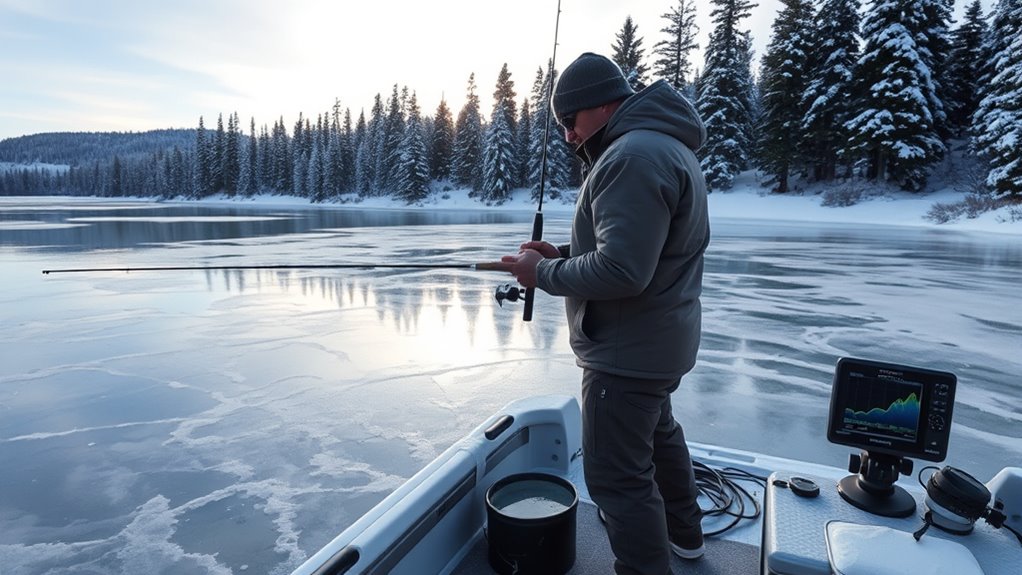
As temperatures drop, understanding bass behavior in cold water becomes vital for successful fishing. In winter, bass slow down considerably, becoming lethargic as their metabolism drops. You’ll find them gravitating toward warmer areas near vertical structures or drop-offs, where they conserve energy while remaining close to deep water.
This strategic positioning is important because bass often use these spots to shelter, rest, and feed without traveling far. A bass may not chase bait across open water in winter, but it may still eat if your lure stays in the strike zone long enough.
Keep in mind that cold fronts can alter bass behavior drastically, causing them to suspend near the bottom, tuck into cover, or stop roaming freely. To entice these hesitant fish, you’ll want to employ subtle presentations that cater to their reduced aggression.
Bass rely heavily on their lateral lines to detect vibrations, so finesse becomes your ally. Pay attention to edges and irregularities like submerged vegetation, wood, brush piles, rock transitions, channel bends, and hard-bottom spots. These features can lead you to where bass are lurking, waiting for the right moment to strike.
Note: Winter bass usually do not spread evenly across a lake or river. Once you find one bite, slow down and fish the area carefully because more bass may be grouped nearby.
Key Techniques for Winter Bass Fishing
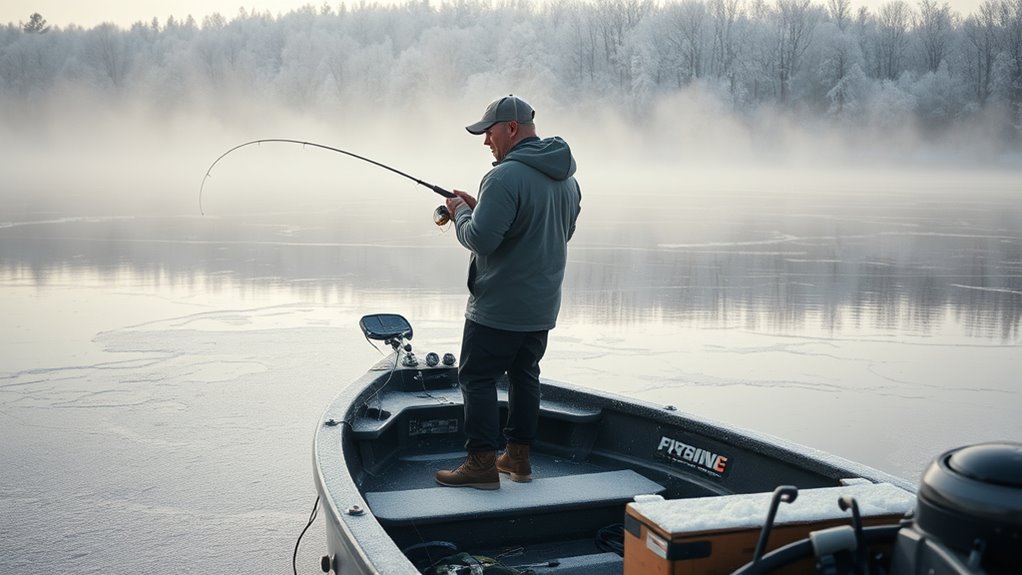
With bass becoming more lethargic in winter, employing the right techniques can make all the difference in your fishing success.
Focus on using slow retrieves with low gear ratio reels in the 5.1:1 to 5.4:1 range when you need extra control. A slower reel helps you keep moving baits from racing past inactive fish. It also makes it easier to crawl jigs, slow-roll spinnerbaits, or work crankbaits with patience.
Opt for smaller baits like soft plastic worms, compact craws, finesse jigs, hair jigs, and small swimbaits. These lures match the reduced activity level of cold-water bass and often look less threatening than bulky, fast-moving options.
Utilize slow retrieves with low gear ratio reels and smaller baits to effectively target lethargic bass in cold weather.
Target vertical structures and irregularities, such as rocks and dock pilings, where bass seek warmth and security. Pay special attention to water temperature; aim for the warmest areas, especially shallow spots that absorb sunlight during the day.
When using reaction baits, choose monofilament fishing line if you want extra stretch. That stretch can help keep treble-hooked fish pinned when bass nip or swipe at a lure slowly in colder temperatures. For bottom-contact baits, fluorocarbon or braid with a fluorocarbon leader can improve feel, especially when bites are faint.
Slow Down Your Cadence
In warm water, bass may chase a fast bait. In winter, they often prefer a lure that pauses, suspends, or crawls. Try working your bait with longer pauses between movements. A suspending jerkbait may need a five-second, ten-second, or even longer pause before a fish commits.
With jigs and soft plastics, drag the bait instead of hopping it aggressively. Let it sit beside rocks, brush, or dock posts. Many winter bites feel like light pressure instead of a sharp strike, so stay alert and keep steady contact with your lure.
Fish the Warmest Water Available
A small temperature difference can change your results. Look for north-facing banks that receive more sun, dark rocks that hold heat, protected coves, shallow flats near deep water, and stained water that warms faster than clear water. Even a slight warm-up can pull bass into feeding positions.
Wind can also help or hurt. A cold wind may push fish tighter to cover, while a warmer wind can move baitfish and improve shallow fishing. Watch for bait activity, birds, surface flickers, and subtle current seams.
Lure Size Choices for Cold Conditions
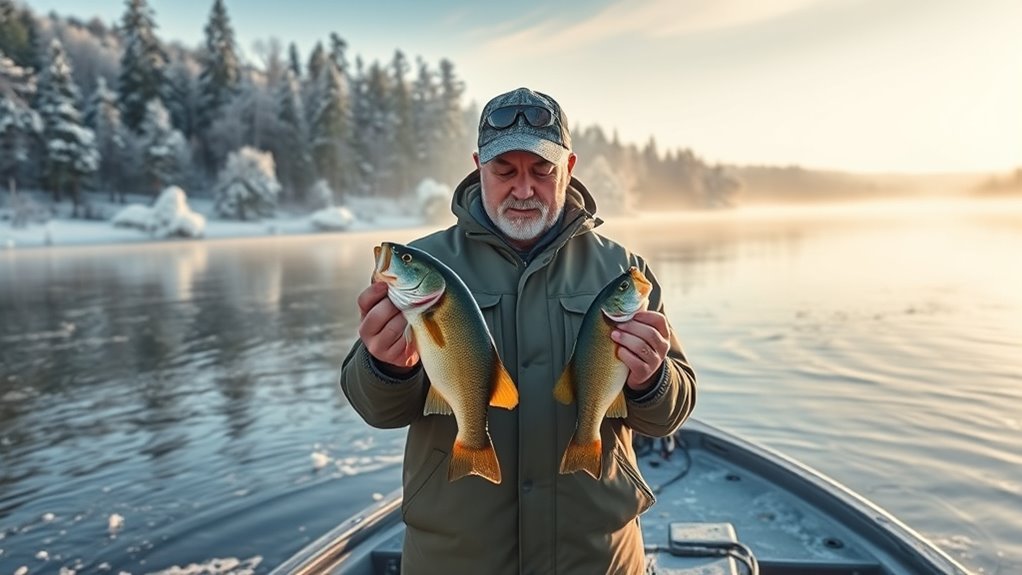
When winter sets in and bass become more finicky, choosing the right lure size can make all the difference in your success. In cold conditions, downsizing your lures to smaller profiles greatly boosts your catch rates.
Lethargic bass are less aggressive, so lures like soft plastic worms, curly tail grubs, finesse jigs, hair jigs, small paddle tails, blade baits, and suspending jerkbaits work well. They offer subtle action that can entice bites without forcing bass to chase too far.
Opt for natural colors, especially in clear water, to mimic the pale, dull baitfish bass target during winter fishing. Shad, smoke, green pumpkin, brown, black, and muted craw colors all have a place. In stained water or low light, add contrast with black-blue, chartreuse accents, white, or brighter crankbaits.
Smaller lures not only increase your chances of getting bites but also make hooksets easier, as bass often take softer strikes in colder water. Don’t hesitate to experiment with various lure sizes according to the bass’s current diet. Remember, matching the hatch is key to enhancing your success in these challenging winter conditions.
Best Winter Bass Lures
- Finesse jig: Drag it slowly around rock, wood, docks, and deeper banks.
- Hair jig: Swim or glide it with tiny movements when bass are suspended or inactive.
- Drop shot: Keep a small worm or minnow-style bait hovering in front of fish.
- Suspending jerkbait: Use long pauses near points, bluff walls, and clear-water structure.
- Blade bait: Lift and drop it gently over deep flats, creek channels, and ledges.
- Soft plastic worm: Fish it on a shaky head, Texas rig, Ned rig, or Carolina rig.
- Small swimbait: Slow-roll it near baitfish, channel swings, and submerged cover.
Pro Tip: If you are getting follows but no bites, downsize your lure first. If that fails, keep the same size but slow the pause, change color, or switch to a more subtle action.
Fishing in Low-Light Conditions

Fishing in low-light conditions can be incredibly rewarding, especially if you know where to focus your efforts. Target permanent light sources like docks, bridges, or piers, as they attract baitfish and subsequently bass. Fish around the shadow lines just outside these light edges, where bass often find ambush opportunities.
Use the right baits to enhance visibility, opting for those that create vibrations or feature bright colors. Pay close attention to the timing of your fishing; dawn and dusk are ideal for bass activity in shallow water.
Here’s a quick reference table for your low-light fishing strategy:
| Time of Day | Best Locations | Recommended Baits |
|---|---|---|
| Dawn | Docks and Bridges | Bright-colored Crankbaits |
| Dusk | Shadow Lines | Vibrating Jigs |
| Night | Piers | Topwater Lures |
| Anytime | Shallow Water Areas | Spinnerbaits |
Stay safe with layered clothing and a flashlight to promote visibility.
In winter, low light does not always mean fast fishing. Bass may move shallower during dawn, dusk, or under dock lights, but they still often prefer a slower presentation. Cast beyond the light line, bring your bait through the edge, and pause it where the bright and dark water meet.
For night fishing, keep your deck or bank setup simple. Use fewer rods, organize your tackle before dark, and avoid walking icy rocks or steep banks without traction. A headlamp with a dim setting can help you tie knots without ruining your night vision.
Targeting Deep Water Access Points
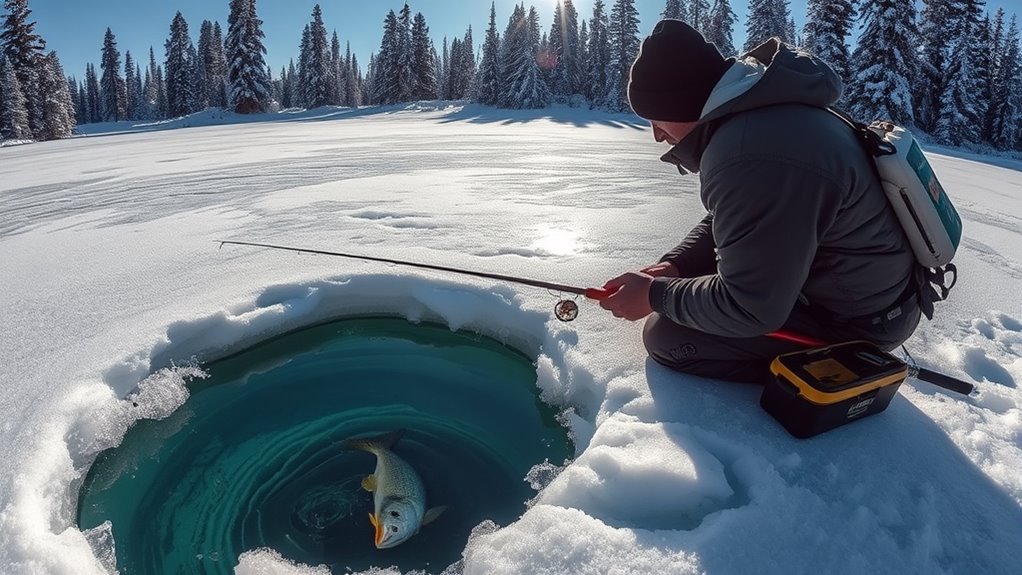
When winter fishing for bass, pinpointing deep water access points is essential for success.
Focus on identifying deep structures and temperature shift zones where fish congregate, as these spots often provide the shelter and warmth bass seek.
Identifying Deep Structures
Although winter can make bass fishing challenging, knowing how to identify deep structures can greatly increase your success.
Focus on deep water access points like steep drop-offs, rocky ledges, bluff walls, channel swings, and vertical structures that provide shelter from the cold. Look for shifting zones where deep water meets shallower areas; these spots can attract bass seeking warmer conditions.
Dock pilings, submerged vegetation, brush piles, standing timber, and creek channels adjacent to deep water are prime locations to target. Pay attention to key features like ledges, humps, and irregular bottom contours that create ambush points for bass.
Using fish finders to detect depth changes and structures will enhance your chances of locating bass effectively during the winter months. Get ready to reel in some impressive catches!
Temperature Transition Zones
As you explore deep structures for winter bass, don’t overlook the significance of temperature shift zones where warmer water meets the chill of deeper depths.
These critical areas often lie near deep water access points like steep drop-offs and creek channels, providing bass with both shelter and a quick escape route to cooler depths.
Look for temperature changes of 2 to 3 degrees; bass often become more active in slightly warmer water.
Target depths between 10 to 20 feet when conditions fit, where bass may suspend or hold near cover. In deeper lakes, you may need to check even deeper structure, especially around baitfish schools.
Additionally, focusing on areas with structure, such as submerged rocks or vegetation near these shift zones, can greatly enhance your chances of encountering winter bass.
Embrace these strategies for a successful winter fishing experience!
Targeting Key Locations
To maximize your chances of landing winter bass, focus on deep water access points where these fish can effortlessly move between shallow and deep zones.
Look for structural features like drop-offs, ledges, points, bluff ends, bridges, and channel bends nearby, as these often hold bass seeking stable temperatures and feeding opportunities.
Monitor temperature changes of 2 to 3 degrees in these areas; even slight variations can trigger increased bass activity.
Use fish finders to pinpoint the depth and structure in deeper waters, enhancing your chances of successful catches.
Don’t forget to cast near submerged structures like fallen trees or rock piles adjacent to these access points, as they provide essential cover for bass seeking shelter from cold conditions.
How to Read Your Electronics in Winter
Your fish finder can save time when bass are grouped tightly. Start by idling over creek channels, points, ledges, deep grass edges, and bluff walls. Watch for baitfish first, then look for larger marks close to the bait or near the bottom.
If you see fish suspended but cannot get bites, try a jerkbait, small swimbait, Damiki-style rig, hair jig, or drop shot. If fish are glued to the bottom, drag a jig, shaky head, Ned rig, or Carolina rig slowly through the area.
Strategies for Ice Fishing for Bass
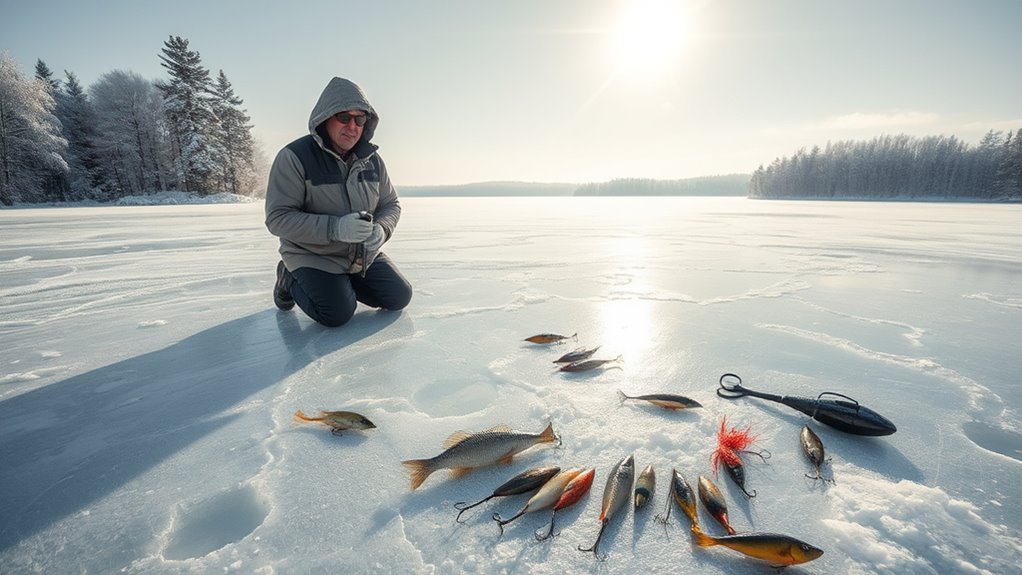
When you’re gearing up for ice fishing bass, having the right gear can make all the difference.
You’ll want to choose effective bait that mimics the natural forage bass are after, especially in colder waters.
With the right setup, you’ll be ready to tackle the challenge and reel in those winter catches.
Warning: Never assume ice is safe because someone else is fishing on it. Check local conditions, measure ice thickness as you move, avoid current areas, and carry safety gear such as ice picks and a flotation device.
Ice Fishing Gear Essentials
Winter bass fishing requires the right gear to maximize your success on the ice. Start with a lightweight ice fishing rod in the 24 to 36-inch range, ensuring you have the sensitivity and control needed to detect subtle bites.
Pair it with high-quality, low-stretch monofilament or fluorocarbon line for ideal hook-setting in cold water. Use tungsten jigs or small blade baits that mimic the lethargic movement of winter baitfish, enhancing your chances of attracting bass.
An underwater camera or flasher can help you locate fish and monitor their activity, increasing your catch rates.
Finally, dress in layers and utilize insulated ice fishing shelters to stay warm and comfortable while waiting for that elusive bite.
Effective Bait Choices
Selecting the right bait can make all the difference in your ice fishing success. For ice fishing for bass, effective bait choices include soft plastic worms and hair jigs, which are more appealing in colder months when bass are lethargic.
Stick to natural colors, especially in clear waters, as they resemble familiar baitfish. Downsizing baits to curly tail grubs or suspending jerkbaits can enhance your odds when bass aren’t aggressive.
Remember to employ a slow and steady retrieve; fast movements often scare them away. Vertical jigs, like knife jigs or jigging spoons, offer versatility for both vertical and retrieved techniques, making them excellent for targeting bass beneath the ice.
Experiment with these strategies for a successful outing.
Where to Place Ice Fishing Holes for Bass
Place your holes near weed edges, inside turns, points, creek channels, deeper flats, and the first breakline outside shallow feeding areas. Bass often move along these routes, especially when baitfish are nearby.
Drill several holes before you start fishing so you can move quietly and quickly. If a hole does not show bait, fish marks, or bites after a reasonable effort, move to the next one instead of waiting too long.
Winter Destinations for Bass Fishing
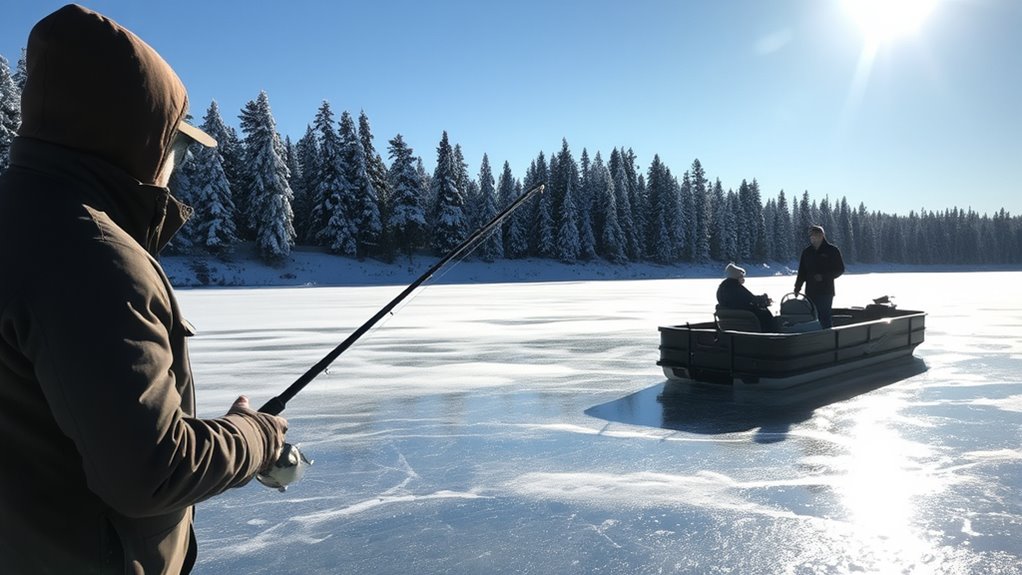
For anglers seeking the thrill of winter bass fishing, several prime destinations await, each offering unique experiences and abundant catches.
Whether you’re after Largemouth or Peacock Bass, these spots have you covered:
For anglers craving Largemouth or Peacock Bass, these prime spots offer exceptional fishing adventures all winter long.
- Florida: Enjoy warm winter weather and year-round fishing for Largemouth and Peacock Bass.
- Texas: Head to Lake Fork or Amistad for world-class winter fishing, known for their strong bass populations.
- Northern Mexico: Discover Lake Huites and El Cuchillo, where you can target Largemouth Bass in excellent conditions.
- Costa Rica: Experience fishing at Lake Arenal for Rainbow Bass in idyllic warm waters.
If you’re feeling adventurous, consider venturing into the Amazon Basin, where winter’s dry season creates perfect opportunities to snag massive Peacock Bass.
Each destination promises not just great fishing but also unforgettable memories.
Pack your gear and get ready for some fantastic winter bass fishing!
Before traveling, check local seasons, license rules, size limits, bag limits, guide requirements, and weather conditions. Regulations can change by state, lake, species, and year, so confirm the rules before you fish.
Safety Tips for Winter Fishing

When you head out for winter fishing, keeping safety in mind is essential to guarantee an enjoyable experience on the water.
Always wear layered clothing to stay warm and protect yourself against the cold, as falling into icy water can lead to hypothermia. A life jacket is a must; it can provide critical support if you find yourself in a dangerous situation.
Before you go, check local weather forecasts and water conditions because winter weather can shift rapidly, impacting your fishing plans.
If you’re fishing during low-light hours, bring a flashlight or headlamp to enhance visibility and reduce the risk of accidents.
Finally, always inform someone of your fishing location and expected return time, particularly when venturing into remote areas.
Cold-Weather Safety Checklist
- Wear a life jacket: Cold water can reduce your ability to swim quickly.
- Dress in layers: Use moisture-wicking base layers, insulation, and a windproof outer shell.
- Protect your hands and feet: Bring dry gloves, wool socks, and insulated boots.
- Carry lighting: Pack a headlamp, backup flashlight, and extra batteries.
- Bring traction: Use cleats on icy ramps, docks, rocks, or shorelines.
- Check ice carefully: Measure thickness often and avoid moving water, inlets, outlets, and pressure cracks.
- Share your plan: Tell someone where you will fish and when you expect to return.
- Keep emergency gear close: Carry a charged phone, whistle, first-aid kit, ice picks, and a throw rope when conditions require it.
Common Winter Bass Fishing Mistakes
Winter bass fishing can feel frustrating when you use warm-weather habits in cold water. The biggest mistake is fishing too fast. If bass are inactive, they may ignore a lure that moves out of reach before they decide to bite.
Another mistake is leaving productive water too quickly. Winter bass may group in small areas, so one dock post, rock pile, or channel bend can hold several fish. Once you get a bite, make repeated casts from different angles.
Many anglers also overlook the importance of baitfish. If you do not see bait on your electronics, near lights, around birds, or along wind-blown structure, keep searching. Bass often stay close to their food source, even in cold conditions.
Finally, avoid ignoring safety. Cold weather leaves less room for error, especially around ice, slick ramps, rough water, and remote banks.
Frequently Asked Questions
What’s the best bait for bass fishing in winter?
The best bait for bass fishing in winter includes live bait where legal, soft plastics, finesse jigs, hair jigs, blade baits, suspending jerkbaits, and slow-retrieving crankbaits. Jigs are especially effective around rock, wood, docks, and deeper banks. Scent can help when bass hold the bait lightly, but slow presentation matters most.
What is the 80/20 rule in bass fishing?
The 80/20 rule in bass fishing means a small part of the water often produces most of your bites. In winter, that usually means deep water access, baitfish, structure, cover, and slightly warmer water. Instead of fishing everywhere, focus on the most likely 20% of the lake or river.
What is the 90/10 rule for bass fishing?
The 90/10 rule means you may find most bass in a very small percentage of the water. During winter, focus on specific locations instead of covering random banks. Check creek channels, bluff walls, deep points, docks, ledges, rock transitions, and areas where baitfish are present.
What is the best rig for winter bass fishing?
For winter bass fishing, the drop shot is one of the best rigs because it keeps a small bait in the strike zone. A jig, Ned rig, shaky head, Carolina rig, Damiki-style rig, or slow-rolled spinnerbait can also work well around winter structure. Choose the rig based on depth, cover, water clarity, and how active the bass seem.
Do bass bite when the water is very cold?
Yes, bass still bite in very cold water, but they usually feed less often and move less far to chase prey. Your best chance comes from slow presentations near structure, cover, baitfish, and warmer water. Long pauses and repeated casts often help trigger bites.
What time of day is best for winter bass fishing?
Midday can be excellent in winter because sunlight may warm shallow cover, rocks, docks, and protected banks. Dawn, dusk, and dock-light periods can also produce bites when baitfish move. Stable weather is often more important than the clock, so watch temperature trends, wind, sunlight, and water clarity.
Conclusion
As you gear up for your winter bass fishing adventures, remember to adapt your techniques, experiment with lure sizes, and seek out those deep water access points. Embrace the thrill of low-light conditions and stay safe on the ice.
Whether you’re casting from a cozy boat or braving the chill for some ice fishing, each moment spent on the water brings the promise of a big catch. So bundle up, stay patient, slow your presentation, and let the adventure unfold.