
Maneuvering the airport with a child can feel like balancing on a tightrope. Gate checking a stroller helps you keep your child comfortable through the terminal, use the stroller until boarding, and avoid carrying extra gear longer than necessary. Most airlines let families gate check a stroller at no extra charge, but size, weight, return location, and tagging rules can vary. Knowing how the process works before you arrive can save time, reduce stress, and help protect your stroller from damage.
Quick Answer
Gate checking a stroller means you use it through the airport, tag it at the gate, fold it before boarding, and hand it to airline staff near the aircraft door. The stroller is usually returned at the jet bridge or baggage claim, depending on the airline, airport, and aircraft.
Key Takeaways
- Gate checking lets you keep the stroller until boarding, which helps with tired children, long walks, and busy terminals.
- Airline policies vary, especially for stroller weight, size, double strollers, and where the stroller is returned after landing.
- Always empty baskets, remove loose accessories, fold and lock the stroller, and attach the gate check tag before boarding.
- A stroller travel bag, luggage tag, and photos of the stroller’s condition can help if damage or loss occurs.
- Compact travel strollers, ticket-counter checking, baby carriers, and stroller rentals can work better than gate checking in some situations.
At a Glance
| Best For | Parents who want to use a stroller through security, the terminal, and the boarding area |
| Time Needed | Plan 30 to 60 extra minutes for family check-in, security, tagging, and boarding |
| What You Need | Foldable stroller, gate check tag, luggage tag, protective bag, and removed accessories |
| Typical Cost | Usually free, but you should confirm your airline’s stroller policy before travel |
Understanding Gate Checking a Stroller
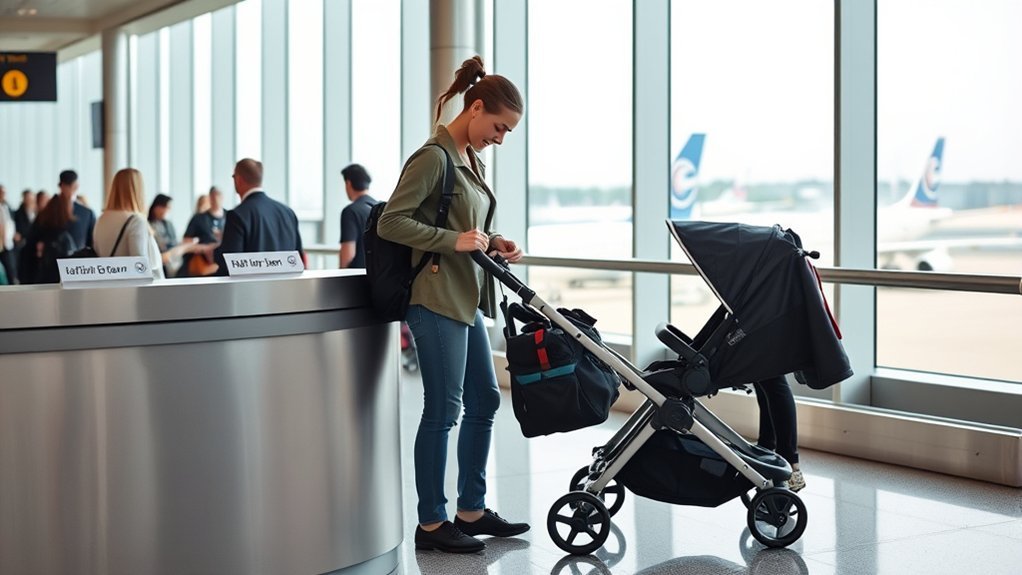
When traveling with small children, understanding gate checking a stroller can make the airport feel much easier. Instead of handing over the stroller at the ticket counter, you keep it with you through check-in, security, and the terminal. Then you receive a gate check tag, fold the stroller before boarding, and leave it with airline staff near the aircraft door or jet bridge.
This option is helpful because airports often involve long walks, crowded terminals, delayed boarding times, and tired children. A stroller gives your child a familiar place to sit, nap, or rest while you manage bags, documents, snacks, and boarding passes. It can also help you move faster through the airport without carrying your child the entire way.
Most major airlines allow families to gate check a stroller at no extra cost, but policies can vary. Some airlines return strollers at the jet bridge after landing, while others send them to baggage claim, especially at international airports, smaller airports, or destinations where local handling rules differ. Always confirm the stroller return process with the gate agent before boarding.
Before handing over your stroller, collapse it, lock the frame, and remove loose items from baskets, cup holders, trays, and organizers. Using a protective bag is also a smart travel step because it helps reduce scratches, dirt, and handling damage.
Note: Gate checking does not always guarantee jet bridge return. Ask the gate agent where your stroller will be delivered after landing, especially if you have a tight connection.
Benefits of Gate Checking a Stroller
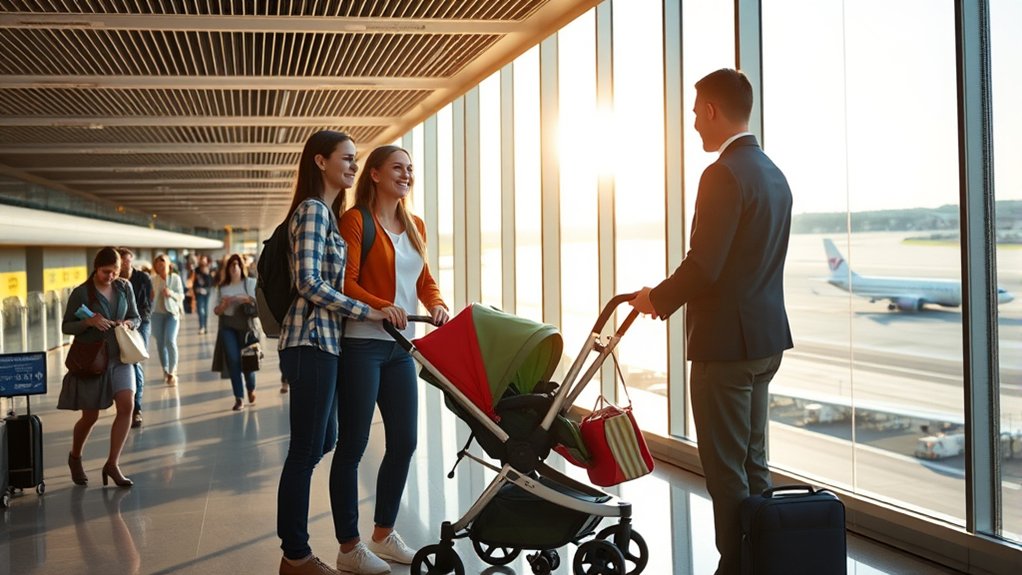
Gate checking a stroller offers several advantages that can improve your travel experience with young children. Instead of carrying your child through long terminals or juggling bags while waiting to board, you can keep your stroller available until the last practical moment.
Gate checking works best when you need your stroller in the airport but do not need it inside the cabin.
- Use until boarding: Navigate the airport with less stress while keeping your child seated and comfortable.
- Helps with naps and delays: A stroller gives your child a familiar place to rest during long waits.
- Less carrying: You can move through the terminal without carrying your child the whole time.
- Useful for layovers: A stroller can make connections easier if it is returned at the jet bridge.
- Often free: Many airlines allow families to gate check a stroller without an extra fee.
- Convenient for bulky models: Larger strollers may not fit overhead, but gate checking keeps them available longer than ticket-counter checking.
- Can reduce stress: Keeping your child calm and contained can make boarding smoother for everyone.
With these travel tips in mind, you can choose the best stroller type for your route, airline, child’s age, and airport schedule. A compact stroller may work better for short flights and tight spaces, while a sturdier stroller can help if your trip includes long layovers or lots of walking.
Preparing Your Stroller for Gate Check
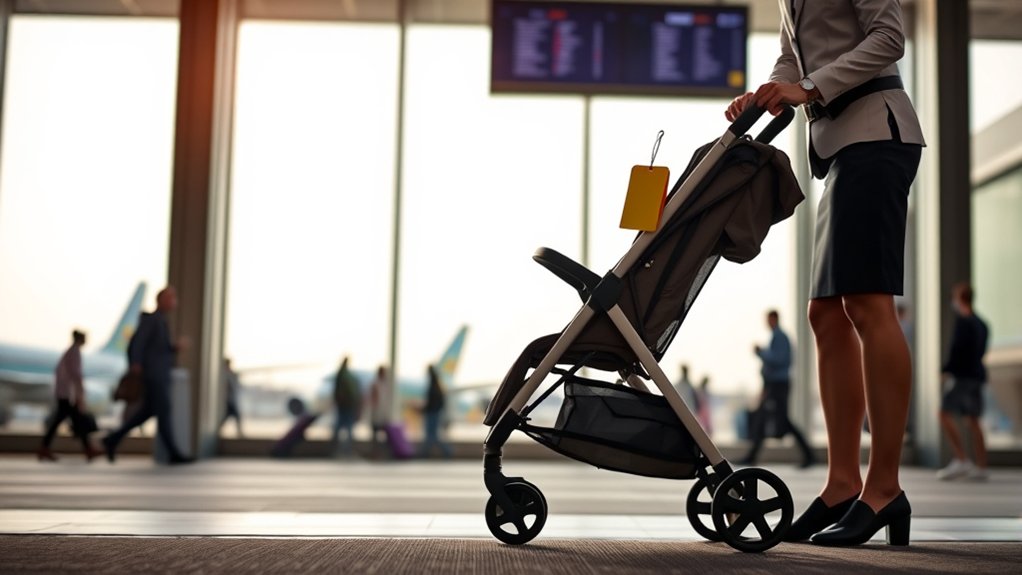
To make the most of the benefits of gate checking your stroller, preparation matters. Start by cleaning the stroller before your trip. Remove crumbs, dirt, toys, blankets, and loose items so security screening and airline handling go more smoothly.
Next, empty the storage basket. Items left under the stroller can fall out, get damaged, or disappear during handling. Detach loose accessories like snack trays, cup holders, stroller fans, rain covers, hooks, parent organizers, and removable canopies when possible. Pack those items in your carry-on or checked bag instead.
Then fold and securely lock your stroller. A stroller that opens during handling can get scratched, bent, or caught on other baggage. If your stroller has a latch, strap, or frame lock, use it. If it does not stay closed firmly, add a simple travel strap or stroller bag for extra security.
A stroller gate check bag can help protect the frame and fabric from dirt, scuffs, and rough handling. Choose a bag that fits your stroller when folded, closes securely, and has a clear luggage tag or name label. Brightly colored bags can also make your stroller easier to spot after landing.
Pro Tip: Take a quick photo of your folded stroller before handing it over. If it comes back damaged, the photo can help show its condition before airline handling.
Airline Policies for Gate Checking Strollers
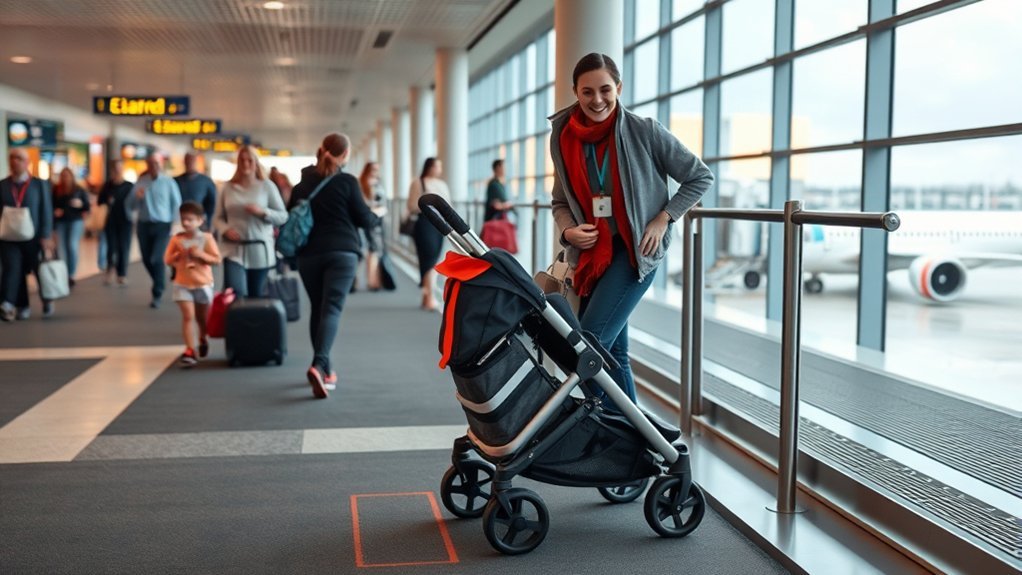
Airline policies for gate checking strollers can vary, so checking your carrier’s rules before your flight is essential. The biggest differences usually involve stroller weight, stroller size, whether double strollers are allowed at the gate, and where the stroller will be returned after landing.
Here’s what you should confirm before travel:
- Whether your airline allows one stroller per child or one stroller per ticketed passenger.
- Whether gate checking is free for your stroller type.
- Whether your stroller must be under a certain weight or folded size.
- Whether double strollers, wagon strollers, jogging strollers, or large travel systems can be gate checked.
- Whether the stroller will return at the jet bridge, aircraft door, oversize baggage area, or regular baggage claim.
- Whether you need to get a stroller tag at the ticket counter or directly from the gate agent.
Some airlines may require heavier or oversized strollers to be checked at the ticket counter rather than at the gate. Others may allow standard strollers at the gate but treat stroller wagons, large double strollers, or non-folding models differently. If your stroller is large, heavy, or unusual, confirm the policy before you leave home.
When in doubt, bring a compact foldable stroller for air travel. A smaller stroller is easier to screen, easier to fold quickly, and less likely to create problems at boarding.
How to Navigate the Airport With a Gate Check Stroller
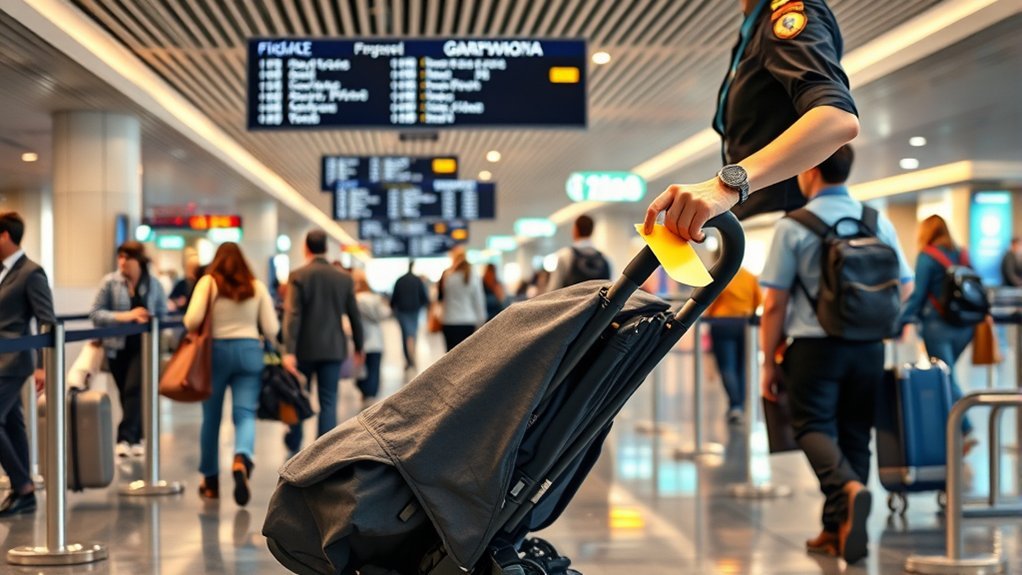
Arriving at the airport 30 to 60 minutes earlier than usual is a smart move when traveling with a gate check stroller. Family travel often takes longer because you may need extra time for check-in, child care, security screening, bathroom breaks, snacks, and boarding.
At security, you usually need to remove your child from the stroller, fold the stroller, and send it through screening when it fits. If the stroller is too large for the machine, security officers may inspect it by hand. After security, you can use the stroller through the terminal until boarding.
Once you arrive at the gate, tell the gate agent that you want to gate check the stroller. The agent will give you a tag. Attach the tag securely to the stroller frame or handle, not to a removable accessory. When boarding begins, fold the stroller before you reach the aircraft door and hand it to the airline staff in the designated area.
Arrival Timing Importance
While maneuvering through the airport with a gate check stroller, arrive 30 to 60 minutes earlier than your usual airport timing. This helps you avoid rushing and gives you room to handle child-related delays. Keep these timing tips in mind:
- Check your airline’s recommended airport arrival time before your travel day.
- Allow extra time for family check-in and stroller questions at the counter.
- Prepare for security by removing your child and folding the stroller.
- Leave time for restroom stops, diaper changes, feeding, or calming a tired child.
- Find your gate early so you can request the stroller gate check tag before boarding starts.
- Ask where the stroller will be returned after landing, especially before a connection.
Arriving early gives you more control over the process. It also helps you avoid folding the stroller at the last second while other passengers are trying to board around you.
Security Screening Process
As you approach the security checkpoint, prepare for the screening process before you reach the front of the line. Remove your child from the stroller, gather loose items, and fold the stroller when asked. Strollers usually need to go through the X-ray machine if they fit. If the stroller is too large, security officers may conduct additional screening by hand.
Keep small accessories, toys, bottles, blankets, and snacks packed securely so they do not slow down the line. Avoid leaving valuables in stroller pockets or under-seat baskets. Once you pass through security, unfold the stroller only after you move away from the screening belt so other travelers can collect their belongings.
After security, you can use the stroller throughout the airport until you reach the boarding gate. Do not forget to inform the gate agent about the stroller and attach the designated gate check tag before folding it for boarding.
Boarding With a Gate Check Stroller
Boarding is the point where many stroller mistakes happen. Before your boarding group is called, remove your child, fold the stroller, and make sure the gate check tag is attached. Keep any loose accessories with you, not inside the stroller bag or basket.
If your airline offers family boarding, use that time to fold the stroller without pressure. If family boarding is not available, step aside near the gate before your group is called and get the stroller ready. This keeps the aisle and jet bridge moving smoothly.
When you reach the aircraft door or jet bridge drop-off point, place the stroller where airline staff direct you. Do not leave it blocking the walkway, boarding lane, or aircraft entrance. After landing, wait in the correct return area and check the stroller before leaving the airport.
Protecting Your Stroller During Gate Check
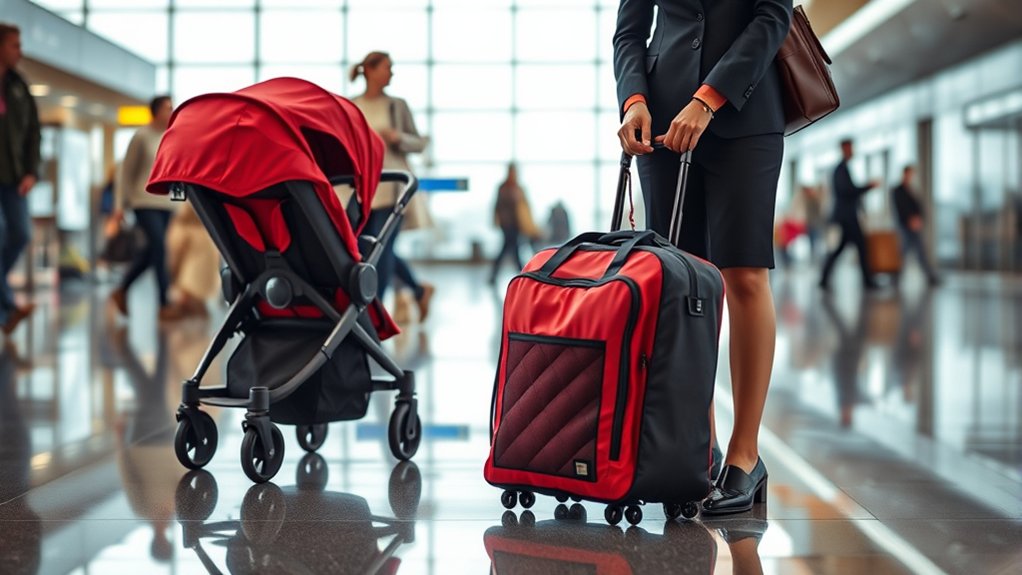
To help your stroller stay in good condition during gate check, take a few protective steps before handing it over. Airline staff may handle gate-checked items quickly, and strollers can be placed with other bags or equipment. Good preparation reduces the chance of scratches, broken accessories, or missing parts.
- Use a stroller gate check bag: A protective bag adds a layer against dirt, scratches, and light handling damage.
- Fully collapse and lock the stroller: A secure fold helps prevent the stroller from opening during transit.
- Remove loose accessories: Take off trays, cup holders, hooks, fans, toys, and organizers before checking the stroller.
- Label your stroller: Include your name, phone number, and email address on a luggage tag.
- Document the stroller’s condition: Take photos before handing it over in case you need to file a damage claim later.
- Add padding when needed: Use a padded bag or soft cover around delicate parts if your stroller has exposed wheels or handles.
- Keep valuables out: Never leave wallets, passports, electronics, medicine, or keys in stroller pockets.
Warning: Do not leave car seats, baby blankets, electronics, medication, or travel documents attached to or stored inside the stroller when you gate check it.
What to Do if Your Stroller Is Damaged
If you discover your stroller is damaged after gate check, act before leaving the airport. First, inspect the stroller for visible damage, missing parts, bent wheels, broken locks, torn fabric, cracked handles, or frame problems. Test the fold, brakes, and wheels before putting your child back in it.
Report the damage to the airline’s baggage service office or customer service desk immediately. Do this at the arrival airport whenever possible, because some airlines require damage to be reported before you leave the airport. Ask for a written report, claim number, or confirmation email.
Take clear photos of the damage from several angles. Keep your boarding pass, baggage tag, gate check tag, stroller purchase receipt, and any repair estimates. This damage documentation can support your claim.
Keep a record of all communication with the airline, including dates, times, claim numbers, and names of representatives. If the stroller is unsafe to use, ask the airline what temporary assistance or reimbursement options may be available under its baggage policy.
What to Do if Your Stroller Is Lost or Delayed
A delayed stroller can be stressful, especially if you need it right after landing. If your stroller does not appear at the jet bridge, ask the arriving gate agent whether it was sent to baggage claim, oversize baggage, or a special handling area. Strollers sometimes arrive separately from regular bags.
If you still cannot find it, go to the airline baggage service desk before leaving the airport. Provide your gate check tag, flight details, stroller description, and contact information. Ask for a missing item report and keep the claim number.
Describe the stroller clearly, including brand, color, model, bag color, wheel type, and any luggage tag details. Photos of the stroller can help airline staff identify it faster. If you have a connecting flight and need the stroller immediately, ask the airline what assistance is available at the airport.
Alternatives to Gate Checking Your Stroller
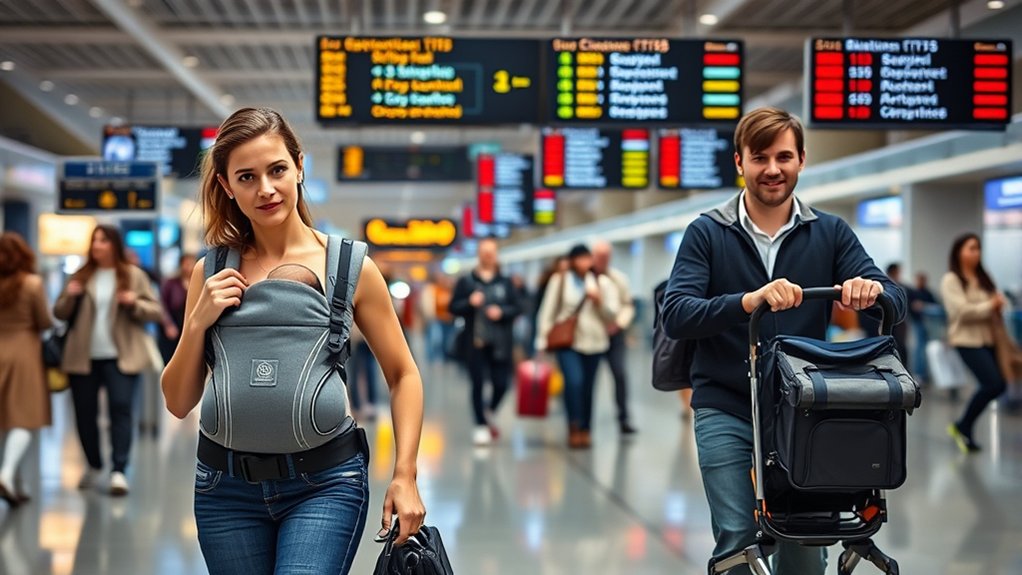
If you’re looking for alternatives to gate checking your stroller, you have several options. You can check the stroller at the ticket counter, bring a compact stroller that fits in the overhead bin, use a baby carrier, rent a stroller at your destination, or choose airport-provided family services where available.
The right option depends on your child’s age, stroller size, airline rules, layover time, and how much walking your trip involves. For a short flight with a toddler, a compact travel stroller may be easiest. For a theme park vacation, renting a stroller at your destination may save space. For a baby who prefers contact naps, a carrier may work better inside the airport.
Stroller Rental Options
Why struggle with gate checking your stroller when you can rent one at your destination? Stroller rental options can give you flexibility and ease, especially if you are visiting a city, resort, theme park, or family destination where rental services are common.
Here’s what you can expect:
- A selection of stroller styles for different ages and needs.
- Delivery and pickup services at hotels, airports, or vacation rentals in some locations.
- A practical option for short trips or infrequent travelers.
- Models available for infants, toddlers, and older children, depending on the rental provider.
- The option to reserve in advance during busy travel seasons.
Renting a stroller can save you from transporting your own gear, but it also has downsides. You may not know the stroller’s exact condition until pickup, and your child may not feel as comfortable in an unfamiliar model. Check cleaning standards, return rules, cancellation terms, and delivery timing before booking.
Overhead Compartment Fit
Renting a stroller can simplify your travel plans, but some parents prefer to bring their own compact model. Knowing whether your stroller can fit in the overhead compartment can make a big difference. Some travel strollers are designed to fold small enough for cabin storage, but not every airline allows every compact stroller onboard.
Airlines have specific overhead dimensions, and aircraft storage space can vary. Always verify your airline’s carry-on stroller rules before travel. A lightweight, foldable stroller that meets cabin-size requirements can help you avoid the risks of gate checking, such as damage, delay, or lost items.
If overhead space is full, airline staff may still require you to gate check the stroller. For that reason, keep a luggage tag on the stroller and bring a protective bag even when you expect to carry it onboard.
Ticket Counter Check
Wondering what your options are for handling a stroller at the airport? One alternative is to ticket counter check your stroller. This means you hand over the stroller when you check in for your flight, and the airline sends it with checked baggage instead of letting you use it through the terminal.
Here’s what you should know:
- You hand over your stroller to airline staff at the ticket counter.
- The stroller is tagged and sent to the cargo hold before security screening.
- You usually retrieve it at baggage claim or oversize baggage after landing.
- This option may be better for large strollers, jogging strollers, stroller wagons, or travel systems.
- You may need a baby carrier or airport cart after checking the stroller.
- Some airline policies may treat ticket-counter stroller check and gate check differently.
Choosing to ticket counter check can simplify boarding because you do not need to fold and drop off the stroller at the gate. However, it also means you cannot use the stroller during security, long terminal walks, delays, or layovers.
Baby Carrier Option
A baby carrier can be a useful alternative or backup when traveling with a stroller. It keeps your hands freer, helps in crowded spaces, and gives you a way to carry your child if the stroller is checked, delayed, or returned at baggage claim.
A carrier is especially helpful during boarding because you may need both hands to fold the stroller, carry bags, and move through the aircraft aisle. Choose a carrier that fits your child’s age and weight, and practice using it before your trip. If your child is not used to a carrier, do a few short practice outings before relying on it at the airport.
Related Guides
Frequently Asked Questions
Can I gate check a double stroller?
Yes, many airlines allow double strollers to be gate checked, but rules vary by airline, aircraft, stroller size, and destination airport. Because double strollers are wider and heavier than standard strollers, confirm your airline’s policy before travel.
Is there a weight limit for gate checking strollers?
Some airlines have weight or size limits for gate-checked strollers, while others handle most standard foldable strollers at the gate. If your stroller is heavy, oversized, or part of a large travel system, check the airline’s stroller rules before you arrive.
Do I need to collapse my stroller for gate check?
Yes, you should collapse and lock your stroller before handing it to airline staff. A folded stroller is easier to handle and less likely to open, bend, or catch on other baggage during loading and unloading.
Are there fees for gate checking a stroller?
Most airlines allow families to gate check a stroller without an extra fee, but policies can vary. Always confirm your airline’s current rules, especially if you are traveling with a large stroller, double stroller, stroller wagon, or multiple child items.
What happens if my stroller is lost during gate check?
If your stroller is missing after landing, first ask whether it was sent to baggage claim or oversize baggage. If you still cannot find it, report it to the airline baggage service desk before leaving the airport and request a claim number.
Will my stroller come back at the jet bridge?
It might, but jet bridge return is not guaranteed. Some airports return gate-checked strollers at the aircraft door or jet bridge, while others send them to baggage claim or oversize baggage. Ask the gate agent before boarding.
Can I leave items in the stroller basket?
No, you should empty the stroller basket before gate check. Loose items can fall out, break, or go missing during handling. Keep valuables, travel documents, snacks, toys, and accessories in your carry-on bag instead.
Should I use a stroller gate check bag?
A stroller gate check bag is a smart choice, especially for newer, expensive, or fabric-heavy strollers. It can reduce dirt, scratches, and light scuffs. Add a luggage tag to the bag so airline staff can identify it if it gets misplaced.
Conclusion
In the hustle and bustle of air travel, gate checking your stroller can be a lifesaver. It lets you keep your little one close, move through the terminal more easily, and use the stroller until the final stage of boarding.
The key is preparation. Check your airline’s stroller policy, arrive early, remove loose accessories, fold and lock the stroller, attach the gate check tag securely, and ask where it will be returned after landing. A protective bag, luggage tag, and quick pre-flight photos can also help if damage or loss occurs.
While mishaps can happen, knowing the process turns potential headaches into manageable bumps in the road. With the right plan, gate checking a stroller can make your airport journey smoother, calmer, and easier for both you and your child.

