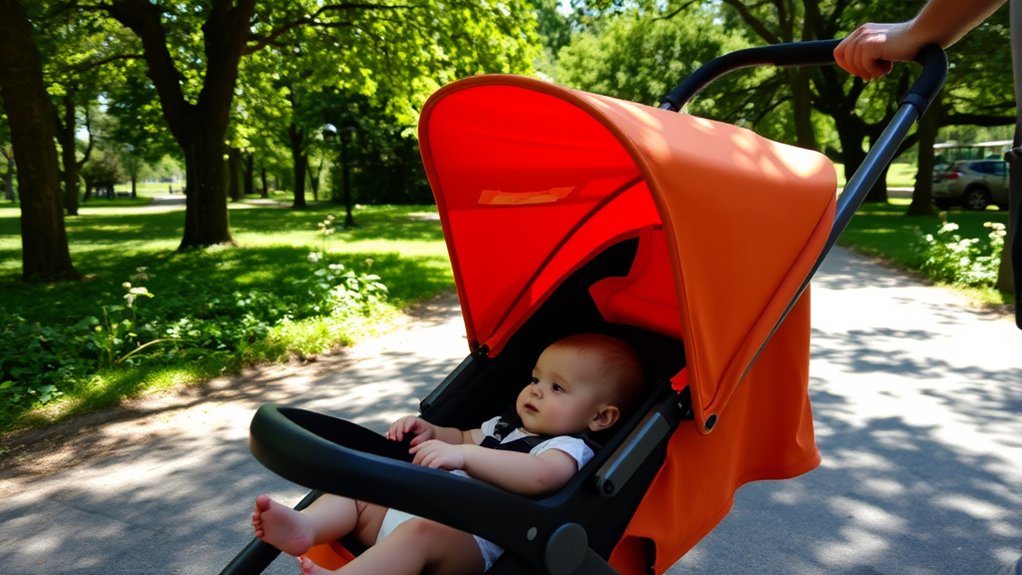
Last updated: September 22, 2026 — developmental milestones, stroller-safety guidance, recall resources, and current manufacturer age/weight examples were rechecked.
There is no single safe age for every umbrella stroller. Many basic upright models are labeled for use from about six months, but some manufacturer-approved models start earlier or from birth in a specific reclined setup. Use the exact stroller manual first. If the seat is intended for upright riding, your baby should have steady head and trunk control and stay properly positioned in the harness. CDC milestone guidance notes that most babies at six months still lean on their hands for support while sitting, while sitting without support is a nine-month milestone, so age alone is not a reliable readiness test.
Quick Answer
For a standard upright umbrella stroller, around six months is a common manufacturer starting point, not a universal safety cutoff. Follow the exact model’s minimum age and approved seating configuration. If the manual expects an upright sitter, wait until your baby can keep the head and trunk stable and remain well positioned in the harness. Some umbrella or lightweight models are approved from three months or even from birth when used exactly as the manufacturer directs.
Key Takeaways
- Check the exact stroller manual before using age alone; published minimum ages and configurations differ by model.
- Many basic upright umbrella strollers start around six months, but some models are approved earlier or from birth with a manufacturer-approved reclined setup.
- For an upright seat, look for steady head and trunk control, good harness fit, and no slumping or sliding.
- Published child-weight limits vary. Current manufacturer examples checked for this update range from 33 to 55 pounds, so the exact model limit matters more than a category average.
- Use the harness every ride, engage the brakes when stopped, keep bags off the handles, and check CPSC recalls for the exact stroller model.
What Is an Umbrella Stroller?
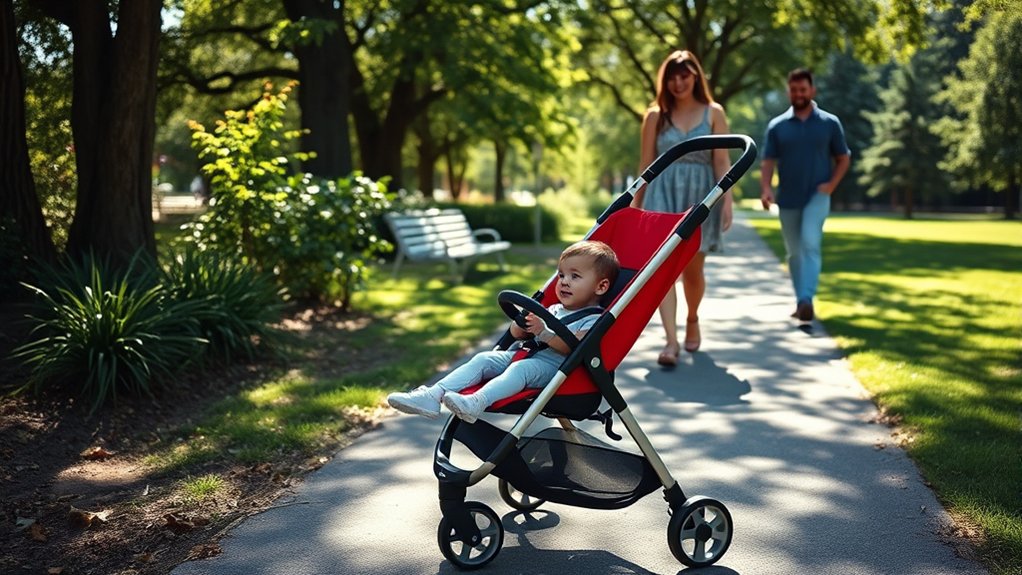
An umbrella stroller is a lightweight stroller designed to fold into a long, narrow package that is easier to carry and store than many full-size strollers. It is commonly used for errands, public transportation, airports, theme parks, and other situations where portability matters.
Most umbrella strollers have a slim frame, simple wheels, basic storage, and a fast fold. Many newer models also include features such as adjustable recline positions, padded seats, sun canopies, cup holders, shoulder straps, storage baskets, and machine-washable fabrics. These features can make daily outings easier while still keeping the stroller portable.
Umbrella strollers are not one standardized category. Some are bare-bones upright models for older babies or toddlers, while others have deeper recline, stronger frames, suspension, or newborn-approved configurations. For a broader use-case overview, see what an umbrella stroller is for; this guide focuses specifically on age, developmental readiness, limits, and safety.
Note: A lightweight stroller is not automatically safe for a younger baby. The manufacturer’s approved age/configuration, seat support, recline, harness fit, and your child’s posture matter more than the stroller’s size.
What Age Can a Baby Use an Umbrella Stroller?
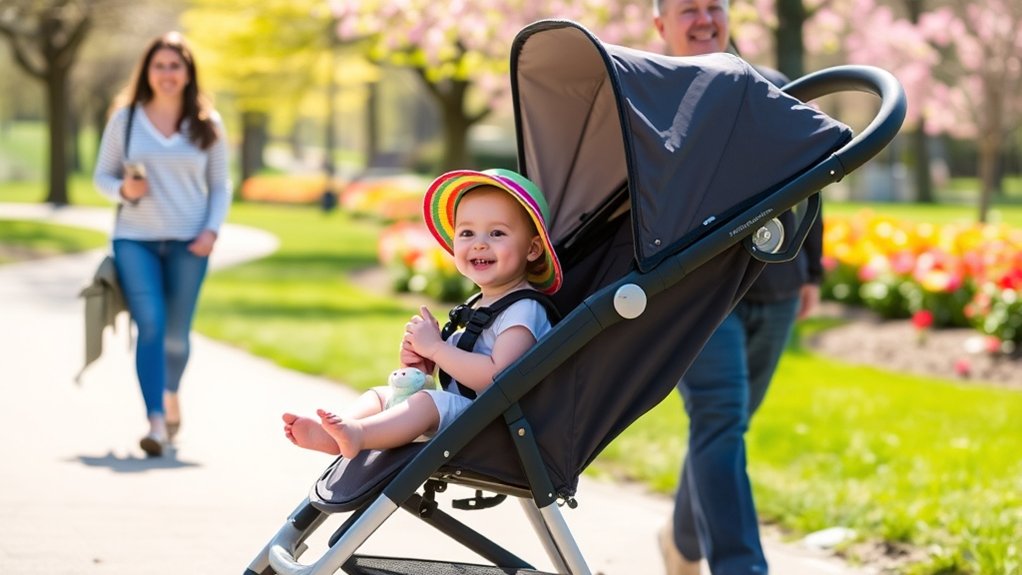
There is no universal minimum age for umbrella strollers. A common starting point for basic upright models is about six months, but the stroller’s own instructions control. Some models are approved from three months, while others are approved from birth only because the manufacturer provides a specific reclined or enclosed newborn setup.
Developmental milestones also vary. The CDC lists leaning on the hands for support while sitting as a six-month milestone and sitting without support as a nine-month milestone. That means “six months old” and “sits independently” should not be treated as the same requirement.
For a stroller seat that expects upright riding, your baby should be able to keep the head and trunk stable, remain centered in the seat, and stay properly positioned in the harness during normal movement. If your baby slumps forward, slides down, leans heavily to one side, or cannot maintain the posture required by the seat, use a more supportive approved configuration or wait.
| What to Check | Why It Matters | What to Do |
|---|---|---|
| Manufacturer minimum age/configuration | Models can be approved from birth, 3 months, 6 months, or another point | Follow the exact manual for your model and year |
| Head and trunk control | An upright seat provides less body support than a bassinet-style setup | Do not use an upright configuration if your baby cannot stay well positioned |
| Harness fit | A poor fit can allow sliding, leaning, standing, or climbing | Buckle and adjust the harness every ride |
| Weight, height, and seated fit | A child may outgrow one limit before another | Stop at the first manufacturer limit or when safe fit is lost |
Age is therefore best used as a screening question, not the final decision. The final decision should come from the exact stroller instructions plus how securely your child fits and holds position in the approved seat configuration.
Current Manufacturer Examples Show Why Age Rules Differ
The following examples were checked on September 22, 2026. They are not product recommendations; they show why a single “umbrella stroller age” rule can be misleading.
| Model | Manufacturer-Stated Use | Child Limit | Stroller Weight |
|---|---|---|---|
| Dream On Me Aero Travel Light Stroller | 6-36 months | 33 lb | 7.4 lb |
| UPPAbaby G-Luxe | From 3 months | 55 lb | 16.3 lb |
| Chicco Liteway | From birth with the manufacturer’s full-recline newborn setup | 40 lb | 17.2 lb |
These published limits can change with model revisions, so recheck the manual for the exact stroller you own before the first ride.
At a Glance
| Common Starting Point | About 6 months for many basic upright models, but the exact manual controls |
| Newborn Use | Only when the manufacturer explicitly approves a from-birth configuration |
| Developmental Check | For upright riding, baby should maintain stable head/trunk posture and proper harness position |
| Current Examples Checked | 33-55 lb child limits across three manufacturer examples; not a universal category range |
Signs a Child Is Ready to Use an Umbrella Stroller
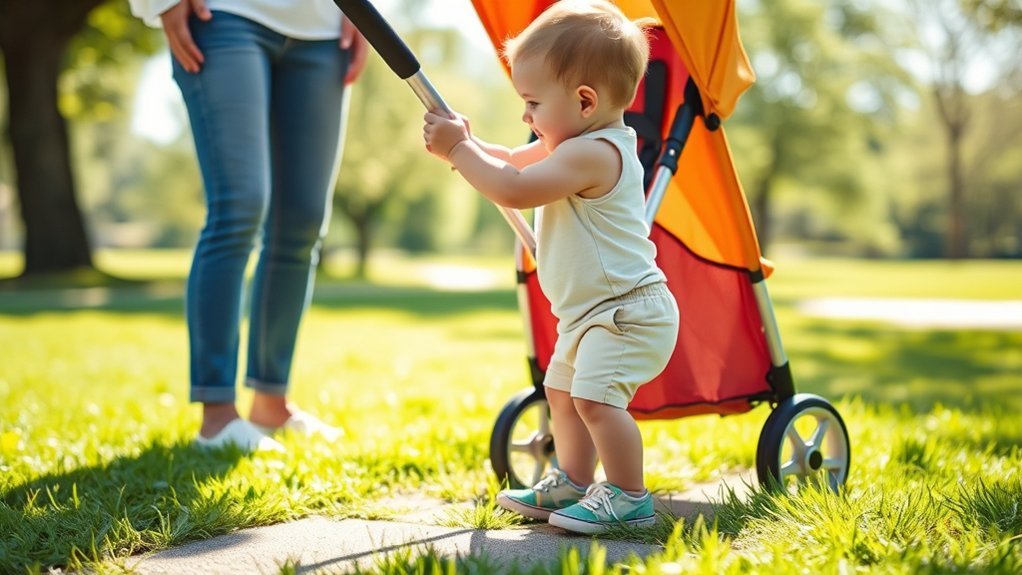
Your child may be ready for an upright umbrella stroller seat when they can keep the head and trunk stable, remain centered rather than slumping or sliding, and fit the harness correctly. The stroller’s manual may specify a minimum age or approved recline position, so developmental readiness never overrides a manufacturer restriction.
Readiness is not about sitting successfully for a few seconds. Watch your child during normal seated play and during a short, supervised stroller trial on a smooth surface. If your baby repeatedly folds forward, leans heavily to one side, slides under the harness, or appears unable to maintain the seat position, use a more supportive approved setup or wait.
Independent Sitting Ability
Independent sitting is a useful readiness sign for a basic upright umbrella stroller, but it should not be turned into a universal six-month rule. CDC milestone guidance places “leans on hands to support herself when sitting” at six months and “sits without support” at nine months. Individual children may reach those skills earlier or later.
If your stroller manual specifically requires a child to sit unassisted, wait until your child can do that consistently. If the stroller is approved for a younger age in a reclined configuration, follow that configuration exactly rather than substituting pillows, loose inserts, or improvised support.
Before the first ride, also confirm the child is within the stated weight and height limits and that the shoulder, waist, and crotch straps can be adjusted to the correct fit.
Head and Neck Control
Head and neck control matters because stroller motion, turns, stops, and uneven pavement can shift a baby’s body. In an upright seat, your child should be able to keep the head from repeatedly dropping forward or to the side and should stay supported by the seat and harness without collapsing into an unsafe posture.
Do not use age alone as proof of head control. Check how your baby actually holds position, and follow any minimum-age or recline instructions in the stroller manual. If you are unsure whether your baby has the control required by an upright seat, ask your pediatric healthcare professional.
If an infant falls asleep in a stroller, the American Academy of Pediatrics advises moving the baby to a firm, flat sleep surface on the back as soon as possible. A recline feature can improve riding comfort, but a stroller should not be treated as a routine infant sleep space.
Manufacturer’s Weight Guidelines
Pay close attention to the manufacturer’s weight, height, and configuration limits. Current umbrella and lightweight stroller examples do not share one standard capacity: the models checked for this update range from 33 to 55 pounds, and their minimum-use guidance also differs.
Never guess the limit based on how sturdy the stroller looks. Two strollers can look similar but use different frames, wheels, harness systems, seat structures, and approved recline positions. Read the manual or manufacturer specifications for the exact model and model year.
Stop using the stroller at the first stated limit or when safe fit is lost. A child can outgrow the seat by height, harness position, leg clearance, or overall fit before reaching the maximum listed weight.
Warning: Do not hang heavy bags from the stroller handles. The American Academy of Pediatrics warns that items on the handles can make a stroller tip backward. Use the stroller’s approved storage area and stay within its load limit.
What to Look for When Shopping for Umbrella Strollers
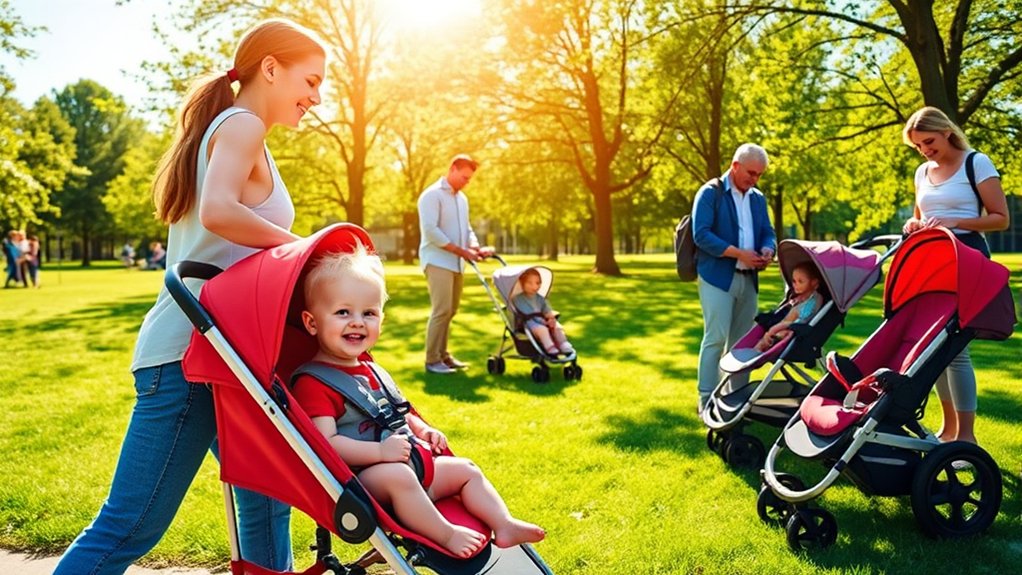
Choosing the right umbrella stroller starts with the child’s approved age/configuration and safe fit, then moves to portability. A stroller for occasional errands may not need the same wheels, storage, canopy, or recline as one used daily for airports, public transportation, or long walks.
Start with safety and support. Look for a stable frame, easy-to-operate brakes, a seat and harness that fit your child correctly, and clear age/weight instructions. The American Academy of Pediatrics’ HealthyChildren stroller guidance recommends a five-point harness and using it whenever the child rides.
For U.S. shoppers, CPSC’s mandatory stroller rule addresses hazards involving stability, brakes, restraint systems, folding mechanisms, structural integrity, wheels, and related components. Compliance is important, but it does not replace checking the manual, recall status, or your child’s fit in the exact stroller.
Next, think about comfort. Multiple recline positions can help with riding comfort, while a padded seat, adjustable footrest, and wide canopy may make longer outings easier. Do not assume a recline label makes a stroller newborn-safe; the manufacturer must explicitly approve that age or configuration.
For travel convenience, choose a stroller with a quick folding mechanism, compact folded size, and a manageable carry weight. If you use buses, trains, rideshares, or small car trunks, compare the actual folded dimensions rather than relying on “travel-friendly” marketing language.
Ease of cleaning is also important. Removable or wipeable fabrics help with snack spills, diaper leaks, sunscreen marks, and everyday messes. If the stroller has machine-washable fabric, follow the cleaning instructions so you do not damage the seat or straps.
Finally, check the wheels and brakes. Small wheels may be fine on smooth indoor floors and sidewalks but can feel rough on broken pavement or gravel. If you regularly use uneven surfaces, compare wheel diameter, suspension, front-wheel lock options, and the manufacturer’s intended terrain.
Pro Tip: Before buying, practice folding and unfolding the stroller and lifting it as you would into a trunk or onto transit. A compact stroller is only convenient if the fold, carry weight, and lock mechanism work for your routine.
What Age Should You Stop Using an Umbrella Stroller?
There is no universal age to stop using an umbrella stroller. Stop when your child reaches any manufacturer limit, no longer fits the seat or harness correctly, drags their feet near the wheels, or makes the stroller difficult to control. Weight is only one limit; height and seated fit can matter first.
Here are three key indicators:
- Manufacturer Limit: Stop at the first stated maximum for child weight, height, age, or approved configuration.
- Child’s Fit and Comfort: If the harness cannot be adjusted correctly, the child is cramped, the seat back no longer supports them properly, or their feet interfere with the stroller, it is time to stop.
- Stability or Steering Concerns: If the stroller wobbles, tips, becomes unusually hard to steer, or behaves differently under the child’s weight, stop using it and inspect the stroller before another ride.
You may also stop using an umbrella stroller when your child can safely walk the distances your family normally travels. Some families still use a stroller for long travel days or crowded events, but it should always remain within the stroller’s stated limits and maintain a safe harness fit.
Safety Guidelines for Using Umbrella Strollers
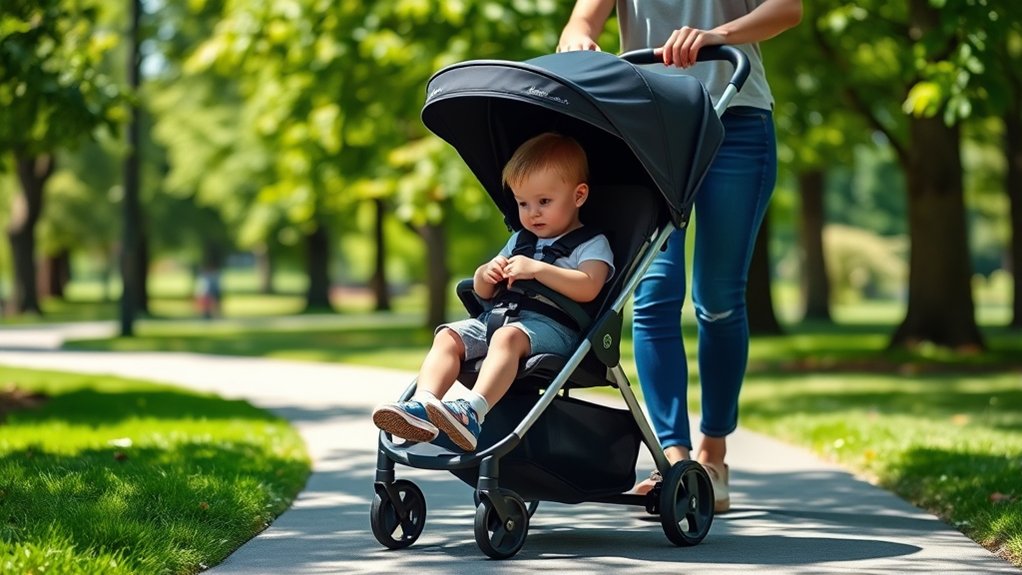
Before every outing, secure your child with the harness system, make sure the stroller is fully locked open, check the brakes and wheels, and confirm that the child and any stored items are within the manufacturer’s limits. Lightweight designs are convenient, but correct loading, folding locks, restraints, and brakes are essential to safe use.
Secure Harness System
A properly fitted harness helps prevent slipping, standing, climbing, or falling during movement. HealthyChildren recommends a five-point harness when choosing a stroller and says the harness should be used whenever the child rides. Keep these points in mind:
- Buckle Up: Always buckle your child in before moving the stroller, even for a short trip.
- Harness Adjustments: Adjust the straps according to the stroller manual so the child is secure without the straps being twisted or obviously loose.
- Inspect Regularly: Check the buckle, straps, attachment points, and stitching for wear, fraying, or damage before use.
If the harness is broken, loose, missing, or difficult to secure, do not use the stroller until it is repaired or replaced according to the manufacturer’s instructions.
Regular Safety Inspections
Make regular safety inspections part of your routine. Before each outing, check for loose parts, cracked plastic, bent metal, worn wheels, damaged brakes, or fabric tears. Confirm that the folding lock fully engages after opening the stroller, and keep children clear of moving hinges while folding or unfolding.
Engage the brakes whenever you stop. Make sure the wheels roll smoothly and do not wobble. If the stroller pulls to one side, makes a new mechanical noise, or feels unstable, inspect it and consult the manufacturer before using it again.
Check the exact model against the U.S. Consumer Product Safety Commission recall database, especially when buying used or receiving a hand-me-down. If the stroller is recalled, follow the manufacturer/CPSC repair, replacement, refund, or disposal instructions before further use.
Proper Weight Limits
Understanding the stroller’s weight and size limits is essential for safe use. Do not rely on a general umbrella-stroller range because capacities vary by model and can change between generations.
- Check the Exact Manual: Use the limit for your stroller’s model and model year, not a similar-looking stroller.
- Count Storage Separately: Follow any basket, parent-organizer, or accessory load limits in addition to the child limit.
- Watch Fit, Not Just the Scale: Stop sooner if height, harness position, leg clearance, or seat fit is no longer safe.
Do not let an older sibling sit or stand on an umbrella stroller unless the model is specifically designed and approved for that use. Extra unapproved weight can affect stability or damage the frame.
Quick Safety Checklist Before Each Ride
Use this short check before putting your child in an umbrella stroller:
- Confirm your child still meets the stroller’s minimum-age/configuration and maximum size limits.
- Open the stroller fully and confirm the frame/fold lock has engaged.
- Buckle and adjust the harness every ride.
- Test the brakes and use them whenever the stroller is stopped.
- Keep heavy bags off the handles and use only approved storage areas and accessories.
- Look for damage, loose parts, wheel problems, or an active recall before continued use.
If an infant falls asleep during a ride, move the baby to a firm, flat sleep surface on the back as soon as possible, consistent with AAP safe-sleep guidance. Never leave a child unattended in a stroller.
Sources and Safety References
- CDC: Milestones by 6 Months
- CDC: Milestones by 9 Months
- HealthyChildren/AAP: How to Choose a Safe Baby Stroller
- HealthyChildren/AAP: Safe Sleep Guidance
- CPSC: Carriages and Strollers
- CPSC: Recalls and Product Safety Warnings
Related Guides
Frequently Asked Questions
Are umbrella strollers suitable for newborns?
Some are, but only when the manufacturer explicitly approves use from birth in the exact stroller configuration. Many basic upright umbrella strollers are intended for older babies. A recline feature by itself does not prove newborn compatibility, so check the manual rather than assuming.
Can a 6-month-old use an umbrella stroller?
Often, yes, if the exact stroller is approved from six months and the baby stays securely positioned in the approved seat configuration. Six months is not a universal rule: CDC guidance shows that many babies at six months still support themselves with their hands while sitting, so check the stroller manual and your baby’s actual posture and head/trunk control.
Can I use an umbrella stroller for taller children?
Yes, if the child remains within the stroller’s stated height and weight limits and still fits the seat and harness correctly. Stop if the harness cannot be adjusted properly, the seat back no longer supports the child, or the child’s feet interfere with the stroller or wheels.
How much do umbrella strollers typically weigh?
There is no single standard weight. Current manufacturer examples checked for this guide include the 7.4-pound Dream On Me Aero, 16.3-pound UPPAbaby G-Luxe, and 17.2-pound Chicco Liteway. Compare actual stroller weight and folded dimensions for the model you plan to carry.
Do umbrella strollers have recline features?
Some do, while basic models may have limited or no recline. Recline can improve riding comfort, but it does not automatically make a stroller safe from birth. Use the minimum age and configuration stated by the manufacturer.
What is the safest age to start using an umbrella stroller?
There is no universal safest age. Many basic upright umbrella strollers start around six months, but other models are approved earlier or from birth in a specific configuration. Follow the exact stroller manual first, then make sure your child can maintain the posture and harness fit required by that seat.
Can an umbrella stroller replace a full-size stroller?
It can for quick trips, travel, and children who fit the umbrella stroller’s approved configuration. A full-size stroller may still be better when you need a newborn travel system, more storage, larger wheels, more suspension, or better support for long daily walks.
Conclusion
The safest answer to “what age can a baby use an umbrella stroller?” is the age and configuration approved for that exact model. Around six months is common for many basic upright models, but it is not a universal developmental cutoff. CDC guidance separates the six-month supported-sitting milestone from the nine-month unsupported-sitting milestone, which is why your baby’s actual posture and the stroller manual matter.
Before the first ride, verify the minimum age/configuration, weight and height limits, harness fit, fold lock, brakes, and recall status. Stop using the stroller when any limit is reached or when safe fit and control are lost.

