
A stroller bassinet can give your newborn a flat, cozy place to rest while you are out, but safety depends on the specific bassinet, the manufacturer’s instructions, and how you use it. The safest setup is always a firm, flat, uncluttered sleep surface with your baby placed on their back. A stroller bassinet should not be treated like a regular overnight crib unless the manual clearly says it is approved for that use.
Quick Answer
A stroller bassinet can be safe for newborn sleep when it has a firm, flat surface, good ventilation, and manufacturer approval for sleep. Always place your baby on their back, keep the bassinet free of blankets and toys, and move your baby to a crib or approved sleep space for long or unsupervised overnight sleep unless the product manual allows it.
Key Takeaways
- Use a stroller bassinet only according to the manufacturer’s age, weight, and sleep-use instructions.
- A safe bassinet should provide a firm, flat, stable, and well-ventilated sleep surface.
- Always place your baby on their back and keep blankets, pillows, bumpers, toys, and loose items out of the bassinet.
- Stop using the bassinet when your baby can roll, push up, sit independently, or reaches the product’s limit.
- For overnight sleep, use only bassinets that are specifically approved for that purpose in the product manual.
Understanding Bassinet Strollers
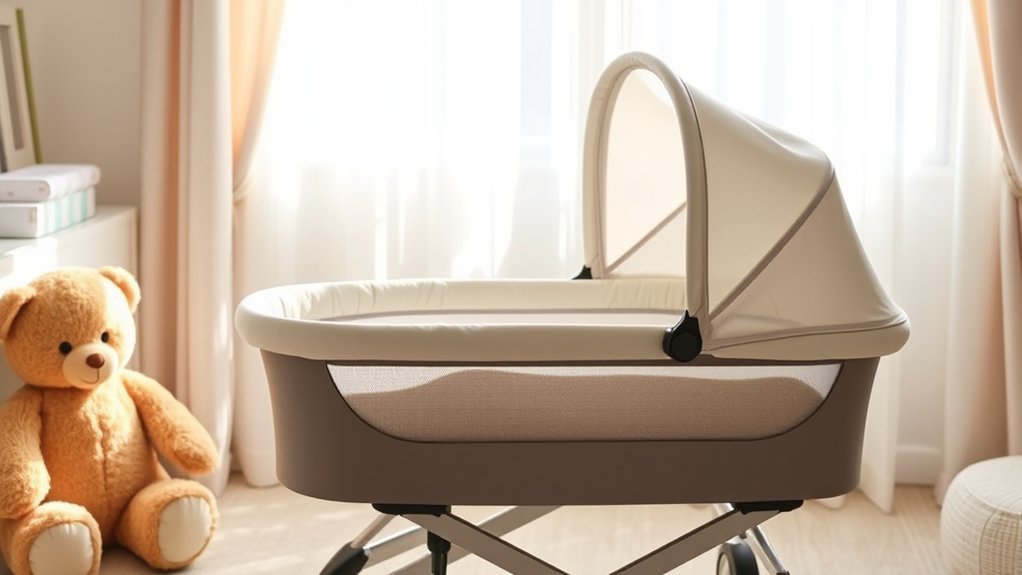
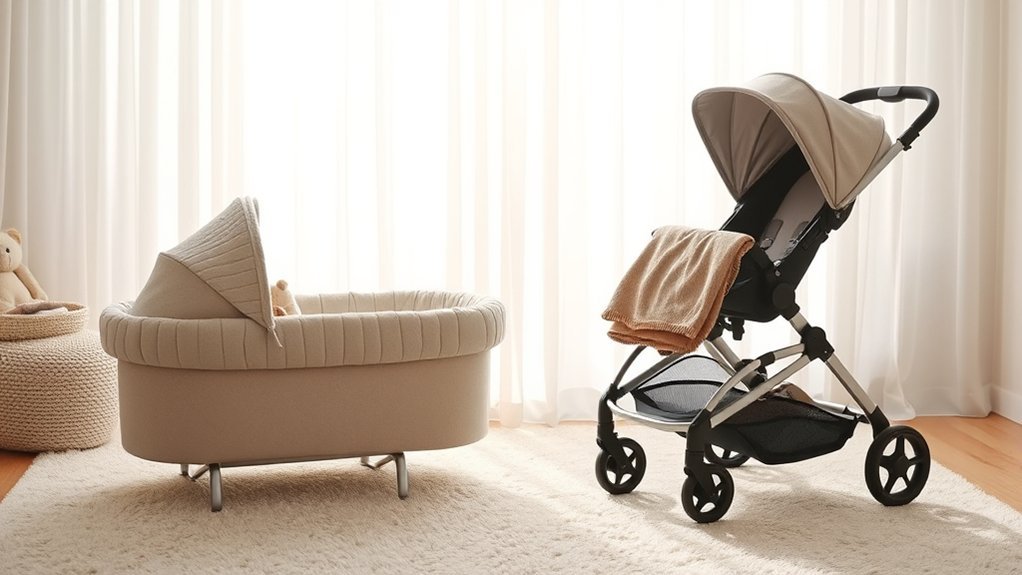
When you’re on the go with your newborn, understanding bassinet strollers can make a significant difference in your baby’s safety and comfort. A stroller bassinet is designed to give young infants a more open, lie-flat space than a standard stroller seat. This can be helpful because newborns do not yet have the head, neck, and trunk control needed for upright stroller seating.
Common bassinet features include a flat sleeping area, a firm mattress pad, side ventilation, a canopy, and a secure attachment system that connects the bassinet to the stroller frame. Some models are detachable, which can make short naps and travel easier. However, not every stroller bassinet is designed for overnight sleep, so the product manual matters more than the brand name or appearance.
The lie-flat position helps support natural body alignment and reduces the risk of your baby’s chin falling forward toward the chest, which can make breathing harder. Manufacturers typically recommend using bassinet strollers only during the early months, often until your baby can roll, push up, sit independently, or reaches the stated weight or height limit.
Warning: Do not assume a stroller bassinet is safe for overnight sleep unless the manual specifically says it is approved for that use. Many stroller bassinets are intended for supervised strolling and short rest periods only.
[Amazon Products Picked for You]

Room to Grow: Use from birth as a newborn stroller with easy conversion to infant pramette mode, allowing your baby to sleep comfortably on the go. This stroller adapts as your child grows, providing a secure ride from newborn to toddler stages. Compatible with Maxi-Cosi and Nuna car seats (car seat adapter sold separately).

Room to Grow: Use from birth as a newborn stroller with easy conversion to infant pramette mode, allowing your baby to sleep comfortably on the go. This stroller adapts as your child grows, providing a secure ride from newborn to toddler stages. Compatible with Maxi-Cosi and Nuna car seats (car seat adapter sold separately).

Room to Grow: Use from birth as a newborn stroller with easy conversion to infant pramette mode, allowing your baby to sleep comfortably on the go. This stroller adapts as your child grows, providing a secure ride from newborn to toddler stages. Compatible with Maxi-Cosi and Nuna car seats (car seat adapter sold separately).
Benefits of Using a Bassinet Stroller

Using a bassinet stroller gives your newborn a flat, cozy place to rest while you’re outside the home. It can make errands, walks, and family outings easier because you do not have to place a very young baby in an upright stroller seat before they are developmentally ready.
For parents, the biggest benefit is convenience. You can keep your baby close while still providing a flatter position than a car seat or regular stroller seat. Some bassinets also include helpful features like sun canopies, breathable side panels, and storage pockets that make daily outings smoother.
Safe Sleeping Environment
Stroller bassinets can provide a safer rest space than an upright seat when they are designed and used correctly. Look for these essential safety features:
- Firm, flat surface: Supports your baby’s body without soft padding that could increase suffocation risk.
- Secure frame connection: Keeps the bassinet locked properly to the stroller during movement.
- Good ventilation: Helps airflow around your baby while they rest.
- Clear sleep area: Reduces risk by keeping pillows, toys, blankets, and loose accessories out of the bassinet.
Even with these features, supervision is still important. A stroller bassinet is not automatically the same as a crib, bedside bassinet, or play yard that is specifically designed and tested for sleep.
Portability and Convenience
While managing a busy schedule, you’ll appreciate how bassinet strollers blend portability and convenience. Their lightweight design can make transporting your little one easier, whether you’re running errands, walking through the park, or visiting family.
Many models feature detachable bassinets, which can help you move your baby with less disruption. This travel convenience is especially useful during the newborn stage, when babies sleep often and parents need flexible gear. Still, the bassinet should always be placed only on approved, stable surfaces if detached. Never place it on a couch, bed, table, countertop, or other elevated soft surface.
Encourages Outdoor Activity
Getting outdoors with your little one becomes easier and more enjoyable with a bassinet stroller. These strollers not only provide a comfortable resting area but also encourage outdoor adventures and family bonding. Here are some key benefits:
- Convenience for outings: A flat bassinet can make walks and short trips easier with a newborn.
- Fresh air and movement: Gentle outdoor walks can support your mood and help you feel less isolated during the newborn stage.
- Social engagement: Walks may help you connect with other parents, neighbors, and family members.
- Travel-system flexibility: Some bassinet strollers fit into modular stroller systems, reducing the need for separate gear.
With a bassinet stroller, you’re not just enjoying the outdoors; you’re also creating small routines that can support your family’s well-being while keeping your baby’s comfort in mind.
Safe Sleep Practices for Newborns
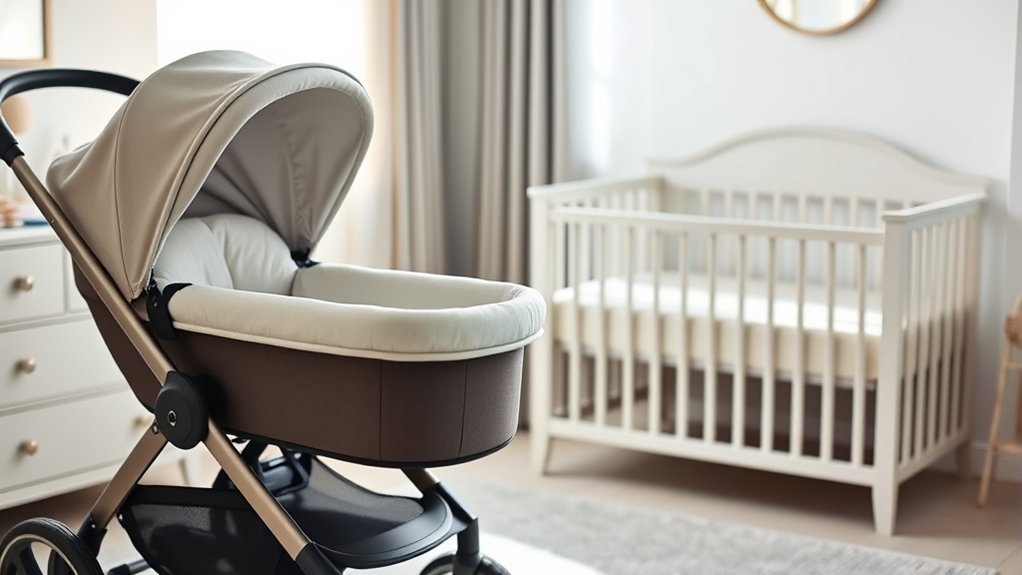
When it comes to your newborn’s safety during sleep, placing them on their back is one of the most important steps. Back sleeping helps reduce sleep-related risks and should be used for naps and nighttime sleep unless your pediatrician gives different medical instructions.
Bassinet safety starts with a firm and flat sleep surface. The mattress or pad should fit the bassinet properly and should not be replaced with extra padding, folded blankets, pillows, or aftermarket inserts. It is also vital to keep your newborn’s face uncovered while they sleep to reduce the risk of overheating and suffocation.
To follow safe sleep practices, avoid loose items like blankets, pillows, stuffed animals, toys, and bumper-style accessories in the bassinet. If your baby needs warmth, choose clothing layers or a properly fitted infant sleep sack instead of loose bedding. Always check that the stroller bassinet is approved for the type of sleep you plan to use it for.
Note: A car seat is designed for travel, not routine sleep outside the vehicle. If your baby falls asleep in a car seat or stroller seat, move them to a firm, flat sleep space as soon as practical.
Importance of the Lie-Flat Position
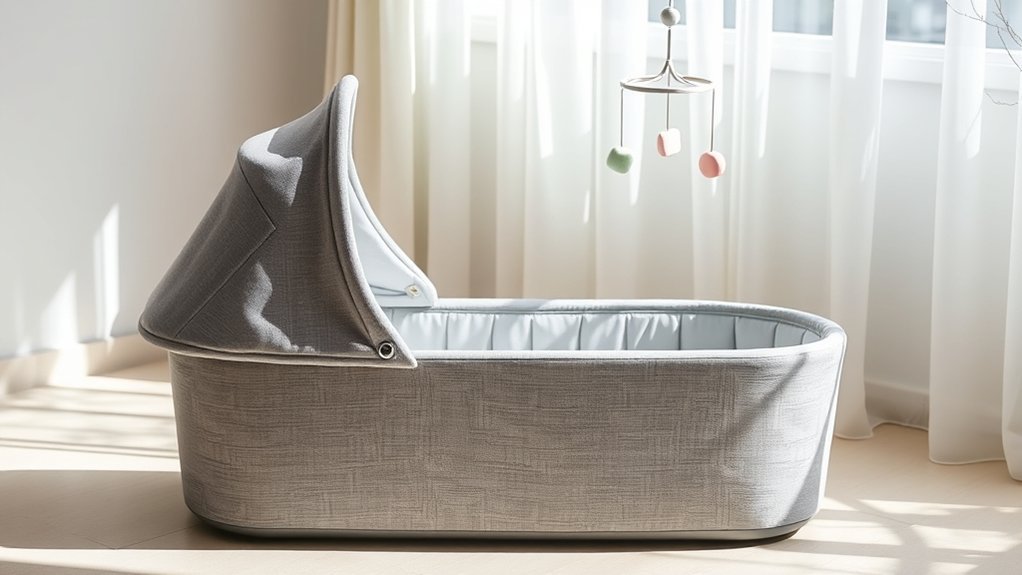
Understanding the importance of the lie-flat position in stroller bassinets is essential for newborn comfort and safety. Young babies have limited head and neck control, so an overly inclined position can allow the head to slump forward. A flat position helps your baby rest with a more open airway and more natural body alignment.
Optimal Oxygen Intake
The lie-flat position in stroller bassinets can help support better airflow because your baby’s head, neck, and body are not forced into a curled or slumped position. Prioritizing this position may help your baby’s breathing comfort by:
- Keeping the head and neck in a more neutral position.
- Reducing chin-to-chest slumping that can happen in some inclined seats.
- Supporting safe sleep guidance that favors a firm, flat surface.
- Making it easier for you to observe your baby’s face, breathing, and comfort.
Spinal Development Support
Ensuring your baby’s lie-flat position in a stroller bassinet can also support comfortable body alignment. Newborns naturally have a curved posture, and a flat bassinet gives them room to rest without being compressed into a seated angle for long periods.
| Benefit | Description |
|---|---|
| Body Alignment | Allows your baby to rest without being held in a seated angle |
| Hip Comfort | Gives the legs and hips more room than a tight upright seat |
| Less Incline Time | Balances time spent in car seats and other angled baby gear |
| Comfort | Helps reduce awkward slumping during short naps and walks |
| Safe Sleep Setup | Works best when the surface is firm, flat, and free of loose items |
Safe Sleep Practices
While many parents may not realize it, the lie-flat position in stroller bassinets is important for your baby’s safety and comfort. To promote safer sleeping habits, keep these safe sleep practices in mind:
- Always place your baby on their back to sleep unless your pediatrician gives different guidance.
- Confirm the sleep surface is firm, flat, and free of loose items.
- Limit long periods in inclined baby gear, including car seats, swings, and bouncers.
- Choose a stroller bassinet that clearly matches your baby’s age, weight, and developmental stage.
- Read the manual carefully before using the bassinet for naps or overnight sleep.
Prioritizing infant safety will help you feel more confident while using your stroller bassinet.
Duration of Use for Bassinet Strollers
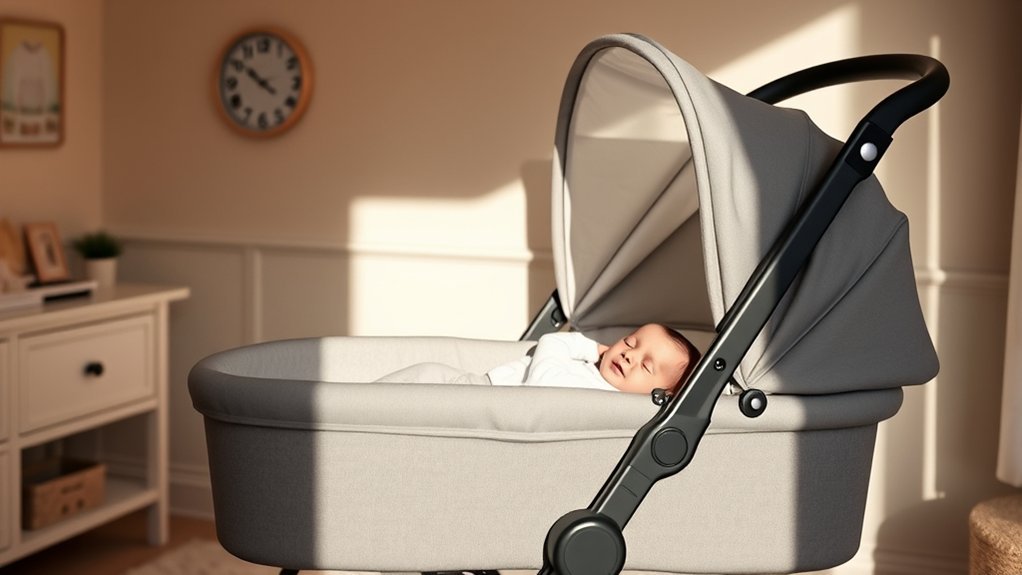
As your baby grows, it’s essential to know how long to use a bassinet stroller for safety and comfort. Most stroller bassinets are used only during the newborn and early infant stage. Many babies outgrow them somewhere around 3 to 6 months, but your baby’s size, strength, and development matter more than age alone.
You should stop using the bassinet when your baby reaches the manufacturer’s weight or height limit, starts rolling, pushes up on hands and knees, or can sit independently. These milestones can make a bassinet less safe because your baby may shift position, lean over the side, or move in a way the bassinet was not designed to handle.
You’ll also want to transition to a standard stroller seat once your baby has enough head and neck control for the seat’s recline setting and harness system. Always follow the stroller manual because some stroller seats are suitable from birth with a full recline, while others are only safe after your baby reaches a specific age or developmental stage.
Pro Tip: Keep the stroller manual saved on your phone. When your baby approaches 3 months, recheck the weight limit, developmental warnings, and seat-transition instructions before your next outing.
Indicators for Transitioning From Bassinet to Stroller Seat
Recognizing when to shift from a bassinet to a stroller seat is essential for your baby’s safety and comfort. Watch your baby’s development closely and do not wait until the bassinet feels cramped or unstable. Keep an eye on these indicators:
- Head support: Your baby can hold their head up steadily without slumping forward.
- Rolling or pushing up: Your baby starts rolling, lifting the chest, or pushing up with their arms.
- Sitting up: Your little one can sit independently or is close to sitting without support.
- Weight or height limit: Your baby reaches the manufacturer’s stated limit for the bassinet.
- Reduced comfort: Your baby seems cramped, restless, or too active for the bassinet space.
When you switch to the stroller seat, use the harness every time. Start with the most reclined safe position if your baby is still building trunk control, and avoid long periods in an upright seat until they are ready.
Recommended Bassinet Options for Overnight Sleep

When you’re looking for a safe and comfortable place for your baby to sleep, stroller bassinets can be helpful, but you need to separate short supervised naps from true overnight sleep. The safest choice for overnight sleep is a product that clearly states it is approved for overnight or unsupervised sleep in the manufacturer’s instructions.
Some popular stroller systems offer bassinet accessories, including models from brands such as Mockingbird, Thule, UPPAbaby, Graco, and others. Before buying or using any of them for sleep, check the exact product manual, not just a store listing. Look for clear wording that confirms approved sleep use, age and weight limits, mattress requirements, ventilation guidance, and whether the bassinet can be used off the stroller frame.
If the manual does not clearly approve overnight sleep, use the bassinet only for supervised rest while strolling or during short daytime outings. For regular nighttime sleep, choose a crib, bassinet, or play yard that is specifically designed for infant sleep and follows current safe sleep guidance.
[Amazon Products Picked for You]

COMPATIBLE WITH: UPPAbaby Bassinet Stand, Vista (models 2015-2019), Vista V2, Vista V3, Cruz (models 2015-2019), Cruz V2 and Cruz V3 Strollers; no adapters needed. Ridge Strollers with adapters.


COMPATIBLE WITH: UPPAbaby Bassinet Stand, Vista (models 2015-2019), Vista V2, Vista V3, Cruz (models 2015-2019), Cruz V2 and Cruz V3 Strollers; no adapters needed. Ridge Strollers with adapters.
What to Check Before Buying a Stroller Bassinet
Before you choose a bassinet stroller, focus on safety details instead of only style, price, or brand popularity. A beautiful bassinet is not useful if it does not fit your baby’s needs or your daily routine.
- Sleep approval: Check whether the product is approved for naps, overnight sleep, or stroller use only.
- Weight and height limits: Choose a model that gives your newborn enough safe use time.
- Firm mattress pad: Avoid soft, plush, or uneven surfaces.
- Ventilation: Look for breathable side panels or airflow openings.
- Stable attachment: Make sure the bassinet locks securely into the stroller frame.
- Harness or no harness: Follow the manual. Some bassinets do not use a harness because they are intended for flat newborn use, while stroller seats require one.
- Cleaning: Choose washable fabrics or easy-to-wipe surfaces for spit-up and diaper leaks.
- Travel needs: Consider fold size, car trunk space, and how easy it is to attach or detach the bassinet.
[Amazon Products Picked for You]

Soothe Your Baby to Sleep with Calming Vibrations-Our Baby Sleep Soother mimics a parent's gentle pat with adjustable vibrating modes, creating a soothing sensation that lulls even the fussiest babies into a deep, restful sleep. Your little one will sleep soundly through the night!

♦【Perfect Gift for Newborn Baby】:Looking for a unique Baby Essential? This Baby Vibrating Soother is gentle, portable, and soothing – the Baby Vibrating Soother is an Baby Essential that every new parent will appreciate. NOTE: If you encounter any issues with our product, please don’t hesitate to contact us—we’ll resolve it within 24 hours.
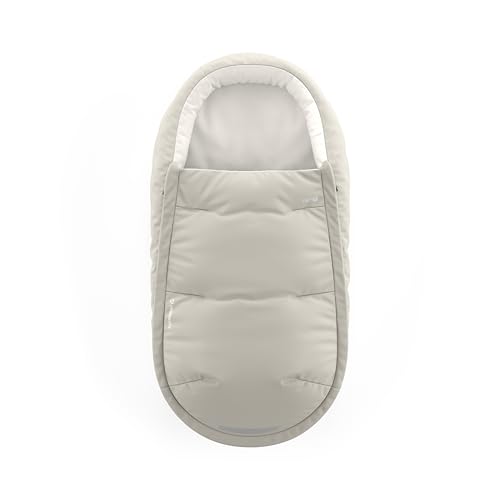
The performance shell is waterproof with a 10,000 mm water column and breathable with a more than 5,000 g/cubic meter/24h moisture vapor transmission rate
Tips for Ensuring Baby’s Safety While Sleeping in a Bassinet

Ensuring your baby’s safety while they sleep in a bassinet is crucial for their well-being and your peace of mind. Here are some key tips to follow:
- Use a firm surface: Always use the original mattress or pad that came with the bassinet unless the manufacturer approves a replacement.
- Place baby on their back: Put your baby on their back for every nap and sleep period.
- Keep it empty: Remove blankets, pillows, stuffed animals, toys, and loose accessories.
- Prevent overheating: Dress your baby in light layers and avoid covering the face or head.
- Lock the stroller: Use the parking brake whenever the stroller is stopped.
- Use on stable ground: Avoid steep slopes, stairs, soft ground, or uneven surfaces when your baby is resting.
- Monitor regularly: Check your baby’s breathing, position, and temperature during naps.
- Stop at milestones: Discontinue bassinet use when your baby can roll, push up, sit, or exceeds the stated limit.
Common Mistakes to Avoid
Many stroller bassinet safety problems come from small choices that seem harmless. Avoid these common mistakes:
- Adding extra padding: Extra cushions, blankets, or mattress toppers can create a suffocation risk.
- Using loose blankets: Loose bedding can cover your baby’s face or trap heat.
- Letting baby sleep in an inclined seat too long: A flat bassinet is usually safer for rest than a car seat or upright stroller seat when you are not traveling by car.
- Ignoring the manual: Each stroller bassinet has different limits and approved uses.
- Using the bassinet after rolling starts: Once your baby is more mobile, the bassinet may no longer be safe.
- Leaving the stroller on an incline: Always park on a flat surface and lock the brake.
Related Guides
Frequently Asked Questions
Can I use a stroller bassinet for daytime naps?
Yes, you can use a stroller bassinet for daytime naps if the product manual allows sleep use and your baby is supervised. Place your baby on their back, keep the surface firm and flat, and remove all loose items from the bassinet.
How often should I check on my baby in the bassinet?
Check your baby regularly during stroller bassinet naps, especially if you are outside, moving between places, or your baby is very young. Make sure their face is uncovered, their breathing looks normal, and they are not too hot or too cold.
Are all stroller bassinets suitable for overnight sleeping?
No. Not all stroller bassinets are suitable for overnight sleeping. Only use one overnight if the manufacturer clearly approves it for that purpose. If the manual does not say it is approved for overnight sleep, use a crib, bedside bassinet, or play yard designed for infant sleep.
What should I do if my baby rolls over in the bassinet?
If your baby starts rolling, it is usually time to stop using the stroller bassinet unless the manual says otherwise. Move your baby to an age-appropriate stroller seat for outings and to an approved crib, bassinet, or play yard for sleep.
Can I use blankets or sleep sacks in the bassinet?
Avoid loose blankets in the bassinet. A properly fitted infant sleep sack is usually a safer way to keep your baby warm because it does not create loose bedding around the face. Always choose the correct size and avoid overheating.
When should I stop using a stroller bassinet?
Stop using a stroller bassinet when your baby reaches the product’s weight or height limit, starts rolling, pushes up, sits independently, or seems too active for the bassinet. Follow the earliest limit listed in the manual.
Is a stroller bassinet safer than a car seat for naps?
For rest outside the car, a firm, flat stroller bassinet is often a better position than an inclined car seat, as long as the bassinet is used correctly. Car seats are made for vehicle travel and should not be used as routine sleep spaces outside the car.
Conclusion
In summary, stroller bassinets can be a safe and cozy option for newborn rest when they are used correctly. The key is to follow the product manual, place your baby on their back, use only a firm and flat surface, and keep the bassinet free of blankets, pillows, toys, and extra padding.
For short supervised naps and daily outings, a bassinet stroller can make life much easier during the newborn stage. For overnight sleep, use only a bassinet that is clearly approved for that purpose. Once your baby can roll, push up, sit independently, or reaches the manufacturer’s limit, transition to a standard stroller seat for outings and an approved sleep space for naps and nighttime sleep.
