
Last updated: September 22, 2026
Yes, you can usually take a double stroller on a plane, but a full-size double stroller normally travels as checked or gate-checked equipment rather than in the cabin. The exact handoff point depends on the airline, stroller design, folded size, route, and available aircraft space. Measure the stroller when folded, review the operating airline’s current child-item policy, and ask where the stroller will be returned after landing.
Quick Answer
You can usually fly with a double stroller. Plan to gate-check or counter-check most full-size models. Only a very compact stroller that meets the airline’s cabin-baggage rules and available-space requirements should be treated as a possible carry-on.
Key Takeaways
- Major U.S. airlines commonly transport a stroller for families without a standard stroller-checking fee, but the exact allowance and handoff rules differ by carrier.
- Most full-size double strollers should be planned as gate-checked or ticket-counter checked items, not overhead-bin luggage.
- Measure the stroller’s folded dimensions and check its weight before you leave for the airport.
- TSA says strollers that fit must go through X-ray screening; equipment that does not fit is visually and physically inspected.
- Remove loose accessories, keep the gate-check claim tag, and ask where the stroller will be returned after landing.
Can You Bring a Double Stroller on a Plane?

When you’re flying with a double stroller, a few common challenges can complicate your travel plans. Double strollers are wider, heavier, and bulkier than single strollers, so they are more likely to exceed standard carry-on dimensions.
Flying with a double stroller is easiest when you know your airline’s size rules before you reach the airport.
Many airlines let families check a stroller at no extra charge, but the process can differ. Some airlines allow gate-checking, while others may ask you to check a large double stroller at the ticket counter. This matters because gate-checking lets you use the stroller through most of the airport, while ticket-counter check-in means you need another way to carry or guide your children.
Security is another practical issue. The Transportation Security Administration says strollers and other child equipment that fit must be screened by X-ray. If the stroller is too large for the X-ray machine, TSA officers perform a visual and physical inspection. Remove children from the stroller before screening and empty the basket so the process is faster.
To reduce stress, confirm the policy for your operating airline, measure your stroller’s folded size, and decide whether you need a backup option such as a baby carrier or lightweight stroller. If you are considering a wagon-style model instead, check the airline’s wagon rules separately because some carriers distinguish stroller wagons from standard strollers.
What Are the Airline Rules for Double Strollers?
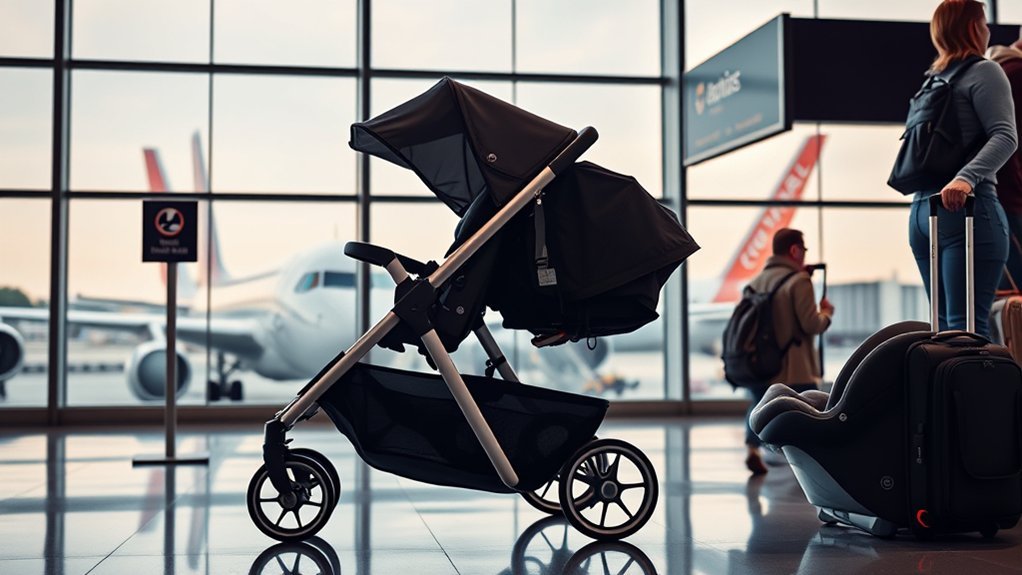
When flying with a double stroller, understanding airline policies is essential for a smoother trip. Each carrier sets its own rules for stroller size, weight, check-in location, and cabin storage.
Most airlines treat strollers and car seats as child travel items, but that does not mean every stroller can come into the cabin. A compact stroller may be allowed as carry-on if it fits the airline’s carry-on dimensions, while a full-size double stroller is more likely to be checked.
Airline-Specific Policies Overview
Airline-specific policies can change, so check the operating carrier’s current stroller rules before every trip. The most useful details are whether stroller checking is free, whether gate-checking is allowed, whether the carrier treats stroller wagons differently, and where a gate-checked stroller will be returned.
| Airline | Current Published Stroller Guidance | What It Means for a Double Stroller |
|---|---|---|
| American Airlines | Allows one stroller and one car seat to be checked free when traveling with a child; non-collapsible strollers must be checked at the ticket counter. | A collapsible double stroller may be taken to the gate under the published policy; a non-collapsible model should be counter-checked. |
| Delta Air Lines | Strollers and child-restraint seats are checked free and may be checked curbside, at the ticket counter, or at the gate. | Gate-checking is an available option, but cabin storage still depends on normal carry-on size and space limits. |
| Southwest Airlines | Each ticketed customer traveling with a child may check one stroller and one car seat free; the stroller can be checked at the curb, counter, or gate. | A double stroller can be gate-checked under the published stroller policy. Ask at the gate if you want jet-bridge return instead of baggage claim. |
| Alaska Airlines | A child’s car seat and stroller are transported free as checked baggage and may be checked with baggage or at the gate. | Standard strollers can be gate-checked; Alaska separately publishes size and weight conditions for stroller wagons. |
These are current published examples, not a universal rule for every airline or itinerary. If your trip is operated by a partner airline, check the operating carrier rather than relying only on the airline that sold the ticket.
Size and Weight Limits
A full-size double stroller often folds larger than standard carry-on dimensions, so it may not qualify for overhead-bin storage. Treat the airline’s published stroller policy—not a generic carry-on number—as the final rule for gate-checking or cabin storage.
Use these checks before you leave home:
- Measure the stroller when folded, including wheels, handles, snack trays, and any attached accessories.
- Weigh the stroller if your airline lists a weight limit for gate-checking or cabin storage.
- Remove detachable cup holders, toys, organizers, and hooks before check-in.
- Confirm whether your airline allows one stroller per child or one stroller per traveling family.
- Check whether your stroller must be tagged at the ticket counter, gate, or both.
Note: Around 22 x 14 x 9 inches is a common U.S. carry-on maximum, but it is not a universal stroller rule. A stroller may have separate check-in or gate-check conditions even when it cannot travel in the overhead bin.
Gate-Check Procedures Explained
Gate-checking lets you use your double stroller through the airport and hand it to airline staff near the aircraft door or jet bridge. This can be helpful if you have toddlers, a long terminal walk, or a tight connection.
| Airline Policy Area | Gate-Check Tips | Stroller Preparation |
|---|---|---|
| Size Limits | Measure the folded stroller before travel | Fold it fully and remove loose add-ons |
| Free Check | Ask whether the stroller is tagged at check-in or the gate | Use a stroller bag if available |
| Boarding Process | Arrive early and request the tag before boarding starts | Check wheels, brakes, and folding locks |
Before boarding, ask exactly where the stroller will be returned. A gate-checked item is not always brought back to the aircraft door. For example, Southwest’s current policy says gate-checked child items are claimed at baggage claim by default, but travelers can ask the agent for jet-bridge return at a connection or final destination.
Pro Tip: Take a quick photo of your stroller before handing it over. If it is damaged in transit, the photo can help when you report the issue to the airline.
Size and Weight Considerations
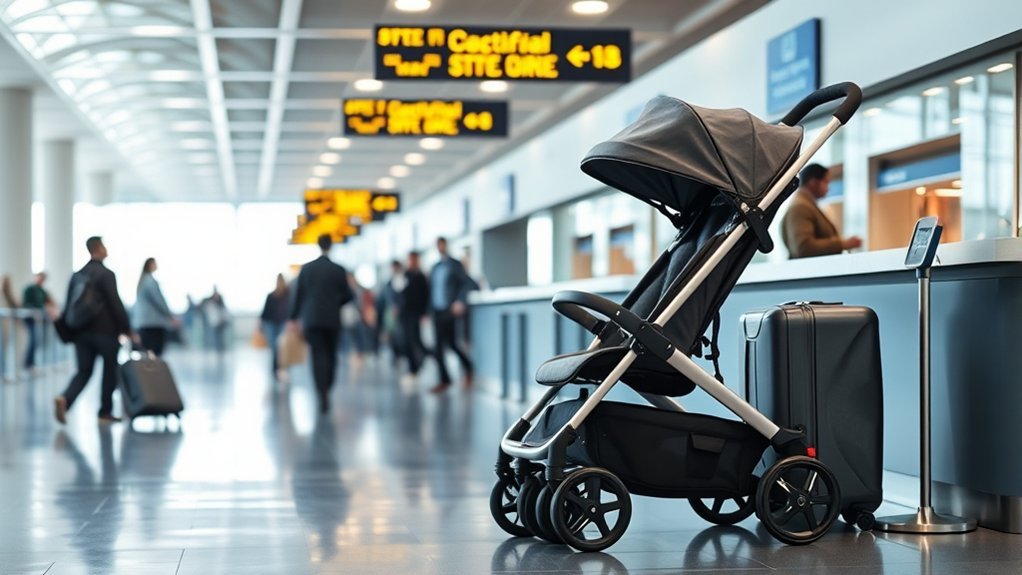
When flying with a double stroller, you’ll need to be mindful of size and weight restrictions. A double stroller may be accepted for travel, but it may not be accepted as a carry-on item.
Measure your stroller’s folded dimensions and check its weight before you travel. This helps you avoid surprise gate decisions, extra handling delays, or being asked to check the stroller earlier than expected.
[Amazon Products Picked for You]

Weighing under 22 pounds, the Summer by Ingenuity 3Dlite Double Stroller has a lightweight, durable aluminum frame that folds compactly with a convenient carry handle for travel

Extendable canopies with sun visors; Five-point safety harness with soft shoulder pads and reflective material that ensures you and your children can be seen at night; Meets Disney size requirements
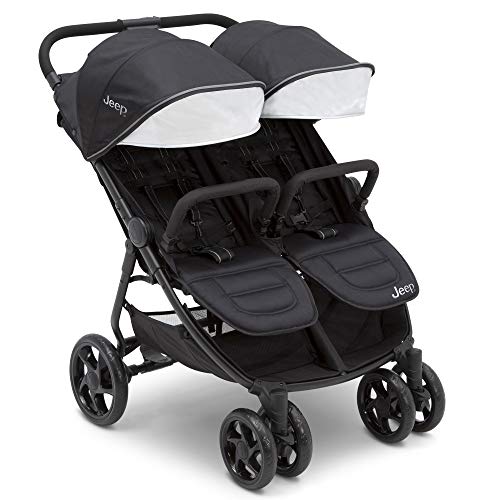
RECOMMENDED USE: Each seat holds up to 40 pounds (80 pounds total). Canopies feature pop out SPF 50 sun visors to shield little ones. Peak a boo windows allow you to keep an eye on your children. Swivel bars make it easy to get children in and out
Airline Size Restrictions
Double strollers often exceed standard cabin limits because they are wider or longer when folded than single travel strollers. That does not prevent you from flying with one; it mainly changes whether the stroller is accepted in the cabin, gate-checked, or checked earlier at the counter.
Keep these stroller travel tips in mind:
- Most full-size double strollers are better suited for gate-checking or checked baggage than cabin storage.
- Compact double strollers may have a better chance of being accepted at the gate, but only if they meet airline limits.
- Side-by-side double strollers are often wider, while tandem double strollers can be longer when folded.
- Large stroller wheels, parent trays, and snack trays can increase the folded size.
- Some aircraft have smaller overhead bins, so approval can depend on the plane, not just the airline.
Understanding these double stroller features will help you travel with fewer surprises and choose the right check-in option.
Weight Limit Guidelines
Weight matters most when an airline publishes a stroller or special-item limit. Many double strollers are heavier than compact travel strollers because they use larger frames, wheels, two seats, storage baskets, and adapters.
If your stroller is heavy, the airline may ask you to check it at the ticket counter instead of the gate. This can be inconvenient if you were planning to use it through the terminal. To avoid this issue, weigh the stroller at home and compare that number with your airline’s current stroller rules.
Warning: Do not leave bags, hooks, organizers, toys, or loose accessories attached to the stroller when checking it. Loose items can break, fall off, or get caught during baggage handling.
Bringing Car Seats on Board: What You Need to Know
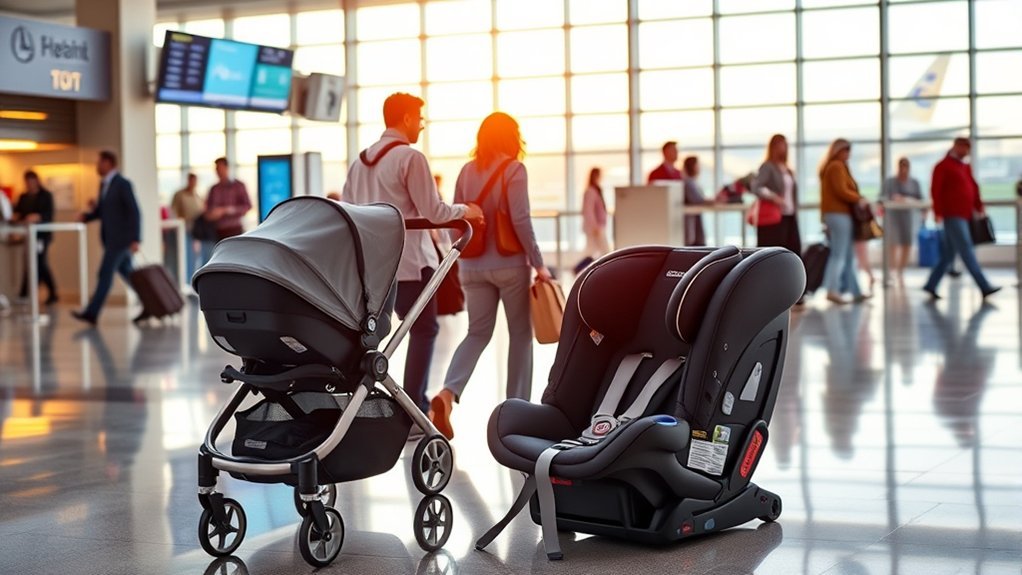
A car seat is different from a stroller because an approved child restraint system can be used on an aircraft seat. The Federal Aviation Administration strongly recommends an approved child restraint system or other approved device for young children and says purchasing a seat is the only way to guarantee that a child under 2 can use a restraint during the flight.
Keep these points in mind for car seat safety:
- Use a child restraint system that is approved for aircraft use and carries the required certification label.
- Check the restraint’s width and the airline’s aircraft-seat information before travel.
- Install the restraint where it does not block another passenger’s escape path; airlines commonly direct car seats to window positions.
- Follow the restraint manufacturer’s instructions and all crew directions during installation.
- Do not use a booster seat or baby carrier as a substitute for an approved child restraint during taxi, takeoff, or landing.
Stroller and car-seat checking allowances differ by airline. Review both policies before travel instead of assuming the two items are always handled together.
A stroller helps you move through the airport, while an approved car seat can help protect your child during the flight when used correctly.
Family Boarding Options: Making Travel Easier With Young Children

Family boarding is airline-specific, and it should not be assumed. Some carriers offer preboarding or early family boarding, while others place families into the normal boarding sequence based on fare, seat, status, or reservation details.
Policies can also change. Southwest, for example, moved to assigned seating for flights from January 27, 2026, and now says customers on the same reservation are assigned the same boarding group rather than using its former family-boarding process.
Arrive at the gate early enough to ask for any stroller tag, confirm the stroller return location, fold the stroller, organize carry-on items, and install an approved child restraint if your child will use one on board.
If extra boarding time is important to your family, check the current policy for your operating airline before travel instead of relying on an older family-boarding rule.
Backup Options During Travel Delays: Keeping Your Child Comfortable
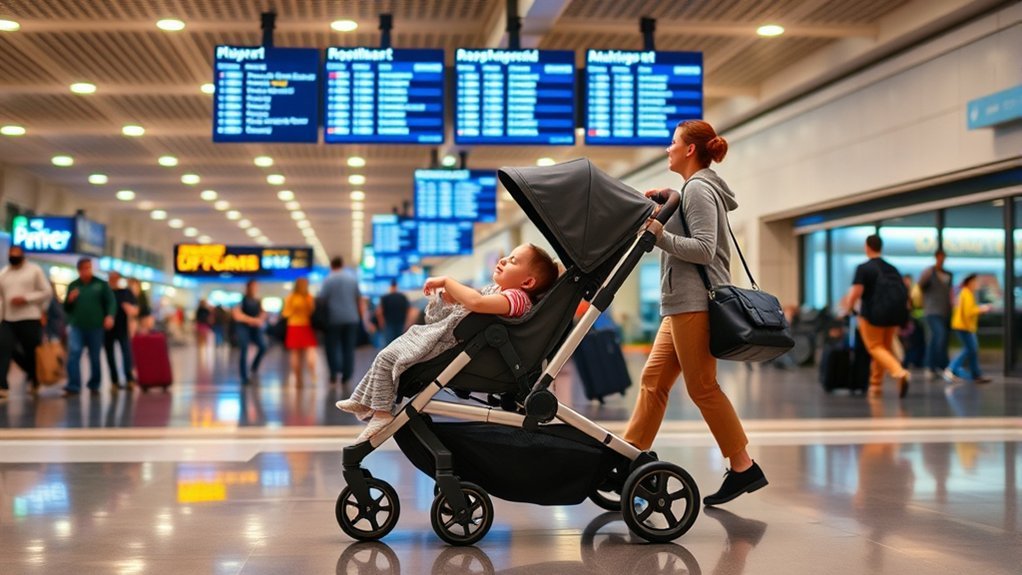
When travel delays happen, having backup options can make a big difference in keeping your child comfortable and calm. This is especially important if your double stroller has already been checked and is no longer available in the terminal.
Here are a few travel hacks and comfort essentials that can help you handle unexpected wait times:
- Baby slings or soft-structured carriers: These keep your child close while giving you hands-free mobility.
- Lightweight, easy-to-fold strollers: A compact model can be easier to use during layovers if your double stroller is too bulky.
- Snacks and toys: Pack simple, mess-light snacks and small activities in your hand luggage.
- Change of clothes: Bring extra clothes for spills, diaper leaks, or travel sickness.
- Small blanket or comfort item: Familiar items can help toddlers rest during delays.
- Diapers, wipes, and bags: Keep more than you think you need, especially for long travel days.
Being prepared with these options not only reduces stress but also improves the travel experience for both you and your child.
Examples of Airline Policies Regarding Strollers and Car Seats
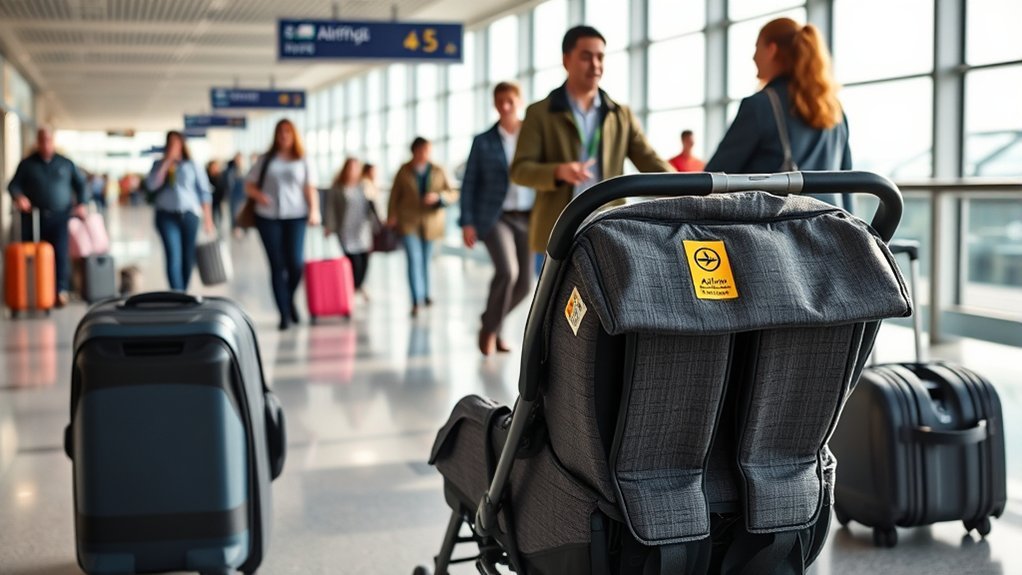
Maneuvering airline policies for strollers and car seats can be challenging, especially with a double stroller in tow. Most airlines allow a stroller to be checked for a child, but double stroller handling can vary because of size.
Current published examples from major U.S. carriers include:
- American Airlines: One stroller and one car seat may be checked free when traveling with a child. Non-collapsible strollers must be checked at the ticket counter; other strollers are directed to gate check.
- Delta Air Lines: Strollers and child-restraint seats are not counted toward the standard baggage allowance and can be checked curbside, at the ticket counter, or at the gate.
- Southwest Airlines: A ticketed customer traveling with a child may check one stroller and one car seat free. Gate-checked items normally go to baggage claim unless you request jet-bridge return from the agent.
- Alaska Airlines: A child’s stroller and car seat are transported free as checked baggage and can be checked with other baggage or at the gate.
Because airline rules can change, use these examples as a starting point, not the final answer. Always verify the operating airline’s policy before departure, especially for a large side-by-side stroller, a non-collapsible model, or a stroller wagon.
Types of Strollers Allowed by Airlines: What You Should Know
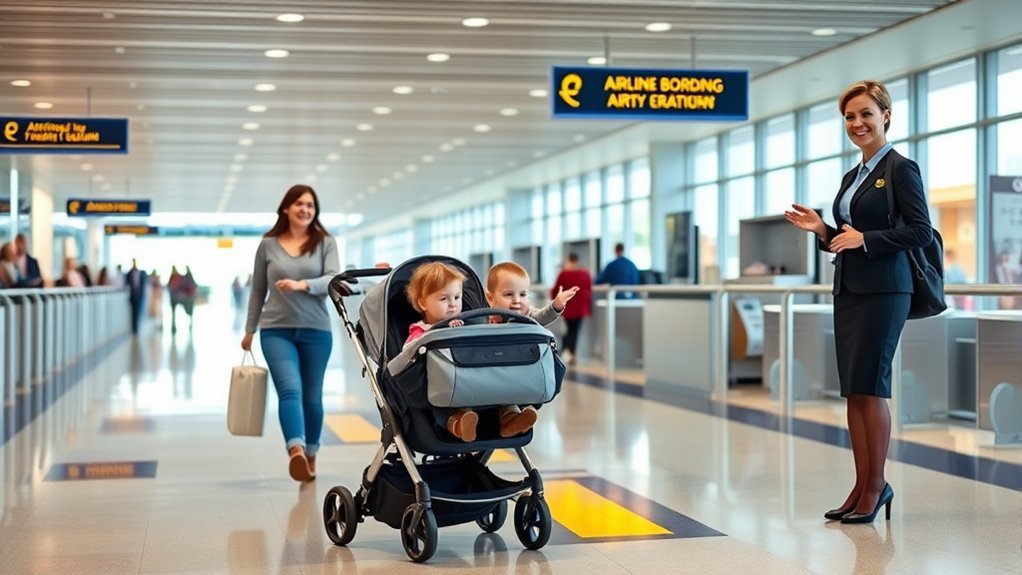
Your stroller type affects how easy it is to move through the airport, fold at security, and hand over for checking. The important distinction is not simply “single” versus “double,” but how compactly the stroller folds and whether the airline places special conditions on its design.
Here are the main stroller types to consider:
- Side-by-side double strollers: These are comfortable for two children but can be too wide for tight airport spaces and overhead bins.
- Tandem double strollers: These are narrower than side-by-side models but may be long or bulky when folded.
- Compact double strollers: These are better for air travel, though they still need to meet airline size rules.
- Umbrella strollers: These are usually lighter and easier to gate-check, but most are single strollers.
- Travel system strollers: These can work well with car seats but may include extra parts that need to be removed before checking.
Always confirm specific airline policies before you travel. These stroller travel tips can help you avoid hassles and enjoy a more comfortable journey with your little ones.
[Amazon Products Picked for You]

Children can sit in the front and rear seats of this stroller or stand on the rear platform
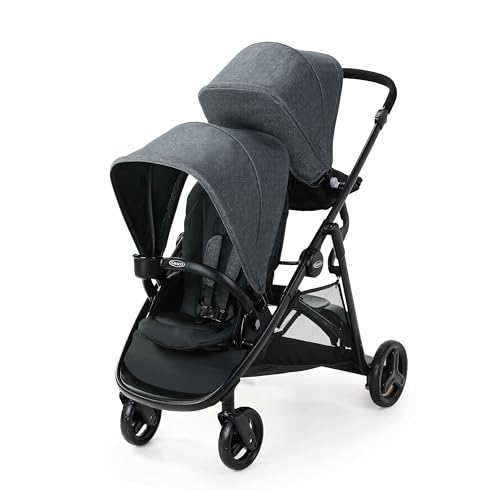
Small-folding stroller rides like a double, but folds like a single stroller, making transport and storage easy

A LIGHTWEIGHT TRAVEL COMPANION (25 LBS) – Weighing in at just 25 lbs, the Lithe double stroller is your key to stress-free travel. Designed for nimble urban navigation and stress-free travel, it is Disney Size Approved, allowing you to breeze through park checks without bulk. The premium full-grain leather handlebar adds a touch of luxury and superior grip for all-day pushing comfort.
How to Prepare a Double Stroller for Air Travel
Preparing your stroller before you reach the airport can save time and reduce the risk of damage. A double stroller has more moving parts than a small travel stroller, so a quick pre-flight setup matters.
At a Glance
| Time Required | 10 to 20 minutes before leaving for the airport |
| Difficulty | Easy |
| Tools Needed | Tape measure, luggage scale, name tag, stroller bag or cover |
| Cost | Often free as a child travel item on major U.S. airlines; confirm your carrier |
- Measure the stroller folded: Write down the length, width, and height.
- Weigh the stroller: Use a luggage scale or bathroom scale if needed.
- Remove loose accessories: Take off cup holders, stroller fans, toy bars, hooks, and organizers.
- Empty the basket: Do not leave diapers, blankets, snacks, or valuables underneath.
- Lock the frame: Make sure the stroller stays folded and does not pop open during handling.
- Use a protective bag: A padded or bright-colored gate-check bag can reduce dirt and make the stroller easier to identify.
- Add your contact details: Use a luggage tag with your name, phone number, and email address.
[Amazon Products Picked for You]
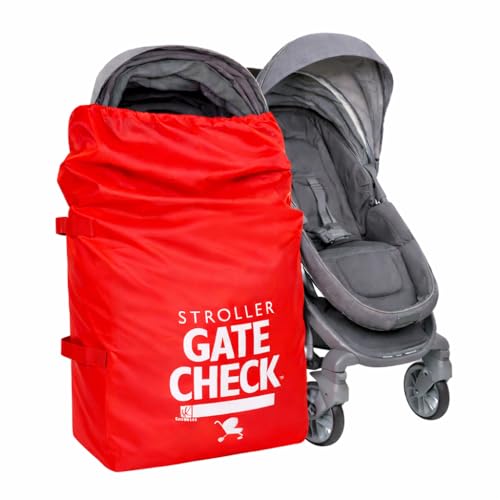
TRAVEL WITH LESS WORRY - Protects your stroller from airport dirt and handling while making family travel a little more manageable. Use to gate check when boarding the airplane.
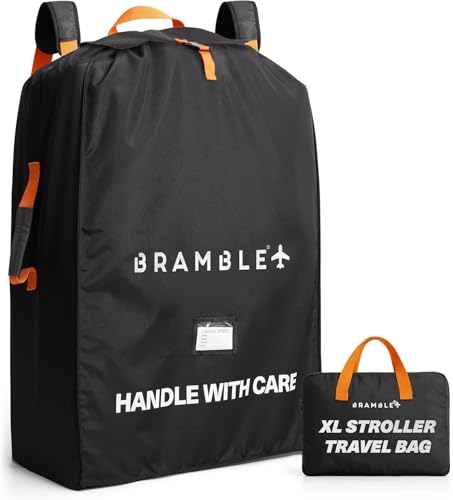
Universal Fit for Double & XL Strollers: Measuring 40 x 26 x 16 inches, this extra-large stroller travel bag is sized to accommodate most double strollers, twin strollers, and oversized single strollers — making it a reliable choice for gate-checking on flights or storing your stroller at home, in the car, or between trips.

TRAVEL WITH LESS WORRY - Protects your stroller from airport dirt and handling while making family travel a little more manageable. Use to gate check when boarding the airplane.
Ticket Counter Check vs. Gate Check: Which Is Better?
For many families, gate-checking is the better option because you can use the double stroller until boarding. This is helpful if your children are tired, your gate is far away, or you have carry-on bags to manage.
Ticket-counter checking may be better if your stroller is very large, heavy, or difficult to fold quickly. It also means you will not have to manage the stroller through security. The trade-off is that you will need another way to move your children through the terminal.
| Option | Best For | Main Drawback |
|---|---|---|
| Gate Check | Using the stroller through the airport | May be refused if the stroller is too large |
| Ticket Counter Check | Large or heavy double strollers | You lose access to the stroller before security |
| Carry-On Storage | Very compact travel strollers only | Rare for full-size double strollers |
Related Guides
Frequently Asked Questions
Can I use my double stroller at the airport before boarding?
Yes, you can usually use your double stroller at the airport before boarding if your airline allows gate-checking. You may need to fold it during security screening and hand it to airline staff before entering the plane.
Are there fees for bringing a double stroller on a plane?
Many major U.S. airlines check a stroller for a child without a standard stroller fee, but eligibility and handling rules differ. Confirm the operating airline’s current policy, especially for non-collapsible strollers or stroller wagons.
Can I check my double stroller at the ticket counter?
Yes, you can usually check a double stroller at the ticket counter. This is often the best option for large, heavy, or hard-to-fold strollers that may not be accepted at the gate.
What happens if my double stroller gets damaged during travel?
Report the damage to the airline before leaving the airport. Take photos, keep baggage tags, and ask for a written damage report. If you have travel insurance or stroller coverage, you may also be able to file a claim.
Can I rent a double stroller at my destination?
Yes, many family travel destinations, theme parks, resorts, and baby gear rental companies offer double stroller rentals. Reserve early if you are traveling during holidays, school breaks, or peak vacation seasons.
Can a double stroller go in the overhead bin?
Most full-size double strollers cannot fit in the overhead bin. Only very compact folding models may qualify, and even then, approval depends on the airline’s carry-on rules and available cabin space.
Should I use a stroller bag when flying?
A stroller bag is a smart idea, especially for a double stroller. It helps protect the frame from dirt and scratches, keeps loose parts together, and makes the stroller easier to identify after landing.
Does TSA make you fold a double stroller at security?
TSA requires strollers that fit to go through X-ray screening, so you should be ready to fold the stroller and remove children and loose items. If the stroller does not fit through the X-ray machine, TSA officers use a visual and physical inspection instead.
Do airlines have a single weight limit for double strollers?
No. There is no universal airline weight limit for double strollers. Each carrier sets its own child-item, gate-check, and cabin-baggage rules, so check the operating airline’s current policy for your stroller.
Conclusion
You can usually take a double stroller on a plane, but most full-size models should be planned as checked or gate-checked equipment. Before leaving home, measure the stroller folded, review the operating airline’s current policy, remove loose accessories, and decide whether you need the stroller through the terminal.
At the airport, be ready to fold the stroller for TSA screening, keep your gate-check claim tag, and ask where the stroller will be returned after landing. If the stroller is large or non-collapsible, counter checking may be required. If it is compact, cabin storage may be possible only when it meets the airline’s carry-on rules and space is available.
Sources
- Federal Aviation Administration: Flying with Children — child safety seats and family air travel guidance
- Transportation Security Administration: Traveling with Children — airport screening guidance for families
- Delta Air Lines: Children and Infant Items — stroller and child travel item handling
- Southwest Airlines: Traveling with Children — family travel and child item information
- United Airlines: Traveling with Children — stroller, car seat, and family travel information
- American Airlines: Traveling with Children — current stroller and car-seat check-in rules
- Alaska Airlines: Infants and Children — stroller, car-seat, and stroller-wagon handling
- Southwest Airlines: Assigned Seating — current family boarding and boarding-group process
