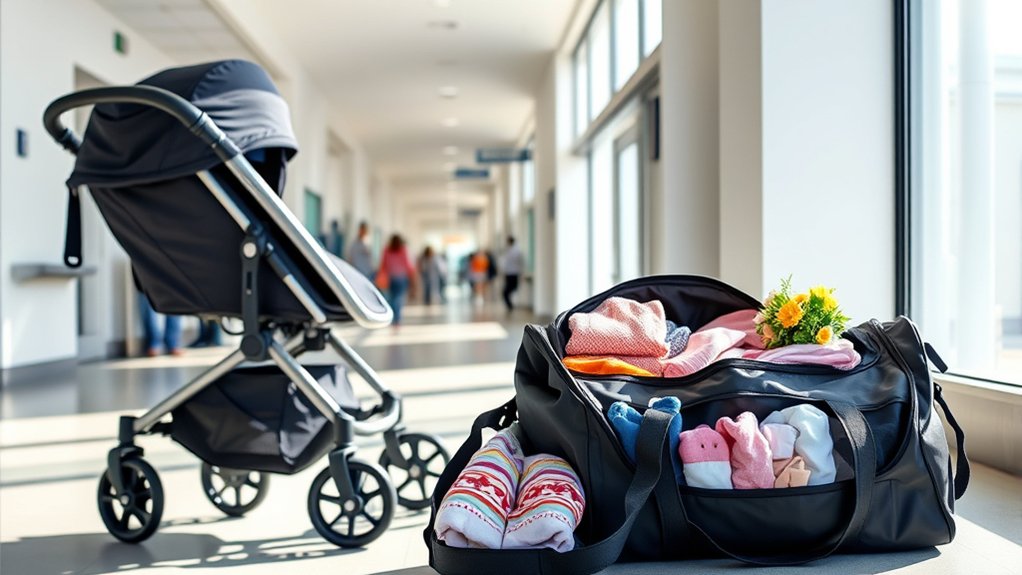
You usually do not need a stroller at the hospital. For most births, it is optional during the stay. If you are going home in a private car, the key piece of baby travel gear is a correctly installed rear-facing car seat. If you are walking home or using another form of transport, check your hospital’s discharge policy because some facilities specifically ask families to have a stroller or another approved infant carrier. The safest plan is to confirm the hospital’s rules before labor and bring only the gear you expect to use.
Quick Answer
You usually do not need to bring a stroller to the hospital. It is mainly useful if your hospital allows it and you expect long hallways, a longer stay, or a walking discharge. If you are leaving by private car, use a rear-facing car seat that is installed and fitted correctly. If you are not leaving by car, ask your hospital what transport they require for discharge.
Key Takeaways
- A stroller is optional for most hospital stays, but discharge rules can differ by hospital and transport method.
- If you are taking your baby home in a private car, use a correctly installed rear-facing car seat.
- Packing about a month before your due date is a practical target; pack earlier if your provider expects an early delivery.
- Avoid bulky coats or thick padding under the car-seat harness because they can prevent a snug fit.
- Ask what your hospital already provides, such as diapers, wipes, blankets, or feeding supplies, so you do not overpack.
At a Glance
| Best Time to Pack | About one month before your estimated due date is a practical target; earlier if your provider says you may deliver early. |
| Stroller Needed? | Usually no during the stay. It may help with long distances or be required or recommended by some hospitals for a non-car discharge. |
| Baby Gear for Discharge | Going-home outfit and weather-appropriate blanket; rear-facing car seat if leaving by private car. Check what your hospital requires for other transport. |
| Main Safety Check | For car travel, install the rear-facing seat in the back seat, tighten it at the belt path, and fit the harness snugly according to the seat manual. |
When to Pack Your Hospital Bag
There is no single universal week for packing your hospital bag, but having it ready about one month before your estimated due date is a practical target. Northwestern Medicine gives similar guidance and recommends packing ahead rather than waiting for labor. If your doctor or midwife thinks you may deliver early, pack sooner.
Start with items you do not use every day, such as baby clothes, extra underwear, nursing bras, a robe, copies of paperwork, and a blanket. Then add a small last-minute list for things you still use daily, including your toothbrush, phone charger, glasses, medication, and wallet. A checklist helps keep your packing process simple and organized.
Once the bag is ready, place it near the door or another easy-to-grab location. If you keep it in your car, avoid leaving temperature-sensitive medication, electronics, or other items that should not sit in a hot or cold vehicle. Keep a short note for the few things you still need to add before you leave.
Pro Tip: Pack one bag for you and one smaller bag for your baby. It makes it easier to find tiny newborn items without digging through your clothing, snacks, and toiletries.
Do You Need a Stroller at the Hospital?
You do not usually need a stroller during a routine hospital stay. Many maternity units use hospital bassinets for newborn movement, and families often spend most of the postpartum stay in the room. A stroller becomes more useful when the hospital is large, you expect a longer stay, or a support person needs an easier way to move baby gear at discharge.
The important exception is discharge policy. Rules can change based on how you are going home. For example, NYU Langone tells families to bring a car seat if they are leaving by car or a stroller if they are walking home. NewYork-Presbyterian likewise notes that families without a car may not need a car seat for discharge and recommends bringing a stroller. That is why your own hospital’s rule matters more than a universal packing list.
Before bringing a stroller, call the maternity unit or check your hospital’s birth-center information. Ask three questions: Are strollers allowed on the postpartum floor? How does the hospital want newborns moved inside the unit? What carrier, car seat, or stroller is required for discharge based on your ride home?
Note: If you are taking your baby home in a private car, use a correctly installed rear-facing car seat. If you are leaving another way, follow your hospital’s discharge policy and local transport rules instead of assuming a stroller or car seat is always required.
Hospital Bag Checklist
Packing your hospital bag is easier when you separate true essentials from comfort items. Start with hospital essentials for yourself: comfortable clothing, a robe, socks or slippers, underwear, nursing bras if you plan to breastfeed, and basic toiletries. Choose soft going-home clothing that will not press on a tender abdomen or incision area.
Bring important paperwork in an easy-to-reach pocket. This may include your photo ID, insurance information, hospital registration forms, medication list, birth preferences, and pediatrician contact information. If your hospital uses an app or online registration, make sure you can access it from your phone.
Pack a reusable water bottle, lip balm, hair ties, a phone charger with a long cord, and a few snacks for your support person or for after delivery if your care team allows them. A personal pillow, eye mask, light blanket, or other small comfort item can also help, but keep the total load manageable.
Before filling the bag with baby supplies, ask what your hospital provides. Cleveland Clinic notes that families are commonly sent home with items such as diapers and wipes, while NYU Langone says its newborn units provide diapers, T-shirts, swaddling blankets, and bath supplies. Your hospital may provide a different set of items, so checking first can prevent overpacking.
What to Pack for Labor and Delivery
- Photo ID, insurance information, and hospital paperwork
- Birth preferences or birth plan, if you have one
- Phone charger with a long cord
- Comfortable socks or slippers
- Hair ties, lip balm, and basic toiletries
- Glasses or contact-lens supplies, if needed
- Snacks for your support person and after delivery, if allowed
- Loose going-home clothes
- Your medication list and any medicines your hospital or provider has told you to bring
What Your Support Person Should Pack
If a partner, family member, or friend will stay with you, they should pack a small bag too. Helpful items include a change of clothes, phone charger, snacks, refillable water bottle, basic toiletries, and any medicine they need. They may also want a light blanket or sweatshirt because hospital rooms can feel cold.
Hospital Bag Checklist for Your Baby
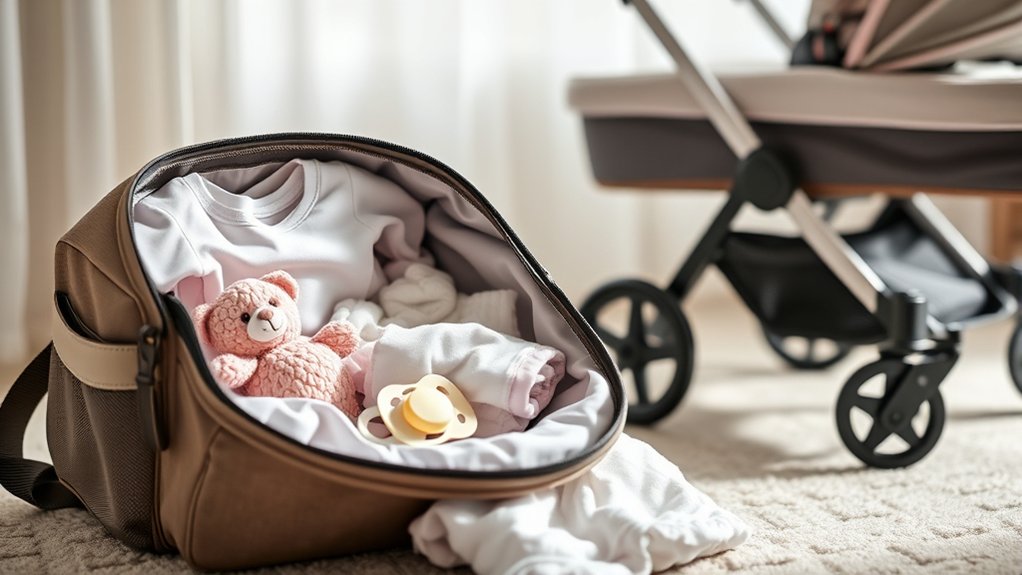
A well-prepared hospital bag for your baby can make discharge simpler, but newborns usually need less than parents expect. Pack a going-home outfit, such as a soft onesie or sleeper, plus a hat or other light layer if the weather calls for it. Choose clothing that opens easily for diaper changes and does not create bulky padding under a car-seat harness.
Bring a light blanket for the trip home. If your baby will ride in a car seat, buckle and tighten the harness first, then place the blanket over the secured harness for warmth. Do not put thick coats, bulky snowsuits, or padded blankets under the harness because they can prevent a snug fit.
Diapers, wipes, swaddles, and feeding supplies vary by hospital. Some facilities provide nearly everything your baby needs during the stay, while others may ask you to bring certain items. Confirm the hospital’s list before packing large quantities. A few backup diapers and wipes for the trip home can still be useful.
For a private-car discharge, have a rear-facing car seat ready and learn how to install and use it before labor. If you are walking home or using another form of transport, ask the hospital what approved carrier or stroller it requires or recommends for discharge.
Baby Items to Pack
- One or two newborn outfits
- One size-up outfit in case your baby is larger than expected
- Hat and socks, depending on weather
- Swaddle or receiving blanket if your hospital does not provide one or you prefer your own
- A few diapers and wipes if needed for discharge or if your hospital asks you to bring them
- Burp cloth
- Formula and bottles only if your hospital asks you to bring them or you have a specific feeding plan
- Rear-facing infant car seat if you are taking your baby home in a private car
- Optional stroller if your hospital allows it, you expect to use it, or your discharge plan requires it
Warning: Do not place your baby in a car seat while wearing a bulky coat or thick padded outfit. NHTSA advises fitting the harness snugly first and placing coats or blankets over the harness instead of underneath it.
Travel Preparations and Newborn Essentials
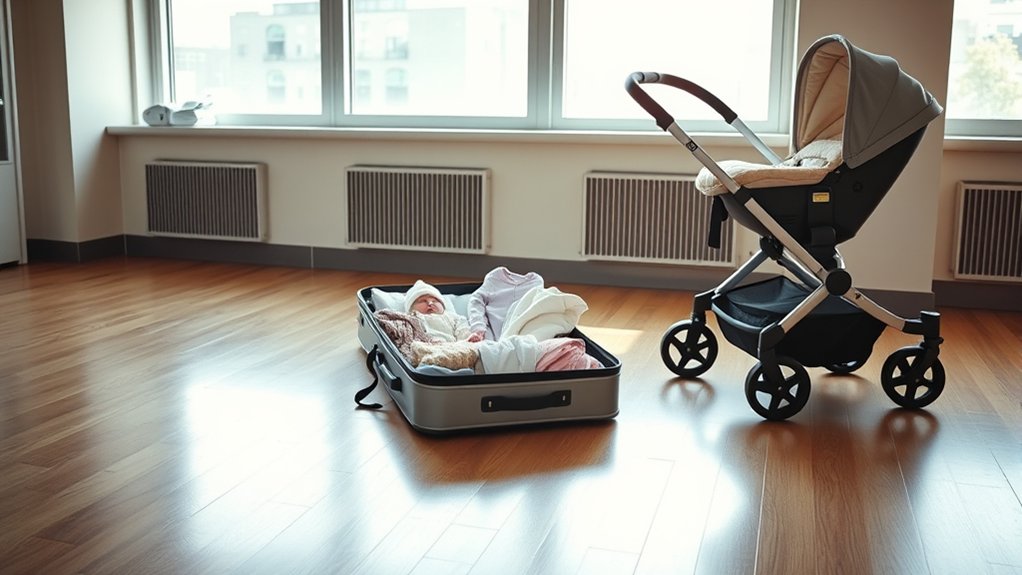
If you are going home by car, prepare the car seat before your due date rather than waiting until discharge. NHTSA’s rear-facing installation guidance says to place the seat in the back seat, follow both the car-seat and vehicle manuals, and tighten the installation so the seat does not move more than one inch at the belt path.
- Install the rear-facing car seat in the vehicle’s back seat and use the recline angle required by the manufacturer.
- Read both the car-seat manual and your vehicle manual because installation methods differ by seat and vehicle.
- Keep rear-facing harness straps flat, untwisted, and routed at or below your baby’s shoulders.
- Tighten the harness until you cannot pinch extra webbing at the shoulder, and place the chest clip at armpit level if your seat uses one.
- Dress your newborn in thin layers and place blankets over the secured harness, not underneath it.
A stroller can help with supervised transport, but it should not be treated as a routine sleep space. The American Academy of Pediatrics’ HealthyChildren guidance says that if a baby falls asleep in a stroller, car seat, swing, carrier, or sling, the baby should be moved to a firm, non-inclined sleep surface on their back as soon as possible.
Car Seat Check Before Discharge
Before you leave, check the installation at the belt path. NHTSA says a correctly installed seat should not move more than one inch side to side or front to back at that point. Make sure the harness lies flat with no twists and is snug on your baby. If you are unsure about installation, use NHTSA’s child-passenger-safety resources to find trained help before your due date, or ask your hospital where local checks are available.
When a Stroller Makes Sense
Bringing a stroller may make sense if your hospital allows it and you expect long hallways, a longer stay, a walking discharge, or help from a support person moving bags and baby gear. A lighter stroller or stroller frame is usually easier to manage in elevators and tight rooms than a bulky full-size model. If you are still choosing a combined setup, our guide to car seat and stroller travel systems explains the main configuration options.
When to Skip the Stroller
You can usually skip the stroller if your hospital room is small, your stay is short, parking is close, or your maternity unit prefers newborns to be moved in hospital bassinets. Leave it at home if it would add more bulk than convenience, unless your hospital specifically asks you to have a stroller or other carrier for discharge.
Adjusting to Your New Routine
After discharge, keep the first days simple and follow the feeding plan your maternity team or pediatrician gives you. Newborns feed frequently. HealthyChildren notes that breastfed newborns commonly nurse about 10 to 12 times in 24 hours, while many bottle-fed newborns eat every 2 to 3 hours. Your baby’s needs may differ, especially after a premature birth or other medical issue.
Keep diapers, wipes, feeding supplies, burp cloths, and your phone charger within easy reach. For sleep, use a firm, flat, non-inclined sleep surface and place your baby on their back. A stroller or car seat should not become the baby’s regular sleep space outside travel.
Postpartum Comfort After You Get Home
Set up a small recovery station before you leave for the hospital. Keep water, snacks, burp cloths, diapers, wipes, feeding supplies, pain-relief items approved by your provider, and your phone charger nearby. This makes it easier to care for yourself and your baby without walking around the house every time you need something.
When to Call Your Provider
For the parent, seek urgent medical care for warning signs such as chest pain, trouble breathing, seizures, severe or worsening pain, heavy vaginal bleeding, a severe headache with vision changes, or thoughts of harming yourself or your baby. The CDC lists urgent maternal warning signs that can occur during pregnancy and after delivery.
For a young infant, call the pediatrician immediately for a rectal temperature of 100.4°F (38°C) or higher if the baby is 3 months old or younger. Also get prompt medical help for trouble breathing, unusual difficulty waking, poor feeding, or markedly fewer wet diapers. HealthyChildren provides age-specific fever guidance. If a symptom seems severe or life-threatening, use emergency services rather than waiting for a routine appointment.
Frequently Asked Questions
Can I use my stroller in the hospital?
Maybe. Hospital policies differ. Some maternity units allow personal strollers, while others prefer newborns to be moved in hospital bassinets. Ask about postpartum-floor access, storage, hallway use, and the discharge process before bringing one.
How do I transport my baby safely home?
If you are leaving in a private car, use a correctly installed rear-facing car seat in the back seat and follow the car-seat and vehicle manuals. Keep the harness flat and snug, and avoid bulky clothing under it. If you are not leaving by car, follow your hospital’s discharge policy and local transport rules.
Is a stroller necessary for short hospital stays?
Usually not. For a short stay with a small room and a short walk to your ride, a stroller often adds more bulk than convenience. Bring one if your hospital allows it and you expect it to solve a specific problem, such as long distances or a walking discharge.
What if I forget to bring my stroller?
Most families can manage the hospital stay without a personal stroller because maternity units often have their own newborn transport process. If your hospital requires a stroller or another carrier for your discharge plan, ask a support person to bring it before you leave.
Will the hospital provide any transportation for my baby?
Many maternity units use hospital bassinets or other approved equipment to move newborns inside the unit, but the exact policy varies. Ask your hospital how your baby will be moved during the stay and what you must provide for discharge.
Should I bring a stroller frame that connects to my infant car seat?
A stroller frame can be practical if your hospital allows personal strollers and you want something lighter than a full-size stroller. Follow both manufacturers’ instructions, secure the baby correctly, and do not use the car seat or stroller as a routine sleep space outside travel.
Can my newborn sleep in the stroller at the hospital?
A stroller should not be used as a routine sleep space. If your baby falls asleep in a stroller, move the baby to a firm, flat, non-inclined sleep surface on their back as soon as possible, following hospital staff guidance.
Do hospitals provide diapers and wipes for newborns?
Many hospitals provide diapers and wipes, but supplies vary by facility. Check your hospital’s packing list before you fill your bag. You may still want a few backups for the trip home.
Do I need a car seat if I am not leaving the hospital by car?
Not every discharge plan requires a car seat. Some hospitals tell families who are walking home or using other transport to bring a stroller or another approved infant carrier instead. Check your hospital’s rule and local transport law before delivery.
Conclusion
You usually do not need a stroller at the hospital, but your discharge plan can change the answer. If you are leaving by private car, prepare a correctly installed rear-facing car seat. If you are walking home or using another type of transport, ask the maternity unit what stroller, carrier, or other equipment it requires.
Before labor, confirm three things with your hospital: whether personal strollers are allowed, what newborn supplies the hospital provides, and what your baby must use for discharge. Pack your bag about a month before your due date unless your provider recommends earlier preparation. That keeps the plan simple and avoids bringing bulky gear you may never use.

