Last updated: September 22, 2026. Safety guidance reviewed against current American Academy of Pediatrics (AAP), U.S. Consumer Product Safety Commission (CPSC), and American Academy of Sleep Medicine (AASM) recommendations.
Yes, stroller naps count toward your child’s total sleep time if your child actually sleeps. But “does it count?” and “is the stroller an appropriate sleep surface?” are two different questions. For infants, the American Academy of Pediatrics says sitting devices such as strollers are not recommended for routine sleep, particularly for babies younger than 4 months. If an infant falls asleep in a stroller, move them to a firm, flat, non-inclined sleep surface as soon as it is safe and practical.
Quick Answer
Yes. Time actually spent asleep in a stroller counts toward total daily sleep. However, a stroller seat is not recommended as a routine infant sleep space. Keep your child properly restrained, never leave them unattended, and move a sleeping infant to a firm, flat, non-inclined sleep surface as soon as it is safe and practical.
Key Takeaways
- If your child sleeps in the stroller, that time still contributes to the day’s total sleep.
- For infants, counting the sleep does not make a stroller seat an approved routine sleep surface.
- AAP guidance says a sleeping infant in a stroller or other sitting device should be moved to a firm, flat, non-inclined sleep surface as soon as safe and practical.
- There is no universal two-hour stroller-nap rule that makes stroller sleep safe for an infant.
- Use the stroller harness according to the manufacturer’s instructions and never leave a child unattended.
- Do not assume a stroller bassinet or fully reclined seat is approved for routine sleep; check the manufacturer’s instructions and applicable sleep-product standards.
Do Stroller Naps Count Toward Daily Sleep?
Yes. If your child is genuinely asleep, those minutes contribute to the total amount of sleep they get during the day. This is the most useful way to interpret the word “count”: record the sleep that actually happened rather than pretending a short stroller doze did not occur.
The safety question is separate. For infants, the AAP recommends sleep on the back on a firm, flat, non-inclined surface intended for infant sleep. Strollers, car seats, swings, infant carriers, and slings are not recommended for routine infant sleep. If your baby falls asleep in one, transfer them to an appropriate sleep surface as soon as it is safe and practical.
That distinction helps parents make better schedule decisions. A stroller doze may reduce how sleepy a child feels before the next nap, but it does not change the safe-sleep recommendation for an infant.
When a Stroller Nap Happens During Daily Life
Babies and toddlers sometimes fall asleep during walks, school runs, shopping trips, appointments, or travel. That does not mean the sleep should be ignored when you think about the rest of the day.
For an infant, however, an accidental stroller nap should not become a reason to use the stroller as the normal nap location. Count the time your baby slept, keep them properly restrained while they are in the stroller, and transfer them to a firm, flat, non-inclined sleep surface as soon as it is safe and practical.
Practical Parenting Solutions
Real life does not always line up perfectly with nap time. A safer plan is to prepare for the possibility that your baby may doze during an outing rather than building the day around routine sleep in the stroller.
- Plan longer outings around your child’s usual sleep schedule when practical.
- If an infant falls asleep in the stroller, count the sleep time but plan to transfer them to an appropriate sleep surface as soon as safe and practical.
- Keep the stroller harness fastened and adjusted according to the manufacturer’s instructions.
- Keep your baby’s face visible and free of loose fabric or objects.
- When you reach your destination, do not leave an infant parked in the stroller simply to extend the nap.
- Use the stroller brake whenever the stroller is stopped.
- Check your stroller’s age, weight, recline, and bassinet instructions instead of assuming a flat-looking position is approved for sleep.
Pro Tip: If your child dozes briefly during an outing, include that sleep when you judge the next nap. You do not need a fixed formula; watch your child’s normal sleepy cues and overall sleep for the day.
Why Babies May Fall Asleep With Stroller Motion
Many parents notice that their baby becomes drowsy during a walk. Repetitive movement, a predictable routine, and the reduced interaction that often comes with riding in a stroller may make it easier for a tired child to drift off.
That can be convenient during an outing, but convenience does not change infant safe-sleep guidance. For a baby under 1 year, a stroller seat remains a sitting device rather than the recommended routine sleep environment.
If stroller motion becomes the only way your child falls asleep, you can gradually rebuild a stationary nap routine at home rather than relying on a specific percentage of stroller naps each week.
Balancing Routine and Flexibility
A flexible schedule can coexist with safe sleep. The goal is not to pretend that an on-the-go doze did not happen; it is to count the sleep while still making an appropriate sleep surface the normal place for infant naps.
- Use your child’s usual nap pattern as the starting point when planning outings.
- Keep a simple pre-nap routine at home so sleep does not depend entirely on stroller motion.
- Watch for sleepy cues instead of following a fixed “80/20” stroller-nap rule.
- If a stroller doze happens, count the time asleep when planning the next nap.
- Keep bedtime reasonably consistent, while allowing for normal day-to-day variation.
- If sleep problems persist or your child has a medical condition that affects sleep or breathing, ask your pediatrician for individualized guidance.
This approach gives your family flexibility without treating a transport device as the default infant sleep space.
Safety Guidelines When a Baby Falls Asleep in a Stroller
The American Academy of Pediatrics recommends that infants sleep on their backs on a firm, flat, non-inclined surface. Sitting devices such as strollers are not recommended for routine infant sleep, particularly for babies younger than 4 months. If an infant falls asleep in a stroller, move them to an appropriate sleep surface as soon as it is safe and practical.
The U.S. Consumer Product Safety Commission also advises caregivers to use the stroller’s safety harness whenever a child is in the stroller and never leave a child unattended.
Warning: Supervision does not turn a stroller seat into an approved infant sleep surface. Keep the harness secured, keep the face and airway unobstructed, and transfer a sleeping infant to a firm, flat, non-inclined sleep surface as soon as it is safe and practical.
What Should You Check While Your Child Is in the Stroller?
While your child is riding in a stroller, basic stroller-safety rules still apply whether they are awake or asleep:
- Use the stroller’s harness according to the manufacturer’s instructions.
- Never leave a child unattended in a stroller.
- Keep the child’s face visible and free from loose fabric or other objects.
- Do not loosen or partially unbuckle the harness because the child has fallen asleep.
- Use the parking brake when the stroller is stopped.
- Follow the manufacturer’s age, weight, recline, and accessory instructions.
- For an infant who falls asleep, transfer to a firm, flat, non-inclined sleep surface as soon as safe and practical.
Restraint and Safety Measures
A properly used harness is important whenever a child is in a stroller. The CPSC has warned that an unrestrained child can slide or become entrapped in parts of a stroller, creating a serious strangulation or injury hazard.
Keep the harness fully secured as directed by the stroller manufacturer. Do not assume that reclining the stroller seat, loosening straps, or adding padding makes the stroller suitable for routine infant sleep.
Also keep the stroller stable. Engage the brake when stopped and avoid hanging heavy items from the handle unless the manufacturer specifically allows it, because added weight can affect stability.
Is There a Safe Time Limit for a Stroller Nap?
There is no universal number of minutes that turns a stroller seat into an approved infant sleep surface. The more useful safety rule is what the AAP recommends: if an infant falls asleep in a stroller or another sitting device, move them to a firm, flat, non-inclined sleep surface as soon as it is safe and practical.
- Do not rely on a 30-, 60-, 90-, or 120-minute cutoff as a safety rule.
- Keep the child properly restrained for as long as they remain in the stroller.
- Never leave a child unattended simply because they are sleeping.
- Transfer an infant when you can safely do so.
- Continue following the stroller manufacturer’s age and weight limits.
- If a stroller bassinet is involved, confirm that its manufacturer explicitly permits the intended sleep use rather than assuming all bassinets are equivalent.
Stroller Sleep vs. Crib or Bassinet Sleep
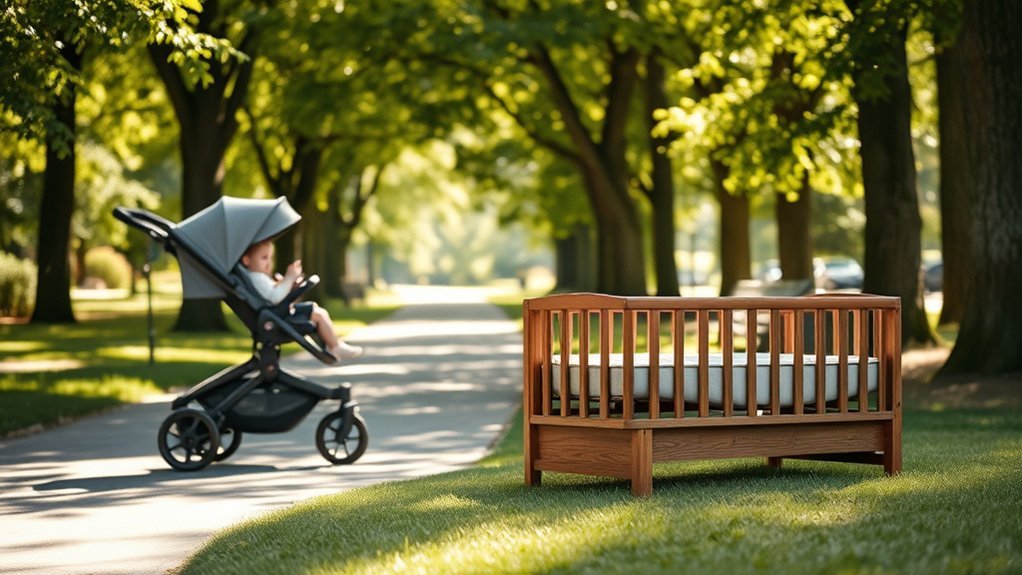
A stroller nap can still count toward the amount of sleep your child has had that day. The key difference for an infant is not whether the sleep “counts”; it is whether the surface is designed and recommended for routine infant sleep.
For infants, the AAP recommends a firm, flat, non-inclined sleep surface. A crib, bassinet, portable crib, or play yard that meets applicable safety standards is designed for that purpose. A stroller seat is a sitting device and is not recommended for routine infant sleep.
| Sleep Location | Does the Sleep Count? | Infant Safe-Sleep Guidance |
| Stroller seat | Yes. Actual time asleep contributes to daily sleep. | Not recommended for routine infant sleep. Transfer to an appropriate firm, flat, non-inclined surface as soon as safe and practical. |
| Approved crib, bassinet, portable crib, or play yard | Yes. | Use a firm, flat, non-inclined surface and place an infant on their back for sleep, following the product instructions. |
So, do not subtract a stroller doze from your child’s sleep total. Instead, count the sleep and make the safe-sleep decision separately.
Age Considerations for Stroller Naps
Age changes both sleep needs and risk. The AAP’s infant safe-sleep recommendations apply through the first year of life, and its warning about sitting devices specifically notes that routine sleep in these devices is particularly concerning for infants younger than 4 months.
For an infant, time asleep in a stroller can count toward total sleep without making the stroller an appropriate routine sleep surface.
- For infants younger than 4 months, be especially careful about sleep in sitting devices because head and neck control is limited.
- For babies 4 to 12 months, the recommendation for a firm, flat, non-inclined infant sleep surface still applies.
- For children older than 1 year, the AAP infant SIDS guidance is no longer the same framework, but stroller restraints, manufacturer limits, and supervision still matter.
- Do not assume a bassinet attachment is approved for routine sleep merely because it looks flat.
- If your child has a medical condition that affects breathing, muscle tone, positioning, or sleep, follow individualized medical guidance.
Newborns and Young Infants
Newborns and young infants have limited head and neck control. A semi-upright or inclined position can allow the head to fall forward or sideways, which is one reason the AAP does not recommend sitting devices for routine infant sleep.
If a young infant falls asleep during a stroller outing, keep them properly restrained while they remain in the stroller and transfer them to a firm, flat, non-inclined sleep surface as soon as it is safe and practical.
If your stroller includes a bassinet, check the manufacturer’s instructions carefully. A stroller bassinet should only be treated as a routine sleep surface if its intended use and applicable safety requirements specifically support that use.
Older Babies and Toddlers
Babies between 4 and 12 months generally have better head control than newborns, but they are still covered by infant safe-sleep recommendations. A stroller seat does not become a routine infant sleep surface simply because the baby can sit or hold their head up.
For toddlers older than 1 year, stroller sleep is no longer governed by the same infant SIDS guidance. Even so, continue using the harness, follow the stroller’s age and weight limits, supervise the child, and consider whether a late or long daytime nap is affecting the child’s usual bedtime.
What to Do If Your Baby Falls Asleep in the Stroller
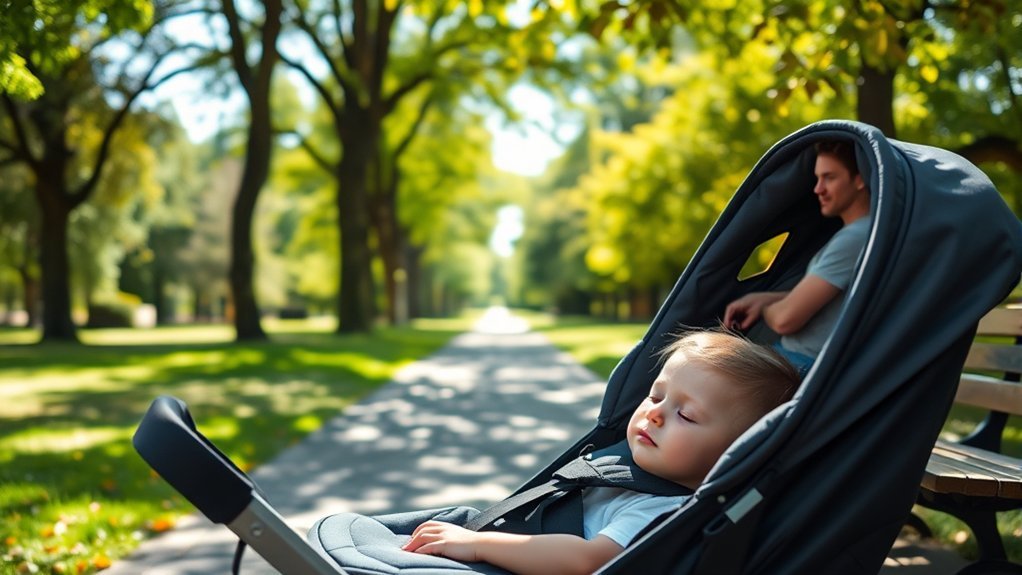
An unplanned stroller doze is common during a walk or outing. The goal is not to panic or pretend the sleep did not happen. Count the sleep, maintain normal stroller safety, and follow infant safe-sleep guidance.
Keep the harness fully secured according to the stroller manual. Do not add loose pillows, blankets, positioning pads, or other items around an infant’s head or face. When you can safely transfer an infant, place them on their back on a firm, flat, non-inclined sleep surface intended for infant sleep.
A deeper stroller recline does not by itself make a stroller seat an approved infant sleep surface. Follow the manufacturer’s instructions for your child’s age and for every recline or bassinet mode.
Safer Steps During an Unexpected Stroller Doze
- Keep your child in view and never leave them unattended.
- Keep the stroller harness fully fastened as instructed by the manufacturer.
- Make sure the child’s face remains visible and unobstructed.
- Avoid loose pillows, blankets, or added padding around an infant.
- Dress for the weather and watch for overheating.
- Use the stroller canopy only as the manufacturer intends.
- Engage the brake when the stroller is stationary.
- Transfer a sleeping infant to an appropriate firm, flat, non-inclined sleep surface as soon as it is safe and practical.
Note: Avoid placing loose fabric around your baby’s face or creating an enclosed space around the stroller. Use the stroller canopy and accessories only as directed by the manufacturer, and keep your child visible.
Babywearing Is Not a Safe-Sleep Substitute
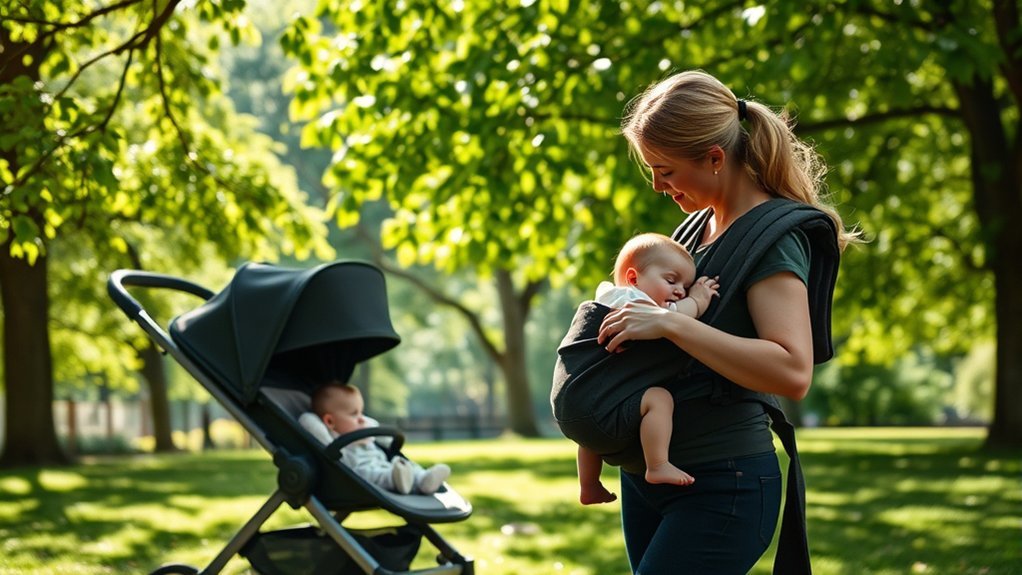
Baby carriers and slings can be useful for carrying an awake baby during daily activities, but the AAP does not recommend infant carriers or slings as routine sleep spaces.
If an infant dozes in a sling or carrier, make sure the baby’s head is up, the face remains visible, and the nose and mouth are clear of fabric or the caregiver’s body. Then move the infant to a firm, flat, non-inclined sleep surface as soon as it is safe and practical.
- Keep the baby’s face visible.
- Keep the nose and mouth unobstructed.
- Do not allow the head to become buried in fabric.
- Follow the carrier manufacturer’s age, weight, and positioning instructions.
- Do not use babywearing as a replacement for a routine infant sleep surface.
If the baby was covered or repositioned for feeding, restore a clear, upright airway position after feeding and continue to monitor the baby until transfer is possible.
Adjusting the Schedule After a Stroller Nap
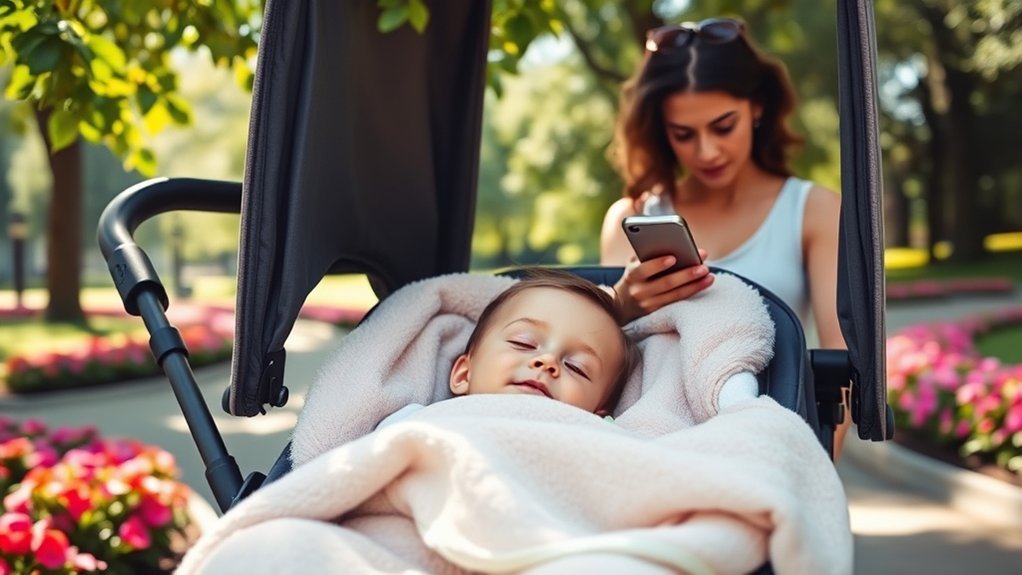
If your child slept in the stroller, include that sleep when planning the rest of the day. Even a short doze can reduce immediate sleep pressure, but there is no universal evidence-based formula that says you should add exactly 10, 30, or 45 minutes to the next wake period.
Instead, consider your child’s age, the amount of sleep they actually got, their usual schedule, and their current sleepy cues. If they still look tired soon after a brief doze, an earlier nap may make sense. If they wake alert after a longer period of sleep, they may stay awake closer to their usual interval.
| What Happened? | How to Count It | What to Do Next |
|---|---|---|
| Brief stroller doze | Count the actual minutes asleep. | Watch sleepy cues; do not automatically add a fixed number of minutes to the next wake period. |
| Longer on-the-go sleep | Include it in the day’s total sleep. | Return to the child’s usual age-appropriate routine based on how rested they appear. |
| Infant is still asleep when you reach your destination | The sleep still counts. | Move the infant to a firm, flat, non-inclined sleep surface as soon as it is safe and practical. |
The schedule does not need to be recalculated to the minute. Track the sleep that happened, follow safe-sleep guidance, and use your child’s normal pattern and behavior to plan the next sleep period.
Creating a Balanced Sleep Routine

A more useful target than an “80/20” stroller rule is your child’s total sleep across 24 hours. The American Academy of Sleep Medicine recommends 12 to 16 hours of sleep per 24 hours for infants ages 4 to 12 months, 11 to 14 hours for children ages 1 to 2 years, and 10 to 13 hours for children ages 3 to 5 years. These totals include naps.
Individual sleep needs still vary, so use those ranges as a broad benchmark rather than a minute-by-minute schedule.
- Count actual naps when estimating total daily sleep.
- For infants, use a firm, flat, non-inclined sleep surface as the routine sleep location.
- Keep a predictable nap and bedtime routine when practical.
- Watch your child’s sleepy cues alongside the clock.
- Avoid rigid stroller-nap percentages or universal wake-window adjustments.
- After an unexpected on-the-go doze, return to the child’s normal routine rather than trying to “cancel out” the nap.
- Discuss persistent sleep difficulties with your child’s pediatrician.
This approach gives you a clearer target: safe sleep for an infant, enough total sleep for the child’s age, and enough flexibility for real family life.
When Should You Transfer a Sleeping Baby Out of the Stroller?
For an infant, transfer to a firm, flat, non-inclined sleep surface as soon as it is safe and practical rather than waiting for a specific stroller-nap time limit.
Pay immediate attention if the baby’s face becomes covered, the head or body slips into an unsafe position, the harness is loose or incorrectly fastened, or the baby appears overheated. If you are concerned about the child’s breathing or responsiveness, seek urgent medical help.
At home or once you reach a suitable destination, avoid leaving an infant parked in the stroller simply to preserve the nap. The sleep already “counts”; transferring is about providing the recommended sleep environment.
Using a Stroller Safely During Outings
A stroller should fit your child’s age, size, and developmental stage and should always be used according to its manufacturer’s instructions. Features such as recline and bassinets may change how the stroller can be used, but they should not be interpreted as automatic approval for routine infant sleep.
- Harness: Use the restraint system supplied with the stroller every time your child rides in it.
- Recline: Use recline positions only within the manufacturer’s age and developmental instructions.
- Bassinet: Confirm whether the specific bassinet is approved for the intended sleep use; do not assume every stroller bassinet is a safe-sleep product.
- Canopy: Use it for shade as directed without placing loose fabric around the child’s face.
- Brakes: Engage them whenever the stroller is stopped.
- Stability: Avoid adding unapproved loads or accessories that may increase tipping risk.
- Age and weight rating: Follow the manufacturer’s limits.
- Recalls: Check current safety notices if the stroller is used, older, or missing its manual.
Frequently Asked Questions
Do stroller naps count toward a baby’s daily sleep?
Yes. If your baby actually sleeps in the stroller, include that time when estimating total daily sleep. However, counting the sleep does not mean a stroller seat is recommended for routine infant sleep.
Is it safe for a baby to sleep in a stroller?
The American Academy of Pediatrics does not recommend strollers and other sitting devices for routine infant sleep, particularly for babies younger than 4 months. If an infant falls asleep in a stroller, move them to a firm, flat, non-inclined sleep surface as soon as it is safe and practical.
How long can a baby sleep in a stroller?
There is no universal number of minutes that makes a stroller seat a safe infant sleep surface. Instead of relying on a 30-, 60-, or 120-minute rule, transfer a sleeping infant to a firm, flat, non-inclined sleep surface as soon as it is safe and practical.
Can a newborn sleep in a stroller?
A newborn may fall asleep during a stroller outing, but a stroller seat should not be used as a routine infant sleep space. Young infants need particular care because their head and neck control is limited. Transfer a sleeping newborn to an appropriate firm, flat, non-inclined sleep surface as soon as safe and practical.
Is a stroller bassinet safe for sleep?
Do not assume every stroller bassinet is approved for routine sleep. Check the manufacturer’s instructions and the applicable infant-sleep requirements for the exact product. A flat appearance alone does not establish that it is an approved sleep surface.
Should I keep my baby buckled if they fall asleep in the stroller?
Yes. Use the stroller harness according to the manufacturer’s instructions whenever your child is in the stroller. Do not loosen or partially unbuckle the harness because the child has fallen asleep.
Should I move my baby after they fall asleep in the stroller?
For an infant, yes when it is safe and practical to do so. The AAP recommends moving a sleeping infant from a stroller or other sitting device to a firm, flat, non-inclined sleep surface.
Can stroller naps affect bedtime?
They can. Any daytime sleep may change how sleepy a child feels later, especially if the sleep happens close to the usual bedtime. Count the stroller sleep and adjust the rest of the day using your child’s age, normal schedule, and sleepy cues rather than a fixed wake-window formula.
What if my baby only falls asleep with stroller motion?
If stroller motion has become the main way your baby falls asleep, start rebuilding a predictable stationary nap routine while continuing to follow infant safe-sleep guidance. You can work on one nap at a time rather than using a rigid percentage of stroller naps. Ask your pediatrician for individualized help if sleep difficulties are persistent.
Conclusion
Stroller naps do count as sleep. If your child slept for 20 minutes during a walk, those 20 minutes were still part of the day’s sleep and may affect when they are ready to sleep again.
For infants, however, that does not make a stroller seat the recommended sleep environment. Follow AAP guidance by moving a sleeping infant to a firm, flat, non-inclined sleep surface as soon as it is safe and practical. Keep the stroller harness secured, never leave a child unattended, and do not rely on unsupported rules such as a two-hour limit or an 80/20 stroller-nap schedule.
Count the sleep that happened, make the safety decision separately, and use your child’s age, total sleep, usual routine, and sleepy cues to plan what comes next.