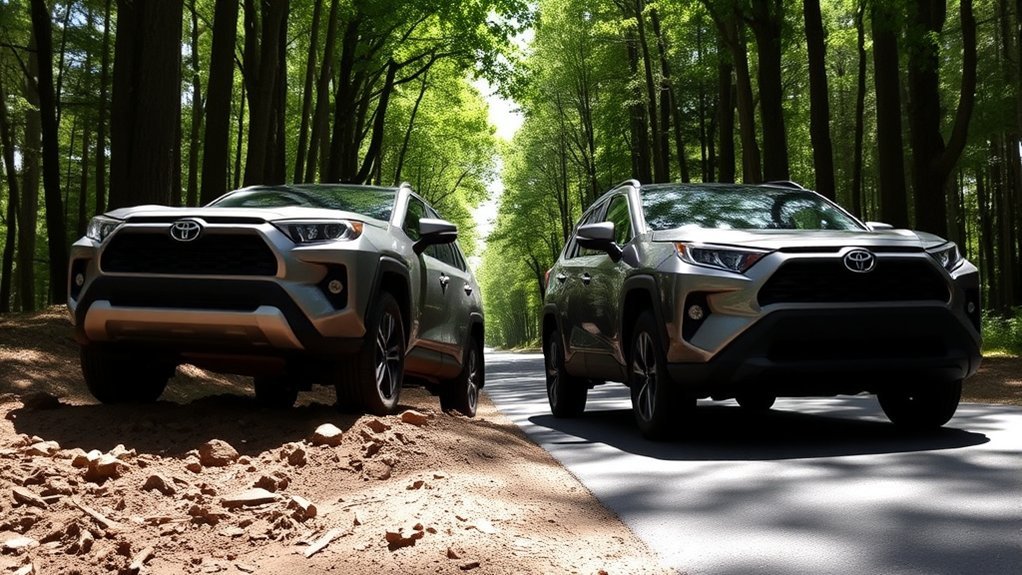
Choosing between a Toyota RAV4 with front-wheel drive and one with all-wheel drive comes down to weather, roads, fuel use, towing needs, and budget. FWD is usually the efficient choice for paved-road driving. AWD adds useful traction when accelerating on snow, rain-soaked roads, gravel, or loose surfaces, but it cannot replace suitable tires or careful driving.
Quick Answer
Choose RAV4 FWD if you mainly drive on paved roads in a mild climate and want the best available fuel economy. Choose AWD if you regularly face snow, steep wet roads, gravel, or slippery launches. Compare the exact model year and trim because availability, mileage, power, and towing ratings vary.
Key Takeaways
- FWD powers the front wheels and is usually less expensive and more fuel-efficient.
- AWD can improve acceleration and stability when traction is limited, but it does not shorten braking distances by itself.
- For 2026, the U.S. RAV4 lineup is fully electrified. Selected hybrid grades offer FWD, while AWD availability depends on grade and every plug-in hybrid uses AWD.
- Towing capacity depends on the model year, powertrain, trim, and equipment, not simply whether the badge says AWD.
- Tire type, tread condition, inflation, and driver behavior often matter more than drivetrain choice in severe winter weather.
Understanding the Key Differences Between RAV4 AWD and FWD
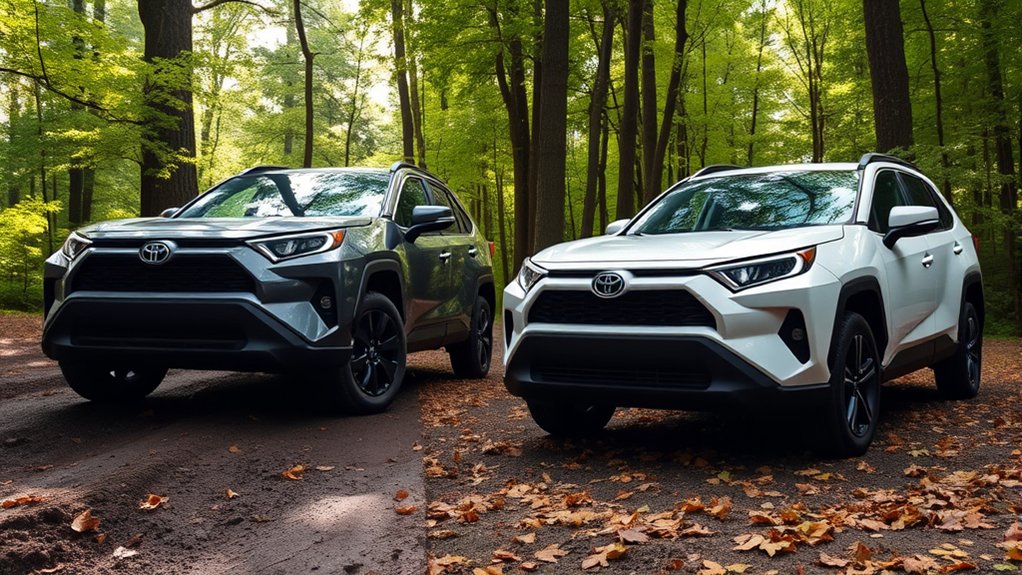
A RAV4 with front-wheel drive sends driving force to the front wheels. This layout is mechanically straightforward and works well for commuting, highway travel, and dry or moderately wet paved roads.
A RAV4 with all-wheel drive can also send driving force to the rear wheels when the vehicle detects that rear assistance may help. The exact hardware differs by model year and powertrain. For example, Toyota’s current electronic on-demand AWD uses a separate rear electric motor rather than a conventional driveshaft-based system.
Note: Drivetrain availability changed for 2026. Toyota moved the U.S. RAV4 to hybrid and plug-in hybrid powertrains. FWD is offered on selected hybrid grades, AWD is available or standard depending on the hybrid grade, and every RAV4 plug-in hybrid has AWD. Older RAV4 gas models follow different trim and drivetrain rules.
| Comparison Point | RAV4 FWD | RAV4 AWD |
|---|---|---|
| Driven wheels | Front wheels | Front wheels plus rear-wheel assistance when the system calls for it |
| Best fit | Paved roads, mild climates, commuting, and fuel-conscious driving | Frequent snow, slick hills, gravel roads, wet launches, and light trail use |
| Fuel economy | Usually higher when you compare equivalent versions | Often lower, although the gap changes by trim, tires, and model year |
| Purchase cost | Usually lower | Usually higher, but trim equipment can account for part of the difference |
| Towing | Use the exact rating for the model year and trim | Some AWD grades tow more, but AWD alone does not determine the rating |
| Maintenance | Follow the model-specific Toyota schedule | Follow the same schedule plus any AWD-related inspections listed for that vehicle |
RAV4 Drivetrain Options by Model Year
Model-year context prevents misleading comparisons. The 2026 Toyota RAV4 lineup uses hybrid or plug-in hybrid power. Hybrid LE, SE, and XLE Premium grades offer FWD or AWD, while Woodland, XSE, and Limited use AWD. Plug-in hybrid grades also use AWD.
The 2025 RAV4 lineup was different. Gas LE, XLE, XLE Premium, and Limited grades offered FWD or AWD, while RAV4 Hybrid grades came with electronic AWD as standard. This is why an older fuel-economy or price comparison should not be presented as a current universal rule.
Key Benefits of AWD in the RAV4
AWD earns its value when the road surface changes often or your route includes steep, loose, or slippery sections. The system can send drive force to the rear wheels when front-wheel traction is limited, helping the vehicle pull away with less wheelspin.
Enhanced Traction Control
Toyota’s electronic AWD system uses wheel-speed information and driver inputs such as steering and accelerator position to control rear-wheel torque. This can help during:
- Starts on snow-covered or rain-soaked roads
- Climbing a slippery driveway or hill
- Driving on gravel, dirt, or uneven campground roads
- Accelerating through a wet intersection
- Maintaining a more settled feel when road grip changes
AWD operation is automatic. You do not need to stop and manually engage a second drivetrain. Some RAV4 versions also include drive modes that change throttle, traction, or braking responses, but those modes do not turn an FWD vehicle into an AWD vehicle.
Improved Weather Performance
AWD can give you a clear traction advantage when accelerating in snow or on a slick incline. It can also reduce the chance of the front tires spinning when you pull away. That benefit is most noticeable in places with regular snowfall, steep wet streets, or poorly cleared roads.
Rain requires a more balanced view. AWD may help put power down, but tread depth, tire pressure, speed, standing water, and road condition determine whether the tires can maintain contact with the pavement. AWD cannot prevent hydroplaning.
Increased Stability and Confidence
Rear-wheel assistance can make the RAV4 feel more composed when traction changes during acceleration or cornering. However, the system works within the grip available from the tires. It does not override the laws of physics, create extra ground clearance, or make an unsuitable road safe.
Warning: AWD mainly helps the vehicle accelerate. It does not automatically improve braking distance or cornering grip on snow and ice. Use four suitable winter tires where conditions require them, slow down, and leave extra stopping space.
When FWD Is the Better Choice for RAV4 Drivers
FWD remains a strong choice when most of your driving happens on maintained pavement. You still get the RAV4’s cabin, safety equipment, and everyday practicality without paying for traction capability you may rarely use.
Cost-Effective Driving Option
FWD is often the lower-cost route, but avoid fixed claims such as “AWD always costs $2,000 more.” The real gap depends on the model year, trim, powertrain, packages, dealer inventory, and local demand. Compare vehicles with the same trim and equipment whenever possible.
For a used RAV4, inspect service records, tire condition, accident history, and current market listings. Regional demand can raise AWD values in snowy areas, while FWD may be easier to find and cheaper in warm climates. A single national resale percentage cannot predict your local result.
Ideal for Urban Environments
FWD suits city driving because paved streets usually provide enough traction for normal acceleration. It may also deliver better fuel economy and a lower purchase price. The lighter, simpler layout can be appealing if your priorities are commuting, errands, highway trips, and predictable ownership costs.
| Urban-Driving Factor | Why FWD Can Work Well |
|---|---|
| Stop-and-go travel | You avoid paying for AWD when roads are normally clear and maintained. |
| Fuel use | FWD usually carries the better official mileage rating within comparable configurations. |
| Parking and handling | Both drivetrains share the same basic vehicle footprint, so drivetrain choice does not materially change parking ease. |
| Mild weather | Quality all-season tires can provide suitable everyday grip where snow and ice are rare. |
Enhanced Fuel Efficiency Benefits
FWD usually uses less energy because it does not need to power rear wheels or carry every AWD component. The exact difference is not a fixed two-to-four MPG across all RAV4s.
For a current example, Toyota lists the 2026 RAV4 Hybrid LE and SE FWD at up to 43 combined MPG in its detailed grade information. AWD ratings vary by grade and equipment, including 41 combined MPG for the Limited and 38 combined MPG for the Woodland Hybrid. These are not direct trim-for-trim comparisons, so check the exact window sticker or use the EPA and U.S. Department of Energy vehicle comparison tool.
Pro Tip: Estimate your own fuel cost instead of relying on a generic five-year savings claim. Divide your annual miles by each vehicle’s combined MPG, then multiply the difference in gallons by your local fuel price.
How AWD and FWD Perform in Different Weather Conditions
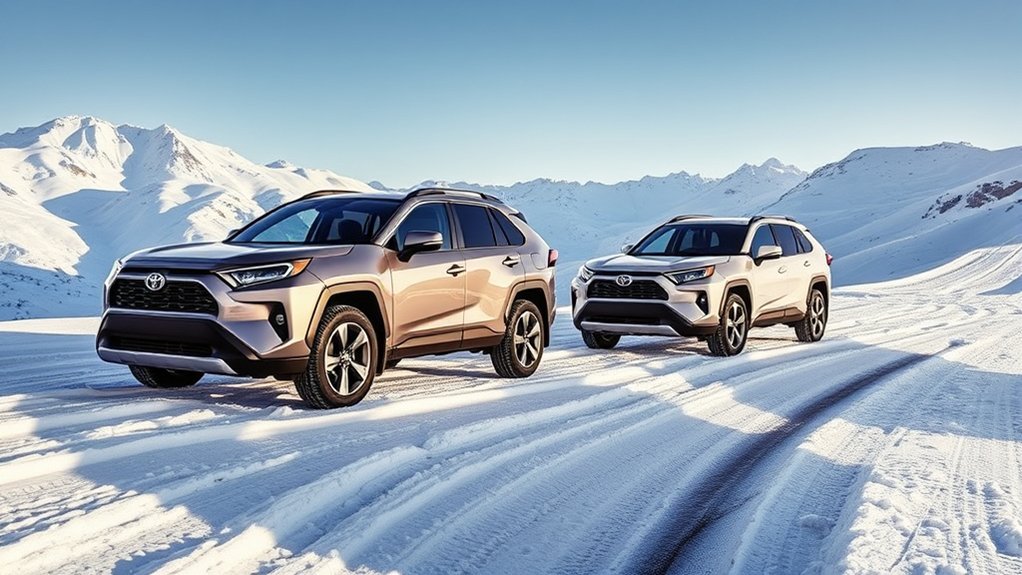
AWD and FWD do not have fixed “excellent” or “poor” ratings for each weather condition. Tire type, tread depth, speed, visibility, road treatment, temperature, and driver input can change the result. Use the table below as practical guidance rather than a guarantee.
| Condition | AWD RAV4 | FWD RAV4 |
|---|---|---|
| Dry pavement | Capable, with little everyday advantage for most drivers | Capable and usually more efficient |
| Heavy rain | May help acceleration, but cannot prevent hydroplaning | Can perform well with good tires, lower speed, and adequate tread |
| Light snow | Usually easier to start and climb on slippery roads | Can be capable with four suitable winter tires and careful driving |
| Deep or unplowed snow | Traction advantage, but ground clearance and tire grip remain limits | More likely to struggle, especially on hills or from a stop |
| Ice | May help launch, but braking and turning still depend on tire grip | Requires the same caution, suitable tires, and extra stopping space |
| Gravel or light trails | Better choice when loose surfaces or climbs are common | Suitable for maintained access roads when conditions are dry and firm |
AWD helps you get moving, but the tires provide the grip that lets you stop and turn.
Why Tires Matter as Much as Drivetrain
The National Highway Traffic Safety Administration notes that winter tires are more effective than all-season tires in deep snow. Use the tire size, load rating, speed rating, and inflation pressure specified for your RAV4. The driver’s door-jamb placard and the owner’s manual are the correct references.
When winter tires are appropriate, install a matched set of four. Keep tread wear reasonably even on AWD vehicles and rotate tires according to the maintenance schedule. Mismatched tire sizes or large tread-depth differences can affect handling and may place unnecessary strain on drivetrain components.
Cost Comparison: RAV4 AWD and FWD
A fair ownership comparison includes more than the purchase price. Use the same model year, powertrain, trim, mileage, condition, and major options before deciding that one drivetrain is more expensive.
| Cost Area | What to Compare |
|---|---|
| Purchase price | Compare the same trim and packages. A higher AWD price may also include equipment unavailable on the FWD version. |
| Fuel | Use official combined MPG, your annual mileage, and your local fuel price. |
| Maintenance and repairs | Check the Toyota schedule for the exact vehicle. Do not assume a fixed annual AWD surcharge. |
| Tires | Price a full matched set and account for regular rotations. AWD owners should pay close attention to even wear. |
| Insurance | Request quotes for the actual VINs because trim value, location, and driver profile affect premiums. |
| Resale value | Review local listings and trade-in offers. AWD demand is often stronger in snow regions, but no fixed retention percentage applies everywhere. |
Maintenance Differences
Both versions require routine service such as tire rotations, fluid checks, brake inspections, and other items listed in Toyota’s maintenance guide. AWD models have additional rear-drive hardware, but that does not support a universal claim that they cost a specific amount more every year.
Use the Toyota manuals and warranty portal to find the schedule for your model year. For a used AWD RAV4, investigate warning lights, unusual vibration, binding sensations, fluid leaks, mismatched tires, or service records that show neglected drivetrain inspections.
Towing Capacity Is Trim-Specific
Do not choose AWD solely because you assume every AWD RAV4 tows more. For the 2026 U.S. lineup, Toyota states that all FWD models and the LE AWD can tow up to 1,750 pounds, while selected AWD grades can tow up to 3,500 pounds. The vehicle’s certification label, owner’s manual, hitch rating, trailer brakes, passenger load, and cargo weight still control what you can tow safely.
Choosing the Right Drivetrain for Your Lifestyle
Choose based on the hardest conditions you face regularly, not a rare scenario that may never occur. AWD is easier to justify when snow, steep wet roads, loose surfaces, or towing are routine. FWD makes more sense when roads are maintained, winters are mild, and fuel economy and upfront cost matter most.
| Your Situation | Better Starting Point |
|---|---|
| Mostly city and highway driving in a warm or mild climate | FWD |
| Regular snow, icy hills, or unplowed roads | AWD plus suitable winter tires |
| Frequent gravel roads, campsites, or light trails | AWD |
| Lowest purchase and fuel cost are the priority | FWD |
| You need to tow | Choose by the exact tow rating, not drivetrain alone |
Buying Checklist
- Confirm the model year, powertrain, trim, and actual drivetrain.
- Compare official fuel-economy ratings for the exact configurations.
- Check the owner’s manual for towing and maintenance requirements.
- Inspect tire size, tread depth, brand matching, and inflation.
- Review service records and scan for drivetrain warning lights on a used vehicle.
- Test-drive both versions on roads similar to your normal route.
- Get insurance quotes and calculate fuel cost using your own annual mileage.
Related Guides
Frequently Asked Questions
Does the RAV4 AWD consume more fuel than the FWD version?
Usually, yes, when you compare similar configurations. The size of the difference varies by model year, trim, tires, and powertrain. Use the EPA rating or window sticker for the exact vehicles rather than applying one MPG gap to every RAV4.
Can I switch between AWD and FWD while driving?
You do not manually convert an AWD RAV4 into a separate FWD vehicle. The AWD system controls rear-wheel assistance automatically. Drive modes may change vehicle responses, but they do not add AWD to an FWD model.
How does towing capacity differ between RAV4 AWD and FWD?
Towing capacity depends on model year, powertrain, trim, cooling, hitch equipment, and drivetrain. In the 2026 U.S. lineup, all FWD models and the LE AWD are rated up to 1,750 pounds, while selected AWD grades are rated up to 3,500 pounds. Always confirm the exact vehicle’s manual and labels.
Are there specific tires recommended for a RAV4 AWD?
Use tires that match the size, load rating, speed rating, and pressure specified on the driver’s door-jamb placard and in the owner’s manual. Use four matching winter tires when local conditions require them, and keep tread wear reasonably even across all four positions.
What warning signs can point to an AWD-system problem?
Watch for an AWD warning message, persistent vibration, unusual grinding or whining, fluid leaks, binding during tight turns, or uneven tire sizes and wear. These symptoms have several possible causes, so a qualified technician should diagnose the vehicle before parts are replaced.
Is RAV4 AWD worth it for rain?
It can be worthwhile if your area has steep wet roads or frequent traction problems. For ordinary rain on maintained streets, good tires, safe speed, and adequate tread are more important. AWD cannot prevent hydroplaning or make worn tires safe.
Is FWD with winter tires better than AWD with all-season tires?
For braking and cornering on snow or ice, suitable winter tires can provide a major advantage because the tires create the available grip. AWD still helps acceleration, so the strongest winter setup is AWD with four appropriate winter tires.
Conclusion
The better RAV4 drivetrain is the one that matches your real roads. FWD is the practical choice for mild climates, maintained pavement, and drivers focused on fuel economy and purchase cost. AWD is worth considering when snow, slick hills, gravel, light trails, or higher trim-specific towing capability are part of normal use. Whichever you choose, verify the exact model-year specifications and invest in the right tires.
Sources
- Toyota USA Newsroom: 2026 RAV4 specifications and drivetrain availability — current powertrains, grades, MPG, AWD operation, and towing ratings.
- Toyota USA Newsroom: 2025 Toyota RAV4 — prior-generation gas, hybrid, FWD, and AWD availability.
- EPA and U.S. Department of Energy: Find and Compare Cars — official model-year fuel-economy comparisons.
- NHTSA TireWise — tire selection, ratings, and winter-tire guidance.
- Michelin: AWD and winter-tire safety — the limits of AWD for braking and cornering.
- Toyota Manuals and Warranties — model-specific owner’s manuals and maintenance guides.
