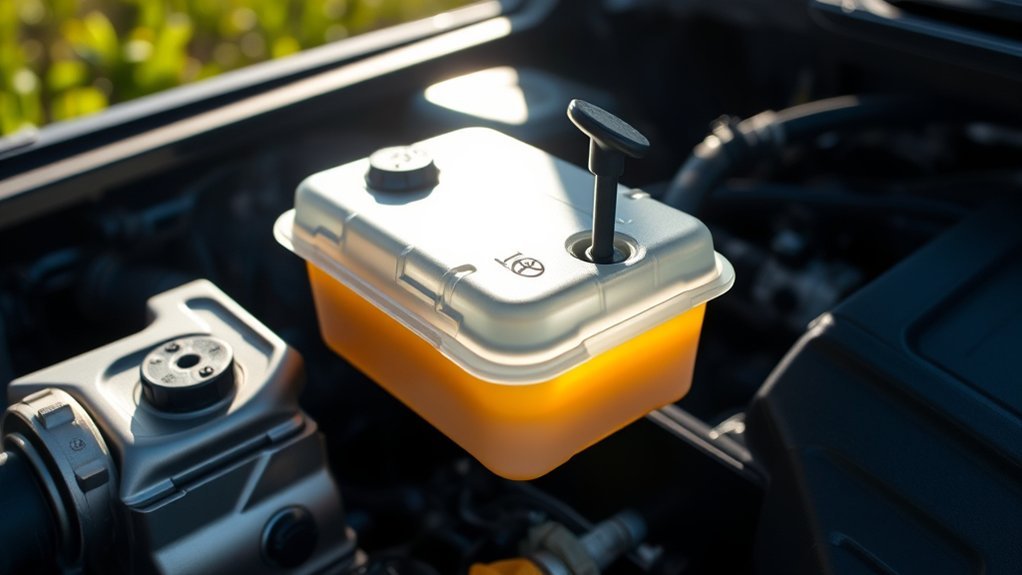
Checking the brake fluid in your Toyota RAV4 takes only a few minutes, but the correct procedure depends on the model year and powertrain. You normally check the fluid through the translucent reservoir without opening it. A low level may reflect brake-pad wear, but a sudden or repeated drop can point to a leak that needs immediate attention.
Quick Answer
Park your RAV4 on level ground, locate the translucent brake-fluid reservoir on the master cylinder, and confirm that the fluid sits between the MIN and MAX marks. Do not automatically top it off. Investigate worn brake pads or leaks first, and use only the fluid specification printed on the cap or listed in your exact owner’s manual.
Key Takeaways
- Check the level through the reservoir wall before removing the cap.
- The fluid should remain between the MIN and MAX marks when the RAV4 is parked on level ground.
- A slight level change can occur as brake pads wear, but rapid or repeated loss may indicate a leak.
- Use only the brake-fluid specification shown on your reservoir cap or in the owner’s manual for your exact model year.
- Do not drive if the reservoir is empty, the brake pedal feels soft, a visible leak is present, or the red brake warning light remains on.
At a Glance
| Time Required | 5 to 10 minutes for a visual check |
| Difficulty | Easy for inspection; professional diagnosis is recommended for leaks or pedal problems |
| Tools Needed | Owner’s manual, flashlight, lint-free cloth, protective gloves, and the specified sealed brake fluid only if addition is appropriate |
| Cost | No cost for a visual inspection; fluid, testing, and repair costs vary |
Warning: Do not drive your RAV4 if the brake-fluid reservoir is empty, you see an active leak, the brake pedal sinks or feels unusually soft, braking ability has changed, or the red brake warning light stays on after the parking brake is released. Arrange professional inspection or towing.
Why Checking Brake Fluid Is Essential for Your Toyota RAV4
Brake fluid transfers force from the brake pedal through the hydraulic system. The system relies on clean fluid, a sealed reservoir, sound brake lines, and leak-free components to provide consistent braking.
Checking the level can help you notice a change before it becomes more serious. A gradual, small drop may occur as disc-brake pads wear and the caliper pistons extend. A sudden drop, an empty reservoir, or repeated need for fluid is not normal and may indicate leakage.
Brake fluid should remain inside a sealed hydraulic system. A noticeable or continuing loss deserves inspection, not repeated topping off.
Toyota’s maintenance guidance includes regular inspection of brake-fluid level and condition. Check the Toyota manual portal for instructions that apply to your model year, engine, hybrid system, and market.
Hybrid and plug-in hybrid RAV4 models use regenerative braking, but they still depend on hydraulic friction brakes. Their brake fluid must be checked and maintained according to the applicable Toyota documentation.
Before You Check the Brake Fluid
Choose a safe, well-lit location and prepare the vehicle before opening the hood.
- Park on firm, level ground.
- Shift into Park and set the parking brake.
- Turn the vehicle off and allow hot engine-bay parts to cool.
- Keep dirt, water, oil, and cleaners away from the reservoir.
- Wear gloves and protect nearby painted surfaces.
- Keep children and pets away from the work area.
- Have the owner’s manual available for the exact fluid specification.
Note: Reservoir position, cap design, level markings, and brake-fluid specification can differ by RAV4 generation and market. The cap and model-specific owner’s manual take priority over general advice.
How to Locate the Brake Fluid Reservoir in Your RAV4
Open the hood and look toward the rear of the engine compartment, close to the firewall. The brake-fluid reservoir is mounted on or connected to the brake master cylinder. On many left-hand-drive RAV4 models, it sits toward the driver’s side, but the exact position can vary.
The reservoir is usually a small, translucent plastic container with a dark cap and brake-system symbol. The side normally has MIN and MAX level marks. Do not confuse it with the larger coolant expansion tank or the windshield-washer reservoir.
Use the maintenance diagram in your owner’s manual when the reservoir is hidden by covers or difficult to identify. Do not remove unfamiliar covers or disconnect electrical parts simply to reach it.
Pro Tip: Shine a flashlight through the side or behind the translucent reservoir. This often makes the fluid line easier to see without opening the cap.
How to Check Toyota RAV4 Brake Fluid Step by Step
- Confirm that the RAV4 is level. A slope can make the fluid appear higher on one side of the reservoir.
- Find the reservoir. Confirm its identity through the owner’s manual or the brake symbol on its cap.
- Clean the exterior. Wipe dust from the reservoir and cap with a clean, lint-free cloth.
- Read the fluid line. Look through the reservoir wall and compare the level with the MIN and MAX marks.
- Inspect the surrounding area. Look for wetness around the cap, master cylinder, lines, hoses, wheels, and ground beneath the vehicle.
- Check for other symptoms. Note any warning light, soft pedal, longer stopping distance, pulling, or unusual pedal travel.
- Leave the cap closed unless necessary. Opening the reservoir increases the chance of moisture or dirt entering the system.
Brake Fluid Levels: MAX vs. MIN
A normal reading falls between the two marks. The level does not need to remain exactly at MAX throughout the life of the brake pads.
- At or near MAX: Usually normal, especially after brake service or with less pad wear.
- Between MAX and MIN: Often acceptable, but monitor the level and consider pad condition.
- At or below MIN: Inspect for worn brake friction material and hydraulic leaks before adding fluid.
- Empty or nearly empty: Do not drive. The system may contain a serious leak or air.
- Level dropping repeatedly: Arrange a complete brake-system inspection.
Do not overfill the reservoir. When worn brake pads are replaced, the caliper pistons are pushed back and the fluid level can rise. An overfilled reservoir may spill during that service.
Urgent Steps to Take When Brake Fluid Is Low
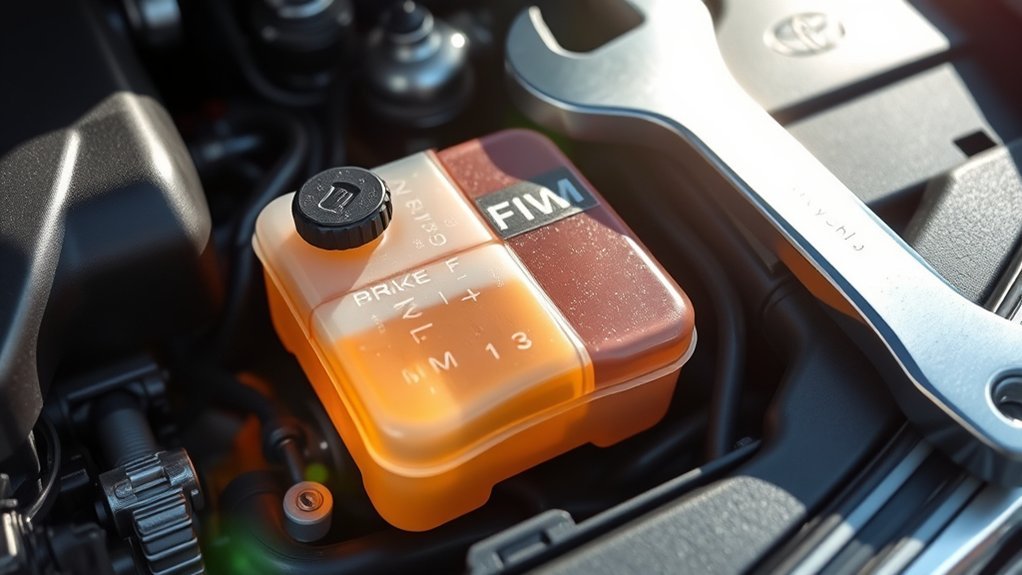
Start by deciding whether the vehicle is safe to move. A minor reading near MIN without other symptoms is different from an empty reservoir, visible leak, warning light, or soft pedal.
1. Check for a Leak
Look for fresh wetness under the vehicle, behind each wheel, around brake hoses and lines, beneath the master cylinder, and around the reservoir. Brake fluid may appear clear, pale yellow, amber, or darker depending on age and contamination.
Do not rely on color alone when identifying a leak. Other automotive fluids can look similar. A qualified technician can trace the source and pressure-test the system.
2. Check Brake-Pad Condition
Pad wear can cause the reservoir level to move downward as the caliper pistons extend. This does not mean every low reading is harmless. Pad thickness and leakage must be evaluated together.
If you cannot inspect the pads safely without lifting the vehicle, arrange a professional brake inspection rather than crawling underneath an unsupported vehicle.
3. Evaluate the Pedal and Warning Lights
Stop using the RAV4 if the pedal sinks, feels spongy, requires pumping, or has changed noticeably. A red brake-system warning light that remains on after the parking brake is fully released also requires immediate attention.
4. Decide Whether Fluid Should Be Added
Addition may be appropriate after the cause of the low level has been identified and the system is otherwise safe. Adding fluid is not a repair for a leak, worn component, trapped air, or hydraulic failure.
How to Add Brake Fluid to Your Toyota RAV4
Only add fluid when you have confirmed the correct specification and determined that topping off is appropriate. Use a new or recently opened, tightly sealed container. Never use fluid from an unmarked bottle.
- Read the specification on the reservoir cap and confirm it in the owner’s manual.
- Place clean absorbent material around the reservoir to protect painted parts.
- Wipe the cap and surrounding area with a lint-free cloth.
- Release or turn the cap according to its design. Do not force it.
- Inspect the cap seal for dirt, swelling, cracking, or damage.
- Add a small amount of the specified fluid without allowing the container or funnel to touch dirty surfaces.
- Stop at the specified mark. Do not fill above MAX.
- Install the cap securely using the cap’s designed locking method.
- Remove protective materials and inspect for spills.
- Recheck the level and arrange brake inspection when the original cause remains uncertain.
Warning: Brake fluid can damage painted surfaces and irritate skin or eyes. Blot a paint spill immediately, rinse the area with plenty of water, and follow the product label. For eye or skin exposure, rinse promptly. Contact Poison Control after ingestion or when symptoms persist.
Choosing the Right Brake Fluid: DOT 3 vs. DOT 4
Do not choose brake fluid by assuming that a higher DOT number is automatically better. Use the exact specification printed on the reservoir cap or listed in the owner’s manual for your RAV4.
Many Toyota RAV4 manuals specify SAE J1703 or FMVSS No. 116 DOT 3 fluid. Requirements may differ by model year or market, so confirm your vehicle before buying or adding anything.
| Fluid Grade | Minimum Dry Boiling Point | Minimum Wet Boiling Point | RAV4 Guidance |
|---|---|---|---|
| DOT 3 | 205°C / 401°F | 140°C / 284°F | Commonly specified in Toyota RAV4 manuals; verify your exact vehicle |
| DOT 4 | 230°C / 446°F | 155°C / 311°F | Use only when the cap, owner’s manual, or Toyota service information permits it |
| DOT 5 | 260°C / 500°F | 180°C / 356°F | Silicone-based; do not substitute it in a RAV4 unless Toyota specifically requires it |
| DOT 5.1 | 260°C / 500°F | 180°C / 356°F | Non-silicone, but not an automatic substitute; use only if specifically approved |
These figures are federal minimum performance requirements under Federal Motor Vehicle Safety Standard No. 116. They do not override Toyota’s fluid specification.
Brake fluid absorbs moisture from the air after the container is opened. Keep the bottle tightly closed, store it in its original labeled container, and do not use fluid that may contain water, dirt, petroleum products, or another unknown substance.
Top Causes of Brake Fluid Leaks and Their Risks
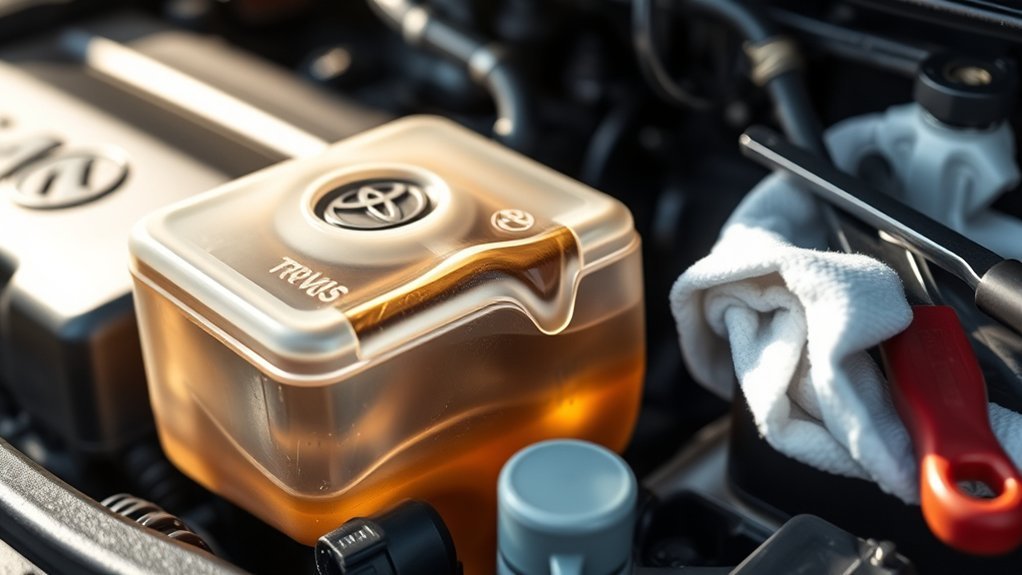
A hydraulic leak can reduce available fluid, allow air into the system, change pedal feel, and reduce braking ability. Leaks may appear only while the pedal is pressed, so a dry parking spot does not rule out a problem.
Worn Brake Lines
Metal brake lines can corrode, especially where road salt and moisture collect. Flexible hoses can crack, chafe, swell, or leak around their fittings.
Brake lines and hoses do not have a universal five-to-seven-year replacement interval. Toyota’s maintenance schedules call for inspections. Replace a line or hose when leakage, corrosion, cracking, swelling, abrasion, impact damage, or another defect is found.
- Inspect exposed lines for rust, wetness, dents, and abrasion.
- Check flexible hoses for cracking, bulges, twisting, and contact with moving parts.
- Inspect fittings and brackets for looseness or corrosion.
- Have questionable lines evaluated before driving.
Damaged Seals
Seals inside calipers, wheel cylinders where fitted, the master cylinder, and the ABS hydraulic assembly can deteriorate or become damaged. External leakage may leave wetness around a component, while some master-cylinder faults can occur internally without an obvious puddle.
Contaminating the system with oil, fuel, solvents, or the wrong hydraulic fluid can damage rubber components. A contaminated system may require more than a simple fluid change, so obtain professional diagnosis.
Faulty Master Cylinder
The master cylinder converts pedal movement into hydraulic pressure. A failing master cylinder can leak externally or allow pressure to bypass internally.
Possible symptoms include:
- A pedal that slowly sinks while steady pressure is applied
- A soft or inconsistent pedal
- Fluid around the master cylinder or brake booster
- A falling level with no obvious wheel-area leak
- A red brake-system warning light
- Reduced or unpredictable braking response
These symptoms require prompt diagnosis. Do not keep driving while relying on repeated fluid additions.
Other Possible Leak Points
Fluid may also escape from caliper seals, wheel cylinders on vehicles equipped with drum brakes, bleeder screws, hose junctions, ABS hydraulic components, or damaged reservoir connections.
A technician may need to remove wheels, clean suspected areas, apply hydraulic pressure, and inspect the system under safe workshop conditions to identify a slow leak.
How to Seal the Brake Fluid Reservoir Properly
The reservoir cap limits contamination and moisture exposure. Clean the cap and surrounding area before opening it, and keep the reservoir exposed for as little time as possible.
Cap designs vary. Some turn into place, while others use tabs, clips, or a flexible diaphragm. Follow the cap markings and owner’s manual rather than forcing it in either direction.
| Step | Action | Reason |
|---|---|---|
| Clean the area | Use a clean, lint-free cloth around the cap | Keeps dirt out of the hydraulic system |
| Inspect the seal | Check the cap, diaphragm, clips, and sealing surface | Finds damage that may prevent proper sealing |
| Install as designed | Turn, press, or clip the cap into its normal locked position | Prevents forcing or damaging the cap |
| Final inspection | Confirm the cap sits evenly and the area is dry | Helps catch an incomplete seal or spill |
Checking, Topping Off, Bleeding, and Flushing Are Different Jobs
- Checking means viewing the level and condition through the reservoir and looking for problems.
- Topping off means adding a small amount of the approved fluid after the reason for the low level has been evaluated.
- Bleeding removes air from the hydraulic system after certain repairs or when air has entered.
- Flushing or replacement exchanges old fluid throughout the system using the correct bleeding sequence and service procedure.
Topping off does not replace old fluid in the brake lines, calipers, or ABS hydraulic unit. It also does not remove air. Modern ABS and electronically controlled brake systems may require Toyota service procedures or scan-tool functions during bleeding.
How to Know When to Replace Your Brake Fluid
Toyota’s U.S. maintenance schedule calls for regular inspection of brake-fluid level and condition. It does not give every RAV4 a universal one-to-two-year replacement interval. Follow the manual and maintenance guide for your exact model.
Replacement or professional testing may be appropriate when:
- Your Toyota maintenance schedule calls for it.
- A qualified inspection finds excessive moisture or reduced boiling performance.
- The fluid contains visible particles, cloudiness, separation, or an unknown contaminant.
- The hydraulic system has been opened for a repair that requires bleeding.
- The wrong fluid or another substance may have entered the reservoir.
- A brake component has failed in a way that contaminates the system.
- A service procedure directs the technician to replace or flush the fluid.
Darkening can occur as fluid ages, but appearance alone does not measure moisture content or prove that the fluid has reached a replacement limit. Avoid relying only on color or an unverified consumer tester.
The 2025 Toyota RAV4 Warranty and Maintenance Guide lists routine inspection of fluid levels and condition. Older and newer model years may have different documentation, so use the guide matched to your VIN and model year.
How to Handle Spills, Exposure, and Disposal
Spill on Paint
Blot the spill immediately without spreading it. Rinse the affected area thoroughly with water and follow the fluid manufacturer’s label. Do not leave a brake-fluid-soaked cloth on painted or plastic surfaces.
Skin or Eye Contact
Remove contaminated clothing and rinse exposed skin with plenty of running water. Flush an affected eye promptly with room-temperature water. Seek medical or poison-control advice when irritation continues or exposure is significant.
Swallowed Brake Fluid
Do not wait for symptoms or induce vomiting unless a medical professional directs you to do so. In the United States, use the Poison Control brake-fluid guidance or call 1-800-222-1222. Call emergency services if the person collapses, has trouble breathing, experiences a seizure, or cannot be awakened.
Used Fluid and Waste
Do not pour brake fluid into a sink, toilet, storm drain, onto the ground, or into a used-oil container unless a local facility specifically accepts that mixture. Keep it in a compatible, sealed, clearly labeled container.
Follow local household hazardous-waste instructions. The U.S. Environmental Protection Agency advises households to use local collection or disposal programs for products containing potentially hazardous substances.
Related Guides
Frequently Asked Questions
How often should I check my Toyota RAV4 brake fluid?
Inspect the level during routine vehicle checks and at scheduled maintenance visits. Toyota’s U.S. maintenance guidance includes regular inspection of fluid levels and brake-fluid condition. Check sooner when a warning light appears, pedal feel changes, or you notice wetness around a brake component.
Does a Toyota RAV4 use DOT 3 or DOT 4 brake fluid?
Many RAV4 owner’s manuals specify SAE J1703 or FMVSS No. 116 DOT 3, but you should verify the reservoir cap and manual for your exact model year and market. Do not substitute DOT 4, DOT 5, or DOT 5.1 solely because it has a higher grade number.
Can I add brake fluid without checking the brake pads?
You should evaluate pad wear and possible leaks first. The level can fall slightly as pads wear, and adding fluid to MAX may cause an overflow when new pads are installed and the caliper pistons are pushed back.
What are the signs of contaminated brake fluid?
Cloudiness, particles, separation, an unusual substance in the reservoir, or known contact with oil, fuel, water, or the wrong fluid requires professional evaluation. Dark color can be a warning sign, but color alone does not measure moisture content or boiling performance.
Can low brake fluid affect braking performance?
A seriously low or empty reservoir can allow air into the hydraulic system and may accompany a leak. This can change pedal feel and reduce braking ability. Stop driving when the pedal is soft, the reservoir is empty, a leak is visible, or the red brake warning light stays on.
Can I drive when the brake fluid is below MIN?
Do not assume the vehicle is safe. Check for a warning light, pedal changes, leakage, and worn brake parts. Do not drive if the reservoir is empty or nearly empty, a leak is visible, the pedal feels abnormal, or braking performance has changed.
What should I do if I accidentally spill brake fluid?
Blot it promptly, protect yourself from contact, and rinse painted surfaces with plenty of water according to the product label. Do not wash a large spill into a storm drain. Collect contaminated absorbent material and follow local hazardous-waste rules.
Conclusion
Checking Toyota RAV4 brake fluid is mainly a visual inspection. Park on level ground, identify the correct reservoir, and confirm that the level remains between MIN and MAX. Keep the cap closed unless fluid addition is justified.
Do not treat topping off as a repair. A rapid drop, repeated fluid loss, soft pedal, visible leak, empty reservoir, or red brake warning light requires immediate diagnosis. Use only the fluid specification listed for your exact RAV4, and follow Toyota’s model-specific maintenance schedule for testing and replacement.
Sources
- Toyota Manuals and Warranties — model-specific owner’s manuals, instructions, and maintenance documents
- 2025 Toyota RAV4 Warranty and Maintenance Guide — scheduled inspection of fluid levels, brake fluid condition, brake lines, hoses, pads, and discs
- Toyota Genuine Brake Fluid — Toyota guidance to follow the applicable vehicle service manual
- 49 CFR 571.116, Motor Vehicle Brake Fluids — federal DOT fluid categories and minimum performance requirements
- U.S. EPA Household Hazardous Waste Guidance — safe handling and local disposal guidance
- Poison Control Brake-Fluid Guidance — exposure and first-aid information

1 thought on “How to Check Brake Fluid on a Toyota RAV4: Level, Type and When to Replace”