
For Toyota Tacoma lug nuts, the key specifications are the thread size, lug-seat design, socket size, and wheel-specific torque. Most 1995-2023 Tacomas use M12 x 1.5 studs, while 2024-2026 fourth-generation models use M14 x 1.5. On 2024-2026 trucks, factory aluminum wheels use washer-style wheel nuts, while factory steel wheels use tapered-seat hardware. Aftermarket wheels may require a different seat or shank design, so match the lug nut to the wheel rather than choosing by thread size alone.
Last updated: September 16, 2026
Quick Answer
- Thread size: M14 x 1.5 for 2024-2026 Tacomas; most 1995-2023 Tacomas use M12 x 1.5.
- Socket size: Factory-style Tacoma lug nuts commonly use a 21 mm socket. Verify the actual nut before applying torque, especially on aftermarket hardware.
- 2024-2026 torque: 131 Nm (97 ft-lb) for aluminum wheels or 209 Nm (154 ft-lb) for steel wheels, per the Toyota owner’s manual.
- Earlier torque: Most 2005-2023 U.S.-market Tacomas with factory wheel hardware use 113 Nm (83 ft-lb). Verify early trucks and non-factory wheels in the exact manual or wheel documentation.
- Seat type: On 2024-2026 factory wheels, aluminum-wheel hardware uses a washer/flat-style seat and steel-wheel hardware uses a tapered seat. Aftermarket wheel requirements vary.
- Bolt pattern: 2016-2026 Tacomas use 6×139.7 mm. Earlier Tacoma configurations include exceptions, especially some 2WD models.
- Re-torque: Toyota says to check tightening torque as soon as possible after replacing a tire. For newly installed aftermarket wheels, follow the wheel maker or installer’s specified re-torque interval.
Deal tip: Need the right tools for the job? Our October Prime Day tool deals include the EPAuto torque wrench, a TEKTON socket set, and CRAFTSMAN and GEARWRENCH mechanics tool sets.
2024-2026 Tacoma Lug Nut Thread & Socket Sizes

The 2024-2026 Tacoma uses an M14 x 1.5 wheel-stud thread. Factory-style lug nuts commonly use a 21 mm socket, but replacement and aftermarket lug nuts can use a different hex or spline key, so use the socket specified for the actual hardware.
Wheel material matters on the fourth-generation Tacoma. Toyota specifies different wheel-nut torque values for factory aluminum and steel wheels: 131 Nm (97 ft-lb) for aluminum wheels and 209 Nm (154 ft-lb) for steel wheels. Toyota’s factory aluminum-wheel hardware uses a washer-style contact, while the steel-wheel installation uses a tapered contact.
If you install aftermarket wheels, do not assume a 60-degree conical nut automatically fits. Confirm the wheel manufacturer’s required thread, seat angle or profile, shank design, lug-hole diameter, socket clearance, and thread engagement. Start every nut by hand and stop if it binds before the seat contacts the wheel.
Quick Specs: Thread, Hex Socket, and Torque Numbers
For a 2024-2026 Toyota Tacoma, start with the M14 x 1.5 stud specification, then identify the wheel material and lug-seat design before choosing hardware or applying torque.
Thread Size & Pitch
The 2024-2026 Tacoma uses M14 x 1.5 wheel studs. The 1.5 designation means there is 1.5 mm between adjacent thread peaks.
Thread size alone does not establish wheel compatibility. A lug nut can have the correct M14 x 1.5 thread and still be wrong because its seat, shank, outside diameter, or socket clearance does not match the wheel.
| Attribute | Specification |
|---|---|
| Thread size | M14 x 1.5 |
| Pitch | 1.5 mm |
| Factory aluminum-wheel seat | Washer / flat-style contact |
| Factory steel-wheel seat | Tapered contact |
| Aftermarket wheel seat | Verify with wheel manufacturer; commonly conical but not universal |
| Factory-style hex socket | Commonly 21 mm; verify actual lug nut |
| Torque (aluminum wheels) | 131 Nm (97 ft-lb) |
| Torque (steel wheels) | 209 Nm (154 ft-lb) |
Socket Size & Torque
Factory-style 2024-2026 Tacoma wheel nuts commonly take a 21 mm socket. Aftermarket tuner, spline, locking, or small-diameter lug nuts may require a different socket or dedicated key, so confirm the hardware rather than forcing a loose-fitting socket.
For factory fourth-generation wheel installations, torque to 131 Nm (97 ft-lb) for aluminum wheels or 209 Nm (154 ft-lb) for steel wheels. Most 2005-2023 U.S.-market Tacomas with factory hardware use 113 Nm (83 ft-lb). For earlier models or modified wheel setups, use the exact vehicle or wheel-manufacturer specification.
Use a calibrated torque wrench for the final pass and tighten in a star or crisscross sequence. Do not use a broad torque range as a substitute for the specified value.
Model-Year Thread Differences (M12 vs M14) Explained
The main lug-thread change occurred with the fourth-generation Tacoma. Most 1995-2023 trucks use M12 x 1.5 wheel studs, while 2024-2026 models use M14 x 1.5. Verify early Tacoma configurations individually before ordering replacement hardware.
For 2016-2026 trucks, the 6×139.7 mm bolt pattern remained the same even though the fourth generation changed the stud diameter and hub bore. That means bolt pattern alone does not establish wheel compatibility.
When moving wheels or lug hardware between generations, verify all of the following:
- Stud thread and diameter
- Wheel bolt pattern
- Center-bore diameter
- Lug-hole clearance and seat geometry
- Wheel offset and load rating
Do not reuse M12 lug nuts on M14 studs or force an M14 stud through a wheel whose lug hole was not designed to clear it. You can confirm model-year specifications through the Toyota Tacoma owner’s manual portal.
Torque Spec for Tacoma Lug Nuts: Why It Matters
Correct torque creates the clamping force that holds the wheel securely against the hub. For 2024-2026 Tacomas, Toyota specifies 131 Nm (97 ft-lb) for aluminum wheels and 209 Nm (154 ft-lb) for steel wheels. Most 2005-2023 factory-wheel installations use 113 Nm (83 ft-lb).
For the full tightening procedure, model-year exceptions, and step-by-step torque sequence, see the Toyota Tacoma lug nut torque guide.
Correct Torque Values
Use the specification for the exact model year and wheel configuration rather than choosing a generic range.
| Model Range | Torque Spec |
|---|---|
| 2024-2026 Tacoma (aluminum wheels) | 131 Nm / 97 ft-lb |
| 2024-2026 Tacoma (steel wheels) | 209 Nm / 154 ft-lb |
| Most 2005-2023 factory-wheel installations | 113 Nm / 83 ft-lb |
| Early or modified configurations | Verify exact manual or wheel documentation |
Effects Of Over/Under
Incorrect wheel-nut torque can create unsafe clamping. Under-torquing can allow wheel movement or loosening. Over-torquing can stretch or damage studs, damage threads, or distort wheel and brake mating surfaces.
Uniform torque matters because each nut shares the job of clamping the wheel against the hub. If one nut is substantially tighter or looser than the others, the load is not distributed as intended.
Proper Torquing Procedure
Hand-start every lug nut so it threads smoothly, snug the wheel gradually in a star or crisscross pattern, then use a calibrated torque wrench for the final value.
Toyota specifically warns against applying oil or grease to wheel bolts or wheel nuts because lubrication can result in excessive tightening and component damage. After replacing a tire, Toyota advises checking the tightening torque as soon as possible.
For newly installed aftermarket wheels, the wheel manufacturer or installer may specify an additional re-torque interval. Tire Rack, for example, recommends rechecking new wheel installations after the first 50-100 miles. Follow the instruction that applies to your wheel and hardware combination rather than treating that distance as a universal Toyota requirement.
Flat Vs 60-Degree Lug Seat: Which Does Your Wheel Need?
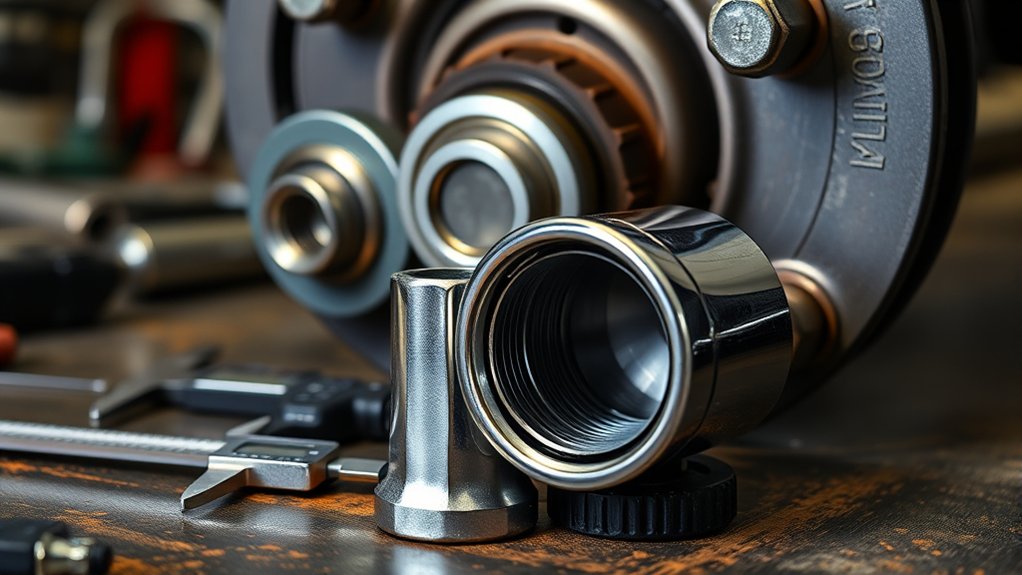
Your Tacoma’s required lug seat is determined by the wheel, not simply by whether the wheel is “OEM” or “aftermarket.”
On 2024-2026 factory applications, Toyota aluminum wheels use wheel nuts with a washer-style contact, while factory steel wheels use a tapered contact. Many aftermarket wheels use a 60-degree conical seat, but that is not universal.
- Match the lug nut’s seat profile to the wheel’s machined lug seat.
- Do not use a flat/washer-style nut on a wheel designed for a conical seat.
- Do not assume all factory wheels use the same seat just because they fit the same Tacoma.
- Confirm the wheel manufacturer’s required lug hardware before ordering replacement nuts.
The correct seat allows the nut to clamp against the surface the wheel was designed to use. A mismatched seat may make the nut appear tight while providing incorrect contact and clamping.
How to Check Your Wheel’s Seat Type and Thread Size
To verify your Tacoma’s wheel seat type and thread size, first identify the truck’s model year and the exact wheel installed. A 2024-2026 Tacoma uses M14 x 1.5 studs, while most older Tacomas use M12 x 1.5.
Remove one lug nut and inspect the surface that contacts the wheel. A washer-style nut has a broad flat washer/contact face. A conical nut has a tapered seating surface. Factory steel and aluminum wheels may use different hardware even on the same model year.
Also confirm:
- The nut threads smoothly onto the stud by hand.
- The seat profile matches the wheel.
- The shank, if present, fits the wheel’s lug hole without binding.
- The socket or key fits fully without excessive play.
- The wheel manufacturer approves the required thread engagement.
If any part of the hardware is uncertain, have a qualified tire or wheel shop identify the wheel and lug design before installation.
Choosing Lug Nuts: OEM vs Aftermarket Wheels
For a 2024-2026 Tacoma, replacement lug nuts must match the truck’s M14 x 1.5 studs and the wheel’s actual seat and shank design.
For factory aluminum wheels, use hardware designed for the Toyota washer-style seat. Factory steel wheels require their specified tapered-seat hardware. Aftermarket wheels commonly use conical nuts, but always verify the wheel maker’s specification before buying.
- Confirm M14 x 1.5 thread on 2024-2026 trucks.
- Match the seat profile to the exact wheel.
- Check shank diameter and depth where the wheel uses a shank-style nut.
- Confirm socket clearance inside narrow aftermarket lug wells.
- Use corrosion-resistant, vehicle-grade hardware from a reputable manufacturer.
A lug nut is compatible only when the thread, seat, dimensions, and wheel design all agree.
Common Mistakes and Signs of Wrong Lug Nuts
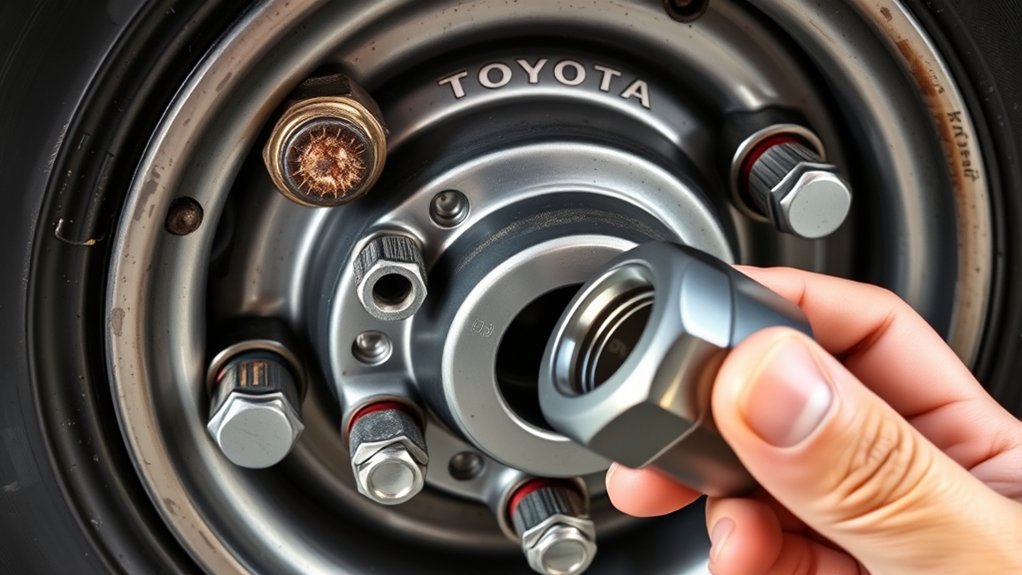
Common mistakes include using the wrong thread, choosing a nut with the wrong seat, forcing hardware that does not turn freely by hand, or assuming that wheels with the same bolt pattern automatically use the same lug hardware.
Incorrect Thread Fit
A 2024-2026 Tacoma requires M14 x 1.5 wheel-nut threads. If a nut binds after only a partial turn, feels unusually loose, or will not thread smoothly by hand, stop rather than forcing it with a wrench or impact tool.
- Resistance or binding while hand-threading
- Visible cross-threading or damaged thread crests
- A lug nut that bottoms out before its seat contacts the wheel
- A seat profile that does not match the wheel
Also inspect the nut’s shank and outside diameter. Correct thread size does not guarantee that the nut fits through the wheel’s lug hole or contacts the seat correctly.
Damaged Wheel Studs
Wrong or cross-threaded lug nuts can deform stud threads and make future removal difficult. Inspect studs for bent sections, flattened or mushroomed threads, heavy corrosion, or obvious stretching.
Do not repair a questionable fit by forcing a lug nut farther onto the stud. Replace damaged hardware and determine why the mismatch occurred before reinstalling the wheel.
Uneven Torque Signs
After installation, check that every lug nut is seated uniformly and that the wheel sits flush against the hub. Stop and inspect the installation if a lug nut repeatedly loses torque, does not seat like the others, or the wheel develops new vibration immediately after wheel work.
- Visible gap between the nut seat and wheel
- Rounded or damaged hex surfaces
- A flat nut installed in a conical seat, or the reverse
- A wheel that does not sit flush against the hub face
Hub Bore Changes on the 2024+ Tacoma
The 2024-2026 Tacoma changed from the previous-generation 106.1 mm hub bore to a 95.1 mm hub bore while retaining a 6×139.7 mm bolt pattern on fourth-generation trucks. The newer truck also uses larger M14 x 1.5 studs.
Because several fitment dimensions changed at once, an older Tacoma or 4Runner wheel should not be treated as a direct fit merely because its six lug holes share the same bolt circle. Verify the wheel’s center bore, lug-hole diameter, seat geometry, offset, and load rating.
If a wheel has a 106.1 mm center bore and otherwise fits a 95.1 mm fourth-generation hub, a correctly sized 106.1 mm outer-diameter to 95.1 mm inner-diameter hub-centric ring can address the center-bore difference. A ring does not solve an undersized lug hole or incompatible lug-seat design.
For more wheel-interchange detail, see the Toyota Tacoma wheel bolt pattern and fitment guide.
Recommended Lug Nuts & Wheel Locks for Tacomas
Choose replacement lug nuts or wheel locks by specification rather than by brand name alone. For a 2024-2026 Tacoma, the starting requirement is M14 x 1.5, but the wheel still determines the required seat, shank, outside diameter, and socket or key.
Some lug kits made for 2016-2023 Tacomas use M12 x 1.5 threads and therefore cannot be installed on fourth-generation M14 studs. Do not reuse an older Tacoma lug kit unless its manufacturer explicitly lists the newer truck and your exact wheel.
For wheel locks, verify that the locking nut uses the same seat geometry and effective dimensions as the other wheel nuts so all positions clamp the wheel correctly.
Installation Checklist: Torque Pattern, Re-Torque, Corrosion Care
Once you have confirmed the correct thread and seat, install the wheel with clean mating surfaces and hand-start every lug nut before using powered or long-handled tools.
- Inspect wheel studs and nut threads for cross-threading, deformation, or heavy corrosion.
- Make sure the wheel sits flush against the hub before final tightening.
- Snug the nuts gradually in a star or crisscross pattern.
- Use a calibrated torque wrench for the final pass.
- For 2024-2026 factory applications, use 97 ft-lb for aluminum wheels or 154 ft-lb for steel wheels.
- Do not apply oil or grease to the wheel bolts or wheel nuts; Toyota warns this can cause excessive tightening and component damage.
- After a tire replacement, check tightening torque as soon as possible. For new aftermarket wheels, follow the wheel maker or installer’s specified re-torque interval.
Correct hardware, clean seating surfaces, and wheel-specific torque are more important than simply buying a lug nut with the right thread diameter.
Related Guides
Frequently Asked Questions
What Size Thread Is a Tacoma Lug Nut?
Most 1995-2023 Toyota Tacomas use M12 x 1.5 wheel studs, while 2024-2026 fourth-generation Tacomas use M14 x 1.5. Verify early configurations individually before ordering hardware.
Is 1/2 or 3/8 Better for Lug Nuts?
A 1/2-inch-drive torque wrench is generally the more practical choice for Tacoma wheel work because its normal working range is well suited to wheel-nut torque. A 3/8-inch wrench is acceptable only if its rated range and accuracy comfortably cover the required specification.
What Thread Are Toyota Lug Nuts?
There is no single Toyota lug-nut thread for every vehicle. For the Tacoma, most trucks through 2023 use M12 x 1.5, while 2024-2026 models use M14 x 1.5. Always identify the vehicle and wheel before buying replacement hardware.
What Is the Thread on the Lug Nuts on a 2018 Tacoma?
A 2018 Toyota Tacoma uses M12 x 1.5 wheel-stud threads. Match the replacement nut’s seat and dimensions to the wheel rather than choosing by thread size alone.
What Is the Correct Torque for 2024-2026 Tacoma Lug Nuts?
Toyota specifies 131 Nm (97 ft-lb) for aluminum wheels and 209 Nm (154 ft-lb) for steel wheels on the 2024-2026 Tacoma. Use the specification for your actual wheel type and keep the threads free of oil or grease.
Do Steel and Aluminum 2024-2026 Tacoma Wheels Use the Same Lug Nuts?
Do not assume they do. Toyota’s factory aluminum-wheel installation uses washer-style wheel-nut contact, while the factory steel-wheel installation uses a tapered contact. The torque specification also differs: 97 ft-lb for aluminum and 154 ft-lb for steel.
Can Older Tacoma Wheels Fit a 2024-2026 Tacoma?
Some older six-lug wheels share the 6×139.7 mm bolt pattern, but that does not guarantee direct fitment. The fourth-generation Tacoma uses a smaller 95.1 mm hub bore and larger M14 studs, so verify center bore, lug-hole clearance, seat type, offset, and load rating before installation.
Conclusion
For Toyota Tacoma lug nuts, match the model-year thread and the wheel’s actual seat design
