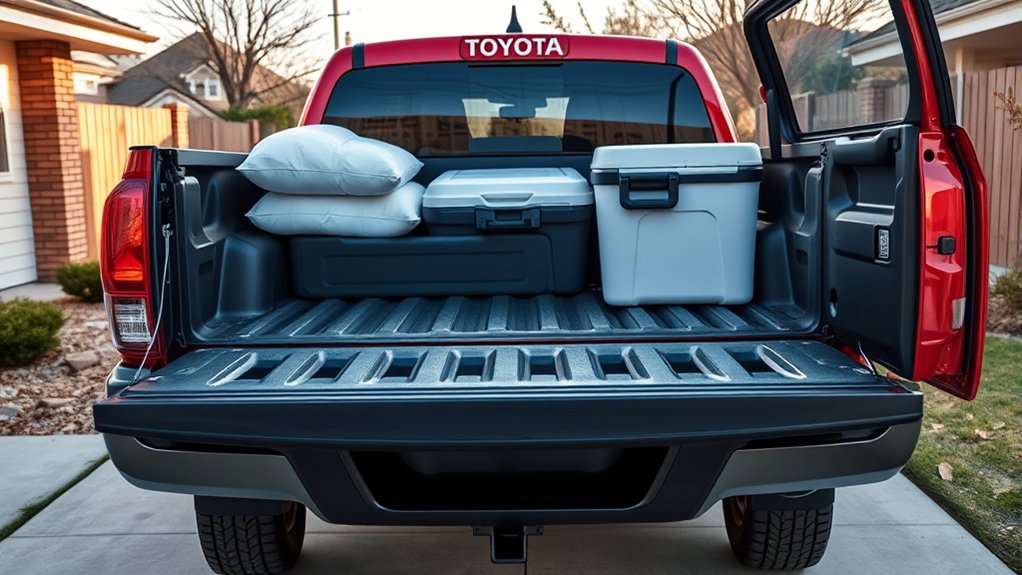
To find your Toyota Tacoma payload capacity, open the driver’s door and read the Tire and Loading Information label on the door jamb or B-pillar. Find the line stating that the combined weight of occupants and cargo should never exceed a specific number. Use that truck-specific figure as your starting limit, then subtract passengers, cargo, accessories added after manufacture, hitch equipment, and trailer tongue weight.
By: Nathan Rhodes · Originally published: February 20, 2026 · Last updated: September 22, 2026
Affiliate disclosure: This page may contain affiliate links inserted by the site. If you buy through qualifying links, we may earn a commission at no additional cost to you.
Quick Answer
Your Tacoma’s vehicle-specific payload starting point is on the driver-side Tire and Loading Information label. Use the line stating that the combined weight of occupants and cargo should never exceed the printed amount. Subtract passengers, cargo, post-production accessories, hitch hardware, and trailer tongue weight to estimate what remains. A published Tacoma maximum is not a substitute for the label on your truck.
Key Takeaways
- The Tire and Loading Information label is the quickest vehicle-specific starting point for determining how much occupant and cargo weight your Tacoma can carry.
- Payload and towing capacity are different: payload is carried by the truck, while towing capacity applies to the trailer the truck pulls.
- Passengers, cargo, bed gear, roof gear, post-production accessories, hitch hardware, and trailer tongue weight can all use available payload.
- GVWR and GAWR are normally listed on the certification label. A loaded scale check helps confirm total and axle weights.
- Lift kits, airbags, heavier springs, tires, and racks do not rewrite Toyota’s factory GVWR, GAWR, or vehicle-capacity label.
- When several ratings apply, stay within every limit rather than relying on one payload or towing number.
At a Glance
| Time Required | 5 minutes for the door label, longer if you also weigh the truck at a public scale |
| Difficulty | Easy |
| Tools Needed | Driver-door labels, calculator, model-year owner’s manual, and a certified scale for loaded checks |
| Cost | Free for label math; public scale fees vary |
Find the Tacoma Door Placard (Quickest Way)
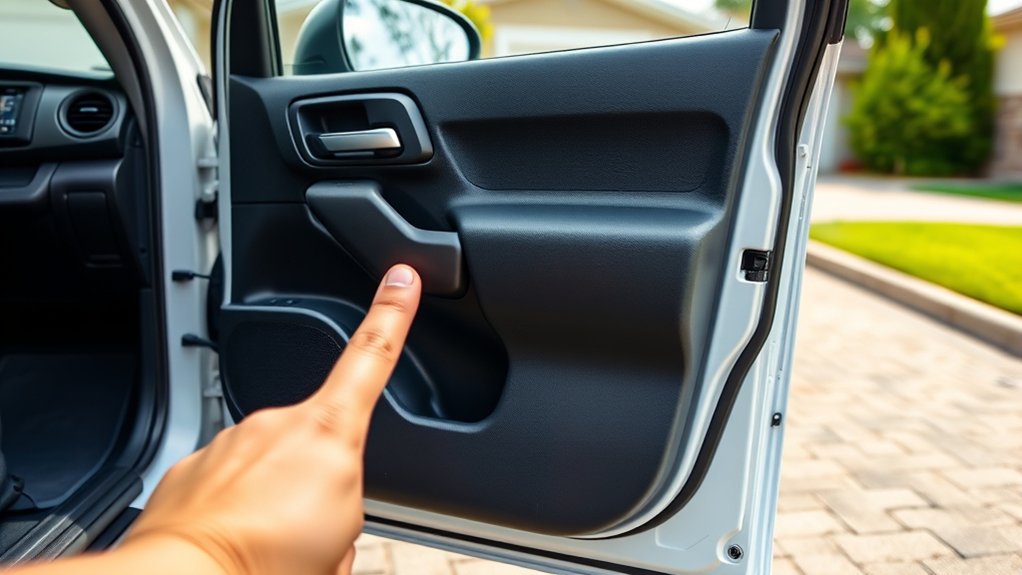
Open the driver’s door and inspect the door jamb or B-pillar. Look for the Tire and Loading Information label. Federal labeling rules require this placard to state the maximum combined weight of occupants and cargo for the vehicle.
Find wording similar to: “The combined weight of occupants and cargo should never exceed…” followed by a number in pounds and kilograms. Owners commonly use that figure as the vehicle-specific payload starting point because it directly limits the combined weight you can add as people and cargo.
Nearby, you should also find a certification label containing GVWR and front and rear GAWR. GVWR is the maximum allowed total weight of the loaded truck. GAWR is the maximum allowed load on each axle.
For a deeper explanation of what each label contains, see the Toyota Tacoma door-jamb sticker guide.
Warning: Do not treat suspension upgrades, larger tires, airbags, helper springs, or lift kits as permission to exceed the occupants-and-cargo limit, GVWR, GAWR, tire ratings, hitch rating, or Toyota towing limits.
Calculate Your Tacoma Payload: Door Label or GVWR − Curb Weight
There are two useful ways to think about Tacoma payload. The simplest trip-planning method starts with the occupants-and-cargo limit printed on your truck. The general engineering relationship is payload capacity = GVWR − curb weight. Use the second formula only when the curb-weight figure accurately represents your truck’s configuration and installed equipment.
Find GVWR On Door
Find the certification label in the driver-side door opening and record GVWR plus front and rear GAWR. GVWR is the maximum permissible total weight of the loaded truck. That total includes the vehicle itself plus the people, cargo, equipment, and trailer load being carried by the truck.
GAWR matters separately. A truck can remain below GVWR while one axle exceeds its rating, especially when heavy bed cargo or trailer tongue weight concentrates load toward the rear.
Locate Curb Weight Value
Curb weight is the vehicle’s weight before passengers and cargo, based on the applicable equipment and fluid definition. Do not assume the certification label lists curb weight. Use Toyota specifications that match the exact model year and configuration, or weigh the truck in a known condition when you need a real-world weight.
A bed rack, steel bumper, winch, rock sliders, drawer system, topper, tonneau cover, rooftop tent, and other owner-added equipment all add weight to the truck and reduce the capacity left for people and trip cargo.
Subtract To Get Payload
The useful formulas are:
- Payload capacity = GVWR − curb weight
- Estimated remaining payload = occupants-and-cargo label limit − passengers − cargo − post-production accessories − hitch hardware − trailer tongue weight
- Current GVWR margin = GVWR − actual loaded truck weight
Illustrative example—not a Tacoma specification: If a door placard lists 1,300 lbs and the truck carries 420 lbs of occupants, 120 lbs of added equipment, 350 lbs of cargo, and 400 lbs of trailer tongue weight, the added load totals 1,290 lbs. Only 10 lbs of that placard allowance remains.
A scale-derived GVWR margin answers a different question from the door placard. The scale shows how much total-weight margin exists in the truck’s current condition; it does not rewrite the manufacturer’s GVWR, GAWR, tire ratings, or occupants-and-cargo limit.
For a dedicated calculation walkthrough, see the Tacoma payload calculator and door-sticker guide.
Note: Trailer tongue weight is load transferred onto the truck, so it must be included when checking available occupant-and-cargo capacity. Also check the towing, hitch, axle, tire, and combination-weight limits that apply to your setup.
What Is the 2026 Toyota Tacoma Maximum Payload?
Toyota’s 2026 U.S. Tacoma information lists a maximum payload of up to 1,705 lbs. That is a lineup maximum, not the payload rating of every 2026 Tacoma. Cab, bed, drivetrain, powertrain, trim, installed equipment, and configuration can change the number applicable to an individual truck.
Use published maximums when comparing trucks before purchase. For an actual loading decision, use the occupants-and-cargo figure on the specific Tacoma and confirm the applicable gross, axle, tire, hitch, towing, and combination limits.
How Payload Changes Across Model Years
Payload ratings vary across Tacoma generations and configurations. Do not carry a maximum from one model year, trim, or drivetrain over to another truck.
- Older Tacoma models: Use the label and owner’s manual for that exact model year.
- Current-generation Tacomas: Use current Toyota specifications for comparison, then verify the specific truck’s labels before loading.
- Used Tacomas: Inspect the actual labels and account for equipment added after the truck was manufactured.
Why Trim-Level Payload Differs
Trim level affects payload because Tacoma configurations do not all weigh the same and do not necessarily share identical ratings. Off-road hardware, larger tires, skid plates, premium features, hybrid components, cab configuration, bed length, and other equipment can change curb weight or rated capacities.
That is why two Tacomas from the same model year can have different occupants-and-cargo limits even when their exterior dimensions look similar.
Common Option Impacts
Factory equipment is incorporated into the vehicle as certified. Equipment added afterward still contributes to the truck’s actual weight and reduces the capacity available for occupants and trip cargo.
| Item or choice | How it affects usable capacity |
| 4WD hardware | Can add vehicle weight compared with some 2WD configurations |
| Off-road trim equipment | Protection hardware, tires, suspension equipment, and other features can change vehicle weight and ratings |
| Bed rack, topper, drawers, or tent | Owner-added weight reduces the remaining capacity available for people and cargo |
| Trailer tongue weight and hitch hardware | Places additional load on the truck and can consume payload and rear-axle capacity |
Where Do Tacoma Payload, GVWR, GAWR, and Curb Weight Numbers Come From?
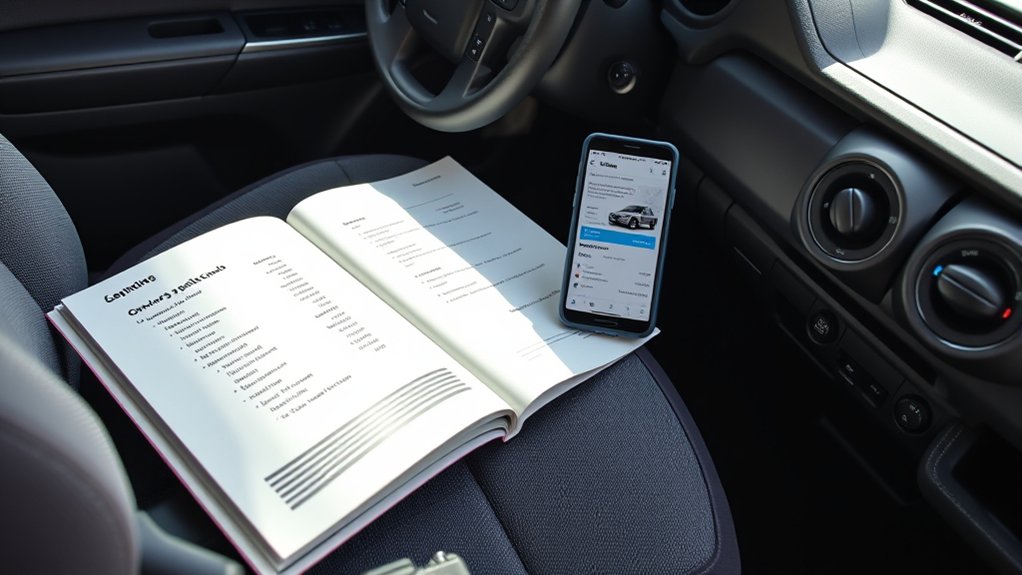
Use the source that matches the number you are trying to verify. The occupants-and-cargo placard and certification label answer different questions, while curb weight and towing information may require Toyota specifications or the model-year owner’s manual.
| Number | Best place to find it | How to use it |
| Combined occupants-and-cargo limit | Tire and Loading Information label | Starting point for passenger, cargo, added-equipment, and tongue-load calculations |
| GVWR | Certification label | Compare with actual loaded truck weight |
| Front and rear GAWR | Certification label | Compare with measured front and rear axle weights |
| Curb weight | Configuration-specific Toyota specifications or a controlled scale measurement | Use with GVWR only when the weight accurately represents your truck |
| Towing, tongue-load, and combination limits | Model-year Toyota owner’s manual and configuration-specific towing information | Use when a trailer is connected; do not assume one generic Tacoma value applies |
If you use online specifications, match the model year, cab, bed, drivetrain, powertrain, trim, and relevant equipment. An online curb-weight figure for a different configuration is not a substitute for your truck’s own labels or an actual scale measurement.
Why Tacoma Payload Varies by Cab, Drivetrain, and Options
Tacoma configurations do not all have the same vehicle weight or ratings. Cab size, bed length, drivetrain, powertrain, trim hardware, and installed options can change how much capacity remains for occupants and cargo.
- Cab configuration: Different cab structures and seating configurations change vehicle weight.
- Bed length: Bed choice can change vehicle weight and load distribution.
- Drivetrain: 4WD equipment can add weight compared with some 2WD configurations.
- Powertrain: Different engines and hybrid hardware change vehicle weight and may be paired with different ratings.
- Trim equipment: Protection hardware, premium equipment, tires, suspension components, and other features affect the final configuration.
Use published specifications to compare configurations before purchase, but use the labels on the actual truck for real-world loading decisions.
Will Mods or Lift Kits Change the Sticker Payload?
Owner-installed lift kits, airbags, helper springs, upgraded shocks, and larger tires do not rewrite the factory occupants-and-cargo label, GVWR, or GAWR. They may change ride height, suspension behavior, or component capability, but they do not create permission to exceed the manufacturer’s certified vehicle limits.
Many modifications also add weight. A steel bumper, winch, rock sliders, skid plates, bed rack, rooftop tent, drawer system, spare-tire carrier, and water tank all leave less capacity for passengers and trip cargo.
Pro Tip: Keep a weight list for permanent accessories. Recalculate available payload after major changes instead of relying on how level the truck appears when loaded.
How Accessories and Gear Reduce Your Tacoma Payload
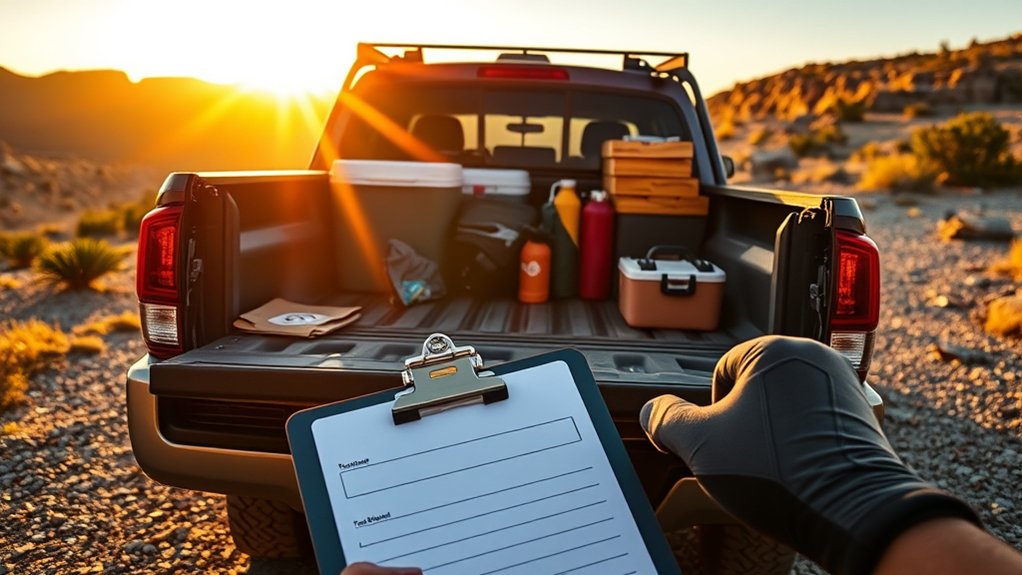
Every owner-added accessory contributes to the Tacoma’s actual weight. For example, a 120-lb rack, 180-lb topper, 90-lb drawer system, 60-lb fridge, and 40-lb recovery kit total 490 lbs before passengers or additional trip cargo are added. These figures are an illustrative example, not weights for specific Tacoma accessories.
Where the weight sits matters too. High-mounted equipment such as a rooftop tent or loaded roof rack raises the center of gravity. Heavy cargo placed far behind the rear axle can also concentrate load on the rear axle.
- List each permanent accessory and its actual weight.
- Include tools, recovery equipment, water, fuel containers, coolers, and camping gear.
- Count the driver and every passenger.
- Include hitch hardware and actual trailer tongue weight when towing.
- Recalculate after major equipment changes or before unusually heavy trips.
Weigh Your Tacoma: Measure Loaded Weight Step-by-Step
A certified scale can confirm whether the loaded truck stays within its total and axle ratings. For a useful result, weigh the Tacoma in the condition you intend to drive it: normal passengers aboard, trip cargo loaded, accessories installed, and the trailer connected when you are checking a towing setup.
| Step | What to record | Why it matters |
|---|---|---|
| 1 | Occupants-and-cargo label limit | Provides the truck-specific starting capacity for added occupant and cargo weight |
| 2 | GVWR and front/rear GAWR | Sets the truck’s total and axle limits |
| 3 | Loaded truck weight | Shows whether the truck is below GVWR |
| 4 | Front and rear axle weights | Shows whether either axle exceeds its GAWR even when total weight is acceptable |
| 5 | Truck-only and towing-condition weights when applicable | Helps quantify how the trailer changes the load carried by the truck |
After weighing, compare the loaded truck with GVWR and the measured axle weights with their GAWR values. When towing, also check the model-year owner’s manual and configuration-specific towing information for the applicable trailer, hitch, tongue-load, and gross-combination limits.
The lowest applicable limit controls: staying below GVWR does not give permission to exceed the occupants-and-cargo limit, either GAWR, tire load limits, receiver or hitch ratings, trailer ratings, or GCWR/TWR requirements that apply to the setup.
Loading Tips: Distribute Weight, Count Passengers, and Account for Tongue Weight
Safe loading is not only about staying below one headline number. Weight distribution affects axle load, steering, braking, tire loading, and vehicle stability.
Evenly Spread Load
Keep dense cargo low and positioned so neither axle is overloaded. Avoid stacking heavy items high or concentrating excessive weight behind the rear axle. Secure cargo so it cannot move during braking, cornering, or rough-road travel.
- Place dense items low in the bed.
- Keep heavy cargo near the axle area when practical.
- Balance weight from left to right.
- Use properly rated tie-downs or restraints.
- Recheck the load and restraints after a short drive.
Include Tongue And Passengers
Passengers count toward the truck’s occupants-and-cargo load. Trailer tongue weight also matters because the trailer transfers downward load through the hitch onto the Tacoma.
Do not assume one tongue-weight percentage applies to every Tacoma and trailer. Follow the towing section of the owner’s manual for your exact model year and the trailer manufacturer’s loading instructions, then measure the loaded trailer’s actual tongue weight when accuracy matters.
Use this trip checklist before leaving:
- Start with the combined occupants-and-cargo figure on the Tire and Loading Information label.
- Subtract the driver and passengers.
- Subtract owner-added equipment and removable cargo.
- Subtract hitch hardware and actual trailer tongue weight when towing.
- Confirm actual loaded truck weight remains below GVWR.
- Confirm front and rear axle weights remain below their GAWR values.
- Check tire, hitch, trailer, towing, and gross-combination limits that apply to the setup.
For a deeper towing comparison, see Tacoma towing capacity vs payload explained.
Payload disappears quickly because passengers, owner-added equipment, cargo, hitch hardware, and trailer tongue weight can all draw from the same vehicle-capacity budget.
Signs You Need a Higher-Payload Truck and Upgrade Options
A higher-capacity truck may be a better fit when normal passengers and required equipment repeatedly leave little or no margin under the Tacoma’s applicable limits.
- Your normal occupants and cargo exceed the door-label capacity.
- Your rear axle approaches or exceeds rear GAWR when loaded.
- Trailer tongue weight leaves insufficient capacity for passengers or essential cargo.
- Your overlanding setup carries substantial permanent equipment, water, tools, recovery gear, and camping hardware.
- Your regular work load requires more capacity than the Tacoma is rated to provide.
Possible solutions include removing heavy accessories, selecting lighter equipment, carrying suitable cargo in a properly rated trailer, changing how the load is distributed within allowable limits, or choosing a vehicle with higher factory ratings. Suspension upgrades can change ride behavior but are not a substitute for adequate GVWR, GAWR, tire, hitch, and payload ratings.
Frequently Asked Questions
How do I find my Tacoma payload capacity?
Open the driver’s door and find the Tire and Loading Information label. Read the statement showing the maximum combined weight of occupants and cargo, then subtract the people, cargo, post-production accessories, hitch hardware, and trailer tongue weight your truck will carry.
What is the payload rating of the Toyota Tacoma?
It varies by model year and configuration. Toyota lists a maximum payload of up to 1,705 lbs for the 2026 Tacoma, but that is a lineup maximum. Use the occupants-and-cargo figure on your specific truck for loading decisions.
How do I find payload from GVWR?
The general relationship is payload capacity equals GVWR minus curb weight. For day-to-day trip planning, the door placard is usually easier: start with its combined occupants-and-cargo limit and subtract the load you add to the truck.
How do I read payload on a truck sticker?
Find the Tire and Loading Information label and read the statement that the combined weight of occupants and cargo should never exceed the printed amount. The nearby certification label normally provides GVWR and front and rear GAWR.
Does trailer tongue weight count against Tacoma payload?
Yes. Tongue weight is load transferred from the trailer onto the truck, so include it when checking available occupants-and-cargo capacity. Hitch hardware carried by the truck also adds weight.
Can a lift kit increase Tacoma payload?
An owner-installed lift kit or suspension helper does not rewrite Toyota’s factory occupants-and-cargo label, GVWR, or GAWR. Added suspension parts can also increase the truck’s actual weight.
Is Tacoma payload the same as towing capacity?
No. Payload is the weight carried by the truck, while towing capacity limits the trailer the truck can pull. Towing still uses payload because tongue weight and hitch equipment place additional load on the Tacoma.
Can a Tacoma be under GVWR and still be overloaded?
Yes. Total truck weight can remain below GVWR while the rear or front axle exceeds GAWR or another component exceeds its applicable tire, hitch, trailer, or load rating. Check every relevant limit.
Conclusion
Your Tacoma’s vehicle-specific payload check starts with the Tire and Loading Information label in the driver-side door opening. Record its combined occupants-and-cargo limit, subtract everything the truck will carry, and use the certification label plus a scale when you need to verify GVWR and axle weights.
Do not rely on Toyota’s lineup maximum, ride height, or one towing number by itself. When the truck is heavily loaded or towing, stay within the occupants-and-cargo limit, GVWR, both GAWR values, tire ratings, hitch and trailer ratings, and any applicable towing or gross-combination limits. If your normal setup repeatedly exceeds those limits, remove weight or move to a vehicle with higher factory ratings.
Sources
- Toyota USA Newsroom: 2026 Toyota Tacoma — supports Toyota’s current published maximum payload figure.
- Toyota Manuals and Warranties — use the owner’s manual for the truck’s exact model year when checking load and towing instructions.
- 49 CFR § 571.110 — supports the required Tire and Loading Information placard wording and vehicle-capacity information.
- NHTSA FMVSS No. 110 Interpretation — supports Tire and Loading Information labeling requirements.
- NHTSA GVWR and Vehicle Capacity Interpretation — supports vehicle weight-rating and capacity concepts.
- Federal Register: Cargo Carrying Capacity Rule — supports cargo-capacity labeling requirements and added-equipment considerations.

