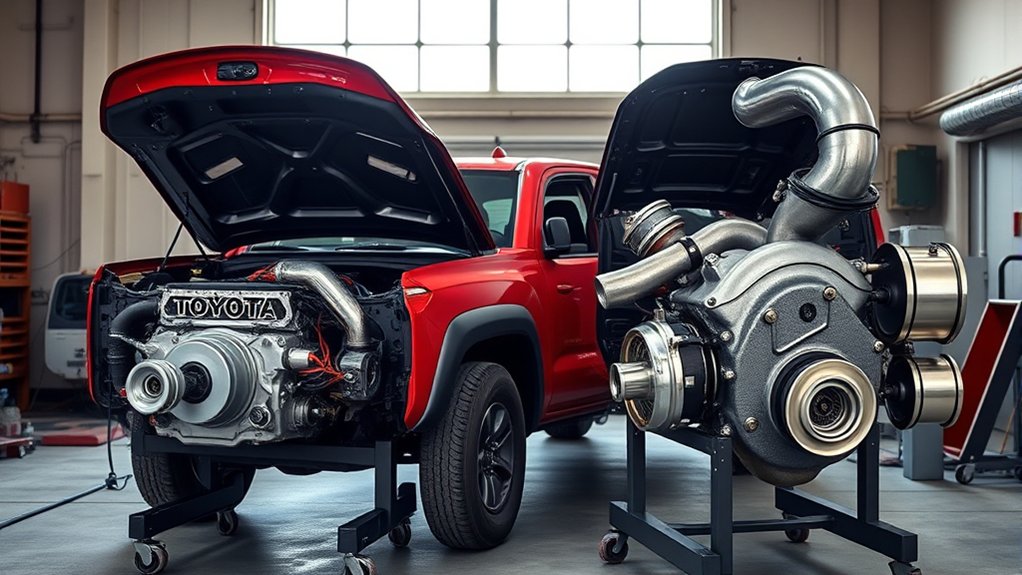
Toyota Tacoma turbo vs naturally aspirated engine comparisons are mainly a choice between generations. The 2016–2023 Tacoma used naturally aspirated 2.7-liter four-cylinder and 3.5-liter V6 engines. The 2024–2026 Tacoma switched to a turbocharged 2.4-liter four-cylinder, with an available i-FORCE MAX turbo-hybrid. For 2026, the standard i-FORCE makes up to 278 horsepower and 317 lb-ft of torque, while the i-FORCE MAX reaches 326 horsepower and 465 lb-ft.
Quick Answer
Choose a 2016–2023 naturally aspirated Tacoma if you prefer linear throttle response, an established service history, and used-truck pricing. Choose a 2024–2026 turbo Tacoma if you want stronger low-rpm torque, better performance retention at altitude, and current-generation technology. Do not assume the newer truck wins every number: a properly equipped 2023 V6 Tacoma was rated to tow up to 6,800 pounds, while Toyota lists up to 6,500 pounds for the 2026 Tacoma.
Last updated: September 19, 2026
Editorial method: This comparison uses Toyota model-year specifications, EPA/DOE fuel-economy data, Toyota owner and recall resources, and an independent instrumented test for real-world context. It does not claim hands-on long-term durability testing of either generation.
Key Takeaways
- Naturally aspirated Tacoma engines are primarily a used-truck choice from the 2016–2023 generation.
- The 2024–2026 Tacoma uses a turbocharged 2.4-liter engine in gas-only i-FORCE and turbo-hybrid i-FORCE MAX forms.
- The 2023 3.5-liter V6 made 278 hp and 265 lb-ft; the 2026 gas turbo reaches the same peak horsepower with up to 317 lb-ft.
- Toyota rates the 2026 gas turbo at up to 26 mpg highway and the 2026 i-FORCE MAX at 23 mpg combined; exact trim and drivetrain still matter.
- Maximum towing is not a simple turbo advantage: selected 2023 V6 Tacomas reached 6,800 lb, versus up to 6,500 lb for the 2026 lineup.
- Reliability depends on maintenance, modifications, operating conditions, vehicle history, and model-specific issues—not turbocharging alone.
Tacoma Engine Options by Model Year
The key comparison is not just induction type. It is an older third-generation truck versus a newer fourth-generation truck, with different engines, transmissions, chassis hardware, electronics, warranty position, and age.
| Model Years | Engine Family | Factory Output | Buying Context | Main Character |
|---|---|---|---|---|
| 2016–2023 | Naturally aspirated 2.7-liter four-cylinder | 159 hp / 180 lb-ft | Used Tacoma market | Simple, low-output work-truck character |
| 2016–2023 | Naturally aspirated 3.5-liter V6 | 278 hp / 265 lb-ft | Used Tacoma market | Linear response with a mature service history |
| 2024–2026 | Turbocharged 2.4-liter i-FORCE four-cylinder | 228 hp / 243 lb-ft on the base SR automatic; 270 hp / 310 lb-ft with the manual; up to 278 hp / 317 lb-ft with higher-output automatics | Current gas-powered Tacoma | Stronger low-rpm torque and newer vehicle technology |
| 2024–2026 | Turbocharged 2.4-liter i-FORCE MAX hybrid | 326 hp / 465 lb-ft combined | Available on selected current trims | Highest factory torque output in the lineup |
Toyota’s current 2026 information confirms up to 278 horsepower and 317 lb-ft for i-FORCE and 326 horsepower and 465 lb-ft for i-FORCE MAX. The lower-output SR automatic and the six-speed manual use different calibrations, so do not assume every gas-turbo Tacoma has the same rating. Compare the exact trim and transmission on Toyota’s 2026 Tacoma model page and the detailed fourth-generation specifications in Toyota’s Tacoma launch information.
Note: The i-FORCE MAX is not a naturally aspirated hybrid. It combines a turbocharged 2.4-liter engine with an electric motor and battery system.
Understanding Naturally Aspirated Engines in the Toyota Tacoma
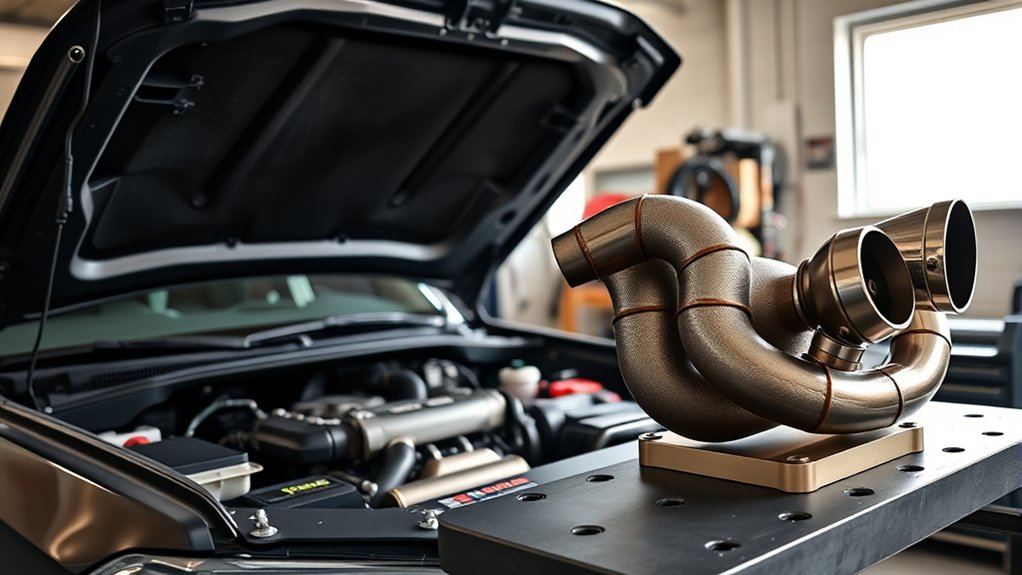
A naturally aspirated engine draws air into its cylinders without using a turbocharger or supercharger. Engine speed, throttle position, displacement, and atmospheric pressure determine how much air enters the engine.
In the 2016–2023 Tacoma, buyers could find a 2.7-liter four-cylinder or a 3.5-liter V6. The four-cylinder prioritized basic operation over strong acceleration, while the V6 provided more useful power for highway travel, hauling, and towing.
The main appeal of a naturally aspirated Tacoma is its predictable response and long-established ownership history, not a guarantee of lower repair costs.
Naturally aspirated engines usually build power in a steady, progressive way. Pressing the accelerator creates a direct-feeling response because the engine does not need to build boost pressure first. That behavior can make low-speed maneuvering and precise throttle control feel familiar.
The design also avoids turbo-specific hardware such as a turbine, compressor, intercooler, boost-control system, and pressurized intake plumbing. However, an older naturally aspirated Tacoma may still need expensive repairs because of mileage, neglect, corrosion, leaks, or worn supporting components.
How Turbocharged Tacoma Engines Work
A turbocharger uses exhaust flow to spin a turbine connected to a compressor. The compressor forces additional air into the engine, allowing the engine-management system to add more fuel and produce greater power from a smaller displacement.
The current Tacoma’s turbocharged 2.4-liter engine develops much more low-rpm torque than the previous naturally aspirated engines. That torque can reduce the need to rev the engine as high during ordinary acceleration, hill climbing, and loaded driving.
Modern electronic controls, turbo boost management, transmission programming, and hybrid assistance can reduce noticeable turbo lag. They do not eliminate every delay. Response still changes with engine speed, gear selection, throttle input, altitude, temperature, and vehicle load.
Turbocharging also adds components and concentrates more heat around the exhaust and intake systems. Toyota designs the engine and cooling system for the truck’s rated operation, but correct oil, coolant, filters, and maintenance intervals remain important.
Tacoma Turbo vs Naturally Aspirated Engine Performance
Power and Torque Output
The current turbocharged Tacoma has a clear torque advantage. Its higher torque arrives lower in the rev range, helping the truck accelerate without requiring the same engine speed as an older naturally aspirated engine.
| Tacoma Powertrain | Factory Output | Driving Character |
|---|---|---|
| 2016–2023 2.7-liter four-cylinder | 159 hp and 180 lb-ft | Progressive response but modest output |
| 2016–2023 3.5-liter V6 | 278 hp and 265 lb-ft | Matches the higher-output gas turbo on peak horsepower but makes less peak torque |
| 2024–2026 i-FORCE automatic | Up to 278 hp and 317 lb-ft | Strong low-rpm torque for daily driving and loads |
| 2024–2026 i-FORCE manual | 270 hp and 310 lb-ft | Driver-controlled shifting with strong turbo torque |
| 2024–2026 i-FORCE MAX hybrid | 326 hp and 465 lb-ft | Immediate electric assistance and the highest torque |
Independent test context: Car and Driver tested a 2024 Tacoma TRD Off-Road automatic at 0–60 mph in 7.0 seconds, six-tenths quicker than the older naturally aspirated V6 TRD Pro used for comparison. The newer truck also returned 22 mpg on the publication’s 75-mph highway test versus 21 mpg for the older truck. The vehicles differed by model year, trim, weight, and tires, so treat this as real-world context rather than an engine-only laboratory comparison. See the instrumented comparison.
Throttle Response Differences
A naturally aspirated Tacoma usually responds in a consistent, linear way as engine speed rises. That can make it easier to judge small throttle inputs while crawling over obstacles, backing a trailer, or driving on a loose surface.
A turbo Tacoma may feel stronger with less accelerator input because it produces more torque at low rpm. However, the response can change as boost builds or the transmission selects another gear. Drivers often adapt quickly, but the feel is different from the older naturally aspirated trucks.
The i-FORCE MAX hybrid can respond more quickly at low speed because the electric motor contributes torque before the engine reaches peak output. That benefit comes with additional hybrid components and a different purchase price and ownership profile.
Which Tacoma Engine Is More Fuel Efficient?
A turbocharger does not guarantee a fixed percentage of fuel savings. A smaller turbo engine can operate efficiently during light and steady driving, but fuel use rises when it frequently produces boost under hard acceleration, high speed, towing, or heavy payload.
The EPA/DOE 2023 Fuel Economy Guide lists naturally aspirated Tacoma configurations at roughly 18–21 mpg combined, depending on engine, transmission, and drivetrain. For the current 2026 truck, Toyota lists the gas i-FORCE at up to 26 mpg highway and the i-FORCE MAX hybrid at 23 mpg combined. Toyota listed up to 24 mpg combined for selected 2025 i-FORCE MAX versions, so do not carry a 2025 headline number into a 2026 comparison.
| Example Configuration | Published Rating | Comparison Limitation |
|---|---|---|
| 2023 Tacoma 2WD, 2.7-liter | 21 mpg combined | Older platform and configuration-specific rating |
| 2023 Tacoma 4WD, 3.5-liter automatic | 20 mpg combined | Tires, gearing, cab, and trim can affect the result |
| Selected 2026 i-FORCE configurations | Up to 26 mpg highway | An “up to” highway figure is not a combined rating |
| 2026 i-FORCE MAX lineup | 23 mpg combined | Individual hybrid trims carry different city/highway ratings |
Warning: Do not compare one truck’s combined MPG with another truck’s highway MPG. Check the window sticker or official EPA/Toyota listing for the exact cab, drivetrain, transmission, trim, and tire package you plan to buy.
Driving Conditions and Real-World MPG
Your real-world result can differ substantially from the published rating. Short trips, cold weather, idling, roof accessories, oversized tires, lifts, headwinds, high speed, towing, and frequent acceleration can increase fuel use in either engine type.
A turbo engine’s efficiency advantage is usually most visible when the truck operates under moderate load. If you regularly use the available torque, the engine must burn more fuel to produce that power.
At higher elevations, a turbocharger can compensate for thinner air more effectively than a naturally aspirated engine. The turbo engine may therefore preserve more of its rated performance, although heat, grade, payload, and fuel quality can still affect operation.
Benefits of a Naturally Aspirated Tacoma
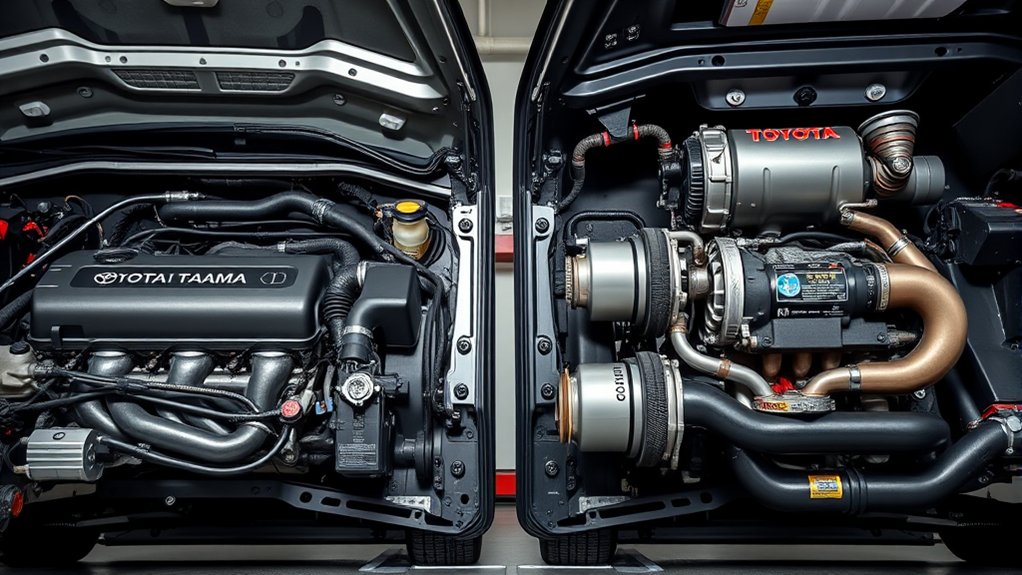
A naturally aspirated Tacoma can remain attractive when you are shopping for a used truck and value a familiar engine design. Its benefits come with an important condition: the truck must have been serviced and operated properly.
| Potential Benefit | What It Means | Important Limitation |
|---|---|---|
| Linear response | Power builds progressively with engine speed | The engine may need more rpm for acceleration or climbing |
| Fewer forced-induction parts | No turbocharger, intercooler, or boost plumbing | Age-related repairs can outweigh the simpler design |
| Mature service knowledge | Shops have years of experience with the third-generation engines | Past reliability does not prove that one specific truck is healthy |
| Used-market availability | Many trims and configurations are available secondhand | Condition and pricing vary widely |
The strongest reason to choose one is not that naturally aspirated engines never fail. It is that you may prefer the older truck’s driving feel, mechanical layout, purchase price, and established repair history.
Drawbacks of Turbocharged Tacoma Engines
The current turbocharged Tacoma delivers strong torque, but it also introduces tradeoffs that deserve a balanced look.
- Additional hardware: The turbocharger, intercooler, boost controls, sensors, and pressurized plumbing add components that do not exist on a naturally aspirated engine.
- Different throttle behavior: Power delivery can change as boost builds or the transmission shifts, especially during quick accelerator inputs.
- Higher thermal concentration: Turbocharger and exhaust areas operate at high temperatures, making correct fluids, cooling-system care, and clean airflow important.
- Newer long-term history: The fourth-generation Tacoma has not accumulated the same number of years in service as the previous generation.
- Efficiency under load: Frequent boost, towing, larger tires, and aggressive acceleration can reduce the fuel-economy advantage.
These points do not prove that the turbocharged Tacoma is unreliable or likely to overheat. Toyota engineered the system for its published ratings. They simply mean that the newer engine has a different component set and a shorter real-world history.
Maintenance for Turbocharged Tacoma Engines
Do not create a special maintenance schedule based only on generic turbo advice. Follow Toyota’s schedule for your exact model year, engine, drivetrain, and operating conditions.
Use the oil viscosity and specification listed in the owner’s manual. Replace the oil and filter at the required interval, maintain the cooling system, inspect the air filter, and address warning lights or fluid loss promptly. Severe-use conditions such as repeated towing, dusty driving, extensive idling, or frequent short trips may require different service intervals.
You should also avoid assuming that premium gasoline is required because the engine is turbocharged. Use the fuel grade printed on the truck’s fuel information label and specified in its owner’s manual. Toyota provides model-specific documents through its owner’s manual and warranty portal.
Pro Tip: Enter the truck’s model year or VIN on Toyota’s manual portal before buying oil, coolant, filters, or fuel additives. Advice for another Tacoma generation may not apply to your engine.
Towing, Off-Road, and High-Altitude Performance
Towing and Payload
The current turbocharged engine’s low-rpm torque can make a trailer feel easier to start and pull up a grade, but peak torque does not equal maximum tow rating. Toyota lists up to 6,500 pounds for properly equipped 2026 Tacoma configurations. By comparison, Toyota rated selected properly equipped 2023 V6 Tacomas at up to 6,800 pounds.
Engine output is only one part of the rating. Cab style, drivetrain, axle ratio, trim, hitch equipment, passengers, accessories, tongue weight, and cargo all affect how much you can safely tow or carry.
Warning: Use the certification labels, payload label, owner’s manual, and towing guide for the exact truck. Never assume that every Tacoma can use the advertised maximum.
Off-Road Control
A naturally aspirated engine’s progressive response can feel predictable when you need a small amount of power. A turbocharged Tacoma provides more torque at lower rpm, which can help on steep climbs, in sand, or while carrying equipment.
Neither engine type determines off-road ability by itself. Tires, traction systems, gearing, suspension, wheelbase, ground clearance, driver technique, and recovery equipment can matter more than the induction system.
High-Altitude Driving
Air density decreases as elevation rises. A naturally aspirated engine cannot draw the same mass of oxygen into its cylinders, so its available power falls. A turbocharger can increase intake pressure and preserve more performance, although it cannot eliminate every altitude, temperature, or load effect.
If you regularly drive in mountain areas, the current turbo engine’s low-rpm torque and altitude compensation may be more useful than the older engine’s simpler response.
Reliability and Used-Tacoma Buying Considerations
A fair reliability comparison must account for age. A 2016–2023 naturally aspirated Tacoma has a longer ownership record, but any individual example may also have more mileage, corrosion, worn suspension parts, overdue fluids, or accident damage. The 2024–2026 turbo Tacoma is newer, while its long-term high-mileage fleet history is still developing.
For a new 2026 Tacoma, Toyota lists a 5-year/60,000-mile powertrain warranty. Hybrid components receive 8 years/100,000 miles of coverage, and the hybrid battery receives 10 years/150,000 miles. Warranty coverage does not prove future reliability, but it changes the ownership-risk calculation compared with an older used truck. Recall and service-campaign status is VIN-specific, so check Toyota’s recall lookup before buying rather than treating any model-wide headline as an engine verdict.
When inspecting a used Tacoma, check:
- Complete maintenance records and evidence of regular fluid service
- Cold-start behavior, warning lights, unusual smoke, and abnormal noises
- Engine-oil, coolant, transmission-fluid, and differential leaks
- Cooling-system condition and signs of previous overheating
- Diagnostic trouble codes, including recently cleared readiness monitors
- Frame and underbody corrosion, impact damage, and poor repairs
- Oversized tires, lifts, tuners, intake changes, and other modifications
- Four-wheel-drive, transfer-case, differential-lock, and crawl-control operation where equipped
- Trailer-hitch wear and other signs of frequent heavy towing
- Open safety recalls and service campaigns for the exact VIN
A professional pre-purchase inspection can reveal problems that are unrelated to whether the engine is naturally aspirated or turbocharged. Service history and current condition often matter more than the theoretical simplicity of one design.
Which Tacoma Engine Fits Your Needs?
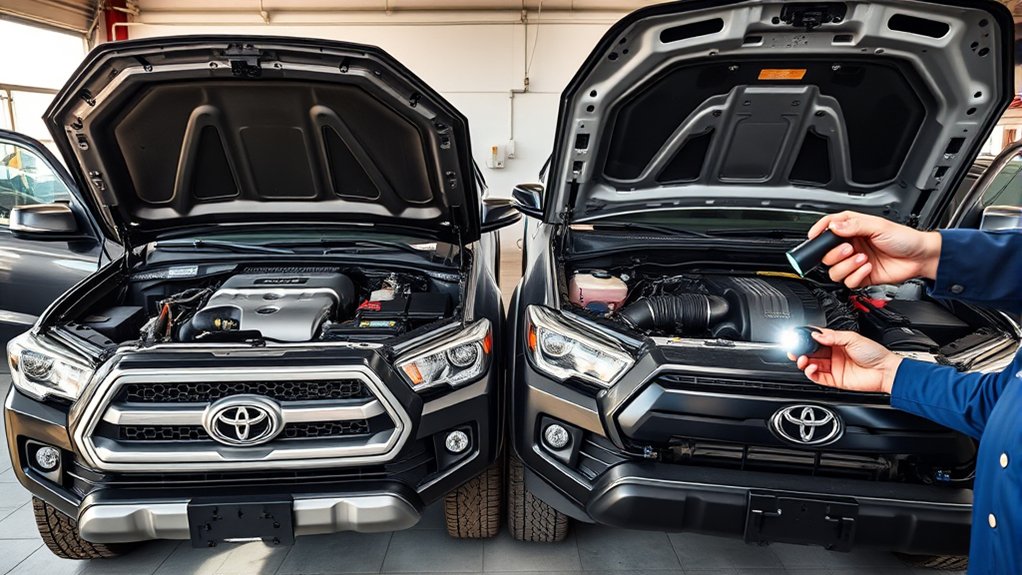
Your choice is mainly a choice between Tacoma generations. Use the following guide to narrow it down.
| Choose This Option | It May Fit You If | Check Before Buying |
|---|---|---|
| 2016–2023 naturally aspirated Tacoma | You prefer linear response, an established generation, and used-truck pricing | Age, mileage, maintenance history, corrosion, modifications, and actual engine choice |
| 2024–2026 i-FORCE turbo | You want a new Tacoma, stronger low-rpm torque, newer safety features, and better altitude performance | Trim-specific output, payload, towing rating, MPG, tire package, warranty terms, and VIN-specific recall status |
| 2024–2026 i-FORCE MAX hybrid | You prioritize maximum factory torque and strong low-speed response | Purchase cost, trim availability, payload, fuel economy, and added hybrid components |
Test-drive the exact configuration you plan to buy. A base gas-turbo Tacoma, a manual turbo Tacoma, and an i-FORCE MAX hybrid do not feel identical even though all use a turbocharged 2.4-liter engine.
Related Guides
Frequently Asked Questions
What is better, a naturally aspirated or turbo Tacoma engine?
Neither is universally better. A used naturally aspirated Tacoma offers linear response and a mature ownership history. A 2024–2026 turbo Tacoma delivers much stronger low-rpm torque, newer technology, and better performance retention at altitude. Condition, configuration, warranty position, and intended use should decide the purchase.
Does the current Toyota Tacoma have a naturally aspirated engine?
No. The 2024–2026 U.S.-market Tacoma lineup uses a turbocharged 2.4-liter four-cylinder. Toyota offers gas-only i-FORCE versions and an i-FORCE MAX version that combines the turbo engine with an electric motor.
Does a turbocharged Tacoma require premium gasoline?
Do not decide based on the turbocharger alone. Use the gasoline grade shown on the truck’s fuel label and in the owner’s manual for its exact model year and engine. Fuel requirements can differ across Toyota turbo engines, so another model’s recommendation is not a substitute for the Tacoma manual.
What are the disadvantages of a naturally aspirated Tacoma engine?
The older naturally aspirated engines produce less low-rpm torque than the current turbocharged engines and lose more power as elevation rises. They may also need higher engine speed during acceleration or climbing. Because these trucks are older, age, corrosion, mileage, modifications, and maintenance history can be bigger concerns than induction type.
Are turbocharged Tacoma engines less reliable?
A blanket conclusion is not supported. Turbo engines add forced-induction hardware, but the newer Tacoma also benefits from a newer vehicle, current warranty coverage when bought new, and updated engineering. The fourth generation still has a shorter high-mileage history, so maintenance records, operating conditions, modifications, VIN-specific campaigns, and future field data all matter.
Which Tacoma engine is better for towing or mountain driving?
The current turbo engine’s low-rpm torque and ability to compensate for thinner air can help during climbing and loaded driving. However, safe towing depends on the exact truck’s payload, hitch, drivetrain, trim, cooling equipment, tongue weight, and published rating. A properly equipped 2023 V6 Tacoma could be rated to tow up to 6,800 pounds, versus up to 6,500 pounds for the 2026 Tacoma.
Does the 2026 Tacoma turbo get better gas mileage than the old V6?
Some 2026 i-FORCE configurations have higher published highway ratings than older V6 Tacomas, but compare like with like. Toyota lists up to 26 mpg highway for the 2026 gas turbo, while the 2023 EPA guide places naturally aspirated Tacoma configurations around 18–21 mpg combined. Exact city, highway, and combined ratings depend on drivetrain, trim, transmission, tires, and cab configuration.
Can the new turbo Tacoma tow more than the old V6 Tacoma?
Not by the lineup maximum. Toyota rated selected properly equipped 2023 V6 Tacomas at up to 6,800 pounds, while the 2026 Tacoma is rated at up to 6,500 pounds. The newer turbo can feel stronger at low rpm, but towing capacity is a vehicle-level rating that also depends on chassis, cooling, gearing, cab, drivetrain, hitch equipment, passengers, and cargo.
Conclusion
Toyota Tacoma turbo vs naturally aspirated engines are best compared as complete truck generations, not as isolated engine designs. The 2016–2023 trucks offer naturally aspirated four-cylinder and V6 engines with linear response and a long ownership history. The 2024–2026 Tacoma uses turbocharged powertrains with substantially more low-rpm torque, and the i-FORCE MAX hybrid delivers the highest factory output.
The newer turbo truck does not win every specification. The 2023 V6 and higher-output 2026 gas turbo both reach 278 horsepower, while the turbo adds 52 lb-ft of peak torque. Toyota rated selected 2023 V6 Tacomas to tow up to 6,800 pounds, compared with up to 6,500 pounds for the 2026 lineup. Buy on the exact configuration, service history, towing and payload labels, warranty position, VIN-specific campaigns, and how the truck feels on your own test drive.
Sources
- Toyota Tacoma official model page — current 2026 powertrain availability, trim MPG estimates, and headline specifications.
- Toyota: The 2026 Tacoma — Adventure Awaits — 2026 powertrain output, fuel economy, towing, payload, warranty, and hybrid coverage.
- Toyota: 2023 Tacoma — 2.7-liter and 3.5-liter engine output and up-to-6,800-pound V6 towing information.
- U.S. Department of Energy and EPA 2023 Fuel Economy Guide — official ratings for naturally aspirated 2023 Tacoma configurations.
- Toyota Owner’s Manuals and Warranty Information — model-specific fuel, fluid, maintenance, and operating guidance.
- Toyota Recall and Service Campaign Lookup — VIN-specific recall and campaign status.
- Car and Driver instrumented Tacoma comparison — acceleration and 75-mph highway fuel-economy context for new versus previous-generation Tacomas.
