Last updated: September 22, 2026. Applies to U.S.-market 2024–2026 Toyota Tacoma i-FORCE MAX models. Editorial basis: Toyota owner documentation and current Toyota model information; this article does not claim instrumented brake testing.
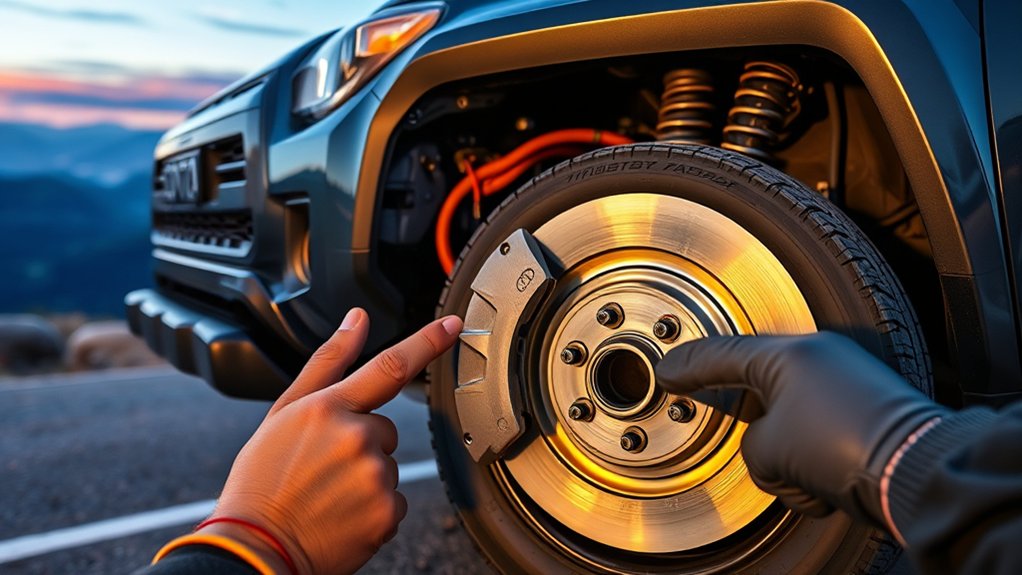
The Toyota Tacoma i-FORCE MAX uses regenerative braking to recover part of the truck’s kinetic energy when it slows down. The electric motor can operate as a generator, sending electricity back to the traction battery while helping decelerate the truck. Toyota’s brake and hybrid controls automatically blend regeneration with the conventional service brakes whenever more stopping force is required.
Quick Answer
Toyota Tacoma Hybrid regenerative braking works when the i-FORCE MAX motor-generator converts part of the truck’s motion into electricity during deceleration. Toyota’s owner documentation says regeneration can occur when you release the accelerator or press the brake pedal with the transmission in D or S. The system manages regenerative and friction braking automatically; S mode and Tow/Haul are not driver-selectable regeneration-strength settings.
Key Takeaways
- Regenerative braking can operate when you lift off the accelerator or press the brake pedal while driving in D or S.
- The Tacoma i-FORCE MAX uses an eight-speed automatic transmission, not an eCVT.
- S mode changes shift-range behavior and engine braking; it is not a selectable “high regen” mode.
- There is no fixed road speed at which the gasoline engine always starts or stops.
- Smooth, early deceleration can support energy recovery, but safe stopping always takes priority.
- Regeneration can reduce friction-brake use, but pads, rotors, fluid, calipers, and related components still require inspection.
What Is Regenerative Braking in the Toyota Tacoma Hybrid?

Regenerative braking is an energy-recovery process used by the Toyota Tacoma i-FORCE MAX hybrid powertrain. When you release the accelerator or press the brake pedal, the electric motor can operate as a generator. Resistance from the motor helps slow the truck while electrical energy is sent back to the traction battery.
The current Tacoma i-FORCE MAX combines a turbocharged gasoline engine with an electric motor integrated into an eight-speed automatic transmission. Toyota’s current 2026 Tacoma information continues to list i-FORCE MAX as the available hybrid powertrain. It is a conventional hybrid rather than a plug-in hybrid, so the truck manages traction-battery charging through vehicle operation instead of requiring an external charging cable.
For a broader explanation of the engine, motor, battery, transmission, and power flow, see our Toyota Tacoma i-FORCE MAX hybrid system guide. This page focuses specifically on braking behavior, energy recovery, drive settings, and brake-related ownership questions.
Regeneration cannot provide every type of braking the truck needs. The braking system combines motor-generated deceleration with the conventional service brakes. The friction brakes provide additional stopping force whenever the requested deceleration exceeds what regeneration can supply.
How Does Regenerative Braking Capture Energy?
A moving truck stores kinetic energy. In a conventional stop, much of that energy becomes heat at the brake pads and rotors. Regenerative braking recovers part of the truck’s motion as electrical energy before it is lost as heat.
- You reduce accelerator pressure or press the brake pedal. The hybrid and brake-control systems determine how much deceleration is requested.
- The electric motor operates as a generator. The truck’s motion drives the motor-generator through the powertrain.
- Electrical energy flows to the traction battery. The hybrid system stores and uses that energy within its automatically managed operating range.
- The service brakes join as needed. Conventional braking supplies the rest of the stopping force when regeneration alone is not enough.
Regenerative braking does not create free energy. It recovers part of the truck’s motion that would otherwise be dissipated during deceleration.
The driver normally does not need to choose between regenerative and friction braking. Toyota’s controls manage the blend. The most useful Tacoma-specific detail is that regeneration can occur with the transmission in either D or S when you lift the accelerator or apply the brake pedal.
Benefits of Regenerative Braking for Urban Driving
Stop-and-go traffic creates frequent opportunities to recover energy. Each deceleration can return some energy to the traction battery. Repeated recovery can help the hybrid system reduce the amount of fuel it needs under suitable conditions, although real-world fuel economy still varies with traffic, payload, temperature, terrain, tires, accessories, and driving style.
Enhanced Fuel Efficiency
Energy stored during deceleration can later support the hybrid system during acceleration and other driving conditions. That reduces the amount of energy that must come directly from gasoline. For a wider look at the variables that affect mileage, see our Toyota Tacoma fuel-economy factors guide.
Regenerative braking is only one part of hybrid efficiency. Rapid acceleration, high speeds, heavy payloads, towing, cold weather, steep grades, and aggressive tires can increase energy use even when the regenerative system is operating normally.
Reduced Brake Wear
When the electric motor supplies part of the requested deceleration, the friction brakes do less work. This can reduce pad and rotor wear, especially in routine driving with frequent moderate slowdowns. Actual service life still depends on operating environment, towing, payload, corrosion, maintenance, and driving habits.
Reduced use does not make the friction brakes maintenance-free. Brake pads, rotors, calipers, fluid, hoses, and related components still need inspection. Trucks exposed to moisture, road salt, mud, or long parking periods can also develop surface corrosion even when the pads have substantial material remaining.
Environmental Impact and Practical Limits
Recovering energy can reduce fuel consumption and associated tailpipe emissions compared with wasting all braking energy as heat under the same driving conditions. However, the Tacoma i-FORCE MAX still uses a gasoline engine and produces exhaust emissions whenever that engine operates. Regenerative braking is an efficiency feature, not zero-emission driving.
The benefit varies with how and where the truck is used. A lightly loaded truck in moderate urban traffic can behave differently from one towing a trailer through steep terrain or operating in extreme temperatures.
How to Maximize Regenerative Braking Safely

You do not need a special technique to make regenerative braking work. Toyota’s own fuel-economy guidance emphasizes avoiding sudden stops when possible. In normal traffic, looking farther ahead and slowing progressively gives the truck more opportunity to recover energy without compromising safety.
- Look farther ahead. Notice changing traffic lights, slower vehicles, curves, and congestion early enough to avoid unnecessary last-second braking.
- Ease off the accelerator progressively. Regeneration can begin as you lift off while driving in D or S.
- Use smooth brake-pedal pressure. Progressive braking gives the control system time to blend regeneration and service braking.
- Maintain a steady speed. Repeated hard acceleration followed by hard braking wastes energy before the truck has a chance to recover part of it.
- Leave a safe following distance. More space gives you time to slow normally without extending your stopping distance.
- Use the energy-flow display only as feedback. Glance at it when safe, but keep your attention on traffic rather than trying to maximize every charging indication.
Pro Tip: The simplest efficiency habit is to avoid accelerating toward a stop you can already see. Lifting early reduces the amount of energy the truck must remove through either regeneration or friction braking.
Warning: Never delay braking, follow too closely, coast unsafely, or use less braking than conditions require merely to increase energy recovery. Press the brake firmly whenever needed to maintain control or avoid a collision.
Why Regeneration and Engine-Off Behavior Can Change
The Tacoma’s hybrid behavior is not fixed. Toyota’s owner documentation says the gasoline engine may remain running in several conditions, including engine warm-up, traction-battery charging, unusually high or low traction-battery temperature, heater use, Tow/Haul operation, Multi-Terrain Select use, certain 4WD settings, S mode, repeated rapid acceleration and deceleration, and long downhill driving.
Those conditions do not all mean regenerative braking has stopped. They show that engine operation, battery charging, transmission behavior, and braking strategy can change as the truck responds to temperature, load, terrain, selected modes, and component-protection needs.
- The gasoline engine may run even when you expect an engine-off period.
- The energy-flow display may show a different balance between engine power, motor assistance, and battery charging.
- Stronger braking requests cause the service brakes to contribute the stopping force the truck needs.
- On long descents, use the transmission and downhill-driving procedures described in the owner’s manual instead of relying on regeneration alone.
A changing charging display or a gasoline engine that stays on is not, by itself, proof of a hybrid-system fault. Persistent warning messages, reduced braking ability, or a major change in pedal behavior should be inspected.
How Does the Tacoma Hybrid Battery Charge?
The Tacoma i-FORCE MAX is not a plug-in hybrid. According to the U.S. Department of Energy’s hybrid-vehicle explanation, a conventional hybrid can charge its traction battery through regenerative braking and power produced within the gasoline-electric system.
The truck manages battery charging and discharging automatically. You do not need to keep the traction battery at a chosen percentage or force the gasoline engine to run because the displayed charge level appears high or low. The system maintains its own operating range.
Note: A dashboard charge or energy-flow display shows what the hybrid system is doing at that moment. It is not a complete battery-health diagnosis. Follow warning messages and have the truck inspected if a hybrid-system warning remains illuminated.
Owners should use Toyota’s manuals and warranty resources for the exact model year, because operating instructions, warnings, maintenance items, and feature availability can vary.
Do D, S, Eco, Sport, or Tow/Haul Change Regenerative Braking?
Current 2026 Tacoma i-FORCE MAX models include Drive Mode Select with Normal, Eco, and Sport settings, while Limited adds additional settings. Toyota also lists Tow/Haul as standard on i-FORCE MAX. These settings change vehicle response, but Toyota does not present them as driver-selectable regenerative-braking levels.
| Setting | What It Changes | Regenerative-Braking Takeaway |
|---|---|---|
| D | Normal automatic driving. | Regeneration can occur when you release the accelerator or press the brake pedal. |
| S | Lets the driver select an upper shift range and increases engine braking as lower ranges are selected. | Regeneration can still occur, but S is not a selectable stronger-regeneration mode. |
| Eco / Normal / Sport | Adjusts items such as throttle or pedal mapping, transmission behavior, HVAC operation, and steering feel. | The hybrid system still manages the regenerative/friction brake blend automatically. |
| Tow/Haul | Changes powertrain response for towing or hauling. | Use it for load-control needs, not as a regeneration-strength setting. |
The Tacoma i-FORCE MAX uses an eight-speed automatic transmission, not an eCVT. Brake blending is controlled by the hybrid and braking systems, which coordinate the motor-generator and service brakes to meet the driver’s requested deceleration.
Brake Feel, Maintenance, and Safety
Toyota’s owner documentation notes that sounds related to regenerative braking can occur when the brake pedal is pressed or the accelerator is released. You may also feel vibration when the gasoline engine starts or stops. Those normal hybrid-system sensations should remain predictable and should not reduce your ability to control the truck.
Seek professional inspection if you notice a persistent brake or hybrid warning, grinding, pulling, strong vibration, unusual pedal travel, reduced stopping ability, a burning smell, or a sudden major change in brake response. Do not dismiss those symptoms as normal hybrid behavior.
When towing or descending a long grade, control speed early and follow the procedures in the owner’s manual. The manual describes S mode as a way to select shift ranges and increase engine braking. Do not depend on regenerative braking as the only way to control speed on a long descent.
On snow, ice, gravel, mud, or wet pavement, smooth inputs and appropriate speed remain essential. Brake, stability, and traction-control systems may change how the truck responds when tire grip is limited.
Common Misconceptions About Regenerative Braking
- “Regeneration only works when I press the brake pedal.” Toyota’s owner documentation says regenerative braking can also occur when you release the accelerator while driving in D or S.
- “Harder braking always means more recovered energy.” Toyota’s fuel-economy guidance recommends avoiding sudden stops when possible; hard stops require the braking system to prioritize the deceleration you request.
- “The gasoline engine always starts above 25 or 30 mph.” Toyota does not publish a universal switchover speed for the Tacoma i-FORCE MAX. Engine operation changes with driving and system conditions.
- “S mode is a stronger regenerative-braking setting.” S mode changes the selectable shift range and engine-braking behavior. The truck still manages regeneration automatically.
- “The Tacoma Hybrid uses an eCVT.” The i-FORCE MAX powertrain is paired with an eight-speed automatic transmission.
- “Regenerative braking eliminates brake maintenance.” It can reduce friction-brake use, but the complete braking system still requires inspection and service.
- “A changing charge display means the battery is failing.” The displayed level normally changes as the system stores and uses energy. A warning message or diagnostic fault is a separate issue.
- “Regenerative braking makes the truck emission-free.” The Tacoma i-FORCE MAX remains a gasoline-electric hybrid and produces tailpipe emissions when its engine operates.
Frequently Asked Questions
How does Toyota Tacoma Hybrid regenerative braking work?
When the truck slows, its electric motor can operate as a generator. The motor creates deceleration while converting part of the truck’s kinetic energy into electricity for the traction battery. The service brakes provide additional stopping force whenever needed.
Does the Tacoma Hybrid regenerate when you lift off the accelerator?
Yes. Toyota’s owner documentation states that regenerative braking can occur when the accelerator is released while the transmission is in D or S. Regeneration can also occur when you press the brake pedal in D or S.
At what speed does a Toyota Tacoma Hybrid switch to gas?
Toyota does not publish one fixed switchover speed. The gasoline engine starts and stops automatically, and its operation can change with battery charging needs, temperature, selected drive settings, load, heating demand, terrain, and other conditions.
Should I use regenerative braking all the time?
The system works automatically whenever operating conditions allow, so you do not need to activate it for each stop. Drive smoothly and leave enough following distance, but use firm braking immediately whenever traffic, traction, or safety requires it.
Does the Toyota Tacoma Hybrid have regenerative braking?
Yes. The Tacoma i-FORCE MAX uses regenerative braking to recover some energy during deceleration and return it to the traction battery. The truck combines this process with conventional service braking automatically.
Can you adjust the Tacoma Hybrid’s regenerative-braking strength?
Toyota does not present the Tacoma i-FORCE MAX as having driver-selectable regenerative-braking paddles or one-pedal regeneration levels. Drive modes can change vehicle response, but the hybrid and braking systems manage regenerative and friction braking automatically.
Does S mode increase regenerative braking on the Tacoma Hybrid?
S mode is not a selectable high-regeneration setting. It lets you select an upper shift range and can increase engine braking in lower ranges. Regenerative braking can still occur in S, but the truck manages its strength automatically.
Conclusion
The Toyota Tacoma i-FORCE MAX recovers part of the truck’s kinetic energy by using its motor-generator during deceleration. Toyota’s owner documentation confirms that regeneration can occur when you release the accelerator or press the brake pedal in D or S, while the conventional service brakes remain available whenever more stopping force is required.
For everyday driving, the best approach is simple: look ahead, leave a safe following distance, accelerate smoothly, and brake progressively when conditions permit. Use S mode, Tow/Haul, and other drive settings for the purposes Toyota describes rather than trying to force a particular regeneration level. If braking behavior changes sharply or a warning remains on, have the truck inspected.
Sources
- Toyota: 2026 Tacoma Official Model Page — current i-FORCE MAX availability, output, and transmission information
- Toyota: The 2026 Tacoma — Adventure Awaits — current Drive Mode Select and Tow/Haul information
- Toyota: 2024 Tacoma / Tacoma i-FORCE MAX Quick Reference Guide — motor-generator braking, service-brake blending, and fuel-economy guidance
- U.S. Department of Energy: How Hybrid Electric Cars Work — conventional-hybrid charging and regenerative-braking fundamentals
- Toyota Owners: Manuals and Warranties — model-year operating instructions, warnings, maintenance guidance, and warranty information
