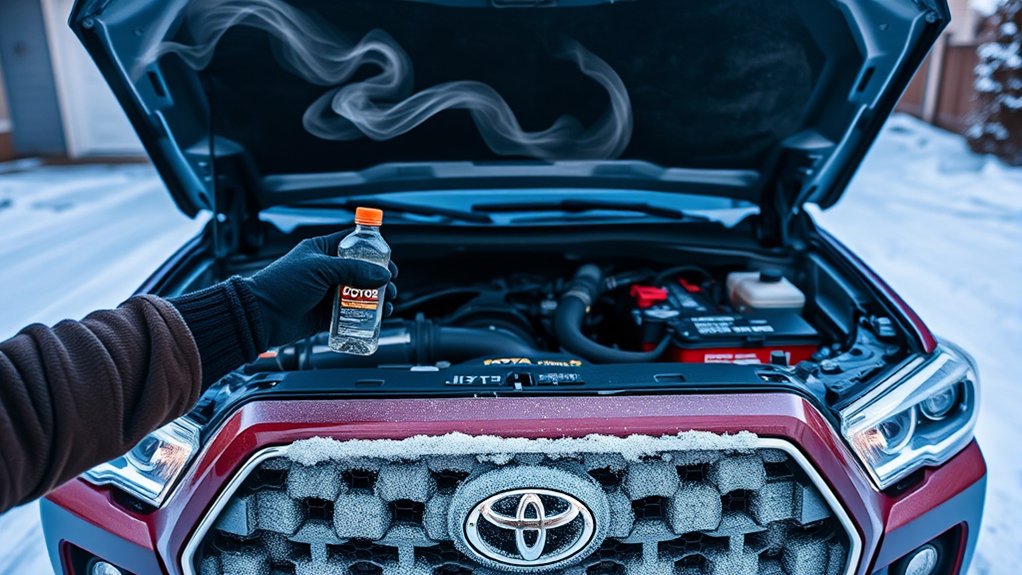
Cold weather can expose a weak battery, poor electrical connections, incorrect oil, or a worn starter in your Toyota Tacoma. A truck that starts normally in mild weather may crank slowly or fail to start after a deep freeze. The best fix is to diagnose the symptom first, then test the battery and charging system before replacing parts.
Quick Answer
If your Toyota Tacoma is hard to start in cold weather, begin with the 12-volt battery, terminals, and ground connections. Then check the charging system, starter, oil specification, and fuel condition. A slow crank usually points to low available battery power, while normal cranking without ignition suggests a fuel, spark, or sensor problem.
Key Takeaways
- Cold weather reduces available battery power while the engine needs more effort to crank.
- A slow crank, rapid clicking, or electrical resets often point to the battery or its connections.
- Use only the oil viscosity and specification listed for your Tacoma’s model year and engine.
- Winter gasoline is formulated for cold operation; random fuel additives are rarely the first solution.
- If the engine cranks at normal speed but will not start, investigate fuel, ignition, sensor, or security-system faults.
At a Glance
| Time Required | 10 to 30 minutes for basic checks; longer if electrical testing or repair is needed |
| Difficulty | Easy for visual checks; moderate for voltage, load, starter, or charging-system tests |
| Tools Needed | Gloves, eye protection, terminal brush, basic hand tools, and an optional multimeter or battery tester |
| Cost | Visual checks may cost nothing; testing, replacement parts, and professional diagnosis vary by fault |
Why Cold Weather Impacts Your Toyota Tacoma’s Battery Performance
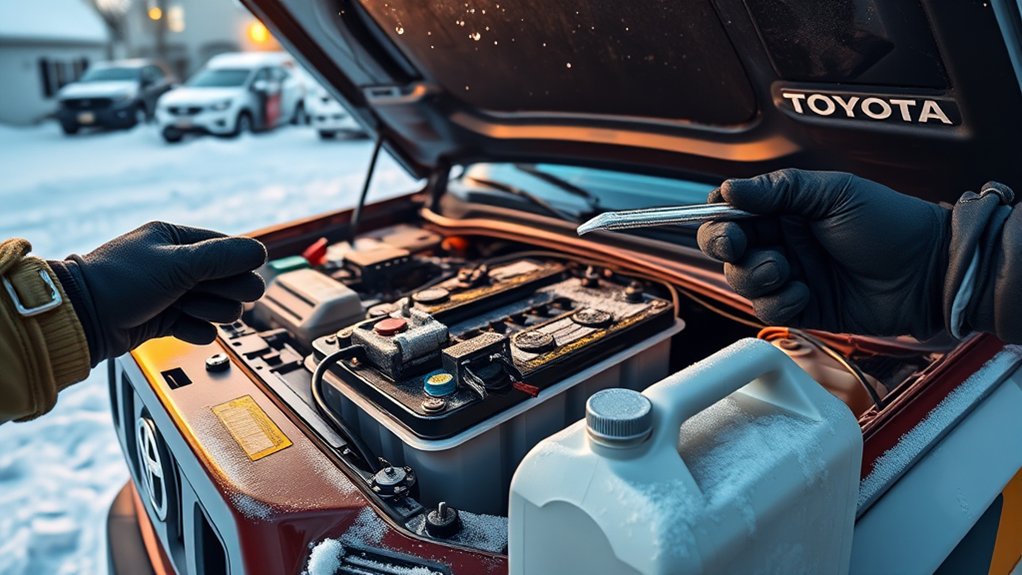
Low temperatures slow the chemical reactions inside a conventional 12-volt battery. At the same time, cold engine oil creates more resistance, so the starter needs more current to turn the engine. The National Highway Traffic Safety Administration recommends checking the battery, charging system, belts, and related components before winter.
A healthy battery may still crank more slowly in severe cold, but a sudden change often exposes an aging battery, low state of charge, corrosion, a loose ground, or a charging problem. Short trips can make the situation worse because the alternator may not have enough time to restore the energy used during repeated cold starts.
Cold weather does not automatically ruin a battery. It often reveals a battery or connection that was already close to failing.
Key Signs That Your Battery Needs Attention This Winter
Listen to how the Tacoma cranks and watch what the lights do. Those clues help separate a battery problem from a starter, charging, fuel, or ignition fault.
Slow Engine Crank
A labored, uneven crank is one of the strongest signs that the battery cannot deliver enough current. Corroded terminals, loose cable ends, or a weak engine ground can create the same symptom. Inspect and test the connections before assuming the battery itself has failed.
Dim Headlights or Electrical Resets
Headlights that become much dimmer during cranking, rapid clicking from the starter relay, a clock that resets, or flickering interior lights can indicate low voltage. However, dim lights while driving may also point to an alternator, belt, wiring, or charging-system problem.
Dashboard Indicator Lights
A battery-shaped warning light that stays on after the engine starts usually indicates a charging-system fault rather than a simple battery-health reading. A check-engine light is not a battery-specific warning. Use the model-specific information in Toyota’s warning-light guide and owner’s manual instead of diagnosing the truck by icon alone.
Diagnose the Starting Problem by Symptom
| What You Notice | Likely Areas to Check | First Action |
|---|---|---|
| No crank and no click | Battery connection, depleted battery, start authorization, fuse, or ignition circuit | Check electrical power, terminals, and the correct starting procedure |
| Rapid clicking | Weak battery or high resistance at a cable connection | Test the battery and clean or tighten connections |
| One solid click | Starter solenoid, starter motor, cable, or engine mechanical resistance | Confirm battery condition, then test the starter circuit |
| Slow cranking | Battery, terminals, grounds, starter, or incorrect/degraded oil | Perform a battery and voltage-drop test |
| Normal cranking but no start | Fuel delivery, ignition, crank/cam sensor, flooding, or security system | Scan for codes and verify fuel and spark |
Troubleshooting Battery Issues in Cold Weather
- Inspect safely. Turn the truck off, remove jewelry, wear eye protection, and look for a cracked case, swelling, leakage, loose hardware, or heavy corrosion.
- Check the terminals and grounds. Both battery posts, cable ends, body grounds, and engine grounds should be clean and tight. Do not overtighten damaged terminals.
- Test the battery under load. A resting voltage reading can be useful, but a conductance or load test gives a better picture of cold-start capability.
- Test the charging system. If the battery repeatedly goes flat, check alternator output, belt condition, cable voltage drop, and parasitic draw.
- Use a jump start only when appropriate. Follow the procedure for your exact Tacoma model year. If the engine starts with assistance but struggles again later, the underlying fault still needs diagnosis.
Warning: Do not jump-start a visibly damaged, leaking, or frozen battery. Keep sparks and flames away from the battery, and follow the cable connection sequence in your Toyota owner’s manual. Hybrid Tacoma models also contain a high-voltage system that should not be opened or serviced by an untrained person.
If the Tacoma still will not start after the battery and connections test well, move to the starter, charging, fuel, ignition, and control-system checks. Replacing the battery without testing can hide the actual problem and lead to another no-start event.
Must-Do Battery Preparations for Cold Weather
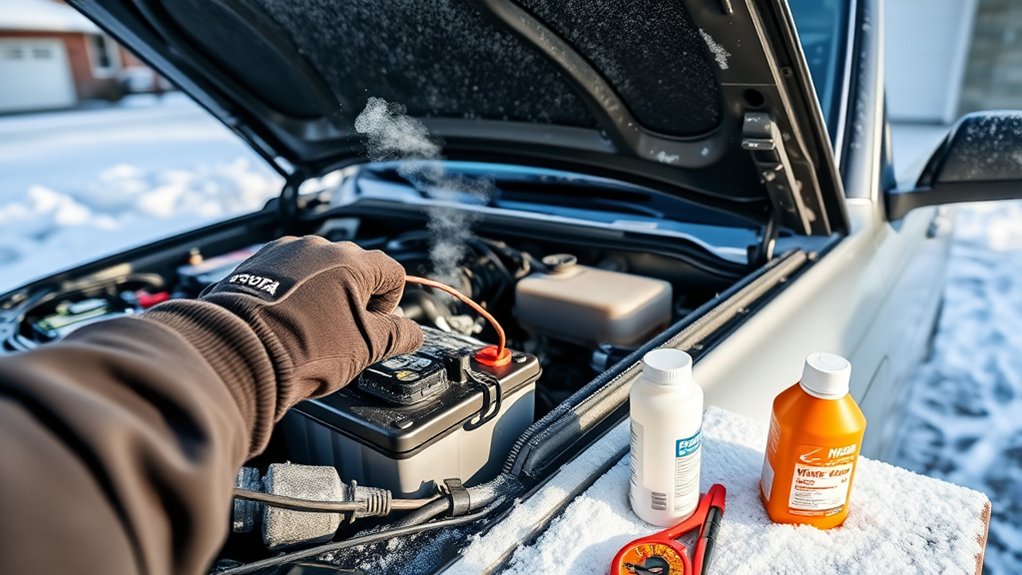
- Have an older or slow-cranking battery professionally tested before the first deep freeze.
- Clean corrosion with the correct supplies and confirm that the terminals and grounds are secure.
- Check the charging system if you make frequent short trips or the battery has needed repeated boosts.
- Keep the battery fully charged with an automatic maintainer when the truck sits for long periods.
- Check electrolyte only if the battery is designed with removable service caps. Do not pry open a sealed battery.
- Repair oil, coolant, or water leaks that can contaminate terminals or wiring.
Pro Tip: Ask for a printed battery and charging-system test result. It gives you more useful information than judging the battery only by age or open-circuit voltage.
How to Pick the Best Engine Oil for Cold Weather
Use the viscosity grade and performance specification listed for your Tacoma’s exact model year, engine, and market. Tacoma engines have changed across generations, so 0W-40, 5W-30, 0W-20, or another grade should never be recommended as a universal choice. Check the oil-fill cap and Toyota’s official manuals and warranty page.
The number before the “W” describes low-temperature viscosity performance, but a lower number does not make an oil suitable for every engine. The complete grade and required certification matter. Avoid aftermarket oil thickeners or improvised additives unless Toyota specifically approves them for your engine.
Also follow the correct oil-change interval. Old, contaminated, diluted, or incorrect oil can increase cranking resistance and reduce lubrication during a cold start. If the oil level is low or the oil smells strongly of fuel, diagnose the cause instead of only topping it off.
Why Fuel Quality Matters for Cold Starts
Buy fresh fuel from a busy, reputable station and use the octane grade required by your owner’s manual. Gasoline volatility is adjusted seasonally. The U.S. Environmental Protection Agency regulates lower-volatility gasoline during the summer ozone season, while colder-season fuel is formulated to support cold operation.
Fuel-line freezing is not the usual first diagnosis on a modern sealed gasoline system. Water contamination, stale fuel, a weak pump, a restricted injector, or an electrical fault can still create a crank-no-start condition. Keeping the tank reasonably full during severe winter weather also leaves a larger emergency reserve and reduces the empty air space where moisture can collect.
Note: Do not add alcohol, starting fluid, or an unapproved fuel treatment simply because the temperature dropped. Confirm that the product is compatible with your engine and follow the owner’s manual.
Tips for Conserving Battery Power Before Starting
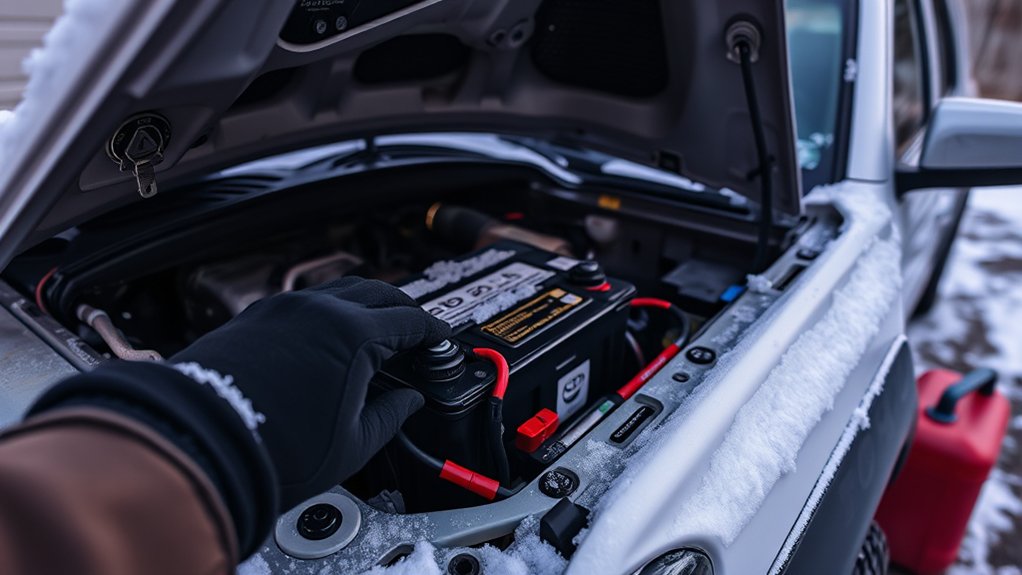
Turn Off Accessories First
Before cranking, switch off high-draw accessories such as seat heaters, the rear defroster, audio equipment, and plugged-in devices. Most modern systems manage many loads automatically, but reducing unnecessary demand gives a marginal battery more current for the starter.
Use the Normal Starting Procedure
Follow the starting procedure in your owner’s manual. A gasoline Tacoma does not generally need an extra pause in the “on” position to let the engine computer adjust to cold weather. Do not pump the accelerator unless the manual gives a specific flooded-engine procedure.
Check Battery Health Regularly
Test the battery before winter, after repeated slow cranks, or after the truck needs a jump. If the truck sits, use a properly sized automatic maintainer rather than allowing the battery to remain partly discharged.
Drive Gently After Starting
Once the engine starts and visibility is clear, let it stabilize briefly, then drive gently until the engine and transmission warm. Prolonged idling wastes fuel and adds unnecessary running time. The U.S. Department of Energy’s idle-reduction guidance notes that reducing idle time saves fuel and can reduce engine wear and pollution.
When the Problem Is Not the Battery
A cold-weather no-start is often blamed on the battery, but several faults can produce similar symptoms:
- Starter motor or solenoid: A single heavy click with a verified healthy battery can point to the starter circuit.
- Alternator or charging circuit: A new battery that repeatedly goes flat may not be receiving a full charge.
- Parasitic draw: An accessory, module, damaged wire, or stuck relay can drain the battery while the truck is parked.
- Fuel or ignition fault: Normal cranking without ignition can involve fuel pressure, injectors, spark plugs, coils, or contaminated fuel.
- Crankshaft or camshaft sensor: A temperature-sensitive sensor can fail intermittently and may store a diagnostic code.
- Security or key recognition problem: A key-fob or immobilizer issue can prevent normal starting on some models.
- Mechanical resistance: Incorrect oil, internal damage, or an accessory that is binding can make the engine unusually hard to turn.
A scan tool, battery tester, current clamp, and voltage-drop test can narrow the fault quickly. Seek professional diagnosis when the starter cables become hot, a fuse repeatedly blows, the truck has a burning smell, or the problem returns after a battery replacement.
The Importance of Regular Battery Maintenance in Winter
Winter reliability depends on the complete starting and charging circuit, not just the battery. Inspect the cables, grounds, hold-down, drive belt, and charging output. A loose battery can damage the case, while high resistance at a connection can reduce starter current and prevent the alternator from charging correctly.
Keep the top of the battery clean and dry. Dirt and moisture can promote corrosion and small electrical leakage paths. If the battery is sealed, limit maintenance to inspection, cleaning, secure mounting, and testing. If it is serviceable, follow the battery maker’s instructions and use proper eye and skin protection.
Recommended Accessories for Winter Preparedness
- Automatic battery maintainer: Useful when the Tacoma sits for days or weeks. Choose a charger compatible with the battery type.
- Portable jump pack: Keep it charged and within its stated temperature range. Learn the correct connection points before an emergency.
- Battery warmer: Use only a properly rated product that fits safely and does not contact moving or hot components.
- Engine block or coolant heater: Consider a Toyota-approved or professionally installed system in consistently extreme climates.
- Winter emergency kit: Carry a flashlight, jumper cables, gloves, blanket, scraper, shovel, phone charger, water, and warning devices. NHTSA provides a broader winter vehicle checklist.
A car cover can reduce snow and ice buildup, but it should not be treated as an engine or battery heater. Use only products designed for outdoor automotive use and secure them so they cannot damage the paint in wind.
How to Maximize Your Tacoma’s Reliability During Extreme Cold
- Check the battery and charging system before the coldest weather arrives.
- Use the exact oil grade and specification required for your model year and engine.
- Keep terminals, grounds, and the battery hold-down clean and secure.
- Use fresh fuel and keep enough in the tank for delays or emergencies.
- Turn off unnecessary accessories before cranking.
- Start normally, let the engine stabilize briefly, and drive gently once visibility is clear.
- Use an approved maintainer, warmer, or block heater when local conditions justify it.
- Carry winter emergency supplies and keep the exhaust outlet clear if the truck becomes stranded in snow.
If the Tacoma repeatedly needs assistance, stop treating the weather as the only cause. A healthy starting system should be tested for battery capacity, charging output, starter draw, cable voltage drop, and parasitic drain.
Related Guides
Frequently Asked Questions
Why is my Toyota Tacoma not starting in the cold?
The most common causes are a weak or undercharged battery, corroded or loose connections, a starter problem, incorrect or degraded oil, or a charging-system fault. If the engine cranks normally but does not fire, check fuel, ignition, sensors, and the security system.
Why is my battery struggling to start in cold weather?
Cold temperatures reduce the battery’s available output while the starter needs more power to turn a cold engine. An aging battery, partial charge, corrosion, loose grounds, short-trip driving, or a charging fault can make the effect much worse.
Why is my Toyota Tacoma struggling to start even with a new battery?
A new battery will not fix a loose cable, poor ground, weak alternator, excessive parasitic draw, worn starter, or fuel and ignition problem. Test the complete starting and charging system and confirm that the replacement battery is correctly sized and fully charged.
Why does my truck crank normally but fail to start in cold weather?
Normal cranking makes a simple low-battery diagnosis less likely. Check for diagnostic trouble codes, fuel pressure, injector operation, spark, temperature-sensitive crank or cam sensors, contaminated fuel, and key or immobilizer warnings.
Can I jump-start a Toyota Tacoma in extreme cold?
You can use the approved jump-start procedure when the battery and cables are not frozen, cracked, leaking, or otherwise damaged. Follow the owner’s manual for the correct connection points and sequence. Do not improvise around hybrid high-voltage components.
How long should I warm up my Tacoma before driving?
After the engine starts, allow it to stabilize briefly and make sure the windows are clear. Then drive gently until the powertrain reaches normal temperature. Long unattended warm-ups are unnecessary, waste fuel, and may violate local idling or vehicle-security rules.
Conclusion
Cold weather starting problems in a Toyota Tacoma usually become easier to solve when you identify the exact symptom. Slow cranking and clicking point toward the battery, cables, grounds, or starter. Normal cranking without ignition points toward fuel, spark, sensors, or security controls. Use the correct oil, test the complete charging system, and avoid replacing parts without evidence.
Prepare before the first severe freeze, keep the battery charged, and follow the model-specific Toyota manual for oil, jump-starting, warning lights, and heater accessories. If the problem repeats, a professional battery, starter, charging, and diagnostic scan can prevent a roadside failure.
Sources
- Toyota Manuals and Warranties — model-specific starting, oil, maintenance, and jump-start guidance
- Toyota Warning Lights — manufacturer guidance for interpreting dashboard indicators
- NHTSA Winter Weather Driving Tips — battery, charging-system, coolant, tire, and emergency-kit preparation
- U.S. Department of Energy: Idle Reduction — fuel, wear, and emissions effects of unnecessary idling
- U.S. EPA Gasoline Reid Vapor Pressure — seasonal gasoline-volatility standards
