
Your Toyota Camry’s tire sidewall tells you the tire’s dimensions, construction, load capacity, speed category, manufacturing date, and other safety information. It does not, by itself, prove that the tire is correct for your car. Before buying a replacement, compare the complete sidewall code with the driver-side tire placard and the owner’s manual for your exact model year, trim, wheel package, powertrain, and market.
Quick Answer
A code such as P215/65R16 95H identifies the tire type, nominal width, sidewall ratio, radial construction, wheel diameter, load index, and speed rating. It is a decoding example, not a universal Camry size. Confirm the exact size and cold pressure on your driver-side tire placard.
Key Takeaways
- Your Camry’s approved original tire size and recommended cold pressure appear on the driver-side tire placard.
- The wheel-diameter code must match the wheel exactly, while the load capacity and speed category must meet Toyota’s requirements.
- The maximum pressure molded into the sidewall is not the normal inflation target for your Camry.
- Two tires with similar-looking size codes are not automatically interchangeable.
- Camry AWD models require particular care because mismatched tire diameters or tread depths may affect the drivetrain.
- Check the DOT date code, winter markings, load designation, tread, pressure, and damage before buying or keeping a tire.
Understanding Tire Size Basics for Your Toyota Camry
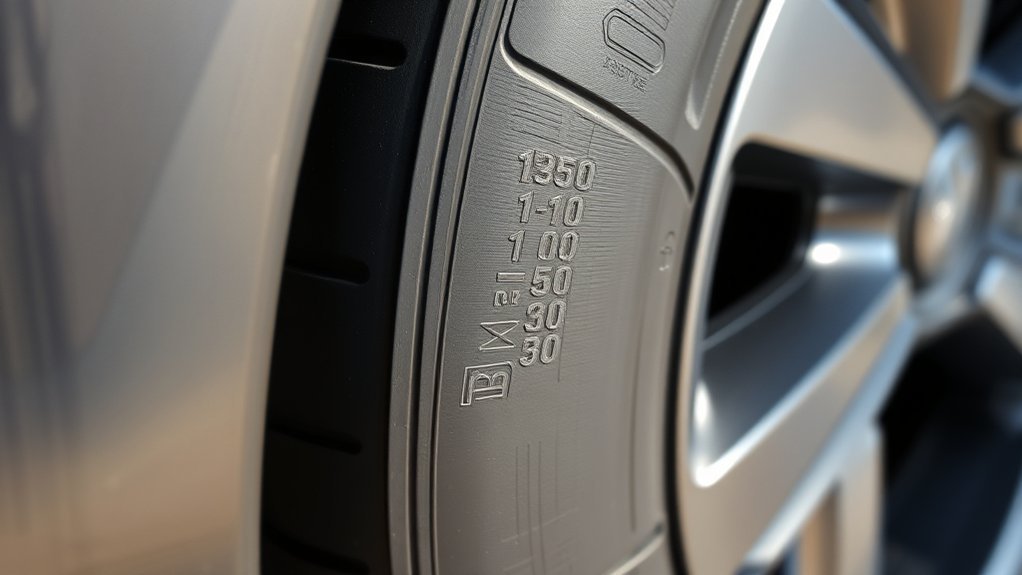
Passenger-car tire sizes usually follow a code similar to P215/65R16 95H. Each part describes a different specification. This example explains the format, but it does not represent every Toyota Camry model, trim, or market.
| Marking | Meaning | What to Check |
|---|---|---|
| P | P-metric passenger tire | Some metric passenger tires omit the P. Compare the complete specification rather than assuming the prefix is the only difference. |
| 215 | Nominal section width in millimeters | This is sidewall-to-sidewall section width under standardized conditions, not an exact tread-width measurement. Actual width varies by tire model and wheel width. |
| 65 | Sidewall height as a percentage of nominal section width | In this example, one sidewall is approximately 65% of 215 millimeters high. |
| R | Radial construction | The R means radial, not radius. |
| 16 | Wheel or rim-diameter code in inches | A 16-inch tire cannot be mounted safely on a 17-inch, 18-inch, or 19-inch wheel. |
| 95 | Load index | The replacement must provide the load capacity required for the vehicle at the approved inflation pressure. |
| H | Speed symbol or speed rating | Use a rating that meets Toyota’s requirement, subject to any manufacturer-approved winter-tire exception. |
The load index and speed symbol together form the tire’s service description. Compare the complete tire size, service description, load designation, and tire type—not only the width or wheel diameter.
How to Calculate Sidewall Height and Approximate Tire Diameter
You can estimate a metric tire’s unloaded dimensions from its size code. The result is useful for understanding the numbers, but it is not a substitute-size approval. Published dimensions can vary slightly among tire models.
- Sidewall height in millimeters: section width × aspect ratio ÷ 100
- Sidewall height in inches: sidewall height in millimeters ÷ 25.4
- Approximate overall diameter: wheel diameter + two sidewall heights in inches
For 215/65R16:
- Sidewall height: 215 × 0.65 = 139.75 mm, or about 5.50 inches
- Approximate overall diameter: 16 + 5.50 + 5.50 = about 27.0 inches
- Approximate circumference: about 84.8 inches
Note: Matching the calculated diameter does not prove that another size is safe. Wheel width, load capacity, clearance, inflation requirements, tire construction, TPMS, steering geometry, and Toyota’s fitment limits must also be checked.
How to Find the Correct Tire Size for Your Toyota Camry
Start with the Tire and Loading Information label on the driver-side door edge or door pillar. It normally lists the original front, rear, and spare-tire sizes together with the recommended cold inflation pressures. The National Highway Traffic Safety Administration recommends using this label or the owner’s manual when selecting tire size.
You can also use Toyota’s official manual lookup to find instructions for your model year. This matters because two Camrys from different years, trims, markets, or factory wheel packages may use different dimensions, load indexes, speed ratings, and pressure specifications.
Pro Tip: Take clear photos of the door-jamb placard and the complete sidewall markings before shopping. Compare every number and letter, and record whether the tire is front, rear, or the temporary spare.
[Amazon Products Picked for You]

HIGH QUALITY: Marsflex tire pressure sensors include a CR2450 battery and a cutting-edge technology chip. The upgraded battery improves the operating temperature range to -40℃~+125℃, and has 5-8 years lifespan. The chip provides best signal strength, real-time reading the condition of your tire

🚗 【315MHz Tire Pressure Sensor-Vehicle Fitment,Year Range,OE Number】 ★:-Tacoma (2006-2025) | FJ Cruiser (2007-2014) | Camry (2007-2025) ★:-Other Compatible Models,2004-2025:TOYOTA Corolla.Highlander.RAV4.4 Runner.Avalon.Prius.Lander Cruiser.Matrix.Venza.Sequoia.Tundra.Yaris.LEXUS RX350.RX450H.ES350.ES350H.NX300.NX350.IS250.IS350.GX460.UX250H.GS350.GS450H.LX570. ⚙ 【OE Number】PMV-107J.42607-06011.42607-0C020.42607-30030.42607-33011.42607-33021.42607-35010 etc. ⚠️Please Refer to The Main Image for The Complete Vehicle Fitment List.
Recent Toyota Camry Tire-Size Examples
The table below shows official original-equipment examples for the 2025 mainland U.S. Toyota Camry. It is included to demonstrate why the trim and wheel package matter. It must not be used as a universal lookup for another model year, country, or modified vehicle.
| 2025 U.S. Camry Trim | Toyota-Listed All-Season Size | Wheel Diameter |
|---|---|---|
| LE | P205/65R16 | 16 inches |
| SE | P235/45R18 | 18 inches |
| XSE | P235/40R19 | 19 inches |
| XLE | P235/45R18 | 18 inches |
These examples come from Toyota’s 2025 U.S. Camry brochure. Your door placard remains the controlling reference because factory specifications, options, and regional fitments can change.
Tire Type Selection
Once you confirm the complete size and service description, choose a tire category that matches your climate, road conditions, and driving priorities.
| Tire Type | Best For | Main Trade-Off |
|---|---|---|
| All-Season | Mixed, generally mild-weather driving | Convenient year-round use, but less capable than a dedicated winter tire in severe snow and ice |
| All-Weather | Year-round use where meaningful winter capability is needed | Performance varies by model; confirm the three-peak mountain snowflake marking |
| Summer | Warm weather and responsive dry or wet handling | Not intended for freezing conditions, snow, or ice |
| Winter | Regular cold temperatures, snow, and ice | Faster warm-weather wear and softer handling; install as a set of four |
| Touring | Comfort, tread life, and low road noise | Usually less aggressive than a performance-focused tire |
| Performance | Sharper steering and stronger grip within the tire’s intended temperature range | May produce more noise, a firmer ride, higher cost, or shorter tread life |
Do not choose by category name alone. Confirm that the exact tire model is available in the required size, load index, speed rating, load designation, and construction.
Why the Complete Specification Matters
A tire that mounts on the wheel can still be unsuitable for your Camry. It may have inadequate load capacity, an incompatible speed category, an incorrect overall diameter, an unapproved load designation, or dimensions that create clearance problems.
A replacement should normally match the original specification or another combination approved by Toyota. A qualified tire installer should confirm wheel width, tire-manufacturer rim-width approval, full steering and suspension clearance, load capacity, inflation requirements, TPMS compatibility, and any model-specific restrictions before fitting an alternative size.
Warning: Do not use the maximum pressure molded on the tire sidewall as your normal inflation target. Inflate cold tires to the pressure on your Camry’s tire placard unless Toyota gives different instructions for an approved setup.
P-Metric, Metric, Light-Truck, and Spare-Tire Prefixes
The first letters in a tire designation help identify its sizing system or intended application:
- P: A P-metric passenger-tire designation, such as
P205/65R16. - No prefix: Often a metric or Euro-metric passenger size, such as
205/65R16. It should not be treated as automatically identical to the P-metric version without checking load and inflation data. - T: A temporary-spare designation. A T-type spare can use a different size and much higher pressure than the four road tires.
- LT: A light-truck metric tire. Do not substitute an LT tire for a Camry passenger tire merely because its dimensions appear close.
- ST: A special-trailer tire. It is not an appropriate passenger-car replacement.
If your Camry has a compact spare, follow the size, pressure, speed, and distance limits in the owner’s manual and on the spare-tire labeling. A temporary spare is intended only to help you reach a service location.
How Tire Width Affects Performance
Nominal tire width can influence steering feel, comfort, noise, rolling resistance, wet behavior, and available clearance. A larger width number does not automatically create better traction because section width is only one part of the tire’s design.
A wider approved tire may use a wider tread package and may provide quicker steering response when it is designed for the wheel and vehicle. Tire compound, tread pattern, tread depth, temperature, inflation, vehicle load, and road surface still have major effects on grip.
Tire width is one part of a complete setup. A well-matched tire in Toyota’s approved specification is usually safer than a wider tire chosen only for appearance.
Going wider can increase rolling resistance, road noise, steering effort, cost, or the risk of rubbing. Wet-road performance cannot be predicted from width alone. Hydroplaning risk also depends on vehicle speed, water depth, tread design, tread depth, pressure, and load.
A narrower approved winter package may perform well in loose snow or slush in some conditions. However, winter compound, tread design, tread depth, temperature range, and the three-peak mountain snowflake marking are more useful indicators of winter capability than width by itself.
Why Aspect Ratio Matters
The aspect ratio compares one sidewall’s nominal height with the tire’s nominal section width. In 215/65R16, the sidewall height is approximately 65% of 215 millimeters.
A lower aspect ratio usually produces a shorter sidewall when other dimensions are considered. When paired with the correct wheel and tire design, it may sharpen steering response. The trade-offs can include a firmer ride, less cushioning over sharp road edges, and a greater risk of wheel or tire damage from severe impacts.
A higher aspect ratio generally produces a taller sidewall. Additional sidewall height can improve impact absorption and ride comfort, although steering response may feel less immediate.
You cannot safely change the aspect-ratio number by itself. Width, wheel diameter, approximate overall diameter, load capacity, rim-width approval, and available clearance must work together.
Internal Construction: Why Radial Tires Are the Standard
The R in a modern Camry tire size identifies radial construction. In a radial tire, body cords run approximately across the tire from bead to bead, while belts reinforce the tread area.
This construction allows the tread and sidewall to perform different jobs. The tread area can remain comparatively stable while the sidewall flexes through normal road movement. Rubber compounds, casing design, belt materials, tread design, and inflation all contribute to handling, comfort, durability, and rolling resistance.
Radial passenger tires are the normal modern fitment for vehicles such as the Camry. Use the construction and complete specifications approved for your car rather than substituting another construction type.
Deciphering Load Index and Its Role in Tire Selection
The load index is the number immediately after the wheel diameter in a complete service description. It corresponds to a standardized maximum load for one properly inflated tire under specified conditions.
| Example Load Index | Standardized Maximum per Tire | Important Limitation |
|---|---|---|
| 91 | 615 kg, approximately 1,356 lb. | This is an example, not an automatic Camry requirement. |
| 95 | 690 kg, approximately 1,521 lb. | The index must be evaluated with the sizing system, pressure, and manufacturer requirements. |
Choose a replacement that meets Toyota’s load requirement. Installing a tire with insufficient capacity can increase deflection, heat, and structural stress, especially when the vehicle carries passengers and luggage.
You may also see SL for Standard Load or XL for Extra Load. An XL tire can support a higher rated load under its specified inflation conditions, but the XL marking does not authorize exceeding the Camry placard pressure or vehicle load limits.
Note: The U.S. Tire Manufacturers Association cautions that load index should not be used by itself to decide whether a replacement has acceptable load capacity.
Speed Ratings: What They Mean for Your Safety on the Road
The speed rating is the letter at the end of the service description. It identifies a standardized speed-capability category under defined laboratory and service conditions.
| Example Symbol | Standardized Category | What It Does Not Mean |
|---|---|---|
| T | 118 mph / 190 km/h | Permission to drive at that speed |
| H | 130 mph / 210 km/h | A guarantee for a damaged, worn, overloaded, or underinflated tire |
Understanding Speed Ratings
A speed rating reflects the tire’s standardized high-speed capability and ability to manage heat under specified load, pressure, and test conditions. It is not based only on a vehicle’s top speed.
The rating does not override speed limits, weather, road conditions, tire damage, inflation, tread depth, repair history, or vehicle load. A damaged, overloaded, underinflated, or severely worn tire may fail far below the speed category molded into its sidewall.
Importance of Matching Ratings
Use a replacement speed rating that meets Toyota’s requirement. Do not assume that any tire with the correct dimensions is suitable.
Mixing tires with different performance capabilities can affect emergency handling, braking response, and stability. A matched set that follows Toyota and tire-manufacturer guidance is the safest approach.
A dedicated winter tire may sometimes use a lower speed rating when the vehicle and tire manufacturers permit it. In that situation, the vehicle must be operated below the replacement tire’s limit, and the driver should be made aware of the reduced rating.
Other Tire Sidewall Markings You Should Know
DOT Tire Identification Number and Date Code
A tire certified for applicable U.S. road-use standards carries a DOT Tire Identification Number, or TIN. The final four digits identify the manufacture week and year. For example, 2325 means the tire was made during week 23 of 2025.
For new tires made under the current format after the phase-out that ended April 13, 2025, the TIN contains a three-symbol plant code, a six-symbol manufacturer code, and a four-digit date code. Older tires can show an earlier valid format. The current requirements appear in 49 CFR 574.5.
Check both sidewalls because the complete TIN is required on at least one sidewall and may be harder to see on the inward-facing side. Tire age is only one part of the decision. Consider condition, storage, pressure history, performance changes, and the inspection or replacement guidance from the vehicle and tire manufacturers.
M+S and Three-Peak Mountain Snowflake
M+S, including variations such as M/S or M&S, identifies a tread that meets a mud-and-snow design definition. It does not represent the same severe-snow performance qualification as the three-peak mountain snowflake, often shortened to 3PMSF.
The mountain-and-snowflake symbol indicates that the tire meets a specified snow-traction performance requirement. For regular winter driving, also consider ice performance, wet grip, local temperatures, tread depth, and the tire manufacturer’s intended use.
Install winter tires as a set of four. Using winter tires only on the front of a front-wheel-drive Camry can create an unstable front-to-rear traction imbalance.
UTQG Treadwear, Traction, and Temperature Grades
Many U.S. passenger tires carry Uniform Tire Quality Grading information. The system covers relative treadwear, straight-line wet-braking traction, and resistance to heat under controlled testing.
- Treadwear: A comparative laboratory and test-course grade, not a mileage warranty.
- Traction: Grades AA, A, B, or C for straight-ahead wet braking under specified test conditions. It does not directly grade cornering or hydroplaning resistance.
- Temperature: Grades A, B, or C for heat resistance and dissipation under controlled testing.
The current federal UTQG standard explains the grades and their limitations. Use UTQG as one comparison point rather than a substitute for size, load, climate, braking, and owner priorities.
Directional and Asymmetric Markings
A directional tire may display a rotation arrow. An asymmetric tire may use markings such as “Inside” and “Outside.” Incorrect mounting can prevent the tread from working as designed.
Check these markings after installation, replacement, repair, seasonal wheel changes, or rotation. A directional tire can normally move front to rear on the same side unless it is remounted on the wheel.
Maximum Load and Maximum Pressure Markings
The sidewall may state a maximum load together with a maximum cold pressure. These markings describe the tire’s limits under the applicable rating system. They do not replace the vehicle manufacturer’s pressure recommendation.
The Camry placard pressure is selected for the vehicle’s load capacity, handling, braking, ride, and tire configuration. Use the sidewall maximum as a limit, not a routine target.
Can You Use a Different Tire Size?
Changing wheel or tire size is sometimes called plus sizing or minus sizing. A safe alternative setup must preserve suitable overall diameter, wheel-width compatibility, load capacity, clearance, inflation requirements, and performance characteristics.
A meaningfully different overall diameter can alter the speedometer and odometer relationship, effective gearing, ground clearance, and the data used by vehicle systems. The exact consequences depend on the Camry’s model year and equipment. A tire may also contact the suspension, body, brake components, or wheel-well liner during steering, loading, or suspension movement.
Note: Two tire sizes that look close on paper are not automatically interchangeable. Have a qualified installer verify the tire manufacturer’s approved wheel-width range and the vehicle’s full-clearance, load, and system requirements.
[Amazon Products Picked for You]

✓ This Fits: ✓ CAMRY 2019-2021 18x8 (alloy, 20 spoke), black ✓ OEM Tire Size: 235/45R18 ✓ Color/Finish: Gloss Black

🚗[Sleek Silver Lacquer Finish]: The 15 inch hubcaps inch feature a high-quality silver lacquer finish that resists fading and maintains its stylish appearance for years to come

【Pre-programmed TPMS Sensor】The Tire Pressure Sensor is 100% new and come pre-programmed specifically for your make/model/year of vehicle,just activate them with TPMS scan tool.
Special Caution for AWD Camry Models
An AWD Camry should use tires that match Toyota’s requirements for size, construction, model or tread characteristics, and remaining tread depth. Differences in actual outside diameter can make the wheels rotate at different rates even when the sidewall codes appear similar.
Warning: Do not replace one tire on an AWD Camry without checking the model-year owner’s manual and having all four tires measured. Tire-industry guidance warns that even small outside-diameter differences can cause drivetrain malfunction or damage on AWD vehicles.
Replacing Fewer Than Four Tires
Replacing all four tires together is generally preferred because it preserves matching construction, tread design, performance, and tread depth. Your owner’s manual or tire manufacturer may impose additional requirements.
If only two tires are replaced and Toyota permits a two-tire replacement, the newer pair should generally be installed on the rear axle. Deeper rear tread helps preserve rear stability on wet roads. Do not automatically place the new pair on the driven axle.
A single-tire replacement needs more care. The replacement must match the other tires, and AWD models may require replacing all four or using a manufacturer-approved tread-depth matching procedure. A qualified installer should make that decision.
Essential Tire Maintenance Tips
Correct tire size does not protect you from poor maintenance. Check all road tires and the spare, when equipped, at least once a month and before a long trip.
- Check cold pressure: Measure before driving or after the car has been parked for at least three hours. Use the door-jamb placard value, which may differ between front, rear, and spare positions.
- Inspect tread depth: NHTSA identifies 2/32 inch as the replacement threshold. Wet or winter performance can become unacceptable before the tread reaches that minimum.
- Look for damage: Have tires with bulges, exposed cords, deep cuts, cracking, impact damage, punctures, or repeated pressure loss professionally inspected.
- Rotate as recommended: Follow your Toyota manual. NHTSA notes that 5,000 to 8,000 miles is a common interval when the manufacturer recommends rotation.
- Check alignment and balance: Uneven wear, steering pull, or vibration can indicate an alignment, balance, wheel, suspension, or tire problem.
- Watch tire age: Read the DOT date and follow the vehicle and tire manufacturers’ age-based inspection or replacement guidance.
- Check directional markings: Confirm that rotation arrows and “Inside/Outside” labels face the correct direction.
- Inspect the spare: A compact spare can require a much higher pressure than the road tires and may have strict speed and distance limits.
- Check recalls: Use the tire brand, product line, size, and TIN with the NHTSA recall search.
Underinflation can increase heat, rolling resistance, shoulder wear, and energy use. Excessive pressure can reduce ride comfort and alter wear and impact behavior. Consistent placard-based inflation helps the tire and vehicle perform as intended. FuelEconomy.gov also advises using the vehicle pressure rather than the sidewall maximum.
[Amazon Products Picked for You]
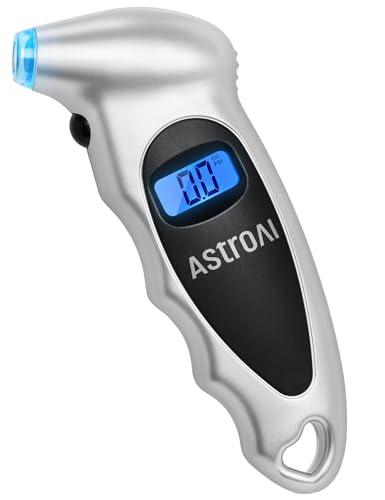
Accurate, Dependable Readings: Factory‑calibrated to ±1 PSI, so you can confidently match your vehicle’s recommended PSI (check the door jamb sticker). Ideal for monthly checks and road trips — consistent results every time, cold or warm.

EXPERT-GRADE CALIBRATION: Each AstroAI Tire Pressure Gauge is calibrated with professional-grade tools, ensuring quick and accurate measurement results within plus-minus 1PSI. Stay prepared for any roadside emergency and travel with peace of mind.

RUGGED DESIGN: The stainless steel components prevent rust and corrosion while the precision-crafted nozzle seamlessly seals onto the valve stems for highly accurate readings (±2% span). We also provide 4 valve stem caps for convenient replacement.
TPMS Is Not a Substitute for a Tire Gauge
A tire-pressure monitoring system warns about significant pressure loss; it does not confirm that every tire is exactly at the placard pressure. Check pressure manually each month with an accurate gauge, even when no TPMS warning appears.
Wheel changes, seasonal tire sets, valve service, or sensor replacement may require TPMS registration, relearning, or diagnosis depending on the Camry’s model year. A flashing TPMS light can indicate a system malfunction rather than ordinary low pressure.
When to Stop Driving on a Damaged Tire
Stop in a safe location and seek professional help if a tire is visibly low, rapidly losing pressure, bulging, exposing cords, producing a sudden vibration, or damaged after a hard impact. Do not continue driving merely because the tread still appears usable. Internal structural damage is not always visible from outside.
Frequently Asked Questions
How do you find the tire size on a Toyota Camry?
Check the Tire and Loading Information label on the driver-side door edge or pillar. You can also check the model-year owner’s manual. The sidewall shows the tire currently installed, but that tire may not be the correct original specification if a previous owner changed it.
What tire sizes are used on a recent Toyota Camry?
For the 2025 mainland U.S. Camry, Toyota listed P205/65R16 for LE, P235/45R18 for SE and XLE, and P235/40R19 for XSE. These are examples for one model year and market. Verify your own car’s driver-side placard before ordering.
Is a 275 tire the same as a 33-inch tire?
No. In a metric size, 275 normally describes nominal section width in millimeters. A 33-inch designation normally describes approximate overall diameter in an inch-based flotation size. You need the complete code to compare width, sidewall height, wheel diameter, and total diameter.
What does 4.80/4.00-8 mean on a tire?
It is an older inch-based designation commonly associated with small trailer or utility tires, not a Camry passenger tire. The final 8 identifies an 8-inch rim code. The first figures are not a metric width and percentage aspect ratio like 215/65R16.
Which tire is wider, 225 or 235?
A 235 tire is nominally 10 millimeters wider than a 225 tire when the first number is compared within the same metric sizing system. That does not show total tire height or prove interchangeability. Aspect ratio, wheel diameter, tire design, load capacity, and approved wheel width also matter.
What do markings such as 95H or 91V mean?
The number is the load index and the letter is the speed symbol. Together they form the service description. Compare both with Toyota’s requirement; the dimensions alone do not establish that a tire is suitable.
Should all four Camry tires have the same size and rating?
Use the front and rear specifications shown on the vehicle placard. Most Camry setups use matching specifications at all four positions, but you should not assume this without checking. Tire type, construction, load capacity, speed rating, and performance characteristics should also be compatible.
Can you replace only two tires on a Toyota Camry?
Sometimes, provided Toyota and the tire manufacturer allow it and the new pair matches the remaining tires. The newer pair should generally go on the rear axle. An AWD Camry may require all four tires to have closely matched actual diameters and tread depths, so obtain model-specific professional guidance.
What does the three-peak mountain snowflake symbol mean?
The three-peak mountain snowflake symbol indicates that the tire meets a specified snow-traction performance requirement for severe-snow service. It provides more winter-performance information than the M+S marking alone, but it does not guarantee equal ice, wet, or dry performance among all marked tires.
Can you use the PSI printed on the tire sidewall?
Do not treat the sidewall maximum as your normal target. Use the recommended cold pressure on your Camry’s tire placard or in the owner’s manual. Check it when the tires are cold and remember that a temporary spare may use a different pressure.
Conclusion
Reading a Toyota Camry tire size becomes easier once you separate the code into tire type, nominal width, aspect ratio, construction, wheel diameter, load index, and speed rating. Those markings explain the installed tire, but the driver-side placard and model-year owner’s manual remain your main fitment and inflation references.
Before replacing a tire, compare the complete specification, inspect the DOT date, confirm the tire category and winter markings, and check for damage or recalls. When considering another size—or replacing fewer than four tires on an AWD Camry—have a qualified installer verify wheel compatibility, actual diameter, clearance, load capacity, inflation requirements, tread-depth matching, and vehicle-system effects.
Sources
- Toyota Manuals and Warranties — model-year owner’s manuals and manufacturer instructions.
- Toyota 2025 Camry Brochure — official U.S. trim-specific tire-size examples.
- NHTSA TireWise — tire selection, placard pressure, tread, rotation, aging, and maintenance guidance.
- 49 CFR 574.5 — current Tire Identification Number format and date-code requirements.
- 49 CFR 575.104 — Uniform Tire Quality Grading standards and limitations.
- U.S. Tire Manufacturers Association Tire Care and Safety Guide — sidewall codes, speed symbols, tire matching, winter sets, AWD cautions, and replacement guidance.
