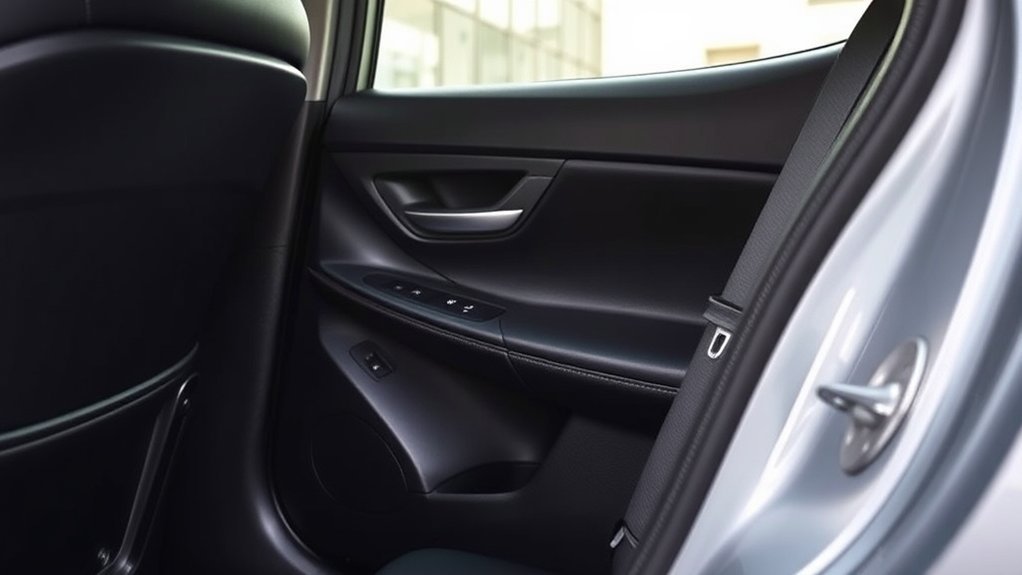
On a Toyota Camry, the child safety lock is on the narrow edge of each rear door beside the latch, so you normally see it only with the door open. Moving the door-edge child-protector control to Lock disables that door’s inside handle. On recent U.S.-market Camrys, pushing the switch down sets Lock and moving it up returns it to Unlock; older model years and other markets can differ, so always follow the marking on your door.
Quick Answer
Park the Camry, open a rear door, and find the child-protector control on the narrow door edge near the latch. On recent U.S.-market Camrys, push the switch down toward Lock; move it up toward Unlock to restore normal inside-handle operation. Repeat on the other rear door if needed, then test while parked: with the normal door lock unlocked, the inside handle should not open a child-locked door, while the outside handle should.
Key Takeaways
- The child safety control is on the edge of each rear door near the latch.
- Each rear door has a separate control, so check both sides.
- On recent U.S.-market Camrys, down is Lock and up is Unlock; follow your door marking if it differs.
- An engaged child lock disables the inside handle; it does not replace the normal power door lock.
- Child locks do not replace a correctly used car seat, booster seat, or seat belt.
- Follow the label on your door and the owner’s manual for your exact Camry year and market.
At a Glance
| Time Required | About 1–2 minutes |
| Difficulty | Easy |
| Tools Needed | Usually none; use a tool only if the door label or owner’s manual specifically instructs you to |
| Cost | $0 |
What Are Child Safety Locks and Why Use Them?
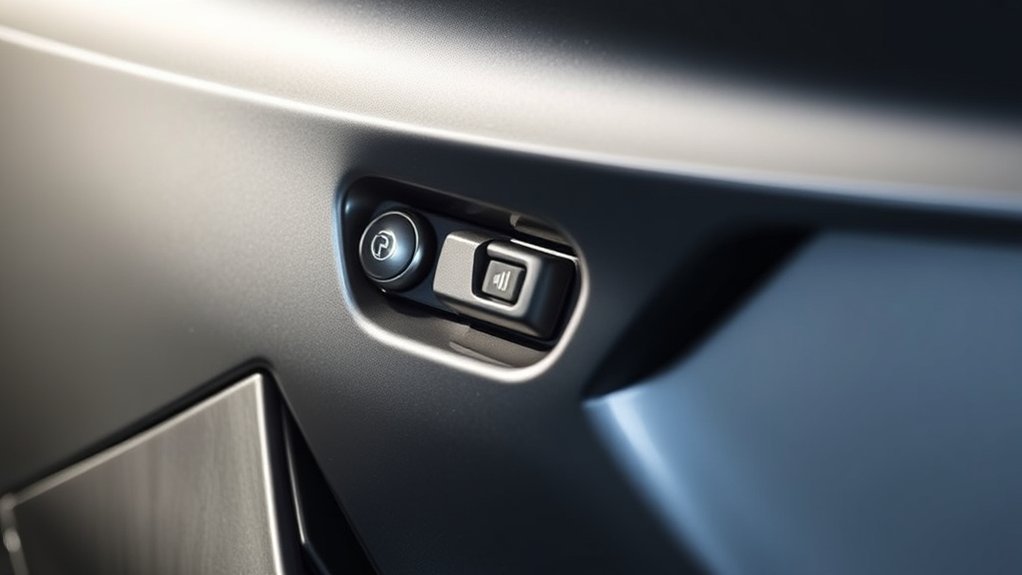
A rear-door child safety lock, also called a child-protector lock, prevents the interior handle from releasing that door when the feature is engaged. Under 49 CFR 571.206, a rear-side-door locking device must be able to prevent operation of the interior release and require separate actions to unlock and open the door.
The child safety lock is different from the Camry’s normal power door lock. The power lock controls whether the door is locked for normal entry and exit. The child-protector setting controls the inside rear-door release. With the child lock engaged and the normal door lock unlocked, the rear door should still open from outside.
Each rear door has its own child-protector control. You can engage one side or both sides, but choose the setting that suits the passengers using each rear seat and make sure every caregiver knows which doors are engaged.
Warning: Child safety locks limit a rear passenger’s ability to exit through the inside handle. Use them only where appropriate, tell adult caregivers which doors are engaged, and never treat them as a substitute for a correctly installed car seat, booster seat, or seat belt.
How to Locate the Child Safety Lock Tab in Your Camry
Open the rear door fully and face the narrow door edge that meets the vehicle body when closed. The child-protector control is normally close to the latch mechanism, not on the interior trim panel or the driver’s window-control panel.
- Check both rear doors because each side has a separate control.
- Look for an arrow, LOCK label, child symbol, or padlock symbol beside a small lever or slot.
- Use good lighting because the control can blend into the painted door edge.
- Do not confuse the child lock with the metal latch, striker opening, or an exposed fastener.
Toyota provides model-year-specific manuals through its official Manuals and Warranties portal. Select your Camry’s year or add the vehicle by VIN when the marking is unclear. If you are unsure which generation your car belongs to, the Toyota Camry generations guide can help identify its model-year range.
Model-Year Note: Recent U.S.-market Camry owner manuals use the same basic arrangement: a separate child-protector switch on each rear door, with down shown as Lock and up as Unlock. Older generations and other markets can use different markings or control designs, so the label on your exact door takes priority.
How to Engage Child Safety Locks in Your Camry
- Park safely. Stop on level ground, shift into Park, apply the parking brake, and keep children away from the door being adjusted.
- Open one rear door. The child-protector control is hidden when the door is closed.
- Find the control near the latch. Look for the lever or slot beside the LOCK marking, arrow, child symbol, or padlock symbol.
- Move it to the locked position. On recent U.S.-market Camrys, push the switch down to Lock. If the marking on your vehicle shows a different motion, follow that marking. Do not force the control.
- Repeat on the other rear door if needed. The two controls operate independently.
- Prepare for the parked test. Have another adult remain outside, or lower the rear window before closing the door so the outside handle remains reachable during the test.
- Test the setting while parked. Close the door, unlock the normal power door lock, and have an adult confirm that the inside handle does not open the door. Then confirm the outside handle opens it.
Pro Tip: Before moving the lever, take a clear phone photo of its original position. The photo makes it easier to compare both doors and return the control to its previous setting later.
How to Check Whether the Child Lock Is On or Off
Do not judge the setting only by looking at the lever. Confirm it with a parked test after closing the door and unlocking the normal power door locks. Before closing the door, make sure another adult is outside or lower the rear window so you retain access to the outside handle.
- Lock is on: The rear door does not open with the inside handle, but it opens with the outside handle when the normal door lock is unlocked.
- Lock is off: The rear door opens from both the inside and outside when the normal door lock is unlocked.
Test one door at a time, with an adult performing the check. Never ask a child to test the feature, and never test it while the vehicle is moving.
How to Turn Off Child Safety Locks in a Toyota Camry
- Park the Camry, shift into Park, and apply the parking brake.
- Open the affected rear door.
- Move the child-protector control toward the unlocked position shown on the door label. On recent U.S.-market Camrys, this means moving the switch up to Unlock.
- Close the door and unlock the normal power door lock.
- Have an adult confirm that the door now opens from both the inside and outside.
Repeat the process on the other rear door if you want both child-protector locks disengaged. Because the controls are independent, changing one side does not change the other.
Why Child Safety Locks Matter for Young Passengers
Young passengers may pull a handle without understanding the result. Engaging the rear-door child locks gives the driver control over when those doors can be opened from inside. The feature can be useful during travel and while the car is stopped near traffic, parking lots, or other hazards.
That protection works best as one part of a complete child-passenger safety routine. Use the right restraint for the child’s age and size, install it according to both manuals, and keep children in the back seat through age 12. The NHTSA car-seat and booster-seat guide explains current restraint recommendations and installation resources.
NHTSA safety reminder: In 2024, 39% of children killed in car crashes were unrestrained. Child locks should always be paired with the correct car seat, booster seat, or seat belt.
Child Lock vs. Door Lock and Window Lock
These controls serve different purposes, so one does not replace another:
- Child safety lock: Disables the inside handle for one rear door.
- Power door lock: Locks or unlocks the doors for normal entry and exit.
- Window lock: Prevents passengers from operating certain power-window switches.
- Automatic door-lock setting: May lock doors based on vehicle or shift conditions, but it does not replace the rear-door child-protector control.
When young children ride in the rear, you may choose to use both rear-door child locks and the driver’s window-lock control. Confirm each feature separately before driving.
Before You Drive: Child Safety Lock Checklist
- Confirm the child-protector setting on both rear doors.
- Test each engaged door from inside and outside while parked.
- Make sure the normal power door locks work correctly.
- Check that every child is secured in the correct restraint.
- Tell other adult caregivers which rear doors are child-locked.
What to Do If the Child Safety Lock Does Not Work
Start with what the affected rear door actually does. The pattern can help separate a normal child-lock setting from a problem with the main door lock, handle, latch, or child-protector mechanism.
| What the Door Does | What It Usually Means | What to Check Next |
|---|---|---|
| Opens outside but not inside | The child-protector lock may simply be engaged. | Open the door from outside and move the child-protector control to Unlock if you want normal inside-handle operation. |
| Opens from both inside and outside | The child lock is off or did not fully engage. | Reopen the door, confirm the control is fully in the marked Lock position, and repeat the parked test. |
| Will not open inside or outside | A child lock alone does not explain an outside-handle failure. | Confirm the normal power door lock is released. If the door remains stuck, stop relying on it and arrange an inspection. |
| Lever will not move | The control may be stuck, dirty, or damaged. | Do not force it. Remove only visible surface dirt and have a Toyota dealer or qualified technician inspect the mechanism if it remains stuck. |
| Lever moves but behavior does not change | The child-protector mechanism may be unreliable or damaged. | Compare the setting with the opposite rear door and arrange inspection if the functional test still fails. |
| Cannot find the control | The marking or control design may differ by model year or market. | Check the owner’s manual for your exact Camry through Toyota’s official manual portal. |
Warning: Do not depend on a rear-door child-protector lock that is damaged, stuck, or unreliable. Use another appropriate seating position and have the door inspected before relying on the feature.
Tips for Maintaining Your Child Safety Features
- Check both child-protector locks before trips with young children and after rear-door repair or body work.
- Keep the door-edge area clean and dry so the markings remain visible and the control can move normally.
- Do not force a stiff lever or spray oil or cleaner into the latch opening unless Toyota service information specifies the product and procedure.
- Teach every caregiver how the locks work and which rear doors are engaged.
- After changing a setting, perform the parked inside-handle and outside-handle test.
- Leave the locks engaged while a child could operate the handle. Disengage them when independent rear-seat exit is appropriate for the passenger.
Related Guides
Frequently Asked Questions
How do I turn off the child lock in a Toyota Camry?
Park the car, open the affected rear door, and move the child-protector control to the unlocked position shown on the door label. On recent U.S.-market Camrys, move the switch up to Unlock. Close the door, unlock the normal power door lock, and have an adult test the inside and outside handles while parked.
Where is the child lock located?
It is normally on the narrow edge of each rear door near the latch. You must open the rear door to see it. Look for a small lever or slot beside a LOCK label, arrow, child symbol, or padlock symbol.
Which way do I move the Toyota Camry child lock lever?
On recent U.S.-market Camrys, push the rear-door child-protector switch down to Lock and move it up to Unlock. The design can differ on older model years or other markets, so follow the Lock/Unlock marking on your exact door if it shows a different motion.
How can I tell whether the child lock is on or off?
With the car parked and the normal door locks released, close the rear door and test it. If the inside handle does not open the door but the outside handle does, the child-protector lock is engaged. If both handles work, it is disengaged.
Do I need a screwdriver to disable the child safety lock?
Usually not. Many Camry models use a small lever that moves by hand. Do not insert a screwdriver or another tool unless the door label or the owner’s manual for your exact model year instructs you to do so.
Does the child lock stop the rear door from opening outside?
No, not by itself. Its purpose is to disable the inside release. The outside handle should still open the door when the normal power door lock is unlocked. A door that remains stuck from outside needs inspection.
Are the child locks connected on both rear doors?
No. Each rear door has its own child-protector control. Engaging or disengaging one side does not change the other, so inspect and test both doors separately.
Do automatic door locks turn the child locks on or off?
No. Automatic or power door locks control the normal locked state of the doors. The rear-door child-protector control is a separate setting and must be checked independently.
Do child safety locks replace a car seat or booster seat?
No. Child locks only control the rear-door interior handles. Children still need the correct car seat, booster seat, or seat belt for their age and size, installed and used according to the restraint and vehicle manuals.
Sources
- Toyota Manuals and Warranties — model-year-specific vehicle instructions and owner’s manuals.
- Electronic Code of Federal Regulations, 49 CFR 571.206 — current rear-door lock and interior-release requirements.
- NHTSA Car Seats and Booster Seats — child restraint, rear-seat, installation, and 2024 restraint-use data.
Conclusion
Your Toyota Camry’s child safety locks are simple once you know where to look. Open each rear door and find the marked child-protector control beside the latch. On recent U.S.-market Camrys, push the switch down to Lock and move it up to Unlock, but follow the label on your exact vehicle if it differs. Test both rear doors while parked, keep the normal power lock and child lock functions separate, and pair the feature with the correct child restraint. If a switch sticks, changes position, or fails the inside-and-outside handle test, have the door inspected before relying on it.
