Your Toyota Camry’s spark plug heat range controls how quickly the firing end transfers combustion heat into the cylinder head. It does not describe spark strength, and changing it is not a shortcut to more power. For a stock Camry, the safest choice is the complete plug specification listed for its exact model year, engine, and market.
Last updated: September 11, 2026 — heat-range guidance and source links rechecked.
Quick Answer
For a stock Toyota Camry that is running normally, use the complete spark plug specification listed for the exact model year, engine, and market. Heat range describes how quickly the firing end sheds combustion heat: a hot plug retains more heat, while a cold plug transfers it faster. Do not choose a replacement from the heat-range number alone because numbering scales differ by manufacturer.
Key Takeaways
- Heat range describes heat transfer from the plug’s firing end, not spark strength, ignition voltage, or electrode material.
- A plug that runs too cold may collect carbon and foul. A plug that runs too hot may contribute to pre-ignition and electrode damage.
- Heat-range numbers are manufacturer-specific. Compare complete part numbers through an official catalog rather than matching one number.
- If a stock Camry is running normally, city, highway, winter, or summer driving alone is not a reason to change the factory-specified plug. Persistent fouling or overheating should be diagnosed before considering a different range.
- Misfires, rough idle, deposits, and poor fuel economy have many possible causes. Diagnose the engine before changing plug specifications.
Source scope: This guide uses Toyota maintenance information plus DENSO and NGK technical references. Because Camry spark plug specifications vary by model year, engine, market, and emissions package, it does not publish one universal Camry part number, gap, or torque value.
Understanding Spark Plug Heat Range for Your Toyota Camry
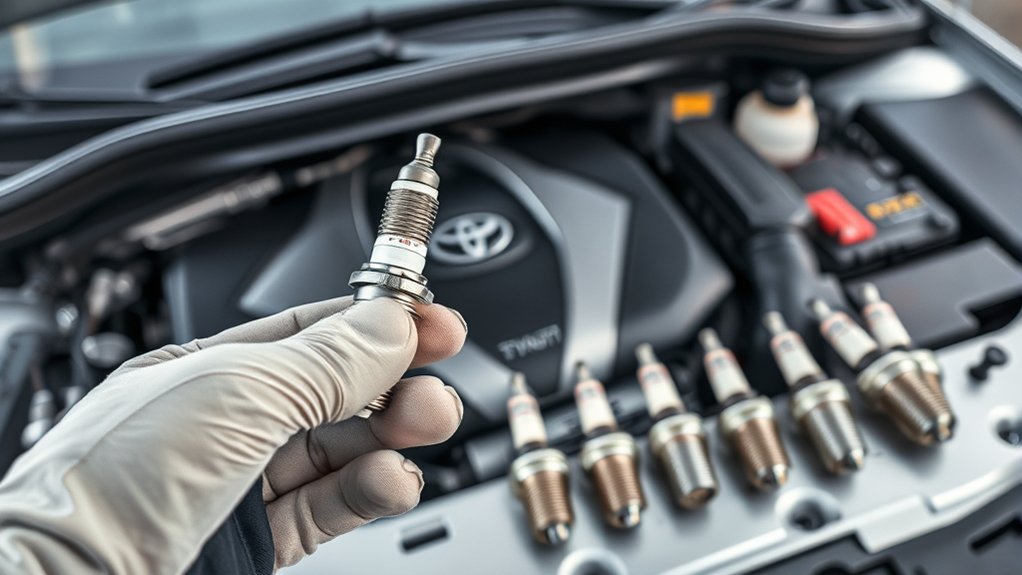
A spark plug absorbs combustion heat at its firing end and transfers that heat through the insulator, shell, and cylinder head. The term heat range describes how effectively the plug moves that heat away from its tip.
A hot plug has a longer heat-transfer path and retains more heat at the firing end. A cold plug transfers heat into the cylinder head more quickly. According to DENSO’s heat-range guidance, low heat-range DENSO plugs are hot types, while high heat-range DENSO plugs are cold types.
Heat-range numbers must be read within the plug maker’s own system. NGK states that lower NGK numbers are hotter and higher numbers are colder. DENSO also identifies higher heat-range values as colder types, but its common numeric scale is different. Cross-reference the full application-approved part number instead of comparing a single number across brands.
Heat range controls firing-end temperature. It does not make the electrical spark hotter, stronger, or longer.
The firing end must become hot enough to burn away normal carbon deposits without becoming a source of abnormal ignition. DENSO identifies approximately 500°C as the self-cleaning threshold and 950°C as the pre-ignition threshold. These figures describe firing-end operating temperatures, not numbered heat ranges.
Heat Range vs. Gap, Reach, and Electrode Material
Heat range is only one part of a spark plug specification. Two plugs can have a similar heat range and still be physically or electrically incompatible with the engine.
| Specification | What It Controls | Why an Exact Match Matters |
|---|---|---|
| Heat range | How quickly the firing end releases combustion heat. | The wrong range can promote fouling or overheating. |
| Gap | The distance the spark must cross. | An excessive or incorrect gap can raise firing-voltage demand and cause misfires. |
| Thread and reach | How the plug fits into the cylinder head and combustion chamber. | Incorrect reach can expose threads, interfere with internal parts, or position the spark incorrectly. |
| Seat type | How the plug seals against the cylinder head. | A gasket-seat and taper-seat plug are not interchangeable unless the application specifically permits it. |
| Electrode design | Service life, required firing voltage, and compatibility with the ignition system. | Copper, platinum, iridium, projected-tip, and multi-electrode designs are not selected by heat range alone. |
| Resistor design | Electrical-noise suppression and ignition-system compatibility. | Substituting a non-resistor plug can create interference or compatibility problems. |
Why Your Camry’s Model Year and Engine Matter
Toyota has used several gasoline and hybrid powertrains across Camry generations. Those engines do not all use the same plug, gap, reach, seat design, electrode material, or heat range.
Even an engine-family reference such as “5S-FE” is not enough to justify buying a plug based only on a heat-range number. Confirm the complete part number for the exact year, engine, market, and emissions specification through the official Toyota manuals portal or a current spark plug manufacturer application catalog.
A Camry Hybrid also has spark plugs in its gasoline engine. The hybrid badge does not identify the correct plug by itself; use the exact model year and engine specification just as you would for a non-hybrid Camry.
Note: Heat-range numbers are not universal. A number from DENSO cannot be assumed to represent the same thermal range as the same number from another manufacturer. Cross-reference the complete part number, not one digit.
How Do You Choose the Correct Toyota Camry Spark Plug Heat Range?
Use this process before ordering or installing plugs. As one model-year example, Toyota’s U.S. 2024 Camry Warranty & Maintenance Guide says replacement plugs should be the same type as originally equipped. That does not establish one plug for every Camry; always use the documentation for your exact vehicle.
- Identify the exact vehicle. Record the model year, engine, gasoline or hybrid configuration, market, and any relevant emissions package. The VIN is the safest starting point when documentation is available.
- Check Toyota’s vehicle-specific information. Review the owner’s manual, maintenance data, or repair information for the specified spark plug type and gap.
- Search by vehicle application. Use a current DENSO or other manufacturer application catalog rather than searching for a heat-range number by itself.
- Match the complete specification. Confirm the full part number, thread diameter, reach, seat, projection, resistor design, electrode type, heat range, and specified gap.
- Check every plug before installation. Make sure all cylinders receive the same approved specification unless a documented racing or development procedure explicitly requires otherwise.
| Situation | Best Starting Point | Do Not Assume |
|---|---|---|
| Stock engine and calibration | Use Toyota’s exact specified plug or a cataloged direct equivalent. | A hotter or colder plug will improve power or fuel economy. |
| Misfire, rough idle, or deposits | Confirm the installed part number and diagnose ignition, fueling, air, cooling, and mechanical conditions. | The heat range is automatically wrong. |
| Forced induction or major tuning | Follow the engine builder’s or tuner’s documented specification and verify it through measured operating data and plug inspection. | Every modified engine needs exactly one step colder. |
| Unknown plug history | Identify the vehicle and compare the installed plugs with the current official application listing. | The plugs already in the engine are correct. |
How Spark Plug Heat Range Affects Engine Performance and Efficiency
The correct heat range helps a plug stay clean during light-load operation while controlling firing-end temperature under heavier loads. It supports reliable ignition and durability, but it does not add horsepower by itself.
A plug that is too cold may fail to reach its self-cleaning temperature during ordinary use. Dry carbon can then build up on the insulator and create a path for electrical leakage. Possible results include hard starting, rough idle, hesitation, or misfires.
A plug that is too hot retains excessive heat. Under load, its firing end may overheat and become a source of pre-ignition. This can cause power loss, rapid electrode wear, melted components, or internal engine damage.
| Condition | Firing-End Behavior | Possible Result |
|---|---|---|
| Too cold | Transfers heat quickly and may remain below its self-cleaning temperature. | Carbon deposits, hard starting, rough idle, hesitation, or misfires. |
| Correct range | Stays hot enough to resist normal fouling while releasing enough heat under load. | Reliable operation, expected plug life, and normal combustion. |
| Too hot | Retains too much heat at the insulator and electrodes. | Pre-ignition, rapid wear, power loss, melted electrodes, or engine damage. |
If the previous plugs were worn, damaged, fouled, or incorrectly specified, installing the correct replacements may restore smooth operation and normal fuel use. Moving to a hotter or colder range than Toyota specifies will not automatically improve performance or fuel economy.
Signs to Investigate Before Changing Spark Plug Heat Range
An incorrect heat range can contribute to symptoms, but none of the following signs proves that heat range is the cause:
- Repeated misfires during idle, acceleration, or heavy load
- Dry, soft black carbon on the insulator and electrodes
- An unusually white, blistered, glazed, or scorched insulator
- Rapid electrode wear or a melted electrode
- Knocking, pinging, or unexplained power loss under load
- A check-engine light with cylinder-specific misfire codes
What Spark Plug Appearance Can Tell You
| Appearance | Possible Causes | What to Check |
|---|---|---|
| Dry black carbon | Plug too cold, rich fuel mixture, repeated short trips, weak ignition, excessive idling, or low operating temperature | Part number, air-fuel faults, coils, injectors, engine temperature, and driving pattern |
| Wet oily deposits | Oil entering the combustion chamber | Oil consumption, valve seals, piston rings, cylinder condition, and compression |
| Very white or blistered insulator | Overheating, plug too hot, lean operation, cooling fault, incorrect torque, or abnormal combustion | Cooling system, fueling, ignition timing, exact plug specification, and installation torque |
| Rounded electrodes and wide gap | Normal wear, excessive service time, or an incorrect initial gap | Service interval, measured gap, electrode condition, and correct replacement specification |
| Cracked insulator | Impact, angled socket use, over-tightening, improper gap adjustment, or severe abnormal combustion | Installation technique, socket fit, torque, handling, and combustion faults |
The DENSO spark plug troubleshooting guide shows that similar symptoms can result from carbon fouling, oil fouling, excessive gap, electrode wear, incorrect torque, cooling problems, abnormal combustion, or the wrong plug specification.
Limits of Reading Spark Plug Appearance
A removed plug records conditions inside its cylinder, but its appearance is not a complete diagnosis. Deposits may reflect recent short-trip operation, oil consumption, rich fueling, a weak coil, an injector problem, or extended service life. Compare all cylinders and combine the inspection with fault codes, operating data, and mechanical tests.
One cylinder that looks different from the others often points to a local problem. Identical deposits across every cylinder are more likely to indicate a shared operating condition, an incorrect set of plugs, or a system-wide fault.
Diagnose the Problem Before Changing Heat Range
- Confirm the exact plug part number. Check the model year, engine, market, reach, seat type, resistor design, electrode design, and specified gap.
- Scan the engine computer. Record stored, pending, and permanent fault codes instead of relying only on how the engine feels.
- Inspect every plug. Label each plug by cylinder and compare deposits, wear, cracks, and gaps.
- Check ignition components. Inspect coils, boots, connectors, plug wells, and wiring for damage, moisture, oil, or carbon tracking.
- Check fuel and air causes. Consider injector faults, fuel-pressure problems, vacuum leaks, sensor errors, and mixture-control faults.
- Check cooling and mechanical causes. Investigate overheating, oil consumption, compression loss, valve problems, or abnormal combustion where the evidence points.
- Change heat range only with evidence. Use Toyota’s specification or documented guidance from the engine builder or tuner.
Warning: Stop driving under heavy load if you find melted electrodes, severe whitening, metal specks, or other signs of pre-ignition. Continuing to load the engine may damage a piston, valve, cylinder wall, catalytic converter, or other internal component.
Should a Toyota Camry Use a Hotter or Colder Spark Plug?
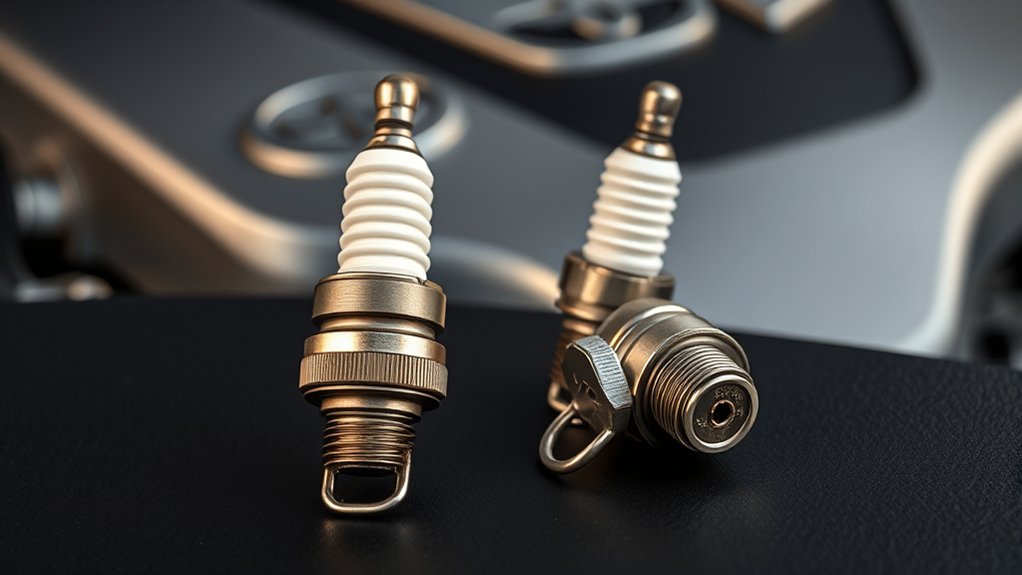
Hot and cold describe the plug’s heat-transfer rate, not the temperature of the electrical spark. A hot plug generally uses a longer insulator heat path and retains more heat. A cold plug uses a shorter path and moves heat into the cylinder head faster.
| Feature | Hot Plug | Cold Plug |
|---|---|---|
| Heat transfer | Slower | Faster |
| Firing-end temperature | Rises more easily | Stays cooler under load |
| Main risk when incorrect | Overheating and pre-ignition | Carbon fouling and misfires |
| Appropriate use | Only where the vehicle or plug application specifies it | High-output applications when testing or documented engine-builder guidance requires it |
Frequent short trips can contribute to deposits because the engine spends more time warming up. Plug makers note that low-speed or short-trip operation can increase fouling risk, but that does not mean every city-driven Camry should automatically receive a hotter plug. First confirm the correct installed part, then check thermostat operation, mixture control, ignition condition, oil consumption, and driving pattern. Consider a different range only when the evidence and documented manufacturer or engine-builder guidance support it.
A colder plug may be appropriate after substantial changes such as forced induction, increased sustained cylinder pressure, racing use, or major calibration changes. Even then, the correct range depends on measured engine conditions rather than a general rule based only on horsepower, boost, RPM, climate, or driving style.
When to Follow Toyota Specifications—and When a Different Range May Be Needed
Keep the manufacturer-specified heat range when your Camry has a stock engine, stock calibration, normal fuel, and ordinary street use. Toyota selected the original plug specification to balance cold starting, emissions, deposit resistance, high-load durability, and service life.
Do not choose a plug using heat range alone. The replacement must also match the required thread diameter, reach, seat type, projection, resistor design, electrode style, and gap. A plug with excessive reach can contact internal parts or leave threads exposed inside the combustion chamber.
A different heat range may be needed when an engine builder or tuner has materially increased cylinder pressure or combustion temperature. DENSO’s plug-selection guidance recommends considering engine conditions and inspecting the current plugs rather than choosing from a universal rule.
- Use the exact Toyota specification for a stock engine.
- Do not change heat range solely because of traffic, highway use, winter, or hot weather when the engine is otherwise operating normally; diagnose repeated fouling or overheating first.
- Do not assume a colder plug will create more power or lower the engine’s coolant temperature.
- Do not use a hotter plug to hide oil burning, rich fueling, low engine temperature, or weak ignition.
- Do not mix hotter and colder plugs across cylinders in a street-driven Camry.
- Use the engine builder’s documented recommendation for a modified engine.
Pro Tip: Photograph and label each removed plug by cylinder. Differences between cylinders can reveal a local coil, injector, oil-control, cooling, or compression problem that a single plug inspection may miss.
Installation Details Can Mimic a Heat-Range Problem
A correct plug can still misfire, leak combustion gas, or overheat when installed incorrectly. Excessive gap raises firing-voltage demand, while incorrect tightening can affect sealing, heat transfer, threads, or the insulator. DENSO instructs installers to follow the vehicle manufacturer’s procedure, start the plug square to the hole, and use the recommended torque.
Follow the exact Toyota repair procedure for your engine. DENSO’s installation instructions warn against adding thread lubricant unless the specific plug and service procedure require it because lubricant can contribute to over-tightening. For the physical replacement workflow, see How to Replace Toyota Camry Spark Plugs.
Note: Many fine-wire plugs are supplied with an application-specific gap. Do not bend or press against a delicate center electrode. Verify the manufacturer’s instructions before attempting any adjustment.
Related Guides
Frequently Asked Questions
How do you choose the right Toyota Camry spark plug heat range?
Start with the complete plug specification for the Camry’s exact model year, engine, market, and emissions package. Match the full part number rather than choosing by heat-range number alone. A stock engine should normally use Toyota’s specified range. A modified engine should follow documented guidance from the engine builder or tuner.
What does a spark plug’s heat range indicate?
Heat range indicates how quickly the firing end transfers combustion heat into the cylinder head. A hot plug retains more heat, while a cold plug transfers heat faster. Heat range does not identify spark strength, ignition voltage, gap, electrode material, or service life by itself.
Which spark plug is hotter, 7 or 8?
There is no universal cross-brand answer. For NGK spark plugs, lower numbers are hotter and higher numbers are colder, so an NGK 7 is hotter than an NGK 8. DENSO uses a different numerical scale, so do not transfer a bare “7” or “8” from one brand to another. Verify the brand’s official catalog and the complete vehicle-approved part number.
What is the ideal operating temperature for a spark plug?
DENSO identifies an approximate firing-end operating window of 500°C to 950°C. Below roughly 500°C, carbon may not burn away effectively. Near or above 950°C, the firing end may become hot enough to promote pre-ignition. These figures are operating temperatures, not numbered heat ranges.
Will hotter spark plugs improve Camry fuel economy?
Not when the engine already has the correct plugs. A hotter plug does not create more ignition energy or make fuel inherently burn better. Installing the correct specification may restore normal fuel economy if the previous plugs were fouled, worn, damaged, incorrectly gapped, or otherwise unsuitable.
Should a modified Toyota Camry use colder spark plugs?
Possibly, but not automatically. Forced induction, major power increases, racing use, or calibration changes can raise combustion temperature and cylinder pressure. Use the range specified by the engine builder or tuner and confirm the choice through plug inspection and measured engine data.
Should you automatically install spark plugs one step colder after modifying a Camry?
No. “One step colder” is a tuning shorthand, not a universal specification. The required plug depends on the manufacturer’s numbering system, the engine changes, combustion pressure, fuel, calibration, operating load, and test results. Follow documented guidance for the exact build.
Can you mix different spark plug heat ranges in the same Camry engine?
Do not mix heat ranges in a normal street-driven engine. Install a matched set of the approved specification unless a qualified engine developer has created and documented a cylinder-specific setup for a specialized application.
Does a Toyota Camry Hybrid use different spark plugs?
A Camry Hybrid’s gasoline engine still uses spark plugs, but the correct plug depends on its exact model year and engine. Do not select a plug using the word “hybrid” alone. Confirm the vehicle-specific Toyota or manufacturer application listing.
Conclusion
The correct spark plug heat range helps your Toyota Camry resist fouling during ordinary driving and control firing-end temperature under load. For a stock engine that is operating normally, use the complete Toyota-specified plug or a verified direct equivalent rather than experimenting with hotter or colder alternatives. If you find deposits, misfires, overheating, or rapid wear, confirm the installed specification and diagnose the ignition, fueling, cooling, installation, and mechanical systems before changing heat range. If you are ready to replace the plugs, follow the vehicle-specific procedure in How to Replace Toyota Camry Spark Plugs.
Sources
- Toyota Manuals and Warranties — vehicle-specific owner information and access to available Toyota manuals.
- Toyota 2024 Camry Warranty & Maintenance Guide — model-year example stating that replacement spark plugs should be the same type as originally equipped.
- DENSO: Spark Plug Heat Range — heat transfer, hot and cold plug construction, self-cleaning temperature, and pre-ignition temperature.
- DENSO: How to Choose a Plug — selecting heat-dispersal capacity for engine load and modified applications.
- DENSO: Spark Plug Troubleshooting — plug appearance, fouling, overheating, wear, damage, and possible misfire causes.
- DENSO: Spark Plug Installation — torque, thread lubricant, socket alignment, and installation precautions.
- NGK: Spark Plug Basics — NGK heat-range numbering, thermal behavior, fouling, and overheating guidance.

