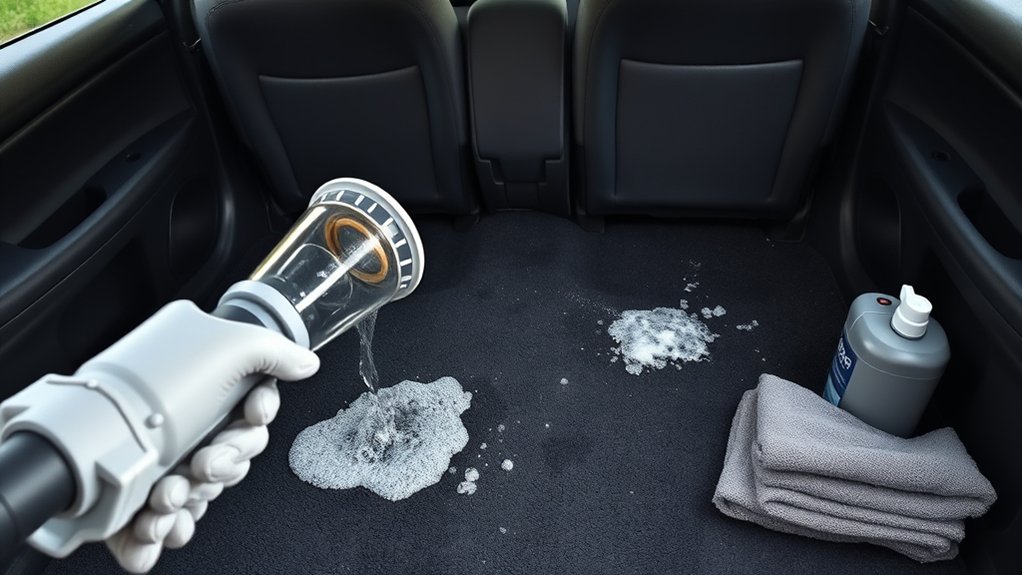
Vacuuming and shampooing your Toyota Camry’s carpets can remove loose grit, tracked-in soil, spills, and lingering odors without soaking the cabin. The safest approach is to dry-vacuum first, spot-test a carpet-safe cleaner, use only enough solution to loosen the soil, extract as much moisture as possible, and reinstall the floor mats only after every surface is fully dry.
Quick Answer
Remove the floor mats, vacuum slowly with crevice and brush attachments, pre-treat stains, and apply a small amount of automotive carpet cleaner in sections. Agitate gently, extract the dirty solution with a wet/dry vacuum or upholstery extractor, and keep the doors open with moving air until the carpet and padding are completely dry.
Key Takeaways
- Vacuum before adding moisture; dry soil is easier to remove before it turns into mud.
- Use a cleaner labeled for automotive carpet or upholstery, follow the label, and test a hidden area first.
- Avoid oversaturating the fitted carpet, seat tracks, wiring areas, and carpet padding.
- Extract repeatedly without adding more solution, then ventilate the cabin until no dampness or musty odor remains.
- Reinstall only clean, dry, correctly fitted mats and secure the driver’s mat to its retention points.
At a Glance
| Time Required | About 45–90 minutes of active cleaning, plus several hours of drying |
| Difficulty | Easy to moderate |
| Tools Needed | Dry vacuum, crevice tool, soft brush, microfiber towels, automotive carpet cleaner, and preferably a wet/dry vacuum or upholstery extractor |
| Cost | Low if you already own the tools; more if you rent or buy an extractor |
Step-By-Step Guide to Vacuuming and Shampooing Your Car
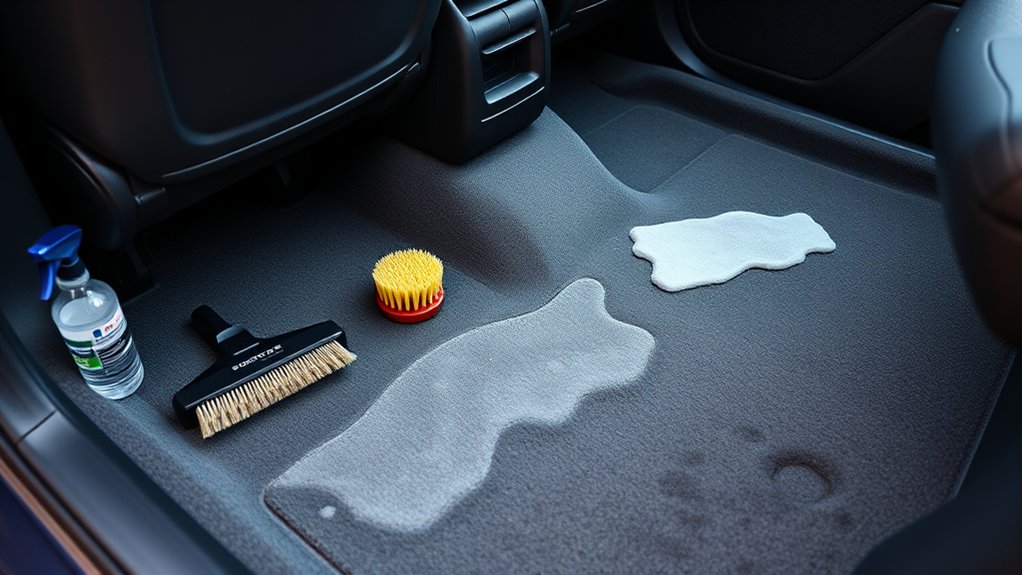
For a thorough cleaning, work from the driest process to the wettest. Remove the mats, pick up large debris, vacuum the fitted carpet and seat-track areas, treat stains, shampoo one small section at a time, extract the dirty solution, and dry the cabin before putting anything back. This order prevents loose grit from becoming muddy and makes it easier to see which areas still need attention.
- Park safely: Work on a level surface in a shaded, well-ventilated place. Turn the vehicle off, remove the key or keep the key fob away from the car, and set the parking brake.
- Inspect before cleaning: Look for standing water, mold, damaged carpet, loose trim, or an active leak. Routine shampooing will not fix a leak or contaminated padding.
- Remove and sort the mats: Clean carpet mats and rubber or all-weather liners separately because they need different products and drying methods.
- Vacuum thoroughly: Use slow, overlapping passes, then clean edges, seams, under-seat areas, and around the pedals with the correct attachment.
- Spot-test and pre-treat: Apply a small amount of cleaner to a hidden area. If the color transfers to a white towel or the fibers change appearance, stop and choose another product.
- Shampoo in sections: Lightly apply solution, agitate with a soft brush, and extract before moving to the next area.
- Dry completely: Use dry extraction passes, towels, open doors or windows, fans, and a dehumidifier when needed.
- Final check: Confirm the carpet is dry, the pedals move freely, and the driver’s floor mat is secured correctly before driving.
Warning: Do not shampoo carpet that is already soaked, moldy, or repeatedly wet from an unknown source. Find and repair the leak first. Avoid flooding seat tracks, under-seat connectors, vents, and the pedal area, and never mix cleaning products. The CDC advises following product labels, providing ventilation, and not mixing chemicals.
Gather Your Supplies
Gathering the right supplies keeps the job controlled and prevents you from reaching for an overly harsh product halfway through the cleaning. Check the cleaning and interior-care section of the Toyota manual for your Camry’s model year before using an unfamiliar chemical or machine.
Use the least moisture and the mildest compatible cleaner that will remove the soil.
- Vacuum cleaner: A shop vacuum, canister vacuum, or strong handheld vacuum with a crevice tool works well. A compact nozzle is more useful in a Camry than a full-size floor head.
- Wet extraction tool: A wet/dry vacuum or portable upholstery extractor helps remove dirty solution and shortens drying time. Do not use a dry-only vacuum on wet carpet.
- Automotive carpet cleaner: Choose a low-residue product labeled for automotive carpet or upholstery. The EPA Safer Choice product search includes carpet-care and car-care categories for shoppers who want products evaluated against that program’s criteria.
- Soft-bristled brush: Use a hand brush or upholstery brush that bends easily. Stiff brushes can fuzz or distort carpet fibers.
- Microfiber towels: Keep several clean, light-colored towels for blotting, checking color transfer, wiping trim, and pressing out moisture.
- Small spray bottle: A controlled mist is safer than pouring solution from a bucket.
- Optional supplies: Nitrile gloves, a fan, a dehumidifier, a pet-hair brush, and a plastic trim tool for gently lifting debris from seams.
Remove Floor Mats and Loose Debris
Remove every floor mat before vacuuming the fitted carpet. Take the mats outside, shake them, and vacuum both sides. Pick up coins, gravel, wrappers, and other objects by hand so they do not clog the vacuum or scratch plastic trim. Slide the seats forward and back using the normal controls to reach exposed areas, but do not remove the seats for routine carpet cleaning.
Check beneath the seats, along the center tunnel, beside the seat rails, and where the carpet meets the door-sill trim. A narrow detailing brush can loosen crumbs from seams while the vacuum nozzle captures them. In the driver’s footwell, use a crevice tool around the accelerator and brake pedal without pulling on wiring, trim, or insulation.
Clean Carpet Mats and Rubber Liners Separately
- Carpet mats: Vacuum both sides, spot-treat stains, lightly shampoo, extract, and dry flat or hang them where air can reach both sides.
- Rubber or all-weather liners: Rinse outside, scrub with a compatible mild cleaner, rinse away residue, and dry completely. Do not apply a glossy or slippery dressing to the driver’s mat.
Note: Before reinstalling the driver’s mat, confirm it is the correct shape for your Camry, right-side up, not stacked over another mat, and secured to the factory retention points. Press each pedal by hand with the vehicle off to verify the mat cannot interfere with pedal travel.
How to Use a Vacuum Cleaner Effectively
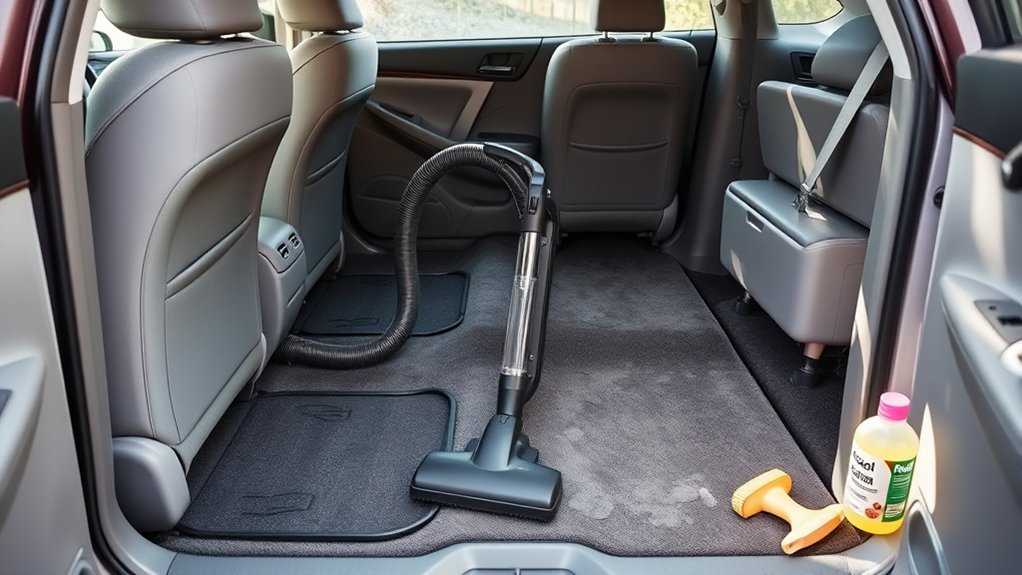
Effective vacuuming depends more on airflow, nozzle contact, and methodical coverage than on a special “carpet height” setting. Most Camry carpet is low pile, and many portable or shop vacuums do not have adjustable floor-head height. Use the attachment and suction setting recommended by your vacuum’s manufacturer.
Vacuum Setup Essentials
- Empty the bag or canister: Start with enough capacity for sand, hair, and crumbs.
- Check the filter and hose: Clean or replace the filter according to the vacuum manual and remove obvious clogs.
- Choose a compact nozzle: Use a crevice tool for seams and rails, a soft brush for delicate areas, and a wider nozzle for open footwells.
- Protect trim: Keep hard nozzle edges from scraping painted door sills, glossy console panels, and soft plastics.
Effective Vacuuming Techniques
Clear the cabin first, then begin at the highest or least accessible areas so dislodged debris falls onto carpet that has not been cleaned yet. Vacuum slowly in straight, overlapping passes. Change direction on open carpeted areas to lift debris from different sides of the pile. Make extra passes over the driver’s footwell, rear-seat footwells, and the edges where dirt collects.
For pet hair, lightly brush the carpet in one direction with a rubber pet-hair tool or soft upholstery brush while holding the vacuum nozzle close. Avoid aggressive scraping, which can pull fibers or damage edge binding.
Maintaining Your Vacuum Properly
Empty the canister or change the bag before it becomes packed, clean filters on the schedule in the vacuum manual, remove hair from powered brush rolls, and inspect the hose for clogs. If you use a wet/dry vacuum for extraction, remove any dry-only bag or filter setup as directed by the manufacturer before collecting liquid, then clean and dry the tank after the job.
Choosing the Right Vacuum Attachments for Your Car
The right attachment improves access and reduces the chance of damaging the interior:
| Attachment | Best Use | Caution |
|---|---|---|
| Crevice tool | Seat rails, carpet edges, console gaps, and pedal-area seams | Do not force it under trim or against wiring |
| Soft dusting brush | Loosening fine dust and hair near trim | Keep the brush clean so trapped grit does not scratch |
| Wide upholstery nozzle | Open footwells and removable carpet mats | A large nozzle may not seal well on contoured areas |
| Powered brush | Only when the tool is intended for automotive carpet and does not snag fibers | Test first; avoid loose edges and damaged carpet |
| Wet extraction nozzle | Pulling shampoo and rinse water from fitted carpet and mats | Use only with equipment designed to collect liquid |
Shampooing Your Camry’s Carpets: A Step-By-Step Guide
After dry vacuuming, shampoo only the areas that need wet cleaning. A controlled spray-and-extract method is safer than saturating the entire floor. Follow the cleaner’s dilution, dwell-time, and rinsing instructions rather than assuming every shampoo should be mixed or rinsed the same way.
- Read both manuals: Check the cleaner label and the instructions for the extractor or wet/dry vacuum.
- Test a hidden area: Apply a small amount near a seat edge, blot with a white towel, and allow it to dry before continuing.
- Pre-treat stains: Blot fresh spills first. Apply the appropriate spot cleaner sparingly and allow only the label-specified dwell time.
- Work in small sections: Lightly mist an area about the size of one footwell rather than spraying the whole cabin at once.
- Agitate gently: Brush in short, overlapping strokes. Circular motion can help on open areas, but use straight strokes along carpet edges and seams to avoid fraying.
- Extract immediately: Pull the nozzle slowly toward you while applying steady pressure. Repeat dry passes without adding more solution until little moisture enters the recovery tank.
- Rinse only if directed: If the product requires rinsing or leaves visible foam, use a light mist of clean water and extract again. Do not pour water onto the carpet.
- Blot and inspect: Press a clean towel into the carpet. If it picks up foam or heavy soil, repeat a light rinse-and-extract cycle rather than adding more shampoo.
Pro Tip: Make more extraction passes than wet passes. The goal is to remove soil and cleaner, not leave the carpet uniformly wet.
How to Treat Common Carpet Stains
Different stains respond to different methods. Start gently, avoid rubbing, and do not combine products.
| Stain | What to Do | Avoid |
|---|---|---|
| Mud or road salt | Let mud dry, vacuum thoroughly, then use a compatible carpet cleaner. For salt residue, use repeated light applications and extraction. | Scrubbing wet mud deeper into the pile |
| Coffee, soda, or food | Blot from the outside toward the center, apply a carpet-safe spot cleaner, and extract. | Rubbing, which spreads the stain |
| Grease or oil | Lift excess residue, then use a product specifically labeled for oily stains on automotive textiles. | Unlabeled solvents or soaking the backing |
| Pet accident or organic odor | Blot, use an automotive-textile-compatible enzymatic cleaner according to its label, and extract thoroughly. | Hot water or steam unless the product specifically permits it |
| Gum or sticky residue | Harden the material with a sealed cold pack, lift it carefully, then spot-clean the remaining residue. | Cutting carpet fibers or using excessive solvent |
If a stain remains after two careful attempts, stop. Repeated aggressive scrubbing can cause more visible damage than the original mark. A professional automotive detailer may have safer specialty products and stronger extraction equipment.
Gentle Techniques for Agitating Carpet Fibers
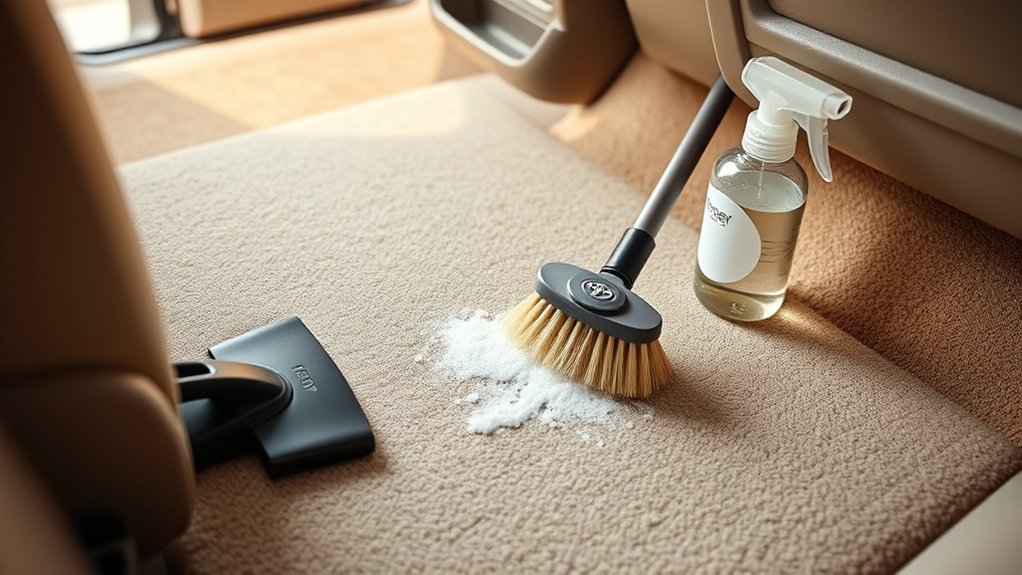
Gentle agitation helps cleaner reach the sides of the fibers without fuzzing the pile. Use a soft-bristled brush or upholstery attachment and moderate pressure. Work small sections so the solution does not dry before extraction.
| Technique | Benefits |
|---|---|
| Soft-bristled brush | Loosens soil while reducing the risk of fiber damage |
| Upholstery attachment | Targets debris without pulling at carpet edges |
| Short circular motion | Helps distribute cleaner on open carpeted areas |
| Straight strokes at seams | Reduces fraying along edges and bindings |
| Sectional cleaning | Keeps dwell time, agitation, and extraction consistent |
Rinsing and Drying Your Carpet Properly
Rinsing is useful when the product instructions require it, when the carpet feels tacky, or when foam remains after extraction. It should be a controlled mist-and-extract step, not a soak. After the final extraction pass, press dry microfiber towels into the carpet and begin ventilating immediately.
Proper Rinsing Techniques
- Use clean water sparingly: Mist one section rather than pouring from a bucket.
- Work toward the nearest door: This reduces the chance of kneeling on areas you have already cleaned.
- Extract repeatedly: Continue dry passes until the nozzle removes little visible water.
- Check for residue: Press a clean damp towel onto the carpet. Persistent foam or slipperiness indicates that another light rinse may be needed.
Effective Drying Methods
Park in a secure, shaded, well-ventilated location. Open the doors or windows when conditions allow, aim fans across the footwells, and use a dehumidifier in humid weather. Do not reinstall mats, close the vehicle for long periods, or drive normally while the carpet remains damp. The EPA emphasizes moisture control and drying wet materials within 24–48 hours to reduce the chance of mold growth.
Removable carpet mats may be dried outside in a protected area with airflow on both sides. The fitted carpet should remain installed; removing it is a repair-level job that may involve trim, seats, and insulation.
Troubleshooting Dampness, Odors, and Wicking
- Carpet is still damp the next day: Remove the mats, resume extraction, increase airflow, and check for moisture in the padding or an ongoing leak.
- A musty odor appears: Stop covering the area with mats. Dry it fully and inspect for hidden moisture. Persistent odor may require professional inspection of the padding.
- A stain returns after drying: This is often called wicking. Lightly re-clean the surface, extract more thoroughly, and speed drying.
- The carpet feels stiff or attracts dirt quickly: Cleaner residue may remain. Use a small amount of clean water and perform extra extraction passes.
- Color transfers to a towel: Stop using that product and allow the area to dry. Seek professional help before trying another chemical.
How to Maintain Your Car’s Cleanliness Between Cleanings
A simple routine prevents most soil from reaching the fitted carpet:
- Remove trash and spills promptly: Blot liquids instead of rubbing them into the fibers.
- Vacuum high-traffic areas regularly: The driver’s footwell and rear-seat floor usually need attention first.
- Use a lint roller or pet-hair tool: These are useful between full vacuuming sessions.
- Clean mats separately: Mats catch grit before it reaches the fitted carpet, but only if they are emptied and cleaned.
- Keep towels in the trunk: A clean microfiber towel can limit damage from a fresh spill.
- Check for moisture: After rain, snow, or a large spill, lift the mats and make sure the carpet underneath is dry.
Vacuum Maintenance for Optimal Car Cleaning
Vacuum maintenance affects suction and prevents old debris or odors from returning to the cabin. Empty the canister or replace the bag as needed, clean or replace filters according to the manufacturer’s schedule, remove hair from brush rolls, and inspect attachments for sharp edges. After wet extraction, empty the recovery tank, rinse the tank and nozzle, and let all washable parts dry before storage.
Do not put a damp filter, hose, or extraction tool into a closed storage bin. Trapped moisture can create odors that transfer to the vehicle during the next cleaning.
Frequently Asked Questions
How do you vacuum a Toyota Camry properly?
Remove the mats and large debris, then use slow, overlapping passes on open carpet. Use a crevice tool around seat rails, the console, carpet edges, and the pedal-area seams. Change direction on open areas and make extra passes in the driver’s footwell.
How should a beginner start vacuuming a car?
Start with an empty vacuum, a crevice tool, and a clear cabin. Work one seating area at a time so you can see your progress. Vacuum dry debris before using any liquid cleaner, and avoid forcing attachments beneath trim or against wiring.
How do you vacuum a car like a professional?
Professionals combine methodical coverage with the right attachments. They loosen debris from seams while vacuuming, make passes in more than one direction, clean mats separately, protect trim from hard nozzles, and inspect the carpet under strong light before moving to wet cleaning.
Should you dust the interior before or after vacuuming?
Wipe or brush dust from the dashboard, console, door pockets, and seat seams before the final carpet vacuuming. Any debris that falls will then be removed from the floor instead of landing on freshly cleaned carpet.
Can you use household carpet shampoo in a Toyota Camry?
Use it only if the label specifically allows automotive carpet or upholstery and the product is compatible with your extraction machine. Automotive interiors have tight spaces, adhesives, padding, electronics, and limited airflow, so a low-residue automotive product is usually the safer choice.
How long should Camry carpet dry after shampooing?
Drying time depends on how much solution was used, extraction strength, temperature, humidity, and airflow. Plan for several hours and wait until the carpet, padding, and mats feel completely dry and have no musty odor before closing the car or reinstalling the mats.
How often should you shampoo car carpet?
Shampoo when vacuuming and spot treatment are no longer enough, after a major spill, or when visible soil and odor remain. Frequent light vacuuming and prompt spill cleanup reduce the need for full wet cleaning.
Conclusion
Clean Toyota Camry carpets come from controlled technique, not maximum water or aggressive scrubbing. Vacuum every edge first, use a compatible cleaner sparingly, extract more than you spray, and dry the cabin completely. Finish by reinstalling only dry, correctly fitted mats and checking that the driver’s mat cannot interfere with the pedals. Regular vacuuming and quick spill cleanup will keep the interior fresh and make the next deep cleaning easier.
Sources
- Toyota Manuals and Warranties — model-year owner’s manuals and Toyota-specific care instructions.
- CDC: When and How to Clean and Disinfect Your Home — product-label, ventilation, soft-surface cleaning, and chemical-mixing safety guidance.
- U.S. EPA: A Brief Guide to Mold, Moisture and Your Home — moisture control and prompt drying guidance.
- U.S. EPA Safer Choice Product Search — searchable categories for carpet-care and car-care cleaning products.
