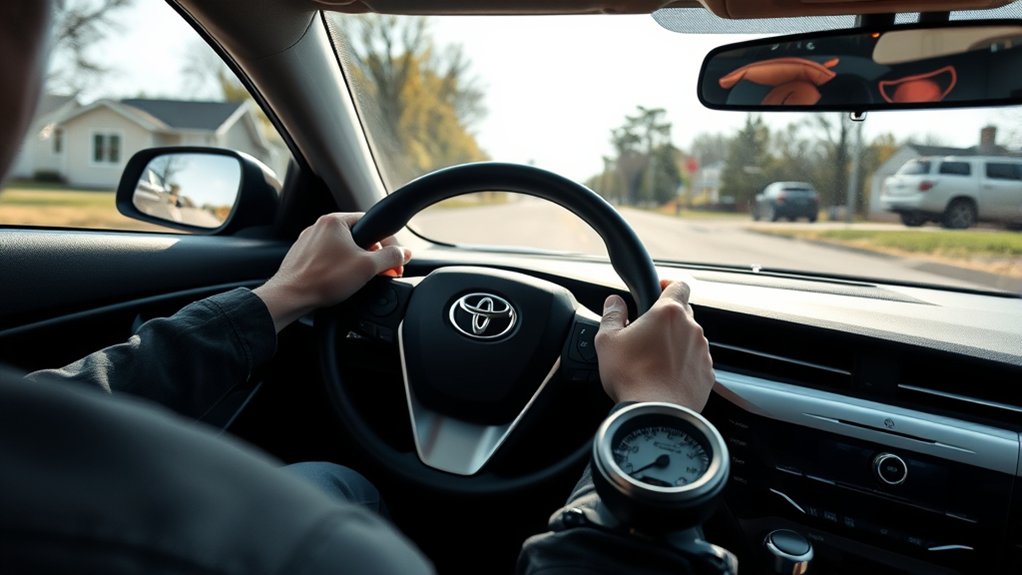
If your Toyota Camry pulls to one side, start with the tires before paying for an alignment. Check cold tire pressure and visible damage, then note whether the car pulls while cruising, braking, accelerating, or only on certain roads. A true pull is also different from an off-center steering wheel: the car can travel straight even when the wheel is not centered.
Last updated: September 22, 2026
How this guide was prepared: This guide uses Toyota vehicle-pull guidance for 2002–2021 U.S.-market Toyota models, current Toyota Camry maintenance information, NHTSA tire guidance, and federal TPMS requirements. It does not claim hands-on testing across every Camry model year. Procedures for 2022-and-newer Camrys should be confirmed against service information for the exact year, trim, tire setup, and market.
Affiliate disclosure: This page contains affiliate links. If you buy through them, we may earn a commission at no extra cost to you.
Quick Answer
A Toyota Camry can pull left or right because of unequal tire pressure, tire-generated lateral force, alignment geometry, brake drag, or worn or damaged steering and suspension parts. Check all four tires cold and inspect for damage first. If the car pulls only when braking, prioritize a brake inspection; if it began after new tires or rotation, have the tire setup and tire-induced pull checked before changing alignment settings.
Key Takeaways
- Check all four tires cold and use the pressure listed on the driver-door placard, not the maximum pressure molded into the tire sidewall.
- A true pull means the Camry keeps moving left or right and needs steering correction; a crooked steering wheel by itself is not proof that the car is pulling.
- A constant pull points first toward tires, road crown, alignment, or chassis geometry; a pull that appears with braking points more strongly toward brake-force imbalance or front-end movement.
- New tires can cause a pull even when alignment readings are within specification because tire conicity or other lateral-force characteristics can change how the car tracks.
- A sudden or severe pull, a very hot wheel, grinding, a burning smell, smoke, loose steering, or strong vibration requires prompt professional attention.
At a Glance
| Time Required | About 10–30 minutes for basic parked checks; professional diagnosis time varies with the cause and tests required |
| Difficulty | Easy for safe tire-pressure and visual checks; professional level for brake, steering, suspension, tire-force, and alignment diagnosis |
| Tools Needed | Accurate tire-pressure gauge, tread-depth gauge or coin, flashlight, and notes for recording when the pull occurs |
| Cost | Free for basic checks; professional diagnosis, alignment, tires, or repairs vary by vehicle condition and local labor rates |
Warning: Stop driving and arrange inspection or towing if the pull is sudden or severe, a tire is visibly low or damaged, the steering feels loose, a wheel becomes unusually hot, or you notice grinding, smoke, a burning smell, or strong vibration. Do not crawl under a vehicle supported only by a jack.
Why Does a Toyota Camry Pull to One Side?
A Camry can drift or pull for several reasons. The most common possibilities fall into six groups:
- Tire pressure or tire damage: One underinflated tire can create more rolling resistance, while a bulge, separated belt, puncture, or uneven tread can change how the vehicle tracks.
- Tire-induced pull: A tire may generate a sideways force because of its internal construction even when it looks normal and the alignment is within specification.
- Wheel alignment: Camber, caster, toe, or rear thrust-angle differences can make the vehicle drift, leave the steering wheel off-center, or accelerate irregular tire wear.
- Brake imbalance or drag: A sticking caliper, restricted brake hose, contaminated friction material, or uneven brake operation can make the car pull, especially during braking.
- Steering or suspension wear: Loose tie-rod ends, ball joints, control-arm bushings, strut mounts, wheel bearings, or damaged springs can change wheel position under load.
- Wheel, road, or impact damage: A bent rim, pothole impact, curb strike, collision damage, road crown, standing water, or strong crosswind can affect straight-line tracking.
Toyota’s T-SB-0063-20 vehicle-pull bulletin tells technicians to identify the cause before changing alignment. The bulletin covers 2002–2021 U.S.-market Toyota models, including Camry, and specifically calls out tire lateral force, road crown, impact damage, worn parts, and brake drag as conditions that can mimic an alignment problem.
True Pull vs. an Off-Center Steering Wheel
A true pull and an off-center steering wheel are different symptoms. In Toyota’s bulletin, a vehicle is pulling when it moves left or right while the driver is trying to travel straight without steering effort. An off-center steering wheel means the vehicle travels straight, but the wheel itself is not pointed straight ahead. That distinction matters because repeatedly aligning a car for a tire-force problem can create new tire-wear issues.
| What You Notice | What It Suggests |
|---|---|
| Camry needs steady steering correction to stay straight on a suitable flat road | A true pull; investigate tires, brakes, suspension, impact damage, and alignment |
| Camry travels straight, but the steering wheel sits left or right of center | Steering wheel off-center; alignment or steering-centering diagnosis may be needed |
Rule Out Road Crown and Weather First
Most roads slope for drainage. Toyota’s 2002–2021 vehicle-pull bulletin describes road crown as roughly a 1–2% slope on many roadways and notes that it can make a vehicle drift toward either side depending on lane design. Crosswinds, deep pavement grooves, standing water, and uneven pavement can also create a temporary tug at the steering wheel.
Pro Tip: Compare the vehicle on more than one straight, dry, low-traffic road. Keep both hands on the wheel; never release the steering wheel to “test” whether the car tracks straight.
Toyota technician benchmark: For 2002–2021 U.S.-market Toyota models covered by T-SB-0063-20, Toyota specifies a controlled road test on a flat road for 100 m (109 yd) at 35 mph (56 km/h). More than 5 ft (1.5 m) of lateral deviation is classified as a pull; 5 ft or less is within the bulletin’s specification. This is a service-procedure benchmark, not an instruction to take your hands off the steering wheel. Confirm current service information before applying it to a 2022-or-newer Camry.
What the Timing of the Pull Can Tell You
When the symptom appears is often more useful than the direction of the pull. Use the pattern below as a diagnostic clue, not as a final diagnosis.
| When It Pulls | More Likely Areas | Best Next Check |
|---|---|---|
| Constantly while cruising | Tire pressure, tire-generated pull, alignment, road crown, or suspension geometry | Cold pressure and tire inspection, followed by tire isolation and four-wheel alignment |
| Only while braking | Unequal brake force, a sticking caliper, brake-hose restriction, rotor or pad problems, or a loose suspension part | Professional brake and front-suspension inspection |
| Only under hard acceleration | Unequal tire grip, tire differences, worn control-arm bushings, or driveline or mount movement | Tire matching and driveline/suspension inspection |
| After new tires or a tire rotation | Pressure error, directional tire installed incorrectly, tire conicity, mixed tire characteristics, or a wheel not seated correctly | Return to the installer for pressure, mounting, torque, and tire-pull diagnosis |
| After a pothole, curb strike, or collision | Alignment shift, bent wheel, tire damage, bent suspension part, or subframe movement | Tire/wheel inspection and a measured four-wheel alignment |
How Do You Diagnose a Camry That Pulls Left or Right?
- Describe the symptom precisely. Record the direction, speed, road type, steering-wheel position, recent tire or suspension work, and whether the pull changes during braking or acceleration. Also note whether the car actually changes direction or simply travels straight with the steering wheel off-center.
- Check cold tire pressure. Measure all four tires before driving or after the vehicle has been parked long enough for the tires to cool. Inflate them to the values on the driver-door placard.
- Inspect every tire. Look for cuts, bulges, exposed cords, punctures, uneven shoulders, cupping, feathering, mismatched sizes, and large tread-depth differences.
- Look at the wheels and ride height. Check for obvious rim damage, a visibly leaning wheel, a broken spring, or one corner sitting lower than the others.
- Note brake-related signs. A pull that begins with pedal application, unusual brake dust on one wheel, heat, odor, grinding, or reduced coasting ability needs brake inspection.
- Have the tires isolated. A technician can reposition the front tires when the tire design permits. Toyota’s 2002–2021 bulletin uses this type of position test to separate tire conicity from alignment. If the pull changes direction after the front tires are switched, tire lateral force is strongly implicated. Directional or staggered tires require the correct service procedure.
- Request a measured four-wheel alignment. Ask for before-and-after readings for camber, caster, and toe, plus confirmation that tire condition, ride height, and suspension play were checked first.
- Inspect steering, suspension, brakes, and bearings. If the pull remains, a qualified technician should check components under load and verify that no wheel is dragging.
Note: A wheel alignment cannot repair a damaged tire, sticking brake, loose ball joint, bent wheel, or worn bushing. Those problems must be corrected before final alignment measurements are meaningful.
Can Wheel Alignment Fix a Toyota Camry That Pulls?
Wheel alignment can fix a pull caused by suspension geometry, but it cannot repair a damaged tire, tire conicity, brake drag, a bent wheel, or worn steering and suspension parts. The main measured angles are camber, caster, and toe; rear alignment and thrust angle can also affect whether the steering wheel sits centered while the car travels straight.
- Camber: A large left-to-right camber difference can create a pull and contribute to inner- or outer-shoulder wear.
- Caster: A side-to-side caster difference can affect straight-line stability and steering return. Whether caster is adjustable depends on the exact Camry; an out-of-spec reading may instead point to worn, bent, shifted, or incorrectly installed parts.
- Toe: Incorrect toe commonly causes feathered wear, instability, and an off-center steering wheel. Toe by itself is not always the main cause of a steady one-direction pull.
- Rear thrust angle: Rear alignment that points the vehicle slightly sideways can make the driver hold the steering wheel off-center.
For the 2002–2021 Toyota models covered by T-SB-0063-20, Toyota notes that noticeable pull due solely to side-to-side camber or caster difference should not occur when the cross-camber or cross-caster difference is 30 minutes of a degree or less. Treat that as a bulletin-specific diagnostic benchmark, not a replacement for the alignment specification for your exact Camry.
Have alignment checked after a significant pothole or curb impact, after suspension work, when the steering wheel is no longer centered, or when tire wear becomes uneven. A proper service should include tire-pressure verification, suspension inspection, calibrated measurements, and a road test. Bridgestone’s alignment guidance also identifies pulling, uneven tread wear, and an off-center steering wheel as common reasons to check alignment.
Can Low Tire Pressure Make a Camry Pull?
Yes. Unequal tire pressure can change rolling resistance and steering response, but there is no universal left-to-right pressure difference that makes every Camry begin to pull. Tire size, load, tread condition, road surface, and vehicle condition all affect how noticeable the symptom becomes.
The National Highway Traffic Safety Administration recommends checking tire pressure at least monthly while the tires are cold. Use the pressure on the driver-side Tire and Loading Information label or in the correct model-year owner’s manual—not the maximum pressure on the tire sidewall. For a more detailed pressure check, see the Toyota Camry tire-pressure guide.
Do not wait for the tire-pressure warning light before checking with a gauge. Federal TPMS requirements are designed to warn of significant underinflation. Under the federal test standard, the warning threshold is generally 25% below the vehicle manufacturer’s recommended cold pressure or the regulation’s minimum pressure for the tire type, whichever is higher. A smaller pressure difference can still change how the car feels before the warning lamp illuminates.
Check pressure cold, match the door-placard specification, and investigate any tire that repeatedly loses air.
What Is Tire Conicity and How Does It Affect Steering?
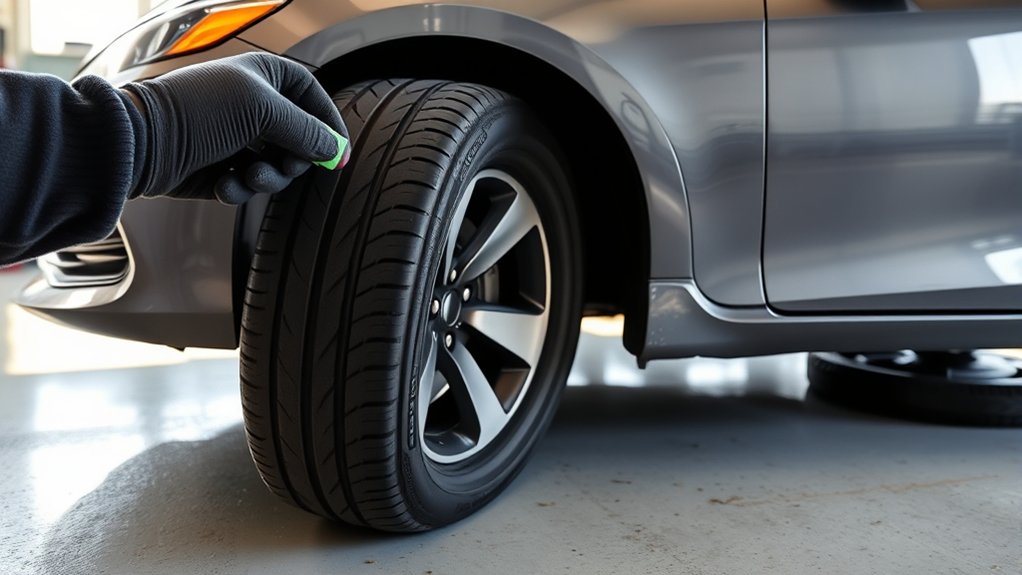
A Camry can pull even when tire pressures and alignment readings are correct. One possible cause is tire conicity or another tire-uniformity condition that creates lateral force as the tire rolls.
Definition of Tire Conicity
Tire conicity describes a tire’s tendency to roll as though it were slightly cone-shaped, producing a steady sideways force. It is usually caused by small asymmetries in tire construction. It is not the same as ordinary uneven tread wear, wheel misalignment, or a tire simply being “out of round.” Out-of-round conditions and radial force variation more often produce vibration or ride disturbance.
A driver may first notice conicity after installing new tires or after a rotation because moving a tire changes how its lateral force combines with the other tires. The tire may look normal during a visual inspection. Toyota’s 2002–2021 vehicle-pull bulletin identifies conicity as a major tire-related source of lateral force.
Impact on Vehicle Handling
Tire-generated lateral force can make the vehicle drift left or right on a level road. In Toyota’s T-SB-0063-20 procedure, a pull that reverses after the left and right front tires are switched points to tire conicity, provided the tires are non-directional and suitable for that position test. Directional or staggered setups require the correct tire-service procedure instead.
| Possible Tire Issue | Typical Effect | Recommended Solution |
|---|---|---|
| Conicity or ply-steer tendency | Steady pull with alignment in specification | Reposition or replace the affected tire |
| Incorrect directional mounting | Handling change, noise, or poor wet performance | Remount in the correct rotation direction |
| Radial force variation or runout | Speed-related vibration or ride disturbance | Road-force measurement, match mounting, or replacement |
| Belt or structural damage | Pull, wobble, bulge, vibration, or irregular wear | Stop using the damaged tire and replace it |
| Mixed tire models or large tread differences | Unequal grip and inconsistent tracking | Match approved size, type, and suitable tread condition |
Alignment adjustments do not “fix” conicity inside a tire. A shop may sometimes position tires to reduce combined pull, but a tire with excessive lateral-force tendency may need replacement.
How Can Worn Suspension Parts Make a Camry Pull?
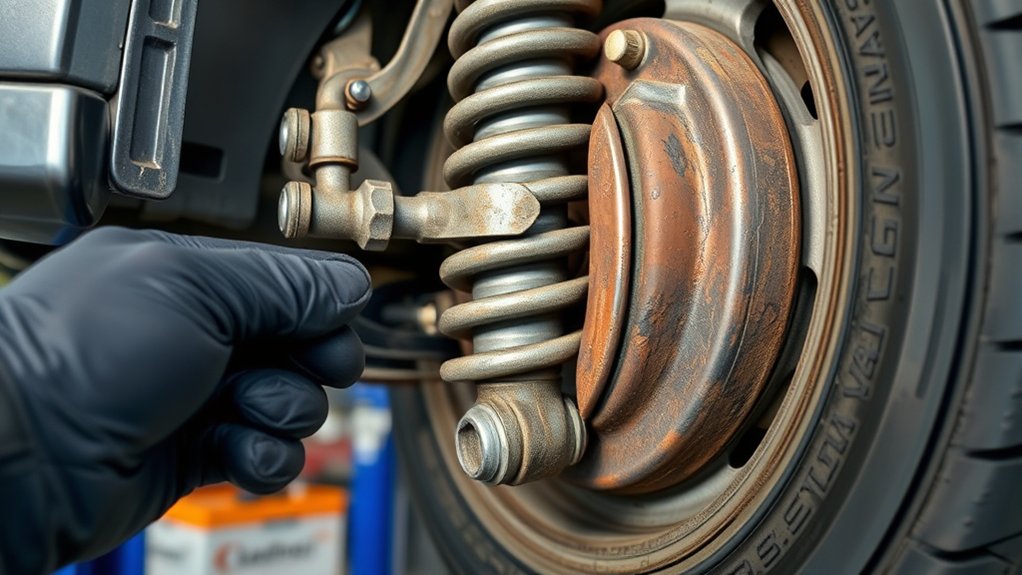
Steering and suspension parts hold each wheel at a precise angle. Wear, looseness, or impact damage can let a wheel move during braking, acceleration, or over bumps, causing pull, wander, clunks, or irregular tire wear.
Visual Inspection Techniques
With the car parked on level ground, use a flashlight to look for obvious problems without crawling underneath:
- Uneven ride height or a visibly broken coil spring
- Leaking struts or damaged strut bodies
- Torn ball-joint, tie-rod, or CV-joint boots
- Cracked, separated, or displaced control-arm bushings
- A tire sitting at a visibly different angle from the tire on the opposite side
- Fresh impact marks, bent metal, or a wheel pushed rearward in the wheel opening
Signs of Component Wear
Symptoms that strengthen the case for a steering or suspension problem include:
- Loose or delayed steering response
- Clunking over bumps or while changing direction
- A steering wheel that shifts during braking
- Cupped, scalloped, or rapidly changing tire wear
- One corner that continues bouncing after a bump
- Grinding or humming that changes when the vehicle turns, which can indicate a wheel-bearing problem
Testing Suspension Functionality
A simple bounce check may reveal severely weak damping, but it cannot confirm the condition of ball joints, tie rods, bushings, alignment angles, or wheel bearings. Proper testing often requires the vehicle to be safely lifted while a technician loads and measures components.
Toyota’s 2026 Camry maintenance chart includes periodic inspection of ball joints and dust covers, steering gear, and steering linkage and boots. If the pull comes with clunking over bumps, the Camry clunking-noise guide covers overlapping steering and suspension checks. Do not shake a raised wheel or work beneath the vehicle unless it is supported with the correct equipment and you are trained to use it.
Why Does My Camry Pull When Braking?
If the Camry tracks normally while cruising but changes direction when you press the brake pedal, treat it as a brake-related symptom first. Unequal braking force can yaw the car, while a dragging brake can also create a pull when the pedal is released. Pull direction alone does not prove which caliper, hose, pad, rotor, tire, or suspension part is faulty.
Possible causes include a sticking caliper piston, seized slide pins, a restricted flex hose, contaminated pad material, uneven rotor condition, loose suspension parts, or different tire grip from side to side.
- Pull only during braking: Inspect both front brakes and suspension joints.
- One wheel hotter than the others: Suspect brake drag or a bearing problem; do not touch the rotor or caliper.
- Burning smell or smoke: Stop driving and arrange service.
- Grinding, long stopping distance, or a soft pedal: Treat the problem as urgent.
Replacing pads alone may not solve the issue if the real cause is a caliper, hose, rotor, tire, or suspension fault. The complete brake system should be inspected before parts are chosen. See the Toyota Camry brake-inspection guide for model-year-aware inspection context.
Can Tire Rotation Change a Camry’s Steering Pull?
Regular rotation helps distribute wear, but the correct pattern depends on the Camry’s model year, tire type, and whether the tires are directional or different sizes front to rear. A pull that begins or changes immediately after rotation is also a diagnostic clue: tire position, pressure, mounting direction, or tire-generated lateral force may now be affecting how the car tracks.
For the 2026 Camry, Toyota’s Warranty & Maintenance Guide lists tire rotation at each 5,000-mile interval shown in the maintenance chart. Owners of other model years should follow the schedule and rotation pattern in the correct manual.
- Rotation can reduce irregular wear and help all tires age more evenly.
- It can reveal a tire-induced pull if the symptom changes after the tires move.
- It does not repair a damaged tire, bad alignment, bent wheel, worn suspension part, or dragging brake.
- Directional and staggered tire setups may require a restricted rotation pattern.
Can a Bent Wheel Make a Camry Pull?
A bent rim more commonly causes vibration, runout, bead leakage, or repeated pressure loss than a pure steering pull. Severe damage can still affect tracking, especially if it changes tire seating or occurred with tire and suspension damage.
Look for:
- Visible dents, cracks, or a flattened rim edge
- A tire that repeatedly loses pressure
- Steering-wheel vibration that increases with speed
- A wobble visible while the wheel rotates
- New symptoms immediately after a pothole or curb strike
Some bends are hidden on the inner barrel and are difficult to see with the wheel installed. A tire shop can measure wheel and tire runout and inspect the bead seat. Cracked or severely bent wheels should be replaced or evaluated by a qualified wheel specialist rather than assumed safe.
Other Less Common Causes of Camry Steering Pull
- Mixed tires: Different models, sizes, load ratings, tread depths, or rubber compounds can create unequal grip and steering response.
- Wheel-bearing drag or play: A failing bearing may add resistance, noise, heat, or looseness that affects tracking.
- Collision or subframe shift: A vehicle can be “within” one alignment angle while still having a shifted subframe or bent component that creates unequal geometry.
- Electric power-steering or driver-assistance faults: On equipped model years, warning lights, stored fault codes, or steering input that appears only with lane-centering assistance active should be diagnosed according to the owner’s manual.
- Uneven loading: A very heavy or poorly distributed load can alter ride height and handling, although it should not create a strong pull in an otherwise healthy vehicle.
When Should You Stop Driving or See a Mechanic?
Schedule professional diagnosis when basic tire-pressure correction does not solve the problem, the vehicle needs constant steering input, tire wear is uneven, the steering wheel is off-center, or the symptom followed an impact or repair.
Seek immediate service if you notice:
- A sudden, strong, or rapidly worsening pull
- A tire bulge, exposed cord, rapid air loss, or repeated TPMS warning
- Pulling with grinding, smoke, a burning smell, or an unusually hot wheel
- Loose steering, clunking, wheel wobble, or strong vibration
- A pull during braking that affects lane control or stopping confidence
Ask the shop to diagnose the cause rather than performing an alignment by default. A complete evaluation may include:
- Cold tire-pressure and tire-condition verification
- Tire-pull isolation and, when useful, road-force or lateral-force testing
- Brake drag and left-to-right brake-condition comparison
- Steering, suspension, wheel-bearing, and ride-height checks
- Four-wheel alignment with before-and-after measurements
- Inspection for bent parts or subframe shift after an impact
- Electronic power-steering or driver-assistance fault scanning when warning lights or related symptoms are present
Frequently Asked Questions
What causes steering to pull to one side?
Common causes include unequal tire pressure, tire wear or construction, wheel alignment, brake imbalance, worn steering or suspension parts, bent wheels, wheel-bearing problems, and road crown. The timing of the pull—cruising, braking, or accelerating—helps narrow the cause.
Which issue is most likely to make a vehicle pull to one side?
Start with the tires because pressure, damage, mismatched tread, and tire-generated lateral force are common and quick to check. If the tires are sound, inspect alignment, brakes, steering, and suspension rather than assuming one universal cause.
Why is my Camry pulling to the right?
A mild right drift can come from road crown, but a consistent pull may result from right-to-left tire-pressure differences, tire conicity, alignment geometry, brake drag, or worn parts. Test on more than one safe, level road and check cold tire pressure before scheduling repairs.
How do you fix a car that pulls to one side?
Correct the cause in order: set cold tire pressure, replace damaged or mismatched tires, repair brake or suspension faults, correct bent components, and then perform a four-wheel alignment. An alignment alone will not fix tire, brake, wheel, or worn-part problems.
Can new tires make a Toyota Camry pull?
Yes. A new tire can have a lateral-force tendency, be mounted in the wrong direction, have incorrect pressure, or behave differently from the other tires. If the pull began immediately after tire service, return to the installer for verification and tire-pull diagnosis.
Is it safe to drive a Camry that pulls to one side?
A slight road-crown drift may be normal, but a persistent or worsening pull should be inspected. Stop driving if the pull is severe or comes with a low or damaged tire, hot wheel, burning smell, grinding, loose steering, smoke, or strong vibration.
Does a Camry need an alignment if the steering wheel is crooked?
Not always. If the car travels straight but the steering wheel is off-center, Toyota treats that as a different symptom from a true directional pull. Have tire condition, steering-wheel centering, and alignment checked, but do not assume a crooked wheel proves that alignment alone is causing the problem.
Why does my Camry pull only when braking?
A pull that appears mainly with brake application points toward unequal braking force, brake drag, a caliper, hose, pad, or rotor problem, a tire-grip difference, or front-end movement. Have the brakes and front suspension inspected before treating it as an alignment-only problem.
Conclusion
A Toyota Camry that pulls to one side needs diagnosis in the right order. Start with cold tire pressure and tire condition, distinguish a true directional pull from an off-center steering wheel, and note whether the symptom appears while cruising, braking, or accelerating. Correct tire, brake, wheel, steering, or suspension faults before relying on an alignment. If the pull is sudden, severe, or accompanied by heat, smoke, grinding, loose steering, or strong vibration, stop driving and arrange professional inspection.
Sources
- Toyota T-SB-0063-20 — Vehicle Pull Diagnosis and Correction — 2002–2021 Toyota applicability, true pull versus off-center steering, road crown, tire conicity, road-test criteria, and tire-position diagnosis
- National Highway Traffic Safety Administration — TireWise — cold tire-pressure checks, placard pressure, alignment, rotation, tread, and TPMS guidance
- 49 CFR 571.138 — Tire Pressure Monitoring Systems — TPMS purpose, warning threshold, and required owner guidance
- Toyota 2026 Camry Warranty & Maintenance Guide — tire rotation and steering/suspension inspection guidance
- Toyota Manuals and Warranties — model-year-specific owner and maintenance manuals
- Bridgestone — Tire Alignment: What You Need to Know — alignment angles, pulling symptoms, and uneven tire-wear patterns

