
A P0171 code in a Toyota Camry means the engine computer has detected excessive lean correction on Bank 1. The engine may truly be receiving too much air or too little fuel, but the code can also be caused by inaccurate airflow data, an exhaust leak, or incorrect air-fuel-ratio sensor information. Diagnose the cause before replacing parts.
Quick Answer
Start by saving all codes and freeze-frame data. Inspect the intake duct, vacuum and PCV hoses, purge valve, and airbox. Then compare short- and long-term fuel trims at idle and higher rpm. Clean or replace the MAF sensor, A/F sensor, fuel pump, or injectors only after testing confirms the fault.
Key Takeaways
- P0171 identifies excessive lean correction on Bank 1. It does not identify the failed component.
- A vacuum or intake leak usually causes the strongest positive fuel trim at idle.
- High positive trim at idle and higher rpm may indicate MAF under-reporting, low fuel delivery, or another shared fault.
- Fuel-pressure specifications and upstream sensor tests depend on the Camry’s year, engine, and injection system.
- Do not replace an oxygen or air-fuel-ratio sensor until intake leaks, exhaust leaks, wiring, and scan data have been checked.
At a Glance
| Time Required | About 30–60 minutes for scanning and visual checks; one to several hours if smoke, fuel-pressure, wiring, or injector tests are needed |
| Difficulty | Beginner for scanning and visual inspection; intermediate or advanced for smoke testing, fuel-pressure testing, and electrical diagnosis |
| Tools Needed | OBD-II scanner with live data, flashlight, basic hand tools, and MAF-specific cleaner; smoke machine, multimeter, or fuel-pressure equipment as required |
| Cost | Low for visual checks or cleaning; highly variable if professional diagnosis, gaskets, sensors, injectors, or fuel-system repairs are required |
Warning: Stop driving and arrange professional help if the check-engine light flashes, the engine misfires heavily, stalls, loses substantial power, or produces a strong fuel smell. Never spray flammable cleaner around a running engine. Newer direct-injection Camrys can retain extremely high fuel pressure, so do not loosen fuel lines without the correct Toyota procedure and safety equipment.
What P0171 Means on a Toyota Camry

P0171 is commonly described as “System Too Lean, Bank 1.” In practical terms, the engine control module has been adding more fuel than expected to keep the commanded mixture near the target air-fuel ratio.
The code is usually based on fuel-trim calculations. It is not generated by one sensor acting alone. The ECM considers information from the mass airflow sensor, upstream oxygen or air-fuel-ratio sensor, engine temperature sensors, throttle position, operating load, and other inputs.
For gasoline operation, technicians often describe the target mixture as approximately 14.7 parts air to one part fuel. However, the exact mass ratio varies with fuel composition. A more useful diagnostic concept is lambda 1, which represents the chemically balanced mixture for the fuel being used.
Note: On an inline-four Camry, the engine has only one cylinder bank, so Bank 1 refers to the entire engine. On a V6 Camry, Bank 1 is the cylinder bank containing cylinder number 1. A V6 may also store P0174 for Bank 2.
Can You Drive a Camry With P0171?
If the check-engine light is steady and the Camry starts, idles, and accelerates normally, a short, gentle trip for diagnosis is usually less concerning than continued daily driving. Avoid hard acceleration and heavy loads until the cause is known.
Do not continue driving if you notice:
- A flashing check-engine light
- Strong or repeated misfires
- Stalling or difficult starting
- Severe hesitation or power loss
- Knocking or abnormal combustion noise
- A strong raw-fuel smell
- Overheating or another warning light
A persistent lean-control problem can increase emissions, reduce drivability, and contribute to misfires. Continued misfiring can overheat and damage the catalytic converter.
Common Symptoms of P0171
The check-engine light may be the only symptom. When drivability is affected, you may notice:
- Rough or unstable idle
- Hesitation when accelerating
- Surging at steady speed
- Long cranking or hard cold starts
- Stalling when stopping
- Reduced engine power
- Misfire codes such as P0300 or cylinder-specific P0301–P0306 codes
- Higher-than-normal positive fuel-trim readings
Symptoms alone cannot distinguish a vacuum leak from a contaminated MAF sensor, fuel-supply problem, purge fault, exhaust leak, or sensor error. Scan data is needed.
Most Common Causes of a Toyota Camry P0171 Code
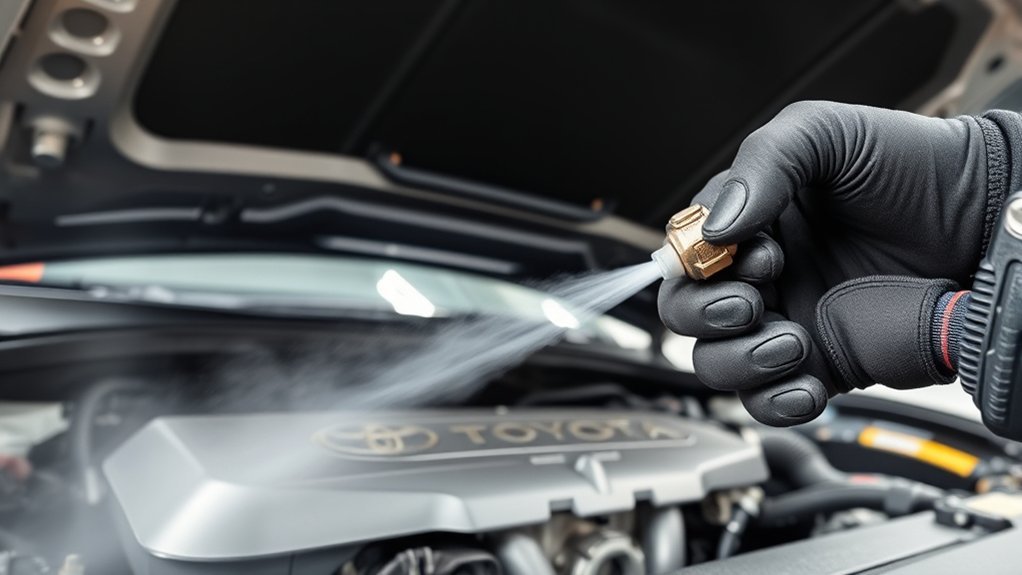
Likely causes vary by model year and engine, but the following faults should be considered:
- Split, loose, or disconnected intake duct after the MAF sensor
- Cracked vacuum, PCV, or brake-booster hose
- Leaking intake-manifold or throttle-body gasket
- PCV valve stuck open or damaged PCV plumbing
- EVAP purge valve stuck open
- Dirty, contaminated, biased, or failing MAF sensor
- Unsealed air-filter housing or incorrectly installed filter
- Low fuel volume or pressure
- Restricted or electrically faulty fuel injector
- Air-fuel-ratio sensor, oxygen sensor, heater, or wiring fault
- Exhaust leak ahead of the upstream sensor
- Incorrect engine-temperature or load data
- Poor-quality or contaminated fuel
- Mechanical problems such as low compression or valve leakage
A faulty upstream sensor is possible, but it should not be treated as the default cause. Intake leaks and inaccurate airflow measurement are often more useful starting points.
How to Diagnose P0171 in the Correct Order
1. Identify the Engine and Save the Scan Data
Record the Camry’s model year, engine size, and engine code. This determines the bank layout, upstream sensor type, fuel-system design, wiring, and correct pressure specifications.
Before clearing anything, scan every available module and save:
- Stored, pending, and permanent codes
- Freeze-frame engine speed
- Engine coolant temperature
- Vehicle speed and calculated load
- Short-term fuel trim
- Long-term fuel trim
- MAF airflow
- Upstream A/F or O2 sensor data
- Fuel-system status
Related codes can change the diagnostic direction. For example, a MAF circuit code, sensor-heater code, coolant-temperature code, misfire code, or EVAP purge code should not be ignored.
2. Inspect the Air Intake and Vacuum Connections
With the engine off and cool, inspect the complete path from the airbox to the throttle body. Flex the intake boot gently and look underneath, where splits may be difficult to see.
Check:
- Airbox clips and filter seating
- MAF sensor mounting seal
- Intake clamps
- Accordion folds in the intake boot
- PCV valve and hoses
- Brake-booster hose and check valve
- Vacuum tees and caps
- Intake-manifold gasket area
- Throttle-body gasket
- EVAP purge hoses
- Oil filler cap and dipstick sealing
A smoke test is safer and more reliable than spraying combustible chemicals around a running engine. Introduce smoke using proper low-pressure equipment and follow the equipment manufacturer’s instructions.
3. Compare Short- and Long-Term Fuel Trims
Warm the engine fully and confirm that it has entered closed-loop operation. Observe STFT and LTFT for Bank 1 at idle, around 2,500 rpm with no load, and during a safe loaded test if appropriate.
Positive trim means the ECM is adding fuel. Negative trim means it is removing fuel. Do not diagnose P0171 from LTFT alone; consider the combined correction and how it changes with engine speed and load.
| Fuel-Trim Pattern | More Likely Direction |
|---|---|
| Strongly positive at idle but improves substantially near 2,500 rpm | Vacuum leak, PCV leak, purge leak, intake-manifold gasket, or another leak with greater effect at high manifold vacuum |
| Positive at idle and remains positive at higher rpm | MAF under-reporting, broad intake leak, low fuel delivery, contaminated fuel, or biased sensor data |
| Acceptable at idle but becomes strongly positive under load | Fuel-volume, pump, injector, or restricted-delivery problem |
| P0171 and P0174 on a V6 | A shared fault such as MAF error, low fuel delivery, purge problem, or intake leak before the manifold divides |
| P0171 only on a V6 | Bank-specific intake leak, injector issue, exhaust leak, wiring fault, or Bank 1 sensor problem |
Pro Tip: A vacuum leak often has its greatest effect at idle because manifold vacuum is high and commanded airflow is low. If positive trim drops sharply as rpm rises, inspect for unmetered air before replacing the MAF sensor or fuel pump.
4. Check the EVAP Purge Valve
A purge valve that remains open can act like a vacuum leak, especially at idle. Use the scan tool’s purge command if supported, or test the valve according to the correct Toyota repair procedure.
Do not permanently plug or bypass EVAP plumbing. The goal is to determine whether unintended purge flow is affecting the mixture.
5. Inspect for Exhaust Leaks
An exhaust leak ahead of the upstream air-fuel-ratio or oxygen sensor can draw outside air into the exhaust stream. The sensor may then report a lean condition even when fuel delivery is adequate.
Inspect the exhaust manifold, gasket, flex section, sensor threads, and nearby joints. Listen during a cold start, when a small leak may be easiest to hear. Keep hands and tools away from hot or moving parts.
Inspecting and Cleaning the MAF Sensor
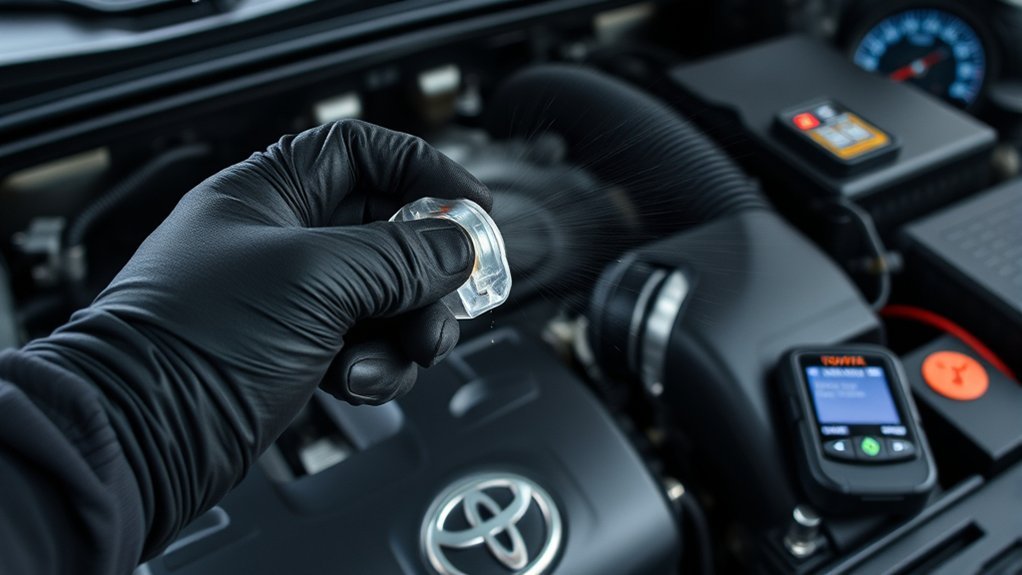
The MAF sensor measures incoming air so the ECM can calculate the required fuel quantity. If contamination causes it to under-report airflow, the ECM may initially command too little fuel and later add fuel through positive trim, eventually setting P0171.
Before cleaning, inspect:
- The connector lock and terminal condition
- Harness damage near the airbox
- The sensor seal
- Airbox closure
- Evidence of dust, oil, water, or aftermarket filter contamination
- MAF readings compared with engine speed and load
[Amazon Products Picked for You]
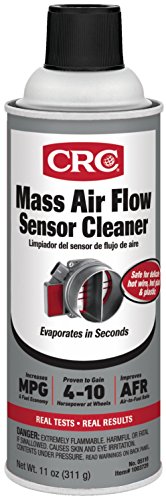
Increases Horsepower And Improves Air/Fuel Ratio And Mpg

Restores Sensor Accuracy & Fuel Economy - By safely removing contaminants like dirt, oil, and pollen from the MAF sensor, the cleaner helps restore the sensor’s ability to measure airflow accurately, which leads to improved fuel combustion.

QD ELECTRONICS CLEANER: A precise cleaner made from petroleum distillate and alcohol that is fast evaporating and leaves no residue.
Safe MAF Cleaning Steps
- Park in a ventilated area, switch the ignition off, and let the engine cool.
- Disconnect the electrical connector without pulling on the wires.
- Remove the sensor using the correct driver or socket.
- Do not touch the sensing element with fingers, brushes, cloths, or tools.
- Use only a cleaner specifically labeled for MAF sensors.
- Spray the sensing area as directed by the cleaner manufacturer.
- Do not use brake cleaner, carburetor cleaner, compressed air, or a heat gun.
- Allow the sensor to air-dry completely.
- Reinstall it in the correct direction with the seal properly seated.
- Reconnect the connector and recheck scan data.
Follow the product’s ventilation and protective-equipment instructions. CRC, for example, directs users to work in a well-ventilated area and use safety glasses and gloves. See the CRC MAF cleaner safety and application information.
Cleaning will not repair damaged electronics, broken wiring, a biased internal circuit, or an incorrect aftermarket sensor. If readings remain implausible, complete the manufacturer’s electrical and performance tests before replacement.
P0171 is a starting point for diagnosis, not an instruction to replace the upstream sensor.
How to Evaluate the Upstream A/F or O2 Sensor
Toyota has used different upstream exhaust-sensor designs across Camry generations. Some vehicles use a traditional narrowband oxygen sensor, while many use a wide-range air-fuel-ratio sensor.
A traditional narrowband sensor may switch between rich and lean during closed-loop operation. A wide-range A/F sensor is interpreted differently and may be displayed by a generic scanner as lambda, equivalence ratio, current, a calculated voltage, or a manufacturer-specific value.
Before condemning the sensor:
- Check for heater or circuit codes.
- Inspect the connector and wiring near hot exhaust components.
- Check for an exhaust leak ahead of the sensor.
- Confirm that the engine is warm and in closed loop.
- Compare commanded mixture, fuel trims, and sensor response.
- Use a controlled rich and lean test only when the correct service procedure permits it.
- Compare Bank 1 and Bank 2 behavior on a V6 when both banks are otherwise operating under the same conditions.
If sensor data indicates lean while an exhaust-gas test, controlled response test, and fuel-trim behavior indicate otherwise, the sensor or circuit may be biased. Do not judge every Toyota A/F sensor by the conventional 0.1-to-0.9-volt switching rule.
[Amazon Products Picked for You]

【Vehicle Fitment】Compatible with Toyota Camry 2012 2013 2014 2015 2016 2017 L4 2.5L, Toyota Avalon 2013-2018 L4 2.5L, Toyota RAV4 2013-2018 L4 2.5L (Except Hybrid); Compatible with Scion tC 2011-2016 L4 2.5L; Compatible with Lexus ES300h 2013-2018 L4 2.5L.

For Pontiac Vibe 1.8L 2005-2008

【OEM Part Number】 234-9052, 2349052, 250-54006, 25054006, 250-54050, 25054050, 250-54066, 25054066, 250-54085, 25054085, 24661, 24828, 24833, 15163, 15117, 15974, 16606, 18071, 234-9048, 2349048, 234-9051, 2349051, 234-9058, 2349058, 234-9068, 2349068, 234-9140, 2349140, 15988, ES10933, 8946702020, 8946702090, 8946706230, 8946712010, 8946704020, 8946704120, 8946704130, 894670C010, 8946712260, 8946724010, 8946726020, 8946730010, 8946730020, 8946730030, 8946730040, 8946730070, 8946730090.
Fuel-Delivery System Checks
If trims remain positive at higher rpm or become worse under load, verify fuel delivery. Start with the least invasive checks.
[Amazon Products Picked for You]
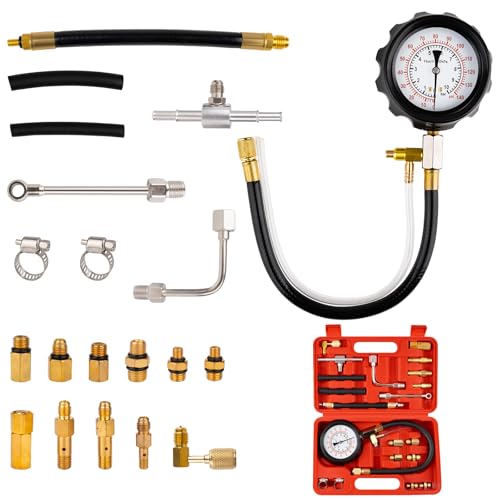
Compatibility Note: For further confirmation of specific model compatibility, refer to the vehicle owner's manual or contact a professional technician. Excludes Fo/rd, K/I/A, Bo/s/ch, C/I/S Je/tro/nic, G//M Th/rot/tle Bo/dy Systems, A/cu/ra, J/ee/p, B/M/W, Ni/s/san, and To/yo/ta fuel systems. Not compatible with small/non/standard S/chra/der vallves, high/pre/ssure direct in/ject/ed engines, or die//sel injection pumps. Verify your vehicle’s vallve size and pressure specs before purchase

FUEL INJECTION PRESSURE TESTER KIT: Fuel injection pressure kit is made of high quality materials which have good durability and reliability.
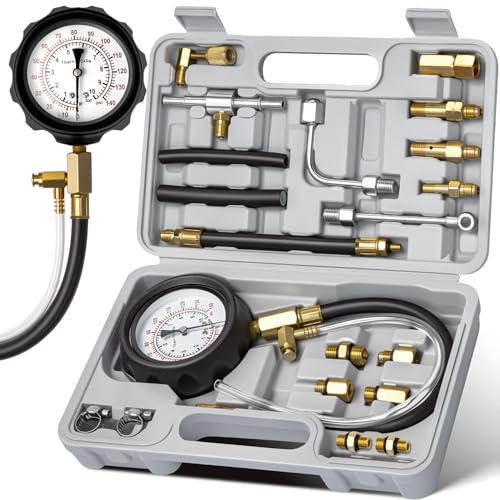
ACCURATE DUAL-SCALE GAUGE: Features a shock-resistant dry gauge with built-in damping mechanism, providing clear 0–140 PSI and 0–10 BAR dual scales for precise fuel system diagnostics
Verify Fuel Quality and Level
Ask whether the fault began immediately after refueling. Contaminated fuel, an incorrect fuel type, or water in the fuel can produce drivability problems and unusual trim behavior.
Use Model-Specific Fuel-Pressure Specifications
Do not apply one pressure value to every Camry. Use the model year, VIN, and engine code to obtain the proper procedure and specifications from the Toyota Technical Information System.
Depending on the engine, diagnosis may involve:
- Low-pressure supply testing
- Fuel-volume testing
- Pressure retention testing
- Electrical testing of the pump and control circuit
- Scan-tool review of commanded and actual rail pressure
- Direct-injection high-pressure system testing
Warning: Direct-injection fuel rails can operate at pressures far above conventional port-injection systems. Do not loosen an injector, high-pressure pipe, pump fitting, or rail connection unless you have the exact depressurization procedure, protective equipment, and required tools.
Check the Fuel Injectors
An injector can be electrically functional but restricted, leaking, or delivering an uneven quantity. Depending on the engine and available equipment, a technician may use:
- Injector balance testing
- Cylinder contribution testing
- Current-ramp testing
- Resistance or circuit testing where applicable
- Misfire counters
- Fuel-pressure drop comparison
- Professional cleaning or flow testing
On a V6 with P0171 but no P0174, pay closer attention to Bank 1 injectors and bank-specific intake or exhaust faults.
Parts You Should Not Replace Without Testing
A P0171 code alone does not justify replacing:
- The upstream oxygen or A/F sensor
- The MAF sensor
- The fuel pump
- The injectors
- The throttle body
- The catalytic converter
- The engine computer
Parts replacement without supporting scan data can hide the original problem temporarily or add a second fault. Aftermarket sensors with incorrect calibration can also create new fuel-trim problems.
How to Verify the Repair
- Repair the confirmed intake, exhaust, electrical, sensor, or fuel-system fault.
- Reassemble every connector, hose, clamp, and seal.
- Clear the codes only after saving the original freeze-frame information.
- Start the engine and check for leaks or abnormal operation.
- Warm the engine fully.
- Recheck STFT and LTFT at idle and higher rpm.
- Repeat the operating conditions shown in the original freeze frame when safe.
- Check for pending codes after the road test.
- Confirm that no misfire, sensor, fuel-pressure, or EVAP codes return.
Fuel trims may not return to exactly zero. The important result is that correction remains reasonable, responds normally to operating changes, and no lean code returns after the required monitor conditions are met.
When to Use a Professional Technician
Professional diagnosis is appropriate when:
- The check-engine light is flashing.
- The engine stalls or misfires heavily.
- A smoke machine is needed.
- The vehicle uses direct injection.
- Fuel-pressure or injector-balance testing is required.
- Wiring or sensor-reference circuits need testing.
- P0171 returns after obvious intake problems have been repaired.
- Compression, leak-down, or valve-timing diagnosis is needed.
A Toyota-capable scan tool can display manufacturer-specific A/F sensor, purge, misfire, and fuel-system data that may not appear correctly on a basic generic reader.
Frequently Asked Questions
How do I fix code P0171 on a Toyota Camry?
Save the codes and freeze-frame data, inspect the intake and vacuum system, compare fuel trims at idle and higher rpm, check the purge valve and exhaust for leaks, evaluate the MAF sensor, and verify fuel delivery using the correct Toyota specification. Replace a component only after testing confirms it is faulty.
What is the most common cause of P0171?
There is no single cause for every Camry. Common starting points include an intake or vacuum leak, a split duct after the MAF sensor, PCV or purge leakage, MAF under-reporting, an exhaust leak ahead of the upstream sensor, and inadequate fuel delivery. Fuel-trim behavior helps identify the most likely category.
Can a dirty MAF sensor cause P0171?
Yes. Contamination can cause the sensor to under-report incoming air, leading the ECM to add fuel through positive trim. Inspect the intake for leaks first, use only MAF-specific cleaner, and confirm the readings afterward. Cleaning cannot repair an electrically failed or incorrectly calibrated sensor.
Can a bad oxygen sensor or A/F sensor cause P0171?
It can, but sensor replacement should not be the first step. An upstream exhaust leak, wiring fault, heater problem, intake leak, fuel problem, or incorrect MAF reading can produce similar data. Confirm the sensor type and test its response using the correct Toyota procedure.
Why does P0171 improve when I raise the rpm?
If positive fuel trim is high at idle but falls significantly near 2,500 rpm, a vacuum, PCV, purge, or intake-manifold leak becomes more likely. The same leak represents a smaller percentage of total airflow as the throttle opens and engine airflow increases.
Why did P0171 return after I cleared it?
Clearing the code erases diagnostic information but does not repair the cause. P0171 returns when the ECM again sees excessive correction under the required operating conditions. Save freeze-frame data before clearing the code and verify fuel trims after the repair.
Does a four-cylinder Camry have Bank 2?
No. An inline-four Camry has one cylinder bank, identified as Bank 1. A V6 has two banks and may set P0171 for Bank 1, P0174 for Bank 2, or both codes when a shared fault affects the entire engine.
Conclusion
A Toyota Camry P0171 code should be diagnosed with scan data rather than guesswork. Begin with freeze-frame information, inspect for unmetered air, compare fuel trims at different engine speeds, and then evaluate the MAF sensor, purge system, exhaust, upstream A/F sensor, fuel delivery, and injectors.
Because Camry engines and fuel systems differ by year, use the correct Toyota repair information before testing fuel pressure or replacing components. A confirmed diagnosis is usually faster and less expensive than replacing several sensors and hoping the code stays away.
Sources
- Toyota Technical Information System — model-specific repair manuals, wiring diagrams, service bulletins, diagnostic procedures, and specifications
- National Highway Traffic Safety Administration Vehicle Search — recalls and manufacturer communications by vehicle model and year
- CRC Mass Air Flow Sensor Cleaner — product-specific MAF cleaning, ventilation, and personal-protection guidance
- U.S. Environmental Protection Agency: State and Local Transportation — vehicle-emissions and onboard-diagnostics context
