
Battery and alternator problems can produce many of the same symptoms, including hard starting, dim lights, electrical glitches, and a dead battery. The difference is that the battery stores the energy needed to start the vehicle, while the alternator or charging system replenishes that energy and powers electrical equipment after the engine starts. Testing both parts—and the cables and charging system around them—is safer and more reliable than guessing from one symptom.
Quick Answer
A weak battery usually causes slow cranking, rapid clicking, repeated jump-starts, or a no-start after the vehicle sits. A charging-system problem is more likely when the battery repeatedly goes dead after driving, the charging warning light stays on, lights flicker while the engine runs, or the vehicle stalls as system voltage falls. Test both before replacing either part.
Key Takeaways
- A slow or labored crank often points toward the battery, its terminals, or the starter circuit.
- The dashboard battery-shaped warning light normally indicates a charging-system fault, not proof that the battery itself has failed.
- A rested, fully charged conventional 12-volt lead-acid battery is commonly around 12.6 volts, but voltage alone does not prove that it can supply enough cranking current.
- Traditional charging systems often measure in the high-13-to-14-volt range with the engine running, but smart charging systems can intentionally vary voltage.
- Corroded terminals, bad grounds, a slipping belt, starter problems, wiring faults, or parasitic drain can imitate battery or alternator failure.
At a Glance
| Time Required | About 10–20 minutes for basic visual and multimeter checks |
| Difficulty | Beginner for basic voltage checks; professional diagnosis may be needed for smart charging or wiring faults |
| Tools Needed | Digital multimeter, eye protection, gloves, and the vehicle owner’s/service information |
| Cost | No additional cost if you already own a multimeter; many auto-parts stores also offer battery and charging-system testing |
Understanding Your Car Battery and Alternator Roles
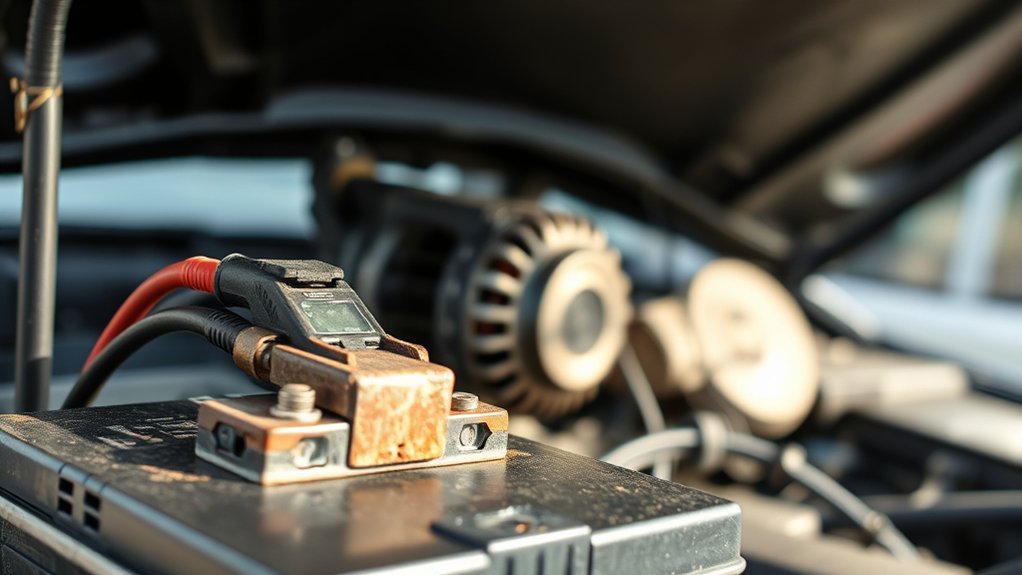
Your car battery supplies the large burst of electrical current needed to operate the starter and helps stabilize the vehicle’s electrical system. Once the engine is running on a conventional gasoline or diesel vehicle, the alternator converts mechanical energy from the engine into electrical power.
That electrical power operates lights, control modules, the blower motor, audio equipment, and other accessories while also replenishing charge removed from the battery during starting.
A battery problem therefore tends to appear most clearly during starting or after the vehicle has been parked. An alternator or charging-system problem often becomes more obvious after the engine starts, because electrical loads continue using stored battery energy without enough replacement charge.
Note: Hybrid and electric vehicles may use a DC-DC converter rather than a traditional belt-driven alternator to maintain the 12-volt battery. Follow the manufacturer’s diagnostic procedure for those vehicles instead of assuming conventional alternator behavior.
Battery vs Alternator Symptoms at a Glance
| Symptom | Battery More Likely | Charging System More Likely |
|---|---|---|
| Slow cranking before engine starts | Yes—especially with a weak or discharged battery | Possible if the alternator has left the battery discharged |
| Rapid clicking during start attempt | Common with low battery voltage or poor connections | Possible indirectly if the battery was not recharged |
| Starts with a jump but is dead again after sitting | Possible weak battery or parasitic drain | Possible if charging output is low |
| Battery-shaped warning light stays on while driving | Does not by itself diagnose the battery | Strong reason to inspect the charging system |
| Lights or electronics weaken while engine runs | Possible | More suspicious if charging voltage/output is inadequate |
| Engine stalls as electrical power fades | Possible with extremely low system voltage | Raises suspicion of charging-system failure |
These patterns help narrow the possibilities, but they are not substitutes for testing. A weak battery and a failed charging system can exist at the same time, and a poor connection can imitate either one.
Common Signs of a Failing Car Battery
When a battery loses capacity or becomes deeply discharged, the first clues usually appear while starting the vehicle.
Symptoms to Watch For
- Slow engine cranking: The starter turns the engine more slowly than normal.
- Rapid clicking: The starter solenoid repeatedly engages because system voltage collapses under load.
- Frequent jump-starts: The vehicle repeatedly lacks enough stored energy to crank.
- Dim lights before startup: Interior or dashboard lights may become noticeably weak with the engine off.
- Corroded or loose terminals: Poor connections can restrict current even when the battery itself is usable.
- Physical damage: A cracked, leaking, or badly swollen battery requires attention and should not be handled like a routine test.
A battery that repeatedly goes flat does not automatically need replacement. It may simply be discharged because of a charging problem, lights left on, an electrical parasitic draw, long storage, or repeated short trips.
Age and Performance Issues
Many conventional automotive batteries provide several years of service, and the commonly quoted three-to-five-year range is a useful reminder to increase testing as a battery ages. It is not an automatic replacement date. Climate, under-hood heat, battery construction, driving pattern, charging strategy, vibration, and depth of discharge can shorten or extend service life.
An older battery that combines slow cranking, repeated discharge, or poor load-test results deserves closer attention than a battery that merely reaches a particular birthday.
Clear Signs Your Alternator or Charging System May Be Failing
Alternator symptoms often appear while the engine is running because the charging system is no longer supplying enough power to meet vehicle demand and restore the battery.
| Sign | Description | What It Can Mean |
|---|---|---|
| Charging/Battery Warning Light | Stays on or appears while driving | A charging-system fault needs diagnosis |
| Dimming or Flickering Lights | Lighting changes noticeably while the engine runs | Charging output or electrical connections may be unstable |
| Unusual Noises | Whining, grinding, growling, or belt noise from the front of the engine | Alternator bearing, pulley, belt, or tensioner problems are possible |
| Electrical Accessories | Windows, blower, radio, or displays behave erratically | System voltage may be low or unstable |
| Repeatedly Discharged Battery | A charged or recently replaced battery keeps going flat | Undercharging or parasitic drain needs investigation |
If a vehicle starts after a jump but then loses electrical functions or stalls, a charging-system problem becomes more likely. It still should be confirmed because loose cables, bad grounds, belt failure, wiring faults, and other problems can produce similar behavior.
Warning: Never disconnect a battery cable while the engine is running as a test of the alternator. This old diagnostic shortcut can create voltage spikes and damage electronic equipment. Use a meter or an appropriate charging-system tester instead.
[Amazon Products Picked for You]
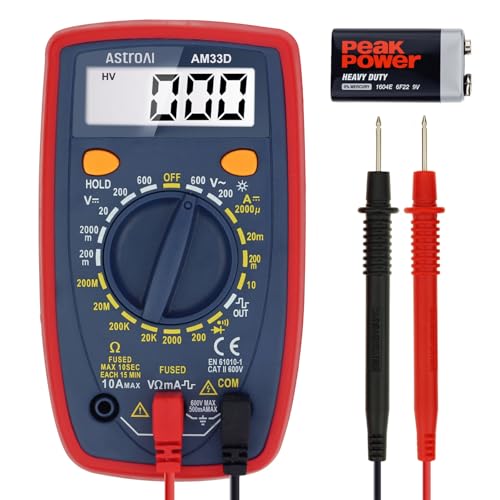
Additional Tips - The following incorrect operations may cause the multimeter not to show results: Firstly, the plugs of test leads are not fully inserted or not inserted into the correct sockets. Secondly, the manual rotary switch is not placed in the correct position. In addition, this meter can not test all AC Current and below 100mV AC Voltage. Please check the user manual carefully before measurement.

【Reliable Car Battery Tester】: The alternator tester can accurately determine whether the car battery needs to be replaced or if there is a power outage, and at the same time evaluate the output status of the alternator, clearly presents real-time voltage data, battery health and charging status. It can effectively prevent the battery from being damaged due to overcharging or undercharging, and extend the battery's service life.
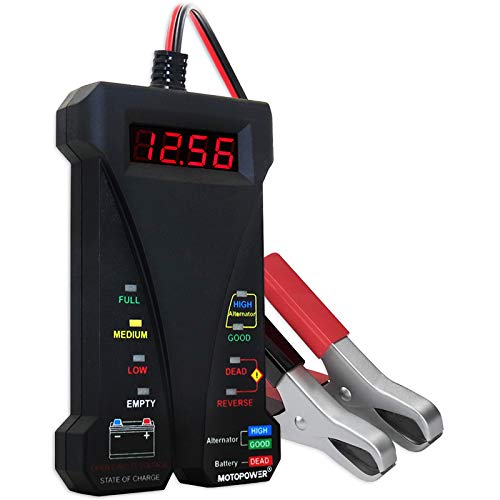
Effortless Operation - Boasting a “plug-and-test” design, there's no need for complex set-up procedures. Just connect it to the battery following simple steps. Without starting the vehicle, you can read the battery status, and after starting, quickly obtain the alternator status. Whether you're a professional mechanic or an ordinary car owner, you can easily use it to quickly determine if the battery needs jump - starting, replacement, or if the alternator output is normal.
How to Identify Battery and Alternator Problems
The safest approach is to test the system in order rather than replacing whichever component seems most suspicious.
[Amazon Products Picked for You]

Catch Battery Problems Early: Featured in two videos by Project Farm, a popular YouTube channel with millions of subscribers, the ANCEL BA101 helps you quickly spot battery issues before they leave you stranded. It provides easy-to-understand readings for State of Health (SOH), State of Charge (SOC), voltage, current, CCA, plus cranking and charging system tests, so you can better understand your battery and help avoid unexpected breakdowns

Wide Application - The AstroAI M4K0R Multimeter accurately measures AC/DC voltage to 600V, Current to 10A, Resistance to 40MΩ. You can use it for continuity test, diode test, battery test and live wire test. Includes 1.5V, 9V and 12V battery test modes to easily test a wide variety of batteries. Multimeter light turns red for low voltage and green for enough voltage.

Accurately Test Full Features: Accurately measures AC/DC voltage, DC current, resistance, continuity test, diode and batteries.
Common Symptoms Overview
A slow engine crank, rapid clicking, repeated jump-start requirement, or weak lights before startup often pushes the battery or battery connections higher on the suspect list.
A charging warning light, voltage-related electrical problems while driving, repeated battery discharge after driving, or stalling as electrical power fades raises more concern about the charging system.
Corrosion, loose terminals, damaged cables, bad grounds, starter faults, belt problems, and excessive key-off electrical drain can blur that distinction.
Testing Procedures Explained
- Inspect first. With the vehicle off, look for loose terminals, corrosion, cracked cables, battery damage, and an obviously loose or damaged drive belt where applicable.
- Check resting voltage. Measure across the 12-volt battery with the vehicle off after surface charge has dissipated. Around 12.6 volts is typical for a fully charged conventional lead-acid battery.
- Do not diagnose battery health from resting voltage alone. A battery can show acceptable open-circuit voltage and still fail when the starter demands high current.
- Start the engine and observe system voltage. A traditional charging system commonly raises voltage above battery-resting voltage, often into roughly the high-13-to-14-volt range.
- Apply electrical load. Headlights, blower, and rear defroster can help reveal a charging system that cannot keep up, but compare results with the vehicle manufacturer’s specification.
- Load-test or conductance-test the battery if needed. This checks its ability to deliver cranking power rather than merely showing its state of charge.
Pro Tip: Charge and test a discharged battery before condemning the alternator whenever possible. A badly discharged or internally damaged battery can distort charging-system test results.
Age-Related Considerations
Battery age can help prioritize testing, but alternator diagnosis should not be based on age alone. There is no universal mileage or year at which an alternator automatically becomes defective.
If an older battery has slow-cranking symptoms and fails a proper battery test, replacement may be reasonable. If the battery passes but repeatedly becomes discharged, continue with charging-system and parasitic-draw diagnosis.
How to Test Your Car Battery: Easy Steps
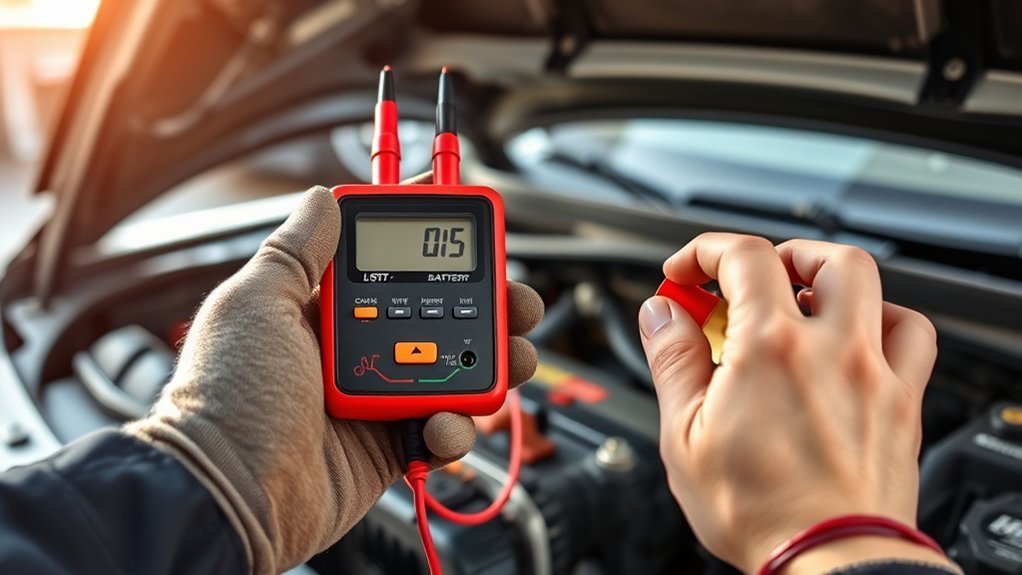
Basic battery voltage testing requires only a digital multimeter, but work carefully around battery terminals.
- Turn the engine and accessories off.
- Set the multimeter to DC volts. An auto-ranging meter or a range capable of reading roughly 0–20 volts works well for a conventional 12-volt system.
- Place the red probe on positive and black probe on negative.
- Read the resting voltage. A fully charged conventional lead-acid battery is commonly around 12.6 volts. A lower reading can mean the battery is partly discharged, but it does not by itself prove failure.
- Inspect the terminals and cables. Corrosion, looseness, or damaged conductors can cause voltage drop and poor starting.
- Get a battery load or conductance test if symptoms continue. This is more useful than open-circuit voltage for determining whether the battery can still supply adequate starting current.
If the battery has removable service caps, follow the battery manufacturer’s instructions rather than opening or adding fluid automatically. Many modern automotive batteries are sealed or maintenance-free.
Warning: Lead-acid batteries contain corrosive electrolyte and can release flammable gas. Wear eye protection, keep flames and sparks away, use correct polarity, and do not test or jump-start a cracked, leaking, badly swollen, or frozen battery. Follow the vehicle manual for designated jump points and procedures.
[Amazon Products Picked for You]
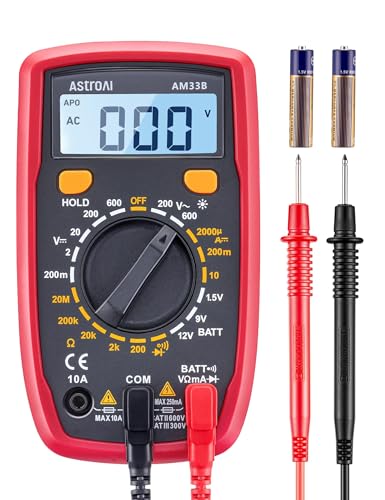
Versatile Digital Multimeter - Accurately measures AC/DC Voltage, DC Current, Resistance, and Diode. This Multimeter is a really useful tool for solving industrial and household electrical issues. Suitable for Household Outlets, Fuses, Batteries (including Vehicles), Automotive Circuit Troubleshooting, Charging Systems, Testing electronics in Cars etc.

VERSATILE MULTIMETER: Measures up to 600V AC/DC voltage, 10A DC current, and 2MOhms resistance

Versatile Digital Multimeter - Accurately measures AC/DC Current, AC/DC Voltage, Capacitance, Frequency, Duty Cycle, Resistance, Diode, Continuity and Temperature.
Essential Testing Procedures for Your Alternator
After confirming that the battery has sufficient charge and the connections are sound, check the charging system.
- Measure battery voltage before starting. Record the resting value so you can compare it with the running value.
- Start the engine and measure again. On many conventional systems, voltage rises into approximately the 13.7–14.7-volt area as the alternator charges the battery.
- Add electrical load. Turn on equipment such as the headlights and blower and watch for excessive voltage drop, flickering, or unstable operation.
- Inspect the drive system. A loose, slipping, damaged, or broken belt can prevent an otherwise usable alternator from producing adequate output.
- Check cables and grounds. Excessive resistance between the alternator, battery, engine, and chassis can imitate alternator failure.
- Use vehicle-specific specifications. Smart charging systems can command lower or higher voltages depending on battery state, temperature, load, deceleration, and computer strategy.
A running voltage that does not match a generic number is therefore not enough to justify alternator replacement. Professional charging-system tests can evaluate output under load, control signals, wiring voltage drop, and—in appropriate cases—AC ripple from the rectifier diodes.
The most reliable diagnosis comes from testing the battery, charging system, cables, and electrical load together—not from replacing the part that seems most likely from one symptom.
What Can Mimic a Bad Battery or Alternator?
Several problems can produce nearly identical symptoms:
- Corroded battery terminals: Resistance can reduce starter current and charging current.
- Loose battery cables or bad ground straps: These can cause intermittent starting, flickering electronics, and charging problems.
- Failing starter motor or solenoid: A single heavy click with a charged battery can point toward the starter circuit rather than the battery.
- Slipping or broken drive belt: The alternator cannot produce normal power if it is not being driven correctly.
- Blown fuse or fusible link: A charging circuit can be interrupted even when the alternator itself is functional.
- Parasitic draw: A module, light, accessory, or wiring fault may drain a healthy battery while the vehicle is parked.
- Battery monitoring or charging-control fault: Modern vehicles may regulate charging through sensors and the engine or body control modules.
- Excessive electrical load: Aftermarket accessories or a system fault can demand more current than expected.
Factors That Contribute to Battery and Alternator Failures
Age contributes to wear, but operating conditions often matter just as much. High temperatures accelerate battery aging, while very cold conditions reduce available cranking performance.
Frequent short trips can leave a battery undercharged because the vehicle uses substantial energy during startup without always running long enough to recover it. Long periods of parking can also permit normal standby loads—or an abnormal parasitic draw—to discharge the battery.
Corroded terminals, poor grounds, loose connections, belt problems, and heavy accessory loads can make the charging system work harder or prevent current from reaching the battery efficiently.
A deeply discharged or defective battery can also place unusually high demand on the charging system. Correct the underlying cause rather than repeatedly jump-starting the vehicle without diagnosis.
Why Regular Maintenance Is Key for Your Battery and Alternator
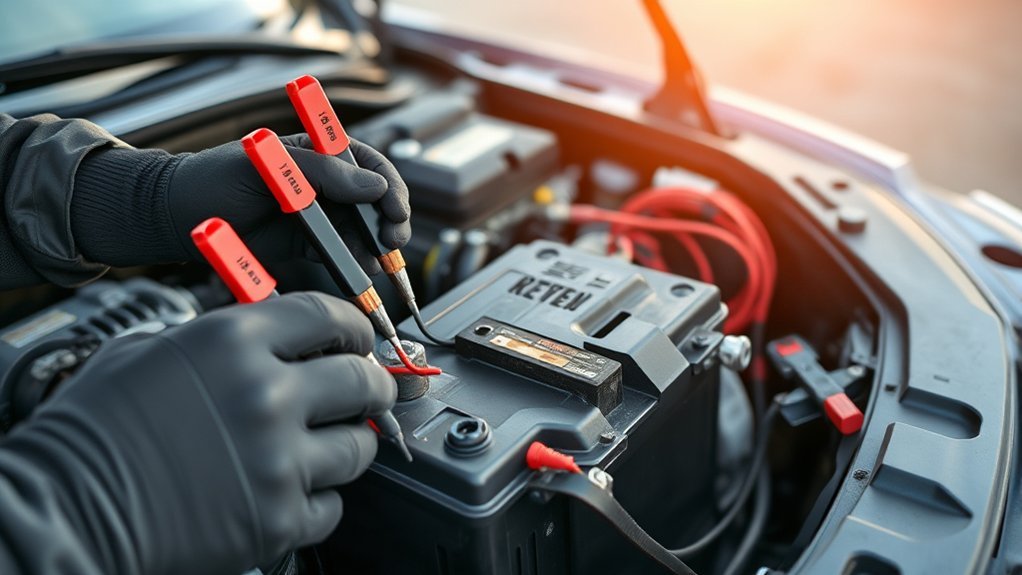
Regular checks can expose small electrical problems before they become no-starts or roadside breakdowns.
- Inspect battery terminals: Keep them clean, tight, and free of severe corrosion.
- Check cable condition: Look for damaged insulation, swollen cables, loose grounds, or heat damage.
- Inspect the accessory belt where applicable: Cracking, glazing, contamination, or poor tension can affect alternator operation.
- Test an aging battery periodically: A proper battery analyzer can reveal declining cranking ability before complete failure.
- Watch driving patterns: Repeated short trips and long storage periods can keep a battery at a low state of charge.
- Investigate repeated discharge: Do not assume every dead battery is simply an old battery.
Battery service life varies, and alternator life varies even more widely by vehicle design and use. Condition-based testing is more reliable than replacing either component solely because it has reached a certain age.
What to Do If Your Battery or Alternator Fails
If the engine will not crank because the battery is discharged, a correctly performed jump-start may get the vehicle running, but it does not identify why the battery went flat. Follow your owner’s manual because modern vehicles may specify dedicated jump terminals or procedures.
If the charging-system warning light stays illuminated while driving, minimize unnecessary electrical loads and move toward a safe stopping location. A failed charging system may eventually discharge the battery enough for the engine and electrical systems to stop operating.
If the temperature gauge rises, steering effort changes suddenly, you smell burning material, or you know the accessory belt has failed, stop safely and shut the vehicle down. On some engines, the same belt can drive additional critical components.
Persistent starting or charging problems should be professionally tested rather than solved through repeated jump-starts or repeated replacement of batteries.
Frequently Asked Questions
How do I know if it’s my battery or my alternator?
Slow cranking, rapid clicking, or a no-start after the car sits often points toward the battery or its connections. A charging warning light, electrical problems while driving, or a battery that repeatedly becomes discharged after driving raises more concern about the charging system. Testing both is the only reliable way to separate overlapping symptoms.
Can AutoZone tell me if it’s my battery or alternator?
AutoZone currently advertises free battery and alternator testing. Those tests can identify many common battery and charging problems, but complicated wiring, smart-charging, parasitic-draw, or intermittent faults may still require a repair shop and vehicle-specific diagnostic equipment.
What can mimic a bad alternator?
A discharged or failing battery, corroded terminals, loose cables, bad grounds, a slipping belt, blown charging-system fuse or fusible link, excessive electrical load, battery sensor fault, or other wiring problem can imitate a failing alternator.
How does a car act when the alternator is going out?
Possible signs include a charging-system warning light, flickering or dimming lights, erratic accessories, repeated battery discharge, unusual belt or bearing noise, and eventually stalling as system voltage falls. Because several other faults can cause the same symptoms, confirm the problem with charging-system tests.
Does a 12.6-volt reading mean my battery is good?
Not necessarily. About 12.6 volts can indicate that a conventional lead-acid battery is fully charged at rest, but it does not prove that the battery still has enough cranking capacity. A load or conductance test gives a better picture of battery health.
Can I test an alternator by disconnecting the battery while the engine runs?
No. Do not disconnect a battery cable while the engine is running. Doing so can create harmful electrical transients and damage vehicle electronics. Use a multimeter or proper charging-system tester instead.
Conclusion
The best way to separate battery and alternator symptoms is to look at when the problem occurs and then test the complete starting and charging system. Slow cranking and repeated no-starts often point toward the battery or its connections, while a charging warning light, weakening electrical equipment while driving, and repeated discharge raise concern about the charging system.
Do not replace either component from symptoms or one voltage reading alone. Check the terminals, cables, grounds, belt, battery condition, and charging output, and remember that modern smart-charging systems may not follow one fixed voltage range. If the results remain unclear, a professional battery and charging-system test can prevent an unnecessary replacement and reduce the chance of another breakdown.
Sources
- Interstate Batteries — Battery FAQs — battery resting and running-voltage guidance.
- AutoZone — Signs of a Bad Alternator — charging-system symptoms, testing, and current testing-service information.
- Lucas Batteries — Battery Voltage Explained — conventional versus smart-charging voltage behavior.
- CDC/ATSDR — Sulfuric Acid Public Health Statement — sulfuric-acid hazards and lead-acid battery safety.
- O’Reilly Auto Parts — Battery, Alternator and Starter Testing — current example of battery and charging-system testing services.
