You want a camera drone that matches how you fly and what you plan to shoot. A lightweight travel model, beginner follow-camera, professional aerial platform, and immersive 360-degree drone solve very different problems.
This guide compares five camera drones for 2026 based on camera capability, flight time, portability, obstacle sensing, ease of use, and overall buyer value. Manufacturer range and battery figures are maximum test results, so your real-world performance will vary with wind, temperature, interference, recording settings, accessories, and flying style.
Quick Verdict
Best overall compact camera drone: DJI Mini 5 Pro for its 1-inch sensor, strong tracking tools, and travel-friendly size.
Best for professional work: DJI Mavic 4 Pro for its tri-camera system, 100 MP main camera, long endurance, and advanced controls.
Best value: Potensic ATOM 2 for buyers who want stabilized 4K video and multiple batteries without paying premium-drone prices.
Best for beginners: DJI Neo 2 for palm operation, gesture controls, protected propellers, and automated subject tracking.
Best for immersive 360 video: Antigravity A1 for creators who want to capture every direction and reframe footage after landing.
Top Camera Drone Picks
| Category | Product | Why It Stands Out |
|---|---|---|
| 🏆 Best Overall Compact Pick | DJI Mini 5 Pro | Large 1-inch sensor in a compact travel-focused design |
| 💰 Best Value Bundle | Potensic ATOM 2 | Stable 4K video, useful automated modes, and strong bundle value |
| 🎮 Best Immersive 360 Pick | Antigravity A1 | Records full 8K 360-degree footage for post-flight reframing |
| 🔰 Best for Beginners | DJI Neo 2 | Palm operation, gesture control, tracking, and protected propellers |
| 🎥 Best for Professionals | DJI Mavic 4 Pro | Professional tri-camera system with a 100 MP main camera |
How We Picked These Drones
We compared manufacturer-published camera specifications, stabilization systems, flight-time claims, transmission systems, aircraft weight, obstacle-sensing hardware, automated shooting modes, and package value. These rankings are editorial comparisons rather than claims of laboratory or hands-on testing.
Camera flexibility received the most weight because sensor size, resolution, frame-rate options, gimbal design, and color controls directly affect your final footage. We also considered portability, learning curve, battery management, safety limitations, controller requirements, and who each model serves best.
Before You Buy a Camera Drone
- Confirm whether the package includes a controller, charger, spare batteries, memory card, goggles, or carrying case.
- Check the aircraft’s actual takeoff weight with the battery and accessories installed.
- Verify local registration, Remote ID, airspace, privacy, and visual-line-of-sight rules.
- Do not treat obstacle sensing as collision-proof protection.
- Compare maximum flight time with realistic recording time, which is normally lower.
- Confirm regional warranty and app support when buying from a marketplace seller.
[Amazon Products Picked for You]
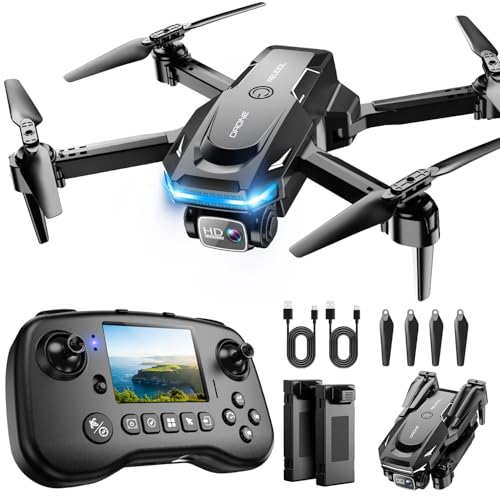
The PK01 drone's remote comes with a super handy built-in screen—no phone needed—so you can watch live HD footage and check flight stats right in your hands. (An SD card is required to save images and videos; not included) Powered by tough brushless motors, this little flyer is strong, smooth, and built to last. With one-key takeoff/landing, headless mode, and even 360° flips, you’ll look like a pro in no time. Ready for takeoff?🤩

【2K Ultra HD Camera】Loiley drone features a high-quality 2K HD camera with a 90° remote adjustable angle, allowing you to capture breathtaking photos and ultra-clear videos from the sky. Whether it's a scenic landscape or a special family moment, this drone helps you preserve every beautiful memory with precision. Simply connect your smartphone to the drone’s camera to enjoy a real-time panoramic view, and easily share your adventures directly to social media with just a tap
DJI Mini 5 Pro: Best Overall Compact Camera Drone
The Mini 5 Pro is the most balanced choice for travelers and content creators who want better image quality without carrying a full-size professional drone. Its 1-inch sensor can provide stronger low-light performance and more editing flexibility than the smaller sensors used in many entry-level models.
The aircraft has a nominal published weight of approximately 249.9 g, but DJI notes that actual weight can vary. Batteries, guards, lights, labels, and other accessories can also change its takeoff category, so weigh your complete setup instead of relying only on the model name.
Why You’ll Like It
- Large 1-inch sensor in a compact aircraft
- 50 MP photo mode and 4K recording up to 120 fps
- Three-axis mechanical stabilization
- Omnidirectional sensing with forward LiDAR support
- True vertical shooting and wide gimbal rotation
- O4+ transmission with a maximum 20 km FCC test claim
Who Should Buy This
Choose the Mini 5 Pro for travel videos, landscape photography, social content, property footage, hiking trips, and other situations where portability and image quality are equally important.
Who Should Avoid This
Skip it if you need a heavy-duty professional platform, multiple focal lengths, or guaranteed sub-250g status after adding accessories. Buyers in regions with limited official DJI distribution should also verify warranty and regional compatibility carefully.
Ease of Use
| Feature | What to Expect |
|---|---|
| Setup | Easy after activation and firmware updates |
| Flight controls | Beginner-friendly with advanced options available |
| Automated modes | Easy to use after practicing in an open area |
| Portability | Excellent for travel |
| Battery management | Simple, but extra batteries improve longer shoots |
Safety and Limitations
Obstacle sensing can reduce risk, but it cannot detect every thin branch, wire, reflective surface, low-texture object, or poorly lit obstacle. Keep the drone within legal visual range and maintain enough battery for the return flight.
Potensic ATOM 2: Best Value Camera Drone
The ATOM 2 makes sense when you want stabilized aerial footage, automated shooting tools, and a useful multi-battery package without moving into premium-drone pricing. Its three-axis gimbal gives it a major advantage over basic electronic-stabilization drones.
Potensic markets an 8K photo mode, but its normal video ceiling is 4K at 30 fps. That distinction matters if you need slow-motion 4K recording or higher frame rates for action footage.
Why You’ll Like It
- Three-axis gimbal for smoother aerial video
- 48 MP high-resolution photo mode and 12 MP RAW capture
- 4K/30 fps HDR video
- Vertical shooting for social content
- AI tracking and automated cinematic modes
- Maximum 10 km transmission claim under ideal FCC test conditions
- Up to 32 minutes of published maximum flight time
Who Should Buy This
Choose the ATOM 2 for travel, family trips, beginner aerial photography, social video, hiking, and casual real-estate footage when value matters more than advanced collision sensing.
Who Should Avoid This
Skip it if obstacle avoidance is essential, you regularly fly close to trees or buildings, or you need 4K recording above 30 fps.
Ease of Use
| Feature | What to Expect |
|---|---|
| Setup | Beginner-friendly |
| Flight controls | Easy after basic practice |
| Automated modes | Simple, but require an obstacle-free route |
| Battery management | Convenient with a multi-battery bundle |
Antigravity A1: Best Immersive 360 Camera Drone
The A1 approaches aerial video differently from a conventional camera drone. Its upward- and downward-facing lenses record a complete 360-degree view, allowing you to select the final camera direction after the flight instead of perfectly framing every shot in the air.
This flexibility works well for immersive travel footage, virtual-reality content, action scenes, events, and creative edits. However, the 8K resolution covers the full spherical image. A cropped conventional view will not deliver the same pixel density as a dedicated 8K forward-facing camera.
Why You’ll Like It
- Captures full 8K 360-degree video
- Lets you reframe the shot after landing
- Uses Vision goggles for an immersive view
- Offers FreeMotion and FPV-style control modes
- Includes Deep Track and automated editing features
- Provides omnidirectional obstacle avoidance
- Offers a maximum 10 km FCC transmission claim in ideal conditions
Who Should Buy This
Choose the A1 if immersive footage, post-flight reframing, goggles-based flying, and creative 360 edits matter more than traditional still photography or conventional two-stick control.
Who Should Avoid This
Skip it if you mainly need standard aerial photos, dislike wearing goggles, want a basic conventional controller, or prefer a simple editing workflow. It is also a specialist system rather than a low-cost beginner drone.
Battery and Weight Considerations
The standard battery has a published maximum flight-time claim of 24 minutes and keeps the aircraft at a nominal 249 g. The optional high-capacity battery raises the published maximum to 39 minutes but also increases takeoff weight, which can change registration and Remote ID requirements.
Safety
The A1 includes obstacle avoidance and return-to-home tools, but these features are not a substitute for route planning. When flying with goggles, follow local visual-line-of-sight requirements and use a visual observer where required. The aircraft is not waterproof, so do not fly it in rain or heavy moisture.
DJI Neo 2: Best Camera Drone for Beginners
The Neo 2 focuses on quick personal filming rather than traditional aerial photography. Palm operation, gesture control, automated tracking, and built-in propeller protection make it approachable for family moments, solo travel clips, walking videos, cycling footage, and short social posts.
It records 12 MP photos and supports 4K video, with higher frame-rate modes depending on the controller or motion-control setup. Its two-axis mechanical gimbal and electronic stabilization are useful for active follow shots, but the image system is less flexible than the larger sensors and three-axis gimbals found in premium camera drones.
Why You’ll Like It
- Very light 151 g standard configuration
- Palm takeoff and landing
- Gesture-based control
- Automated subject tracking
- Protected propellers for added close-range confidence
- Omnidirectional sensing with forward LiDAR
- Up to approximately 19 minutes of published maximum flight time
- 49 GB of internal storage
Who Should Buy This
Choose the Neo 2 if you want a personal follow-camera, selfie drone, or compact beginner model that can capture short automated clips without requiring a traditional controller for every flight.
Who Should Avoid This
Skip it if long flight time, RAW photography, a three-axis gimbal, interchangeable focal lengths, or professional color-grading flexibility are priorities.
Ease of Use
| Feature | What to Expect |
|---|---|
| Palm operation | Very approachable after reading the safety guidance |
| Gesture control | Easy for quick personal clips |
| Remote operation | May require optional compatible accessories |
| Portability | Excellent, although the protected frame is not foldable |
| Battery endurance | Best for short clips rather than long aerial sessions |
Safety
Obstacle sensing and protected propellers can reduce risk, but palm operation still requires care. Keep fingers, hair, clothing, pets, and bystanders away from the propellers. Practice in an open area before using tracking near trees, buildings, vehicles, or crowds.
DJI Mavic 4 Pro: Best Professional Camera Drone
The Mavic 4 Pro is the strongest option here for commercial photography, film production, high-end property work, landscape projects, and creators who need several focal lengths without landing to change equipment.
Its main Hasselblad camera uses a 100 MP 4/3 sensor and supports up to 6K/60 fps recording. The additional medium-telephoto and telephoto cameras provide more framing options for compressed landscapes, distant details, and shots where flying closer is impractical or unsafe.
Why You’ll Like It
- 100 MP 4/3 Hasselblad main camera
- Three-camera system with wide, medium-telephoto, and telephoto views
- Up to 6K/60 fps recording from the main camera
- Infinity Gimbal for creative roll and vertical movement
- Published maximum flight time of 51 minutes
- Omnidirectional sensing with forward LiDAR
- O4+ transmission with a maximum 30 km FCC test claim
Who Should Buy This
Choose the Mavic 4 Pro if your work benefits from multiple focal lengths, longer endurance, high-resolution stills, advanced color workflows, and a professional controller.
Who Should Avoid This
Skip it if you are learning basic flight, need a small daypack drone, or mainly create casual social clips. At approximately 1,063 g, it also carries more regulatory, transportation, and operational responsibility than the lighter models in this guide.
Package Contents Matter
The linked Amazon listing appears to promote a creator-focused package. Confirm the exact controller, number of batteries, charger, storage capacity, filters, cables, carrying case, and warranty coverage because bundle contents can vary by seller.
Ease of Use
| Feature | What to Expect |
|---|---|
| Basic setup | Moderate |
| Flight controls | Approachable basics with a deep advanced feature set |
| Camera controls | Best suited to experienced creators |
| Portability | Moderate due to aircraft, controller, batteries, and charger |
| Post-production | Designed for advanced editing and color workflows |
Safety
The obstacle-sensing system, LiDAR, and return-to-home features improve situational awareness, but the aircraft’s size and speed demand careful planning. Check weather, airspace, return altitude, battery reserve, takeoff area, and emergency landing options before every professional flight.
Camera Drone Comparison
The transmission figures below are manufacturer maximums measured under specified standards in unobstructed, low-interference conditions. They do not represent a safe or legally permitted flight distance.
| Product Name | Image | Camera | Maximum Flight Time | Maximum Transmission Claim | Weight | Obstacle Sensing | Best For |
|---|---|---|---|---|---|---|---|
| DJI Mini 5 Pro |
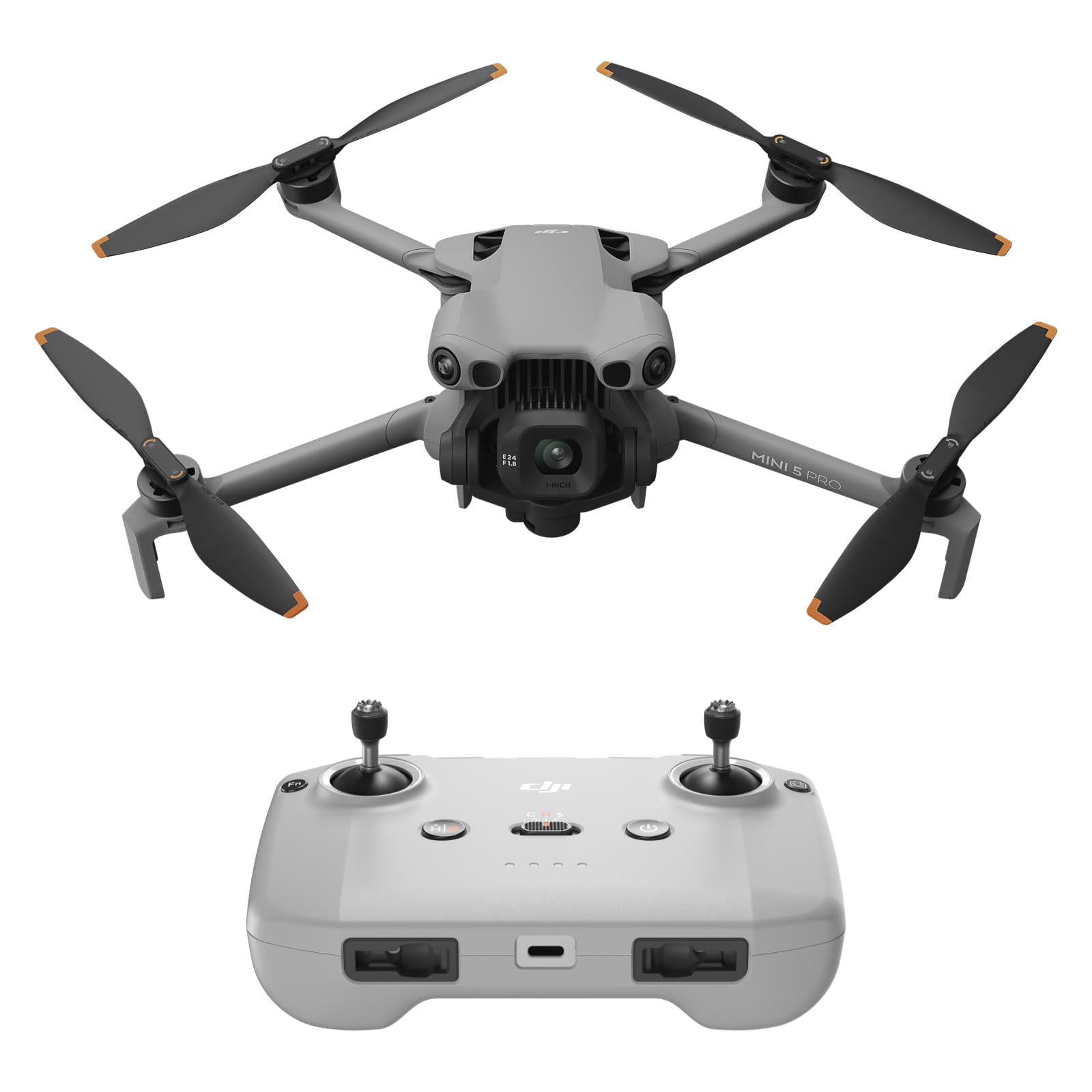 |
1-inch, 50 MP, 4K/120 fps | 36 minutes with standard battery | 20 km FCC | Approx. 249.9 g ±4 g | Omnidirectional | Compact premium photography |
| Potensic ATOM 2 |
 |
1/2-inch, 48 MP high-resolution mode, 4K/30 fps | 32 minutes | 10 km | Under 249 g | No | Value-focused travel video |
| Antigravity A1 |
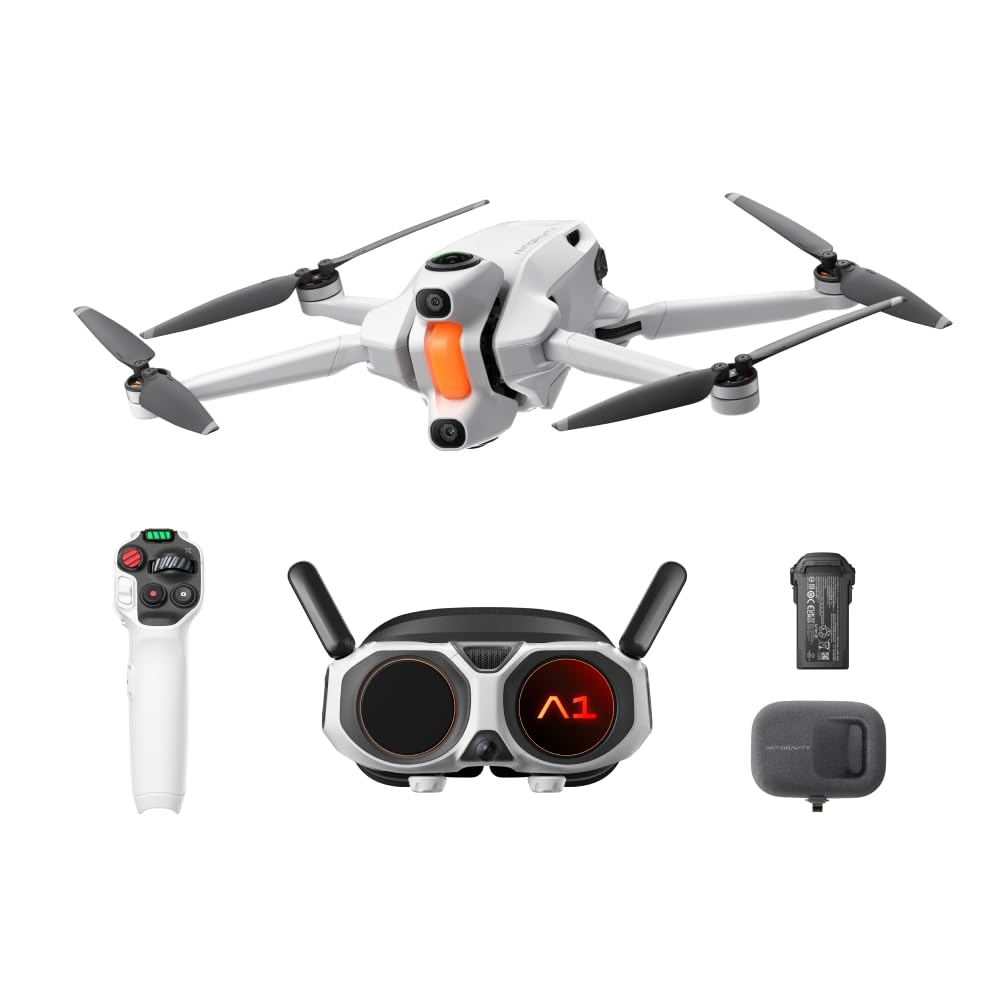 |
8K 360-degree camera | 24 minutes standard; 39 minutes high-capacity | 10 km FCC | 249 g with standard battery | Omnidirectional | Immersive 360 video |
| DJI Neo 2 |
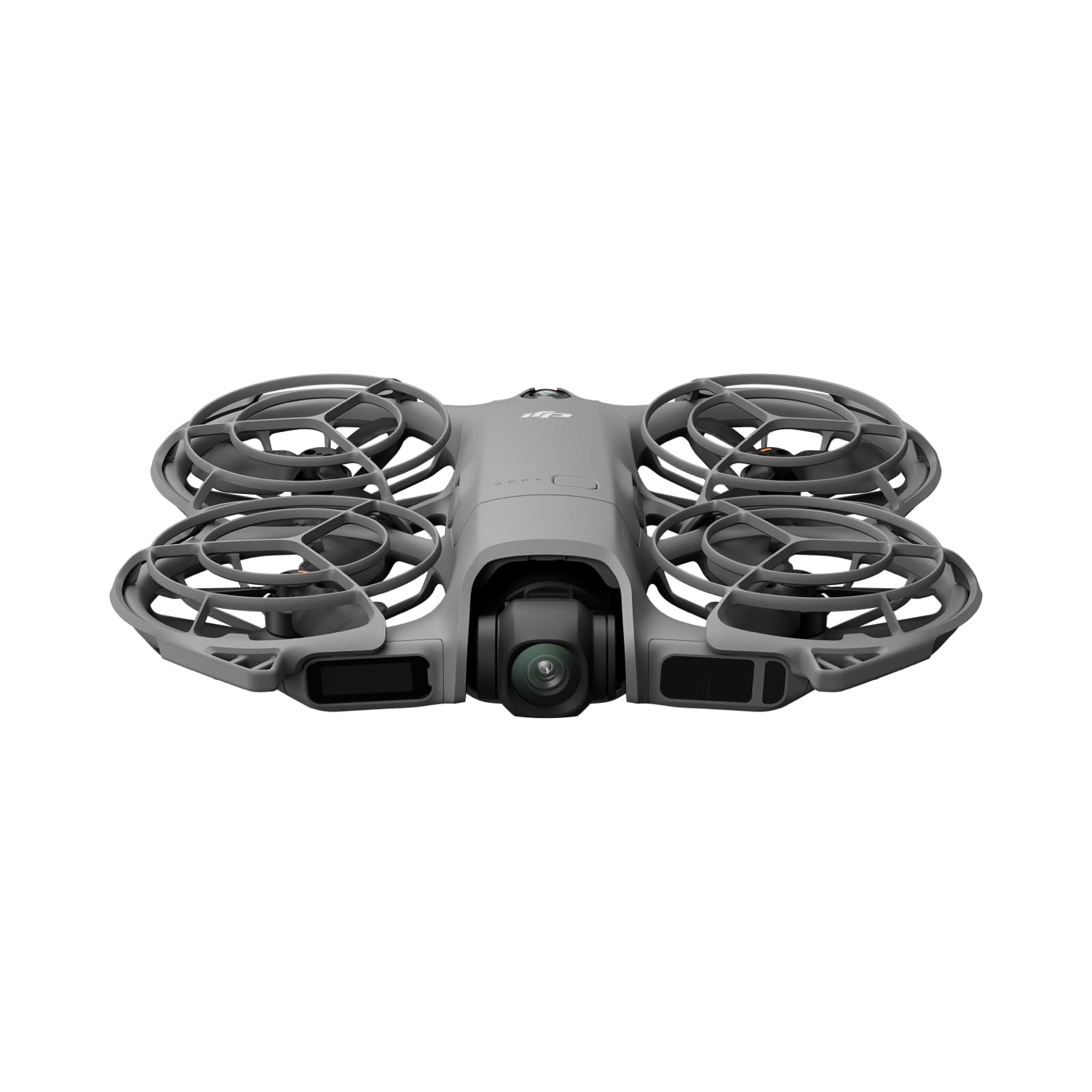 |
12 MP, up to 4K/100 fps in supported configurations | Approx. 19 minutes | 10 km FCC with compatible transceiver and controller | 151 g; 160 g with transceiver | Omnidirectional | Beginner follow-camera use |
| DJI Mavic 4 Pro |
 |
Tri-camera; 100 MP 4/3 main camera; up to 6K/60 fps | 51 minutes | 30 km FCC | Approx. 1,063 g | Omnidirectional | Professional aerial production |
[Amazon Products Picked for You]

No Registration Needed - Under 249 g, this drone with camera for adults 4K does not require FAA registration or Remote ID for recreational use. Visit the FAA's official website for requirements related to drone registration and Remote ID. [1]

No Registration Needed - Under 249 g, this drone with camera for adults 4K does not require FAA registration or Remote ID for recreational use. Visit the FAA's official website for requirements related to drone registration and Remote ID. [1]
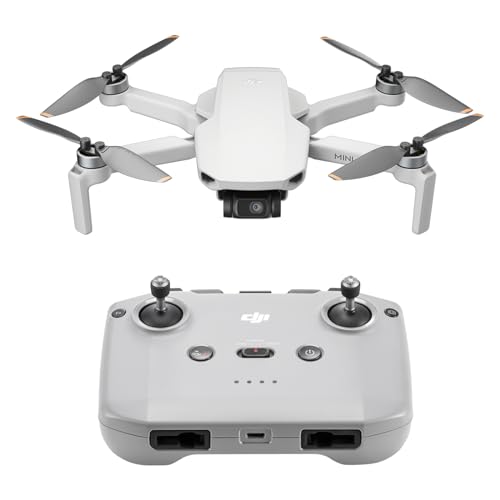
No Registration Needed - Under 249 g, this drone with camera for adults 4K does not require FAA registration or Remote ID for recreational use. Visit the FAA's official website for requirements related to drone registration and Remote ID. [1]
How to Choose the Right Camera Drone
[Amazon Products Picked for You]

【Drone with Camera for Adults】Although the TT19LCD is not a drone with 4K camera, it features a FPV HD camera with a 90° electrically adjustable remote lens. From continents to oceans, forests to mountains, it delivers rich image detail and accurate color reproduction. The video&Image looks sharper and smoother than that from many 720p and 1080p drones. With easy operation and versatile functionality, you can effortlessly capture stunning aerial footage. Additionally, the second camera—optical flow camera—continuously analyzes ground image data during flight, enabling precise hovering positioning even in small indoor spaces.

Multifunctional Foldable Drone for Your Everyday Flying Needs:The S166MAX drone comes with 3-speed adjustment, one-key takeoff and landing, smart obstacle avoidance, optical flow hovering, and orbit flight — covering most of your everyday flying needs. It's a perfect pick for beginners looking for an easy-to-use, feature-packed drone.

Cinematic 4K/60fps HDR Video & 48MP Photos: Captures smooth 4K/60fps HDR video and detailed 48 MP photos with a 1/1.32" CMOS sensor and f/1.7 aperture, The drone with camera for adults delivers clearer, more vibrant footage for travel, hiking, family activities, outdoor adventures, and everyday aerial photography
Choose Based on Your Main Type of Content
For traditional photos and cinematic video, prioritize sensor size, gimbal quality, RAW support, frame rates, and color profiles. For personal follow footage, prioritize automated tracking, propeller protection, portability, and simple controls. For immersive content, a 360-degree system offers more reframing freedom but requires a different editing workflow.
Compare Realistic Flight Time
Manufacturer maximums are measured under controlled conditions. Recording video, flying in wind, climbing, tracking subjects, cold weather, returning against the wind, and keeping a safe battery reserve will reduce usable time.
Do Not Buy on Range Alone
A long transmission specification can improve connection reliability, but it does not give you permission to fly that distance. Keep the drone within the visual range required by your local regulations and always reserve enough power for the return flight.
Check Obstacle-Avoidance Coverage
Omnidirectional systems provide broader awareness than front-only or downward-only sensors, but no consumer system can guarantee collision prevention. The Potensic ATOM 2 has no obstacle avoidance, making route planning especially important.
Confirm the Complete Takeoff Weight
Battery choice, propeller guards, Remote ID modules, lights, labels, landing gear, and other accessories may move a drone into a different regulatory category. The Mini 5 Pro’s nominal weight is especially close to the 250 g threshold.
Review the Seller and Warranty
When official regional distribution is limited, marketplace listings may use imported stock. Confirm whether the warranty applies in your country, whether the controller and radio frequencies match your region, and whether the manufacturer will service the aircraft.
Frequently Asked Questions
Do I Need to Register My Drone?
Rules vary by country and by how you use the aircraft. In the United States, recreational drones below the applicable weight threshold may qualify for a registration exception, while commercial operations under Part 107 follow different requirements. Registered drones generally need to comply with Remote ID rules.
Check the current aviation-authority guidance for your country before flying. You should also review airspace restrictions, local takeoff rules, privacy requirements, temporary flight restrictions, and any rules covering flights near people or vehicles.
Does a 249 g Drone Always Avoid Registration?
No. The complete takeoff weight matters, not only the advertised model weight. A larger battery, propeller guards, lights, landing accessories, or manufacturing variation can push a drone over the threshold. Commercial use can also trigger different requirements regardless of weight.
How Many Batteries Should I Bring?
Two or three batteries are practical for most travel and photography sessions. Published maximum times do not equal uninterrupted recording time because you need battery reserve for wind, route changes, and returning safely.
Use the correct charger, allow hot batteries to cool before charging, inspect them for swelling or damage, and follow the manufacturer’s storage guidance.
Which Drone Is Best for Beginners?
The DJI Neo 2 is the simplest option here for personal follow footage and automated short clips. The Potensic ATOM 2 offers a more conventional controller-and-gimbal experience, but it requires extra caution because it has no obstacle avoidance.
Which Drone Is Best for Professional Photography?
The DJI Mavic 4 Pro provides the most capable professional camera system in this group. Its three focal lengths, 100 MP main camera, 6K recording, longer endurance, and advanced controller options make it better suited to paid production work.
Which Drone Is Best for Travel?
The DJI Mini 5 Pro offers the strongest balance of compact size and camera capability. The ATOM 2 is a more value-focused option, while the Neo 2 works best when you want a lightweight personal follow-camera rather than a traditional aerial-photography platform.
Is Obstacle Avoidance Enough to Prevent Crashes?
No. Sensors can miss thin branches, wires, transparent surfaces, reflective materials, dark objects, low-texture walls, and obstacles outside their effective range. Fly slowly near hazards and maintain direct control instead of depending entirely on automation.
Can I Fly a Drone in Rain?
Do not assume a camera drone is waterproof. None of the models in this comparison should be treated as safe for normal rain exposure unless the manufacturer explicitly provides an appropriate water-resistance rating and operating guidance.
Final Recommendations
Pick the DJI Mini 5 Pro for the best mix of portability, image quality, tracking, and obstacle sensing.
Pick the Potensic ATOM 2 when value, a three-axis gimbal, vertical video, and a multi-battery package matter more than obstacle avoidance.
Pick the Antigravity A1 when your main goal is immersive 360-degree footage that you can reframe after landing.
Pick the DJI Neo 2 for beginner-friendly personal tracking, palm operation, and short automated clips.
Pick the DJI Mavic 4 Pro for professional photography, commercial video, multiple focal lengths, and advanced production workflows.
No single drone is best for every buyer. Match the aircraft to your camera needs, local regulations, editing workflow, portability requirements, and experience level. Before ordering, check the current Amazon seller, package contents, regional compatibility, warranty coverage, and return policy.
This roundup is reader-supported. When you click an affiliate link and make a qualifying purchase, we may earn a referral commission at no extra cost to you.