Finding the best cheap camera drones that capture sharp aerial footage without complicated controls or hefty registration fees can feel overwhelming. Many low-cost options compromise on camera stabilization, leaving you with blurry photos and jittery video in light breezes.
The Potensic ATOM 2 is our top pick because it pairs a true 3-axis mechanical gimbal with 4K HDR recording and three batteries for extensive flight time. If you want a dependable GPS drone on a tighter budget, the Potensic ATOM SE delivers steady 4K footage and auto-return functions.
We compared these models based on sensor clarity, mechanical versus electronic stabilization, sub-249g weight compliance, and manufacturer flight specifications.
Best Cheap Camera Drones Compared
| Product | Best for | Camera & Stabilization | Flight Time |
|---|---|---|---|
|
Mid-range
|
Best overall | 4K HDR at 30fps, 3-Axis Gimbal | Up to 32 mins (96 mins total) |
|
Mid-range
|
Best for travel | 4K HDR at 60fps, 3-Axis Gimbal | Up to 31 mins |
|
Premium
|
Premium pick | 4K HDR at 30fps, Vertical 3-Axis Gimbal | Up to 38 mins |
|
Budget
|
Best for vloggers | 4K UHD at 30fps, 1-Axis Gimbal + EIS | Up to 18 mins |
|
Budget
|
Best beginner DJI | 4K UHD at 30fps, 3-Axis Gimbal | Up to 31 mins |
|
Budget
|
Best value | 4K at 30fps (Sony Sensor), EIS ShakeVanish | Up to 31 mins (62 mins total) |
Best Cheap Camera Drones: Our Top Picks
1. Potensic ATOM 2
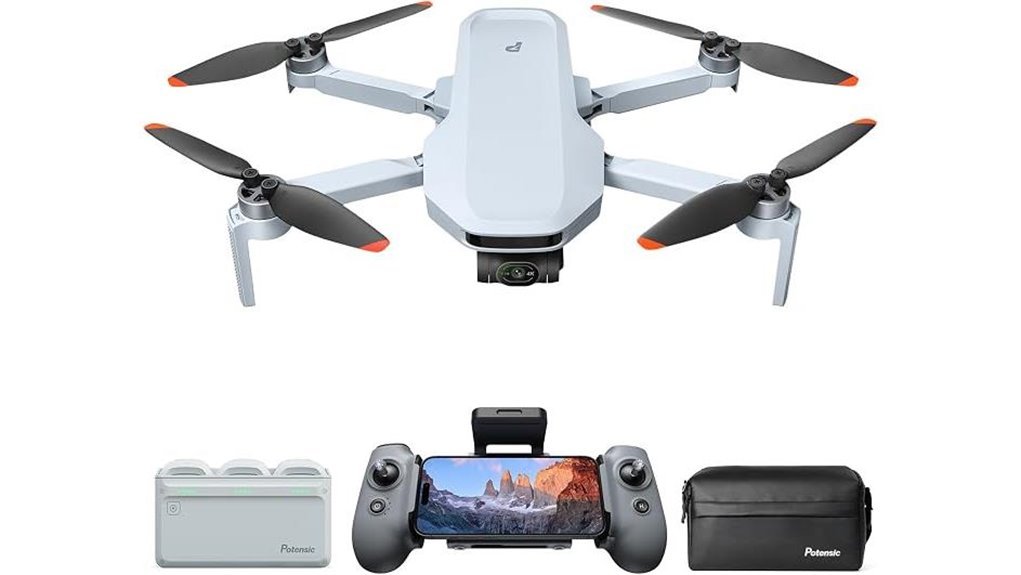
Bottom line: The Potensic ATOM 2 delivers professional-grade 3-axis stabilization and 96 minutes of total airtime in a sub-249g package that requires no FAA registration. It is the best all-around drone for beginners and travel creators wanting smooth 4K video without complex setups.
- Video resolution: 4K HDR at 30fps, captures crisp landscape and travel footage
- Gimbal stabilization: 3-axis mechanical gimbal, keeps video smooth during windy flights
- Takeoff weight: Under 249g, flies without FAA registration hassles
- Max flight time: Up to 32 mins (96 mins total), provides extended recording sessions across three packs
- Max transmission range: 10 km, delivers reliable signal over long distances
The Potensic ATOM 2 stands out by pairing a 48MP sensor with a fast F1.8 aperture, allowing you to capture crisp stills and vibrant 4K HDR video even in dimmer sunset conditions. Its 3-axis mechanical gimbal actively compensates for sudden gusts, ensuring your footage remains steady without digital cropping.
The Fly More Combo package includes three flight batteries that provide up to 96 minutes of total flight time, eliminating the frustration of cutting your recording sessions short. With a 10 km transmission range and responsive GPS return-to-home functionality, you can pilot with confidence across wide open spaces.
- 48MP camera with 4K HDR video and F1.8 aperture for strong low-light clarity
- Sub-249g ultralight weight bypasses FAA registration for recreational pilots
- Fly More package provides 96 minutes of combined airtime across three batteries
- 3-axis mechanical gimbal produces stable cinematic footage in breezy conditions
- No omnidirectional obstacle avoidance sensors
- 4K video frame rate tops out at 30fps rather than 60fps
2. DJI Flip
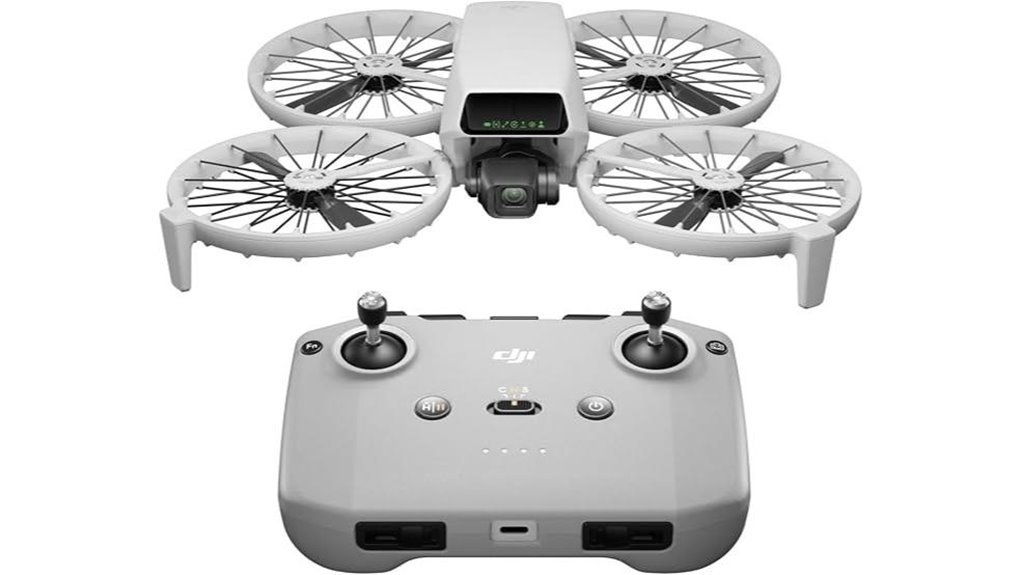
Bottom line: The DJI Flip combines palm launch portability with a 4K 60fps HDR camera and 13 km video transmission. It is ideal for travelers who want fluid, high-framerate action footage in an ultralight carbon fiber design.
- Video resolution: 4K HDR at 60fps, delivers fluid high-framerate action shots
- Gimbal stabilization: 3-axis mechanical gimbal, prevents shaky clips during rapid movements
- Takeoff weight: Under 249g, bypasses FAA registration paperwork
- Max flight time: Up to 31 mins, offers solid airtime on a single charge
- Max transmission range: 13 km, maintains a strong video feed during distant flights
The DJI Flip brings high-speed action recording to the sub-249g category with smooth 4K capture at 60fps. Its large 1/1.3-inch CMOS sensor captures wider dynamic range, protecting highlights in bright skies and preserving shadow details in mountain and coastal landscapes.
A lightweight carbon fiber folding frame and convenient palm takeoff feature make launching from narrow trails or rocky overlooks effortless. Coupled with smart subject tracking and the included RC-N3 controller, you get dependable flying performance up to 13 km away.
- Fluid 4K recording at 60fps with HDR processing
- Large 1/1.3-inch sensor delivers strong dynamic range
- Lightweight folding build with palm takeoff convenience
- Long 13 km video transmission range with RC-N3
- Includes only one battery in the standard package
- Ultralight frame requires caution in gusty coastal winds
3. DJI Mini 3
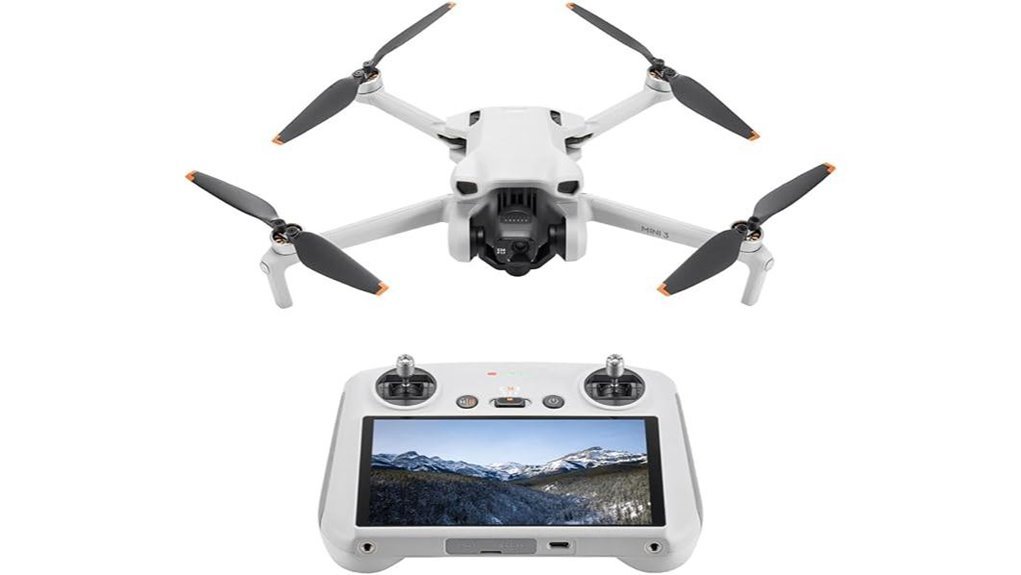
Bottom line: The DJI Mini 3 stands as the premier compact camera drone with its 38-minute single battery life, true vertical shooting, and dedicated DJI RC screen remote. It is best suited for serious social creators and enthusiasts wanting premium imaging without phone tethering.
- Video resolution: 4K HDR at 30fps, captures vivid colors and sharp details
- Gimbal stabilization: 3-axis mechanical gimbal, rotates vertically for instant social content
- Takeoff weight: 248g, requires no recreational FAA registration
- Max flight time: Up to 38 mins, lets you film longer without battery swaps
- Max transmission range: 10 km, keeps transmission clear and dependable
Equipped with a physical rotating gimbal, the DJI Mini 3 captures native vertical video without cropping away resolution, making it an exceptional tool for Instagram Reels and TikTok. The 1/1.3-inch sensor features dual native ISO for clean 4K HDR footage in diverse lighting conditions.
Flying is hassle-free thanks to the included DJI RC controller, featuring an integrated HD screen that frees your smartphone from flying duties. With an impressive 38-minute flight time on its standard battery and Level 5 wind resistance, this drone handles coastal breezes with ease.
- Native vertical shooting without digital crop penalties
- Long 38-minute flight time on a single standard battery
- Includes DJI RC controller with built-in bright display
- 48MP photo mode and clean 4K HDR video capture
- Higher price point than basic entry-level drones
- Does not include omnidirectional obstacle avoidance sensors
4. DJI Neo
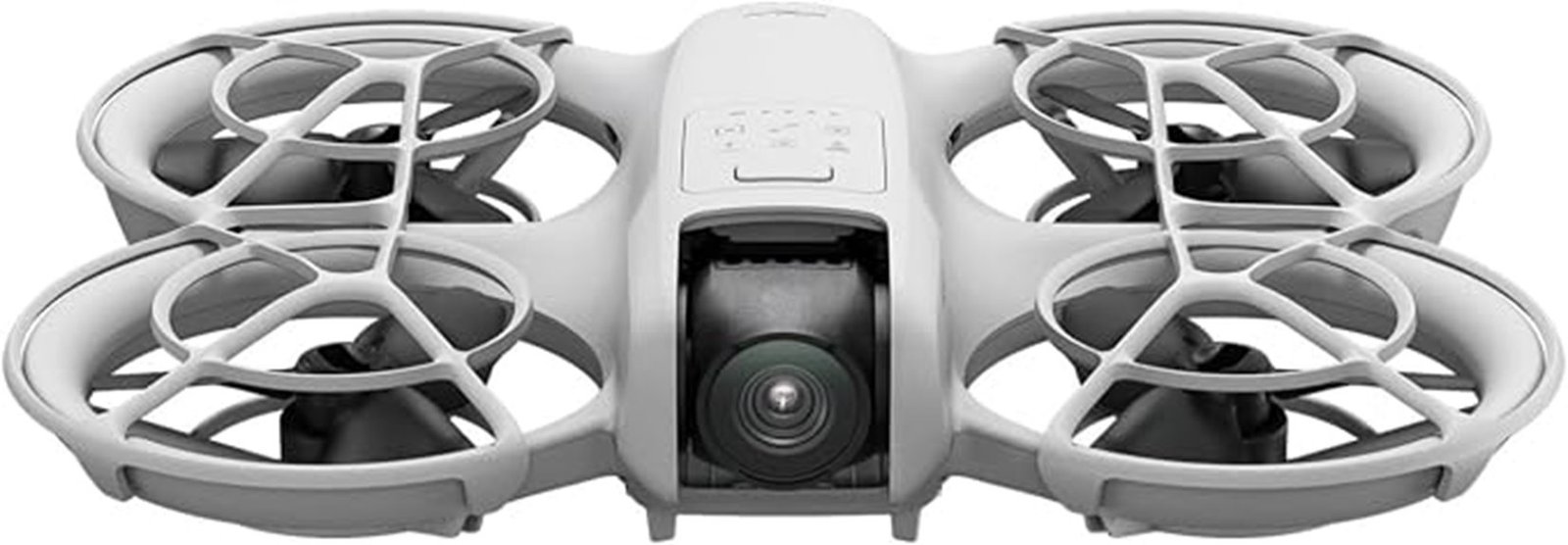
Bottom line: The DJI Neo is an ultra-compact 135g self-flying drone that takes off directly from your palm without requiring a physical remote. It is the ultimate lightweight solution for vloggers and casual creators wanting instant tracking footage on the go.
- Video resolution: 4K UHD at 30fps, records sharp everyday video from the air
- Gimbal stabilization: Single-axis gimbal with RockSteady EIS, stabilizes quick vlogs and tracking shots
- Takeoff weight: 135g, fits in pockets with zero registration needs
- Max flight time: Up to 18 mins, handles fast spontaneous shooting sessions
- Max transmission range: Up to 10 km (with RC-N3), supports both controller-free and long-range flight
At just 135 grams, the DJI Neo is significantly lighter than most modern smartphones and easily slides into a jacket pocket. Its integrated full-coverage propeller guards allow you to safely launch and land the drone straight from your palm with a simple button press.
Using advanced AI subject tracking, the Neo locks onto you while walking, cycling, or skating, filming automated QuickShots without needing manual piloting. While its 18-minute flight time is shorter than larger drones, its zero-friction operation makes it an unbeatable companion for casual creators.
- Ultra-lightweight 135g chassis with full propeller guards
- Controller-free palm takeoff, voice control, and mobile app support
- Smart AI subject tracking keeps you centered automatically
- Crisp 4K stabilized video with RockSteady technology
- Single-axis gimbal relies on electronic stabilization rather than full 3-axis mechanics
- Shorter 18-minute battery endurance per charge
5. DJI Mini 4K
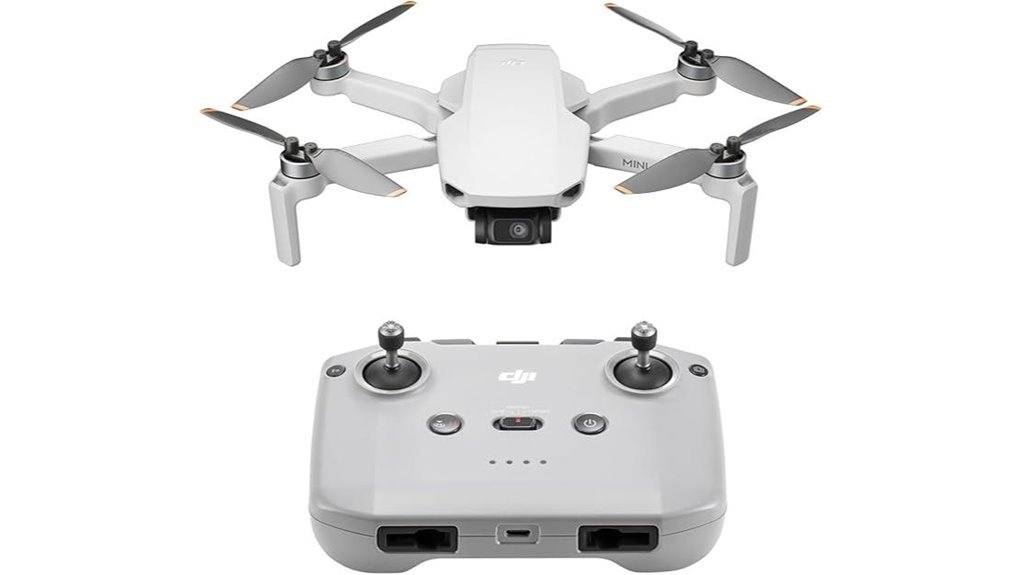
Bottom line: The DJI Mini 4K is the most affordable way to access DJI’s renowned 3-axis gimbal stabilization and robust flight software. It is the best choice for first-time pilots who prioritize dependable flight stability and true 4K cinematic video on an entry budget.
- Video resolution: 4K UHD at 30fps, produces clean cinematic aerial footage
- Gimbal stabilization: 3-axis mechanical gimbal, eliminates camera shakes effectively
- Takeoff weight: Under 249g, complies with sub-250g recreational flying rules
- Max flight time: Up to 31 mins, gives ample time for thoughtful framing
- Max transmission range: 10 km, delivers steady HD video transmission
The DJI Mini 4K takes the proven flight platform of DJI’s entry series and upgrades it to crisp 4K UHD video recording. Its physical 3-axis mechanical gimbal guarantees silky smooth footage that software-based stabilization cannot match, especially in breezy conditions up to Level 5 wind resistance.
Novice flyers will appreciate the intuitive DJI Fly app, which offers step-by-step flight tutorials, automated Return to Home, and pre-programmed QuickShots maneuvers like Dronie, Helix, and Rocket. Its sub-249g weight means you can take to the skies without registering with the FAA for recreational flights.
- True 3-axis mechanical gimbal delivers professional stabilization
- Sub-249g weight avoids FAA registration requirements
- Proven Level 5 wind resistance for stable outdoor performance
- Straightforward DJI Fly app interface with one-tap auto return
- Still photo capture is limited to 12MP
- Lacks active obstacle avoidance sensors
6. Potensic ATOM SE
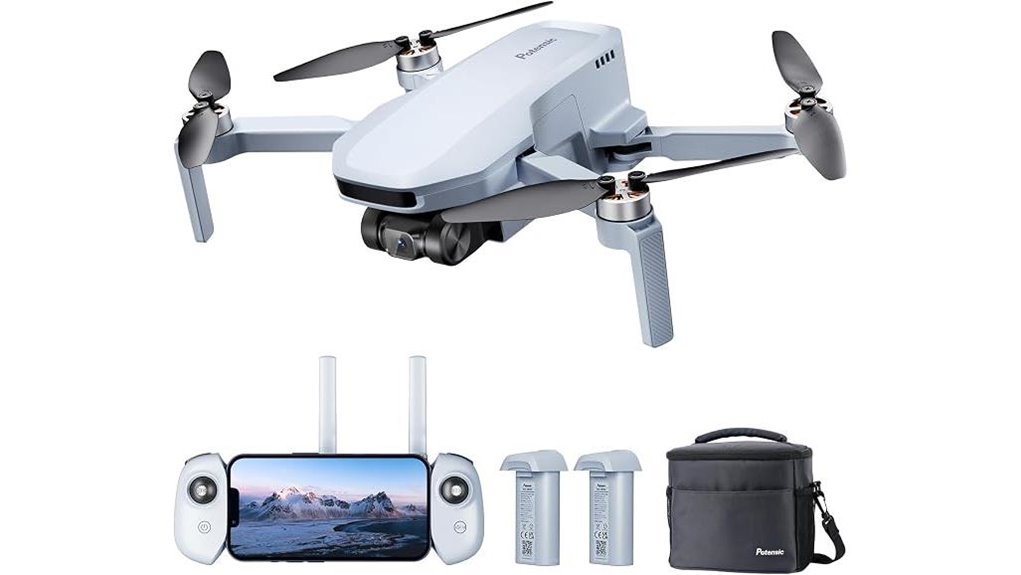
Bottom line: The Potensic ATOM SE provides dependable GPS positioning, 4K recording with a Sony sensor, and two included batteries at the lowest price on this list. It is the best budget-friendly starter drone for pilots wanting solid GPS flight assistance without overspending.
- Video resolution: 4K at 30fps (Sony sensor), captures sharp still photos and video
- Gimbal stabilization: Electronic Image Stabilization (ShakeVanish), smooths out flight vibrations electronically
- Takeoff weight: Under 249g, skips registration requirements for casual pilots
- Max flight time: Up to 31 mins (62 mins total), doubles your airtime with two included batteries
- Max transmission range: 4 km, provides ample coverage for line-of-sight flying
Powered by a Sony CMOS sensor, the Potensic ATOM SE delivers crisp 12MP photos and clear 4K video using ShakeVanish electronic stabilization. While it lacks a mechanical gimbal, its electronic stabilization effectively irons out minor tremors during level cruising.
The drone comes bundled with two flight batteries offering up to 62 minutes of combined flight time, giving beginners plenty of practice time in the air. Built-in GPS functionality enables essential safety features like Follow Me, Circle Flight, and automated Return to Home if signal is lost.
- Most affordable entry point for a GPS-assisted 4K camera drone
- Two included batteries deliver up to 62 minutes of combined airtime
- Sony camera sensor captures crisp colors and clean 12MP stills
- Sub-249g folding design requires no FAA registration
- Uses electronic EIS rather than a physical 3-axis mechanical gimbal
- Transmission range is capped at 4 km
Potensic ATOM 2 vs Potensic ATOM SE: Is the Upgrade Worth It?
The primary difference between the Potensic ATOM 2 and the Potensic ATOM SE comes down to camera stabilization hardware and camera resolution. While both share a compact, sub-249g folding design, the ATOM 2 adds a motorized 3-axis mechanical gimbal that keeps footage far smoother than electronic stabilization can achieve on its own.
- Gimbal stabilization: The ATOM 2 features a physical 3-axis mechanical gimbal, eliminating wind tilt and camera jitter that electronic ShakeVanish on the ATOM SE cannot correct.
- Camera resolution: The ATOM 2 upgrades to a 48MP sensor with F1.8 aperture for richer low-light detail compared to the ATOM SE’s 12MP sensor.
- Total airtime: The ATOM 2 Fly More kit includes three batteries for 96 minutes of flying, versus two batteries and 62 minutes with the ATOM SE.
- Transmission range: The ATOM 2 extends maximum transmission distance to 10 km, more than double the ATOM SE’s 4 km range.
Which Cheap Camera Drone Should You Buy?
- Maximum flight endurance and 3-axis stabilization: get the Potensic ATOM 2.
- High framerate action video: get the DJI Flip.
- Vertical social media videos with a dedicated screen remote: get the DJI Mini 3.
- Instant palm takeoff and controller-free vlogging: get the DJI Neo.
- Rock-solid mechanical stabilization on an entry budget: get the DJI Mini 4K.
- Lowest upfront price with full GPS flight return: get the Potensic ATOM SE.
How We Chose the Best Cheap Camera Drones
- Sensor quality and true 4K output: We selected only drones that record native 4K video rather than interpolated lower resolutions, ensuring clear image quality on modern displays.
- Camera stabilization type: We compared mechanical 3-axis gimbals against electronic stabilization systems to assess footage smoothness in real-world outdoor winds.
- Sub-249-gram regulatory threshold: We prioritized drones that weigh under 249g at takeoff, allowing recreational pilots in the United States to fly without mandatory FAA registration or Remote ID broadcast.
- Flight endurance and battery value: We evaluated actual minutes in the air per battery and gave extra weight to packages that include multi-battery bundles.
- Independent research sources: We cross-referenced official manufacturer specification sheets, drone community flight logs, and FAA recreational aviation safety standards.
Factors to Consider When Choosing Cheap Camera Drones in 2026
Selecting the best cheap camera drone requires balancing video resolution, flight stabilization, battery capacity, and flight safety features. Understanding these core factors ensures you invest in a drone that matches your filming ambitions without paying for unnecessary commercial-grade hardware.
Camera Quality Essentials
Look for drones that offer native 4K video recording at 30fps or 60fps to ensure your footage stays sharp when played on large screens or shared across social platforms. Sensor size and aperture matter just as much as resolution; a 1/1.3-inch sensor or an F1.8 aperture allows significantly more light into the lens, producing richer colors and lower noise in sunset or dawn shots. If smooth cinematic motion is your primary goal, choose a drone with a motorized 3-axis mechanical gimbal like the Potensic ATOM 2, which physically absorbs vibrations far better than software-only image stabilization.
Flight Time Comparison
Manufacturer flight times are measured under ideal, windless hovering conditions, so practical flight times are typically about 15 to 20 percent shorter in real-world conditions. Standard single-battery drones generally provide between 18 and 38 minutes of airtime per charge. For uninterrupted filming sessions, prioritize multi-battery packages or budget for extra packs right away. The DJI Mini 3 leads the category with up to 38 minutes on a single standard battery, while multi-pack kits like the Potensic ATOM 2 provide up to 96 minutes total across three batteries.
Weight and Portability
Drones weighing under 249 grams occupy a critical legal sweet spot. Under Federal Aviation Administration (FAA) rules in the United States, recreational drones under 249 grams do not require formal registration or Remote ID compliance. Foldable rotor arms allow you to collapse the aircraft down to roughly the size of a water bottle, making it easy to store in a backpack or camera bag. If ultimate pocket-sized convenience is your main requirement, the ultralight 135g DJI Neo offers unmatched portability.
Ease of Use
A great beginner drone must be intuitive to control from your very first flight. Essential beginner features include one-tap automated takeoff and landing, responsive altitude hover hold, and automated Return to Home (RTH) that triggers if the drone encounters low battery or signal disconnection. Look for companion mobile apps that provide interactive simulator tutorials and pre-programmed flight trajectories like circle, helix, and dronie, such as the user-friendly interface found on the DJI Mini 4K.
Safety and Compliance
Flight safety protects both your aircraft and people on the ground. Most budget camera drones omit expensive multi-directional optical obstacle avoidance sensors, meaning you must stay vigilant when navigating near trees, power lines, and building overhangs. Look for propeller guards if you plan to fly indoors or launch near crowds. Always update your aircraft firmware before heading out, keep the drone within your unaided line of sight, and respect airspace boundaries near airports and public infrastructure.
Range and Connectivity
Video transmission range determines how far your aircraft can travel while maintaining a clear, low-latency live video feed to your controller or phone. Budget camera drones utilize either enhanced Wi-Fi transmission or proprietary digital radio systems like DJI O2 and Potensic PixSync. While models like the DJI Flip boast transmission ranges up to 13 km in open conditions, real-world urban interference will reduce practical distance. A strong connection ensures you retain reliable control throughout every flight maneuver.
Smart Features Overview
Automated shooting modes allow beginner pilots to capture sophisticated, cinematic camera movements without advanced manual piloting skills. Look for smart features such as subject tracking, automatic orbit, and high-resolution panoramic stitching. Some models also include gesture controls or voice commands, enabling hands-free operation when filming solo outdoor activities.
Mistakes to Avoid When Buying Cheap Camera Drones
- Confusing EIS with a mechanical gimbal: Electronic image stabilization crops the camera frame and struggles with aggressive wind vibrations, whereas a true 3-axis mechanical gimbal physically absorbs motion for smooth video.
- Ignoring the 249g weight threshold: Adding heavy third-party accessories or extended-life battery packs can push an ultralight drone over 249 grams, which triggers mandatory FAA registration and Remote ID compliance.
- Purchasing single-battery kits without spare packs: A single 20- to 30-minute flight battery depletes quickly during practice, making bundled multi-battery packages significantly more cost-effective.
- Overlooking memory card write speed requirements: Recording high-bitrate 4K footage requires a microSD card with a U3 or V30 speed rating to prevent corrupted video files and dropped frames.
Frequently Asked Questions
Are Budget Camera Drones Allowed to Fly in National Parks?
No, you cannot fly recreational or budget camera drones in U.S. National Parks. The National Park Service prohibits operating unmanned aircraft to protect wildlife from disturbance and preserve visitor safety. Flying inside national park boundaries can result in equipment confiscation and federal fines unless you hold a rare special-use permit.
How Do I Update Firmware on Cheap Drones?
You update firmware by connecting your drone and controller to your smartphone via the manufacturer companion app, such as PotensicPro or DJI Fly. The app will notify you when a new firmware version is available. Ensure both your drone and phone batteries are charged above 50 percent before initiating the wireless update.
Can I Use Cheap Drones for Live Streaming?
Yes, select budget drones support live streaming through their companion mobile apps or RTMP stream outputs. However, video resolution during live broadcasts often drops to 720p or 1080p due to transmission bandwidth limits. Expect occasional latency and compressed image quality when streaming over cellular or local Wi-Fi networks.
What Insurance Options Exist for Affordable Drones?
Affordable drone pilots can choose manufacturer damage protection plans, third-party personal liability policies, or on-demand hourly coverage through flight apps. Manufacturer refresh programs replace damaged drones for a small replacement fee, while general liability insurance protects against accidental property damage or bodily injuries caused during outdoor flights.
How Do I Recycle or Dispose of Old Drone Batteries Safely?
You should dispose of damaged or degraded lithium-polymer drone batteries at certified electronic recycling drop-off centers or local retail battery collection bins. Never place lithium drone batteries in standard household trash. Discharge the battery fully and tape over the connection terminals with electrical tape before taking it in for recycling.
Do I need an FAA license to fly a cheap camera drone?
Recreational pilots flying drones under 249 grams do not need a commercial Part 107 remote pilot certificate or FAA registration. However, you must still complete the free FAA TRUST aeronautical knowledge test online, follow recreational airspace rules, maintain visual line of sight, and avoid restricted airspace around airports and emergency operations.
What is the difference between mechanical gimbal and EIS on cheap drones?
A mechanical gimbal uses motorized axes to physically stabilize the camera against drone tilt and vibrations, producing true cinematic footage. Electronic image stabilization, or EIS, uses software to crop and stabilize frames digitally. Mechanical gimbals perform much better in windy conditions, while EIS keeps the drone lighter and less prone to mechanical damage.
Final Verdict
Investing in a cheap camera drone no longer means settling for shaky video or flimsy build quality. The top budget-friendly models of 2026 combine crisp 4K recording, reliable GPS flight assistance, and sub-249g ultralight designs that keep flying simple and fun.
If you want the lowest upfront entry price with dependable GPS return, consider the Potensic ATOM SE, or step up to the DJI Mini 3 for native vertical social video and an integrated screen remote.
