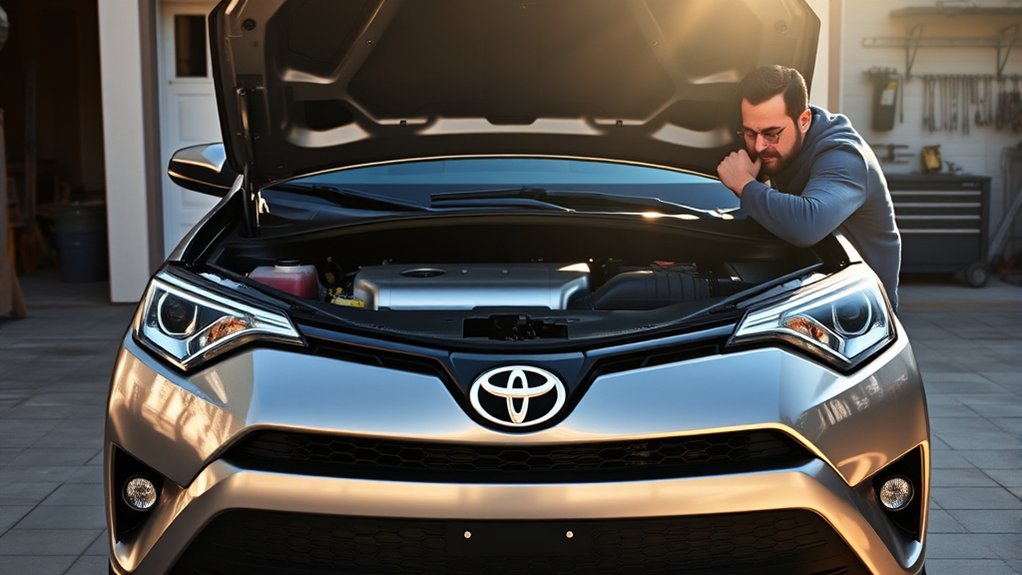
No. The 2015 Toyota RAV4 uses a conventional 6-speed automatic transmission, not a CVT. Both FWD and AWD models share this gearbox with the 2.5L four-cylinder engine. It generally delivers predictable shift response and avoids common CVT issues such as belt wear and droning. Some owners report occasional low-speed shift harshness or light-acceleration jerkiness, so used examples should be test-driven carefully and checked for fluid condition, service history, and calibration-related behavior.
Does the 2015 RAV4 Have a CVT?
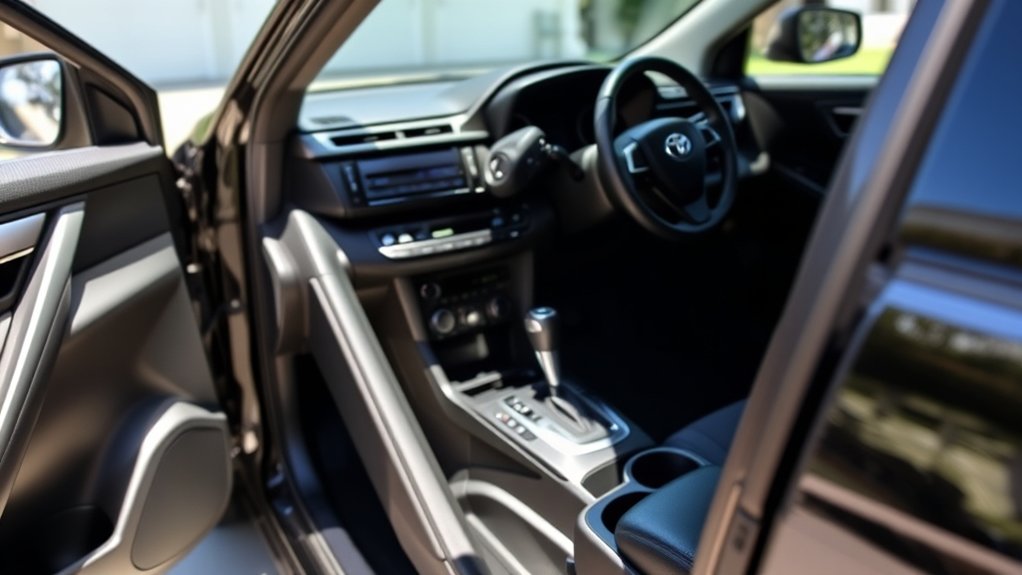
No—the 2015 Toyota RAV4 does not use a CVT. That fact is significant for buyers seeking liberation from common CVT concerns such as belt wear, droning operation, and uncertain long-term service behavior. The powertrain pairs a 2.5L DOHC 16-valve 4-cylinder engine with 176 horsepower and 172 lb-ft of torque, supporting predictable response under load and during routine acceleration.
No CVT here—the 2015 RAV4 delivers familiar automatic operation with a 176-hp 2.5L four-cylinder and predictable response.
From a diagnostic standpoint, the absence of a CVT shapes expectations for drivability, maintenance, and fault isolation. Owners commonly describe smooth shift quality, although some report occasional jerky changes that merit evaluation of fluid condition, software calibration, or adaptive shift behavior.
In front wheel drive configurations, traction control integration remains conventional and transparent, with no CVT-specific ratio behavior affecting intervention patterns. For shoppers prioritizing fuel economy without embracing CVT characteristics, this setup offers a familiar operating feel.
Understanding this distinction helps narrow purchase decisions and reduces confusion during reliability comparisons and service planning.
What Transmission Is in the 2015 RAV4?
The 2015 RAV4 uses a conventional 6-speed automatic transmission, not a CVT, making the standard transmission type straightforward to identify.
It is paired with a 2.5L DOHC 16-valve 4-cylinder engine rated at 176 hp and 172 lb-ft, a configuration calibrated for balanced drivability and shift response.
Both FWD and AWD variants use this gearbox, although drivetrain behavior and handling characteristics can differ between the two layouts.
Standard Transmission Type
Although often assumed to use a CVT, the 2015 Toyota RAV4 is fitted with a conventional 6-speed automatic transmission. For buyers seeking clarity, the standard transmission type delivers fixed gear ratios, predictable response, and generally smooth operation, though some units exhibit occasional jerky shifts. This matters for long-term reliability, service planning, and real-world Combined MPG expectations. Cabin details such as front seats do not alter the transmission diagnosis.
| Item | Specification | Diagnostic Note |
|---|---|---|
| Transmission | 6-speed automatic | Not a CVT |
| Shift quality | Mostly smooth | Jerky shifts reported |
| Efficiency role | Supports family use | Helps fuel economy |
This configuration gives owners freedom from CVT-related assumptions. It defines driving feel more accurately and helps isolate concerns during inspection, road testing, ownership decisions, and maintenance forecasting.
Engine And Gearbox
Power comes from a 2.5L DOHC 16-valve 4-cylinder rated at 176 hp and 172 lb-ft, paired in the 2015 RAV4 with a conventional 6-speed automatic rather than a CVT. That distinction matters for diagnosis and ownership expectations: the engine delivers predictable torque, while the gearbox uses fixed ratios and standard shift logic.
Drivers seeking freedom from CVT behavior may prefer this more traditional automatic transmission.
In operation, shift quality is generally smooth, though some examples show occasional jerkiness during upshifts or low-speed modulation. Such behavior does not change the core specification: this model uses a 6-speed automatic transmission, not a belt-driven continuously variable unit.
Buyers should still verify the installed gearbox on any specific vehicle, since configuration differences across the lineup can affect documentation and service records.
AWD Vs FWD
Across both drivetrain layouts, the 2015 RAV4 uses one transmission specification: a conventional 6-speed automatic, not a CVT. That applies equally to awd and fwd models, so drivetrain choice does not alter the transmission design. The real distinction is traction strategy and use case.
- AWD: better torque distribution on loose surfaces, improved off-road confidence
- FWD: lower complexity, optimized for pavement-focused efficiency and daily commuting
- Transmission note: some owners report occasional jerky shifts, worth monitoring during a test drive
From a diagnostic standpoint, buyers gain freedom by separating drivetrain needs from gearbox assumptions. AWD suits those prioritizing variable grip and light trail use.
FWD better serves drivers centered on on-road behavior. In both cases, the same automatic transmission defines the 2015 RAV4’s operation overall.
Why the 2015 RAV4 Used a 6-Speed Automatic
Because the 2015 Toyota RAV4 was engineered as a family-oriented compact SUV, it used a conventional 6-speed automatic transmission to balance drivability, efficiency, and durability. Toyota paired this unit with a 2.5L DOHC 16-valve 4-cylinder rated at 176 horsepower and 172 lb-ft of torque. That calibration reflects a practical engineering choice: predictable ratio changes, proven mechanical architecture, and easier long-term serviceability than a CVT.
From a diagnostic perspective, the 6-speed automatic supports straightforward operation and generally dependable behavior. Its shift mapping was intended to preserve fuel economy without sacrificing usable performance in daily duty cycles.
Some owners note occasional jerkiness during gear changes, but that characteristic does not alter the core design intent. Unlike later compact crossovers that pursued CVT packaging and tuning priorities, the 2015 RAV4’s transmission emphasized conventional response and reliability.
For buyers seeking liberation from unnecessary complexity, that decision remains a meaningful advantage in ownership, maintenance, and confidence.
How the 2015 RAV4 Automatic Drives
The 2015 RAV4’s 6-speed automatic exhibits predictable shift mapping and generally smooth acceleration, with intermittent low-speed shift harshness reported in some operating conditions.
Its 2.5L 4-cylinder output integrates effectively with the gearbox, producing balanced drivability and practical fuel-efficiency characteristics.
In chassis evaluation, ride comfort remains acceptable, while handling responses can show understeer during cornering.
Shift Quality
When driven in mixed conditions, the 2015 RAV4’s 6-speed automatic delivers generally smooth shift changes, producing a more conventional feel than a CVT-equipped crossover. Its shift quality supports a familiar automatic transmission character, avoiding the elastic response often associated with CVTs. Under steady throttle, gear changes remain predictable and refined.
- Smooth operation in routine commuting
- Occasional jerkiness during harder acceleration
- Conventional driving experience with defined ratios
The 2.5L DOHC engine’s 176 horsepower and 172 lb-ft of torque are managed with efficiency-oriented calibration. That tuning favors control and fuel economy over urgency.
Some owners note brief hesitation or abruptness when throttle input increases quickly, but overall behavior stays dependable. For buyers seeking liberation from CVT sensations, this transmission delivers mechanical clarity rather than sporty excitement.
Ride And Handling
On the road, the 2015 RAV4 automatic presents a competence-first dynamic shaped more by stability than agility. Its conventional 6-speed automatic supports predictable throttle response and generally smooth gear changes, though occasional jerkiness can interrupt refinement.
The 2.5L engine’s 176 horsepower and 172 lb-ft of torque deliver adequate forward thrust for daily liberation, not enthusiastic acceleration. Suspension tuning is particularly stiff, so the ride transmits sharp impacts and road seams more directly than some compact SUV rivals.
During cornering, handling trends toward understeer, reducing front-end precision and limiting confidence when pace increases. The chassis thus favors secure, practical operation over sporty intent.
Cabin packaging still offers useful leg room, helping offset comfort deficits on routine drives, but longer trips may expose the suspension’s firmer calibration and diminished compliance overall.
Is the 2015 RAV4 Transmission Reliable?
Overall, the 2015 Toyota RAV4 transmission is generally regarded as reliable, due in part to its conventional 6-speed automatic design rather than a CVT. This transmission architecture delivers predictable operation and supports long-term reliability when maintenance intervals are respected.
Owner feedback commonly indicates satisfactory performance, smooth gear changes, and limited major concerns. For buyers seeking freedom from common CVT anxieties, the design offers a more familiar service profile and easier diagnostic expectations.
- Traditional 6-speed automatic supports consistent drivability
- Routine maintenance strengthens durability and service life
- Owner records help verify real-world reliability trends
From a diagnostic standpoint, regular fluid inspections, service history review, and road-test evaluation remain essential. Some drivers note occasional jerky shifts, but overall sentiment remains positive.
Prospective buyers can strengthen purchase confidence by reviewing maintenance documentation and comparing owner experiences. In practical terms, the 2015 RAV4 presents a transmission setup widely viewed as dependable for daily use and long-term ownership.
What Problems Does the 2015 RAV4 Transmission Have?
Despite a generally favorable reliability record, the 2015 RAV4 transmission is not entirely free of complaints. This model uses a conventional 6-speed automatic transmission, not a CVT, yet some owners report intermittent jerky shifts under light acceleration or during gear changes. Such behavior can disrupt refinement and raise questions about long-term reliability. A smaller group also links the transmission’s calibration to understeer sensations in cornering, where power delivery and chassis response feel mismatched.
| Reported issue | Diagnostic relevance |
|---|---|
| Jerky shifting | Shift timing or calibration concern |
| Cornering understeer feel | Powertrain-handling interaction |
| Reliability skepticism | Long-term durability uncertainty |
From a technical standpoint, these concerns do not define every vehicle, but they represent the main transmission-related issues cited by owners. For drivers seeking freedom from recurring drivetrain surprises, disciplined maintenance remains central to preserving shift quality, operational consistency, and overall confidence over time.
How to Check a Used 2015 RAV4 Transmission
When inspecting a used 2015 RAV4 transmission, the evaluation should begin by confirming that it uses a conventional 6-speed automatic rather than a CVT. Then proceed with basic diagnostic checks. This frees the buyer from misinformation and focuses the check on known operating traits, including generally smooth behavior with occasional jerky shifts.
- Verify transmission fluid level and inspect color; bright red is acceptable, while dark or burnt fluid suggests wear.
- Listen during gear engagement for whining, clunking, or other abnormal noises that may indicate internal faults.
- Test drive the used vehicle to assess shift quality under acceleration and deceleration, watching for hesitation or slipping.
A vehicle history report should also be reviewed for prior transmission repairs or maintenance entries. That documentation can expose recurring problems or neglected service.
A disciplined check gives the buyer more control, better negotiating leverage, and a clearer path toward an informed, independent purchase decision without avoidable risk later.
How the 2015 RAV4 Compares With Newer RAV4s
Although the 2015 RAV4 remains mechanically straightforward, it differs from newer RAV4s in several functional areas. Its drivetrain uses a conventional 6-speed automatic, whereas later versions of the Toyota RAV may employ a CVT, altering shift behavior, efficiency mapping, and diagnostic expectations.
Newer powertrain calibrations also deliver better fuel economy through revised engine management and transmission strategy.
Later powertrain tuning improves fuel economy through updated engine control logic and more efficient transmission behavior.
Chassis tuning marks another separation point. The 2015 model carries a stiffer suspension profile, producing firmer road feedback, while later RAV4s generally prioritize ride compliance and refined handling isolation.
Cabin updates are equally significant. Newer models integrate expanded infotainment architecture, broader driver-assistance systems, and improved interface logic absent in the 2015 vehicle.
Practicality has evolved as well, with packaging improvements around cargo access and rear seats.
Visually, the 2015 reflects a traditional crossover template; newer designs pursue a sharper, sport-oriented identity. For buyers opening a new account of comparison, that distinction matters.
Should You Buy a 2015 RAV4 Automatic?
For buyers evaluating ownership value rather than model-year differences, the 2015 RAV4 automatic remains a rational choice in the compact crossover segment. Its conventional 6-speed automatic, rather than a CVT, simplifies long-term expectations and supports dependable operation. The 2.5L four-cylinder generates 176 horsepower and 172 lb-ft of torque, enough for routine commuting, highway merging, and front-drive efficiency.
- Conventional automatic design favors predictable shift logic and easier ownership confidence.
- Cabin packaging supports family use with generous seating and practical cargo volume.
- Test drives should check for low-speed shift harshness and suspension response.
From a diagnostic standpoint, purchase suitability depends on tolerance thresholds. Some units exhibit occasional jerky shifts at lower speeds, so transmission behavior during stop-and-go evaluation matters.
Ride quality also deserves scrutiny; the suspension tuning can feel stiff over broken pavement. For buyers seeking freedom from CVT concerns, solid utility, and familiar Toyota mechanicals, this automatic remains a defensible used-crossover candidate overall.
Frequently Asked Questions
What Year Did the RAV4 Get a CVT?
The RAV4 received a CVT in 2017. This shift affected RAV4 performance through smoother ratio changes and CVT advantages in efficiency; transmission maintenance remains diagnostic-critical for owners seeking informed, independent decisions about newer versus earlier drivetrains.
Is 2015 a Good Year for a RAV4?
Yes—like a telegraph of dependability, 2015 rates well: RAV4 performance is balanced, RAV4 safety scores are strong, and RAV4 fuel efficiency remains competitive. Diagnostic consensus notes reliability, cargo utility, and practical ownership despite suspension harshness.
How Reliable Is the Toyota RAV4 CVT Transmission?
Toyota RAV4 CVT reliability is generally rated solid, though model-specific diagnostics vary. CVT performance reviews emphasize fluid condition, thermal load, and software behavior. CVT maintenance tips improve longevity. CVT vs automatic comparisons often favor automatics.
What Are Some Common Transmission Issues With a 2015 Toyota RAV4?
Rough shifting affects a minority of 2015 Toyota RAV4s; common issues include shifting problems, overheating under severe loads, slipping, and abnormal noises. Critical maintenance tips emphasize timely transmission fluid service and immediate diagnostic inspection for symptom escalation.
Conclusion
The 2015 RAV4 does not use a CVT; its 6-speed automatic delivers stepped, mechanical shifts with predictable load response. On a test drive, clean engagement should feel crisp, not delayed, with no flare, shudder, or harsh downshift echoing through the cabin. A used example is best judged like a diagnostic scan in motion: fluid condition, shift quality, and service history under bright light. For many buyers, that conventional gearbox remains a durable, practical fit.

