
Last updated: September 16, 2026. Specifications below apply to the U.S.-market 2026 Toyota RAV4.
The 2026 Toyota RAV4 does not offer a turbocharged engine. Every U.S.-market model instead uses a naturally aspirated 2.5-liter four-cylinder as part of either a Hybrid Electric Vehicle (HEV) or Plug-in Hybrid Electric Vehicle (PHEV) powertrain. The regular Hybrid produces 226 net combined horsepower with front-wheel drive or 236 horsepower with all-wheel drive, while the RAV4 Plug-in Hybrid produces 324 net combined horsepower with standard AWD.
Quick answer: There is no gas-only or turbocharged 2026 RAV4 in the United States. Toyota’s current lineup uses electrification rather than turbocharging to add power and low-speed response. Selected RAV4 Hybrid FWD configurations are rated at up to 47 MPG city, 40 highway, and 43 combined, while the Plug-in Hybrid SE offers an EPA-estimated 54 miles of all-electric range. See Toyota’s current 2026 RAV4 specifications and Toyota’s RAV4 Plug-in Hybrid specifications.
What Engine Options Does the 2026 Toyota RAV4 Offer?
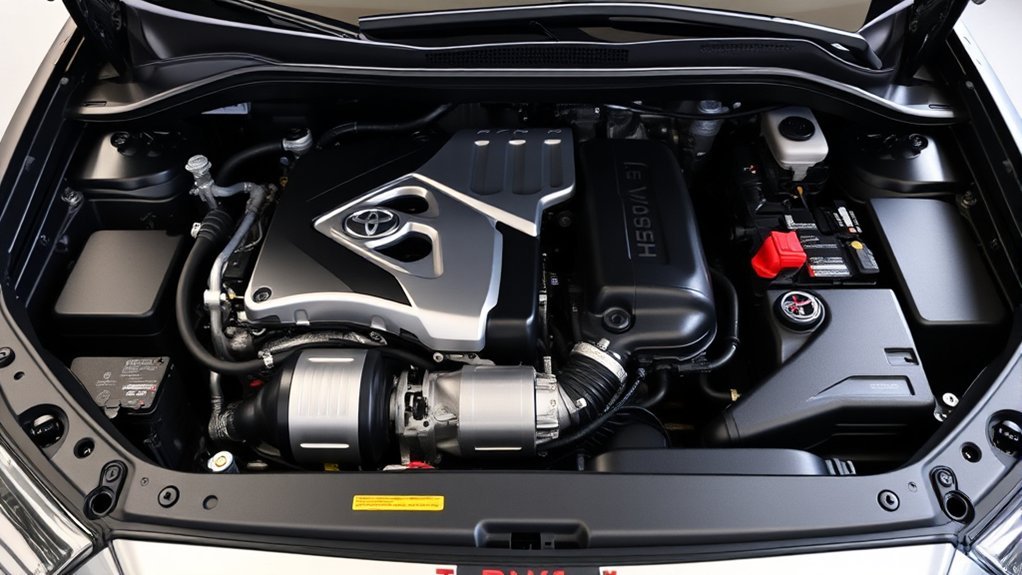
The U.S.-market 2026 Toyota RAV4 has two powertrain types: the standard RAV4 Hybrid and the externally rechargeable RAV4 Plug-in Hybrid. Both are built around Toyota’s naturally aspirated 2.5-liter A25A-FXS four-cylinder engine. There is no conventional gas-only version and no turbocharger.
| Feature | RAV4 Hybrid | RAV4 Plug-in Hybrid |
|---|---|---|
| Gas Engine | 2.5L naturally aspirated 4-cylinder | 2.5L naturally aspirated 4-cylinder |
| Turbocharger | No | No |
| Net Combined Output | 226 hp FWD / 236 hp AWD | 324 hp |
| Drivetrain | FWD or Electronic On-Demand AWD, depending on grade | AWD standard |
| Transmission | Electrified e-CVT-type transaxle | Electrified e-CVT-type transaxle |
| Best Fuel-Economy Rating | Up to 47 city / 40 highway / 43 combined MPG | Up to 40 MPG combined in hybrid operation on SE/XSE |
| Electric-Only Range | Not rated for extended EV-only driving | Up to 54 EPA-estimated miles on SE |
The regular Hybrid uses Toyota’s fifth-generation hybrid system. Front-wheel-drive models produce 226 net combined horsepower, while AWD models add a dedicated rear electric motor and raise total system output to 236 horsepower. The Plug-in Hybrid uses a larger rechargeable battery and more powerful electric drive hardware for 324 net combined horsepower.
Is There a Turbo Engine Option for the 2026 RAV4?
No. Toyota does not sell a turbocharged 2026 RAV4 in the United States. The gasoline portion of both the regular Hybrid and Plug-in Hybrid is a naturally aspirated 2.5-liter four-cylinder engine.
Instead of using exhaust-driven boost from a turbocharger, the RAV4 combines the gasoline engine with electric motor assistance. The electric motors can contribute torque during acceleration without waiting for a turbocharger to build boost. That does not make a hybrid mechanically equivalent to a turbo engine, but it explains how Toyota can increase total system output without fitting a turbocharger.
The distinction is also important when shopping used or comparing model years. The redesigned U.S. 2026 RAV4 is fully electrified: there is no new conventional gas-only 2026 model with an 8-speed automatic transmission.
How Does the 2.5L 4-Cylinder Engine Perform?
The 2.5-liter four-cylinder is only one part of the 2026 RAV4’s total propulsion system, so the most useful performance number is net combined system horsepower, not the gasoline engine’s output by itself.
The RAV4 Hybrid makes 226 net combined horsepower with front-wheel drive and 236 horsepower with Electronic On-Demand AWD. In AWD versions, a separate rear electric motor powers the rear axle when additional traction or acceleration assistance is required.
The RAV4 Plug-in Hybrid is substantially more powerful at 324 net combined horsepower. Toyota lists a 0–60 mph time of 5.4 seconds for the Plug-in Hybrid. Its stronger electric motors and larger traction battery provide much of the additional system performance.
In everyday driving, the Hybrid prioritizes efficiency and predictable response, while the PHEV provides considerably stronger acceleration. Neither needs a turbocharger to reach its advertised total system output.
What Are the Key Features of Hybrid and Plug-In Hybrid Variants?
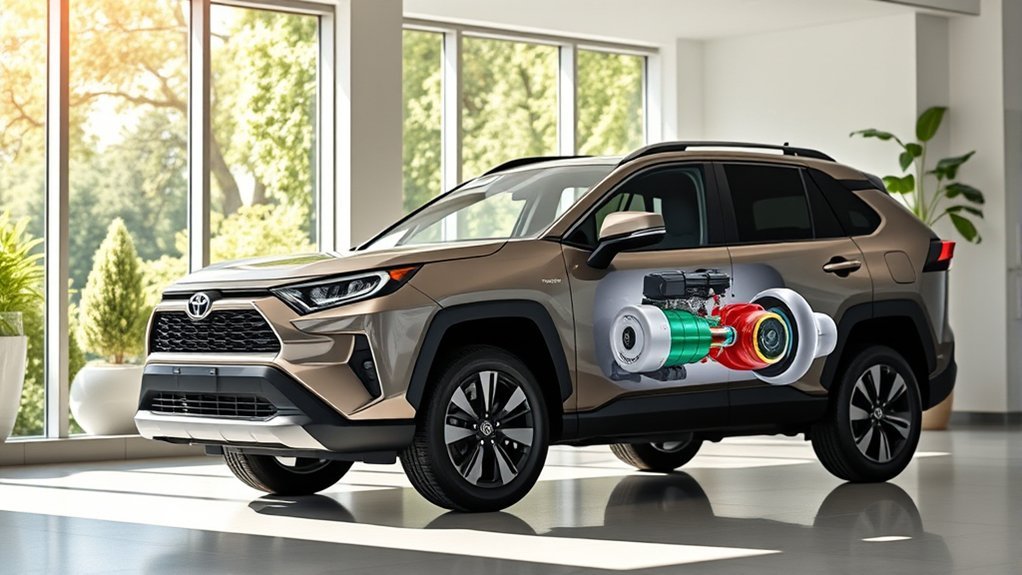
The regular RAV4 Hybrid and RAV4 Plug-in Hybrid use the same basic 2.5-liter naturally aspirated engine concept, but the electrical systems are designed for different jobs.
The regular Hybrid does not need to be plugged in. Its traction battery is replenished through the gasoline engine and regenerative braking, and the electric motors assist the engine during normal driving.
The Plug-in Hybrid uses a much larger battery that can be charged from an external power source. That gives it meaningful electric-only driving capability before it operates as a gasoline-electric hybrid.
Here’s a current U.S.-market comparison:
| Feature | Hybrid Variant | Plug-In Hybrid |
|---|---|---|
| Engine | 2.5L 4-cylinder + electric motors | 2.5L 4-cylinder + higher-output electric drive system |
| System Output | 226 hp FWD / 236 hp AWD | 324 hp |
| External Charging | Not required | Yes |
| Electric Range | No extended EPA EV-range rating | Up to 54 miles on SE |
| Combined Fuel Economy | Up to 43 MPG | Up to 40 MPG in hybrid operation; varies by grade |
| AWD | Available or standard depending on grade | Standard |
How Do Engine Options Impact Fuel Efficiency?
For U.S. shoppers, the 2026 RAV4 fuel-economy comparison is no longer gas-only versus Hybrid. The choice is between a regular Hybrid and a Plug-in Hybrid.
Selected front-wheel-drive RAV4 Hybrid configurations achieve up to an EPA-estimated 47 MPG city, 40 highway, and 43 combined. AWD, wheel, tire and grade choices can reduce those ratings, so the exact configuration matters.
The Plug-in Hybrid is different because it can use electricity from the grid before consuming gasoline in normal hybrid operation. Toyota currently lists the SE at up to 54 EPA-estimated electric miles. Once the usable EV charge is depleted, the vehicle continues as a hybrid rather than stopping like a battery-only EV.
Engine Type Comparison
The presence or absence of a turbocharger is only one part of the efficiency equation. The 2026 RAV4 gains much of its efficiency from its Atkinson-cycle 2.5-liter engine, electric motors, regenerative braking, traction battery and electronically controlled hybrid transaxle.
That means a buyer should compare the complete powertrain rather than assuming that “non-turbo” automatically means more efficient. The current RAV4’s strongest efficiency numbers come from the interaction between the gasoline engine and hybrid system.
Hybrid Efficiency Benefits
The regular Hybrid recovers some energy during deceleration through regenerative braking and reuses stored electrical energy to assist propulsion. That reduces the amount of work the gasoline engine must do in many low-speed and stop-and-go situations.
- Hybrid FWD: 226 net combined horsepower and the highest RAV4 Hybrid fuel-economy ratings.
- Hybrid AWD: 236 net combined horsepower with an additional rear electric motor.
- Plug-In Hybrid: 324 net combined horsepower and external charging for meaningful EV-only driving.
- Grade matters: MPG, electric range and towing limits vary by drivetrain, wheels, tires and grade.
For detailed model-specific fuel-economy figures, compare the exact grade rather than applying one MPG number to the entire lineup.
Benefits of the Non-Turbo Engine Design
The clearest benefit of the RAV4’s non-turbo layout is mechanical simplicity in one specific area: there is no turbocharger, wastegate or turbo-specific boost plumbing. That does not guarantee lower lifetime repair costs or greater engine longevity, because the RAV4 also contains hybrid motors, power electronics and a high-voltage battery.
A more useful comparison is how the systems deliver power:
| Characteristic | 2026 RAV4 Hybrid/PHEV | Typical Turbo Gas Powertrain |
|---|---|---|
| Engine Air Supply | Naturally aspirated | Forced induction from turbocharger |
| Low-Speed Assistance | Electric motor torque assists propulsion | Depends on engine and turbo calibration |
| Turbo Hardware | None | Turbocharger and related boost-control hardware |
| Electrified Components | Traction battery, motor-generators and power electronics | Depends on whether the vehicle is also a hybrid |
For maintenance, follow Toyota’s required fluid, filter, inspection and service intervals rather than assuming a non-turbo engine is automatically maintenance-free. If you are checking engine-oil requirements specifically, see whether the Toyota RAV4 requires synthetic oil.
How Does the RAV4 Compare to Competitors?
The most important difference is not simply “RAV4 non-turbo versus competitor turbo.” Compact SUVs now use several different powertrain strategies, including conventional turbo gasoline engines, naturally aspirated hybrids and plug-in hybrids.
For the 2026 RAV4, Toyota has made electrification standard in the U.S. lineup. A shopper comparing it with another compact SUV should therefore compare:
- Total system output: 226 hp FWD Hybrid, 236 hp AWD Hybrid, or 324 hp Plug-in Hybrid.
- Fuel economy: the exact EPA rating for the chosen grade and drivetrain.
- Electric capability: whether the vehicle can be plugged in and how much rated EV range it provides.
- Towing: the exact grade-specific limit rather than assuming every AWD model has the same rating.
- Ownership needs: local fuel/electricity prices, charging access, annual mileage and service requirements.
A turbocharger by itself does not establish which vehicle is more reliable, faster, cheaper to maintain or more efficient. Those comparisons require the complete vehicle specification and long-term ownership data.
What’s New in the 2026 RAV4’s Powertrain?
The 2026 redesign makes one major powertrain change especially clear: the U.S. RAV4 lineup is now fully electrified.
The regular RAV4 uses Toyota’s fifth-generation hybrid system with the 2.5-liter A25A-FXS four-cylinder engine. For 2026, front-wheel drive is available on selected Hybrid grades, producing 226 net combined horsepower, while AWD models produce 236 horsepower.
The redesigned Plug-in Hybrid raises output to 324 net combined horsepower. Toyota also lists an EPA-estimated 54-mile all-electric range on the SE and a 5.4-second 0–60 mph time.
The key point for turbo shoppers is simple: Toyota increased RAV4 performance through updated hybrid and plug-in-hybrid systems rather than adding a turbocharger.
How Do Engine Choices Affect the Driving Experience?
The regular Hybrid and Plug-in Hybrid share the same basic naturally aspirated engine concept, but the stronger electric system in the PHEV changes acceleration and EV capability substantially.
The Hybrid is designed around everyday efficiency and smooth electric assistance. The PHEV adds a larger rechargeable battery and much more system output, allowing stronger acceleration and extended electric-only operation when the battery has sufficient charge.
Engine Performance Variations
For U.S. 2026 models, performance breaks down into three useful configurations:
- Hybrid FWD: 226 net combined horsepower and the lineup’s strongest regular-Hybrid fuel-economy potential.
- Hybrid AWD: 236 net combined horsepower with a dedicated rear electric motor for Electronic On-Demand AWD.
- Plug-In Hybrid AWD: 324 net combined horsepower, standard AWD and Toyota-listed 0–60 mph acceleration of 5.4 seconds.
The rear electric motor in Hybrid AWD models can drive the rear axle without a conventional mechanical driveshaft linking the engine to the rear wheels. That layout is one reason the 2026 Hybrid’s AWD system differs from many traditional gasoline-only AWD systems.
Fuel Efficiency Considerations
Fuel economy varies by exact drivetrain and grade. Current Toyota U.S. figures can be summarized this way:
| Powertrain | Efficiency | Key Point |
|---|---|---|
| Hybrid FWD | Up to 47 city / 40 highway / 43 combined MPG | Highest regular-Hybrid fuel-economy rating |
| Hybrid AWD | Varies by grade | Adds rear electric-motor AWD |
| Plug-in Hybrid | Up to 40 MPG combined in hybrid operation on SE/XSE | Also provides externally charged EV driving |
| Plug-in Hybrid SE | Up to 54 EPA-estimated electric miles | Highest listed EV-range figure |
Actual fuel use depends heavily on speed, temperature, trip length, terrain and driving style. PHEV gasoline consumption also depends on how regularly the vehicle is charged and how much driving occurs within its electric range.
Driving Dynamics Differences
The 2026 RAV4 does not offer three separate gas, Hybrid and Plug-in Hybrid engine families in the U.S. Instead, buyers choose between two electrified powertrain families.
- Regular Hybrid: prioritizes fuel economy, everyday response and simple refueling without external charging.
- Hybrid AWD: adds a rear electric motor for additional traction and slightly higher total output.
- Plug-In Hybrid: provides the strongest acceleration, standard AWD and the ability to complete many shorter trips using externally supplied electricity.
The right choice depends more on drivetrain needs, charging access, fuel economy and desired acceleration than on turbocharger availability, because no current U.S. 2026 RAV4 uses a turbo.
Related Guides
Frequently Asked Questions
Does the 2026 Toyota RAV4 Have a Turbo?
No. Every U.S.-market 2026 RAV4 uses a naturally aspirated 2.5-liter four-cylinder engine as part of either a regular Hybrid or Plug-in Hybrid powertrain.
Is There a Gas-Only 2026 Toyota RAV4?
No. Toyota discontinued the conventional gas-only RAV4 from the U.S. lineup for 2026. Buyers choose between the RAV4 Hybrid and RAV4 Plug-in Hybrid.
How Much Horsepower Does the 2026 RAV4 Have?
The regular Hybrid produces 226 net combined horsepower with front-wheel drive or 236 horsepower with AWD. The Plug-in Hybrid produces 324 net combined horsepower.
What Are the Maintenance Costs for the RAV4’s Engine Options?
There is no single maintenance-cost figure that applies to every owner. The 2026 RAV4 avoids turbocharger hardware, but it also includes hybrid motors, power electronics and a traction battery. Regenerative braking can reduce use of the friction brakes in some driving, but actual maintenance cost depends on mileage, driving conditions, service pricing and repairs.
Can I Use Premium Fuel in the 2026 RAV4?
Premium fuel is not required. Toyota’s 2026 RAV4 Owner’s Manual specifies unleaded gasoline with an octane rating of 87 or higher.
How Does the RAV4’s Engine Affect Towing Capacity?
The 2026 RAV4 can tow up to 3,500 lb on specified AWD grades, but 3,500 lb is not the rating for every RAV4. Toyota lists that capacity for specified Hybrid AWD configurations and for Plug-in Hybrid SE, Woodland and XSE grades. Always confirm the exact grade, drivetrain and equipment rating before towing.
Are There Any Performance Upgrades Available for the Engine?
The largest factory performance difference comes from selecting the powertrain itself. The regular Hybrid produces 226 or 236 net combined horsepower depending on drivetrain, while the Plug-in Hybrid produces 324 horsepower. Aftermarket changes can affect reliability, emissions compliance and warranty coverage, so they should be evaluated separately rather than assumed to be equivalent to the factory PHEV system.
What Warranties Cover the 2026 Toyota RAV4’s Engine?
Toyota lists a 3-year/36,000-mile basic warranty and 5-year/60,000-mile powertrain warranty. Covered hybrid-related components receive 8-year/100,000-mile coverage, while the hybrid battery is covered for 10 years/150,000 miles, whichever comes first, subject to Toyota’s warranty terms. See Toyota’s warranty information for current terms and exclusions.
How Far Can the 2026 RAV4 Plug-in Hybrid Drive on Electricity?
Toyota lists the 2026 RAV4 Plug-in Hybrid SE at an EPA-estimated 54 miles of all-electric range. Range varies by grade and real-world conditions such as temperature, speed, climate-control use and driving style.
Conclusion
The 2026 Toyota RAV4 does not have a turbo engine, and U.S. shoppers no longer choose between a conventional gas engine and a Hybrid. Every model uses a naturally aspirated 2.5-liter four-cylinder as part of either Toyota’s regular Hybrid or Plug-in Hybrid system.
The regular Hybrid produces 226 hp with FWD or 236 hp with AWD and reaches up to 43 MPG combined in its most efficient configuration. The Plug-in Hybrid increases output to 324 hp, has standard AWD, and offers up to an EPA-estimated 54 miles of electric range on the SE. For buyers asking specifically about turbocharging, the answer is therefore straightforward: Toyota uses electric assistance, not a turbocharger, to expand the 2026 RAV4’s performance range.
