Buying a drone for saltwater use is not as simple as choosing a model with a camera and long flight time. Salt can attack motors, circuits, and connectors in minutes, even after a brief splash. Some drones recover with fast action, but others fail quietly later. The real question is not just how it flies over water, but how it survives when the water wins.
What Salt Water Does to a Drone
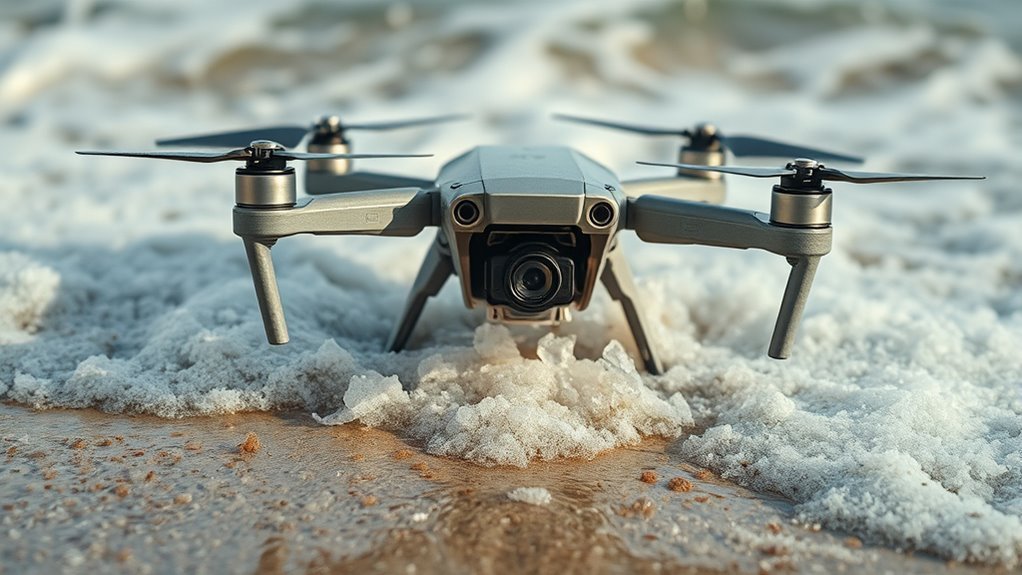
Salt water can quickly begin corroding a drone, especially its internal components and electronics, and even a brief immersion may cause serious circuit damage.
When salt water enters the frame, it attacks exposed metal, wiring, and boards, then leaves residue that keeps drawing moisture. That residue can spread corrosion long after the flight ends.
In practical terms, a drone that looks intact may already have hidden damage inside its motors, battery bay, or control systems. A new account of salt water exposure should treat every second as costly, because delay makes recovery less likely.
Community experience shows that quick cleaning and drying can sometimes preserve function, but only if contamination is limited. Without prompt intervention, salt crystals and oxidation can undermine reliability, reduce range, and shorten the drone’s service life.
The result is not just failure, but avoidable loss of capability.
What to Do Immediately After Recovering a Saltwater Drone?
The drone should be powered off at once to limit further damage and reduce the risk of corrosion spreading through the internal components.
It should then be rinsed with distilled water to remove salt residue, followed by thorough drying before any test or restart is attempted.
Careful drying is essential, since trapped moisture can cause lasting damage if the drone is used too soon.
Power Off Immediately
Power off the drone immediately after recovering it from salt water to reduce the risk of short circuits and further internal damage.
This quick response follows core drone safety tips and emergency protocols, helping preserve control over the situation.
Remove the battery at once if it is safe to do so, then keep the unit idle and disconnected.
Do not charge it or test it before inspection. A delayed move can allow corrosion to spread and erase recovery chances.
Seek professional service promptly for internal evaluation.
- Wet frame, silent motors
- Battery lifted free
- No power, no spark
- Dry hands, careful handling
- Repair bench, steady assessment
Rinse With Distilled Water
A swift rinse with distilled water helps wash away salt residue before it can trigger corrosion inside the drone. This first step is central to drone maintenance tips because salt left in seams, ports, and frame joints can keep working long after recovery.
Effective rinsing methods call for attention to every opening and crevice, since hidden contaminants can defeat later repairs. After the distilled-water rinse, a brief isopropyl alcohol rinse can help displace moisture and support drying.
These corrosion prevention techniques give the drone a better chance of surviving saltwater exposure. Community guidance is consistent: act quickly, clean thoroughly, and do not delay. Immediate washing is not optional; it is the cleanest path toward recovery and a small act of control over damage.
Dry Thoroughly Before Testing
Once the battery is removed, the drone should be left to dry completely before any power-on test is attempted. Careful drone maintenance begins with moisture detection and a full pause.
After the distilled-water rinse and alcohol wipe, the body should rest where air can move freely. If available, a food dehydrator on low can speed corrosion prevention without heat stress.
- open shell panels
- fan gentle air across joints
- check camera housings
- inspect landing gear crevices
- wait for all seals to clear
Patience protects freedom from avoidable damage. Any lingering water inside motors, boards, or connectors can turn a simple recovery into a costly failure.
Only after complete dryness should testing begin, and even then, it should start cautiously.
Can a Saltwater Drone Be Saved?
Can a saltwater drone be saved? Yes, sometimes, but only if action is immediate. Saltwater corrosion effects can begin fast, attacking boards, motors, and connectors before the owner has time to react.
The first move is to remove the battery and keep the drone off, because power can worsen the damage. After that, drone restoration techniques may include careful flushing with distilled water, then alcohol, to reduce salt residue. Results vary, and recovery is never guaranteed.
Some community members report success with rice or a food dehydrator, though these methods are inconsistent and should not replace thorough intervention.
If the drone has stayed wet for long, professional repair options become important, since delays often turn repairable damage into loss. A saved drone depends on speed, restraint, and honest assessment.
In practice, the sooner the device is stabilized, the better the chance of restoring function and preserving freedom from needless replacement costs.
How to Clean Saltwater Damage Safely
A saltwater-exposed drone should be rinsed immediately with distilled water to remove corrosive residue before it can settle into the components.
After that, a cleaning alcohol rinse can help displace moisture, and the internal parts should be dried thoroughly with a food dehydrator or a similar low-heat method.
Some recovery efforts also use rice or shared community advice, but the priority remains careful cleaning and complete drying.
Immediate Fresh Water Rinse
Rinse the drone immediately with distilled water to flush away salt residues before they can trigger corrosion or spread deeper into the components. This first move supports drone maintenance tips that preserve freedom of flight and align with corrosion prevention techniques. Fast action matters; delay can let internal parts suffer irreversible damage.
- Water running across seams
- A careful rinse at openings
- Salt crystals lifting from joints
- Emergency response gear ready nearby
- Clean surfaces reclaiming control
A thorough rinse should reach any point where salt water entered, especially seams and ports.
Afterward, the owner may use isopropyl alcohol to push out lingering moisture, then a low-heat food dehydrator for gentle drying. The process stays practical, direct, and protective, helping the craft return to service without unnecessary loss.
Drying And Decontamination Steps
Once the initial rinse is complete, the drone should be dried and decontaminated without delay to limit salt-driven corrosion. A careful wipe with isopropyl alcohol can displace remaining moisture and support corrosion prevention on boards, connectors, and housings.
For deeper moisture control, a food dehydrator offers one of the safest drying techniques because it removes trapped water from internal parts without harsh heat. If a dehydrator is unavailable, the drone may be placed in rice for an extended period, though results can vary.
Every step should be timely and thorough, since delay invites irreversible damage. Clean hands, clean tools, and patient drying help preserve function and keep the machine ready for independent use after saltwater exposure.
How to Dry a Drone After Saltwater Exposure
When a drone has been exposed to saltwater, the first priority is to remove salt residue as quickly as possible by rinsing it with distilled water, then following with isopropyl alcohol to help displace moisture. These drone maintenance tips support corrosion prevention techniques and keep damage from spreading.
After the exterior is cleared, every opening should dry fully.
After cleaning, let every opening dry completely to reduce hidden moisture and prevent long-term damage.
- Frame resting on a clean towel
- Propellers removed and set aside
- Compartments open to moving air
- Low-heat dehydrator working quietly
- Rice nearby as a backup option
A drying methods comparison favors a food dehydrator set low, because it can warm internal parts evenly. Uncooked rice may absorb moisture, but timing is less predictable.
The drone should not remain wet; the longer moisture lingers, the greater the risk of circuit failure and irreversible corrosion. Timely action offers the best chance to regain freedom of flight.
When a Saltwater Drone Is Beyond Repair
If drying has already been attempted and the drone still shows signs of trouble, severe saltwater exposure may have pushed it past practical recovery.
Salt residue inside the frame often keeps attacking boards, motors, and connectors long after the crash. When corrosion has spread, salvage techniques can only recover limited parts, not full function.
A prompt professional assessment can still identify usable components, but delay usually raises repair costs and lowers the chance of restoration. If the battery was not removed immediately, or if the craft was powered on or charged after exposure, deeper damage is likely.
At that stage, replacement may be the most rational choice for someone seeking freedom from endless setbacks. The key is recognizing when corrosion prevention is no longer possible and the drone has become a source of ongoing expense rather than utility.
How to Prevent Future Saltwater Crashes
Preventing future saltwater crashes starts with immediate care after any exposure: the drone should be rinsed with distilled water as soon as possible to reduce corrosion and protect internal components.
After drying, the craft should be stored in a dry, salt-free place, away from damp gear and sea spray. Preventative measures also include scheduled inspections, so early corrosion is caught before it spreads.
- A clean workbench with microfiber cloths
- A sealed case lined with silica gel packs
- Protective coatings on exposed joints and ports
- Waterproof casings for coastal flights
- A local pilot group sharing maintenance tips
Protective coatings and rugged casings add another layer of defense when flying near waves or salt mist.
Regular service keeps motors, wiring, and sensors reliable. Community engagement helps pilots compare methods, avoid repeat mistakes, and stay free to fly with confidence.
Frequently Asked Questions
What Are the Key Things to Consider Before Buying a Drone?
Key considerations before buying a drone include intended use, drone features, battery life, and camera quality. A buyer should match the model to recreation, photography, surveying, or inspections.
Strong camera quality, stable gimbal support, and good low-light performance matter for imaging. Longer battery life and range improve field use.
Durability, weather resistance, and obstacle avoidance add freedom, safety, and confidence, especially for beginners seeking practical control and dependable flight.
What Is the 1:1 Rule for Drones?
The 1:1 rule for drones means planning at least one minute of reserve battery life for every minute of expected flight. It helps meet drone regulations, preserve battery life, and support flight stability during wind, detours, or landing delays.
Pilots should count takeoff, hovering, and return time, especially in remote areas. Adjustments are wise for heavier drones, weaker batteries, or rough conditions, keeping missions safe, efficient, and free.
Is Pix4d Better Than Dronedeploy?
Pix4D is often better than DroneDeploy for demanding mapping and 3D modeling work, while DroneDeploy is easier for fast setup and everyday missions.
In a drones comparison, Pix4D stands out for advanced software features, customizable outputs, and stronger results in complex sites.
DroneDeploy usually wins on simplicity and automation.
User experiences often reflect this tradeoff: technical teams favor Pix4D; beginners and crews seeking speed often prefer DroneDeploy.
Is Flying a Drone Over Water a Good Idea?
Generally, flying a drone over water is not a good idea unless the operator has strong drone safety practices in place.
Water challenges increase the risk of crashes, and salt water can rapidly destroy electronics. Flight regulations may also restrict certain areas near lakes, rivers, or coasts.
If flight is necessary, using return-to-home features, flotation gear, and careful planning offers the best chance of keeping the drone and operator free.
Conclusion
Saltwater is a silent tide of rust, slipping into seams and circling circuits like an advancing shadow. A drone built for coastal work needs sealed armor, protective coatings, and careful upkeep to stay airborne. If exposure happens, quick rinsing, drying, and inspection can still pull some craft back from the brink. But when corrosion has taken root, repair may be only a fading lighthouse, not a promise. Prevention remains the surest flight path.
