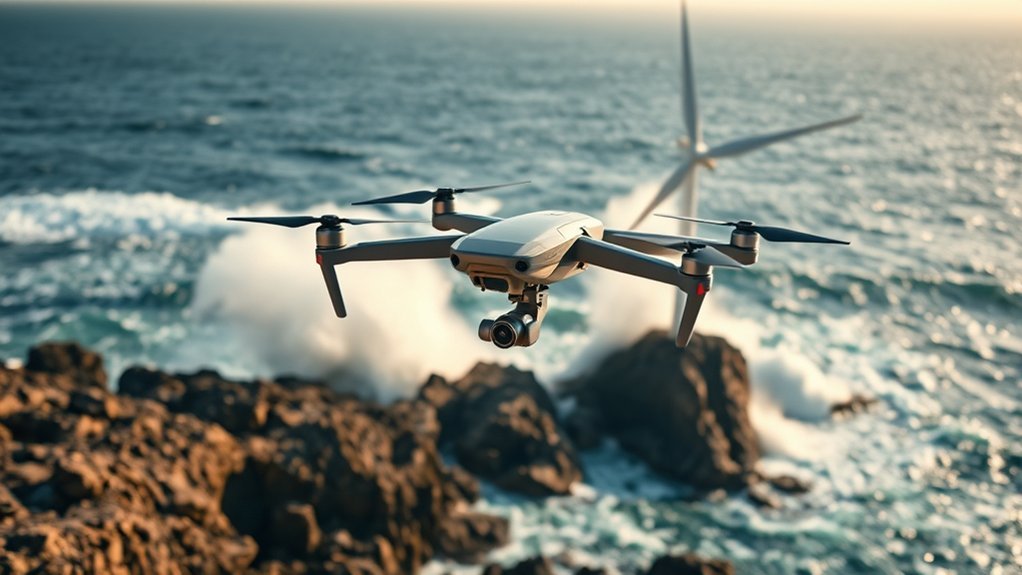
Coastal and marine drone operations demand more planning than a normal land-based flight. Wind can shift quickly, salt can damage exposed parts, and a forced landing over water can mean total equipment loss. You need the right drone, a conservative flight plan, strong safety habits, and a clear maintenance routine before every shoreline, harbor, offshore, or marine construction mission.
Quick Answer
Coastal drone operations require careful weather checks, corrosion protection, safe battery reserves, legal compliance, and post-flight cleaning. Use a drone rated for wind and moisture, avoid flying beyond your recovery options, plan return points before launch, and rinse salt exposure promptly so small problems don’t become expensive failures.
Key Takeaways
- Coastal wind, spray, glare, and shifting weather can reduce stability, range, visibility, and battery life.
- Saltwater exposure is one of the biggest threats to drone motors, connectors, screws, gimbals, and charging contacts.
- You should plan every marine flight with battery reserves, recovery options, emergency landing zones, and a safe return route.
- Drone rules still apply over water, including airspace limits, visual line of sight, privacy, restricted zones, and local permissions.
- Post-flight rinsing, drying, inspection, and storage help extend the life of drones used near saltwater.
Unique Challenges of Coastal Marine Drone Operations
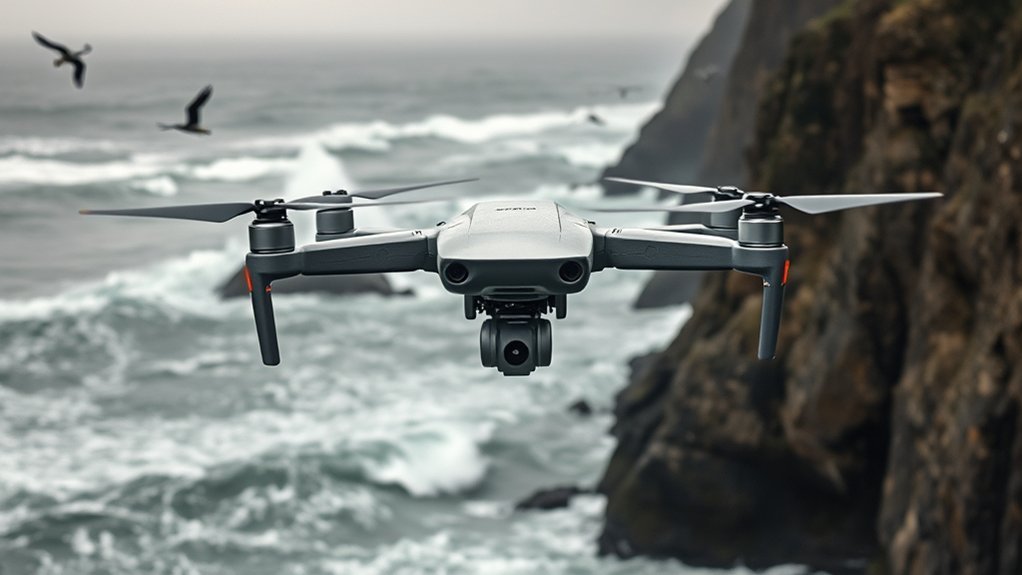
When operating drones in coastal marine environments, you face conditions that can change faster than they do inland. Strong winds, gusts around cliffs or buildings, sea spray, glare from the water, birds, moving vessels, and limited emergency landing areas can all affect flight safety and mission success.
Wind is often the first challenge. A drone may handle steady wind within its rated limit, yet sudden gusts can make hovering, framing shots, mapping passes, or precision inspections much harder. Before launch, check the forecast, local gust speed, tide timing, visibility, and marine alerts from reliable weather sources such as the National Weather Service Marine Forecasts.
Moisture is the second major concern. Your drone must cope with salt spray, mist, damp air, and possible condensation. Even if the drone never touches the water, salt can settle on motors, propellers, screws, gimbal parts, landing gear, and battery contacts.
Battery endurance also deserves conservative planning. Many common multirotor drones fly for roughly 20 to 40 minutes in ideal conditions, but marine flights often reduce that number. Wind, heavy payloads, cold air, repeated repositioning, and long return legs can drain a battery faster than expected.
Treat the manufacturer’s flight time as a best-case number, not a marine mission guarantee. Over water, your safe return reserve matters more than squeezing out one more shot.
Legal compliance matters too. Aviation rules apply even when you fly over open water. Depending on your location and mission, you may need to follow airspace rules, keep the drone within visual line of sight, avoid restricted areas, protect privacy, and respect local harbor, port, wildlife, or marine protected area rules. In the United States, start with the FAA UAS guidance before planning any drone operation.
Finally, you need realistic risk coverage. Marine operations can expose equipment and people to higher costs than a simple field flight. Public liability insurance, hull or equipment coverage, and written operating procedures can protect you if a drone damages property, strikes a vessel, or fails during paid work.
Impact of Weather Conditions on Drone Performance
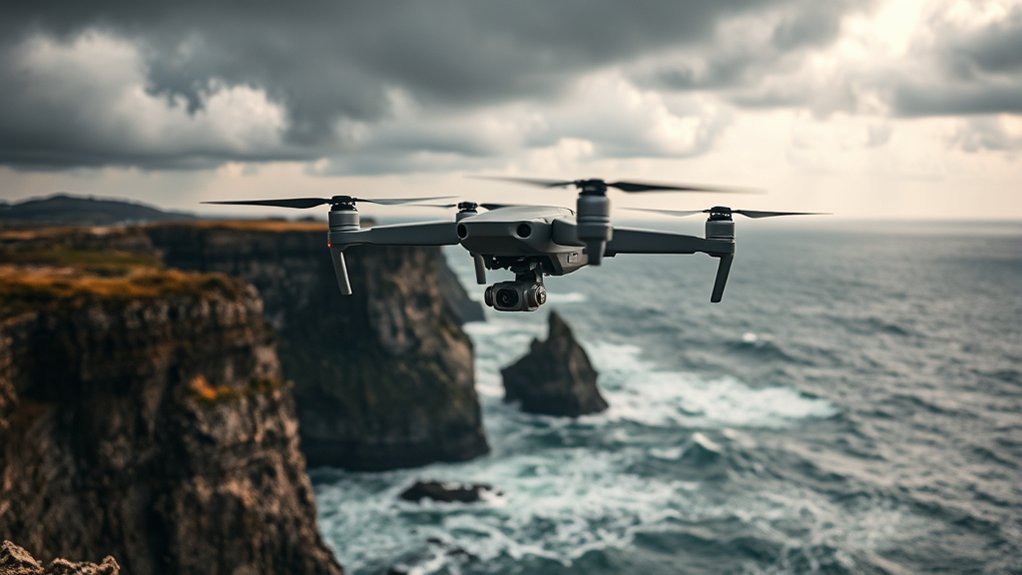
Although you may be eager to deploy your drone in coastal areas, you should never treat weather as a small detail. Weather conditions can dramatically affect lift, control, image quality, GPS performance, battery use, and the safety of your return flight.
Wind speeds near strong-breeze conditions can make small drones drift, tilt, or fight to hold position. Gusts matter even more than steady wind because they can hit without warning. Use the drone manufacturer’s wind rating, then add a safety margin for offshore or shoreline work.
Rain, fog, mist, and salt spray create separate risks. Moisture can reach vents, motors, seams, buttons, ports, and the camera gimbal. If your drone is not rated for wet conditions, even light spray can shorten its lifespan or cause immediate problems.
Visibility can also fall quickly near water. Fog, haze, bright reflection, and low sun angles can make it harder to maintain visual line of sight. If you lose clear orientation, the risk of flying too far, descending too low, or misjudging your return path increases.
Warning: Do not launch just because the drone can technically lift off. If wind, visibility, rain, sea spray, nearby traffic, or battery reserve makes recovery uncertain, postpone the flight.
Tides and currents can also affect launch planning. A safe beach launch site may disappear as the tide comes in. A boat-based launch can become difficult if the vessel turns, rises, or rolls during takeoff and landing. Check tide information from a reliable source such as NOAA Tides and Currents when timing coastal missions.
Always assess the weather before launching and keep monitoring conditions during flight. A safe marine drone operation depends on what the weather is doing now, what it may do in the next 30 minutes, and whether you have enough battery to return safely if conditions worsen.
Importance of Safety Measures in Marine Environments
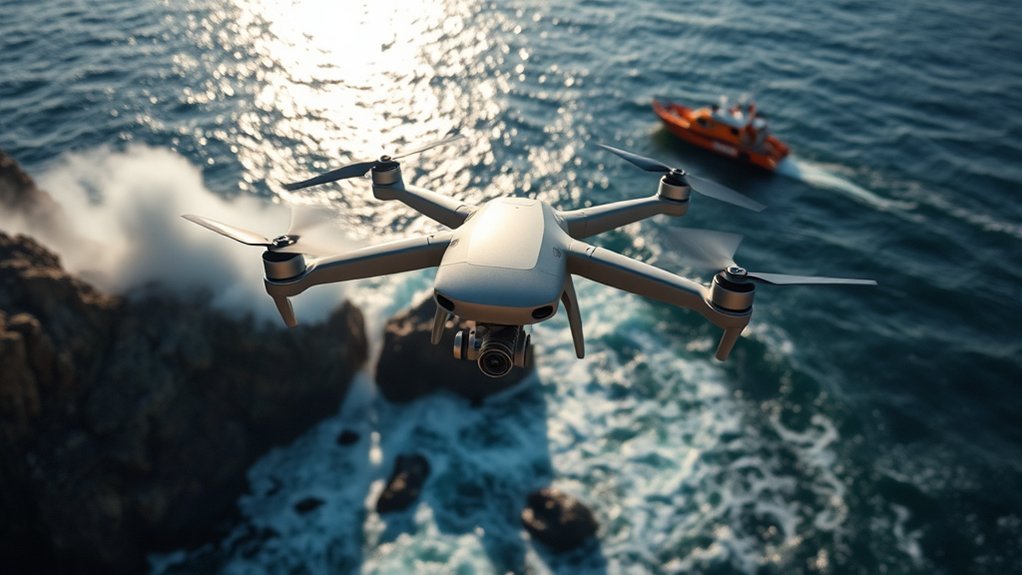
Safety measures in marine environments are not optional. They help you protect people, vessels, wildlife, property, and your drone. They also help you complete the mission without rushing or making risky decisions once the aircraft is already over water.
Start with a pre-flight checklist. Confirm the propellers are secure, batteries are fully charged, firmware and maps are ready, memory cards have space, compass and GPS status look normal, and the return-to-home point is correct. If you launch from a moving boat, set your return behavior carefully because a fixed home point may no longer match your boat’s position.
Build backup protocols into the plan. Since battery life can vary widely, set an early return threshold before takeoff. Many operators use a conservative rule for over-water flights: one part of the battery for the outbound leg, one part for the return, and one part as a reserve. The exact number depends on the aircraft, wind, payload, distance, and mission risk.
Keep visual line of sight unless your local rules and authorization allow a different operation. Over water, distance can be deceptive because there are fewer landmarks. Use a trained visual observer for longer shoreline missions, active construction areas, or locations with boat traffic.
Pro Tip: Choose a return path before takeoff, not during a low-battery warning. Mark safe landing areas, avoid people and vessels, and keep enough altitude to clear masts, cranes, cliffs, trees, and shoreline structures.
Compliance with aviation and privacy laws is also critical. Avoid restricted airspace, airport flight paths, emergency response areas, military zones, busy ports, and private property where you do not have permission. In the United States, drones that require registration generally also need to follow Remote ID requirements unless an exception applies.
Using drones for remote inspections can improve safety for marine teams. Instead of sending workers onto unstable docks, bridge edges, seawalls, cranes, confined pier areas, or difficult shoreline terrain, you can collect imagery from a safer position. That benefit only holds when the drone operation itself stays controlled and well planned.
Insurance can add another layer of protection. Public liability coverage, equipment coverage, and professional service coverage may be useful for commercial inspections, construction monitoring, environmental surveys, or paid photography. Check policy exclusions carefully because some policies limit water operations, offshore work, or flights from vessels.
Choosing the Right Drone for Coastal Work
The best drone for coastal work depends on your mission. A photographer, surveyor, harbor manager, environmental team, and marine contractor may all need different features. Before buying or deploying a drone, match the aircraft to the job instead of assuming any camera drone can handle saltwater environments.
For general shoreline photography, a stable multirotor with strong GPS, reliable obstacle sensing, good wind resistance, and a high-quality camera may be enough. For inspection work, you may need optical zoom, thermal imaging, high-resolution stills, precise hover control, and repeatable flight paths.
For large-area mapping, a fixed-wing or VTOL drone can cover more distance than a standard quadcopter. For bridge, pier, dock, ship, or seawall inspections, a multirotor often works better because it can hover, move slowly, and frame details from multiple angles.
Water resistance matters, but you should read the rating carefully. “Water-resistant,” “weather-resistant,” and “waterproof” do not mean the same thing. A drone that can handle light rain may still be unsafe for salt spray, landing on water, or repeated marine exposure.
Also check payload options, battery availability, controller screen brightness, GPS reliability, replacement propeller cost, service support, and whether the aircraft can maintain a stable connection near metal structures, cranes, vessels, and industrial equipment.
Maintenance and Durability of Drones in Saltwater
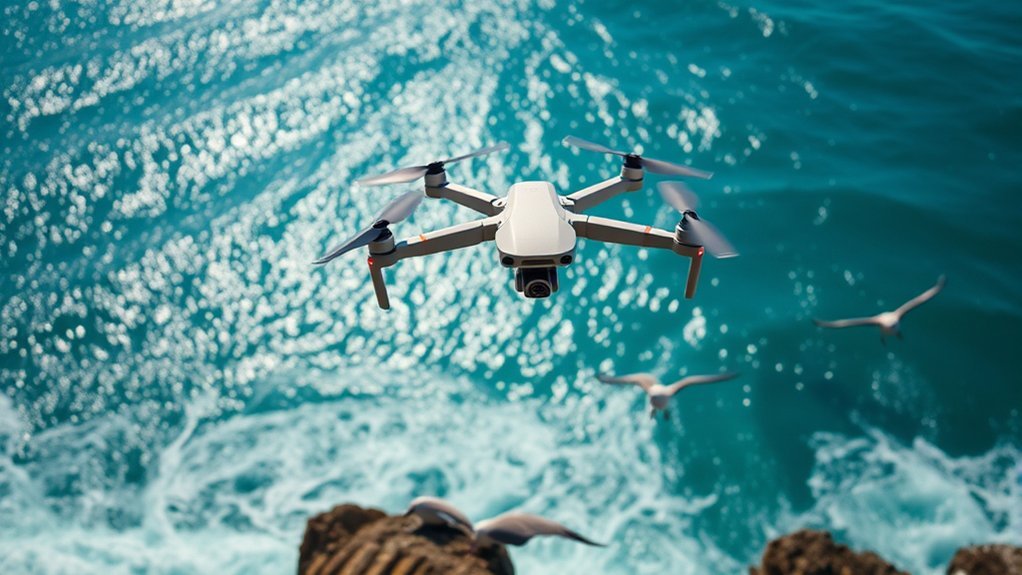
Marine drone operations demand more than careful flying. You also need a maintenance routine that protects the drone after each saltwater exposure. Salt can quickly corrode electronic components, fasteners, motor parts, connectors, charging contacts, and mechanical assemblies if you leave residue behind.
Drones designed for marine operations often use corrosion-resistant materials such as coated metals, sealed electronics, protected ports, and specialized plastics. Even so, no material makes the aircraft maintenance-free. Salt can sit in small gaps and cause damage long after the flight ends.
After each coastal flight, inspect the drone before packing it away. Look for salt film, sand, water droplets, cracks, loose propellers, gritty motor movement, sticky buttons, fogged lenses, and gimbal resistance. Check the landing gear and underside closely because spray and sand often collect there first.
If the manufacturer allows freshwater rinsing, rinse exposed salt residue gently with fresh water and dry the drone thoroughly. Do not force water into vents, ports, sensors, motors, or battery compartments unless the drone’s manual clearly permits that cleaning method. For many consumer drones, a lightly damp cloth, careful drying, and compressed air used at a safe distance may be more appropriate than direct rinsing.
Note: Always follow the drone manufacturer’s cleaning instructions. A cleaning method that works for a waterproof marine drone may damage a standard camera drone.
Battery care is just as important. Keep batteries dry, clean the contacts only as recommended, and never charge a battery that shows swelling, salt contamination, cracked housing, moisture, overheating, or impact damage. Store batteries in a cool, dry place away from direct sunlight and salt air.
Routine inspections help you catch wear before it affects performance. Replace damaged propellers, corroded screws, worn landing pads, gritty motors, cracked guards, or loose mounts quickly. For commercial work, record maintenance dates, cleaning steps, battery cycles, incidents, repairs, and part replacements so you have a clear equipment history.
Applications of Drones in Marine Construction and Inspections
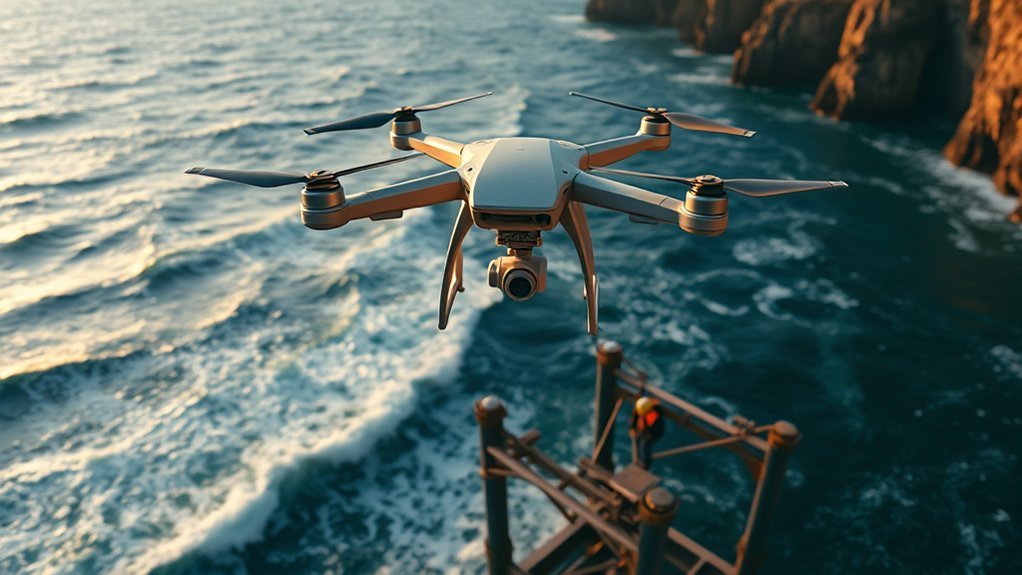
Drones can improve marine construction and inspections by delivering high-resolution imagery, repeatable viewpoints, and real-time data. They help teams document conditions, compare progress, identify risks, and reduce the need for workers to access dangerous locations.
You can use drones to inspect seawalls, docks, piers, breakwaters, cranes, bridges, marinas, roofs near shorelines, shoreline erosion, vessels, buoys, and construction staging areas. For project managers, repeat flights can show progress over time and help create records for clients, engineers, insurers, or regulators.
Fixed-wing drones excel in covering large areas during long-distance flights, while multirotor drones provide the agility needed for detailed inspections in confined spaces. This versatility lets you choose the right drone for your project requirements.
Amphibious drones can expand operational options by supporting both aerial and water-based tasks. Underwater drones, also known as remotely operated vehicles, can inspect submerged structures, pilings, hulls, intake areas, moorings, and underwater damage without sending divers into every situation.
Drones also support environmental monitoring. They can document shoreline change, sediment movement, vegetation, storm damage, wildlife presence, debris, and construction impacts. However, you should avoid disturbing birds, marine mammals, nesting areas, or protected habitats. Wildlife rules can vary by location and season, so confirm local requirements before flying.
Data quality matters as much as flight quality. For inspections, capture overlapping images, steady video, scale references where possible, and clear file names. Save the location, date, time, tide stage, weather notes, operator name, and mission purpose so the data remains useful later.
Pre-Flight Planning Checklist for Marine Drone Missions
A coastal mission should begin before you reach the launch site. The more you plan at your desk, the fewer decisions you need to make while the drone is airborne. Use a written checklist for repeatable results.
- Check rules and permissions: Confirm airspace, local drone rules, harbor restrictions, property access, wildlife limits, and client permission.
- Review weather: Check wind speed, gusts, visibility, rain, temperature, marine warnings, tide stage, and sunset time.
- Set battery limits: Choose launch, turnaround, return, and landing thresholds before takeoff.
- Inspect equipment: Check props, motors, gimbal, sensors, batteries, controller, memory card, lens, and firmware status.
- Plan launch and recovery: Pick a dry, stable, clear launch area with room to land safely if wind shifts.
- Map hazards: Identify vessels, people, cranes, power lines, cliffs, masts, birds, antennas, and restricted areas.
- Assign roles: For team missions, define the remote pilot, visual observer, spotter, payload operator, and site contact.
- Prepare emergency actions: Decide what you’ll do for low battery, lost signal, sudden rain, boat traffic, bird activity, or a forced landing.
If you operate from a boat, add extra checks. Secure loose gear, avoid launching near rigging or antennas, keep the deck clear, brief the crew, and confirm whether hand launching or hand catching is safe for that aircraft. Moving-vessel operations raise the difficulty level and should only be attempted by trained operators.
Common Mistakes to Avoid Near Water
Many marine drone failures come from simple mistakes, not dramatic weather. The most common error is flying too far downwind. The outbound leg feels easy because the wind helps the drone, but the return leg drains the battery because the aircraft must fight back against the wind.
Another mistake is trusting automatic return-to-home without checking the home point. If you launch from a moving boat, the drone may try to return to the original launch coordinates instead of your current position. Some drones offer dynamic home point features, but you must understand them before relying on them.
Flying too low over water can also cause problems. Smooth water, waves, and reflections may confuse downward sensors on some drones. Keep a safe altitude unless your mission requires a low pass and the aircraft is suited for it.
Do not ignore birds. Gulls, terns, raptors, and nesting birds may approach or attack drones. If birds show stress or aggressive behavior, climb carefully if safe, leave the area, and land. Avoid nesting colonies and protected habitats.
Finally, do not pack up a salty drone and clean it later. Salt damage starts quickly. Even a short wipe-down and inspection at the site can reduce corrosion risk before you complete deeper cleaning at home or in the shop.
Related Guides
Frequently Asked Questions
What types of drones are best for coastal operations?
For coastal operations, choose a drone with strong wind resistance, reliable GPS, bright controller visibility, stable camera performance, and moisture protection that matches the mission. Quadcopters work well for inspections and photography, while fixed-wing or VTOL drones can suit larger mapping areas.
How do I prepare for unexpected weather changes during a flight?
Check marine forecasts before launch, watch changing clouds and wind at the site, set an early battery return point, and identify safe landing areas. Keep the drone close enough to recover quickly if rain, fog, gusts, or boat traffic moves in.
Are there specific regulations for drone operations over water?
Yes. Drone rules still apply over water. You may need to follow visual line-of-sight rules, airspace restrictions, Remote ID requirements, privacy rules, and local restrictions near ports, bridges, wildlife areas, airports, military zones, or emergency operations.
How can I protect my drone from saltwater damage?
Use a drone suited for the environment, avoid unnecessary spray, keep ports and batteries dry, and clean salt residue after each flight. Follow the manufacturer’s care instructions, dry the drone thoroughly, and inspect motors, screws, contacts, gimbal parts, and propellers.
What is the typical flight time for drones in coastal environments?
Many common drones fly for roughly 20 to 40 minutes in ideal conditions, but coastal wind, payload weight, cold air, repeated repositioning, and long return paths can shorten that time. Always keep a larger battery reserve when flying over water.
Can I launch a drone from a boat?
You can launch from a boat if local rules allow it and the aircraft, crew, and conditions support safe recovery. Moving boats add risk because the home point, deck movement, rigging, antennas, wind, and waves can complicate landing.
Should I fly lower over water for better footage?
Low shots can look dramatic, but they increase risk. Reflections, waves, spray, birds, and sensor confusion can make low-altitude flight unsafe. Keep a safe height unless the mission requires a low pass and you have enough skill, space, and battery reserve.
Sources
- Federal Aviation Administration UAS — general drone operating rules and safety guidance.
- FAA Remote ID — Remote ID requirements for drones in U.S. airspace.
- National Weather Service Marine Forecasts — marine weather checks before coastal operations.
- NOAA Tides and Currents — tide, current, and water-level planning for coastal missions.
Conclusion
In the world of coastal and marine drone operations, flying safely means planning for wind, salt, water, weather, regulations, and recovery before the drone ever leaves the ground. A good mission plan protects your equipment, your crew, nearby people, vessels, wildlife, and the data you came to collect.
Choose a drone that fits the job, monitor marine conditions closely, keep generous battery reserves, and follow a consistent maintenance routine after salt exposure. When you combine smart preparation with careful flying, drones can become powerful tools for marine construction, inspections, mapping, environmental monitoring, and safer coastal operations.