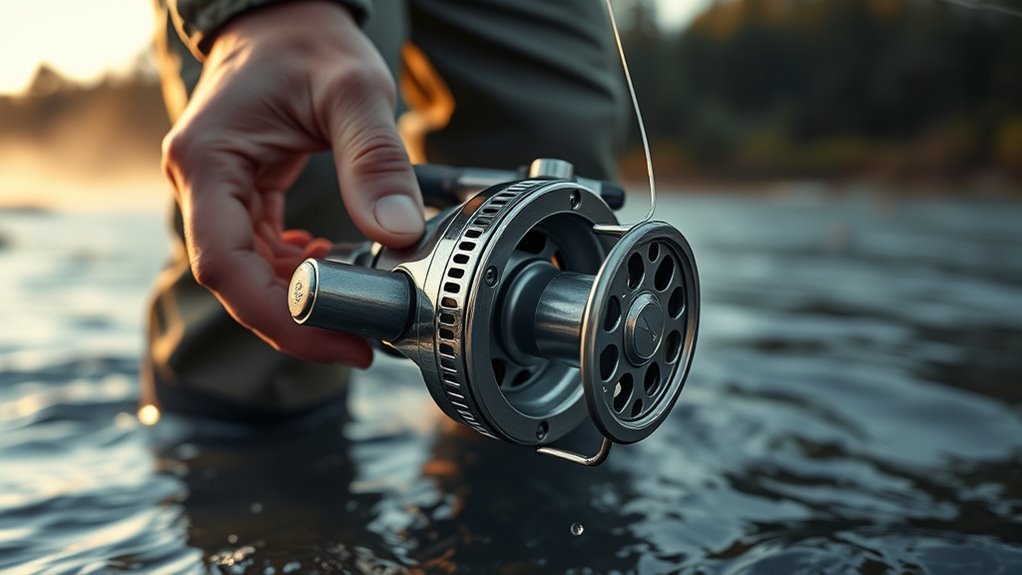
A left-handed centrepin is best used with the rod held in the left hand and the reel set for left-side retrieve. The line should spool off the bottom of the reel, with backing filling roughly one third to one half of the spool. Casting is usually done with a relaxed side cast or Wallis cast, using light thumb pressure for control. Spool speed should be managed manually, and common setup errors matter less once the finer adjustments are understood.
Key Takeaways
- Hold the rod in your left hand and set the centrepin for left-hand retrieve to keep control natural and balanced.
- Spool the line correctly, with backing filling about one-third to one-half of the spool and line coming off the bottom.
- Use a relaxed grip and practice side casts or Wallis casts for smooth, controlled line release.
- Control spool speed mainly with your thumb; keep drag light and treat the clicker as a bite alarm, not primary control.
- Retrieve by backwinding and stay alert for fish runs to prevent overruns and tangles.
What Hand Should You Use?
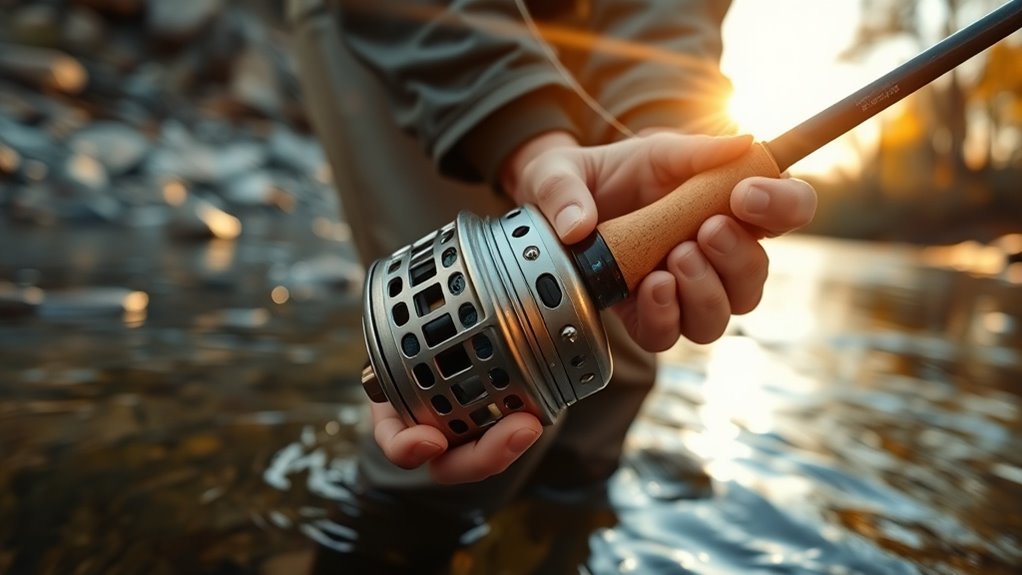
Left-handed anglers will generally find it most practical to hold the rod in the left hand and configure the centrepin reel for left-hand use, rather than forcing a right-handed setup. This arrangement preserves natural control of the blank and keeps the dominant side responsible for strike detection, mending, and line management.
With the rod secured in the left hand, the right hand can handle winding with less strain, provided the reel is built or adjusted for that direction. A left-hand configuration also helps the angler keep the line coming off the top in a controlled path, reducing friction and awkward wrist angles.
Centrepin mechanisms with reversible parts or adjustable pawls often support this choice. The result is a setup that is mechanically sound, efficient, and less restrictive.
For anglers seeking freedom from compromised technique, the correct hand choice is not cosmetic; it is the basis of steady, practical performance.
How to Set Up a Left-Handed Centrepin Reel
A left-handed centrepin reel should be oriented so retrieval feels natural, with the handle positioned for comfortable winding from the left side. In practical terms, the reel is mounted to support left-hand control while preserving balance across the rod.
The seat position should be checked and adjusted so the grip does not force wrist strain or awkward reach. This setup gives the angler freedom of movement and cleaner control during fine presentation.
Before use, the winding direction should be familiarized, since some reels require the line to travel opposite to a right-handed arrangement. The line should be prepared so it runs from the bottom of the reel, reducing twist and maintaining smooth rotation.
A backing line of monofilament or Dacron may be secured with an Arbor Knot or Uni Knot to anchor the mainline reliably. With the reel correctly configured, the system remains efficient, responsive, and ready for disciplined fishing.
How to Spool the Line Correctly
To spool a centrepin correctly, the line should come off the bottom of the spool to reduce twist and promote a smooth, controlled release during casting. This bottom-fed orientation keeps the line come path consistent and supports efficient rotation without unnecessary friction.
A suitable backing, such as monofilament or Dacron, should fill one third to one half of the spool, creating a stable base and reducing slippage under load. The backing must be secured with an Arbor Knot or Uni Knot for dependable attachment.
Mainline should then be added evenly, ideally with a spooler for uniform winding. The spool should finish about 1/8 inch from the rim, leaving enough clearance to prevent trapping and tangles.
- Bottom-fed line placement reduces twist.
- Backing improves grip and security.
- Strong knots prevent failure.
- Even winding preserves performance.
- Rim clearance limits line trapping.
How to Cast a Centrepin Left-Handed
With the line correctly spooled and the spool turning freely, left-handed casting can be set up for controlled delivery. The angler holds the rod in the left hand and uses the right hand for winding, creating balance and freeing the casting arm.
A relaxed grip is essential; tension restricts movement and reduces precision. The side cast is the most direct option, sending line smoothly while the rod tip stays slightly angled to preserve tension.
For a more deliberate release, the Wallis cast works well when the left hand grips firmly and the thumb applies light pressure on the batting rim. Timing matters: dip and lift the rod to about 45° so the lead travels level with the water and distance remains efficient.
This method is practical, repeatable, and suited to anglers seeking open, unforced control rather than the fixed feel of fly reels.
How to Control the Spool While Fishing
Spool control on a left-handed centre pin depends on controlled thumb braking, with light finger pressure applied to regulate line release and maintain tension.
The drag or clutch should be set lightly enough to permit manual adjustment without allowing the spool to overrun when a fish runs.
The clicker can serve as a bite alarm, but it should remain secondary to direct control of the spool during active fishing.
Thumb Braking Control
A light thumb touch on the spool rim gives the left-handed centrepin angler precise control over line release, slowing or stopping the spool as needed to prevent overruns and tangles. This thumb braking keeps the presentation free and responsive, especially when line is coming off the top during a drift.
- Keep the grip relaxed for finer modulation.
- Place the thumb on the rim before the cast.
- Increase pressure only as speed rises.
- Use practice on calm water to build memory.
- Apply the same control when backwinding for quick response.
With disciplined pressure, the spool remains liberated yet fully governed, allowing clean line management against sudden runs and faster fish.
Clicker And Drag Use
Clicker and clutch settings add another layer of control once thumb braking is mastered, giving the left-handed centrepin angler a practical way to manage line release while fishing.
The clicker functions as a bite alarm, signalling subtle takes without a conventional drag. A light clutch setting is preferable, because it limits uncontrolled spool spin while preserving enough freedom for manual braking during runs.
For left-handed use, this preserves dominant-hand rod control and keeps response immediate. Backwinding remains a direct way to retrieve line, letting the angler control the spool rather than depend on mechanical resistance.
Used together, clicker, clutch, and backwinding create a precise system that frees the angler from hesitation and improves control in fast encounters.
Left-Handed Centrepin Mistakes to Avoid
A left-handed centrepin must be mounted and held in the correct orientation, since the wrong reel-hand choice disrupts casting and line handling.
Line direction should be checked before use because an incorrect spool feed can produce tangles and reduce casting efficiency.
Drag or clutch tension should remain light and controlled, as excessive resistance can cause the spool to run unpredictably.
Reel Hand Choice
For left-handed anglers, the most practical Centrepin setup is usually the one that keeps the rod in the left hand and the reel in the right, so winding feels natural and control stays consistent during the retrieve.
This arrangement frees the cast and reduces awkward wrist movement, especially when reel handles need to stay clear of interference. The line should come off the top for low resistance and cleaner flow.
- Check whether the reel converts without tools.
- Move the pawl if the model permits.
- Use a light clutch setting.
- Practice winding direction before fishing.
- Verify the rod balance during each cast.
A setup that matches the body, not the label, usually produces smoother backwinding and more precise control.
Line Direction Errors
One common line-direction error is spooling the Centrepin so the line leaves the reel from the wrong side, which increases twist and makes left-handed control less efficient.
The correct setup keeps line coming off the bottom, allowing a clean run and reducing tangles during retrieval. If the reel is wound backwards, the angler loses the mechanical advantage needed for smooth left-hand operation.
Before fishing, the reel should be tested on dry land to confirm orientation and retrieval feel. The rod and reel position should also support comfort, especially when the left hand governs the spool.
Proper winding mechanics matter because they prevent line snarl and preserve efficiency. A light, controlled setup gives the angler freedom to manage the reel without unnecessary resistance or confusion.
Drag And Clutch Use
With the line direction set correctly, attention then shifts to the clutch and drag, where left-handed centrepin use often goes wrong. A light drag should permit smooth line release without free-spooling, preserving control and freedom under load. The clutch must not become the primary brake; manual braking and backwinding provide sharper response, especially when a fast fish surges.
- Set the drag light, not loose.
- Test clutch engagement on dry land.
- Use backwinding as the default retrieve.
- Apply manual braking before the spool over-runs.
- Check winding direction to prevent tangles.
Left-handed anglers who rely on the clutch alone surrender precision. Proper adjustment keeps the reel liberated, yet disciplined, during runs and recovery.
Frequently Asked Questions
What Is the Point of a Center Pin Reel?
A center pin reel exists to release line with minimal resistance, improving drift control and bait presentation. Its centerpin advantages include direct manual line management and adaptable casting techniques for precise, liberated river fishing.
Is a Left-Handed Baitcaster Harder to Find?
Yes—left-handed baitcasters are harder to find; in many shops they comprise roughly 20% of stock. Left handed options remain limited because Reel mechanics favor right-hand production, though specialty dealers and certain brands offer them.
What Line to Use on a Centerpin Reel?
A centerpin reel performs best with 8–10 lb floating mainline, ideally thin mono like Raven Mainline, plus backing. Line types should minimize twist; line maintenance means spooling off the bottom and securing knots.
How Do You Cast With a Centerpin?
They cast by keeping a relaxed grip, tucking the rod under forearm, and using Wallace or side casting techniques. Controlled line retrieval follows, with slight tip tension, a 45° load, and level finish for accuracy.
Conclusion
In the end, left-handed centrepin use is less about preference than control. The reel must sit correctly, the line must feed cleanly, and the dominant hand must manage the spool with steady discipline. Small errors in setup or casting can quietly ruin performance, while correct technique remains almost invisible. Yet the real test comes later, on the water, when smooth rotation and measured pressure reveal whether the angler has mastered the reel—or merely turned it.
