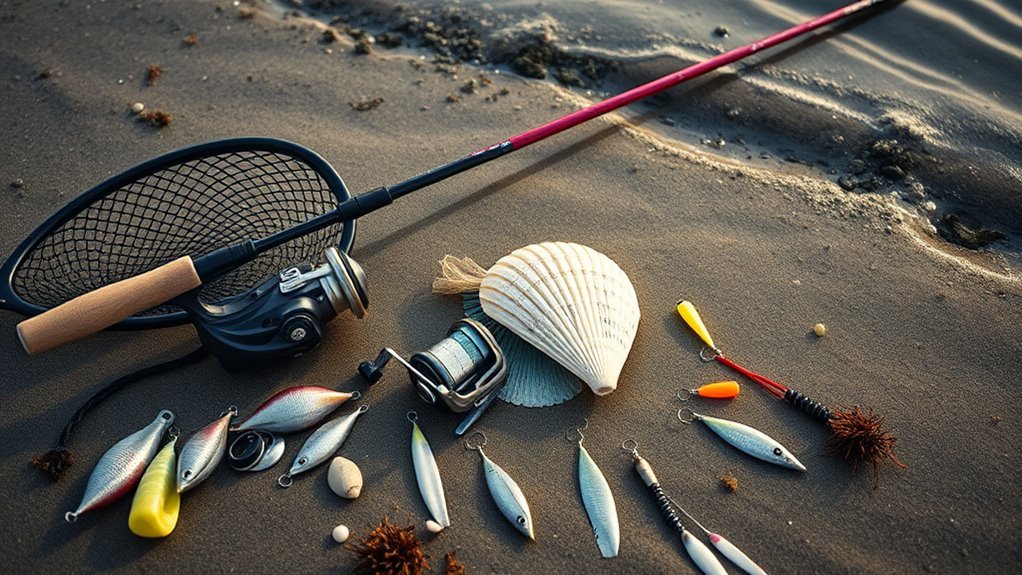
Flatfish fishing tackle works best when it matches the fish, seabed, and strength of the tide. Light rock fishing (LRF) equipment helps you feel small bites and work lures close to the bottom. However, a delicate LRF outfit and a heavier beach-fishing setup serve different purposes. Choosing between them is the first step toward catching plaice, flounder, and dab more consistently.
Quick Answer
For light flatfish fishing, start with a fast-action LRF rod rated around 1–8g, a 1000–3000 spinning reel, PE0.4 braid, and a 6–8lb fluorocarbon leader. Use small jig heads or dropshot rigs over clean ground. For heavier bait fishing, switch to a rod rated for the required lead and use a running ledger or Wessex rig.
Last checked: September 26, 2026. Key specifications and regulations were verified against official sources.
Key Takeaways
- LRF tackle suits small lures and sheltered water; heavier beach leads need a suitably rated rod.
- Plaice favour clean sandy ground, while flounder also use muddy estuary margins.
- Keep the bait near the seabed and adjust lead weight to the current.
- A slow retrieve can help locate fish when a stationary presentation produces no bites.
Choose Flatfish Fishing Tackle for LRF
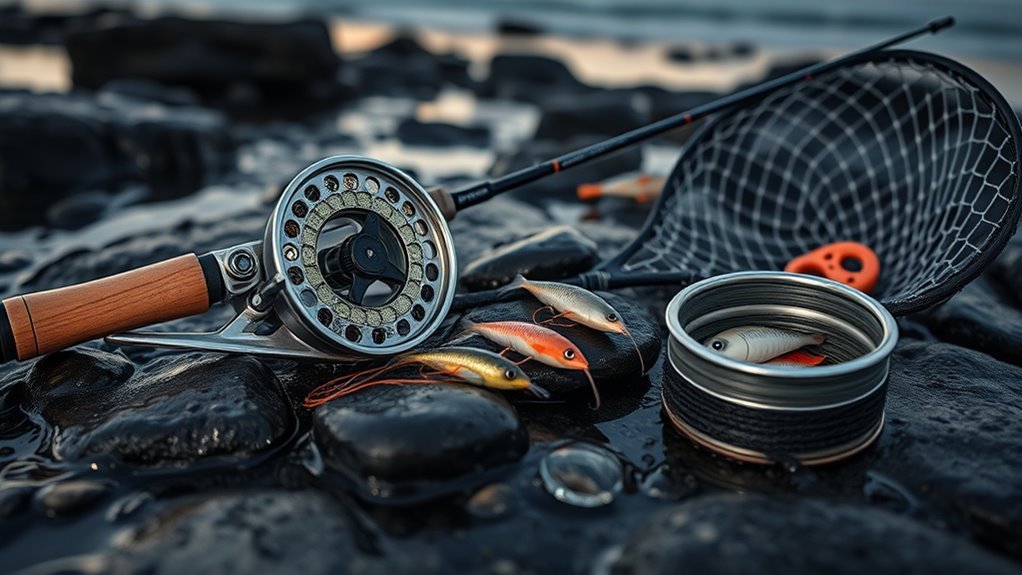
Light rock fishing uses small lures and sensitive equipment to target fish around harbours, piers, and sheltered coastal ground. A rod rated around 1–8g is a practical starting point for small flatfish.
Pair it with a compact spinning reel and fine line. This combination helps you detect subtle takes, cast light lures, and maintain contact with the seabed.
A basic LRF outfit consists of:
- Rod: A light, fast-action blank rated around 1–8g.
- Reel: A balanced 1000–3000 spinning reel.
- Mainline: PE0.4 braid or 3–4lb fluorocarbon.
- Leader: Around 6–8lb fluorocarbon when using braid.
- Terminal tackle: Small hooks, jig heads, dropshot weights, and compact lures.
PE describes a braid’s diameter class rather than its breaking strain. Check the actual strength printed on the spool.
Fine line offers good sensitivity, but the full setup must suit the ground. Larger flounder, strong currents, and rough structure may require stronger tackle.
Do not use a light LRF rod to cast a heavy pyramid or gripper lead. Choose a beach or estuary rod rated for the complete casting weight when fishing heavier bait rigs.
Match Your Rod, Reel, and Line
The rod, reel, line, and leader should work as one system. A sensitive rod cannot perform properly if the reel is poorly balanced or the drag is set too tightly.
Start with the lure weight and fishing location. Then select a reel and line combination that supports that presentation.
Rod Power and Action
A light rod rated around 1–8g suits small soft plastics, artificial worms, and other delicate LRF presentations. Its responsive tip helps you feel faint bites and changes in bottom contact.
A fast-action blank bends mainly toward the tip. This provides direct feedback and helps you control small lures.
When selecting a rod:
- Check its printed casting-weight range.
- Choose enough backbone for the expected fish and fishing ground.
- Look for a responsive tip that shows subtle bites.
- Match the rod to your preferred soft plastics, worms, or small metal lures.
A balanced outfit also reduces fatigue during repeated casts.
For bait fishing with heavier leads, choose a separate rod capable of handling the total rig weight. The LRF casting range does not apply to every flatfish technique.
Reel Size and Drag
A 1000–3000 spinning reel suits many light flatfish setups. Smaller models balance delicate rods, while a larger reel may provide additional line capacity.
Choose a reel with a smooth drag that releases line without sudden jerks. This matters when a larger fish pulls against fine mainline.
Drag should be set according to the weakest practical part of your system. A reel capable of producing 6–8lb of maximum drag does not mean you should fish at that pressure.
For example, a 3–4lb fluorocarbon mainline needs a much lighter working drag than its stated breaking strength.
Check the drag before casting. It should release line under firm pressure rather than lock completely.
During the fight, keep the rod working and avoid forcing a fish upward with the reel alone.
Line Choice and Leader
PE0.4 braid provides direct bite transmission and helps you feel light contact with the seabed. Fluorocarbon offers a different approach when low visibility and a little extra stretch are useful.
For delicate presentations, 3–4lb fluorocarbon can serve as the mainline. When using braid, a 6–8lb fluorocarbon leader adds abrasion resistance near rocks, shells, and other structure.
Match the line system to these conditions:
- Use fine braid for sensitivity and light lure control.
- Connect a fluorocarbon leader with a suitable line-to-line knot.
- Check the leader for damage after contact with rough ground.
- Increase line and leader strength when targeting larger fish or fishing around snags.
The leader should be strong enough for the fishing ground without making the lure presentation unnecessarily stiff.
Always inspect knots and connections before fishing.
Build a Simple Flatfish Rig
A simple running ledger rig presents natural bait near the seabed while allowing line to pass through the lead attachment. It is useful for flounder, plaice, and other bottom-feeding fish.
The rig uses a running weight, a protective bead, a swivel, a hooklength, and a baited hook. Its weight and trace strength must match the rod and conditions.
To assemble a basic running ledger:
- Thread the mainline through a suitable running lead slider or lead attachment.
- Add a protective bead to prevent the slider from striking the knot.
- Tie a swivel to the end of the mainline.
- Attach a fluorocarbon or monofilament hooklength to the other side.
- Tie on a hook suited to your target species and bait.
- Attach the chosen lead and check that the line runs freely.
- Add fresh bait and lower or cast the rig onto suitable bottom.
A short 6-inch hooklength provides a compact presentation. However, longer traces can allow more natural movement over open sand.
Adjust hooklength to the conditions rather than treating one length as suitable everywhere.
Snap swivels allow quick changes to compatible leaders and lead attachments. Make sure every clip closes securely before casting.
A pyramid weight can help keep bait positioned on the seabed. If the current becomes too strong, a suitable grip lead may be needed with a heavier rod.
For a more visible presentation, place a small teaser above the main bait. Bucktail jigs and compact soft plastics can provide additional movement.
Fresh bay shrimp or ragworm can add scent when suitable bait is available locally.
For LRF lure fishing, use a different terminal setup: a small jig head or light dropshot rig within the rod’s casting rating.
These systems should not be confused with heavier beach rigs designed to cast substantial leads.
Choose Hooks, Leads, and Beads
Hooks, leads, and beads determine how your bait sits and moves near the bottom. Their size should reflect the target fish, bait, current, and rod rating.
For plaice, size 1–4 Aberdeen hooks are a useful starting point. Their long shanks help present worm baits.
Smaller hooks may suit dab and smaller flounder, while compact #4–#8 hooks can work with light dropshot presentations and suitable jig heads.
Consider these adjustments:
- Hooks: Match hook size to the bait and the fish’s mouth.
- Light dropshot leads: Use weights around 3.5–7g when conditions and rod rating permit.
- Pyramid leads: Use them when you need a bait to remain near a chosen area of bottom.
- Grip leads: Choose them for stronger current when extra holding power is needed.
- Floating beads: Add two or three when you want to lift bait slightly above bottom clutter.
- Snap swivels: Use secure connections for quick terminal-tackle changes.
HTO Dropshot leads are one example of weights used for light presentations.
Bright beads, sequins, and small spinner blades can provide visual attraction, particularly when targeting plaice.
However, too many additions make a rig harder to control and may increase tangles.
Floating beads can also help reduce crab interference by holding bait slightly above the seabed. Keep the bait within reach of bottom-feeding fish.
Use the Best Baits and Lures
Natural bait provides scent, while artificial lures let you cover water and imitate moving prey. Both methods can catch flatfish when the presentation stays close to the seabed.
Choose bait according to the target species, local food supply, and fishing conditions. Use smaller offerings for fish with smaller mouths.
Best Natural Baits
Fresh worms, shrimp, squid, and fish strips are practical options for flatfish. Their scent and movement help fish locate food along sandy or muddy ground.
Useful choices include:
- Bay shrimp: A scented bait option where locally available.
- Piling worms: Useful around structure and current breaks.
- Fresh fish strips: Durable bait that adds movement and scent.
- Squid: A firm bait that can be cut into narrow strips.
- Ragworm: A common choice for plaice and flounder.
- Lugworm: Another useful bait for bottom-fishing rigs.
Ragworm and lugworm can be used separately or combined to offer a different scent profile.
Keep bait compact enough for the hook. A large piece of bait on a small hook can make it harder to achieve a secure hookup.
For additional attraction, a soft-plastic teaser such as a Gulp grub can be positioned above the main bait.
A 5-inch Gulp grub is a larger offering and should be matched to the hook and rig. It is not automatically suitable for a delicate 1–8g LRF setup.
Top Flatfish Lures
Small worm imitations and soft plastics are useful when fishing for flatfish with light tackle. Work them slowly and maintain occasional contact with the seabed.
Several lure styles offer different presentations:
- Marukyu Isome worms: Artificial worm-shaped baits that suit delicate bottom presentations.
- HTO Leethal shads: Soft plastics that can be mounted on a suitable jig head.
- Small paddle-tail shads: Lures around 1–3 inches that imitate small fish.
- HTO Bug-Ga and Paddle Bugs: Options for shrimp-like or small-creature presentations.
- Mini metal lures and spoons: Useful for covering water and adding flash.
Choose a lure that matches the local prey. Natural colours can work in clear water, while brighter options may provide extra visibility when conditions change.
Start with a slow retrieve. Allow the lure to reach the bottom, then lift it gently and let it settle again.
Small paddle tails should move just above the seabed rather than racing through the upper water.
If you feel a tentative tap, avoid immediately pulling the lure away. Pause briefly and maintain contact before lifting into the fish.
Teaser and Scent Tricks
A teaser adds movement or colour near the main bait. Combined with a natural scent source, it can make a presentation easier for flatfish to locate.
Try these methods:
- Add a bright soft-plastic teaser above a bottom bait.
- Use nightcrawlers or fresh fish strips when suitable for the fishing location.
- Tip a bucktail jig with a small strip of fish for extra movement and scent.
- Use a quick-change leader system to adjust the presentation.
- Test Marukyu Isome worms or small paddle-tail shads when natural bait produces little response.
A floating bead can lift the bait slightly above the bottom. This may reduce interference from crabs and help the bait remain visible.
Keep the rig simple enough to cast and retrieve without tangling.
The best teaser is one that works with the target species and natural food supply, rather than one carrying the most decorations.
Fish the Best Tides and Bottoms
Flatfish often feed where tidal movement carries food across sandy or muddy ground. Rising water can be productive, especially as it begins covering shallow feeding areas after low tide.
For shore fishing, look for sandy beaches, muddy estuary margins, channels, and gentle drop-offs.
Pier corners and dock edges can also hold fish where moving water carries food past nearby bottom structure.
Use a local tide table to identify the fishing window. The Met Office explains how tide times and heights affect coastal conditions.
| Tide phase | Bottom type | Likely result |
|---|---|---|
| Rising tide | Sandy flats | Fish may move into newly covered feeding areas. |
| After low water | Muddy channels | Moving water can carry food along the channel. |
| Moderate tidal flow | Drop-offs | Food and fish may concentrate along depth changes. |
These are useful starting points, not guaranteed feeding periods. Wind, water clarity, season, and local fish movements can change the result.
On clean sand, move the rig slowly across fresh ground when stationary bait produces no bites.
Lift the rod gently, retrieve a short distance, and allow the bait to settle. Avoid dragging quickly enough to lift it far above the seabed.
With a lure, use a slow lift-and-drop retrieve or maintain a gentle swimming action near the bottom.
In UK waters, some plaice marks produce catches from February through September. However, that period should not be treated as a universal flatfish season.
Different species and locations have different seasonal patterns. Flounder can also provide worthwhile fishing during colder months.
If you intend to keep fish, identify the species correctly. The UK Marine Management Organisation’s minimum conservation reference sizes list plaice at 27cm and sole at 24cm in the relevant UK waters.
Additional local restrictions may apply, so confirm the rules for your fishing area before retaining a catch.
Stay Safe When Fishing Coastal Marks
Coastal fishing requires more than suitable tackle. Changing tides, slippery rocks, and exposed shorelines can make an otherwise productive location dangerous.
The RNLI’s angling safety guidance recommends appropriate lifejackets and preparation before fishing.
Warning: Never allow the rising tide to cut off your route back to shore. Wear a suitable lifejacket when fishing from rocks or exposed coastal locations, and avoid fishing alone. If you become stranded in the UK, call 999 and ask for the Coastguard rather than attempting to cross dangerous water.
Carry suitable footwear, a means of communication, and the equipment needed to handle fish safely.
Use a landing net when necessary, and avoid lifting a larger fish by the line alone.
Frequently Asked Questions
What Is the Best Rig for Catching Flatfish?
A running ledger or Wessex rig is a useful choice for flatfish. The running ledger presents bait naturally near the bottom, while the Wessex rig offers an upper and lower bait. Use a suitable lead, size 1–4 Aberdeen hooks for plaice, and optional floating beads. Match the rig’s total weight to your rod.
What Are the Best Lures for Flatfish Fishing?
Small worm imitations, paddle-tail shads, creature baits, and mini metal lures are effective flatfish options. Marukyu Isome worms, HTO Leethal shads, Bug-Ga, and Paddle Bugs offer different presentations. Match lure size and colour to local prey, then retrieve slowly near the seabed. A gentle lift-and-drop action can help trigger bites.
Does WD-40 Attract Catfish?
There is no reliable evidence that WD-40 improves catfish catches. Although anglers have shared anecdotal stories, the manufacturer states that the product does not contain fish oil and does not recommend using it as a fish attractant. The WD-40 manufacturer’s guidance explains this distinction. Choose purpose-made fishing scents or natural bait instead.
How Deep Do FlatFish Lures Dive?
The depth depends on the specific lure model and fishing setup. The branded Yakima Bait FlatFish T-4 has a listed trolling depth of 4 feet, while the F-7 and X-4 are listed at 2 feet. These are specifications for the named plugs, not all flatfish lures. Line, speed, and added weight affect actual running depth. Check the manufacturer’s FlatFish specifications for the model you use.
Conclusion
Effective flatfish fishing starts with tackle that suits the presentation and fishing ground. A sensitive LRF rod, fine line, and compact lure work well in sheltered conditions, while heavier bait rigs need appropriately rated equipment. Keep your bait close to the seabed, adjust to the tide, and use a controlled retrieve. The right combination makes subtle bites easier to detect and hooked fish easier to land.
Sources
- Marine Management Organisation: Official UK minimum conservation reference sizes for plaice and other sea fish.
- Met Office: Tide times, tidal ranges, and coastal safety.
- RNLI: Safety guidance for coastal and rock anglers.
- WD-40 Company: Manufacturer information about the fish-oil myth and using WD-40 as a fishing attractant.
- Yakima Bait: Official FlatFish F-7, X-4, and T-4 product specifications and trolling depths.
