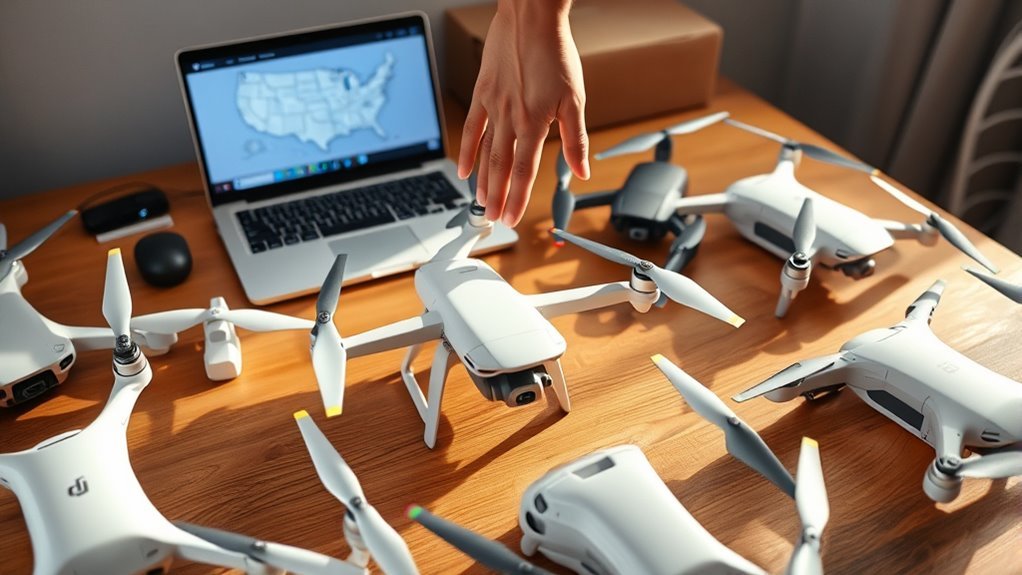
In 2026, DJI’s U.S. lineup is narrowing fast. Reports indicate only the Mavic 4 Pro and Mini 5 Pro remain available for purchase, while newer models are blocked from entry under FCC Covered List restrictions tied to national security concerns. Existing drones can still be flown under FAA rules, but supply, repairs, and parts are becoming less certain. That shift is changing what buyers, and current owners, need to weigh next.
DJI Drones Still Available in the US
A limited number of DJI drones remain available in the U.S. in 2026, including existing models such as the Mavic 4 Pro and Mini 5 Pro.
These existing DJI units can still be found through authorized retailers and secondhand marketplaces, though inventory is expected to tighten.
These existing DJI units can still be found through authorized retailers and secondhand marketplaces, though inventory is expected to tighten.
The FCC Covered List has blocked new imports that need approval, so future models and many accessories are not entering the market.
As a result, availability depends on remaining supply chain stock rather than fresh shipments.
For users seeking practical freedom, current models still matter because they can be operated legally under FAA rules.
There is no ban on flying these drones once owned, and owners may continue using them without new restrictions.
However, buyers should expect fewer choices over time as existing stock is sold through and replacement options stay blocked.
[Amazon Products Picked for You]

No Registration Needed - Under 249 g, this drone with camera for adults 4K does not require FAA registration or Remote ID for recreational use. Visit the FAA's official website for requirements related to drone registration and Remote ID. [1]

【1/2" 48MP CMOS & 3-Axis Gimbal】Equipped with a premium 1/2" 48MP CMOS sensor, this drone captures superior light and detail for stunning 8K photos and 4K/30fps video. The 3-axis brushless gimbal and EIS technology ensure ultra-smooth cinematic footage.

【No FAA Registration | Under 249g Ultra-Portable】Featuring a sleek black body with orange-black propellers, Hassle-free flight for villa yard tours, retirement trips, farm patrols, and small-town explorations with no tedious registration.
DJI Drones Blocked in the US
Although some DJI models remain on sale in the U.S., new DJI drones are blocked from entering the market in 2026 because the company has been added to the FCC’s Covered List, which restricts new product authorizations on national security grounds. These DJI drones banned measures leave current DJI owners with usable equipment, but future releases face restrictions affecting sales and certification. The Mavic 4 Pro and other existing DJI drones may still be bought if already authorized.
| Item | Status |
|---|---|
| Mavic 4 Pro | Available |
| Mini 5 Pro | Available |
| New DJI drones | Blocked |
| Accessories needing FCC approval | Blocked |
A national security agency-led review has narrowed market choice, and legal challenges may follow as consumers push back. Existing DJI drones can still fly legally, yet parts and service could become harder to obtain.
Why New DJI Models Are Blocked
New DJI models are blocked because the FCC has placed the company on its Covered List, citing unresolved national security concerns and incomplete audits required under the NDAA.
That status has halted new FCC authorizations, preventing fresh model certifications for the U.S. market.
As a result, import and approval limits now restrict the entry of new DJI drones, even though existing models remain legal to use.
FCC Covered List Trigger
The FCC added DJI to its Covered List on December 23, 2025, citing national security concerns and effectively blocking new product authorizations for future DJI models. Under the National Defense Authorization Act, a required security review was not completed on time, and that lapse cut off market access for New DJI drones. Existing drones remain legal to operate and purchase, but the path for new models is blocked, with parts and updates facing tighter scrutiny.
| Item | Status | Effect |
|---|---|---|
| FCC Covered List | Active | New certifications denied |
| DJI security review | Unfinished | Authorization risk increased |
| Existing drones | Allowed | Current owners retain use |
This action may block up to 25 launches in 2026, narrowing choice while preserving current devices.
New Model Authorization Halt
Because the FCC’s Covered List bars new product authorizations, DJI cannot bring new drones to the U.S. market in 2026 without FCC approval.
The Drone Ban, rooted in the National Defense Authorization Act, blocks FCC authorization for new models on national security and public safety grounds.
Existing users may still fly and buy approved DJI drones such as the Mavic 4 Pro and Mini 5 Pro, but no fresh lineup can enter the market.
That means DJI drones already cleared remain available, while new models are stalled by regulatory changes.
The halt also limits DJI’s ability to launch dozens of products and has caused major financial losses.
Legal challenges continue, with DJI arguing that the agency has not identified specific threats tied to its products.
Import And Certification Limits
Import and certification barriers are the main reason fresh DJI drones remain absent from the U.S. market in 2026.
DJI drones placed on the FCC Covered List cannot receive new product approvals, and without FCC authorization they cannot be imported legally for sale.
The block reflects unresolved national security review requirements under the NDAA, which were not completed by the deadline.
As a result, new products like future DJI drones are effectively shut out of the US market.
Existing models, including the Mavic 4 Pro and Mini 5 Pro, remain lawful because they already hold approval.
That keeps some access open, but it also creates supply scarcity.
Demand shifts toward approved stock, and retail prices for existing models may rise as new releases stay locked out.
What Current DJI Owners Can Do
Current DJI owners can keep flying their existing drones legally under FAA rules, with no immediate restrictions on use. For current DJI owners, the practical path is preparation: maintain DJI drones already in hand, and consider stockpiling accessories such as batteries, propellers, and ND filters before supply tightens.
Although import restrictions affect new models, some older units like the Mavic 4 Pro and Mini 5 Pro may still appear for sale, but availability is uneven. Existing aircraft should continue receiving firmware updates until January 1, 2029, which supports safety, functionality, and security.
Still, owners should watch policy changes closely. Political shifts could bring future limitations on parts, repair access, or service channels. Under FAA regulations, the core right to fly remains intact, but independence depends on planning ahead.
Those who value operational freedom may find it wise to secure essentials now, update devices promptly, and avoid reliance on uncertain future supply chains.
Where to Buy DJI Drones Legally
In 2026, legal DJI purchases in the United States are mainly limited to authorized retailers such as Amazon and Best Buy, which continue to sell current inventory like the Mavic 4 Pro and Mini 5 Pro.
Used and refurbished units may also appear on secondhand marketplaces, while international mail-order imports remain another path, though support and warranty coverage can be uncertain.
New DJI models requiring FCC authorization are blocked from the U.S. market under the FCC’s Covered List, restricting direct legal sale.
[Amazon Products Picked for You]
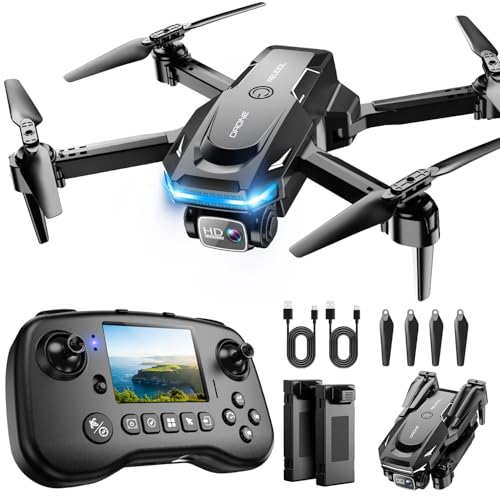
The PK01 drone's remote comes with a super handy built-in screen—no phone needed—so you can watch live HD footage and check flight stats right in your hands. (An SD card is required to save images and videos; not included) Powered by tough brushless motors, this little flyer is strong, smooth, and built to last. With one-key takeoff/landing, headless mode, and even 360° flips, you’ll look like a pro in no time. Ready for takeoff?🤩

【2K Ultra HD Camera】Loiley drone features a high-quality 2K HD camera with a 90° remote adjustable angle, allowing you to capture breathtaking photos and ultra-clear videos from the sky. Whether it's a scenic landscape or a special family moment, this drone helps you preserve every beautiful memory with precision. Simply connect your smartphone to the drone’s camera to enjoy a real-time panoramic view, and easily share your adventures directly to social media with just a tap

【Ultimate Fusion: 4K HD Camera, Image Stabilization, and FPV】This drone with camera features a 130° wide-angle 4K lens and 90° adjustable view, ensuring every moment is captured in high definition. With smooth FPV transmission, it’s ideal for drones for kids and adults, providing an immersive flight experience.
Authorized Retailers
Where can buyers still find DJI drones legally in the U.S. in 2026? Mainly through authorized retailers such as Amazon, Best Buy, and specialty drone shops that still hold current stock.
Existing DJI models, including the Mavic 4 Pro and Mini 5 Pro, remain available where inventory persists, but FCC authorization blocks new DJI drones from entering normal U.S. retail channels.
As supply chain issues continue, availability is likely to narrow, especially for accessories and higher-demand units.
For those seeking more freedom in acquisition, secondhand marketplaces may offer previously authorized DJI drones, though warranty and support can be limited.
Some buyers also consider importing DJI drones, but that falls outside standard domestic retail access and reflects a shrinking market for official sales.
Legal Purchase Paths
Despite the limits on new DJI imports, legal purchase paths still exist in the U.S. in 2026 for buyers seeking approved models such as the Mavic 4 Pro and Mini 5 Pro.
DJI drones already in the market remain available through authorized retailers, including Amazon and Best Buy, when stock lasts. These existing DJI models were previously approved and can still be sold under FCC regulations.
Secondhand marketplaces also offer a legal purchase route, since resale is not the same as importing new inventory.
Some buyers may consider import options through mail order from authorized sellers outside the U.S., but that path can create warranty and compliance risks.
Verification matters: every drone should match FCC regulations before purchase.
Should You Buy a DJI Drone in 2026?
A DJI drone can still be a sensible purchase in 2026 for buyers who want access to the company’s proven camera systems and are willing to accept growing uncertainty.
DJI drones remain attractive because existing models such as the Mavic 4 Pro and Mini 5 Pro can still be bought, even as FCC restrictions block new authorizations.
Anyone who plans to buy a DJI drone should weigh support and warranty limits, since future availability is less predictable.
The decision is strongest for users whose long-term needs are best met by DJI’s mature ecosystem, rather than by alternatives to DJI like Skydio or Autel Robotics, which may offer less depth.
The risk is that parts, repairs, and updates could tighten over time.
For buyers committed to current hardware, stockpiling accessories may reduce later shortages.
In short, purchase only if the present value outweighs the uncertainty ahead, and if the drone is needed now rather than sometime later.
How the Ban Affects Repairs and Parts
The larger concern for DJI owners in 2026 is not just whether a drone can be bought, but whether it can be kept flying. Existing DJI drones can still receive repairs and maintenance, and the ban does not stop legal operation. Yet the real pressure falls on parts and support.
| Item | Near term | Later |
|---|---|---|
| DJI drones | Usable | Still legal |
| Repairs | Available | Harder to arrange |
| Parts | Selective | Scarcer |
As the supply chain tightens, replacement parts for models like the Mavic 4 Pro and Mini 5 Pro may dwindle. Authorized service may remain, but access can become slower and less certain as the market shifts away from new DJI products. Owners seeking freedom from disruption should stockpile essential accessories now, especially batteries and ND filters, before shortages deepen. Existing DJI users who plan ahead may preserve maintenance options longer than those who wait.
DJI Alternatives Worth Considering
Several DJI alternatives deserve attention in 2026, especially for buyers seeking continuity amid supply and support uncertainty.
Autel Robotics remains prominent, with competitive models such as the EVO Nano+, EVO Lite+, and EVO II Pro V3, offering advanced features for both recreational and commercial applications.
Skydio stands out for American-made platforms like the X10 and X10D, whose AI obstacle avoidance and Blue UAS alignment appeal to public-safety and enterprise users.
Parrot’s ANAFI USA adds another option, combining a 32x zoom camera with inspection and surveillance utility.
For stricter compliance needs, Freefly’s Astro Prime and Inspired Flight’s IF800 Tomcat and IF1200A are vetted choices built for specific missions.
A practical drone buyer’s guide should compare payload, endurance, software, and service.
These competitive models expand freedom of choice, but none yet match DJI’s ecosystem breadth or feature depth, so switching platforms calls for careful mission-based evaluation.
[Amazon Products Picked for You]

Screen Controller, No Phone Needed: This drone comes with a 4.5-inch remote controller with a built-in screen, making connection simple and convenient. No smartphone connection or app download is required, allowing you to fly and view real-time footage directly on the controller. Without distractions from incoming calls, messages, or notifications, you can enjoy an immersive flying experience. The all-in-one design also reduces reliance on mobile devices.

【Drone with Camera】Equipped with GPS drone FPV HD camera and a 90° electrically adjustable lensy, this drone for adults capture stunning aerial photos and videos from virtually any angle. Whether you're flying over forests, beaches, mountains, or cityscapes, it delivers breathtaking views and immersive experiences—helping creators preserve unforgettable moments and bring their vision to life.

【GPS Technology Safety and Reliability】GPS Drones are equipped with advanced flight control systems and GPS technology to ensure stable and secure flights. Return-to-Home functionality provides added peace of mind, bringing the drone back to its takeoff point or landing safely in case of signal loss or low battery. The GPS Follow and Circle Fly modes are fantastic additions, making it perfect for capturing panoramic shots and tracking movement.
How the DJI Ban Changes Drone Buying in 2026
In 2026, DJI’s U.S. market has shifted from routine consumer choice to a constrained buying decision, because new DJI drones are blocked from sale under FCC Covered List restrictions tied to national security concerns.
The DJI ban means recent releases cannot gain FCC authorization, so drone buying now centers on existing models already approved, including the Mavic 4 Pro and Mini 5 Pro. Those products remain legal to buy, but supply chain issues may reduce retail stock over time.
Buyers seeking freedom from uncertainty may choose sooner rather than later if DJI gear is still preferred. The risk profile has also changed: warranty support, parts, and long-term service may weaken as availability tightens.
That reality pushes many pilots toward alternative drone options from U.S.-approved brands such as Skydio and Autel. Yet DJI drones still offer a broader ecosystem and familiar feature set, so each purchase now demands a careful tradeoff between access, support, and independence.
Frequently Asked Questions
What Drone to Buy if DJI Is Banned?
Alternative drones such as Autel EVO Nano+ or EVO II Pro V3, Skydio X10, and Parrot Anafi USA are sensible choices.
A features comparison should weigh camera quality, battery life, and flight regulations alongside price considerations.
User reviews often favor brand reliability and support options, especially for creators seeking liberation from DJI dependence.
For buyers needing used gear, refurbished models may still offer strong value and proven performance.
Can I Still Fly My DJI Drone in the US After a Ban?
Yes—existing DJI drones can still be flown in the U.S. after a ban, as long as FAA drone regulations and local flight restrictions are followed.
For example, a photographer with a Mavic 4 Pro could keep flying legally while exploring repair options, community support, and software updates.
The legal implications affect new sales, not current owners.
Safety measures remain essential, though some may consider alternative brands based on user experiences.
Can DJI Drones Still Be Purchased in the USA?
Yes, some DJI drones can still be purchased in the USA, though DJI models availability depends on US drone regulations and retailer stock.
Existing FCC-approved units may remain on sale, while newer releases face limits.
Consumer preferences often shift toward alternative brands, based on drone features comparison, price considerations, resale market trends, user experience reviews, and future technology trends.
This is especially true as buyers seek flexible, accessible options with greater autonomy.
Which DJI Drones Are Banned in the US?
DJI’s future U.S. drone launches are blocked, with up to 25 models affected, while existing units remain legal.
The ban targets new DJI drone regulations tied to security concerns and FCC approval, not current product specifications like the Mavic 4 Pro.
Law enforcement and federal buyers face tighter limits.
Market alternatives grow as consumer preferences shift, yet user communities still follow tech innovations and future implications closely.
Conclusion
In 2026, the U.S. DJI market is unusually limited: only the Mavic 4 Pro and Mini 5 Pro remain available to buy new, while newer models are blocked under FCC Covered List rules. That matters because DJI still dominates consumer drones worldwide, making the restricted U.S. lineup notable. For buyers, the key question is no longer which DJI model to choose, but whether to buy now, repair existing gear, or switch to an alternative brand.
