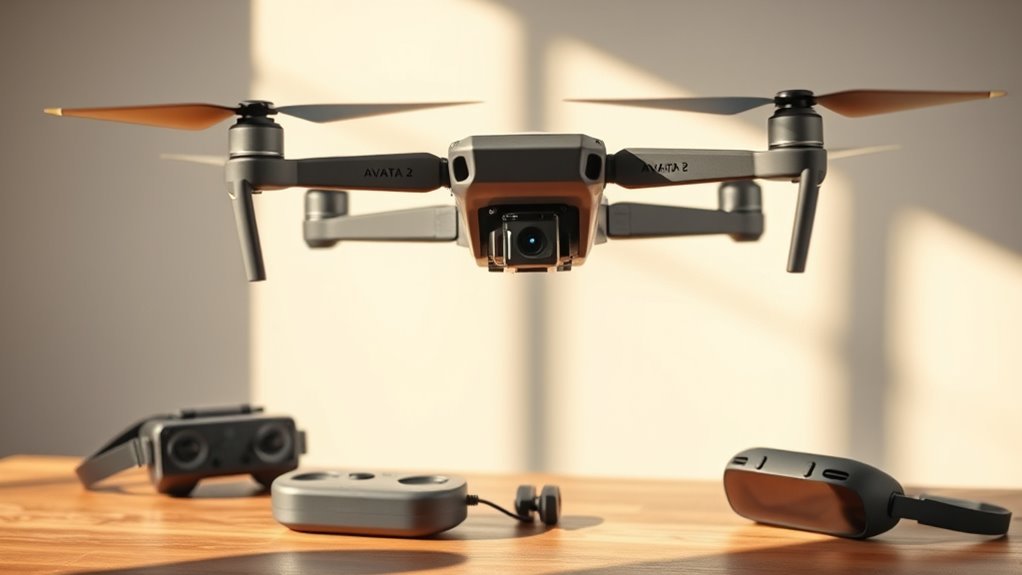
The DJI Avata 2 is a compact FPV cinewhoop built for controlled, close-range flying with a 1/1.3-inch CMOS sensor, 4K/60fps video, and integrated propeller guards. It pairs with DJI Goggles 3 for low-latency first-person viewing, and it works with either the RC Motion 3 or FPV Remote Controller 3. Flight time reaches about 23 minutes, but the practical limits depend on setup and conditions. The details change the purchase decision.
What Is the DJI Avata 2?
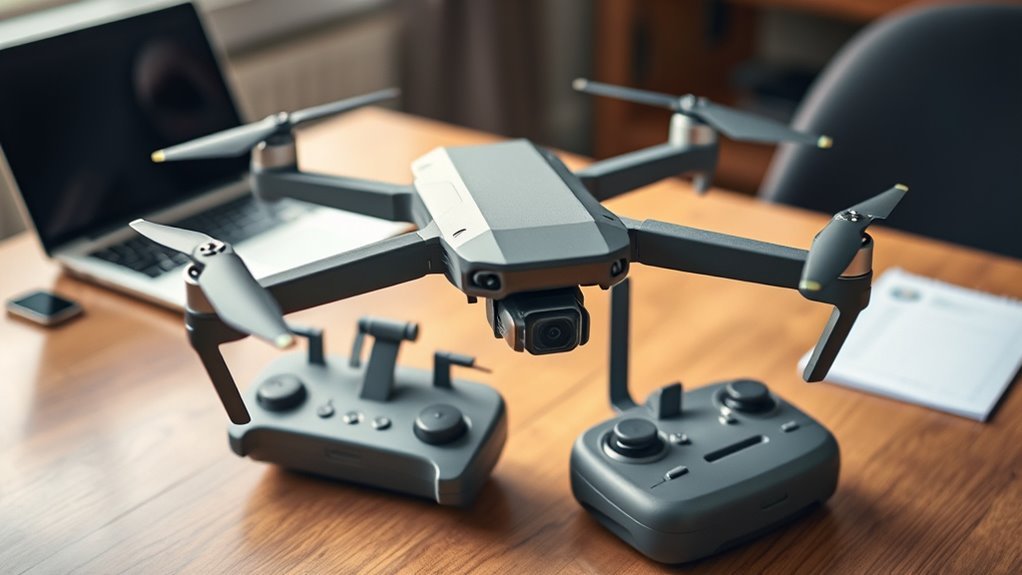
The DJI Avata 2 is a specialized Cinewhoop drone built for both professional and hobbyist pilots who want an immersive FPV flying experience. It combines a compact airframe with integrated propeller guards, giving pilots greater freedom to fly closer to subjects and through tighter spaces with reduced exposure to damage.
Compact yet capable, the DJI Avata 2 delivers immersive FPV flight with integrated propeller guards for tighter, safer maneuvering.
A 1/1.3-inch CMOS sensor supports 4K video capture at 60 frames per second, improving low-light detail and dynamic range for cinematic results. Its O4 Video Transmission system delivers a stable live feed and extended control range, supporting confident high-speed flight.
The flight time is approximately 23 minutes, allowing more sustained aerial sessions before landing. When paired with DJI Goggles 3 and the RC Motion 3 controller, the DJI Avata 2 offers a responsive, intuitive control setup that lowers entry barriers while preserving precision.
It is engineered to support liberated, expressive flight.
DJI Avata 2 Specs Buyers Should Know
Specs matter most when evaluating how the DJI Avata 2 performs in real use, and several stand out immediately.
The DJI Avata FPV drone uses a 1/1.3-inch CMOS sensor that records 4K video at 60fps and 2.7K at 120fps, giving buyers a practical balance of detail and slow-motion flexibility. Its flight time reaches about 23 minutes under ideal conditions, while effective range extends to 13 km in open air.
The O4 transmission system supports a 20 km link and a stable 1080p live feed at 100fps with 24 ms latency, which supports responsive, immersive flight. Built-in propeller guards reinforce safety features and make close-quarters flying more accessible indoors.
Storage is also well considered: 46 GB of internal storage is included, with microSD support up to 512 GB for larger recording needs. Paired with the motion controller, these specifications give the Avata 2 clear operational value.
What the DJI Goggles 3 Add
DJI Goggles 3 add the immersive visual interface that makes the Avata 2’s FPV system feel immediate and controlled.
The DJI Goggles 3 use twin Full HD OLED panels to create a high-resolution immersive viewing experience, letting the pilot read terrain, horizon, and framing with precision.
O4 video transmission delivers a 1080p responsive live feed at up to 100 fps and 24 ms latency, preserving timing and spatial awareness during flight.
Their lightweight design and adjustable fit support comfort over longer sessions, reducing fatigue while maintaining secure placement.
Integrated head tracking capabilities let the camera follow natural head movement, adding intuitive control without complicating the flight interface.
Built specifically for the DJI Avata 2, they provide seamless compatibility and stable performance.
For pilots seeking freedom through accurate perception, the goggles transform the cockpit into a clear, responsive window and contribute directly to an enhanced flying experience.
RC Motion 3 Vs FPV Remote Controller 3
Which controller suits the Avata 2 depends largely on pilot experience and preferred flight style.
The RC Motion 3 uses a one-handed design with tilt and button inputs, enabling intuitive maneuvering and a user-friendly path into DJI Avata 2 operation. Paired with DJI Goggles 3, it supports immersive flying experiences and lowers the barrier for pilots seeking freedom without mastering a full stick interface.
The FPV Remote Controller 3 follows a conventional dual-stick layout, delivering finer axis separation and tighter command authority for advanced FPV flight. It is better aligned with experienced users who want to exploit complex flight modes and more exact attitude control.
Both controllers work with the DJI Avata 2, yet the decision is best made by skill level and flight preference. RC Motion 3 favors simplicity and flow; FPV Remote Controller 3 favors precision, depth, and broader control expression.
DJI Avata 2 Flight Time and Range
Under ideal conditions, the DJI Avata 2 delivers a maximum flight time of about 23 minutes, though real-world use typically reduces that to roughly 15 to 20 minutes depending on wind, speed, and maneuvering demands.
In practical use, flight time is shaped by chosen pace: Normal mode at 8 m/s conserves energy, Sport mode at 16 m/s increases responsiveness, and Manual mode, reaching up to 27 m/s, consumes power fastest.
The drone’s maximum flight distance is rated at 13 km under FCC conditions, but real-world scenarios often limit range to 1.5 km to 13 km because of signal interference.
Its O4 video transmission supports a stable live feed and extends transmission range to 20 km, improving situational awareness.
Meanwhile, downward positioning sensors help maintain stable hovering and precise navigation, supporting controlled movement when the aircraft is kept within safe limits.
Why the Avata 2 Works Indoors
Because of its cinewhoop design and integrated propeller guards, the DJI Avata 2 is well suited to indoor flight, where close proximity to walls, furniture, and other obstacles increases the risk of contact. Its downward positioning sensors support stable flight in indoor environments, helping the aircraft hold altitude and track accurately when GPS is unavailable.
- The rugged frame absorbs minor impacts and supports safer obstacle avoidance.
- The lightweight frame improves agility and maneuverability in narrow corridors.
- Normal mode prioritizes control, making motion predictable for indoor shooting.
These traits give pilots a freer operating envelope without sacrificing precision. The ducted layout reduces exposure to spinning propellers, while the compact form factor allows confident movement through tight spaces.
In practice, the Avata 2 favors smooth, deliberate control over aggressive speed, which is exactly what confined interiors demand. For creators working inside homes, studios, or other structured spaces, it delivers a practical balance of resilience, stability, and expressive FPV motion.
Which DJI Avata 2 Combo Should You Buy?
For most creators, the DJI Avata 2 Fly More Combo is the stronger choice, as it includes three batteries for extended shooting time, a Two-Way Charging Hub for more efficient power management, and practical extras such as ND filters and spare propellers.
The DJI Avata 2 gains clear advantages here: each battery delivers about 23 minutes of flight time, making the Fly More Combo better suited to repeated takes and uninterrupted field work.
For users seeking an immersive FPV experience, the Fly Smart Combo adds DJI Goggles 3 and RC Motion 3, which provide more direct control and visual engagement.
That package is more appropriate when the priority is the full cockpit-style setup.
The decision should track filming needs and budget. Frequent flyers benefit most from the three-battery configuration, while casual users may find a single-battery kit sufficient.
In practice, the Fly More Combo favors freedom through endurance, while the Smart Combo emphasizes immediate immersion.
Frequently Asked Questions
How Much Flight Time Does the DJI Avata 2 Have?
The DJI Avata 2 has about 23 minutes of maximum flight time, while real world scenarios usually yield 15 to 20 minutes.
Avata battery life varies with drone performance factors, flight mode variations, wind, and maneuvering.
Flight duration comparison shows strong efficiency for its 2150 mAh pack.
Battery optimization techniques and FPV experience tips support safer use.
User feedback insights note charging efficiency, environmental impact, and safety considerations during freer flight.
Why Was DJI FPV Discontinued?
DJI FPV was discontinued because market trends and product evolution aligned by coincidence: the model no longer matched user experiences, drone regulations, or the FPV community’s demand for safer, more versatile systems.
In DJI history, customer feedback favored improved tech comparisons, longer flight times, and stronger video links. Its industry impact faded as future predictions pointed toward Avata-style platforms, where liberation comes through better control, indoor safety, and broader creative access.
Can FAA Know You Flew a DJI Drone?
Yes—the FAA can know a DJI drone was flown through remote identification, FAA registration records, and, in some cases, flight logs.
Drone regulations require compliance with airspace restrictions and safety guidelines, and operator responsibilities include carrying proper drone insurance where applicable.
Reporting incidents may expose activity further. Violation penalties can follow unauthorized flights.
With liberation in mind, lawful operation still preserves autonomy by respecting transparent rules and local requirements.
Is DJI FPV Faster Than Avata 2?
Yes—the DJI FPV is faster than the Avata 2, making it more suited to FPV racing and aggressive flight modes.
Its higher top speed demands greater pilot skills, while the Avata 2 prioritizes drone stability, camera quality, and safety features.
Battery capacity, controller options, firmware updates, and maintenance tips matter on both platforms, but the FPV’s speed advantage remains clear for those seeking liberated, high-energy aerial performance.
Conclusion
To conclude, the DJI Avata 2 emerges as a finely tuned cinewhoop that balances portability, safety, and FPV performance with rare composure. Its 4K imaging, Goggles 3 integration, and choice between motion or traditional control make it adaptable to different flying styles. Like a modern echo of the fixed-wing pioneers’ pursuit of perspective, it offers immersive flight without sacrificing practicality. For pilots weighing capability against convenience, the Avata 2 is a compelling, well-rounded entry point.
