When recovering a lost drone, start with the last reliable information you have: the flight log, map view, controller screen, and the drone’s last known GPS coordinates. A calm, step-by-step search gives you the best chance of finding it, whether the cause was GPS signal loss, low battery, wind drift, obstacle impact, or pilot error.
Quick Answer
To find a lost drone, check the last known GPS point in your flight app, save the coordinates, and search outward in a careful pattern. Look near trees, rooftops, tall grass, water edges, and obstacles. Use the drone’s lights, beeper, controller map, Return-to-Home data, another drone, or local community help when needed.
Key Takeaways
- Start with the flight log, last GPS coordinates, altitude, battery status, and Return-to-Home path.
- Search the last known location first, then widen the search using a grid or spiral pattern.
- Check trees, roofs, brush, fences, water edges, and downwind areas before expanding too far.
- Use lights, sound, binoculars, another drone, RF trackers, or community posts to improve recovery odds.
- Prevent future losses with pre-flight checks, firmware updates, registration details, and a tracker or label.
At a Glance
| Time Required | 15 minutes to several hours, depending on terrain, battery status, and visibility |
| Difficulty | Easy to moderate for open areas; difficult in woods, water, roofs, or tall vegetation |
| Tools Needed | Flight app, controller, phone, map, flashlight, binoculars, spare drone, gloves, and optional RF or Bluetooth tracker |
| Cost | Usually free if you use the flight app and manual search; optional trackers or recovery gear add cost |
Understanding Why Drones Get Lost
When drones lose their way, it often comes from a mix of technical malfunctions, environmental challenges, and human decisions. Understanding the likely cause helps you choose the right recovery strategy.
One common reason for drone loss is GPS location failure. Signal interference, poor satellite lock, compass errors, nearby metal structures, or flying in a tight urban area can reduce location accuracy. When your drone loses reliable positioning, it may drift, hover, land, or follow an unexpected path.
Battery failure can also lead to a missing drone. A low battery, damaged battery, cold battery, or incorrect battery reading may cause the drone to land before it reaches home. In some cases, the drone may auto-land where it is instead of returning to the takeoff point.
User error also plays a major role. Flying too far, ignoring wind, launching without a home point, flying behind obstacles, or exceeding your comfort level can all increase the chance of loss.
Environmental factors matter too. Strong winds, trees, power lines, buildings, hills, birds, rain, dust, and glare can disrupt stability or block your view. A drone may also crash after clipping a small branch that was hard to see from the ground.
Understanding these reasons for drone loss helps you mitigate risks, narrow the search zone, and improve your flying habits before your next flight.
Warning: Never enter private property, restricted areas, roads, rail lines, water, rooftops, or unsafe terrain without permission and proper safety precautions. Recovering the drone is not worth risking injury or violating local rules.
Determining the General Location of the Lost Drone
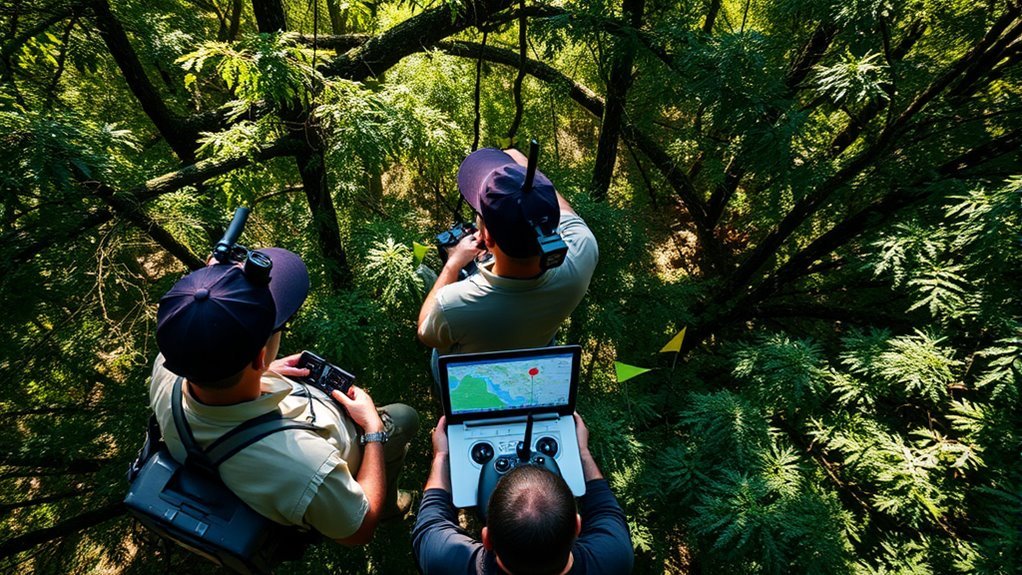
How can you effectively determine the general location of a lost drone? Start by reviewing the flight logs for the last GPS coordinates. This data shows where the drone was last recorded and gives you the best starting point.
Open your drone app and look for the map, flight record, aircraft location, or “find my drone” feature. Save a screenshot of the map, write down the coordinates, and note the final altitude, direction of travel, battery level, and distance from the controller.
If you’re still connected to the controller, you might receive real-time updates on the drone’s current status and location. Do not close the app too quickly. Keep the controller powered on, keep the phone screen active, and check whether the drone still sends telemetry.
Use the most recent flight data, such as altitude and distance traveled, to narrow down the search area. A drone that was high and moving with the wind may land farther from the last point than a drone that was low, hovering, or already descending.
Focus your efforts on the last known location, as this is where your drone is most likely to be found based on its flight path. Incorporate any telemetry information available to create a targeted search strategy.
Check Your Flight App First
Before walking into the search area, review every location feature your drone app provides. Many drone apps store a flight path, home point, last aircraft position, and final signal point. These details can save a lot of time.
- Check the last recorded GPS pin on the map.
- Review the full flight path, not only the last point.
- Look for final altitude, speed, and direction.
- Confirm whether the drone was returning home, landing, hovering, or drifting.
- Take screenshots before the phone battery dies or the app refreshes.
If the app shows a “find my drone” or aircraft locator option, use it before you begin a wide search. The final pin may not be perfect, but it usually gives you a better start than guessing.
Steps to Find a Lost Drone
To effectively find your lost drone, start by checking the last known GPS coordinates from the flight logs, as this serves as your initial reference point.
If the drone is unresponsive, systematically search the last known location using these coordinates, then gradually expand your search area. Stay calm and methodical so you do not overlook small clues.
Use the Return-to-Home (RTH) function if it is still available and safe to trigger. It can guide the drone back to its takeoff point automatically when the drone has enough battery, a stable signal, and a recorded home point.
Employ visual aids, such as binoculars or a telescope, to scan for your drone from a distance, especially in open fields, trees, hillsides, and rooftops.
Also, collaborating with friends or local community groups can greatly improve your search efforts. A small team can cover more ground, watch different angles, and check hard-to-see spots faster.
Use a Systematic Search Pattern
A random search can waste time and energy. Use a clear pattern so every section gets checked once. Start at the last known point, then expand outward.
- Grid search: Divide the area into small sections and search one section at a time.
- Spiral search: Start at the last known GPS point and move outward in larger circles.
- Line search: Have several people walk parallel lines across a field or open area.
- Downwind search: Check the area in the direction the wind was blowing during the flight.
Mark searched areas on your phone map or with simple notes. This prevents you from checking the same ground again while missing nearby spots.
Pro Tip: Search above eye level as much as you search the ground. Lost drones often end up in tree branches, gutters, roofs, fences, tall grass, shrubs, or utility structures.
Indoor and Outdoor Drone Search Strategies

While searching for a lost drone presents unique challenges indoors and outdoors, using targeted strategies can greatly improve your recovery efforts.
Searching for a lost drone can be challenging, but using specific strategies enhances your chances of successful recovery.
For indoor searches, turn off lights to better spot the drone’s flashing lights and systematically check common hiding spots like behind furniture, under tables, near curtains, on shelves, and around rafters. Use sound or visual cues, such as calling out, listening for fan noise, or looking for high-contrast colors.
When tackling outdoor searches, use binoculars or a telescope for a broader view, increasing your chances to find the drone without stepping into every difficult area.
Implement a systematic search pattern, such as spiraling outward from its last known location, to ensure thorough area coverage. Consider environmental factors like wind direction and obstacles, as these can affect the drone’s potential landing area and greatly impact your search and recovery efforts.
Where to Look First
Most lost drones are easier to find when you search the most likely landing or crash spots first. Do not assume the drone is lying flat in an open area.
- Trees and branches: Look for tilted propellers, flashing lights, or unusual shapes in the canopy.
- Tall grass and weeds: Walk slowly and scan from different angles.
- Roofs and gutters: Check nearby buildings from a safe public location or ask the property owner.
- Fences and power-line areas: Search carefully, but do not touch electrical equipment.
- Water edges: Check banks, reeds, docks, rocks, and shorelines.
- Roadside areas: Look from a safe distance and avoid walking into traffic.
- Downwind zones: Wind can carry a low-battery drone beyond the last recorded point.
Locating a Lost Drone at Night
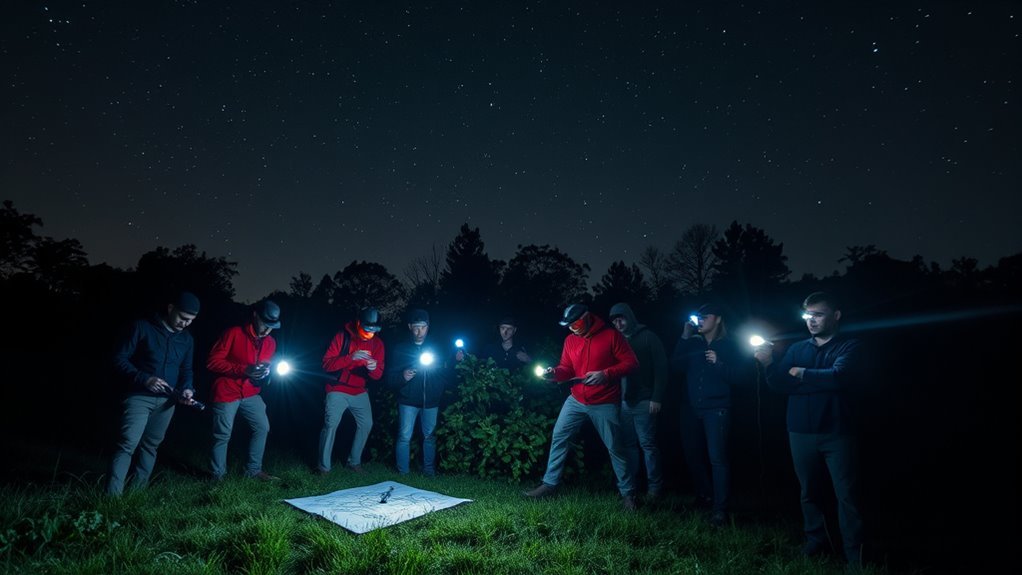
When searching for a lost drone at night, first activate its built-in flashing lights if your app or controller still has a connection. Lights can make the drone much easier to spot in dark areas.
Also consider using thermal imaging equipment if you have safe access to it. A thermal camera may detect the drone’s heat signature shortly after it lands or crashes.
These strategies, combined with a focused search area, can greatly increase your chances of recovery.
Utilize Flashing Lights
Utilizing flashing lights on drones considerably improves the ability to locate them at night, as their illumination makes them easier to spot in dark environments.
When you’re engaged in nighttime recovery, drones equipped with flashing lights improve visibility, allowing search teams to identify their location faster.
Use search techniques that include gathering a small group and using high-powered flashlights to illuminate the area. Sweep the lights slowly across trees, brush, fences, rooftops, and open ground.
Focus your efforts around the last known location of the lost drone and stay alert for any audible signals it may emit.
However, prioritize safety during these searches. Watch your footing, avoid unsafe terrain, and do not search alone in unfamiliar areas at night.
Employ Thermal Imaging
Thermal imaging technology can improve your ability to locate a lost drone at night by detecting heat emitted from its components.
When you employ thermal imaging, you may identify the drone’s heat signature, even if foliage or other obstacles make it hard to see. This method works best soon after the drone goes missing because heat signatures fade over time.
Thermal cameras allow for efficient searches across wide areas, making them useful when normal visual methods are not enough. By differentiating between the drone’s heat and the surrounding environment, you can narrow its location and reduce search time.
Note: Night searches can be risky. Bring a flashlight, keep your phone charged, tell someone where you are going, and avoid climbing trees, roofs, fences, or steep terrain.
Advanced Drone Recovery Methods

Though losing a drone can be frustrating, employing advanced recovery methods can greatly increase your chances of retrieving it. Start by utilizing another drone equipped with a camera. This aerial perspective allows you to visually locate your missing drone from above, especially in fields, brush, trees, or large open areas.
Also, tap into telemetry data from your drone’s controller. It may reveal essential flight information like altitude, speed, battery level, direction, and last known coordinates, which can guide your search.
If you’ve prepared in advance, RF tracking devices can help you locate the drone within a limited range using a handheld RF receiver. Bluetooth trackers, GPS trackers, and buzzers may also help, depending on the model, terrain, and signal range.
- Use grapples or underwater drones only when recovery is safe and legal in challenging environments.
- Connect with local drone clubs or online forums for community assistance and additional recovery techniques.
- Document telemetry data to streamline your search efforts and avoid repeating the same search area.
Employing these advanced drone recovery methods can markedly enhance your chances of a successful recovery.
Using Another Drone to Search
Another drone can give you a higher viewing angle and help you scan places you cannot safely reach on foot. Use it carefully and keep the search flight simple.
- Fly slowly over the last known area.
- Record video so you can review it later on a larger screen.
- Search trees, fields, roofs, ditches, and water edges from several angles.
- Keep the search drone within your visual line of sight.
- Do not fly over people, traffic, emergency scenes, or restricted airspace.
A second drone works best when the missing drone has a bright body color, flashing lights, reflective tape, or a clear shape against the background.
Leveraging Community Assistance and Social Media for Drone Recovery

How can community support amplify your chances of recovering a lost drone? Engaging local drone communities can greatly enhance your recovery efforts. By posting on social media, you can share vital details like the drone model, last known location, flight path, and a photo of the drone.
| Platform | Benefits |
|---|---|
| Facebook Groups | Organize search parties and reach local residents |
| Reddit Communities | Share effective search strategies and recovery advice |
| Update followers on search progress and sightings | |
| Local Forums | Tap into community expertise and neighborhood knowledge |
Utilizing geotagging features when posting can attract individuals who might have seen or found the lost drone. Also, informing local authorities can further promote visibility, especially in sensitive areas, parks, public facilities, or locations where a drone may be mistaken for suspicious equipment.
When posting online, include a clear description, approximate location, date and time lost, contact method, and reward details if you choose to offer one. Avoid posting sensitive personal information or exact home addresses publicly.
With community assistance and strategic social media use, your chances of finding a lost drone improve greatly.
What to Do if Someone Finds Your Drone
If someone contacts you about the drone, ask for a photo before meeting. Confirm the model, color, registration label, sticker, serial number, or memory card details if available.
Meet in a safe public place when possible. If the drone is on private property, ask permission before entering. If it landed in a restricted or dangerous area, contact the proper authority instead of trying to retrieve it yourself.
After recovery, inspect the drone before flying again. Check the battery, arms, propellers, gimbal, camera, motors, vents, sensors, landing gear, and body shell. Do not power on a wet or damaged drone until it has been properly inspected.
Preventative Measures to Avoid Future Drone Loss

To minimize the risk of losing your drone, regularly perform maintenance checks on its battery, motors, propellers, sensors, firmware, and controller connection.
Conducting thorough pre-flight equipment inspections ensures better performance and helps you identify potential issues before they lead to failure.
Regular Maintenance Checks
Regular maintenance checks are essential for ensuring your drone remains operational and minimizes the risk of loss during flights. These preventative measures help you locate potential issues before they escalate.
- Regularly inspect the drone’s battery for swelling, cracks, corrosion, or unusual heat.
- Check propellers for proper fitting, chips, warping, cracks, or loose screws.
- Calibrate the drone’s compass and sensors when the manufacturer recommends it or when the app warns you.
Also perform routine firmware updates and schedule thorough checks on electronic components as recommended by your drone manufacturer. Addressing these areas boosts performance and reduces the chance of unexpected malfunctions.
Pre-Flight Equipment Inspections
Before every flight, conducting a thorough pre-flight inspection is essential for preventing future drone loss. Start by confirming the battery is fully charged and properly connected to avoid battery failures. Inspect propellers for damage or improper fitting, as these can compromise flight stability.
Verify that all control systems, including GPS and sensors, are operational to reduce risks of disorientation. Confirm that firmware updates are applied, as they often include critical fixes for reliability. Finally, test the Return-to-Home (RTH) feature when appropriate to confirm it functions correctly, allowing your drone to return safely in case of signal loss.
| Inspection Item | Importance | Action Required |
|---|---|---|
| Battery | Prevents battery failures | Confirm fully charged and undamaged |
| Propellers | Supports stable flight | Check for damage and secure fit |
| Control Systems | Helps maintain control | Verify GPS, sensors, and controller connection |
| Firmware Updates | Enhances reliability | Update to the latest stable version |
| Return-to-Home (RTH) | Supports safer return in emergencies | Set and verify the home point before flight |
Preparing for a Potential Drone Loss
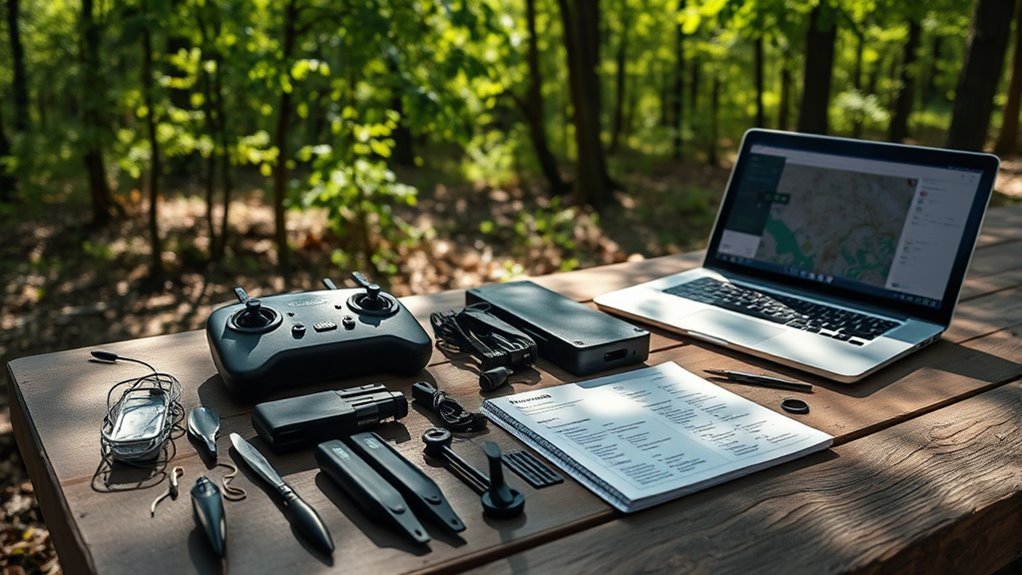
While no one wants to think about losing their drone, preparing for potential loss is essential for any operator. Understanding the risks, such as flyaways or technical failures, can help you avoid losing your equipment.
Start with these key steps:
- Register your drone with the appropriate aviation authority when required and label it according to applicable rules.
- Familiarize yourself with your drone’s built-in GPS and RF tracking capabilities; these features will greatly help you locate it if it goes missing.
- Consider drone insurance for financial protection against repair or replacement costs if your drone is lost or damaged.
You can also add a small tracker, reflective tape, a phone number label, or a recovery message to your drone if it does not interfere with sensors, vents, propellers, weight limits, or safe operation.
Before Your Next Flight
Once you recover your drone, use the experience to improve your next flight. Review what caused the loss and adjust your routine.
- Set the home point before takeoff.
- Choose a safe Return-to-Home altitude that clears nearby obstacles.
- Check wind speed and direction before launch.
- Keep the drone within your visual line of sight.
- Avoid flying behind buildings, hills, trees, or other signal-blocking objects.
- Land early instead of draining the battery too low.
- Store screenshots of your drone’s serial number and registration details.
Small habits make a major difference. Most recovery problems become easier when your drone has a clear label, accurate logs, a healthy battery, and a safe home point.
Related Guides
Frequently Asked Questions
How do you recover your lost drone?
Start by checking your drone’s last known GPS location in the flight app. Save the coordinates, review the flight path, and search the last known area first. Use Return-to-Home if the drone is still connected and conditions are safe. Then expand the search with binoculars, lights, sound, another drone, or community help.
What is a checklist and what can it be used for in drone operations?
A checklist in drone operations is a simple step-by-step tool for pre-flight, in-flight, and post-flight tasks. It helps you confirm the battery, propellers, GPS, sensors, firmware, home point, weather, airspace, and recovery plan before flying. A good checklist improves safety and reduces preventable mistakes.
What is the 1:1 rule for drones?
The 1:1 rule is a simple visibility guideline some pilots use: for every unit of altitude, keep the drone within about the same horizontal distance when practical. It is not a universal legal rule, but it helps newer pilots keep the drone close, visible, and easier to control.
How do you find a drone if you lost it?
Check the drone’s last known GPS coordinates, then inspect the area around that point. Review wind direction, final altitude, and battery level to estimate where it may have landed. Search trees, tall grass, rooftops, fences, water edges, and downwind areas. Use a grid or spiral pattern so you do not miss sections.
Can Return-to-Home help find a lost drone?
Yes, Return-to-Home can help if the drone still has power, a stable connection, a recorded home point, and enough clearance from obstacles. However, it may not work after a crash, full battery drain, GPS failure, or signal loss. Always review the last flight data even if RTH was active.
What should you do if your drone lands on private property?
Do not enter private property without permission. Contact the owner politely, explain what happened, and ask for safe access. If the drone is in a dangerous or restricted area, contact local authorities, site staff, or the proper property manager for help.
Conclusion
In the unpredictable world of drone operation, the loss of your device can feel like chasing shadows. However, a structured recovery plan gives you a real advantage. Start with the flight app, save the last known GPS coordinates, search the most likely landing zones, and expand the area in a careful pattern.
By using strategic search methods, leveraging community support, and implementing preventative measures, you can greatly improve your chances of recovery. Prepare before every flight, label your drone, keep your logs accessible, and make sure Return-to-Home settings are correct. With patience, safety, and a methodical approach, you can turn a stressful drone loss into a successful recovery.