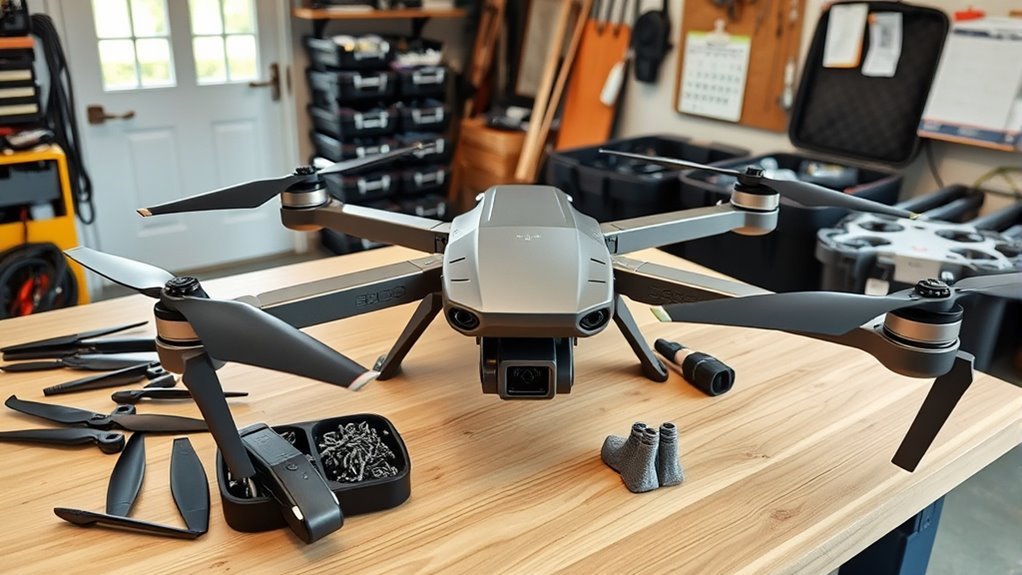
A drone maintenance schedule starts with a simple principle: inspect before use, verify on a set cycle, and replace worn parts before failure appears. Each flight calls for checks on batteries, propellers, GPS, and camera function. Monthly tasks extend to cleaning sensors and reviewing battery health. Annual inspections go deeper, covering the frame and firmware. The details matter, because small defects often surface only when operation is already at risk.
What to Check Before Every Flight
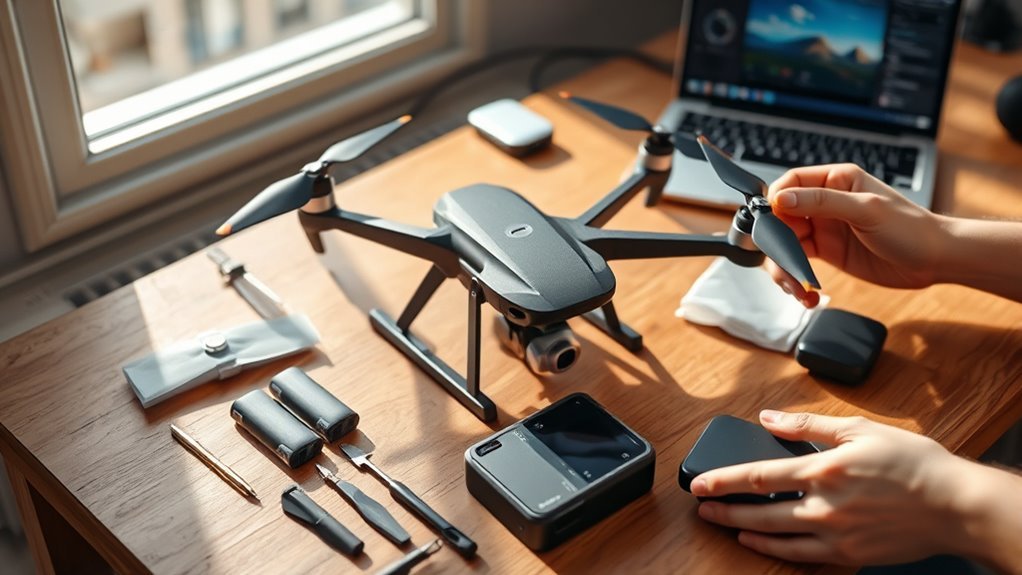
Before every flight, a drone should undergo a systematic preflight inspection to verify operational readiness and reduce the risk of failure. The battery must be fully charged and firmly connected, because stable power is the first condition of autonomous movement.
Propellers require close examination for cracks, deformation, or foreign matter, since even minor damage can degrade lift and control. GPS performance should be verified to guarantee accurate positioning and navigation, supporting disciplined flight paths and reducing dependency on guesswork.
The camera and sensors must be tested and calibrated so that imagery and telemetry remain precise. Firmware status should also be reviewed, with updates installed when required to keep the system current and efficient.
For a pilot operating under a new account, this methodical routine establishes reliable practice, protects equipment, and supports liberated use of aerial capability through measured, repeatable checks before takeoff.
Monthly Drone Maintenance Tasks
Monthly maintenance extends inspection beyond the preflight routine to verify that the drone remains structurally sound, electronically current, and operationally stable.
Each month, the propellers should be examined for damage, residue, and imbalance, then cleaned so airflow remains efficient and control remains precise.
Monthly propeller checks for damage, residue, and imbalance help maintain efficient airflow and precise control.
Drone battery management requires checking health, capacity, swelling, and corrosion, while confirming proper charging and storage practices to preserve usable cycles and reduce interruption.
Sensor cleaning techniques should be applied to cameras and navigation sensors after outdoor use, using nonabrasive materials that protect clarity and measurement accuracy.
The firmware update importance is equally clear: current software provides safety improvements, system refinements, and broader functionality.
GPS and compass calibration should also be reviewed monthly to sustain navigation reliability and flight stability.
This disciplined schedule supports dependable operation and keeps the aircraft ready for autonomous work without unnecessary constraint.
How to Spot Drone Wear Early
Early detection of drone wear depends on a systematic visual and operational inspection of key components.
Propellers should be examined for nicks, cracks, and warping; these wear indicators often precede vibration, reduced efficiency, and unsafe flight behavior.
Batteries require close observation for swelling, corrosion, or abnormal surface wear, because compromised cells can limit endurance and increase risk.
The frame should be checked for stress fractures and surface abrasion, especially near impact points where hidden damage accumulates.
Motors merit attention when noise changes, resistance, or overheating appear, since such signs may signal progressing wear.
Gimbals and camera assemblies should move smoothly without hesitation, binding, or drift, preserving stable operation and clear footage.
These maintenance tips support early detection by revealing degradation before it becomes failure.
A disciplined inspection routine gives operators the freedom to fly with greater confidence, fewer interruptions, and stronger control over equipment reliability.
Yearly Drone Inspection and Parts Replacement
A yearly inspection provides a structured reset for drone reliability and safety. Technicians should verify drone frame integrity, conduct propeller wear assessment, and perform battery health evaluation before continued service. Motors, batteries, and propellers merit annual replacement when service limits or wear indicators appear. Firmware and companion software should be updated to capture fixes and capability improvements. Camera lenses and sensors require cleaning and inspection to preserve image fidelity and data accuracy. Remote control units and communication links should be tested for response and range, with worn parts replaced promptly.
| Annual task | Purpose |
|---|---|
| Frame inspection | Detect structural damage |
| Propeller review | Identify fatigue or chips |
| Battery replacement | Maintain dependable power |
| Firmware update | Apply fixes and features |
| Camera and link test | Preserve data and control |
This methodical cycle reduces hidden faults, supports autonomous operation, and keeps maintenance aligned with disciplined freedom.
Drone Maintenance Checklist for Safer Flights
Before each flight, a maintenance checklist should confirm that the drone body has no visible damage, the propellers are secure, and the battery is within safe operating limits. This preflight discipline reduces avoidable failures and supports controlled, independent operation.
It should also verify controller links, sensor status, and warning alerts before launch.
Each battery requires inspection for swelling, abrasion, and cycle count, with attention to battery storage tips that preserve capacity and limit degradation.
Monthly, motors, gimbals, and camera assemblies should be examined for debris, looseness, or abnormal wear, while drone cleaning techniques are applied to remove dust without introducing moisture into electronics.
Firmware update importance should not be ignored; current software improves performance and closes security gaps that could constrain safe use.
Yearly service should include internal cleaning, sensor recalibration, and replacement of deteriorated parts.
This methodical schedule keeps the platform reliable, extends service life, and gives operators the freedom to fly with greater assurance.
Frequently Asked Questions
What Is the Recommended Maintenance Schedule for DJI Drones?
Recommended DJI drone maintenance follows a layered schedule: every flight, the operator should perform propeller inspection, check battery care for swelling or damage, and confirm firmware updates in the DJI app.
Monthly, sensors, camera lenses, landing gear, and body should be cleaned and examined for wear.
Annually, internal motors, wiring, and other components require thorough inspection, with professional servicing advised to preserve reliability, autonomy, and safe operational freedom.
What Is the 1:1 Rule for Drones?
The 1:1 rule for drones is delightfully simple: one hour of flight invites one hour of maintenance, as if freedom from failure required paperwork.
It directs technicians to inspect batteries, propellers, motors, and logs with methodical precision. This practice supports Drone performance, Battery longevity, and Flight stability while revealing wear before it becomes a burden.
What Is the Recommended Maintenance Schedule for an Airplane?
The recommended maintenance schedule for an airplane includes preflight checks, monthly inspections, and annual overhauls.
Preflight airplane inspections verify fuel, controls, tires, and exterior condition.
Monthly checks examine engines, avionics, wiring, and corrosion.
Annual servicing is thorough, covering structure, systems, and regulatory compliance.
Flight logbooks and maintenance records document findings, intervals, and corrective actions, ensuring airworthiness, accountability, and operational freedom through disciplined, preventive care.
What Are the Safety Checklists for Drone Flights?
Like a disciplined gate opening, the safety checklist begins with pre flight procedures: battery management is verified, propellers inspected, and GPS, compass, and control surfaces tested.
The operator confirms firmware status, radio links, and obstacle-free launch space. Emergency protocols are reviewed, including return-to-home and shutdown actions.
Each step protects flight integrity while preserving autonomy, allowing the aircraft to move with precision, confidence, and self-determined purpose under changing conditions.
Conclusion
A disciplined drone maintenance schedule offers a quieter route to safer, more dependable flights. By attending to batteries, propellers, sensors, frame integrity, and firmware at regular intervals, operators can identify early signs of fatigue before they become operational disruptions. This methodical upkeep preserves performance, extends service life, and reduces the likelihood of unwelcome surprises aloft. In practice, consistent inspection is less a burden than a prudent investment in continued aerial reliability.
