Applied biomechanics for weight training explains how your joints, muscles, and exercise equipment work together to produce movement. Understanding these mechanics helps you choose exercises, adjust resistance, and recognize movement limitations without relying on guesswork.
You do not need an anatomy degree to apply these principles. A few practical concepts, including joint angles, lever arms, muscle stabilization, and equipment fit, can make your workouts more effective and easier to manage.
Quick Answer
Applied biomechanics helps you understand how exercise position changes the forces acting on your body. Focus on joint angles, resistance direction, lever length, and muscle control. Choose equipment that fits your proportions and allows comfortable movement. Use these principles to adjust exercises, manage training loads, and improve performance rather than forcing every movement into one supposedly perfect technique.
How to Understand Joint Movement Tendencies for Effective Weight Training?
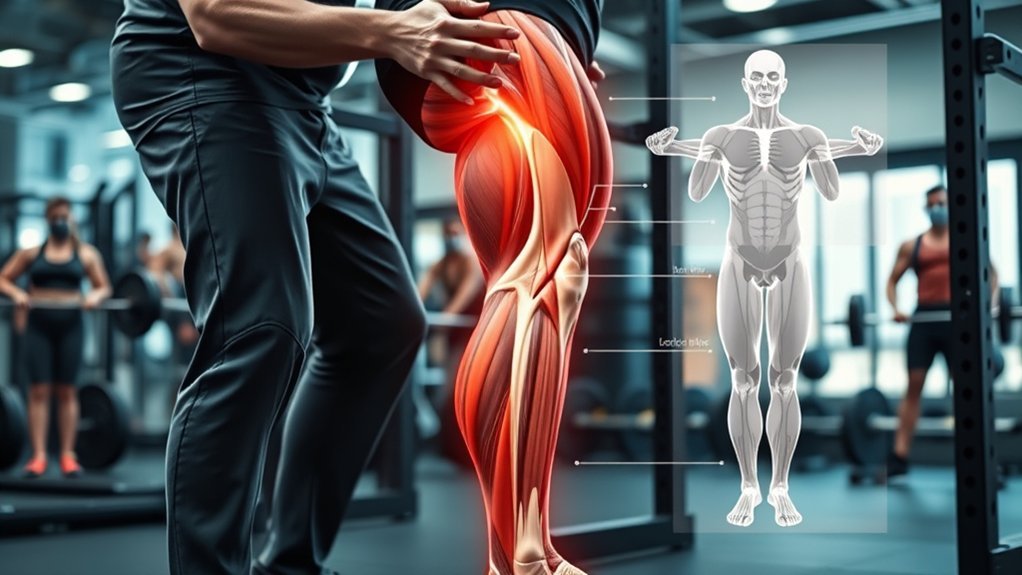
Joint movement tendencies describe how your joints move under different loads and body positions. Understanding them helps you select exercises that match your goals, available mobility, and individual anatomy.
Three factors deserve particular attention:
- Joint angle: The position of a joint during an exercise affects muscle length, force production, and the mechanical demands of the movement.
- Resistance direction: Gravity, cables, and machines apply force differently, changing where an exercise feels most demanding.
- Lever length: The distance between a joint and the applied force affects the turning force that muscles must oppose.
For example, a dumbbell lateral raise feels easier near your side and harder as your arm approaches shoulder height. This happens partly because the perpendicular distance between the dumbbell’s downward force and your shoulder increases.
Bending your elbow shortens the effective resistance lever and can reduce the external turning force at your shoulder. Straightening your elbow increases that distance.
Neither position is automatically superior. The appropriate choice depends on your training goal, load, comfort, and ability to control the movement.
Joint movement also varies between individuals. Differences in limb length, joint structure, mobility, and training history can influence which exercise positions feel comfortable.
Instead of copying another person’s movement exactly, use their technique as a starting point and adjust it within a controlled, comfortable range.
The Role of Lever Systems in Muscle Action
Your bones act as levers, your joints act as pivot points, and your muscles produce the forces needed for movement. This mechanical arrangement explains why the same weight can feel very different across an exercise.
A central concept is torque, which describes the turning effect of a force around a joint.
In simplified terms:
Torque = force × perpendicular moment arm.
The moment arm is the shortest perpendicular distance between the joint’s axis of rotation and the force’s line of action.
As that distance increases, the same external force produces more torque around the joint.
Proximal and Distal Levers Explained
Proximal means closer to the trunk or point of attachment, while distal means farther away. These terms describe anatomical positions rather than separate classes of mechanical levers.
For example, the upper arm is proximal to the forearm, and the hand is distal to the elbow.
Changing the position of these segments alters the effective resistance lever during an exercise.
Most major limb movements involve third-class lever arrangements, where muscular effort acts between the joint axis and the external resistance.
This arrangement favors movement speed and range over mechanical force advantage.
The following table summarizes how these principles apply to muscle action.
| Aspect | Description |
|---|---|
| Lever Type | Proximal and distal describe anatomical location; mechanical levers are classified by the positions of the pivot, effort, and resistance. |
| Muscle Function | Muscles generate force and torque to produce or control joint movement. |
| Stabilization Needs | Supporting muscles control joint and body-segment positions while movement occurs. |
| Example | The deltoid contributes to shoulder abduction while the shoulder blade and rotator cuff help control the movement. |
| Impact of Imbalances | Differences in strength, mobility, or motor control may influence movement quality and available exercise options. |
These principles apply beyond shoulder exercises. During squats and presses, changes in body position alter the external moment arms around the working joints.
For example, changing your torso position during a squat can change the relative demands placed on your hips and knees.
The goal is not to eliminate joint torque. Your muscles need mechanical loading to become stronger.
Instead, choose positions and resistance levels that provide a manageable training stimulus.
How Joint Movement and Muscle Stabilization Affect Training?
Muscle stabilization allows your body to maintain control while producing movement. During weight training, some muscles generate the main movement while others help position and control the joints.
The shoulder provides a useful example because its movement depends on several connected structures.
Why Scapular Movement Matters
The scapula, or shoulder blade, provides a moving base for the upper arm. As you raise your arm, the scapula rotates and changes position to support the movement.
The deltoid helps lift your arm, while the rotator cuff contributes to shoulder-joint control.
Meanwhile, muscles including the serratus anterior and trapezius help position and move the scapula.
The American Academy of Orthopaedic Surgeons explains that altered scapular movement may be associated with weakness, tightness, limited shoulder motion, or other underlying problems.
However, visible differences in shoulder-blade movement do not automatically mean that a person has an injury or needs corrective treatment.
Applying Shoulder Biomechanics to Lateral Raises
A lateral raise primarily trains shoulder abduction, with the deltoid contributing substantially to the movement.
To perform the exercise with better control:
- Choose a weight you can lift without using momentum.
- Stand with your trunk stable and your elbows slightly bent.
- Raise your arms through a comfortable range.
- Allow your shoulder blades to move naturally as your arms rise.
- Lower the weights under control without swinging your torso.
Avoid forcing your shoulder blades into a rigid downward position throughout the movement. Healthy arm elevation requires scapular motion.
If your shoulders shrug excessively or your torso swings, reduce the load and reassess your technique.
However, do not treat every small movement variation as a technical fault. Some variation is normal, particularly as an exercise becomes challenging.
How to Improve Shoulder Stabilization
Shoulder training can include exercises that strengthen the deltoids, rotator cuff, trapezius, and serratus anterior.
Examples include controlled rows, wall-supported movements, scapular setting, and appropriate rotator cuff exercises.
The AAOS shoulder conditioning program provides examples of strengthening and mobility exercises for these muscle groups.
Choose exercises based on your actual movement limitations rather than assuming every lifter needs the same corrective routine.
Key Techniques for Identifying Muscle Imbalances
Muscle imbalances may appear as differences in strength, mobility, endurance, or movement control between muscles or sides of the body.
Simple observations can help you recognize patterns, but they cannot establish the underlying cause of an injury or diagnose a specific muscle disorder.
Use the following assessment methods to identify areas that may deserve closer attention.
1. Compare Both Sides During Basic Movements
Perform a light, controlled movement on each side and observe differences in range, coordination, and effort.
Useful examples include unilateral rows, supported shoulder raises, and single-leg movements.
Look for repeated differences rather than judging your movement from one repetition.
Some degree of side-to-side variation is normal, especially when one side is used more frequently in daily activities.
2. Observe Scapular Movement
Stand in front of a mirror or have someone observe your shoulder blades while you slowly raise and lower your arms.
Notice whether one shoulder blade moves differently, protrudes noticeably, or becomes difficult to control.
A wall-supported push-up movement may also help reveal changes in shoulder-blade position.
These observations are useful starting points, not definitive tests of serratus anterior weakness.
Persistent winging can involve muscle dysfunction, nerve injury, or other conditions that require professional assessment.
3. Check Shoulder Abduction
Slowly raise each arm to the side without holding a weight.
Compare the movement range, comfort, and degree of control.
If one arm cannot rise as far, the limitation may involve several factors, including mobility, pain, strength, or shoulder mechanics.
Do not assume the deltoid is weak simply because the arm does not reach the same height.
4. Use a Functional Movement Screen
An overhead squat can help you observe trunk control, shoulder mobility, and lower-body coordination during a combined movement.
Watch for repeated compensations, such as excessive forward trunk movement or differences between sides.
However, a screening result does not identify a specific injury or reliably predict who will get hurt.
A systematic review of functional movement screening found insufficient support for using the overall screening approach as a reliable injury-prediction tool.
Use screening observations to guide further assessment rather than assigning a diagnosis from appearance alone.
5. Match Corrective Exercises to the Actual Limitation
Once you identify a recurring limitation, select exercises that address the relevant movement or strength requirement.
For example:
- Limited shoulder mobility may call for appropriate mobility work.
- Poor control during a light movement may improve with reduced resistance and repeated practice.
- A measurable strength difference may benefit from carefully progressed unilateral training.
- Scapular movement problems may require targeted strengthening or rehabilitation, depending on their cause.
Reassess the same movement over time to see whether your chosen approach improves control, comfort, or performance.
Note: If you experience persistent joint pain, sudden weakness, numbness, significant scapular winging, or reduced movement after an injury, consult a qualified healthcare professional. A physical therapist can assess strength, mobility, and movement together rather than relying on a single screening test.
Making Informed Equipment Choices for Optimal Performance
Choosing suitable gym equipment requires more than comparing weight capacity or available exercises. Equipment should accommodate your body proportions, training goals, and comfortable range of motion.
Understanding resistance mechanics makes it easier to identify which features matter.
Free Weights, Machines, and Cables
Each equipment type offers a different way to apply resistance. None is automatically necessary for every strength-training goal.
- Free weights: Dumbbells and barbells allow movement through a self-directed path and require you to control the load.
- Fixed-path machines: These guide movement through a defined path and may reduce some balance or stabilization demands.
- Cable machines: Adjustable pulleys allow resistance to approach from different directions, making it easier to change an exercise’s resistance profile.
- Resistance bands: Elastic resistance changes as the band stretches, providing another way to train movement and strength.
A systematic review comparing free weights and machines found no clear overall difference in muscle growth between the training methods studied.
Strength improvements were more specific to the equipment and movements participants practiced.
This means equipment selection should reflect the exercises you want to improve, your preferences, and the setup available to you.
What to Check Before Choosing a Machine
Adjustability matters because machines must accommodate different limb lengths and body proportions.
Before using a machine, check the following:
- Seat position: Can you adjust the seat to reach the handles or foot platform comfortably?
- Joint alignment: Does the machine’s movement axis reasonably match the joint it is designed to train?
- Range of motion: Can you move without being forced into an uncomfortable position?
- Starting resistance: Is the lightest setting manageable with controlled technique?
- Adjustability: Can the machine accommodate your individual proportions and preferred setup?
- Build quality: Are the adjustment mechanisms secure, and does the equipment move smoothly?
A machine that fits one person comfortably may not suit another.
Do not force a movement simply because the equipment provides a fixed path.
How Equipment Changes Resistance
Resistance profiles describe how the mechanical demands of an exercise change throughout its range of motion.
With a dumbbell lateral raise, gravity acts vertically downward. The external shoulder torque changes as the arm moves.
With a cable lateral raise, the direction of the cable creates a different line of resistance.
Changing pulley height, body position, or distance from the machine can therefore change where the exercise feels demanding.
Machines may also use cams or other mechanisms to alter the resistance profile.
These differences allow you to select exercises that feel manageable across the intended range.
User comfort and equipment fit matter. Choose equipment that allows controlled movement rather than assuming one exercise path is suitable for everyone.
Balance Biomechanics With Consistent Training
Understanding exercise mechanics is useful, but small technical adjustments cannot replace a suitable training program.
The American College of Sports Medicine’s resistance-training guidance emphasizes consistent training, individualization, and progressive resistance.
For general strength and fitness, training all major muscle groups at least twice weekly provides a practical foundation.
Progress by gradually adjusting resistance, repetitions, sets, or exercise difficulty as your ability improves.
You do not need specialized equipment to achieve meaningful results. Machines, free weights, bands, and bodyweight exercises can all contribute to an effective program.
Frequently Asked Questions
How Do I Choose Equipment for Diverse Body Types?
Choose equipment that accommodates your limb length, mobility, and comfortable movement range. Adjustable seats, handles, and starting positions can improve fit. Test the movement with light resistance before increasing the load. If a fixed-path machine feels uncomfortable despite adjustment, consider another machine or a free-weight alternative.
What Are the Signs of Overtraining Related to Biomechanics?
Persistent fatigue, declining performance, prolonged soreness, and recurring joint discomfort may indicate inadequate recovery or excessive training demands. Technique can also deteriorate as fatigue increases. These signs do not establish overtraining syndrome by themselves. Reduce training demands and seek professional advice if symptoms persist or worsen.
How Does Age Affect Joint Movement and Strength Training?
Age-related changes in muscle mass, strength, and mobility can affect exercise performance. However, older adults can still improve strength and physical function through progressive resistance training. Adjust exercise selection, resistance, and recovery to individual ability rather than relying on age alone. Begin with manageable loads and progress gradually.
Are There Specific Exercises to Avoid for Certain Joint Issues?
Some exercises may need modification when they cause pain or exceed your available movement range. Depending on the condition, reducing resistance, changing the range, or choosing a supported variation may help. There is no universal list of forbidden exercises for every joint problem. Follow individualized medical or rehabilitation advice when managing an injury.
How Can I Incorporate Recovery Techniques Into My Training Regimen?
Plan recovery by alternating demanding sessions with adequate rest or lighter activity. Prioritize sleep, nutrition, hydration, and manageable training volume. Gentle movement and foam rolling may help with temporary soreness, but they cannot replace adequate recovery. If performance keeps declining, review your overall workload before adding more training.
Conclusion
Applied biomechanics for weight training helps you understand why exercises feel different as your body position, resistance direction, and joint angles change.
Use that knowledge to select suitable movements, improve muscle control, recognize possible limitations, and choose equipment that fits your body.
Start by reviewing one familiar exercise. Observe its joint positions, resistance profile, and stabilization demands, then make small adjustments while keeping the movement controlled and comfortable.
Combine these principles with consistent training and gradual progression for a practical approach to long-term strength development.
Sources
- American College of Sports Medicine: Resistance-training recommendations, equipment selection, consistency, and progressive training.
- American Academy of Orthopaedic Surgeons — Scapular Disorders: Shoulder-blade mechanics, altered movement, symptoms, assessment, and rehabilitation.
- American Academy of Orthopaedic Surgeons — Shoulder Conditioning Program: Shoulder strengthening, stabilization, mobility, and exercise guidance.
- BMC Sports Science, Medicine and Rehabilitation: Systematic review comparing free-weight and machine-based resistance training.
- Cochrane — Progressive Resistance Strength Training: Evidence on strength and physical function in older adults.
- Mayo Clinic Health System: Warning signs of excessive training and overuse problems.
- Sports Health — Functional Movement Screen Review: Evidence concerning movement screening and injury prediction.
