Carp fishing rewards anglers who slow down, read the water, and match their setup to how carp actually feed. These strong, cautious fish can test your patience, but the right mix of location, bait, tackle, and quiet presentation can turn a slow session into a productive day on the bank. Once you understand where carp feel safe and how they search for food, you can fish with more confidence and avoid random casting.
Quick Answer
The best carp fishing approach is to find quiet feeding areas, pre-bait lightly, use proven baits like sweet corn or boilies, and fish a simple hair rig with strong tackle. Focus on early morning, evening, and signs of feeding activity such as bubbles, mud clouds, and surface rolls.
Key Takeaways
- Carp often feed near soft bottoms, weeds, reed beds, creek mouths, drop-offs, and quiet margins.
- Sweet corn, boilies, bread, worms, maggots, and tiger nuts can all work when used in the right situation.
- A hair rig helps carp take the bait naturally while keeping the hook ready for a better hookup.
- Light pre-baiting can build carp confidence, but overfeeding can reduce bites during your session.
- Safe landing, wet hands, quick photos, and careful release help protect larger carp.
At a Glance
| Best Times | Early morning, late evening, mild overcast days, and periods when carp are visibly feeding |
| Difficulty | Beginner to intermediate, depending on water clarity, pressure, and fish size |
| Basic Gear | 10- to 12-foot rod, baitrunner reel, 12- to 20-pound mono or 30- to 50-pound braid, landing net, unhooking mat, hooks, weights, and bait |
| Top Baits | Sweet corn, boilies, bread, worms, maggots, dough balls, tiger nuts, and pack bait |
Understanding Carp Behavior
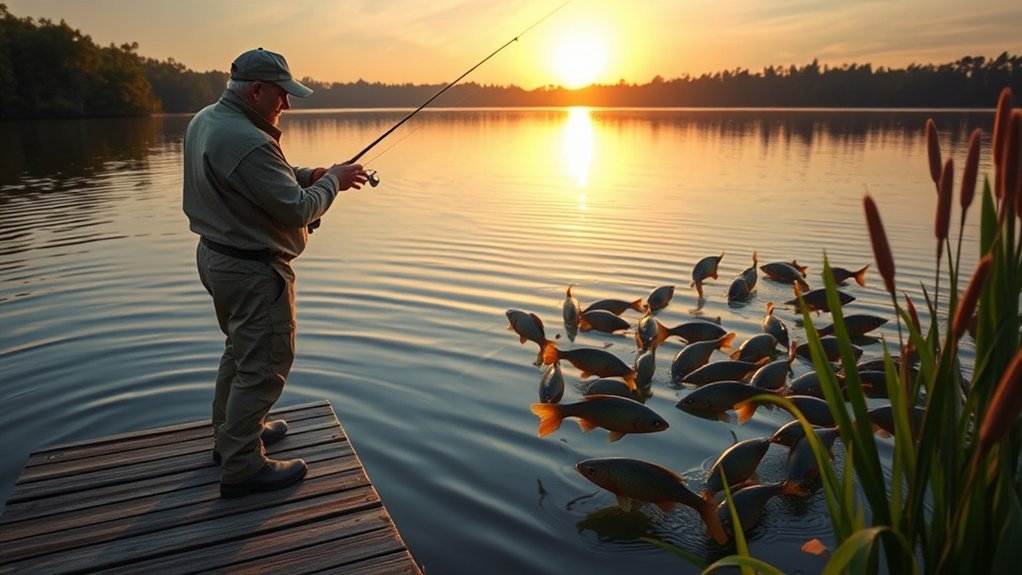
Understanding carp behavior is essential for successful fishing, especially because these fish feed in a cautious, methodical way. Carp are omnivorous, so they may eat invertebrates, aquatic vegetation, seeds, grains, insects, larvae, and angler baits such as sweet corn, bread, boilies, and dough balls. Your choice of bait matters, but location and presentation matter just as much.
Carp often spook easily in clear, shallow water. They may back away from heavy line, loud footsteps, sudden shadows, or bait that looks unnatural. That is why quiet movement, careful casting, and light disturbance can improve your results. In cloudy or murky water, carp may feel safer and feed with more confidence, especially near cover.
Seasonal patterns also shape where you should fish. In spring, carp often move into warmer shallows and may spawn when conditions suit them. In summer, feeding activity can be strong during cooler parts of the day. In fall, carp often feed heavily before winter. During winter, fishing can become harder because their metabolism slows and feeding windows may be shorter.
Carp are naturally wary and often prefer areas with structure, such as reed beds, weed edges, overhanging trees, drop-offs, gravel bars, and soft-bottom zones. These features provide food, shade, and safety. Watch for signs of carp activity, including bubbles, clouded water, tailing fish, surface breaks, and “mudding.” These clues tell you where carp are actively searching for food.
Note: Carp can feed very close to the bank. Before casting far, stand back, stay quiet, and check the margins for bubbles, swirls, or moving reeds.
Location, Location, Location

Choosing the right location is essential when targeting carp, as these fish thrive in habitats that offer both safety and abundant food. Look for shallow areas rich in aquatic vegetation, where carp often find cover and forage. Also check edges where soft bottom meets gravel, weeds meet open water, or a drop-off meets a flat.
- Seek out flats near creek mouths.
- Consider coves with soft bottoms.
- Focus on slow-moving current breaks.
- Check weed edges, reed beds, and overhanging trees.
- Look for drop-offs near shallow feeding areas.
- Observe signs of carp activity, like “mudding,” bubbles, tailing, and surface rolls.
Using polarized sunglasses will enhance your visibility, allowing you to spot feeding zones and active carp more effectively. Move slowly and scan the water before setting up. If you see several fish cruising without feeding, avoid dropping bait directly on top of them. Cast ahead of their path or place bait quietly near a likely patrol route.
Patience is key. Once you commit to a specific feeding zone, give yourself time to observe and adapt your fishing tackle accordingly. Carp may take time to settle over bait, especially in pressured water. Strategic placement in these ideal locations increases your chances of a successful carp fishing session, so take the time to explore different bodies of water and identify where these fish congregate.
Reading the Water Before You Cast
Good carp fishing starts before your rig touches the water. Spend the first 10 to 20 minutes watching the swim. Look for patches of fizzing bubbles, muddy clouds, reeds knocking without wind, or small waves that move against the natural ripple. These signs often reveal feeding carp.
Pay attention to wind direction too. A warm wind pushing into a bank can move natural food and warmer surface water into that area. Carp may follow it, especially in spring and summer. In hot weather, they may cruise near the surface, sit under shade, or move into deeper, oxygen-rich water.
Depth changes can also help you choose a spot. A shallow flat may produce bites during low light, while a nearby drop-off may hold fish after sunrise. If you can find a route between resting water and feeding water, you can often intercept carp without disturbing them.
Pro Tip: Cast to a clear patch beside weeds rather than into the thickest vegetation. Carp can find the bait, but you still have a better chance of landing the fish.
Effective Baiting Strategies
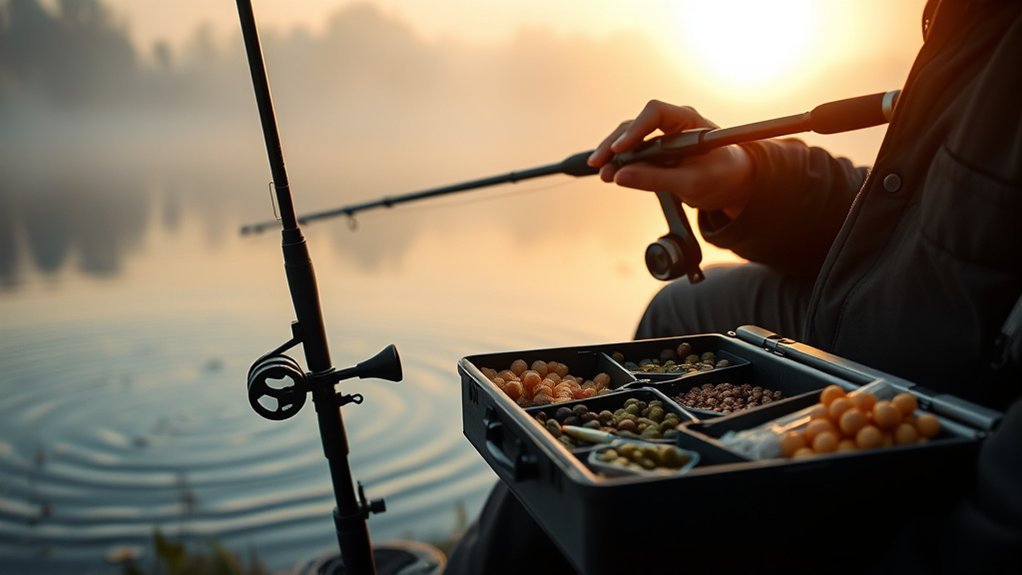
When it comes to carp fishing, selecting the right bait can greatly impact your success. Popular options like sweet corn and boilies not only attract carp but also align with their natural feeding habits. To maximize your chances, consider implementing pre-baiting techniques that establish a reliable food source, boosting carp confidence in your chosen fishing spot.
Your baiting strategy should match the water, season, and fish pressure. In a small pond with cautious carp, a few free offerings may work better than a large bed of bait. In a bigger lake or river, you may need more bait to draw fish into the swim and keep them searching.
Popular Bait Options
Effective baiting strategies are essential for successful carp fishing, and selecting the right bait can make all the difference in your catch. Here are some popular options to consider:
- Canned sweet corn: Its sweet smell, bright color, and soft texture make it one of the easiest carp baits to use.
- Boilies: Made from base mixes, eggs, and flavorings, boilies are useful when you want to target larger fish or avoid smaller nuisance bites.
- Natural baits: Worms, maggots, and bread use movement, scent, and familiar texture to entice carp effectively.
- Tiger nuts: These can work well for bigger carp, but they must be prepared safely before use.
- Dough balls: Simple homemade dough can work in ponds, canals, and pressured waters where carp already eat soft baits.
- Pack bait: Breadcrumbs, oats, corn, or other binding mixes can break down around your hook bait and create a feeding zone.
- Hair rig: This technique allows bait like corn or boilies to move independently, reducing line detection and increasing your chances of a catch.
Using these bait options strategically can help you establish a feeding zone and enhance your overall fishing success. Start simple before changing too many things at once. If fish are present but not biting, adjust hook size, bait size, rig length, or bait quantity before abandoning the location.
Warning: Never use unprepared tiger nuts or hard particles. Soak and boil particle baits properly before fishing, because poorly prepared bait can harm fish.
Pre-Baiting Techniques
Pre-baiting techniques can greatly boost your chances of success in carp fishing by creating a feeding pattern before you even cast your line. By introducing bait like sweet corn, boilies, and pack bait made from breadcrumbs and jello, you can attract carp with scent, color, and food signals.
Establish a consistent baiting schedule, such as daily or every few days, to develop a reliable feeding pattern that keeps carp returning to the area. Use small amounts first. A handful of corn, a few crushed boilies, or a small ball of pack bait may be enough in a pond or canal. Larger waters may need a wider spread, especially if carp travel in groups.
Be cautious not to overfeed. Too much bait can satisfy carp before they find your hook bait. Limiting the bait helps carp remain eager during your actual fishing sessions. For efficient distribution, use mesh PVA bags where allowed and suitable. These can hold pellets, crushed boilies, or small particles close to your rig, helping draw carp to your chosen spot.
Matching Bait to Season
Seasonal bait choice can make your presentation more effective. In cold water, carp often feed less, so smaller hook baits and lighter baiting usually work better. A single grain of corn, small boilie, or small piece of bread can look less suspicious than a heavy pile of bait.
During warmer months, carp may respond well to more active feeding areas and stronger food signals. Boilies, particles, pack bait, and scattered corn can keep fish grubbing around longer. In fall, slightly larger baits can help when carp feed heavily before colder weather arrives.
Terminal Tackle Essentials
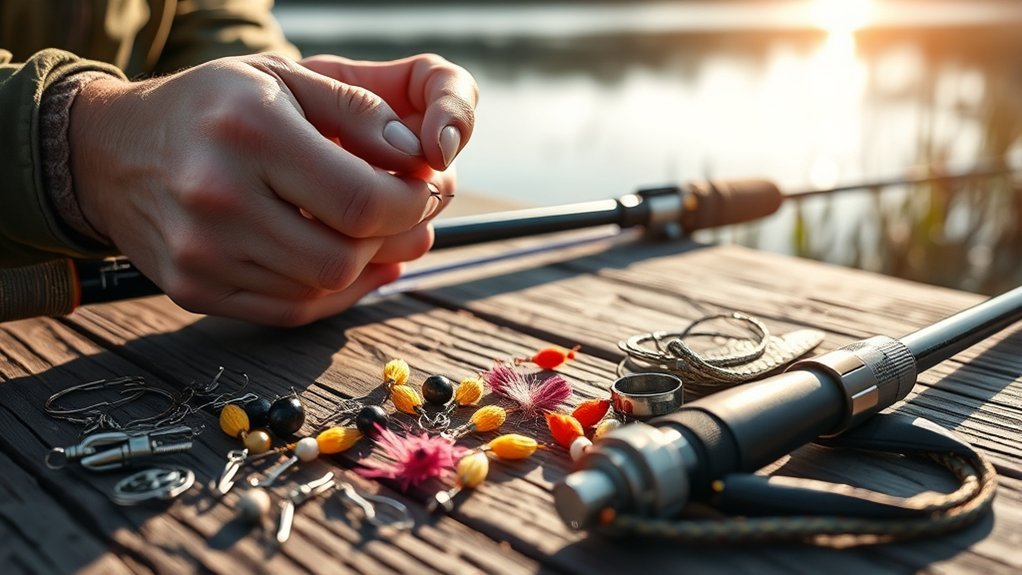
When setting up your hair rig, make certain the bait is positioned correctly to maximize movement and improve your hookup success. Choose hook sizes between 4 and 10 based on the bait’s size, as this will greatly influence your catch rate. By mastering these terminal tackle essentials, you’ll enhance your overall carp fishing effectiveness.
Hair Rig Setup
Setting up a hair rig is crucial for maximizing your carp fishing success, as it allows the bait to move independently of the hook. This helps carp suck in the bait more naturally while the hook remains exposed enough to take hold.
To effectively use a hair rig, consider the following:
- Choose soft bait like boilies or sweet corn for easy sucking.
- Select appropriate hook sizes, typically ranging from 4 to 8, based on your bait.
- Verify your fishing line is strong enough to handle the fight.
- Keep the hair length short enough that the bait sits close to the hook, but not so tight that it blocks hook movement.
- Utilize a baitrunner spinning reel paired with a sensitive bite alarm to detect subtle takes.
This setup reduces line movement detection by carp, which can boost your hookup rates. Mastering the hair rig will elevate your carp fishing experience and can lead to more successful catches.
Recommended Hook Sizes
To maximize your chances of landing carp, selecting the right hook size is key. Recommended hook sizes for carp fishing typically range from size 4 to 10. If you’re targeting larger carp, opt for a size 4 hook to accommodate bigger baits like boilies or tiger nuts.
For a hair rig setup, sizes 6 to 8 are often ideal, providing strong hook-up rates while allowing bait movement. When using softer baits such as sweet corn, bread, or dough balls, smaller hooks in sizes 8 to 10 can be effective for secure catches without overpowering the bait.
Always choose hooks that are sharp, strong, and suitable for the size of fish in your water. Barbless hooks or micro-barbed hooks can make unhooking easier and may be required on some waters. Check local rules before fishing.
Weights, Leaders, and Rig Safety
Your weight and leader setup should help you cast accurately without creating unnecessary risk for the fish. Inline leads, lead clips, and running rigs can all work for carp fishing. A running rig allows the line to move more freely, while a fixed or semi-fixed setup can improve bolt-rig hooking when used safely.
A fluorocarbon leader can improve abrasion resistance around rocks, shells, and snags. In weedy or snaggy water, use tackle strong enough to guide the fish away from danger. Avoid ultra-light line if you are fishing near branches, thick weeds, or sharp structure.
Rig safety matters. If a carp breaks your main line, it should not be left dragging a heavy lead around the lake. Use safe lead systems and check your knots, swivels, and hook points before every cast.
Choosing the Right Rods, Reels, and Line
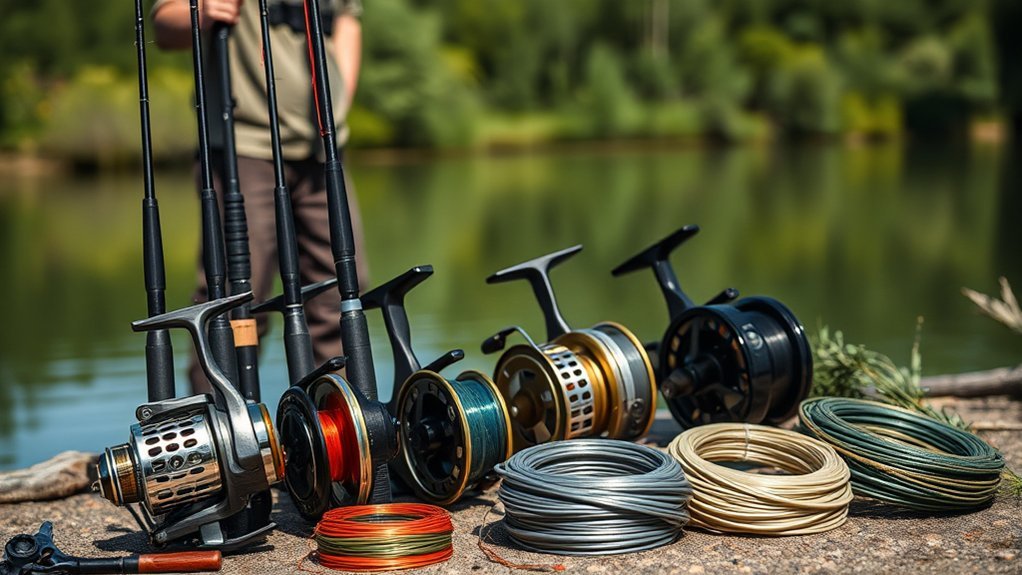
Selecting the right rods, reels, and line is essential for a successful carp fishing experience. A rod length of 10 to 12 feet with a test curve of 2.5 to 3.5 pounds gives you the leverage and casting distance needed for carp. Shorter rods can still work well on small ponds, tight swims, canals, and margin fishing.
Opt for a baitrunner reel spooled with either 12- to 20-pound monofilament for a forgiving performance or 30- to 50-pound braided line for enhanced sensitivity and strength. Monofilament offers stretch, which can help during hard lunges close to the bank. Braid gives better bite feedback and casting control, but it needs careful drag settings and may not suit every venue.
Choosing rods, reels, and line carefully is crucial for landing carp successfully, especially when fishing near weeds, reeds, rocks, or submerged timber.
Consider these key components for your setup:
- Fluorocarbon leader for improved abrasion resistance
- Barbless hooks or micro-barbed hooks where rules allow
- Hook sizes 4 to 10 based on bait size and fish size
- Sensitive rod tip for better bite detection
- Bite alarm system to alert you of subtle bites
- Large landing net for safe control at the bank
- Unhooking mat or padded surface to protect the fish
With the right tackle in hand, you’ll greatly improve your chances of landing that trophy carp. More importantly, strong and balanced gear helps you land fish quickly, which reduces stress and improves release success.
Simple Carp Fishing Setup for Beginners
If you are new to carp fishing, keep your first setup simple. You do not need a complicated rig box to catch your first carp. A medium-heavy spinning rod, strong reel, reliable main line, size 6 or 8 hook, small weight, and sweet corn can be enough on many ponds and lakes.
Start with a basic ledger rig or hair rig. Add one or two grains of corn, cast near a visible feeding area, and keep the line slightly slack if carp are spooky. Avoid recasting every few minutes. Carp may need time to find the bait and settle.
Use a rod rest or bank stick to keep your rod stable. Set the drag so the fish can take line without pulling the rod into the water. If you use a baitrunner reel, engage the free-spool setting while waiting, then switch it off before striking or lifting into the fish.
Best Time of Day for Carp Fishing
The best time of day for carp fishing is often early morning or late evening. During these lower-light periods, carp may move into shallow feeding areas and feel safer near the bank. Warm, overcast days can also produce steady action, especially when the water temperature is comfortable.
Midday fishing can still work, but you may need to adjust your location. In bright sun, carp may hold under shade, near weed beds, in deeper water, or just below the surface. Watch the water rather than following a fixed schedule. Visible feeding signs matter more than the clock.
Night fishing can be productive where it is legal and safe. Carp often feed confidently after dark in pressured waters. Use good lighting, keep your swim tidy, and check local rules before staying overnight.
Common Carp Fishing Mistakes to Avoid
Many carp anglers struggle because they change tactics too quickly or ignore obvious fish behavior. Carp fishing rewards observation. If you find feeding fish, quiet presentation often matters more than fancy gear.
- Overfeeding the swim: Too much bait can fill carp before they pick up your hook bait.
- Casting too often: Repeated splashes can push wary carp out of the area.
- Using hooks that are too large: Oversized hooks can make small baits look unnatural.
- Ignoring the margins: Carp often feed close to the bank, especially when it is quiet.
- Fishing weak tackle near snags: Light gear can lead to lost fish and unsafe break-offs.
- Standing too close to the edge: Shadows and vibrations can spook fish in shallow water.
- Not checking local rules: Some waters restrict bait types, hooks, night fishing, or keepnets.
Catch and Release Practices
After gearing up with the right rods, reels, and line, it’s time to focus on the importance of catch and release practices in carp fishing. These techniques are essential for preserving common carp populations, especially larger specimens over 10 to 15 pounds, contributing to sustainable fishing efforts where catch and release is encouraged or required.
To minimize stress and injury, use proper handling techniques. Wet your hands before touching the fish and utilize a landing mat. Keep the carp low to the ground while unhooking or photographing it. A carp can injure itself if dropped from standing height.
Opt for barbless hooks or circle hooks where appropriate to reduce deep hooking and ensure a smoother release. When photographing your catch, prioritize quick photography to limit the time your carp spends out of water. If the fish needs recovery, hold it upright in the water until it kicks away strongly on its own.
Anglers of all ages should embrace these practices. Sharing responsible catch and release experiences on social media can foster a community that values conservation practices, promotes awareness, and encourages future generations to engage responsibly with waterways.
Warning: Always follow local fishing regulations. In some areas, carp may be managed differently, and rules for release, harvest, bait, hooks, or transport can vary.
Frequently Asked Questions
What is the best technique for catching carp?
The best technique for catching carp is to find active feeding areas, bait lightly, and use a hair rig with a natural-looking bait such as sweet corn or a boilie. Pair that with quiet bankside movement, strong tackle, and patient bite detection.
What is the best time of day to catch carp?
The best time to catch carp is often early morning or late evening, especially in warm weather. These lower-light periods can make carp more comfortable feeding in shallow areas. Overcast days and warm winds can also improve activity.
What is the best bait for carp fishing?
The best bait for carp fishing depends on the water, but sweet corn, boilies, bread, worms, maggots, dough balls, and tiger nuts are all proven choices. Sweet corn is a great beginner bait because it is bright, soft, and easy to fish.
How do you target a bigger carp?
To target bigger carp, use larger baits like boilies or properly prepared tiger nuts, fish near deeper water or safe structure, and use stronger tackle. Bigger carp often feed more confidently during quiet periods, low light, and after careful pre-baiting.
Can you catch carp with regular fishing gear?
Yes, you can catch smaller carp with regular medium or medium-heavy spinning gear, but larger carp need stronger line, a smooth drag, and a large landing net. If you fish near weeds, rocks, or snags, use heavier tackle to land fish safely.
Why do carp bite and then stop feeding?
Carp may stop feeding if they become spooked, full, pressured, or suspicious of your rig. Loud bank noise, repeated casting, too much bait, poor hook placement, or visible line can all reduce bites. Scale back disturbance and adjust your presentation.
Conclusion
As you cast your line into the shimmering waters, remember that mastering carp fishing is an art built on patience, observation, and smart preparation. By understanding carp behavior, scouting productive habitats, and using effective baiting techniques, you can turn each outing into a more focused and rewarding session.
Equip yourself with the right tackle, keep your rigs safe, and always practice catch and release where local rules and fishery goals support it. Watch the water, stay quiet, and trust the signs carp give you. With dedication, your next catch could be a trophy worthy of the stories you’ll share long after the session ends.