Keeping a fishing journal can reveal patterns from your trips that you might overlook in the moment. It is more than a list of catches; it can become a practical log, a personal storybook, and a simple way to track your progress season after season. When you know what to record, when to write, and how to review your notes, your journal can help you make smarter choices on your next fishing adventure.
Quick Answer
To write a fishing journal, record each trip’s date, location, weather, water conditions, bait or lure, fish caught, and what you learned. Add short reflections while the details are fresh. Over time, review your entries to spot patterns and improve where, when, and how you fish.
Key Takeaways
- Decide whether your journal will be a quick fishing log, a detailed story record, or both.
- Record the same core details after every trip so you can compare entries later.
- Use a print notebook, digital app, spreadsheet, or photo-based log based on how you fish.
- Review your notes often to find patterns in weather, bait, locations, and fish behavior.
At a Glance
| Time Required | 5 to 10 minutes after each trip, plus 15 minutes for a weekly review |
| Difficulty | Easy for beginners |
| Tools Needed | Notebook or app, pen, phone camera, weather notes, optional GPS or map app |
| Cost | Free to low cost, depending on whether you use paper, an app, or a printed journal |
Determine Your Goals for the Journal
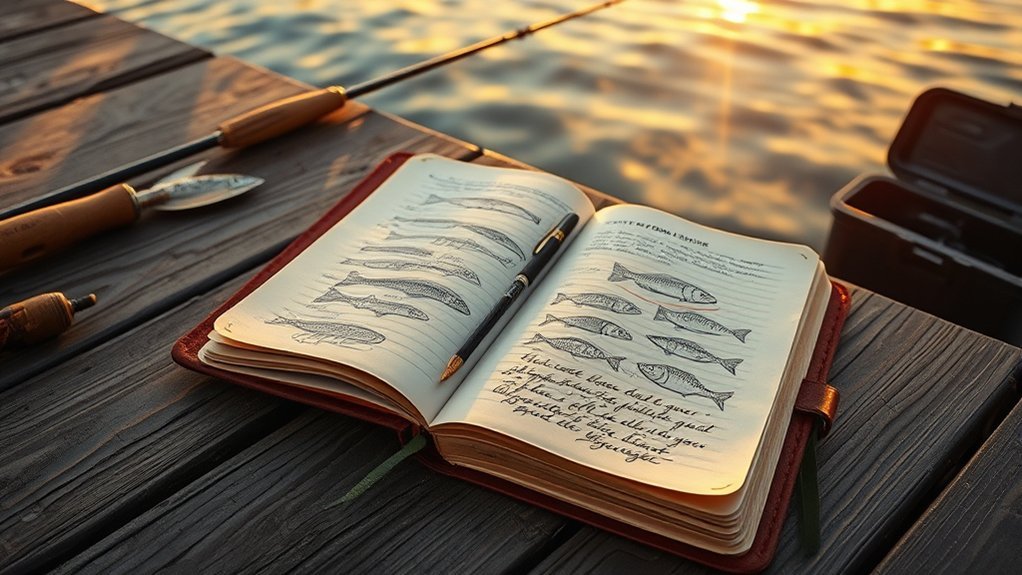
When you sit down to start your fishing journal, clarify what you want it to do. Your goal shapes the way you write, the details you record, and how useful the journal becomes later.
You may want a detailed narrative of your fishing experiences, a concise log of trips, or a practical reference guide for future outings. If storytelling captures your interest, focus on emotions, scenery, conversations, and special moments. If you prefer a reference log, prioritize details like weather conditions, water clarity, bait, lure style, retrieve speed, and fish activity.
Set personal benchmarks to track your fishing success. You might count the number of trips taken, species caught, new locations explored, or techniques tested. You can also record goals such as learning to fish soft plastics, improving casting accuracy, or catching a specific species.
Decide how much detail you want to include. Some anglers prefer quick summaries, while others enjoy extensive notes on techniques and fish behavior. This clarity will improve your decision-making and help you build stronger fishing strategies over time.
Select the Right Medium
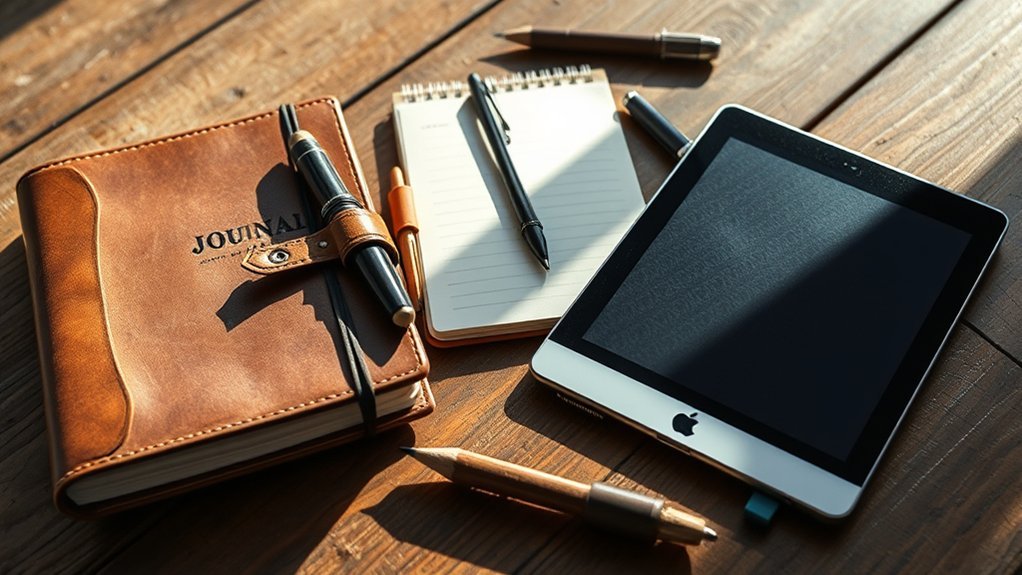
When it comes to selecting the right medium for your fishing journal, weigh the benefits of digital versus print options. Digital journals let you jot down notes quickly and access them from different devices, while print journals offer a tactile experience that can spark creativity. Consider your personal preferences, fishing style, and journaling goals before you choose.
Digital Versus Print Options
Choosing between a digital or print fishing journal can greatly impact how you document your experiences on the water. Digital fishing journals offer easy backup, quick search, photos, map pins, and access from multiple devices. That makes them convenient for anglers who like to organize data. Print journals provide a satisfying pen-to-paper experience that feels personal and works without batteries or signal.
| Feature | Digital Fishing Journals | Print Journals |
|---|---|---|
| Backup | Easy | No |
| Device Access | Multiple | Single |
| Creativity | Limited | High |
| Battery Dependence | Yes | No |
| Flexibility | High | Moderate |
Ultimately, the medium you choose should align with your purpose. Pick a digital journal if you want searchable entries, photos, and GPS notes. Pick a print journal if you enjoy slower reflection, sketches, and handwritten details.
Personal Preference Considerations
Whether you cherish the feel of pen on paper or embrace the convenience of technology, selecting the right medium for your fishing journal is a personal choice. A print journal lets you add drawings, handwritten notes, and quick sketches of rigs or shoreline features. A digital format improves accessibility and allows multimedia elements like photos, GPS data, voice notes, and weather screenshots.
Consider how often you will write. A durable print journal may be more suitable for outdoor adventures than a device that needs a charge. Think about structure too. Digital journals often come with templates, while print journals allow more unique designs. Your choice can evolve. You might start with a print journal and later shift to digital as you seek advanced features.
Note: You do not need the perfect system before you start. The best fishing journal is the one you will actually use after each trip.
Establish a Consistent Routine
To truly capture your fishing experiences, establishing a consistent routine is key. Set specific times to jot down your thoughts, whether right after a trip or at a designated moment each week, to keep memories fresh. Using reminders will help you stay on track, turning journaling into an effortless habit that enriches your fishing journey.
Set Specific Journaling Times
Establishing specific times for journaling, such as right after each fishing trip or at the end of the week, can greatly improve your routine. By doing this, you record your experiences while they are still fresh. Consider allocating just 5 to 10 minutes for quick notes, making the process manageable and less intimidating.
Consistency is key, so link journaling to regular activities. You might write while cleaning your gear, saving photos, or unpacking your tackle. Use reminders or calendar alerts to reinforce the habit. Creating a dedicated journaling space will help you focus and maintain a regular writing schedule.
| Time to Journal | Benefits |
|---|---|
| After each fishing trip | Captures fresh memories |
| Weekly reflection | Summarizes experiences |
| Pre-trip preparation | Links to gear checks |
| Daily reminders | Keeps consistency |
Maintain Daily Entries Habit
Building on the foundation of setting specific journaling times, maintaining a daily entries habit can greatly enrich your fishing journal experience. By committing to this practice, you will capture the essence of each outing and create lasting memories. Start small. Write just one or two sentences about your day. This keeps it manageable and enjoyable.
- Use prompts like “What was the most memorable catch today?”
- Set a goal of three entries a week, then increase as you feel comfortable.
- Keep your journal in your fishing gear or a visible spot at home.
- Make it a routine to write after each trip or at a consistent time daily.
This consistency will transform your fishing reflections into a treasure trove of experiences. Even short entries can become useful when you review them across several weeks or seasons.
Use Reminders for Consistency
When you set a specific time each day or week for journaling, it fits naturally into your fishing routine. Use digital reminders or calendar alerts on your phone to prompt you to write in your fishing journal after each trip. This helps you stay consistent with your entries.
Create a checklist of key details, like date, time, weather, and fishing conditions, to streamline the writing process. Start with quick entries right after your trips. Then expand into more detailed accounts as you grow comfortable with the routine. Keep your journal easily accessible in your fishing gear or vehicle, so you can jot down notes and observations whenever inspiration strikes.
Document Essential Information
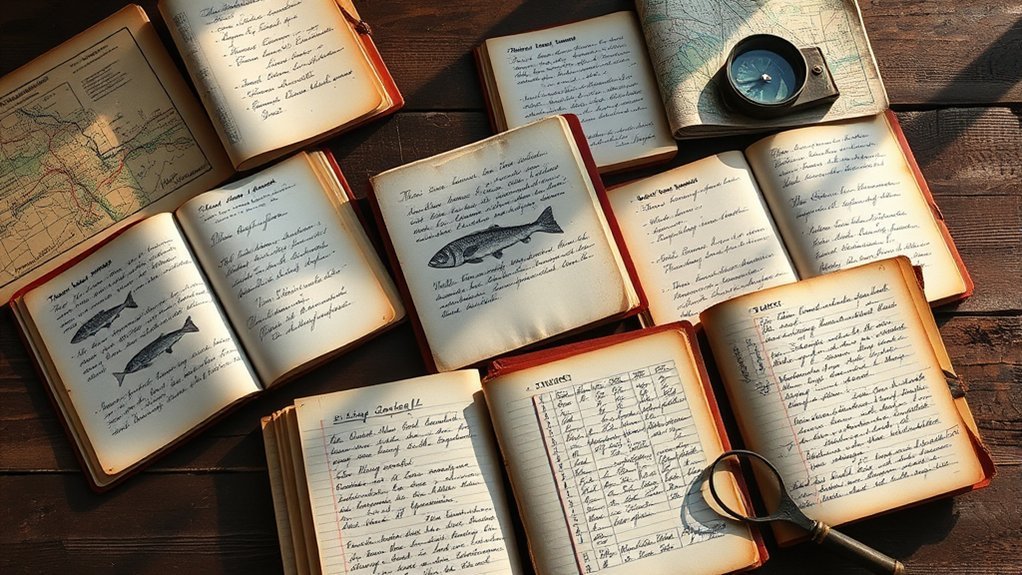
To maximize your fishing success, documenting essential information during each outing is crucial. This practice helps you pinpoint patterns and refine your strategies over time. Make sure to record the following details:
- Date and time of your fishing trip to track seasonal patterns and peak feeding windows.
- Weather conditions, including air temperature, water temperature when available, wind direction, cloud cover, rainfall, and barometric pressure.
- Specific location using GPS coordinates, map pins, shoreline descriptions, or familiar names for easy reference in future outings.
- Water conditions such as clarity, current, tide stage, depth, vegetation, bottom type, and visible baitfish activity.
- Types of bait or lures used, including size, color, rigging style, retrieve speed, and presentation depth.
- Number of fish caught, species, approximate sizes, release notes, and any legal harvest details when relevant.
- What worked, what failed, and what you want to try differently next time.
Pro Tip: Use the same entry format every time. Consistent notes make it much easier to compare trips and spot reliable patterns.
Use a Simple Fishing Journal Template
A template keeps your entries organized and saves time after a long day on the water. You can copy this format into a notebook, notes app, spreadsheet, or printable journal page.
| Journal Field | What to Record |
|---|---|
| Date and Time | Trip date, start time, end time, and best bite window |
| Location | Lake, river, pier, pond, GPS pin, or shoreline description |
| Weather | Temperature, wind, clouds, rain, pressure, and major changes |
| Water Conditions | Clarity, depth, current, tide, vegetation, and structure |
| Bait or Lure | Type, size, color, rig, retrieve, and presentation depth |
| Catch Details | Species, number caught, size, release or harvest notes |
| Lessons Learned | What worked, what failed, and what to test next trip |
Here is a simple entry example:
June 12, evening trip, light wind, stained water, 72°F air temperature. Caught three bass near grass edges on a green soft plastic worm with a slow retrieve. Missed two bites when working too fast. Next time, start shallow and pause longer near cover.
Reflect on Your Experiences
Reflecting on your fishing experiences not only sharpens your skills but also deepens your appreciation for the sport. When you take the time to journal about your fishing, you can identify patterns in fish behavior and seasonal changes that improve your strategies for future outings.
Documenting your emotions and memorable moments also helps you connect with each trip. Write about who joined you, what surprised you, what challenged you, and what you enjoyed most. These details turn your fishing journal into more than a technical log. They make it a record of your growth as an angler.
Questions to Guide Your Reflection
If you are not sure what to write, use simple reflection prompts. They help you move beyond basic data and capture lessons you can use later.
- What pattern did I notice today?
- Which bait, lure, or technique produced the most action?
- What mistake did I make, and how can I avoid it next time?
- Did the fish relate to structure, shade, depth, current, or vegetation?
- What would I do first if I returned to this same spot tomorrow?
- What made this trip enjoyable, even if the fishing was slow?
Adapt Your Approach as Needed
As you navigate the ever-changing waters of fishing, adapting your journaling approach becomes essential for capturing the details of each experience. Embrace flexibility in your journaling style, and switch formats as your preferences or circumstances change. If details overwhelm you, simplify your entries and focus on the key information that helps you fish better.
Adapting your fishing journal style is key to capturing every unique experience effectively. Embrace flexibility and simplify when needed.
- Track date, location, and weather conditions
- Note notable catches for easy reference
- Switch from print to digital for convenience
- Incorporate seasonal observations of fish behavior
Your journal should support your fishing, not make the hobby feel like homework. Some days may call for a full page of notes. Other days may only need a few lines. The habit matters more than perfection.
Utilize Resources for Better Insights
Capturing the details of your fishing experiences goes beyond personal observations. You can also use reliable resources that improve your understanding and help you interpret what happened on the water. Start by using weather tools to track historical weather patterns, including temperature, wind, rainfall, and pressure trends that may have influenced your catch on specific days.
In tidal waters, tide charts can help you understand how tidal movement affects fish positioning and feeding activity. For freshwater trips, lake maps, depth charts, and local fishing reports can add helpful context. Document water clarity and wind direction to create a clearer picture of which conditions yield the best results.
Use GPS apps to geotag successful spots, mark productive structure, and analyze patterns over time. You can also try alternative logging methods, such as video logging, voice notes, or electronic journals. These resources can transform your fishing journal from a simple log into a useful tool for improvement.
Review Your Journal to Find Patterns
A fishing journal becomes more valuable when you review it. Set aside time every few weeks to look back through your entries. Search for repeated clues across successful trips and slow days.
Pay attention to patterns such as:
- Best times of day for certain species
- Productive water temperatures or weather shifts
- Bait colors that worked in clear, stained, or muddy water
- Locations that produced bites during certain seasons
- Wind directions that improved or hurt specific spots
- Common mistakes that caused missed fish
Once you spot a pattern, test it on your next trip. Your journal should not only describe the past. It should guide your next decision.
Engage With the Fishing Community
While you are out on the water, connecting with the fishing community can open up a treasure trove of insights that elevate your experience. Engaging with fellow anglers not only enhances your knowledge but also helps you gather the information you need to improve your fishing journal.
Connecting with fellow anglers enriches your fishing experience and enhances your fishing journal insights.
- Join online forums and social media groups to ask questions and share experiences.
- Participate in local fishing clubs or events for hands-on advice from seasoned anglers.
- Collaborate on group challenges to maintain fishing logs, boosting motivation and accountability.
- Share your journal publicly to spark discussions and gain constructive feedback.
Be thoughtful when sharing exact locations. Publicly posting small ponds, fragile fisheries, or private access points can increase pressure on those spots. You can still share lessons, patterns, and general conditions without revealing sensitive details.
Warning: Always follow local fishing rules, size limits, harvest limits, and access laws. Your journal should never encourage fishing in closed areas, trespassing, or keeping fish outside legal limits.
Frequently Asked Questions
How can I improve my fishing techniques based on my journal?
Review your journal regularly and identify patterns in successful catches. Compare bait, location, weather, water clarity, depth, and time of day. Then adjust your techniques based on what worked. Experiment with different baits, locations, and retrieve speeds while staying observant on each trip.
What should I do if I miss a fishing trip?
If you miss a fishing trip, use your journal to plan the next one. Review past entries from the same season, check what worked before, and create a short plan for your next outing. You can also write a planning entry with target locations, bait ideas, and goals.
Can I include personal reflections in my fishing journal?
Yes, you can include personal reflections in your fishing journal. Sharing your thoughts, feelings, and lessons learned makes the journal more meaningful. It also helps you connect with your experiences and remember why each trip mattered.
How do I handle multiple fishing locations in my journal?
Create separate sections or tags for each location. Record conditions, bait used, fish caught, access notes, and reflections for each spot. Over time, this makes it easier to compare which locations produce better results during different seasons.
What’s the best way to organize my journal entries?
Organize your journal entries by date, location, or species. Use headings for clarity and bullet points for quick reference. Add sketches, photos, map notes, or lure details when they help you remember the trip more clearly.
Should I use a spreadsheet for my fishing journal?
A spreadsheet works well if you like sorting and comparing data. You can filter by date, species, location, bait, weather, or water conditions. Many anglers use a spreadsheet for technical details and a notebook or app for personal reflections.
How soon after a trip should I write in my journal?
Write as soon as possible after the trip. Even five minutes of notes in the parking area or at home can preserve details you may forget later, such as bite timing, lure color, wind direction, and small changes in fish behavior.
Conclusion
In the end, your fishing journal is not just a collection of notes. It is a practical map that points you toward better decisions, stronger memories, and more rewarding trips. By setting clear goals, choosing the right medium, and consistently documenting your journeys, you will uncover valuable insights that elevate your fishing game.
Grab a pen, open an app, or start a simple spreadsheet. Write down what happened, what you noticed, and what you want to try next. Every entry is a step toward becoming a more thoughtful, prepared, and confident angler.