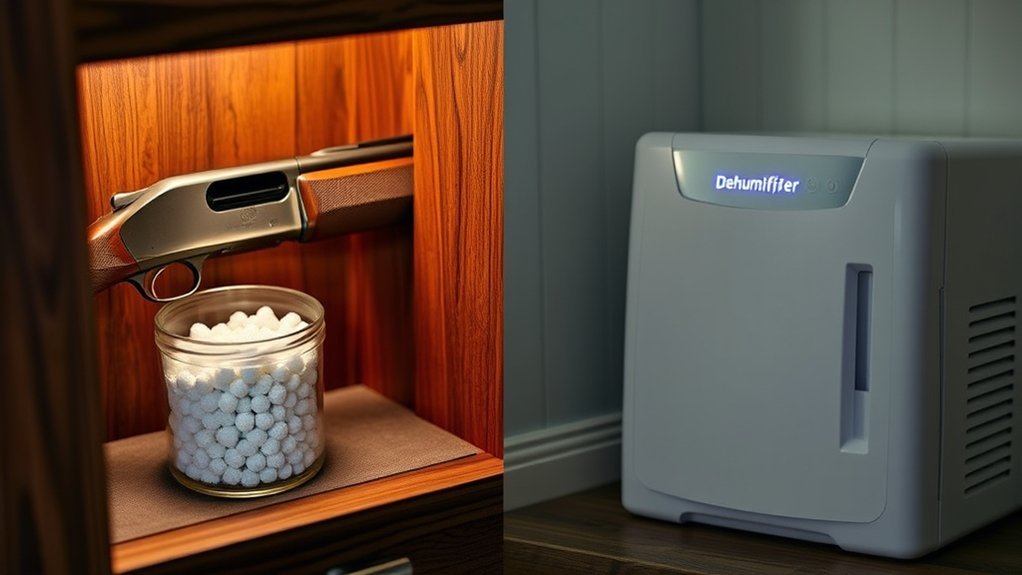
Gun cabinet humidity control matters because moisture can rust metal parts, damage wood stocks, affect ammunition storage, and create a musty environment inside a safe or cabinet. Choosing between desiccant and electric dehumidifiers depends on your cabinet size, power access, local humidity, and how much maintenance you want to handle.
Quick Answer
Use a desiccant dehumidifier for a small gun cabinet, low-power setup, or occasional moisture control. Choose an electric dehumidifier for a larger safe, humid climate, or long-term storage where steady humidity control matters most.
Key Takeaways
- Aim to keep your gun cabinet humidity in a moderate range, often around 30% to 50%, while avoiding extreme dryness.
- Desiccant dehumidifiers work best in smaller cabinets because they are cordless, compact, quiet, and easy to place.
- Electric dehumidifiers work better in larger safes or humid rooms because they provide more consistent moisture control.
- A hygrometer is essential because you cannot manage humidity accurately by guessing.
- The best choice is the one that matches your safe size, room conditions, power access, and maintenance habits.
It’s common for gun owners to overlook humidity control in their cabinets, but that small detail can greatly affect the condition of stored firearms. A cabinet may look sealed and secure, yet moisture can still build up inside if the room is damp, the safe sits near an exterior wall, or the door stays closed for long periods.
Both desiccant and electric dehumidifiers can protect firearms, but they work in different ways. Desiccants absorb moisture silently without power. Electric units usually use heat or air circulation to keep the interior drier. Understanding the difference helps you choose a setup that protects your investment without creating extra hassle.
Understanding Humidity Levels in Gun Safes
When it comes to storing firearms, understanding humidity levels in gun safes is essential because excessive moisture can lead to rust and deterioration. A commonly recommended target range is about 30% to 50% relative humidity. That range helps reduce corrosion risk while avoiding overly dry conditions that may affect wood stocks, leather accessories, or other stored materials.
High humidity can cause significant damage, including rust on metal components, mildew inside the cabinet, and deterioration of wood stocks. Conversely, excessively dry environments can also harm your firearms, leading to wood stocks shrinking, drying, or cracking over time.
To maintain balanced humidity levels, regularly monitor conditions with a hygrometer. A hygrometer gives you an actual reading instead of relying on guesswork. Once you know the humidity inside the cabinet, you can decide whether a desiccant pack, rechargeable desiccant unit, electric rod, or powered dehumidifier makes the most sense.
Note: Room humidity and cabinet humidity are not always the same. A closed gun cabinet can trap moisture, so place the hygrometer inside the safe or cabinet rather than relying only on a room reading.
The Role of Dehumidifiers in Gun Storage
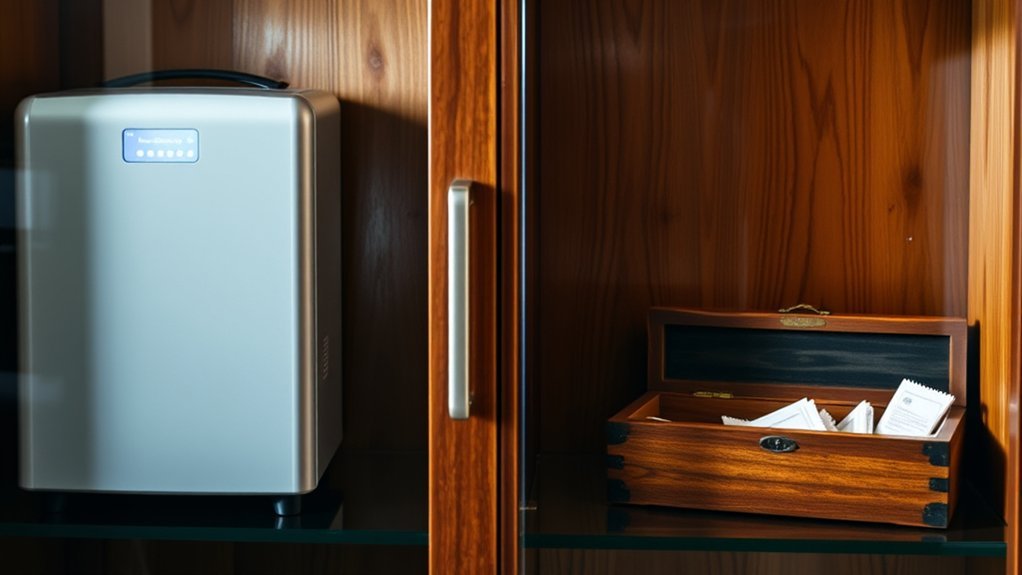
Dehumidifiers play an essential role in gun storage by controlling moisture levels, which helps prevent rust and corrosion. You’ll find that electric dehumidifiers are particularly efficient in larger cabinets, while non-electric options can work well in smaller spaces.
The right dehumidifier does not replace basic firearm care. You still need to clean, oil, and inspect your firearms as recommended by the manufacturer. A dehumidifier simply helps create a better storage environment, especially when the cabinet stays closed for long periods.
Moisture Control Mechanisms
Maintaining ideal humidity levels is fundamental for preserving firearms in gun cabinets, as excess moisture can lead to rust and corrosion. Dehumidifiers combat this issue by either absorbing moisture or helping warm, dry air circulate inside the cabinet.
Electric dehumidifiers work well in larger cabinets because they can provide more consistent drying. Some models use a heated rod that raises the interior temperature slightly, which helps reduce condensation. Others use powered moisture removal systems, depending on the design.
In contrast, desiccant dehumidifiers are useful in smaller spaces because they absorb moisture without needing electricity. Many use silica gel or another moisture-absorbing material. However, you’ll need to recharge or replace them periodically. Regularly monitoring humidity levels with a hygrometer is essential, as both high and low humidity can harm your firearms.
Electric vs. Non-Electric
Whether you’re storing a single firearm or an extensive collection, choosing between electric and non-electric dehumidifiers can greatly impact the effectiveness of your humidity control strategy.
- Electric Dehumidifiers: Best for larger gun safes, they require a power source to circulate warm, dry air or actively reduce moisture inside.
- Non-Electric Options: Desiccant beads, like silica gel canisters, are portable and ideal for smaller spaces with limited power access, absorbing moisture without generating heat.
- Considerations: Evaluate the size of your storage space, the humidity levels, power access, maintenance needs, and operational costs.
Ultimately, the right choice balances efficiency, safety, and convenience, ensuring your firearms remain well-protected from moisture damage.
Maintenance and Efficiency
While effective humidity control is vital for protecting your firearms, understanding the maintenance and efficiency of your chosen dehumidification method can greatly improve your storage strategy.
Electric dehumidifiers are particularly efficient in larger gun cabinets because they can work continuously when plugged in. In contrast, desiccant dehumidifiers absorb moisture effectively in smaller spaces but require regular recharging or replacement, which can reduce their efficiency if you forget to maintain them.
Monitoring humidity with a hygrometer is essential for evaluating the effectiveness of your method and making adjustments as needed. Both types help reduce conditions that support mold, mildew, rust, and corrosion.
Types of Dehumidifiers for Gun Cabinets
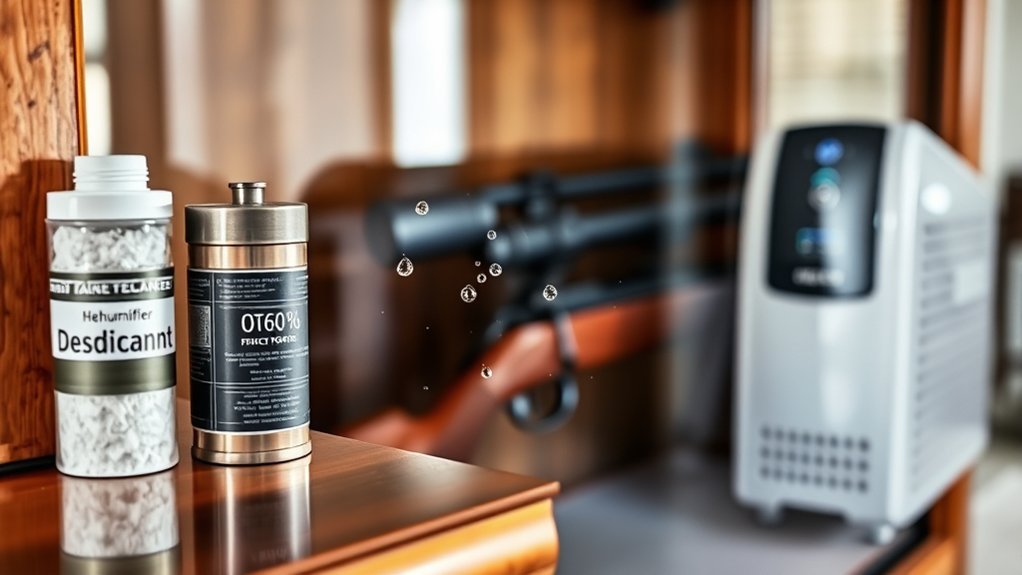
When it comes to protecting your firearms from moisture damage, understanding the different types of dehumidifiers available for gun cabinets is essential. Here are three common options to evaluate:
- Electric Dehumidifiers: These plug-in devices circulate warm, dry air or actively manage moisture, making them suitable for larger cabinets with higher humidity. They require a power source.
- Desiccant Dehumidifiers: These use moisture-absorbing materials like silica gel. They are cordless, compact, and ideal for smaller cabinets, but they need periodic recharging or replacement.
- Renewable Dehumidifiers: These combine absorbent materials with a recharging method. They usually sit unplugged while absorbing moisture, then plug in only when they need to dry out for reuse.
Selecting the right dehumidifier can greatly improve your gun safe dehumidifier setup and help maintain ideal humidity levels.
Advantages of Desiccant Dehumidifiers
Desiccant dehumidifiers offer several advantages that make them ideal for many gun cabinets. They provide cost-effective moisture control without needing electricity, making them useful for locations without power outlets. Their lightweight and portable design also makes them easy to place in tight spaces without adding bulk.
Cost-Effective Moisture Control
If you’re looking for an effective and budget-friendly solution to control moisture in your gun cabinet, desiccant dehumidifiers are a smart choice. These devices, often using silica gel, provide a cost-effective way to help prevent rust and corrosion without the need for electricity.
Here are three key advantages:
- Reusable and Rechargeable: Many models can be dried out and reused, which helps reduce long-term costs.
- Non-Toxic: Silica gel products are commonly used around stored valuables, and they avoid the electrical risks of powered devices.
- Efficient Coverage: Small desiccant units can work well in compact cabinets, drawers, cases, or smaller safes when sized correctly.
No Electricity Required
For those seeking an efficient moisture control solution, opting for a desiccant dehumidifier offers a significant advantage: it operates without electricity. This feature makes it ideal for locations like remote gun cabinets, closets, and storage areas where power sources may be unavailable.
Utilizing materials such as silica gel, these dehumidifiers effectively absorb moisture from the air, protecting your firearms and valuables from rust, corrosion, and mildew. They also do this without generating heat, which can be helpful when storing sensitive items.
Rechargeable silica gel options can be reactivated according to the product instructions, providing a reusable solution. Their compact design allows for easy placement in smaller spaces, while their non-toxic nature makes them practical for enclosed storage areas.
Lightweight and Portable Design
When it comes to moisture control solutions for gun cabinets, the lightweight and portable design of desiccant dehumidifiers stands out. These devices offer several advantages that make them ideal for keeping your firearms safe and dry:
- Easy Placement: Their compact size allows you to position them in tight spaces like gun safes, cabinets, drawers, or storage cases.
- Flexibility: You can easily move or reposition the dehumidifier as needed when you reorganize your cabinet.
- Simple Storage: Many models fit beside ammunition boxes, documents, optics, or accessories without taking up much room.
With options like rechargeable silica gel desiccant beads, you gain a practical and cost-effective way to maintain better humidity control in your gun cabinet.
Limitations of Desiccant Dehumidifiers
Desiccant dehumidifiers are convenient, but they are not perfect for every setup. Their main weakness is capacity. Once the material absorbs moisture, it stops working well until you recharge or replace it.
In a very humid area, a small desiccant unit may saturate quickly. That means you may need to check it often. If you forget, humidity can rise again inside the cabinet. Some units have color indicators that show when they need recharging, but not every model includes this feature.
Desiccants also work best in sealed or semi-sealed spaces. If your cabinet leaks a lot of outside air, the desiccant may keep absorbing moisture from the room instead of stabilizing the cabinet interior. In that case, you may need a larger unit, better door sealing, or an electric option.
Pro Tip: If you use desiccant, choose a model with a visible saturation indicator. It removes guesswork and helps you recharge the unit before humidity climbs too high.
Pros and Cons of Electric Dehumidifiers
Electric dehumidifiers offer a compelling solution for managing humidity levels in gun cabinets, especially in larger safes where passive methods may fall short. They can circulate warm, dry air or provide active moisture control, depending on the model.
They’re easy to use and often require less frequent attention than loose desiccant packs. Some powered units also pair well with a separate hygrometer, giving you a simple way to track whether the setup is working.
However, they require a power source, making them unsuitable for locations without electrical outlets or for users wary of electrical hazards. Some electric devices may generate mild heat, which is usually part of how they work. You should still follow the manufacturer’s installation instructions and keep cords away from sharp edges, door pressure points, and stored items.
While operating costs are usually low, powered devices are not completely maintenance-free. You may need to check for dust accumulation, inspect the cord, and confirm the unit remains properly positioned. Weigh these pros and cons to determine what’s best for your needs.
Desiccant vs Electric Dehumidifiers Side by Side
A side-by-side comparison makes the choice easier. Neither option is automatically better. The right answer depends on your safe size, room humidity, power access, and how often you want to maintain the system.
| Feature | Desiccant Dehumidifier | Electric Dehumidifier |
| Best For | Small safes, cabinets, cases, and areas without power | Larger gun safes, humid rooms, and long-term storage |
| Power Needed | No power while in use | Requires an outlet or power access |
| Maintenance | Recharge or replace when saturated | Check cord, placement, dust, and function |
| Main Advantage | Simple, silent, portable, and cordless | More consistent for larger spaces |
| Main Drawback | Limited capacity and regular recharging | Needs power and proper cord placement |
Key Features to Consider in a Dehumidifier
While choosing a dehumidifier for your gun cabinet, several key features can significantly impact its effectiveness and safety. Prioritizing these aspects helps improve moisture removal and firearm protection.
- Moisture Removal Capability: Look for a model that can help maintain humidity around the 30% to 50% range to reduce rust and corrosion risk.
- Reliability Indicators: Choose dehumidifiers for gun safes with reliable saturation or recharging indicators, so you know when to replace desiccant materials or attend to electric components.
- Safe and Compact Design: Confirm the exterior does not rust, crack, or overheat. Choose a size that fits without blocking door movement or crowding stored items.
- Coverage Rating: Match the product’s recommended coverage area to the internal volume of your cabinet or safe.
- Ease of Maintenance: Pick a setup you will actually maintain. A powerful dehumidifier does little good if you forget to recharge, inspect, or monitor it.
Assessing Space and Size Requirements
Selecting the right moisture control solution for your gun cabinet hinges on understanding the space and size requirements. When you assess space, consider the interior volume of the cabinet, not just the exterior height and width.
A typical desiccant dehumidifier works best in smaller areas when it is sized correctly. If your cabinet is large, packed tightly, or located in a humid room, an electric dehumidifier is often a better choice because it can manage humidity levels more consistently.
For smaller cabinets, desiccant dehumidifiers are ideal because they fit easily in tight spaces and require low maintenance. Make sure that the moisture control method matches your cabinet’s dimensions and humidity levels. Improper sizing can leave you with moisture problems even when a dehumidifier is present.
Where to Place a Gun Safe Dehumidifier
Placement affects performance. A desiccant unit should sit where air can reach it. Avoid burying it under gear, paperwork, boxes, or soft cases. If air cannot circulate around the desiccant, it will not absorb moisture as effectively.
For electric rods or plug-in units, follow the product instructions. Many electric rods are placed low in the safe because warm air rises. Keep cords routed safely so the door does not pinch them. If your safe has a built-in cord access hole, use it as intended.
Place the hygrometer away from the dehumidifier. If it sits too close, the reading may look drier than the rest of the cabinet. A middle shelf or central position often gives a better overall reading.
Warning: Never run a power cord through a gun safe door if the door pinches, cuts, or crushes it. Damaged cords can create safety risks and may stop the dehumidifier from working correctly.
Maintenance Needs for Different Dehumidifiers
Maintaining the right moisture control solution for your gun cabinet requires understanding the distinct maintenance needs of desiccant and electric dehumidifiers.
- Desiccant Dehumidifiers: You’ll need to replace or recharge them every few weeks or months, depending on humidity levels and product size. Models without saturation indicators require manual performance checks.
- Electric Dehumidifiers: These generally require less frequent upkeep. Regularly check that the power source works, the cord is undamaged, and the unit remains properly positioned.
- Renewable Models: Some operate as desiccants while unplugged but need to be plugged in for recharging when saturated.
Regular maintenance for all types is essential to guarantee peak functionality and protect your valuables from moisture damage. Add a quick humidity check to your normal firearm inspection routine so problems do not go unnoticed.
Monitoring Humidity Levels Effectively
How can you guarantee your gun cabinet remains a safe environment for your firearms? Utilizing a hygrometer is essential for monitoring humidity levels, ensuring they stay within the ideal range of about 30% to 50%.
This helps prevent excess moisture that can rust metal parts and damage sensitive items like ammunition, optics, and wood stocks. Regularly check the hygrometer’s readings and consider using a digital model for easy monitoring.
Make sure to place the hygrometer away from direct moisture sources and away from the dehumidifier itself. For best protection, place a hygrometer inside the gun cabinet. This allows you to monitor humidity levels in real time and promptly address any issues.
Common Mistakes to Avoid
Even a good dehumidifier can perform poorly if the setup is wrong. Avoid these common mistakes when managing gun cabinet humidity:
- Skipping the Hygrometer: Without a humidity reading, you cannot know whether your dehumidifier is working.
- Using an Undersized Unit: A tiny desiccant pack may not handle a large cabinet or very humid room.
- Forgetting to Recharge Desiccant: Saturated desiccant no longer protects the cabinet effectively.
- Blocking Airflow: Piling gear around the dehumidifier limits its ability to manage moisture.
- Ignoring the Room: A cabinet in a damp basement, garage, or exterior-wall closet may need stronger humidity control.
- Creating Extreme Dryness: Moisture control should reduce excess humidity, not make the cabinet overly dry for long periods.
Making the Right Choice for Your Gun Safe
When deciding on the best dehumidification method for your gun safe, it’s essential to assess your specific needs and circumstances. Consider the following factors to make an informed choice:
- Size of Your Safe: Small safes often benefit from desiccant options, while larger ones may require electric dehumidifiers.
- Humidity Levels: Use a hygrometer to monitor humidity. Desiccants work well in low to moderate humidity, while electric dehumidifiers can better maintain ideal levels in larger or damper spaces.
- Power Availability: If electricity isn’t an option, desiccant dehumidifiers provide a reliable solution, especially if you choose rechargeable silica gel.
- Maintenance Preference: Choose desiccant if you prefer a cordless setup and do not mind recharging it. Choose electric if you want steadier control and have safe outlet access.
- Storage Location: A cabinet in a climate-controlled room may need less help than one in a basement, garage, or damp closet.
For many gun owners, the best setup is a combination: a hygrometer for monitoring, a desiccant unit for backup, and an electric dehumidifier for larger safes or damp locations. This layered approach gives you more control and helps you respond quickly when humidity changes.
Conclusion
Choosing between desiccant and electric dehumidifiers for your gun cabinet comes down to your storage space, power access, humidity level, and maintenance habits. Desiccants are simple, cordless, and easy to use in smaller cabinets. Electric units are stronger choices for larger safes and humid environments where steady control matters.
The most important step is not just buying a dehumidifier. It is monitoring your cabinet with a hygrometer and responding when conditions change. With the right setup, you can keep your firearms protected from the creeping threat of humidity and preserve them with the care they deserve.